WE really need to get rid of this guy

spaminator

Hall of Fame Member
Oct 26, 2009
40,345
3,918
113
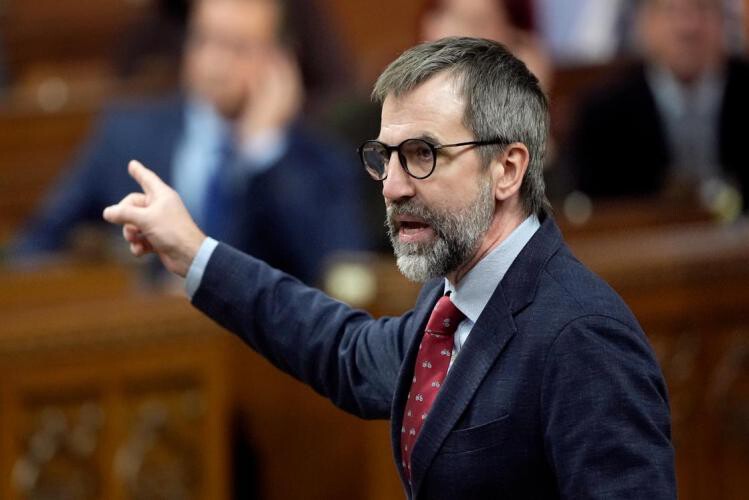
Smell ya’ later” says the PM. Montreal-area MP and climate activist Steven Guilbeault says he will resign his seat in the House of Commons later this summer, according to a statement posted to social media.

Does he have his 6yrs in to get his pension indexed to inflation for life yet? Guilbeault said he will remain a member of the Liberal caucus until he resigns.
Under Canadian rules, MPs must contribute to the pension plan for a minimum of six years and reach 55 years of age to claim their pension. Having been first elected on October 21, 2019, he met the six-year service requirement on October 21, 2025 and reached the age threshold of 55 in June 2025.

“After almost seven years as a Member of Parliament and Minister, I have come to the conclusion that it is time for me to pursue my fight for environmental protection and the fight against climate change in a different way,” he said in his statement, thanking the residents of his riding Laurier-Sainte-Marie for electing him to Parliament.

Guilbeault’s political future within the Liberal Party of Canada has been in doubt ever since he quit Carney’s cabinet over the deal with Alberta that “could” see a new oil pipeline built to the West Coast.
hes a fool for quitting.
 

Ron in Regina

"Voice of the West" Party
Apr 9, 2008
32,431
11,733
113
Regina, Saskatchewan
As Premier of Quebec, he could only really damage Quebec’s economy. As a federal green, he could irritate the whole country.
As a federal green in a marginal party he would be a louder and more annoying Elizabeth May…but in a provincial party as the Quebec Premier (they love him out there for some reason I’ve heard, maybe ‘cuz he’s very openly anti-Alberta?) he could get a lot more sound bites in a not “man bites dog” story situation with influence over 25% of the Canadian population.

“Politicians in Quebec who adopt critical stances toward Alberta—or federal oil and gas policies—gain popularity by tapping into strong, ‘culturally distinct’ provincial values that prioritize environmentalism, secularism, and local resource control.” Guilbeault would already be starting as being popular in Quebec, and criticizing Alberta's energy sector (basically Guilbeault’s political career so far) aligns with a broader push for Quebec’s provincial independence from federal overreach.
 
  • Like
Reactions: Dixie Cup

pgs

Hall of Fame Member
Nov 29, 2008
29,254
8,606
113
B.C.
As a federal green in a marginal party he would be a louder and more annoying Elizabeth May…but in a provincial party as the Quebec Premier (they love him out there for some reason I’ve heard, maybe ‘cuz he’s very openly anti-Alberta?) he could get a lot more sound bites in a not “man bites dog” story situation with influence over 25% of the Canadian population.

“Politicians in Quebec who adopt critical stances toward Alberta—or federal oil and gas policies—gain popularity by tapping into strong, ‘culturally distinct’ provincial values that prioritize environmentalism, secularism, and local resource control.” Guilbeault would already be starting as being popular in Quebec, and criticizing Alberta's energy sector (basically Guilbeault’s political career so far) aligns with a broader push for Quebec’s provincial independence from federal overreach.
Yet if you remember the biggest push the separatists had was when the Quebec wing of the Conservative Party abandoned Mulroney and joined the block .Not all separatists are left leaning .
 

spaminator

Hall of Fame Member
Oct 26, 2009
40,345
3,918
113
Fidel Castro's daughter asked about Trudeau-Castro love child rumour
Activist gives 'half-answer' to 'half-brother' conspiracy theory about Canada's former prime minister

Author of the article:Ling Hui
Published May 30, 2026 • Last updated 9 hours ago • 2 minute read

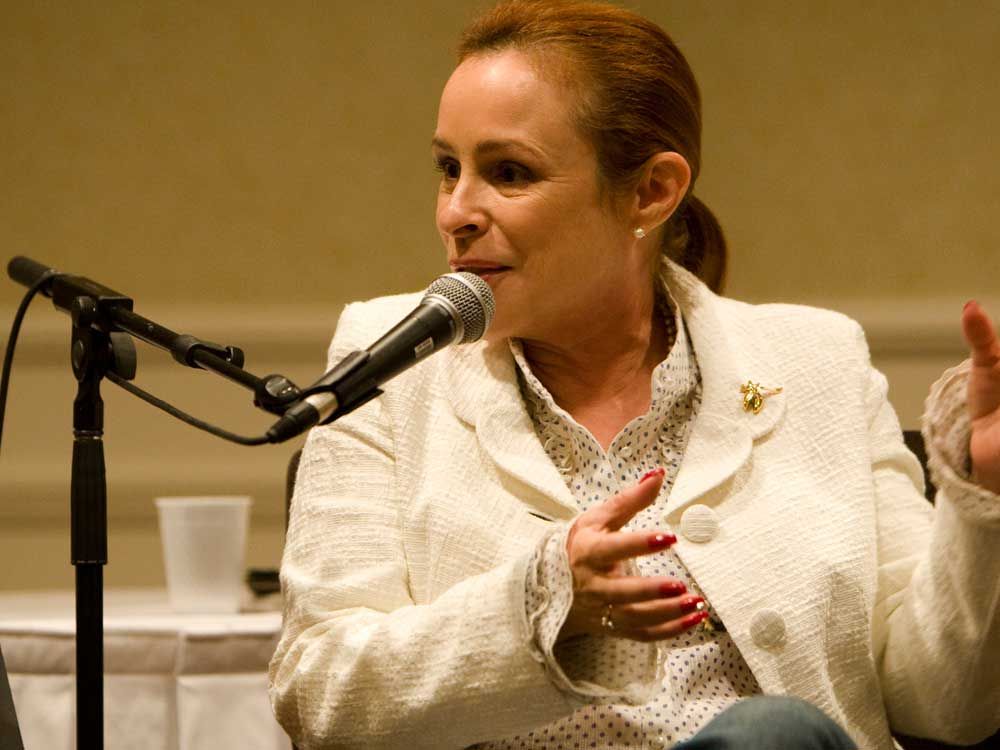
Alina Fernandez, daughter of Fidel Castro, is interviewed during the Blue Metropolis festival at the Delta Centre Ville in Montreal on May 8, 2002.
Alina Fernandez, daughter of Fidel Castro, is interviewed during the Blue Metropolis festival at the Delta Centre Ville in Montreal on May 8, 2002. Photo by TIM SNOW /Montreal Gazette

Fidel Castro’s daughter, Alina Fernandez, didn’t deny the conspiracy theory that former prime minister Justin Trudeau is the son of the late Cuban dictator in a recent interview.


During an appearance on NewsNation’s Katie Pavlich Tonight on Tuesday, the exiled anti-communist activist was quizzed about the debunked rumour.

“For years, we’ve heard rumours that Justin Trudeau, the former prime minister of Canada, could be your half-brother. What do you think about it?” host Katie Pavlich asked.

The 70-year-old Cuban activist laughed and said, “The only thing I can say is that his mother used to visit the country very often.”

Pavlich then said, “Well, that may be a tell then. I guess that’s a half-answer.”

Fernandez, still smiling, said, “Yes.”


Fishing for more details, Pavlich asked, “Do you plan to call him and maybe find out?”

Fernandez responded, “No, no. I won’t do it. If he wants, he’s welcome, but I won’t, I won’t. I think he keeps that to himself, and you have to respect that.”

The activist was asked about the unsubstantiated claim near the end of her interview in which she spoke about the humanitarian crisis in Cuba as the communist country continues to grapple with power outages and food shortages.


What sparked the gossip
The long-running rumour first emerged after the Cuban dictator’s death in 2016, when the office of the then-prime minister sparked backlash by releasing a statement calling Castro a “legendary revolutionary,” while acknowledging that he was a “controversial figure.”

U.S. President Donald Trump further fanned the rumour in a 2024 book, titled Save America, in which he wrote that Trudeau’s mother, Margaret, was “somehow associated” with Castro.

“A lot of people say that Justin is his son,” Trump wrote. “He says that he isn’t, but how the hell would he know!”

While Trudeau’s father, Pierre, and Castro were friends, media reports showed that Pierre and Margaret Trudeau didn’t officially visit Cuba until 1976, which was five years after Justin was born.
 

petros

The Central Scrutinizer
Nov 21, 2008
120,844
14,983
113
Low Earth Orbit
Fidel Castro's daughter asked about Trudeau-Castro love child rumour
Activist gives 'half-answer' to 'half-brother' conspiracy theory about Canada's former prime minister

Author of the article:Ling Hui
Published May 30, 2026 • Last updated 9 hours ago • 2 minute read

Alina Fernandez, daughter of Fidel Castro, is interviewed during the Blue Metropolis festival at the Delta Centre Ville in Montreal on May 8, 2002.
Alina Fernandez, daughter of Fidel Castro, is interviewed during the Blue Metropolis festival at the Delta Centre Ville in Montreal on May 8, 2002. Photo by TIM SNOW /Montreal Gazette

Fidel Castro’s daughter, Alina Fernandez, didn’t deny the conspiracy theory that former prime minister Justin Trudeau is the son of the late Cuban dictator in a recent interview.


During an appearance on NewsNation’s Katie Pavlich Tonight on Tuesday, the exiled anti-communist activist was quizzed about the debunked rumour.

“For years, we’ve heard rumours that Justin Trudeau, the former prime minister of Canada, could be your half-brother. What do you think about it?” host Katie Pavlich asked.

The 70-year-old Cuban activist laughed and said, “The only thing I can say is that his mother used to visit the country very often.”

Pavlich then said, “Well, that may be a tell then. I guess that’s a half-answer.”

Fernandez, still smiling, said, “Yes.”


Fishing for more details, Pavlich asked, “Do you plan to call him and maybe find out?”

Fernandez responded, “No, no. I won’t do it. If he wants, he’s welcome, but I won’t, I won’t. I think he keeps that to himself, and you have to respect that.”

The activist was asked about the unsubstantiated claim near the end of her interview in which she spoke about the humanitarian crisis in Cuba as the communist country continues to grapple with power outages and food shortages.


What sparked the gossip
The long-running rumour first emerged after the Cuban dictator’s death in 2016, when the office of the then-prime minister sparked backlash by releasing a statement calling Castro a “legendary revolutionary,” while acknowledging that he was a “controversial figure.”

U.S. President Donald Trump further fanned the rumour in a 2024 book, titled Save America, in which he wrote that Trudeau’s mother, Margaret, was “somehow associated” with Castro.

“A lot of people say that Justin is his son,” Trump wrote. “He says that he isn’t, but how the hell would he know!”

While Trudeau’s father, Pierre, and Castro were friends, media reports showed that Pierre and Margaret Trudeau didn’t officially visit Cuba until 1976, which was five years after Justin was born.
Rummage thru Trudeaus garage and get the DNA. Even one of his kids will do.
 
  • Like
Reactions: 55Mercury

spaminator

Hall of Fame Member
Oct 26, 2009
40,345
3,918
113
Louise Arbour installed as Canada's 31st governor general
Arbour will replace Mary Simon, appointed in 2021 by former PM Justin Trudeau

Author of the article:Bryan Passifiume
Published Jun 08, 2026 • Last updated 15 hours ago • 4 minute read

Louise Arbour is installed as Canada's Governor General during a ceremony at the Canadian Senate building in Ottawa June 8, 2026. Photo by Blair Gable /Photo by Blair Gable / Postmedia

OTTAWA — The Nation’s capital welcomed Canada’s 31st governor general with pomp and circumstance staged under blue, sunny skies.


Former Supreme Court Justice Louise Arbour was sworn in Monday morning on the floor of the Canadian Senate, flanked by a host of dignitaries, politicians and a sparse but enthusiastic line of well-wishers and curious tourists.

Notable guests greet future, former governors general
Prime Minister Mark Carney, who announced the impending appointment of the Montreal-born Arbour at an Ottawa press conference a little over a month ago, arrived at the Canadian Senate Building along Wellington St. near Sussex Dr., at little after 9:30 a.m., joined by outgoing vice-regal Mary Simon, and her husband, Whit Fraser.

Other notable names at the ceremony included former Prime Ministers Jean Chrétien and Joe Clark, former Governors General David Johnston and Adrienne Clarkson, Assembly of First Nations National Chief Cindy Woodhouse Nepinak, and Supreme Court Justice Richard Wagner.


A black car arrived carrying the new governor general pulled up to the senate building just after 9:40 a.m., where Arbour was greeted by a red carpet receiving line of dignitaries beginning with her predecessor, the prime minister, the government’s representative in the senate Pierre Moreau, and representatives from Indigenous community, including Algonquin Anishinaabe Elder Albert Dumont — who delivered remarks and invocation before the entourage headed inside the senate, lead by Usher of the Black Rod J. Greg Peters and flanked by an Indigenous drum circle.

Canada’s Governor General Louise Arbour arrives to a ceremony at the Canadian Senate building in Ottawa June 8, 2026. Photo by Blair Gable /Photo by Blair Gable / Postmedia
Governor general, sovereign not permitted in House of Commons
Arbour’s installation took place in the Senate Chambers because, due to long-standing constitutional traditions of independence handed down from the British Parliament, sovereigns or their representatives are not allowed to enter the House of Commons.

That is why King Charles III, as with other monarchs, have given their addresses within the Senate and not five blocks east in the House of Commons.


Simon’s final duty as viceroy was the decommissioning of the Great Seal of Canada — the governor general’s primary instrument of constitutional authority — to be replaced by a new seal to be presented to and looked after by Arbour during her term.

Simon then handed her seal to Defence Minister David McGuinty and signed a document affirming the decommissioning of her seal.

The Red Chamber was full to capacity with senators, politicians and dignitaries, members of the King’s Privy Council, Simon, and later Arbour, who was led in to begin the ceremony shortly after 10 a.m., with music performed live by the Central Band of the Canadian Armed Forces, as well as a live performance of the song Reine by Quebec folk singer Sara Dufour.


GG a ‘guardian’ of constitutional order: Carney
Arbour’s oath of office was administered by Supreme Court Justice Richard Wagner, delivered in both French and English.


“Do you solemnly affirm that you will bear true allegiance to His Majesty King Charles III, King of Canada, his heirs and successors?” Wagner asked Arbour, to which she replied: “I do.”

Arbour was then prompted to sign her oath of office, co-signed by Wagner and the PM.

That was followed by a royal fanfare by the CAF Central Band and a standing ovation welcoming Canada’s 31st head of state, after which Arbour took her seat in the Senate Speaker’s chair just after 10:30 a.m.

The band then played God Save the King, followed by a reading by Canadian Parliamentary Poet Laureate Chimwemwe Undi, and a presentation of the Great Seal of Canada by Defence Minister McGuinty.

After a musical performance by Canadian singer Tyler Shaw, Prime Minister Mark Carney called the governor general a “guardian” of Canada’s constitutional order, and a symbol of unity, peace and good government.

“Canadians entrust the governor general to defend our institutions, to uphold our core values of liberty, fairness, solidarity and sustainability,” Carney said.


“To represent our ambition to build a stronger, fairer country for all — these duties call for sound judgement, deep learning and an unwavering commitment to the rule of law, the very principles upon which our new governor general, Her Excellency Louise Arbour, has built her exceptional career.”

In her first speech as vice-regal, Arbour thanked both the PM and the King for the opportunity to serve as governor general.

“I say this with confidence — let us not slow our momentum toward progress out of fear of differences,” Arbour said in French.

“Extreme polarization is dangerous, but so is extreme consensus. It is through our differences and our fundamental right to express them, that we will nourish critical thinking, creativity and innovation. It is through our differences that we will build a common future.”

bpassifiume@postmedia.com
 

Dixie Cup

Senate Member
Sep 16, 2006
6,673
4,209
113
Edmonton
Louise Arbour installed as Canada's 31st governor general
Arbour will replace Mary Simon, appointed in 2021 by former PM Justin Trudeau

Author of the article:Bryan Passifiume
Published Jun 08, 2026 • Last updated 15 hours ago • 4 minute read

Louise Arbour is installed as Canada's Governor General during a ceremony at the Canadian Senate building in Ottawa June 8, 2026. Photo by Blair Gable /Photo by Blair Gable / Postmedia

OTTAWA — The Nation’s capital welcomed Canada’s 31st governor general with pomp and circumstance staged under blue, sunny skies.


Former Supreme Court Justice Louise Arbour was sworn in Monday morning on the floor of the Canadian Senate, flanked by a host of dignitaries, politicians and a sparse but enthusiastic line of well-wishers and curious tourists.

Notable guests greet future, former governors general
Prime Minister Mark Carney, who announced the impending appointment of the Montreal-born Arbour at an Ottawa press conference a little over a month ago, arrived at the Canadian Senate Building along Wellington St. near Sussex Dr., at little after 9:30 a.m., joined by outgoing vice-regal Mary Simon, and her husband, Whit Fraser.

Other notable names at the ceremony included former Prime Ministers Jean Chrétien and Joe Clark, former Governors General David Johnston and Adrienne Clarkson, Assembly of First Nations National Chief Cindy Woodhouse Nepinak, and Supreme Court Justice Richard Wagner.


A black car arrived carrying the new governor general pulled up to the senate building just after 9:40 a.m., where Arbour was greeted by a red carpet receiving line of dignitaries beginning with her predecessor, the prime minister, the government’s representative in the senate Pierre Moreau, and representatives from Indigenous community, including Algonquin Anishinaabe Elder Albert Dumont — who delivered remarks and invocation before the entourage headed inside the senate, lead by Usher of the Black Rod J. Greg Peters and flanked by an Indigenous drum circle.

Canada’s Governor General Louise Arbour arrives to a ceremony at the Canadian Senate building in Ottawa June 8, 2026. Photo by Blair Gable /Photo by Blair Gable / Postmedia
Governor general, sovereign not permitted in House of Commons
Arbour’s installation took place in the Senate Chambers because, due to long-standing constitutional traditions of independence handed down from the British Parliament, sovereigns or their representatives are not allowed to enter the House of Commons.

That is why King Charles III, as with other monarchs, have given their addresses within the Senate and not five blocks east in the House of Commons.


Simon’s final duty as viceroy was the decommissioning of the Great Seal of Canada — the governor general’s primary instrument of constitutional authority — to be replaced by a new seal to be presented to and looked after by Arbour during her term.

Simon then handed her seal to Defence Minister David McGuinty and signed a document affirming the decommissioning of her seal.

The Red Chamber was full to capacity with senators, politicians and dignitaries, members of the King’s Privy Council, Simon, and later Arbour, who was led in to begin the ceremony shortly after 10 a.m., with music performed live by the Central Band of the Canadian Armed Forces, as well as a live performance of the song Reine by Quebec folk singer Sara Dufour.


GG a ‘guardian’ of constitutional order: Carney
Arbour’s oath of office was administered by Supreme Court Justice Richard Wagner, delivered in both French and English.


“Do you solemnly affirm that you will bear true allegiance to His Majesty King Charles III, King of Canada, his heirs and successors?” Wagner asked Arbour, to which she replied: “I do.”

Arbour was then prompted to sign her oath of office, co-signed by Wagner and the PM.

That was followed by a royal fanfare by the CAF Central Band and a standing ovation welcoming Canada’s 31st head of state, after which Arbour took her seat in the Senate Speaker’s chair just after 10:30 a.m.

The band then played God Save the King, followed by a reading by Canadian Parliamentary Poet Laureate Chimwemwe Undi, and a presentation of the Great Seal of Canada by Defence Minister McGuinty.

After a musical performance by Canadian singer Tyler Shaw, Prime Minister Mark Carney called the governor general a “guardian” of Canada’s constitutional order, and a symbol of unity, peace and good government.

“Canadians entrust the governor general to defend our institutions, to uphold our core values of liberty, fairness, solidarity and sustainability,” Carney said.


“To represent our ambition to build a stronger, fairer country for all — these duties call for sound judgement, deep learning and an unwavering commitment to the rule of law, the very principles upon which our new governor general, Her Excellency Louise Arbour, has built her exceptional career.”

In her first speech as vice-regal, Arbour thanked both the PM and the King for the opportunity to serve as governor general.

“I say this with confidence — let us not slow our momentum toward progress out of fear of differences,” Arbour said in French.

“Extreme polarization is dangerous, but so is extreme consensus. It is through our differences and our fundamental right to express them, that we will nourish critical thinking, creativity and innovation. It is through our differences that we will build a common future.”

bpassifiume@postmedia.com
Guess she has a lot to learn!
 

spaminator

Hall of Fame Member
Oct 26, 2009
40,345
3,918
113
More sanctions for Pickering councillor Lisa Robinson after workplace harassment probe
Pickering mayoral hopeful Lisa Robinson banned from council chambers after bullying probe, but she maintains process was unfair

Author of the article:Bryan Passifiume
Published Jun 09, 2026 • Last updated 10 hours ago • 2 minute read

Pickering City Hall
Pickering City Hall Photo by Toronto Sun file

OTTAWA — Conduct by a controversial Pickering city councillor did indeed meet the threshold of workplace bullying and intimidation, according to the results of a months-long external review.


But Pickering City Councillor and current mayoral candidate Lisa Robinson, who’s long been a thorn in the side of city mayor Kevin Ashe, denied the allegations and accused the city of conducting a one-sided investigation against her.

Conduct constituted harassment, mayor claims
In 2025, the city retained an external legal firm to investigate harassment complaints filed by city staff against Robinson, which, according to a statement from Mayor Ashe, consisted of an “ongoing campaign of bullying, intimidation and persistent harassing conduct” that allegedly began in 2024.

“The process involved a comprehensive review of evidence, including emails, letters, videos recorded and shared by the councillor, integrity commissioner reports, and witness evidence,” read a statement posted online this week by Ashe.


“Investigators also assessed the broader pattern, repetition, tone, platform and foreseeable impact of the councillor’s public communications in the workplace context, including their effect on the psychological safety and the reputational harm directed at staff.”

The investigator, according to Ashe, concluded the allegations were substantiated, claiming the investigator found “…the cumulative effect of Councillor Robinson’s statements and actions directed at staff constituted workplace harassment and created a poisoned work environment.”

The City of Pickering denied the Toronto Sun’s request to view the report, citing confidentiality and solicitor-client privilege.

As a result, according to Ashe’s statement, council is limiting Robinson’s participation in future council to virtual-only for the remainder of her term, and directed staff to update the city’s indemnification by-law to “address adverse conduct toward City employees,” and endorsed administrative restrictions previously enacted against Robinson.


Robinson chose not to participate, she said
Robinson, the statement said, was invited to take part but chose not to — but in a statement of her own, Robinson maintains she didn’t participate because her requests for representation were denied.

“I strongly disagree with council’s decision and the unfair process that produced it,” she said in her statement.

“Months before any complaint was even filed, I sent formal cease-and-desist letters to HR and the Integrity Commissioner regarding unacceptable conduct directed at me. Instead of addressing those concerns, the city launched a one-sided investigation. When I was denied the right to representation, I chose not to participate.”

Robinson, who says she hasn’t seen a copy of the report, said during an in-camera council meeting on Monday she was denied the ability to challenge the allegations, question the process or defend herself — but maintains she never threatened or harassed any city employee.

“After three years of complaints from the CAO (Chief Administrative Officer) and the mayor, pay suspensions, restrictions, and what I believe is a clear pattern of intimidation and unfair treatment, I remain committed to the job I was elected to do: asking the tough questions, holding government accountable, and speaking up for the residents of Pickering,” her statement read.

bpassifiume@postmedia.com
 

spaminator

Hall of Fame Member
Oct 26, 2009
40,345
3,918
113
Doug Ford, Danielle Smith and David Eby hit personal lows in new premier poll
Premiers of three of Canada's most prominent provinces see their approval ratings hit personal lows, according to new Angus Reid poll

Author of the article:Bryan Passifiume
Published Jun 11, 2026 • Last updated 12 hours ago • 3 minute read

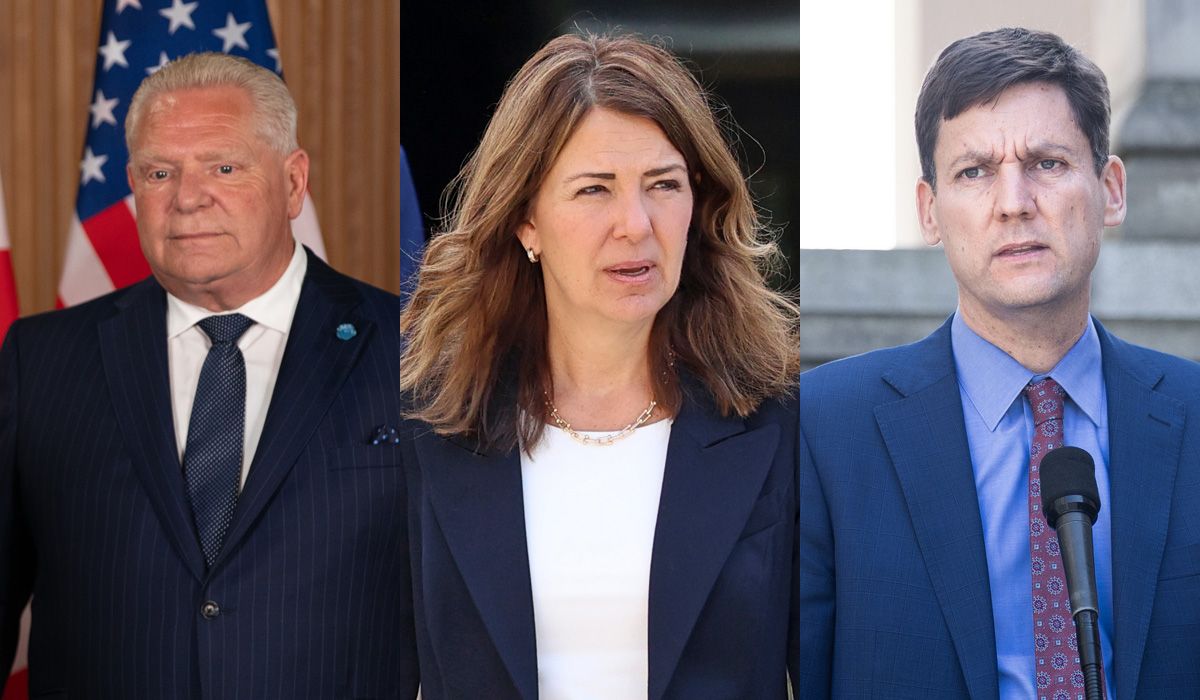
Ontario Premier Doug Ford, Alberta Premier Danielle Smith and BC Premier David Eby
Ontario Premier Doug Ford, Alberta Premier Danielle Smith and BC Premier David Eby Postmedia file photos


OTTAWA — It’s been a bad few weeks to be a big-deal premier in Canada, as three of the nation’s heavy political hitters watch their political fortunes tank.


Approval ratings for Ontario Premier Doug Ford, B.C. Premier David Eby and Alberta Premier Danielle Smith have fallen to personal lows, according to an Angus Reid poll released Thursday.

“Smith’s approval drops to an all-time low at 39% after weeks of controversy over her government’s plan to hold an October referendum related to Alberta’s place in Canada,” read an excerpt from the poll.

“West of the Rockies, Eby drops to 31% as his government faces ongoing pressure over DRIPA (B.C.’s Declaration on the Rights of Indigenous Peoples Act,), property-rights concerns, health care and affordability after nearly nine years of NDP government in B.C.”

Here in Ontario, the poll showed Ford’s approval rating falling to just 21%, the lowest-recorded level in the eight years the Ontario PC Party leader has been premier.


Premiers' approval ratings
Premiers’ approval ratings tumble to new lows. Photo by Toronto Sun graphic /Angus Reid Institute
All three premiers show cycles of approval, disapproval
According to the poll, Ford’s 21% approval rating is the lowest of any provincial premier — a 10 percentage point change since polling performed last quarter.

Eby’s 31% ranks second-worst, representing a six percentage point drop, with Nova Scotia Premier Tim Houston — in office since 2021 — ranking third from the bottom with 34%, a five point drop from the previous quarter, and Alberta’s Smith, who dropped seven percentage points to 39%.

While New Brunswick’s Susan Holt’s 41% was good enough to rank fourth among her peers, she saw the biggest drop in approval rating, falling 13% from the previous quarter.

Among the only two premiers who’ve seen their approval ratings increase over the past four months is Newfoundland’s Tony Wakeham, climbing eight percentage points to 50% — tying for second place with Saskatchewan’s Scott Moe, who saw his approval rating fall one per cent.

And Manitoba’s Wab Kinew, who gained a per cent to hit 62% approval, remains Canada’s favourite premier.


Danielle Smith’s approval rating has largely hovered in the high-40s since becoming premier in 2022, peaking last June at 51%.

While David Eby has enjoyed similar approval ratings — peaking last March with 53% — support for BC’s embattled premier soon began a precipitous dive, passing 40% in December and bottoming out at 31% with this most recent poll.


Deficits, ‘gravy plane’ fracas source of Ford’s woes: pollster
In Ontario’s Ford’s approval rating shows numerous peaks and valleys since he became Premier — reaching a personal high 69% during the COVID-19 pandemic and two more peaks in June 2022 (45%) and March 2025 (48%) but now seeing lows under his previous all-time low of 28% in Sept. 23.

“His government has continued to frame its agenda around protecting Ontario from U.S. tariffs, but that message has competed with a budget that is projecting years of deficits, as well as persistent affordability and health-care challenges,” read an excerpt from the poll.

“Most damaging may have been the brief purchase of a $28.9-million government jet, which Ford announced was being sold back to Bombardier after significant backlash.”

The poll was conducted between May 7 and 11, 2026 from a randomized sample of 1,803 Canadian adults via the Angus Reid Forum.

As margins-of-error cannot be applied to online panels, an equivalent sample size would normally yield a margin-of-error of ±2.0%, 19 times out of 20.

bpassifiume@postmedia.com
Premiers-approval-ratings-tumble-to-new-lows[1].jpg
 
Last edited: