


What on Earth has Hollywood done to Robin Hood?
In the new Robin Hood movie, starring Australian Russell Crowe, who comes from a country in which the year 1910 is considered ancient history, Sherwood Forest is no longer a jolly place inhabited by tight-wearing merry men. There are no merry men at all. Marian isn't a maid but a widow.
And the most famous socialist of English legend doesn't rob from the rich to give to the poor in this new movie. Robin just seems to be too busy fighting.
So who was the REAL Robin Hood? Was he a real person?
He may have been real person in his own right but it's more likely that Robin was based on somebody else.
Could the green-wearing fellow be the outlaw Roger Godberd who led his gang of outlaws on a crime spree in Leicestershire, Nottinghamshire and Wiltshire in 1272?
Or could he have been based on the mysterious Hereward the Wake (1035-1072), the Anglo-Saxon leader involved in resistance to the Norman conquest of England?
Or could he have been Robert Hood, a servant of the Abbot of Cirencester who murdered a man in 1216?
Tony Rennell: What has Hollywood done to Robin Hood?
By Tony Rennell
13th May 2010
Daily Mail
Oh what have they done to Robin Hood? Russell Crowe's version - out in cinemas this week - is an arrow through the heart of ye olde English romantics. There are no merry men. In fact, there's not much merriment at all.
Sullen, unsmiling, smeared with mud and gore - this is a distinctly gritty Robin.
Forget roistering Douglas Fairbanks and Errol Flynn in tights. Crowe's Sherwood is no longer an Eden of sunny glades, but a dark and menacing place. Even Marian is no Maid - but a widow.
And what about robbing the rich to give to the poor - the policy that we were brought up to believe topped Robin's manifesto? Well, that's gone too. This Robin, it seems, is too busy fighting.
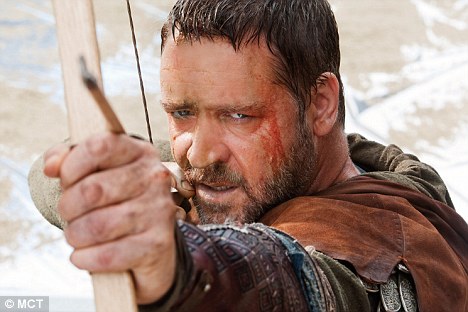
Hot shot: But how realistic is Russell Crowe's portrayal?
Once again, the glib hand of Hollywood has slapped British history in the face.
Indeed, the Daily Mail's reviewer Chris Tookey yesterday wrote: 'Historians will know that it's all tosh.'
But then Robin Hood has always been tosh. From the start, he was pure invention. In the seven centuries he has figured in mythology, Robin Hood has been impossible to pin down on time, place or purpose.
There have been countless incarnations of the outlaw since the medieval poet Geoffrey Chaucer referred to the 'haselwode where joly Robyn played' - one of the earliest written references. But he was a myth even then - a hero of fireside tales and boozy barroom ballads passed on by word of mouth.
He may even have had his origins in the Green Man, a pagan fertility figure dating back to at least the 4th century. Scholars have certainly tried to track the 'real' Robin down in medieval texts and ancient archives. But, despite the odd namecheck, he remains frustratingly elusive.
One Robert Hood was a servant of the Abbot of Cirencester and killed a man in 1216, but he was from Gloucestershire, not Nottingham. Meanwhile, County Durham had a Robin Hod, but he was entirely law-abiding.
Robert of Wetherby was described as an 'outlaw and evil-doer of our land' and was pursued by the Sheriff of Yorkshire in 1225. But he was caught and hanged - unlike the mythical Robin, who died in his bed.
But where did Robin emerge? Well, it wasn't Nottingham. According to 'A Geste of Robyne Hood and his Meiny' - an eight-part ballad in 456 verses, which was the first substantial account of him to appear in printed form - he haunted Barnsdale Forest in South Yorkshire.
Published around 1500, it wove tall tales about Robin, Little John and the Sheriff of Nottingham. It ended with the King coming to the forest in disguise and Robin being royally pardoned.
And the 'geste' - a word meaning adventure or romance - also featured a throwaway line which skewed the legend: 'He did pore men much good.' From this, the idea was derived of an altruistic outlaw stealing from the rich and giving to the poor in the style of an early one-man benefits system.
Just a few years later, Scottish historian John Major took the tale further. In his History Of Great Britain, he wrote of: 'Those most famous robbers Robert Hood and Little John, who lay in wait in the woods, but spoiled of their goods only those who were wealthy.'
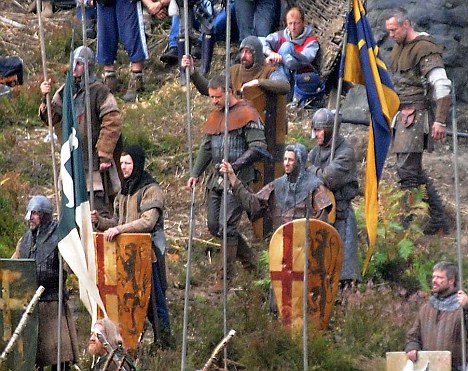
In Russell Crowe's Robin Hood there are no merry men. In fact, there's not much merriment at all
All this is fiction. Certainly there were bandits who lived in forests. But there is no evidence that these medieval hoodies ever shared their ill-gotten gains.
There are, however, a handful of historical figures who may have helped to inspire the myth. The mysterious Hereward the Wake is one possibility. He was an Anglo-Saxon who defied the Normans following William the Conquerer's 1066 invasion.
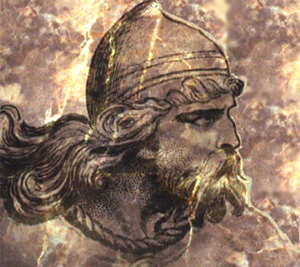
Hereward the Wake
Another possibility was the splendidly named Fulk FitzWarin, who became an outlaw in the Welsh borders in the early 13th century after refusing to accept King John's verdict on a long-standing inheritance dispute.
He was later one of the barons who forced John to sign the Magna Carta, the landmark document limiting his royal powers (and one of the documents which constitute the "unwritten" British constitution).
Or how about Eustace the Monk, who fled to a forest and also took up arms against King John? Eustace's specialty, like Hood's, was donning a disguise.
He would hold up travellers and demand to know how much money they were carrying. Then he searched them and if they were telling the truth they kept it all. Liars lost the lot - a jolly ploy also attributed to Hood.
According to legend, Robin Hood may have had as many as 140 merry men (and one or two merry women). These included Little John, Much the Miller's Son, Will Scarlet, Arthur a Bland, David of Doncaster, Will Stutely, Friar Tuck, Alan-a-Dale and Maid Marian.
A newly-published book, meanwhile, claims one Roger Godberd was the closest England had to a real Hood. Records show that he was leading a bunch of outlaws committing burglaries and murders in Leicestershire, Nottinghamshire and Wiltshire in 1272.
A warrant to seize Godberd attributes to him 'so many and great homicides and robberies that no one could pass through those parts without being taken or spoiled of his goods'.
Amazingly, when Godberd was seized, he wangled himself a royal pardon, blaming his bad behaviour on the civil war that was ravaging the country at the time.
The book's author David Baldwin argues that the sheer number of references to Godberd in contemporary documents indicates that he was both known and feared across much of England.
But there is a major difficulty in pinning the feathered cap on him as the real Hood, for Godberd was up to no good more than 50 years after the reigns of King Richard and King John when most of the Robin Hood tales - including this latest one - are set.
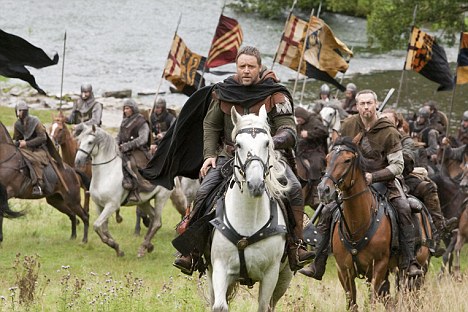
New version: The new Robin Hood is not a tale of cheeky medieval muggings, but of a resistance fighter
Even so, it is possible that Godberd's adventures were conflated with others to make a composite outlaw - which folklore embellished with a heart of gold and an archer's unerring eye. And after that, Robin was reinvented in ways that often reflected not so much his times, but the times of his newest chroniclers.
To the self-confident Victorians, Hood was a prototype of the fair-minded democracy they believed underpinned the British empire.
In the next century, Errol Flynn's 1938 film version tried to reassure a world heading for war that a smile and a swashbuckling air would see off dictators who threatened individual freedoms.
The avuncular Robin of the Fifties' TV series (Richard Greene) was perfect for those upright times. 'Feared by the bad, loved by the good,' as the theme song said. This Hood summed up the spirit of the generation that won the war - or, at least, the way they saw themselves.

Robin Hood's statue in Nottingham
And in Crowe's version, we are being introduced to a Robin Hood for a new millennium. This is not a tale of cheeky medieval muggings, but of a resistance fighter struggling against the oppression and injustice of an over-mighty state.
'The world can always use a hero,' says the preamble to the latest film, which gives a modern relevance to the notion of stealing from the rich to give to the poor.
'What he stole from the rich,' it goes on, 'was a sense of entitlement, the vain illusion of superiority over fellow men. In turn, he endowed the poor of spirit with a sense of hope and the courage to do one's duty in the face of outrageous fortune.'
And if by 'the rich' it means bankers, and if by 'outrageous fortune' it means the debt hanging over us, then the legend of Robin Hood may once again have caught the tenor of the times.
dailymail.co.uk
In the new Robin Hood movie, starring Australian Russell Crowe, who comes from a country in which the year 1910 is considered ancient history, Sherwood Forest is no longer a jolly place inhabited by tight-wearing merry men. There are no merry men at all. Marian isn't a maid but a widow.
And the most famous socialist of English legend doesn't rob from the rich to give to the poor in this new movie. Robin just seems to be too busy fighting.
So who was the REAL Robin Hood? Was he a real person?
He may have been real person in his own right but it's more likely that Robin was based on somebody else.
Could the green-wearing fellow be the outlaw Roger Godberd who led his gang of outlaws on a crime spree in Leicestershire, Nottinghamshire and Wiltshire in 1272?
Or could he have been based on the mysterious Hereward the Wake (1035-1072), the Anglo-Saxon leader involved in resistance to the Norman conquest of England?
Or could he have been Robert Hood, a servant of the Abbot of Cirencester who murdered a man in 1216?
Tony Rennell: What has Hollywood done to Robin Hood?
By Tony Rennell
13th May 2010
Daily Mail
Oh what have they done to Robin Hood? Russell Crowe's version - out in cinemas this week - is an arrow through the heart of ye olde English romantics. There are no merry men. In fact, there's not much merriment at all.
Sullen, unsmiling, smeared with mud and gore - this is a distinctly gritty Robin.
Forget roistering Douglas Fairbanks and Errol Flynn in tights. Crowe's Sherwood is no longer an Eden of sunny glades, but a dark and menacing place. Even Marian is no Maid - but a widow.
And what about robbing the rich to give to the poor - the policy that we were brought up to believe topped Robin's manifesto? Well, that's gone too. This Robin, it seems, is too busy fighting.
Hot shot: But how realistic is Russell Crowe's portrayal?
Once again, the glib hand of Hollywood has slapped British history in the face.
Indeed, the Daily Mail's reviewer Chris Tookey yesterday wrote: 'Historians will know that it's all tosh.'
But then Robin Hood has always been tosh. From the start, he was pure invention. In the seven centuries he has figured in mythology, Robin Hood has been impossible to pin down on time, place or purpose.
There have been countless incarnations of the outlaw since the medieval poet Geoffrey Chaucer referred to the 'haselwode where joly Robyn played' - one of the earliest written references. But he was a myth even then - a hero of fireside tales and boozy barroom ballads passed on by word of mouth.
He may even have had his origins in the Green Man, a pagan fertility figure dating back to at least the 4th century. Scholars have certainly tried to track the 'real' Robin down in medieval texts and ancient archives. But, despite the odd namecheck, he remains frustratingly elusive.
One Robert Hood was a servant of the Abbot of Cirencester and killed a man in 1216, but he was from Gloucestershire, not Nottingham. Meanwhile, County Durham had a Robin Hod, but he was entirely law-abiding.
Robert of Wetherby was described as an 'outlaw and evil-doer of our land' and was pursued by the Sheriff of Yorkshire in 1225. But he was caught and hanged - unlike the mythical Robin, who died in his bed.
But where did Robin emerge? Well, it wasn't Nottingham. According to 'A Geste of Robyne Hood and his Meiny' - an eight-part ballad in 456 verses, which was the first substantial account of him to appear in printed form - he haunted Barnsdale Forest in South Yorkshire.
Published around 1500, it wove tall tales about Robin, Little John and the Sheriff of Nottingham. It ended with the King coming to the forest in disguise and Robin being royally pardoned.
And the 'geste' - a word meaning adventure or romance - also featured a throwaway line which skewed the legend: 'He did pore men much good.' From this, the idea was derived of an altruistic outlaw stealing from the rich and giving to the poor in the style of an early one-man benefits system.
Just a few years later, Scottish historian John Major took the tale further. In his History Of Great Britain, he wrote of: 'Those most famous robbers Robert Hood and Little John, who lay in wait in the woods, but spoiled of their goods only those who were wealthy.'
In Russell Crowe's Robin Hood there are no merry men. In fact, there's not much merriment at all
All this is fiction. Certainly there were bandits who lived in forests. But there is no evidence that these medieval hoodies ever shared their ill-gotten gains.
There are, however, a handful of historical figures who may have helped to inspire the myth. The mysterious Hereward the Wake is one possibility. He was an Anglo-Saxon who defied the Normans following William the Conquerer's 1066 invasion.
Hereward the Wake
Another possibility was the splendidly named Fulk FitzWarin, who became an outlaw in the Welsh borders in the early 13th century after refusing to accept King John's verdict on a long-standing inheritance dispute.
He was later one of the barons who forced John to sign the Magna Carta, the landmark document limiting his royal powers (and one of the documents which constitute the "unwritten" British constitution).
Or how about Eustace the Monk, who fled to a forest and also took up arms against King John? Eustace's specialty, like Hood's, was donning a disguise.
He would hold up travellers and demand to know how much money they were carrying. Then he searched them and if they were telling the truth they kept it all. Liars lost the lot - a jolly ploy also attributed to Hood.
According to legend, Robin Hood may have had as many as 140 merry men (and one or two merry women). These included Little John, Much the Miller's Son, Will Scarlet, Arthur a Bland, David of Doncaster, Will Stutely, Friar Tuck, Alan-a-Dale and Maid Marian.
A newly-published book, meanwhile, claims one Roger Godberd was the closest England had to a real Hood. Records show that he was leading a bunch of outlaws committing burglaries and murders in Leicestershire, Nottinghamshire and Wiltshire in 1272.
A warrant to seize Godberd attributes to him 'so many and great homicides and robberies that no one could pass through those parts without being taken or spoiled of his goods'.
Amazingly, when Godberd was seized, he wangled himself a royal pardon, blaming his bad behaviour on the civil war that was ravaging the country at the time.
The book's author David Baldwin argues that the sheer number of references to Godberd in contemporary documents indicates that he was both known and feared across much of England.
But there is a major difficulty in pinning the feathered cap on him as the real Hood, for Godberd was up to no good more than 50 years after the reigns of King Richard and King John when most of the Robin Hood tales - including this latest one - are set.
New version: The new Robin Hood is not a tale of cheeky medieval muggings, but of a resistance fighter
Even so, it is possible that Godberd's adventures were conflated with others to make a composite outlaw - which folklore embellished with a heart of gold and an archer's unerring eye. And after that, Robin was reinvented in ways that often reflected not so much his times, but the times of his newest chroniclers.
To the self-confident Victorians, Hood was a prototype of the fair-minded democracy they believed underpinned the British empire.
In the next century, Errol Flynn's 1938 film version tried to reassure a world heading for war that a smile and a swashbuckling air would see off dictators who threatened individual freedoms.
The avuncular Robin of the Fifties' TV series (Richard Greene) was perfect for those upright times. 'Feared by the bad, loved by the good,' as the theme song said. This Hood summed up the spirit of the generation that won the war - or, at least, the way they saw themselves.
Robin Hood's statue in Nottingham
And in Crowe's version, we are being introduced to a Robin Hood for a new millennium. This is not a tale of cheeky medieval muggings, but of a resistance fighter struggling against the oppression and injustice of an over-mighty state.
'The world can always use a hero,' says the preamble to the latest film, which gives a modern relevance to the notion of stealing from the rich to give to the poor.
'What he stole from the rich,' it goes on, 'was a sense of entitlement, the vain illusion of superiority over fellow men. In turn, he endowed the poor of spirit with a sense of hope and the courage to do one's duty in the face of outrageous fortune.'
And if by 'the rich' it means bankers, and if by 'outrageous fortune' it means the debt hanging over us, then the legend of Robin Hood may once again have caught the tenor of the times.
dailymail.co.uk
Last edited:


