


The Tarriff Hype.
- Thread starter petros
- Start date
You are using an out of date browser. It may not display this or other websites correctly.
You should upgrade or use an alternative browser.
You should upgrade or use an alternative browser.


Mark Carney's odds of being Time magazine's person of the year surges after European trip: Betting site
Prime minister's odds surged to 19% after overseas jaunt, only trailing NYC Mayor Zohran Mamdani, says Covers.com
Author of the article:Ling Hui
Published Sep 22, 2026 • 2 minute read
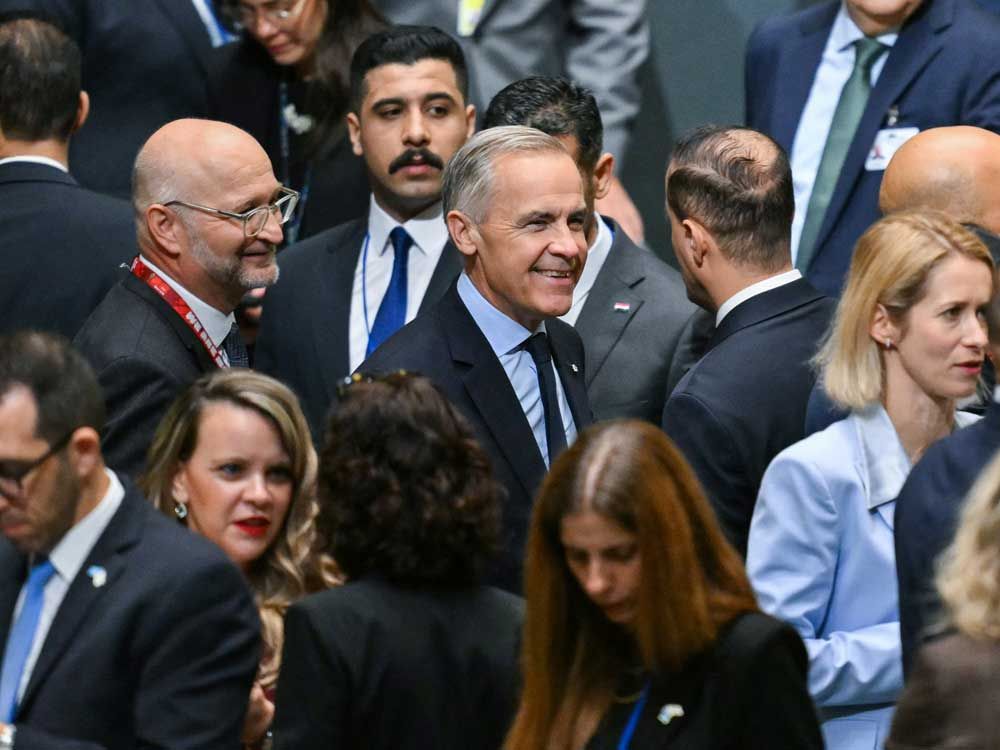
Prime Minister Mark Carney (centre) attends the 81st United Nations General Assembly at the United Nations Headquarters in New York, on Sept. 22, 2026.
Prime Minister Mark Carney (centre) attends the 81st United Nations General Assembly at the United Nations Headquarters in New York, on Sept. 22, 2026. Photo by ANGELA WEISS /AFP via Getty Images
Prime Minister Mark Carney’s chances of being Time magazine’s 2026 Person of the Year got a huge boost thanks to his firm stance during trade talks with U.S. President Donald Trump and his push to strengthen ties with the European Union, according to Covers.com.
The online sports betting platform, which tracked prediction-market odds, said Carney’s is now the second favourite pick for the news magazine’s iconic year-end cover.
Covers said the prime minister’s odds got a boost after Sept. 14 — the eve of his European trip — going from 4% to 19% after his three-day visit, putting him in second place behind New York Mayor Zohran Mamdani, whose odds sit at 27%.
Meanwhile, U.S. President Donald Trump and Pope Leo XIV are both tied at 9%, Covers said in a news release.
Carney’s chances continued to surge following his trip overseas, during which European Union Commission President Ursula von der Leyen offered to make Canada the EU’s first “associate member.”
A day later, the prime minister welcomed the invitation in a speech to the European Parliament in Strasbourg, France, signalling his desire for more cooperation between Canada and Europe amid the nation’s strained ties with the U.S.
PM among leaders featured in magazine top 100 list
Carney is a likely choice for Time, having recently been named by the magazine in its 100 Most Influential People of 2026 list.
In the annual list published in April, European Central Bank president Christine Lagarde referred to Carney’s nickname as the “George Clooney of finance” and hailed him as a “rock-star central-bank governor” who is now “turning heads as a prime minister.”
Carney was among 24 people selected in the leaders category, which included Trump, Mamdani, the Pope, and Israeli Prime Minister Benjamin Netanyahu.
Previous person of the year picks
Last year, Time picked the “Architects of AI” as its person of the year, with one of its covers depicting eight leaders in the tech industry, including OpenAI CEO Sam Altman, Meta CEO Mark Zuckerberg and Tesla CEO Elon Musk, sitting on a steel beam high in the sky.
Every year since 1928, the magazine’s editors select the person of the year by choosing someone or idea who most affected the news for better or for worse.
Trump was given the distinction twice — once in 2016 and again in 2024.

 time.com

 covers.com
 torontosun.com
Prime minister's odds surged to 19% after overseas jaunt, only trailing NYC Mayor Zohran Mamdani, says Covers.com
Author of the article:Ling Hui
Published Sep 22, 2026 • 2 minute read
Prime Minister Mark Carney (centre) attends the 81st United Nations General Assembly at the United Nations Headquarters in New York, on Sept. 22, 2026.
Prime Minister Mark Carney (centre) attends the 81st United Nations General Assembly at the United Nations Headquarters in New York, on Sept. 22, 2026. Photo by ANGELA WEISS /AFP via Getty Images
Prime Minister Mark Carney’s chances of being Time magazine’s 2026 Person of the Year got a huge boost thanks to his firm stance during trade talks with U.S. President Donald Trump and his push to strengthen ties with the European Union, according to Covers.com.
The online sports betting platform, which tracked prediction-market odds, said Carney’s is now the second favourite pick for the news magazine’s iconic year-end cover.
Covers said the prime minister’s odds got a boost after Sept. 14 — the eve of his European trip — going from 4% to 19% after his three-day visit, putting him in second place behind New York Mayor Zohran Mamdani, whose odds sit at 27%.
Meanwhile, U.S. President Donald Trump and Pope Leo XIV are both tied at 9%, Covers said in a news release.
Carney’s chances continued to surge following his trip overseas, during which European Union Commission President Ursula von der Leyen offered to make Canada the EU’s first “associate member.”
A day later, the prime minister welcomed the invitation in a speech to the European Parliament in Strasbourg, France, signalling his desire for more cooperation between Canada and Europe amid the nation’s strained ties with the U.S.
PM among leaders featured in magazine top 100 list
Carney is a likely choice for Time, having recently been named by the magazine in its 100 Most Influential People of 2026 list.
In the annual list published in April, European Central Bank president Christine Lagarde referred to Carney’s nickname as the “George Clooney of finance” and hailed him as a “rock-star central-bank governor” who is now “turning heads as a prime minister.”
Carney was among 24 people selected in the leaders category, which included Trump, Mamdani, the Pope, and Israeli Prime Minister Benjamin Netanyahu.
Previous person of the year picks
Last year, Time picked the “Architects of AI” as its person of the year, with one of its covers depicting eight leaders in the tech industry, including OpenAI CEO Sam Altman, Meta CEO Mark Zuckerberg and Tesla CEO Elon Musk, sitting on a steel beam high in the sky.
Every year since 1928, the magazine’s editors select the person of the year by choosing someone or idea who most affected the news for better or for worse.
Trump was given the distinction twice — once in 2016 and again in 2024.
Mark Carney: The 100 Most Influential People of 2026
Find out why Mark Carney is on this year’s list
time.com
TIME Person of the Year 2026 Odds: Top Value Picks & Market Odds
Maximize returns on Kalshi’s 2026 TIME Person of the Year market. Find value 'Yes' picks for Mamdani and Carney and new high-probability 'No' plays.
Mark Carney's odds of being Time magazine's person of the year surges after European trip: Betting site
Prime Minister Mark Carney's odds of being Time's 2026 Person of the Year got a boost after his EU trip, according to Covers. Read more.

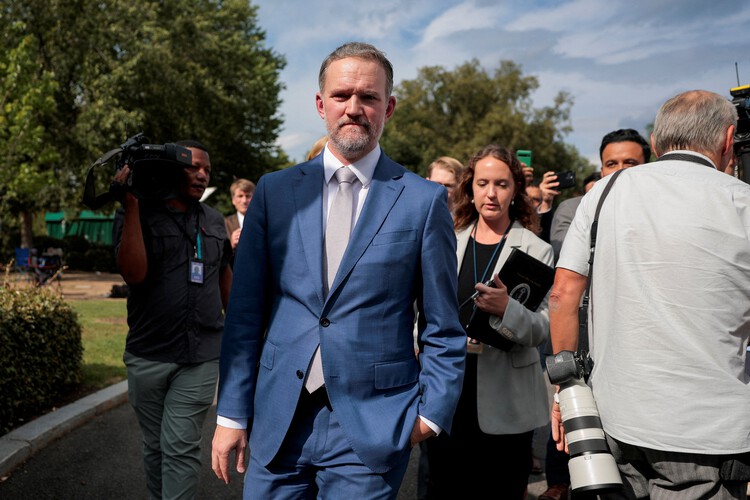
The United States isn’t rushing to strike a deal that would end a costly trade war with Canada, Washington’s point man on negotiations said Friday, noting the U.S. is still receiving the potash and energy it needs from this country?
United States Trade Representative Jamieson Greer was asked during an interview with CNBC about relations with Canada, given the damaging trade war that has escalated in recent weeks after Ottawa walked away from negotiations in August.
“We’re still getting what we need from them in terms of oil, gas, potash, all of these things,” Mr. Greer said. “We’re shipping [agricultural products] back and forth across the border, so there’s still a lot of strong trade between the two countries.” Hmmm…
A Canadian government official said there are continuing communications with Washington, but no formal negotiations right now. The Globe and Mail is not identifying the source because they are not authorized to speak publicly on the matter.
(YouTube & ‘Trump is in trouble in his own country’: Mulcair on how economic policies may impact midterms)
Mr. Greer said there are sporadic conversations with Canada but stopped short of suggesting there are active negotiations taking place to resolve the dispute. “There’s no urgency on our side, I would say.”
 apple.news
Speaking about the curtailed trade talks in August, Mr. Greer said “we gave them a deal. They left.” Reports from the August 2026 breakdown highlight that while U.S. Trade Representative Jamieson Greer had successfully hammered out a framework that President Donald Trump initially celebrated and paused tariffs for, Lutnick and pro-tariff trade adviser Peter Navarro stepped in to fiercely oppose the terms and torpedo that trade agreement. While President Trump initially praised the preliminary framework, Lutnick didn't act as a rogue agent.
apple.news
Speaking about the curtailed trade talks in August, Mr. Greer said “we gave them a deal. They left.” Reports from the August 2026 breakdown highlight that while U.S. Trade Representative Jamieson Greer had successfully hammered out a framework that President Donald Trump initially celebrated and paused tariffs for, Lutnick and pro-tariff trade adviser Peter Navarro stepped in to fiercely oppose the terms and torpedo that trade agreement. While President Trump initially praised the preliminary framework, Lutnick didn't act as a rogue agent.

 www.thestar.com
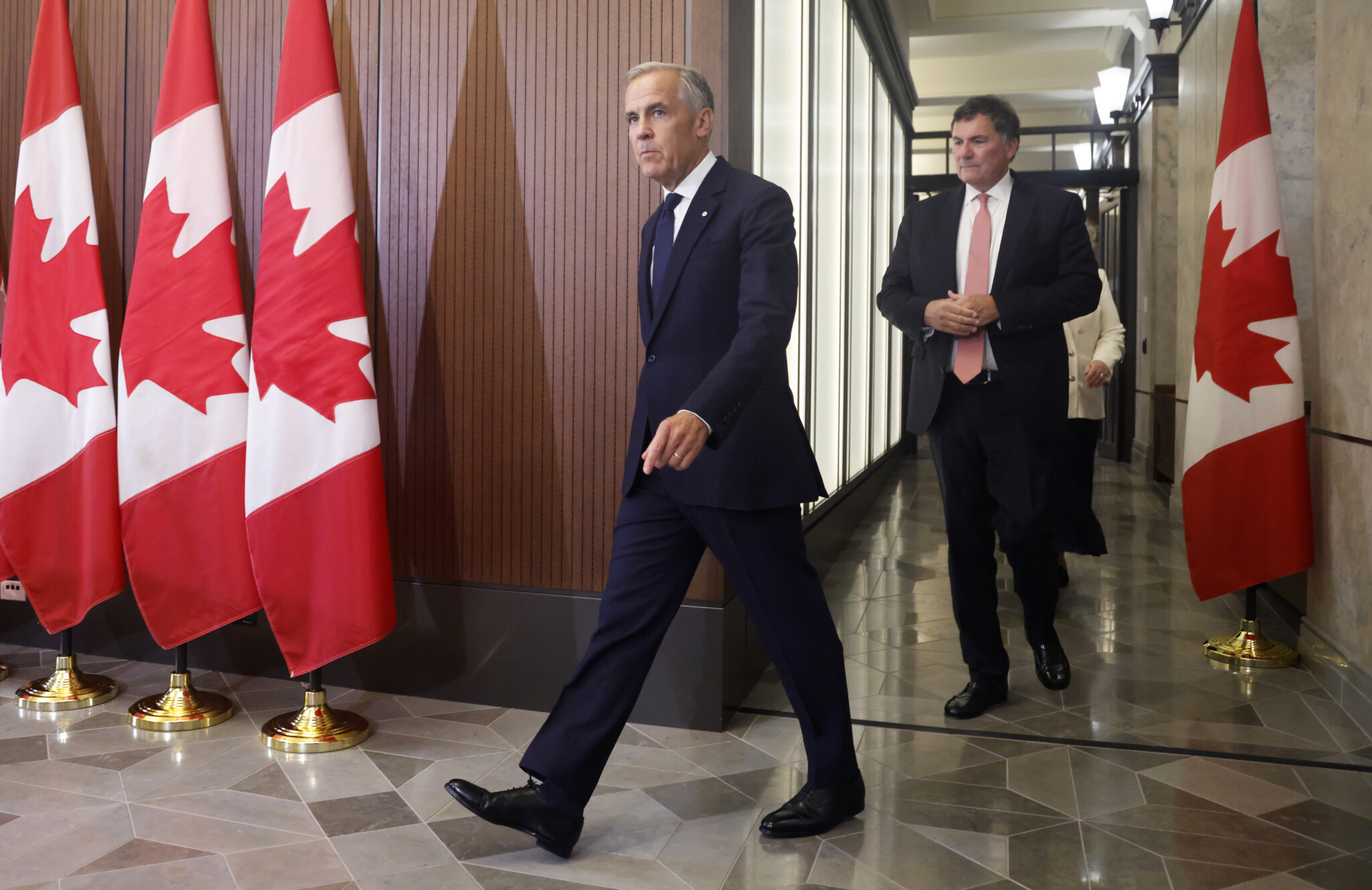
U.S. Commerce Secretary Howard Lutnick’s 11th-hour intervention to derail the U.S.–Canada trade agreement was driven by his own aggressive view that the deal was too soft on Canada, though he acted with the structural backing of the Trump administration.
www.thestar.com
U.S. Commerce Secretary Howard Lutnick’s 11th-hour intervention to derail the U.S.–Canada trade agreement was driven by his own aggressive view that the deal was too soft on Canada, though he acted with the structural backing of the Trump administration.
Lutnick serves as a primary economic disrupter within the administration. He judged Greer's framework as structurally weak for American metal and auto industries. Once Lutnick and Navarro presented their hardline objections, Trump aligned with their aggressive approach. Trump ultimately backed Lutnick's move by ending the negotiations and immediately slapping 50% tariffs on approximately $20 billion to $28 billion of Canadian goods.
 thehub.ca
United States Trade Representative Jamieson Greer was asked during an interview with CNBC about relations with Canada, given the damaging trade war that has escalated in recent weeks after Ottawa walked away from negotiations in August.
“We’re still getting what we need from them in terms of oil, gas, potash, all of these things,” Mr. Greer said. “We’re shipping [agricultural products] back and forth across the border, so there’s still a lot of strong trade between the two countries.” Hmmm…
A Canadian government official said there are continuing communications with Washington, but no formal negotiations right now. The Globe and Mail is not identifying the source because they are not authorized to speak publicly on the matter.
Mr. Greer said there are sporadic conversations with Canada but stopped short of suggesting there are active negotiations taking place to resolve the dispute. “There’s no urgency on our side, I would say.”
U.S. not rushing to strike deal with Canada, Washington’s trade envoy says — The Globe and Mail
Two sides continue to talk, but there are no formal negotiations right now, according to Canadian official
How Howard Lutnick became Donald Trump’s ‘ultimate disrupter’ in Canada’s trade war
Sources have told the Star and other media that Lutnick was a major factor in the collapse of tariff negotiations.
Lutnick serves as a primary economic disrupter within the administration. He judged Greer's framework as structurally weak for American metal and auto industries. Once Lutnick and Navarro presented their hardline objections, Trump aligned with their aggressive approach. Trump ultimately backed Lutnick's move by ending the negotiations and immediately slapping 50% tariffs on approximately $20 billion to $28 billion of Canadian goods.
Lutnick’s late demands sank Canada-U.S. trade deal that analysts say beat the alternative
A Canada-U.S. trade deal was reportedly ready to go—until Lutnick's late demands blew it up. Analysts say Canada just lost a better deal than the alternative.
thehub.ca
With just hours to go before import bans on certain Canadian goods were set to take effect, U.S. President Donald Trump said Monday he thinks he can make a trade deal with Canada in the coming weeks.
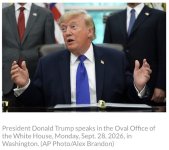
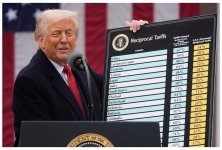
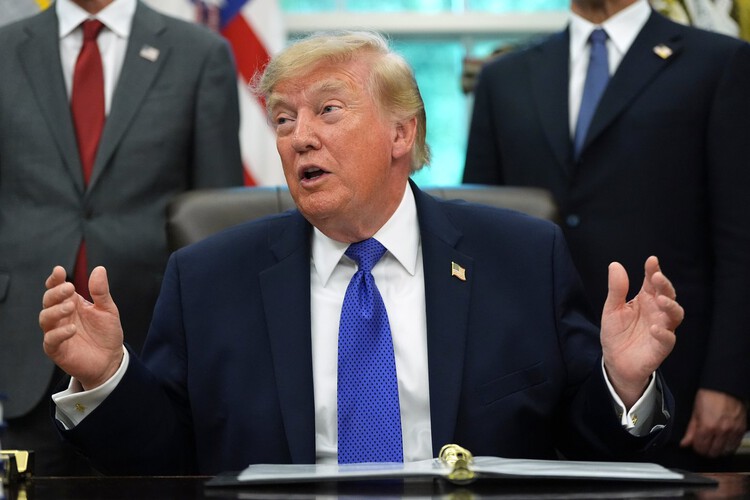
Speaking to reporters in the Oval Office, Trump said he thinks the Canadian side will contact him in the next three or four weeks and the United States will "win everything?"
 apple.news
International trade experts and legal analysts state that U.S. President Donald Trump's import bans and steep tariffs on Canadian goods effectively override or bypass obligations under the Canada-United States-Mexico Agreement (CUSMA), though the administration justifies them through domestic statutory authority.
apple.news
International trade experts and legal analysts state that U.S. President Donald Trump's import bans and steep tariffs on Canadian goods effectively override or bypass obligations under the Canada-United States-Mexico Agreement (CUSMA), though the administration justifies them through domestic statutory authority.

 www.bbc.com
“They're gonna come in and they're gonna say, 'Sir, we are sorry,'" Trump said. "They've treated the United States very, very badly. I think a deal will be made but it's gonna be fair?" Trump's bans — which mainly affect some alcoholic drinks, dairy byproducts and motorcycles — are set to begin at 12:01 a.m.
www.bbc.com
“They're gonna come in and they're gonna say, 'Sir, we are sorry,'" Trump said. "They've treated the United States very, very badly. I think a deal will be made but it's gonna be fair?" Trump's bans — which mainly affect some alcoholic drinks, dairy byproducts and motorcycles — are set to begin at 12:01 a.m.
While the trade restrictions on Canadian goods are unlikely to significantly affect Canadian economic growth in the near term, they represent the latest fracture in Ottawa's relationship with the Trump administration. Trump on Monday repeated his inaccurate claims about Canadian agriculture tariffs, as well his more recent allegations about Canada's immigration system letting people in unchecked, etc…
Peter Navarro, Trump's senior adviser on trade and manufacturing, told reporters that Canadians were "the most difficult and arrogant of the traders." He claimed Ottawa was "getting in bed with" Beijing — despite the fact that Trump hosted Chinese President Xi Jinping in Washington last week.
Over the past 18 months, the Trump administration has tried to remake the global trading system in an effort to isolate Beijing and force trade partners to trim ties with China.
But when U.S. President Donald Trump met with Chinese President Xi Jinping last week in Washington, it was not as the leader of a geopolitical bloc marching in lockstep to confront Chinese industrial might.
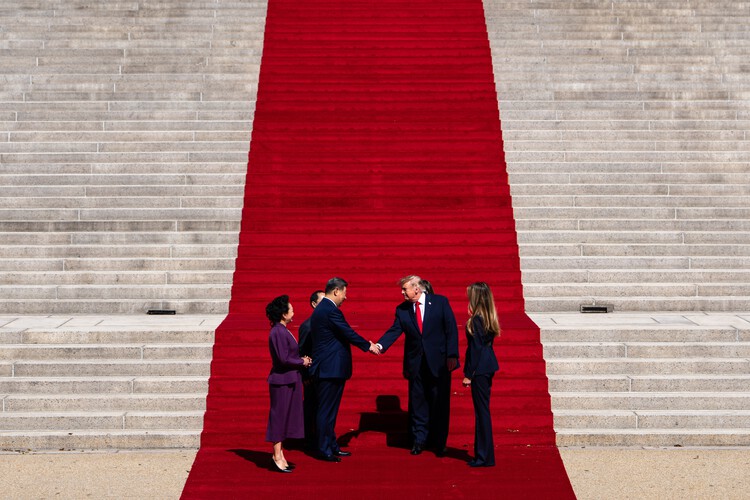 apple.news
United States Trade Representative Jamieson Greer said last week that "the reality is President Trump is comfortable where we are on Canada.” Greer said the Canadians "call us now and then" and there are conversations about potential deals.
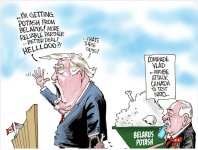
Trade talks with the United States fell apart in late August and both countries have claimed the other added last-minute changes to the deal.
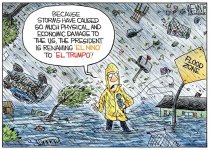
 apple.news
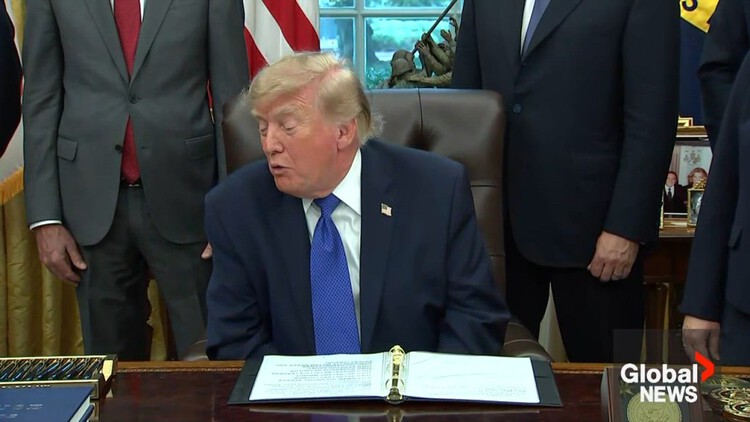
Speaking to reporters in the Oval Office, Trump said he thinks the Canadian side will contact him in the next three or four weeks and the United States will "win everything?"
Trump says he expects Canada trade deal within weeks as import ban looms — The Canadian Press
Just hours before import bans on certain Canadian goods were set to take effect,
US to ban imports of some Canadian alcohol, dairy goods and motorbikes
It is the latest strike in a long trade war, and comes after Canadian counter-tariffs on US goods come into force.
www.bbc.com
Peter Navarro, Trump's senior adviser on trade and manufacturing, told reporters that Canadians were "the most difficult and arrogant of the traders." He claimed Ottawa was "getting in bed with" Beijing — despite the fact that Trump hosted Chinese President Xi Jinping in Washington last week.
Over the past 18 months, the Trump administration has tried to remake the global trading system in an effort to isolate Beijing and force trade partners to trim ties with China.
But when U.S. President Donald Trump met with Chinese President Xi Jinping last week in Washington, it was not as the leader of a geopolitical bloc marching in lockstep to confront Chinese industrial might.
Trump’s heavy-handed approach to China leaves trade partners with stark choice — The Globe and Mail
While it was all pomp and smiles during a state visit to Washington, behind the scenes the battle lines are being drawn in a war for trade dominance
United States Trade Representative Jamieson Greer said last week that "the reality is President Trump is comfortable where we are on Canada.” Greer said the Canadians "call us now and then" and there are conversations about potential deals.
Trade talks with the United States fell apart in late August and both countries have claimed the other added last-minute changes to the deal.
'We’re going to win everything, we even have Lake Ontario': Trump on Canada trade war — Global News
During an announcement in which U.S. President Donald Trump boasted about a $15-billion plan for Mesabi Metallics to build the "largest American steel plant of all-time," Trump once again took a shot at Canadian leadership amid the trade war between the two countries. “We’re going to win...
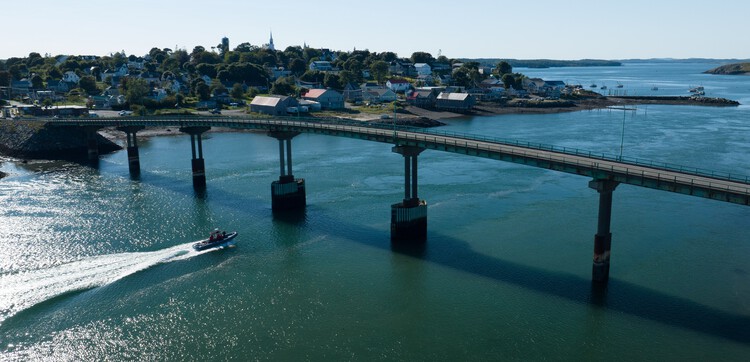
This supply truck was allowed to operate unimpeded during the COVID-19 pandemic as well as in the weeks following the terrorist attacks of Sept. 11, 2001, that snarled border traffic. The island is accessible by bridge from the Maine town of Lubec.
Campobello’s mayor, Harvey Matthews said he has remained friendly and positive about the United States during this trade dispute and is puzzled why these restrictions are affecting a truck sealed with a customs tag that is merely delivering goods to Canadians.
“Mark Carney probably has no clue where Campobello is. It’s not like it’s gonna make that big of a deal in these trade talks.” The mayor said his neighbours in Maine are not to blame for this. It’s “one guy,” he said, referring to Mr. Trump.
U.S. Customs on Tuesday blocked a truck from New Brunswick that carries supplies through Maine to the Canadian island – a land journey of about 75 kilometres, according to Matthews.
The supply truck was turned back at the border crossing between St. Stephen, N.B., and Calais, Me., and instead travelled by a series of two ferries to reach Campobello, home to about 950 people. The second ferry is only seasonal and expected to shut down after Thanksgiving.
 apple.news
Campobello’s mayor, Harvey Matthews said he has remained friendly and positive about the United States during this trade dispute and is puzzled why these restrictions are affecting a truck sealed with a customs tag that is merely delivering goods to Canadians.
“Mark Carney probably has no clue where Campobello is. It’s not like it’s gonna make that big of a deal in these trade talks.” The mayor said his neighbours in Maine are not to blame for this. It’s “one guy,” he said, referring to Mr. Trump.
U.S. Customs on Tuesday blocked a truck from New Brunswick that carries supplies through Maine to the Canadian island – a land journey of about 75 kilometres, according to Matthews.
The supply truck was turned back at the border crossing between St. Stephen, N.B., and Calais, Me., and instead travelled by a series of two ferries to reach Campobello, home to about 950 people. The second ferry is only seasonal and expected to shut down after Thanksgiving.
Truck carrying supplies to isolated N.B. island blocked by U.S. customs — The Globe and Mail
Vehicle turned back at border crossing as U.S. bans of Canadian alcohol and other goods take effect
Prime Minister Mark Carney said Tuesday he has no plans to apply new trade pressure on the U.S. as Americans prepare for crucial midterm elections that could end Republican control of Congress. Speaking with reporters at a news conference in Vancouver on Tuesday, Carney said Canada has no intention of escalating the trade war, although he noted he never rules anything out.

"Our timing isn't dictated by any specific aspect of the U.S. calendar," Carney said. "The reality is the cost of living is very high in the United States and there's things Canada can do to help lower that cost of living."
“When Carney was asked about Trump's recent claim that Canada will apologize to his administration in order to secure a deal in the next few weeks, the prime minister laughed. Carney said he would take note of Trump's and Navarro's comments but would not respond to either. "It continues to be the case that Canada stands ready to negotiate in good faith," Carney said.

Canada-U.S. Trade Minister Dominic LeBlanc directly dismissed Trump's claim. "I'm not thinking the government of Canada is going to apologize for standing up for Canadian workers, Canadian businesses, defending our economy," he said Tuesday, answering questions from reporters at an unrelated announcement in New Brunswick.
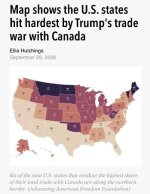
LeBlanc said the U.S. government "decided to apply a series of tariffs that violated the trade agreement" Trump's first administration signed just six years ago. He said Canada will do what it must to support and protect its workers and businesses.

Carney says he has no plans to apply further trade pressure as U.S. midterms approach — The Canadian Press
Prime Minister Mark Carney said Tuesday he has no plans to apply new trade
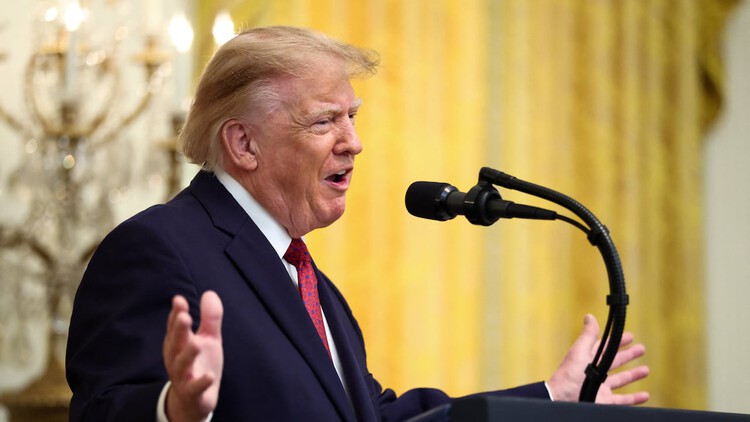
U.S. President Donald Trump's war of words with Canada continued Wednesday as he veered off a prepared script  at an event marking Hispanic Heritage Month in the States to chastise Canadian (Snow Mexican) leaders for being what he called "very bad."
Speaking at the White House, Trump said the U.S. was "stupidly run" before he got the job because past leaders allowed automakers to move assembly plants offshore, including to Canada.
(Canada has had a large-scale domestic auto manufacturing industry since 1904, developing at roughly the same time as the one in the U.S. )
)
Trump said past presidents "allowed other countries to make our cars and sell them to us," because nobody but Americans made cars before 1965 and he is ending that now with his high-tariff regime. The Trump administration has repeatedly made it clear that it wants to hollow out Canada's auto industry. "Canada has taken advantage of us for so many years. The worst of any country," Trump said.
 apple.news
"I love the
apple.news
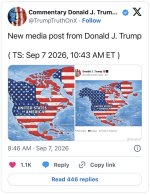
"I love the Mexican Canadian people, but the leaders have taken advantage of our stupid leadership for many, many years. They felt emboldened…They act like they're totally innocent. They're not. They were very bad. But now they're being taught a little lesson." One of those "lessons," as the president described it, was his unilateral move to rename Lake Ontario in the U.S.
Addressing a largely Hispanic audience, Trump said his move to rename the Gulf of Mexico to the Gulf of America was "even cooler."
"There could be a few people in the room that don't love that one," he said.
In an interview with Fox Business, U.S. Trade Representative Jamieson Greer said the administration is irked by Canadian liquor restrictions and limits on American businesses competing for provincial procurement contracts — restrictions enacted only after Trump slapped coercive unilateral tariffs on Canadian goods last year. Greer said the import ban is retribution for that lack of capitulation.
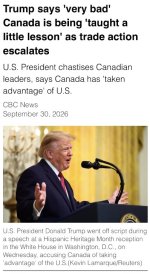
at an event marking Hispanic Heritage Month in the States to chastise Canadian (Snow Mexican) leaders for being what he called "very bad."Speaking at the White House, Trump said the U.S. was "stupidly run" before he got the job because past leaders allowed automakers to move assembly plants offshore, including to Canada.
(Canada has had a large-scale domestic auto manufacturing industry since 1904, developing at roughly the same time as the one in the U.S.
)Trump said past presidents "allowed other countries to make our cars and sell them to us," because nobody but Americans made cars before 1965 and he is ending that now with his high-tariff regime. The Trump administration has repeatedly made it clear that it wants to hollow out Canada's auto industry. "Canada has taken advantage of us for so many years. The worst of any country," Trump said.
Trump says 'very bad' Canada is being 'taught a little lesson' as trade action escalates — CBC News
U.S. President Donald Trump's war of words with Canada continued Wednesday as he veered off a prepared script at an event marking Hispanic Heritage Month in the States to chastise Canadian leaders for being what he called "very bad."
Addressing a largely Hispanic audience, Trump said his move to rename the Gulf of Mexico to the Gulf of America was "even cooler."
"There could be a few people in the room that don't love that one," he said.
In an interview with Fox Business, U.S. Trade Representative Jamieson Greer said the administration is irked by Canadian liquor restrictions and limits on American businesses competing for provincial procurement contracts — restrictions enacted only after Trump slapped coercive unilateral tariffs on Canadian goods last year. Greer said the import ban is retribution for that lack of capitulation.

Canada has had a large scale domestic auto industry since 1904 . How and why is that ? Tariffs maybe .U.S. President Donald Trump's war of words with Canada continued Wednesday as he veered off a prepared script
Speaking at the White House, Trump said the U.S. was "stupidly run" before he got the job because past leaders allowed automakers to move assembly plants offshore, including to Canada.
(Canada has had a large-scale domestic auto manufacturing industry since 1904, developing at roughly the same time as the one in the U.S.
Trump said past presidents "allowed other countries to make our cars and sell them to us," because nobody but Americans made cars before 1965 and he is ending that now with his high-tariff regime. The Trump administration has repeatedly made it clear that it wants to hollow out Canada's auto industry. "Canada has taken advantage of us for so many years. The worst of any country," Trump said.
"I love theTrump says 'very bad' Canada is being 'taught a little lesson' as trade action escalates — CBC News
U.S. President Donald Trump's war of words with Canada continued Wednesday as he veered off a prepared script at an event marking Hispanic Heritage Month in the States to chastise Canadian leaders for being what he called "very bad."MexicanCanadian people, but the leaders have taken advantage of our stupid leadership for many, many years. They felt emboldened…They act like they're totally innocent. They're not. They were very bad. But now they're being taught a little lesson." One of those "lessons," as the president described it, was his unilateral move to rename Lake Ontario in the U.S.
View attachment 35832
Addressing a largely Hispanic audience, Trump said his move to rename the Gulf of Mexico to the Gulf of America was "even cooler."
"There could be a few people in the room that don't love that one," he said.
In an interview with Fox Business, U.S. Trade Representative Jamieson Greer said the administration is irked by Canadian liquor restrictions and limits on American businesses competing for provincial procurement contracts — restrictions enacted only after Trump slapped coercive unilateral tariffs on Canadian goods last year. Greer said the import ban is retribution for that lack of capitulation.
View attachment 35833
Very different time before an integrated Automotive supply chain and assembly situation involving three nations for the North American market, but I hear what you’re saying. 122 years ago.Canada has had a large scale domestic auto industry since 1904 . How and why is that ? Tariffs maybe .
But hasn’t that integraded supply chain been a political tug of war for that entire time?Very different time before an integrated Automotive supply chain and assembly situation involving three nations for the North American market, but I hear what you’re saying. 122 years ago.
But isn’t it a thing that exists, and has now for 60+ years, but more interwound since NAFTA 1.0 32 years ago and apparently more so every year? The Hydra exists and chopping off its tentacles now to try and untangle it would probably kill it in the short term…adding billions in expenses for the auto manufacturers. I’ve heard roughly an increase on average of $6000 per vehicle for these tariffs which is just gonna give the competitive advantage to Asian and European auto manufacturers which I’m assuming isn’t Trump’s intention.But hasn’t that integraded supply chain been a political tug of war for that entire time?
Lando Calrissian: “That wasn’t part of the deal!”
Darth Vader: “I am altering the deal. Pray I don’t alter it any further.”
Lando: “This deal is getting worse all the time!”
Raymond J. de Souza: Trump is a gangster dressed up like a president — National Post
The Gordie Howe Bridge dispute is his latest Mafia-style shakedown
Raymond J. de Souza: Trump finds gangsterism doesn't always end well — National Post
It's a foolish policy — especially when it comes to foreign affairs — if the other fellow is stronger, or at least strong enough to inflict damage
You know, this is a very interesting question and it forced me to find the right phrasing by finding the background find the answer to that, so on that note, I’m assuming that you knew the answer all the way along, right?Canada has had a large scale domestic auto industry since 1904 . How and why is that ? Tariffs maybe .
I smell what you’re cooking now. The McKinley Tariff was designed to protect American industries and coerce Canada into political annexation by the United States. Framed by Congressman William McKinley, the act became law on October 1, 1890, and raised the average duty on imports to nearly 50 percent (sounds familiar) without making exceptions for Canadian products. It lasted until 1894, when Democrats replaced it with the lower Wilson-Gorman Tariff Act after a protectionist backlash.But hasn’t that integraded supply chain been a political tug of war for that entire time?

McKinley Tariff - Wikipedia
Officially, the U.S. Republican platform sought to shield domestic workers and companies from foreign competition (again, sounds familiar). Unofficially, U.S. policymakers like McKinley and Secretary of State James G. Blaine used it as an economic weapon. Knowing Canada was deeply reliant on the U.S. market, they intentionally denied Canada any trade exemptions. They openly hoped that severe economic starvation would force Canadians to abandon British ties and accept annexation into the United States, which in a modern context again sounds very familiar.
So Trumps trying to copy the playbook from 140-ish years ago, but the times have changed, and it didn’t work back then anyway, and that’s before an integrated supply chain in manufacturing like we have now specifically for the last three decades.
So what was Carney’s intention when he walked away from an agreement ? Why haven’t we made any progress after a year and half of our saviour global banker running the show ?But isn’t it a thing that exists, and has now for 60+ years, but more interwound since NAFTA 1.0 32 years ago and apparently more so every year? The Hydra exists and chopping off its tentacles now to try and untangle it would probably kill it in the short term…adding billions in expenses for the auto manufacturers. I’ve heard roughly an increase on average of $6000 per vehicle for these tariffs which is just gonna give the competitive advantage to Asian and European auto manufacturers which I’m assuming isn’t Trump’s intention.
But that was only the start of what eventually became the auto pact . We are always in a trade dispute with America in one form or another , and somehow entrepreneurs on both sides of the border managed to trade , as they still are .You know, this is a very interesting question and it forced me to find the right phrasing by finding the background find the answer to that, so on that note, I’m assuming that you knew the answer all the way along, right?
I smell what you’re cooking now. The McKinley Tariff was designed to protect American industries and coerce Canada into political annexation by the United States. Framed by Congressman William McKinley, the act became law on October 1, 1890, and raised the average duty on imports to nearly 50 percent (sounds familiar) without making exceptions for Canadian products. It lasted until 1894, when Democrats replaced it with the lower Wilson-Gorman Tariff Act after a protectionist backlash.
While the McKinley Tariff itself focused heavily on agricultural and raw material disputes (like timber and fisheries), the broader era of aggressive cross-border trade restrictions it reinforced became the catalyst for the birth of the Canadian automotive industry.McKinley Tariff - Wikipedia
en.wikipedia.org
Officially, the U.S. Republican platform sought to shield domestic workers and companies from foreign competition (again, sounds familiar). Unofficially, U.S. policymakers like McKinley and Secretary of State James G. Blaine used it as an economic weapon. Knowing Canada was deeply reliant on the U.S. market, they intentionally denied Canada any trade exemptions. They openly hoped that severe economic starvation would force Canadians to abandon British ties and accept annexation into the United States, which in a modern context again sounds very familiar.
So Trumps trying to copy the playbook from 140-ish years ago, but the times have changed, and it didn’t work back then anyway, and that’s before an integrated supply chain in manufacturing like we have now specifically for the last three decades.
Trudeau 1 gave us the metric system to facilitate trade diversification as he was in the midst of a trade dispute . The current situation is nothing new except Trump and our pathetic PM .
Nothing started until the last day of the deadline on Canada Day 2026 for all intents & purposes…re negotiation, or lack there of.So what was Carney’s intention when he walked away from an agreement ? Why haven’t we made any progress after a year and half of our saviour global banker running the show ?
The dreams of annexing Canada go back to these initial tariffs and McKinley, so the playbook isn’t that different, auto-pact or not.But that was only the start of what eventually became the auto pact . We are always in a trade dispute with America in one form or another , and somehow entrepreneurs on both sides of the border managed to trade , as they still are .
As much of a pain in the arse as that was in the 70s (I was in elementary school at the time and they didn’t know if the metric system would stick, so we were being taught everything in metric and imperial side-by-side for the next several years), but it did bring Canada into the modern era leaving only three countries on the planet still using the imperial system to the best of my knowledge (Liberia and Myanmar are the two of three that haven’t landed a man on the moonTrudeau 1 gave us the metric system to facilitate trade diversification as he was in the midst of a trade dispute . The current situation is nothing new except Trump and our pathetic PM .
 ).
).I concur with your assessment of the situation.
FUnny thing about this. We sell logs by the cubic meter, but buy lumber by the board foot. Our cars are built in metric, but tires sizes are imperial. We are almost 50 years into being metric, but I still have to drag two sets of tools around to fix one piece of equipment.Nothing started until the last day of the deadline on Canada Day 2026 for all intents & purposes…re negotiation, or lack there of.
The dreams of annexing Canada go back to these initial tariffs and McKinley, so the playbook isn’t that different, auto-pact or not.
As much of a pain in the arse as that was in the 70s (I was in elementary school at the time and they didn’t know if the metric system would stick, so we were being taught everything in metric and imperial side-by-side for the next several years), but it did bring Canada into the modern era leaving only three countries on the planet still using the imperial system to the best of my knowledge (Liberia and Myanmar are the two of three that haven’t landed a man on the moon
I concur with your assessment of the situation.
Yep….true, & out here on the prairies overpass bridges are costly getting hit by tall equipment loads as truckers are coming up on them at 60 mile an hourFUnny thing about this. We sell logs by the cubic meter, but buy lumber by the board foot. Our cars are built in metric, but tires sizes are imperial. We are almost 50 years into being metric, but I still have to drag two sets of tools around to fix one piece of equipment.
trying to mentally convert metric to imperial.I have a Jamaican friend who really doesn’t think in imperial like most Canadians still do half the time, depending on what they’re measuring and imperial sounds like gibberish to him (he’s an exception to the Canadian rule of mixed confusion measures). Have you tried to purchase a metric tape measure recently in Canada?
…& half a century later, we’re still stuck with two measurement systems, one official and one unofficial, but very real. Yes there are only three countries on the planet that still use the imperial system as their official measuring system…but one of them is Canada‘s largest trading partner and the only one that we’re physically connected to.As much of a pain in the arse as that was in the 70s (I was in elementary school at the time and they didn’t know if the metric system would stick, so we were being taught everything in metric and imperial side-by-side for the next several years)…
I’m in commercial international shipping, of products made in the US for the Canadian market and built to Canadian standards, with documentation for import into Canada. About 1/2 the American manufacturers use metric for these documents, and about half don’t. If I’m setting up a border crossing for a mixed load of RV’s with one of the units being from Forest River (only uses Imperial) and the other being Keystone (uses Metric), and CBSA allows one measurement system per load…do I convert the metric into imperial so they’re both the same? Or do I convert the imperial into metric so they’re both the same?
In all honesty, it depends on my mood because I think in both systems. Somebody older than me by a decade would convert everything into imperial, and somebody younger than me by a decade would convert everything into metric. I totally get where you’re coming from.
My brother maintains that since the UK went metric there is no longer an imperial gallon (4.5 l.), only the US gallon, oddly non-imperial (3.8 l.), that remains.
Ironically, the imperial gallon remains in Canadian legislation (the metric version of it) all over the place when it comes to fuel imports and exports and interjurisdictional taxation like your own provincial maximum size restrictions to an aftermarket non-OEM slip tank in the box of your truck (forget the farm tanks in vehicles that are not supposed to leave their province) if you travel across more than one jurisdiction be that province to province, internationally, etc…My brother maintains that since the UK went metric there is no longer an imperial gallon (4.5 l.), only the US gallon, oddly non-imperial (3.8 l.), that remains.
(Saddle-tanks on a highway tractor are considered OEM, regardless of whether they are or not making them exempt to this legislation above)