


Republican senator warns Carney: Closer ties to EU hurts chance of trade deal with U.S. — CBC News
A long-serving Republican senator from a border state is warning Prime Minister Mark Carney against strengthening Canada's economic and political ties to the European Union.
Carney heads to Europe aiming to build 'unique alliance' with EU — Global News
Prime Minister Mark Carney is en route to France with the goal of forging a "unique alliance" with the European Union (EU). David Akin explains what that could mean for Canada, and how it appears the feeling is mutual for the EU.
Those dozen governments’ officials mentioned everything from “frictionless” trade in goods and services to allowing Canadians to work in Europe without a visa — and, presumably, vice versa. You might reasonably call such an agreement “associate membership,” though that’s not a category that currently exists. Helpfully for the Liberals, it could mean anything (or nothing?).
Chris Selley: Carney's EU cuteness is an unwelcome return to Justin Trudeau's playbook — National Post
If Iceland doesn't want into the EU, there's no reason to believe Canadians would support it
Ben Woodfinden: The EU is an economic disaster. What exactly is Mark Carney after? — National Post
Canada doesn't need to change its status to trade more with Europe

Republican Sen. Susan Collins of Maine — facing a re-election battle in November's midterms in a state highly dependent on cross-border trade — says it's unfortunate that Canada is turning toward the EU in response to U.S. President Donald Trump's tariffs. "That doesn't help rebuild the good relationship that we once had and that I want us to have again," Collins told CBC News correspondent Katie Simpson at the U.S. Capitol on Wednesday.

Collins's comments come amid growing signs of unease among some Republicans in the U.S. Congress over Trump's trade tactics toward Canada, particularly as the Nov. 3 midterm elections grow nearer. The Republicans hold narrow majorities in both the U.S. House of Representatives and the Senate and stand to lose control of Congress if the Democrats can flip a handful of districts or states, and the Senate is currently viewed as a tight toss-up or slight lean away from a Republican majority depending on the forecast.

It used to be that the Democrats were the tariff/protectionist party, & the Republicans where the open for business party, but shit switches eventually like with Democrats and Jim Crow laws…& then trying to point the finger at the Republicans over those decades later, etc…

 enette Wilford
![limited-prestocards[1].jpg](https://forums.canadiancontent.net/data/attachments/33/33949-5ef5802f1cb09f6e5702081ab6a0f829.jpg "limited-prestocards[1].jpg")





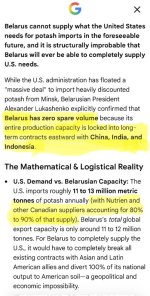
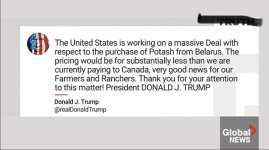
 “Even if we wanted to supply [potash] to other, Western markets, we simply do not have those volumes — everything is contracted,” a Monday press release from his office quoted him as saying.
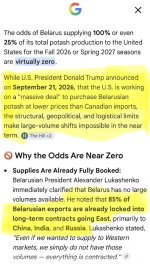

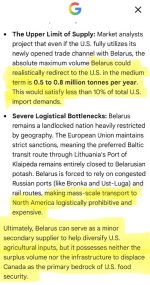
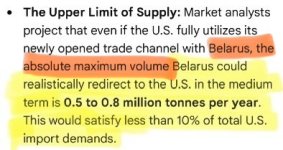
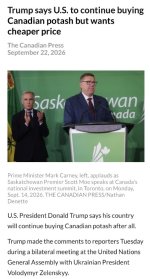
 The US is still receiving potash exports from Russia, but the overwhelming majority of supply comes from nearby Canada.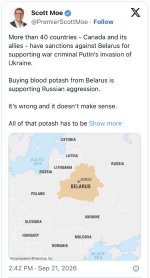


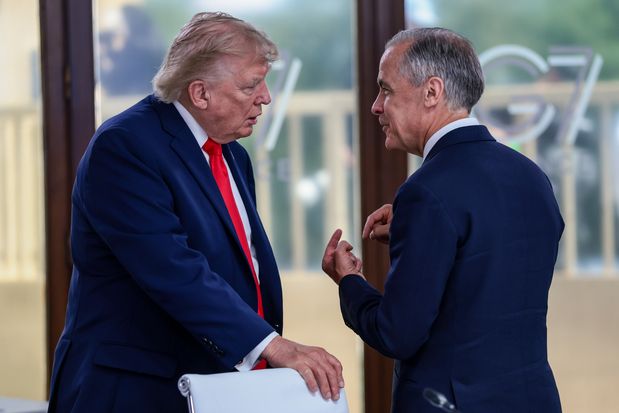
![otttrumpaug30_304929837-2[1].jpg](https://forums.canadiancontent.net/data/attachments/34/34022-99e193eb1833bb7db5d7d53b8c71b4e0.jpg "otttrumpaug30_304929837-2[1].jpg")
