Kelly McParland: How decades of Liberal indifference created Danielle Smith

Ron in Regina

"Voice of the West" Party
Apr 9, 2008
30,865
11,259
113
Regina, Saskatchewan
Rapidly changing global events make clear that Canadians are now paying a steep price for the lost decade of economic growth under the government of former prime minister Justin Trudeau.

Where the previous Liberal government should have focused on making Canada an energy superpower by expanding our energy infrastructure, given our vast oil and natural gas resources, it instead downplayed them, using the ridiculous argument that the age of fossil fuels was ending.

Now we have to play catch-up on selling our oil to the world instead of selling almost all of it at a huge discount to the U.S., currently our only major customer, where U.S. President Donald Trump just took over Venezuela, giving the Americans access to the world’s largest oil reserves.

Prime Minister Mark Carney said Canadian oil will still be able to compete globally because it’s cleaner, less expensive and lower risk compared to Venezuela, which makes “Canadian oil competitive for the medium and long term.” Let’s hope so.
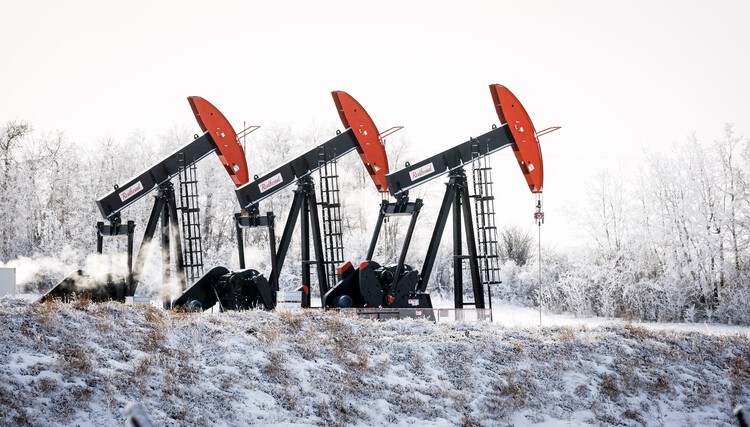
At least Carney, unlike Trudeau, seems to understands that fossil fuels aren’t going to disappear from the global economy anytime soon. But having recognized that, the problem is it’s going to take years to build the energy infrastructure for Canada to become globally competitive in oil.

That is if it ever gets built in the first place because of the perpetual opposition to pipelines by the B.C. and Quebec governments, along with some, although definitely not all, Indigenous leaders.
The potential for increasing Venezuelan exports rattled markets after U.S. forces captured President Nicolás Maduro and his wife in a military raid on Saturday. Mr. Trump asserted that “we’re in charge” of the country and would bring in U.S. oil companies to take over energy infrastructure that has been underfunded and mismanaged for years.

Both countries have massive reserves of heavy crude oil, and Canada’s exports to the U.S. have surged as Venezuela’s have dwindled under sanctions. The prospect of stiffer competition injected new uncertainty into the Canadian oil patch, said Menno Hulshof, analyst at TD Cowen.
 

petros

The Central Scrutinizer
Nov 21, 2008
119,437
14,686
113
Low Earth Orbit
Ok. Will it be a problem for China? Or India? Or others? Venezuela has millions of barrels of oil loaded on tankers and in storage tanks that it has been unable to ship due to a U.S. blockade on exports imposed by U.S. President Donald Trump since mid-December. The U.S. blockade was part of rising U.S. pressure on the government of Venezuelan President Nicolas Maduro that culminated in U.S. forces capturing him at the weekend.

A deal to sell the stuck crude to U.S. refiners in the United States would redirect them from China, which has been Venezuela's top buyer in the last decade.🤔
US President Donald Trump has said Venezuela "will be turning over" up to 50m barrels of oil to the US, after a surprise military operation that ‘removed’ President Nicolás Maduro from power.

The oil will be sold at its market price, Trump posted on social media, ading that the money would be controlled by himself and used to benefit the people of Venezuela and the US.

His comments come after he said the US oil industry would be "up and running" in Venezuela within 18 months and that he expected huge investments to pour into the country

Analysts previously told the BBC it could take tens of billions of dollars, and potentially a decade, to restore Venezuela's former output.

Trump posted on Truth Social on Tuesday: "I am pleased to announce that the Interim Authorities in Venezuela will be turning over between 30 and 50 MILLION Barrels of High Quality, Sanctioned Oil, to the United States of America.
While justifying the ‘seizure’ of Maduro from Caracas, Trump also claimed that Venezuela "unilaterally seized and stole American oil". BBC Verify's Ben Chu said the claim Venezuela has "stolen" American oil is too simplistic, as experts said the oil itself was never actually owned by anyone except Venezuela.
Oil futures are standardized, legally binding agreements to buy or sell a specific quantity and quality of crude oil at a predetermined price on a specified future date. These contracts are primarily used by commercial entities for hedging against price volatility and by traders for speculation.

Key Mechanics
Standardized Contracts: Futures contracts have uniform terms regarding the quantity (typically 1,000 barrels), quality (e.g., West Texas Intermediate (WTI) or Brent Crude), and delivery date/location. This standardization facilitates trading on regulated exchanges like the New York Mercantile Exchange (NYMEX) and the Intercontinental Exchange (ICE).

Obligation: Unlike options, both the buyer (long position) and the seller (short position) are obligated to fulfill the terms of the contract at expiration, unless they close their position beforehand.

Margin and Leverage: Participants trade futures using a margin account, where they only put up a fraction of the contract's total value as initial collateral. This leverage magnifies both potential profits and losses, making risk management crucial.

Settlement:
Physical Delivery: Some contracts, like the standard WTI contract, require the physical delivery of crude oil to a specified location (e.g., Cushing, Oklahoma) at expiration.

Cash Settlement/Offsetting: Most participants, especially speculators, do not wish to handle physical oil. Instead, they close their position before the expiry date by executing an opposing trade (selling a contract they bought, or buying a contract they sold). The difference between the entry and exit price determines the profit or loss.

Many modern trading platforms and smaller "micro" contracts are cash-settled by default.
Price Discovery: Oil futures prices are influenced by global supply and demand dynamics, geopolitical events, inventory reports (like those from the U.S. Energy Information Administration (EIA)), and general economic conditions.

How Participants Use Them
Hedgers: Oil producers may sell futures contracts to lock in a price for their future output, protecting themselves from a potential drop in oil prices. Conversely, large consumers like airlines may buy futures to secure their future fuel costs against price increases.

Speculators: Traders who believe the price of oil will rise will buy contracts (go long), while those who think it will fall will sell contracts (go short). They aim to profit from the price difference when they close their position and rarely intend to take delivery of the physical commodity.

In essence, oil futures enable market participants to manage price risk and speculate on future price movements without the logistical burden of storing or transporting physical barr
els of oil.
 

Ron in Regina

"Voice of the West" Party
Apr 9, 2008
30,865
11,259
113
Regina, Saskatchewan
Oil futures are standardized, legally binding agreements to buy or sell a specific quantity and quality of crude oil at a predetermined price on a specified future date. These contracts are primarily used by commercial entities for hedging against price volatility and by traders for speculation.

Key Mechanics
Standardized Contracts: Futures contracts have uniform terms regarding the quantity (typically 1,000 barrels), quality (e.g., West Texas Intermediate (WTI) or Brent Crude), and delivery date/location. This standardization facilitates trading on regulated exchanges like the New York Mercantile Exchange (NYMEX) and the Intercontinental Exchange (ICE).

Obligation: Unlike options, both the buyer (long position) and the seller (short position) are obligated to fulfill the terms of the contract at expiration, unless they close their position beforehand.

Margin and Leverage: Participants trade futures using a margin account, where they only put up a fraction of the contract's total value as initial collateral. This leverage magnifies both potential profits and losses, making risk management crucial.

Settlement:
Physical Delivery: Some contracts, like the standard WTI contract, require the physical delivery of crude oil to a specified location (e.g., Cushing, Oklahoma) at expiration.

Cash Settlement/Offsetting: Most participants, especially speculators, do not wish to handle physical oil. Instead, they close their position before the expiry date by executing an opposing trade (selling a contract they bought, or buying a contract they sold). The difference between the entry and exit price determines the profit or loss.

Many modern trading platforms and smaller "micro" contracts are cash-settled by default.
Price Discovery: Oil futures prices are influenced by global supply and demand dynamics, geopolitical events, inventory reports (like those from the U.S. Energy Information Administration (EIA)), and general economic conditions.

How Participants Use Them
Hedgers: Oil producers may sell futures contracts to lock in a price for their future output, protecting themselves from a potential drop in oil prices. Conversely, large consumers like airlines may buy futures to secure their future fuel costs against price increases.

Speculators: Traders who believe the price of oil will rise will buy contracts (go long), while those who think it will fall will sell contracts (go short). They aim to profit from the price difference when they close their position and rarely intend to take delivery of the physical commodity.

In essence, oil futures enable market participants to manage price risk and speculate on future price movements without the logistical burden of storing or transporting physical barr
els of oil.
And then along came Trump. As U.S. President Donald Trump expounds on his fever dream of expropriating Venezuelan oil by running the failed petrostate, he is musing about turning over its rotting oil infrastructure to American companies and reimbursing their costs to rebuild it. With U.S. government debt topping US$38-trillion, who will finance this endeavour?
(YouTube & Trump Venezuela Operation Reaction!)

The biggest risk to the White House’s plan for American energy companies to extract more Venezuelan oil is Mr. Trump himself. His mercurial decision-making exudes regulatory risk – the kind that jeopardizes costly capital investments.

U.S. oil companies have a long history of navigating unstable political environments and dealing with irrational strongmen. But they’ve never encountered anything like Donald Trump.
 

petros

The Central Scrutinizer
Nov 21, 2008
119,437
14,686
113
Low Earth Orbit
And then along came Trump. As U.S. President Donald Trump expounds on his fever dream of expropriating Venezuelan oil by running the failed petrostate, he is musing about turning over its rotting oil infrastructure to American companies and reimbursing their costs to rebuild it. With U.S. government debt topping US$38-trillion, who will finance this endeavour?
(YouTube & Trump Venezuela Operation Reaction!)

The biggest risk to the White House’s plan for American energy companies to extract more Venezuelan oil is Mr. Trump himself. His mercurial decision-making exudes regulatory risk – the kind that jeopardizes costly capital investments.

U.S. oil companies have a long history of navigating unstable political environments and dealing with irrational strongmen. But they’ve never encountered anything like Donald Trump.
It sounds like Bolshevik too me.

Some guy I know said something about Trump wanting to challenge OPEC.
 

Ron in Regina

"Voice of the West" Party
Apr 9, 2008
30,865
11,259
113
Regina, Saskatchewan

petros

The Central Scrutinizer
Nov 21, 2008
119,437
14,686
113
Low Earth Orbit

Ron in Regina

"Voice of the West" Party
Apr 9, 2008
30,865
11,259
113
Regina, Saskatchewan
The same guy I know also said it would take 30 years for Venezuela to catch up to where Canada is now.
In the video that you quoted, it says that American oil companies have invested half a trillion dollars in Canadian oil fields in the last couple decades, and that would have to be factored and also with respect of Venezuela oil.
 

petros

The Central Scrutinizer
Nov 21, 2008
119,437
14,686
113
Low Earth Orbit
In the video that you quoted, it says that American oil companies have invested half a trillion dollars in Canadian oil fields in the last couple decades, and that would have to be factored and also with respect of Venezuela oil.
Canadian oil companies never spent a penny? Which American oil company owns Suncor? Royal Dutch Shell is American? CNOCC from Beijing Missouri?