


Head for the hills .Could 'Super El Nino' come storming into Canada this summer?
50/50 chance that Canada could experience strong El Nino events this summer, into fall: Report
Author of the article:Brian Towie
Published Mar 24, 2026 • 1 minute read
Conditions brought on by El Nino have been known to cause drought and wildfires.
Conditions brought on by El Nino have been known to cause drought and wildfires. Photo by Getty Images
Canadians could see a “super El Nino” in 2026, climate scientists say.
Kent Moore, a professor of atmospheric physics at the University of Toronto, told CTV that there’s a 50% chance Canada could experience strong El Nino events later on this summer and into the fall.
Super El Nino, El Nino and La Nina
An El Nino is identified by sea surface temperatures in the eastern and central Pacific Ocean. Those waters are warmer during an El Nino event and colder during a La Nina year.
A “super El Nino” happens when ocean temperatures reach 2 C or greater than average. A “super El Nino” would mean higher temperatures and a milder winter for Canada, experts say.
But that comes at a cost. David Phillips, a climatologist from Environment and Climate Change Canada, told CTV that such conditions could create less ice on the Great Lakes, which could mean more lake-effect storms.
The parts of the country that experience warmer winters would tend to see the most intense weather in such a case. Historically, El Nino means milder than normal temperatures for Western and Central Canada, according to Canada.ca.
Global impact
El Nino has a much more severe impact on other parts of the planet. It can impact food supplies, energy systems and infrastructure all over the world.
The 2015-16 El Nino event affected food security for more than 60 million people. Tropical regions such as Southeast Asia, Australia and central Africa experience drier conditions, which can mean drought and wildfires.
The Southeastern United States and parts of Mexico, however, have historically seen wetter conditions. During La Nina, the reverse is true.
http://openknowledge.fao.org/server/api/core/bitstreams/1794e261-d1b7-42fd-8939-1fb765b77571/content
What is El Niño, and how does it affect the weather and temperatures?
Global temperatures are expected to rise in the coming months as El Niño begins.bbc.com

Is Canada going to see a ‘super El Niño’ in 2026? Here’s everything you need to know
After being subjected to almost a year and a half of La Niña weather, Canadians could end up facing the possibility of a completely different weather system – a “super” El Niño – according to climate scientists.ctvnews.ca

Could 'Super El Nino' come storming into Canada this summer?
A weather expert said there is a 50% chance that Canada could see 'super El Nino' events later this year. Read more.torontosun.com
It's Climate Change I tell'ya!! IT'S CLIMATE CHANGE!!
- Thread starter B00Mer
- Start date
You are using an out of date browser. It may not display this or other websites correctly.
You should upgrade or use an alternative browser.
You should upgrade or use an alternative browser.


Head for the hills .
I’d be happy with just Head at this point.Head to the beach.
With the price of poultry rising it must cost more for a chocked chicken .I’d be happy with just Head at this point.

Carbon tax increases will cost workers income, jobs and shrink economy: Study
The study says the economic impact of a $170 per tonne carbon price by 2030 would be most severe in Alberta
Author of the article:Lorrie Goldstein
Published Mar 26, 2026 • Last updated 16 hours ago • 2 minute read
Alberta Premier Danielle Smith and Prime Minister Mark Carney
Alberta Premier Danielle Smith and Prime Minister Mark Carney sign an MOU in Calgary on Nov. 27, 2025. Photo by Jeff McIntosh /THE CANADIAN PRESS
The federal government’s current plan to raise the national industrial carbon tax to $170 per tonne of greenhouse gas emissions by 2030 will cost the average Canadian worker $1,160 in lost annual income and result in 50,000 fewer jobs, according to a new study by the Fraser Institute.
The report by the fiscally conservative think tank says it would shrink the Canadian economy by 1.3% compared to a scenario in which the industrial carbon price is frozen at its current level of $95 per tonne of emissions.
It also predicts a $170 per tonne carbon price in 2030 would have a severe negative impact on capital earnings (interest, dividends, capital gains, etc.), resulting in reduced or cancelled investment plans, and “further long-run declines in Canadian living standards.”
Canada’s current carbon price of $95 per tonne of emissions is scheduled to increase by almost 16% to $110 on April 1, on the way to $170 per tonne in 2030.
Alberta would be hardest hit
“Policymakers — and all Canadians — need to understand the significant costs further carbon price increases would impose,” said Elmira Aliakbari, director of natural resource studies at the Fraser Institute and co-author of the report, Estimated Impacts of a $170 Industrial Carbon Price in Alberta and Canada.
The study says the economic impact of a $170 per tonne carbon price by 2030 would be most severe in Alberta — where the carbon price is currently frozen at $95 per tonne — costing workers $1,730 in lost income and resulting in 10,000 fewer jobs in that province alone.
The memorandum of understanding signed by Prime Minister Mark Carney and Alberta Premier Danielle Smith in November called for an agreement by April l to raise the carbon price in that province to $130 per tonne, although reports say the two governments may miss that deadline and continue negotiating.
The current effective carbon price in Alberta is actually much lower than $95 per tonne — around $20 — because of a surplus of carbon credits large emitters can buy to comply with carbon pricing.
lgoldstein@postmedia.com
 torontosun.com
The study says the economic impact of a $170 per tonne carbon price by 2030 would be most severe in Alberta
Author of the article:Lorrie Goldstein
Published Mar 26, 2026 • Last updated 16 hours ago • 2 minute read
Alberta Premier Danielle Smith and Prime Minister Mark Carney
Alberta Premier Danielle Smith and Prime Minister Mark Carney sign an MOU in Calgary on Nov. 27, 2025. Photo by Jeff McIntosh /THE CANADIAN PRESS
The federal government’s current plan to raise the national industrial carbon tax to $170 per tonne of greenhouse gas emissions by 2030 will cost the average Canadian worker $1,160 in lost annual income and result in 50,000 fewer jobs, according to a new study by the Fraser Institute.
The report by the fiscally conservative think tank says it would shrink the Canadian economy by 1.3% compared to a scenario in which the industrial carbon price is frozen at its current level of $95 per tonne of emissions.
It also predicts a $170 per tonne carbon price in 2030 would have a severe negative impact on capital earnings (interest, dividends, capital gains, etc.), resulting in reduced or cancelled investment plans, and “further long-run declines in Canadian living standards.”
Canada’s current carbon price of $95 per tonne of emissions is scheduled to increase by almost 16% to $110 on April 1, on the way to $170 per tonne in 2030.
Alberta would be hardest hit
“Policymakers — and all Canadians — need to understand the significant costs further carbon price increases would impose,” said Elmira Aliakbari, director of natural resource studies at the Fraser Institute and co-author of the report, Estimated Impacts of a $170 Industrial Carbon Price in Alberta and Canada.
The study says the economic impact of a $170 per tonne carbon price by 2030 would be most severe in Alberta — where the carbon price is currently frozen at $95 per tonne — costing workers $1,730 in lost income and resulting in 10,000 fewer jobs in that province alone.
The memorandum of understanding signed by Prime Minister Mark Carney and Alberta Premier Danielle Smith in November called for an agreement by April l to raise the carbon price in that province to $130 per tonne, although reports say the two governments may miss that deadline and continue negotiating.
The current effective carbon price in Alberta is actually much lower than $95 per tonne — around $20 — because of a surplus of carbon credits large emitters can buy to comply with carbon pricing.
lgoldstein@postmedia.com
Carbon tax increases will cost workers income, jobs and shrink economy: Study
The study says the economic impact of a $170 per tonne carbon price by 2030 would be most severe in Alberta. Find out more.

Same here.A change of government would cure most of our problems.
Snowpack 'remarkable' in some parts of Alberta's Rockies
Stations from Kananaskis to Jasper National Park are showing "remarkable" snowpacks
Author of the article:Stephen Tipper
Published Mar 30, 2026 • Last updated 14 hours ago • 2 minute read
This year's snowpack in the Rocky Mountains west of Calgary is "remarkable" says one scientist.
This year's snowpack in the Rocky Mountains west of Calgary is "remarkable" says one scientist. Steve MacNaull/Times & Transcript
This year’s snowpack looks “really good” in parts of Alberta’s Rocky Mountains, says a scientist.
In the Bow River basin, the snowpack is at an all-time high at Lake Louise, and other snow surveys are above average to well above average, but aren’t breaking records, University of Saskatchewan professor John Pomeroy said Monday.
Stations set up by the Global Water Futures Observatories stretching from Kananaskis to Jasper National Park are showing “remarkable” snowpacks this year, said Pomeroy, the research facility’s director.
“Our latest snow surveys are showing more than double what the average would be at this time of year, and in some cases triple what we had last year for the water equivalent of the snowpack,” he said. “That’s pretty good news.”
And the snowpack is deep — measuring 2.6 metres above Helen Lake in Banff National Park to 2.3 metres in a forest clearing near Fortress Mountain, said Pomeroy.
The snowpacks are close to average at mid and lower elevations due to melting and rain during the winter, he said.
“At the very highest elevations, when that rain hits when it’s mixed with snow, the snowpack will soak it up and it’s still holding it, and that’s why we have really high values at the highest, coldest places,” said Pomeroy.
The snowmelt should be “exceptionally high” this year in the Bow River basin, said Pomeroy, adding it could be “one of the highest in our lifetimes.”
“That will help us with the low flows into rivers that we’ve been seeing in recent late summers and falls, which has been problematic in Calgary and for the irrigation downstream,” said Pomeroy.
But an eye will need to be kept on high stream flows, he added.
“Snowmelt by itself doesn’t generally cause flooding in Calgary and in the area, but it can be a contributing factor if there’s rain during the snowmelt, and if the snowmelt is fast,” said Pomeroy.
Southern Alberta snowpack is extremely low
But the situation looks much different south of Calgary, in the Oldman River basin.
Recent Alberta Environment snow surveys are at record lows in the southern Alberta Rockies, said Pomeroy. At Akamina Pass, for example, the early March survey is the lowest ever, he noted.
At Akamina Pass in 2023, there was 260 millimetres of water equivalent — the depth of water once it melts — in the snowpack. This year there’s 162 millimetres.
“In the Oldman, they need to prepare for the possibility of severe drought this year,” said Pomeroy.
But he’s reluctant to call 2026 a drought year in southern Alberta, with conditions depending on how much moisture the region gets this spring.
The western United States is experiencing its most severe drought and heat wave since records began being kept in the 1800s, said Pomeroy.
“That exceptional drought extends up into the headwaters of the Oldman River, which are in Glacier National Park, Mont., but it also goes up into the Pincher Creek area.”
An attribution study showed the Western U.S. drought would be “virtually impossible” without the extra greenhouse gases in the atmosphere, said Pomeroy.
“It’s human-caused climate change, for sure,” he said.
stipper@postmedia.com
 torontosun.com
Stations from Kananaskis to Jasper National Park are showing "remarkable" snowpacks
Author of the article:Stephen Tipper
Published Mar 30, 2026 • Last updated 14 hours ago • 2 minute read
This year's snowpack in the Rocky Mountains west of Calgary is "remarkable" says one scientist.
This year's snowpack in the Rocky Mountains west of Calgary is "remarkable" says one scientist. Steve MacNaull/Times & Transcript
This year’s snowpack looks “really good” in parts of Alberta’s Rocky Mountains, says a scientist.
In the Bow River basin, the snowpack is at an all-time high at Lake Louise, and other snow surveys are above average to well above average, but aren’t breaking records, University of Saskatchewan professor John Pomeroy said Monday.
Stations set up by the Global Water Futures Observatories stretching from Kananaskis to Jasper National Park are showing “remarkable” snowpacks this year, said Pomeroy, the research facility’s director.
“Our latest snow surveys are showing more than double what the average would be at this time of year, and in some cases triple what we had last year for the water equivalent of the snowpack,” he said. “That’s pretty good news.”
And the snowpack is deep — measuring 2.6 metres above Helen Lake in Banff National Park to 2.3 metres in a forest clearing near Fortress Mountain, said Pomeroy.
The snowpacks are close to average at mid and lower elevations due to melting and rain during the winter, he said.
“At the very highest elevations, when that rain hits when it’s mixed with snow, the snowpack will soak it up and it’s still holding it, and that’s why we have really high values at the highest, coldest places,” said Pomeroy.
The snowmelt should be “exceptionally high” this year in the Bow River basin, said Pomeroy, adding it could be “one of the highest in our lifetimes.”
“That will help us with the low flows into rivers that we’ve been seeing in recent late summers and falls, which has been problematic in Calgary and for the irrigation downstream,” said Pomeroy.
But an eye will need to be kept on high stream flows, he added.
“Snowmelt by itself doesn’t generally cause flooding in Calgary and in the area, but it can be a contributing factor if there’s rain during the snowmelt, and if the snowmelt is fast,” said Pomeroy.
Southern Alberta snowpack is extremely low
But the situation looks much different south of Calgary, in the Oldman River basin.
Recent Alberta Environment snow surveys are at record lows in the southern Alberta Rockies, said Pomeroy. At Akamina Pass, for example, the early March survey is the lowest ever, he noted.
At Akamina Pass in 2023, there was 260 millimetres of water equivalent — the depth of water once it melts — in the snowpack. This year there’s 162 millimetres.
“In the Oldman, they need to prepare for the possibility of severe drought this year,” said Pomeroy.
But he’s reluctant to call 2026 a drought year in southern Alberta, with conditions depending on how much moisture the region gets this spring.
The western United States is experiencing its most severe drought and heat wave since records began being kept in the 1800s, said Pomeroy.
“That exceptional drought extends up into the headwaters of the Oldman River, which are in Glacier National Park, Mont., but it also goes up into the Pincher Creek area.”
An attribution study showed the Western U.S. drought would be “virtually impossible” without the extra greenhouse gases in the atmosphere, said Pomeroy.
“It’s human-caused climate change, for sure,” he said.
stipper@postmedia.com
Snowpack 'remarkable' in some parts of Alberta's Rockies
This year's snowpack is breaking low and high records in different parts of the Rocky Mountains.
Mark Carney’s ‘carbon border adjustment mechanism’ will cost you
When governments put a price on something they have not put a price on before, someone has to pay it and it is inevitably the public
Author of the article:Lorrie Goldstein
Published Apr 04, 2026 • Last updated 14 hours ago • 3 minute read
Prime Minister Mark Carney.
Prime Minister Mark Carney. Photo by Brook Mitchell /Getty Images
When Prime Minister Mark Carney announced he would reduce the Liberal government’s consumer carbon tax to zero, he also promised to introduce a “carbon border adjustment mechanism.”
He described the CBAM as a new government measure to “promote fair competition and improve environmental outcomes” while “supporting Canadian jobs in … energy-intensive, trade-exposed sectors, such as steel, chemicals, cement, and aluminum.”
What it means, assuming it happens, is that the Canadian government will impose tariffs on imported goods from countries that don’t have a national carbon pricing scheme comparable to Canada’s – currently $110 per tonne of industrial greenhouse gas emissions rising to $170 per tonne in 2030.
The increased retail prices for these goods resulting from these new tariffs will be paid for by Canadian consumers purchasing these products.
Some or all of this increased revenue for the government may be given in rebates to Canadian companies exporting their goods to foreign countries with little or no carbon pricing regimes, in order to make their goods more price competitive in those markets.
The purpose of a CBAM is to prevent “carbon leakage” where companies located in a country with stringent carbon prices close down operations and move to other jurisdictions with less stringent or non-existent carbon pricing.
There’s no free lunch
As with all carbon pricing regimes, there is no free lunch.
When governments put a price on something they have not put a price on before – in this case industrial greenhouse gas emissions – someone has to pay it and it is inevitably the public in the form of higher taxes or retail prices.
During last year’s federal election campaign, Carney predicted the CBAM would initially raise $100 million in government revenues starting in 2027, rising to $400 million in 2028, with no estimates provided after that.
More details of the plan, which Carney hasn’t released yet, would be required to determine the longer-term financial impact of the CBAM on Canadian consumers.
But since the U.S. under President Donald Trump doesn’t have a national carbon price – along with many other countries – it’s conceivable these tariffs could be applied to imported goods from the U.S., which accounts for about half of all Canadian imports, in addition to imported goods from other countries that lack carbon pricing schemes.
The European Union introduced a CBAM at the start of this year and given Carney’s goal to double non U.S. exports within a decade, creating a similar system in Canada may now be inevitable.
Critics point to a wide range of problems with the CBAM including the high administrative costs of creating the system, increased costs faced by manufacturers, retaliatory tariffs imposed by countries outside the CBAM system and potential violations of World Trade Organization laws as a protectionist measure, rather than an environmental one.
Some studies have suggested the CBAM is inefficient because it mainly shuffles global emissions to different countries rather than eliminating them, while imposing higher costs in particular on developing nations.
In assessing the likelihood of the CBAM succeeding, Canadians should keep in mind the failure of the previous Liberal government’s climate change strategy under Justin Trudeau.
That has cost federal taxpayers more than $200 billion, or about $5,000 per Canadian, funding 149 programs administered by 13 federal departments, which failed to meet a single emission target set by the previous Trudeau government.
Add in the estimated cost of $303 billion for 364 provincial and territorial climate programs (excluding municipal ones) and the total estimated cost rises to more than $500 billion, or $12,000 per Canadian.
During last year’s election, Carney also promised “new consumer incentives to lower costs for families investing in our clean future,” but those have yet to be announced.
All of this in a country that produces 1.5% of global emissions, which would not materially impact climate change if we were to eliminate all of Canada’s industrial greenhouse gas emissions tomorrow.
Meanwhile, our inability to market our vast natural gas resources globally – beyond a relative trickle because of years of government dithering about building pipelines – means we’re not doing the one thing we could do to help dramatically lower global emissions, by replacing coal-fired electricity with natural gas, which burns at half the carbon dioxide intensity of coal.
While Canada produces only 6% of its electricity from coal, in China – the world’s largest consumer of coal – it’s over 50%, and in India over 70%.
lgoldstein@postmedia.com
 torontosun.com
When governments put a price on something they have not put a price on before, someone has to pay it and it is inevitably the public
Author of the article:Lorrie Goldstein
Published Apr 04, 2026 • Last updated 14 hours ago • 3 minute read
Prime Minister Mark Carney.
Prime Minister Mark Carney. Photo by Brook Mitchell /Getty Images
When Prime Minister Mark Carney announced he would reduce the Liberal government’s consumer carbon tax to zero, he also promised to introduce a “carbon border adjustment mechanism.”
He described the CBAM as a new government measure to “promote fair competition and improve environmental outcomes” while “supporting Canadian jobs in … energy-intensive, trade-exposed sectors, such as steel, chemicals, cement, and aluminum.”
What it means, assuming it happens, is that the Canadian government will impose tariffs on imported goods from countries that don’t have a national carbon pricing scheme comparable to Canada’s – currently $110 per tonne of industrial greenhouse gas emissions rising to $170 per tonne in 2030.
The increased retail prices for these goods resulting from these new tariffs will be paid for by Canadian consumers purchasing these products.
Some or all of this increased revenue for the government may be given in rebates to Canadian companies exporting their goods to foreign countries with little or no carbon pricing regimes, in order to make their goods more price competitive in those markets.
The purpose of a CBAM is to prevent “carbon leakage” where companies located in a country with stringent carbon prices close down operations and move to other jurisdictions with less stringent or non-existent carbon pricing.
There’s no free lunch
As with all carbon pricing regimes, there is no free lunch.
When governments put a price on something they have not put a price on before – in this case industrial greenhouse gas emissions – someone has to pay it and it is inevitably the public in the form of higher taxes or retail prices.
During last year’s federal election campaign, Carney predicted the CBAM would initially raise $100 million in government revenues starting in 2027, rising to $400 million in 2028, with no estimates provided after that.
More details of the plan, which Carney hasn’t released yet, would be required to determine the longer-term financial impact of the CBAM on Canadian consumers.
But since the U.S. under President Donald Trump doesn’t have a national carbon price – along with many other countries – it’s conceivable these tariffs could be applied to imported goods from the U.S., which accounts for about half of all Canadian imports, in addition to imported goods from other countries that lack carbon pricing schemes.
The European Union introduced a CBAM at the start of this year and given Carney’s goal to double non U.S. exports within a decade, creating a similar system in Canada may now be inevitable.
Critics point to a wide range of problems with the CBAM including the high administrative costs of creating the system, increased costs faced by manufacturers, retaliatory tariffs imposed by countries outside the CBAM system and potential violations of World Trade Organization laws as a protectionist measure, rather than an environmental one.
Some studies have suggested the CBAM is inefficient because it mainly shuffles global emissions to different countries rather than eliminating them, while imposing higher costs in particular on developing nations.
In assessing the likelihood of the CBAM succeeding, Canadians should keep in mind the failure of the previous Liberal government’s climate change strategy under Justin Trudeau.
That has cost federal taxpayers more than $200 billion, or about $5,000 per Canadian, funding 149 programs administered by 13 federal departments, which failed to meet a single emission target set by the previous Trudeau government.
Add in the estimated cost of $303 billion for 364 provincial and territorial climate programs (excluding municipal ones) and the total estimated cost rises to more than $500 billion, or $12,000 per Canadian.
During last year’s election, Carney also promised “new consumer incentives to lower costs for families investing in our clean future,” but those have yet to be announced.
All of this in a country that produces 1.5% of global emissions, which would not materially impact climate change if we were to eliminate all of Canada’s industrial greenhouse gas emissions tomorrow.
Meanwhile, our inability to market our vast natural gas resources globally – beyond a relative trickle because of years of government dithering about building pipelines – means we’re not doing the one thing we could do to help dramatically lower global emissions, by replacing coal-fired electricity with natural gas, which burns at half the carbon dioxide intensity of coal.
While Canada produces only 6% of its electricity from coal, in China – the world’s largest consumer of coal – it’s over 50%, and in India over 70%.
lgoldstein@postmedia.com
GOLDSTEIN: Mark Carney’s ‘carbon border adjustment mechanism’ will cost you
The Liberals will impose tariffs on imported goods from countries that don’t have a carbon pricing scheme comparable to Canada’s. Read more.

He needs to simply scrap the carbon tax period. It's of no value & doesn't make a spit of difference. It's simply a money grab that I'm sure lines "some" pockets which is why they insist on imposing this tax - purely for personal benefit & nothing to do with the environment.Mark Carney’s ‘carbon border adjustment mechanism’ will cost you
When governments put a price on something they have not put a price on before, someone has to pay it and it is inevitably the public
Author of the article:Lorrie Goldstein
Published Apr 04, 2026 • Last updated 14 hours ago • 3 minute read
Prime Minister Mark Carney.
Prime Minister Mark Carney. Photo by Brook Mitchell /Getty Images
When Prime Minister Mark Carney announced he would reduce the Liberal government’s consumer carbon tax to zero, he also promised to introduce a “carbon border adjustment mechanism.”
He described the CBAM as a new government measure to “promote fair competition and improve environmental outcomes” while “supporting Canadian jobs in … energy-intensive, trade-exposed sectors, such as steel, chemicals, cement, and aluminum.”
What it means, assuming it happens, is that the Canadian government will impose tariffs on imported goods from countries that don’t have a national carbon pricing scheme comparable to Canada’s – currently $110 per tonne of industrial greenhouse gas emissions rising to $170 per tonne in 2030.
The increased retail prices for these goods resulting from these new tariffs will be paid for by Canadian consumers purchasing these products.
Some or all of this increased revenue for the government may be given in rebates to Canadian companies exporting their goods to foreign countries with little or no carbon pricing regimes, in order to make their goods more price competitive in those markets.
The purpose of a CBAM is to prevent “carbon leakage” where companies located in a country with stringent carbon prices close down operations and move to other jurisdictions with less stringent or non-existent carbon pricing.
There’s no free lunch
As with all carbon pricing regimes, there is no free lunch.
When governments put a price on something they have not put a price on before – in this case industrial greenhouse gas emissions – someone has to pay it and it is inevitably the public in the form of higher taxes or retail prices.
During last year’s federal election campaign, Carney predicted the CBAM would initially raise $100 million in government revenues starting in 2027, rising to $400 million in 2028, with no estimates provided after that.
More details of the plan, which Carney hasn’t released yet, would be required to determine the longer-term financial impact of the CBAM on Canadian consumers.
But since the U.S. under President Donald Trump doesn’t have a national carbon price – along with many other countries – it’s conceivable these tariffs could be applied to imported goods from the U.S., which accounts for about half of all Canadian imports, in addition to imported goods from other countries that lack carbon pricing schemes.
The European Union introduced a CBAM at the start of this year and given Carney’s goal to double non U.S. exports within a decade, creating a similar system in Canada may now be inevitable.
Critics point to a wide range of problems with the CBAM including the high administrative costs of creating the system, increased costs faced by manufacturers, retaliatory tariffs imposed by countries outside the CBAM system and potential violations of World Trade Organization laws as a protectionist measure, rather than an environmental one.
Some studies have suggested the CBAM is inefficient because it mainly shuffles global emissions to different countries rather than eliminating them, while imposing higher costs in particular on developing nations.
In assessing the likelihood of the CBAM succeeding, Canadians should keep in mind the failure of the previous Liberal government’s climate change strategy under Justin Trudeau.
That has cost federal taxpayers more than $200 billion, or about $5,000 per Canadian, funding 149 programs administered by 13 federal departments, which failed to meet a single emission target set by the previous Trudeau government.
Add in the estimated cost of $303 billion for 364 provincial and territorial climate programs (excluding municipal ones) and the total estimated cost rises to more than $500 billion, or $12,000 per Canadian.
During last year’s election, Carney also promised “new consumer incentives to lower costs for families investing in our clean future,” but those have yet to be announced.
All of this in a country that produces 1.5% of global emissions, which would not materially impact climate change if we were to eliminate all of Canada’s industrial greenhouse gas emissions tomorrow.
Meanwhile, our inability to market our vast natural gas resources globally – beyond a relative trickle because of years of government dithering about building pipelines – means we’re not doing the one thing we could do to help dramatically lower global emissions, by replacing coal-fired electricity with natural gas, which burns at half the carbon dioxide intensity of coal.
While Canada produces only 6% of its electricity from coal, in China – the world’s largest consumer of coal – it’s over 50%, and in India over 70%.
lgoldstein@postmedia.com
GOLDSTEIN: Mark Carney’s ‘carbon border adjustment mechanism’ will cost you
The Liberals will impose tariffs on imported goods from countries that don’t have a carbon pricing scheme comparable to Canada’s. Read more.
You will own nothing and be happy .He needs to simply scrap the carbon tax period. It's of no value & doesn't make a spit of difference. It's simply a money grab that I'm sure lines "some" pockets which is why they insist on imposing this tax - purely for personal benefit & nothing to do with the environment.
It could be worse. You could have everything but be depressed.You will own nothing and be happy .
Strongest El Niño in a century? What this rare phenomenon could bring. — The Washington Post
The chances for a planet-warming super El Niño this year are rising, according to an updated model forecast issued by ECMWF on Sunday.
Nice! I'm tired of morning walks. I need beach therapy.View attachment 33976
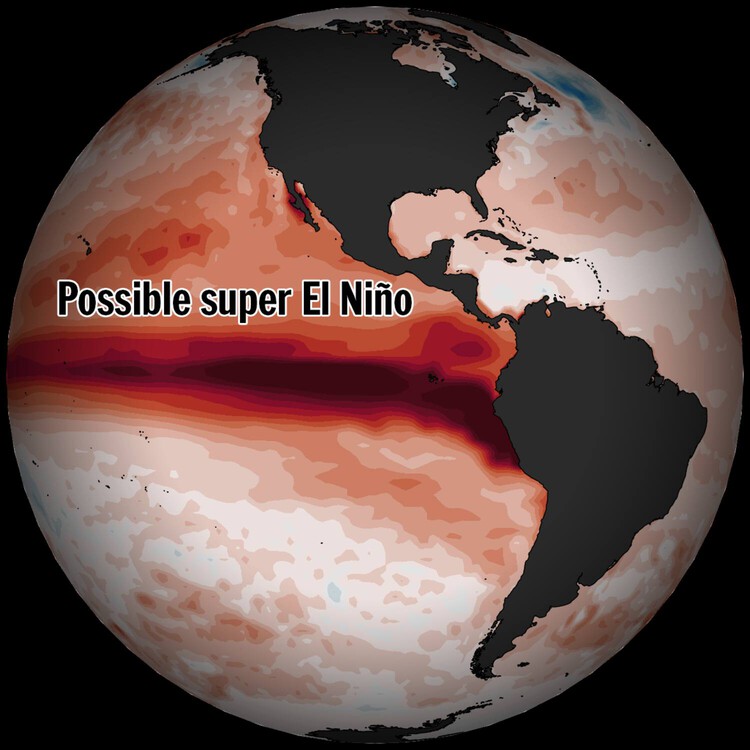
Strongest El Niño in a century? What this rare phenomenon could bring. — The Washington Post
The chances for a planet-warming super El Niño this year are rising, according to an updated model forecast issued by ECMWF on Sunday.apple.news
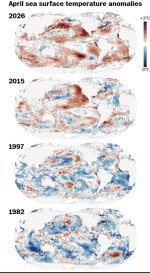
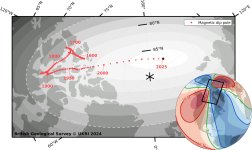
Jetstream and ocean currents follow the poles.
Yea it sucks when there is nothing more .It could be worse. You could have everything but be depressed.
Give it away and start again.Yea it sucks when there is nothing more .
Should be a good beach year.
Nice! I'm tired of morning walks. I need beach therapy.