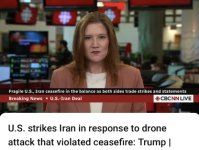
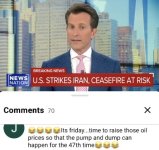
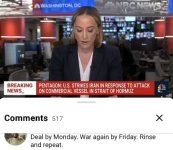
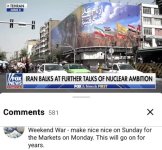
(YouTube & US-Iran MOU under threat as countries trade strikes)
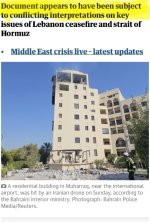
“On Saturday, Bahrain’s Foreign Ministry condemned “an alleged Iranian drone attack on its territory”, describing it as a serious violation of sovereignty and international law. It said the incident endangered civilians and undermined regional de-escalation efforts, placing responsibility on Tehran for escalating tensions.
A tanker was hit by an unidentified projectile, the United Kingdom Maritime Trade Operations (UKMTO) said on Saturday, adding that all crew are reported safe.”
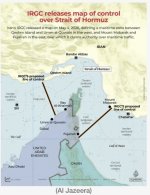
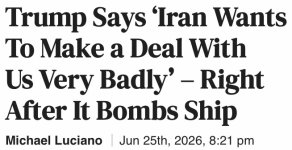
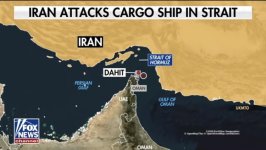
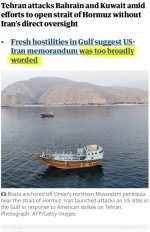
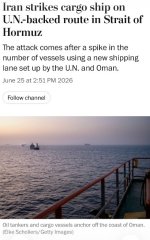
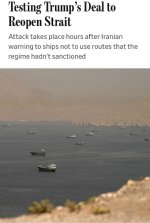
On Thursday, a Singapore-flagged commercial vessel, Ever Lovely, was struck by an unknown projectile off Oman’s coast. Iran did not acknowledge the attack, but did not deny it either. Late on Thursday, the IRGC warned against an alternative route in the waterway. Only routes approved by Tehran could ensure safe passage through the strategic waterway, it said.

A Singapore-flagged ship was struck crossing the waterway on Thursday, prompting a large-scale evacuation to be paused.

apple.news
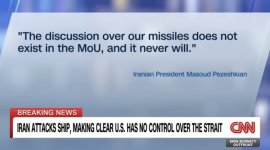
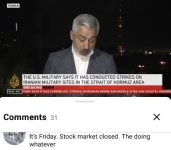
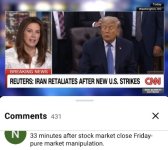
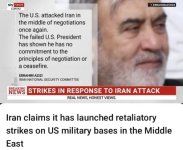
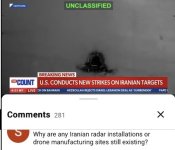
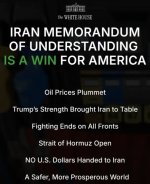
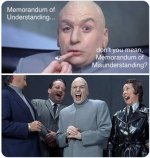
The Iranian foreign ministry condemned the latest US attacks, saying the targeting of “coastal surveillance facilities (being used to target civilian shipping) violate Article 1 of the Memorandum of Understanding,” which mandates the end of hostilities on all fronts. Tehran said the US attack was also a violation of the UN Charter.
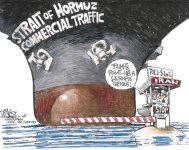
Under the universally accepted principles of the UN Convention on the Law of the Sea (UNCLOS), the Strait of Hormuz qualifies as an international strait. This guarantees all ships the right of
"transit passage," meaning navigation cannot be suspended, and coastal states cannot levy tolls, impose mandatory fees, or require permission for ships to pass by Iran or American, but that’s neither here nor there.
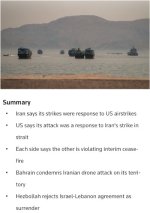
“Later Mohsen Rezaei, adviser to Iran’s Supreme Leader Mojtaba Khamenei, accused the US of violating Article 5 of the MoU, which states that the safe passage of commercial vessels in the Strait of Hormuz must be restored.
The Article 5 also stipulates that Iran and Oman would discuss the future administration and maritime services in the waterway.” Iran says it maintains the control – and the right of management – over the waterway, which has come to be Tehran’s biggest bargaining chip in negotiations with the US.
As the latest confrontations are aimed at control of the Strait of Hormuz, analysts say the deal is at risk of collapse.
apple.news
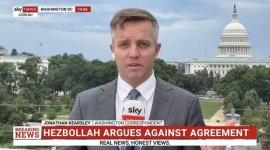
Hezbollah leader Naim Qassem criticised provisions in a U.S.-brokered security agreement between Lebanon and Israel linking Israel's withdrawal to Hezbollah's disarmament, saying they effectively legitimised Israel's military presence and crossed "all red lines".
Who’s red lines? Not Lebanon’s…
Israel and Lebanon on Friday signed a U.S.-brokered agreement laying out a framework for peace, though Hezbollah, the Iran-backed Lebanese faction that has been trading fire with Israel, on Saturday issued a statement rejecting the deal and vowed to keep fighting against Israel from Lebanon.
In a statement, Qassem called it "null and void", and accused the Lebanese government of making unilateral concessions and undermining Lebanon's sovereignty which Hezbollah itself does by acting as a state within a state inside of Lebanon.
Hezbollah would continue its armed resistance on behalf of Iran, he added: "We did not leave the battlefield in the most difficult circumstances, and we will not leave it” as they continue to draw Lebanon into military conflict with Israel against the wishes of the Lebanese government and peoples.
Qassem said the Iran-U.S.
memorandum of understanding reached earlier this month, which guarantees Lebanon's territorial integrity (With the exception of Hezbollah acting as a state within a state while attacking Israel from inside Lebanon’s borders on behalf of Iran

), should serve as the basis for ending the conflict, rather than Friday's Washington agreement actually between the sovereign nations of Lebanon and Israel.
Lebanese territory controlled by Hezbollah is not officially recognized as Iranian-controlled territory, though the group acts as a heavily armed proxy. Hezbollah is a Lebanon based political and militant organization that is armed, funded, and directed by Iran’s IRGC, integrating Lebanon into Tehran's regional military strategy and thus Irans insistence of its inclusion in the MOU between Iran and America.
Hezbollah is highly unlikely to ever voluntarily surrender its weapons to the Lebanese state, and the government currently lacks the military capacity to force disarmament. Hezbollah views its arsenal as essential for Iranian national defense, and its leadership has explicitly rejected disarming.
Hezbollah leader Naim Qassem rejected a U.S.-brokered security agreement between Lebanon and Israel on Saturday a day after it was signed, describing it as a surrender to Israel.
apple.news
Who’s surrender to Israel? Not Lebanon’s…


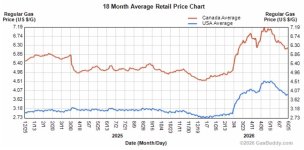
 Maybe Iran can take the excess bourbon that Canada isn’t buying?


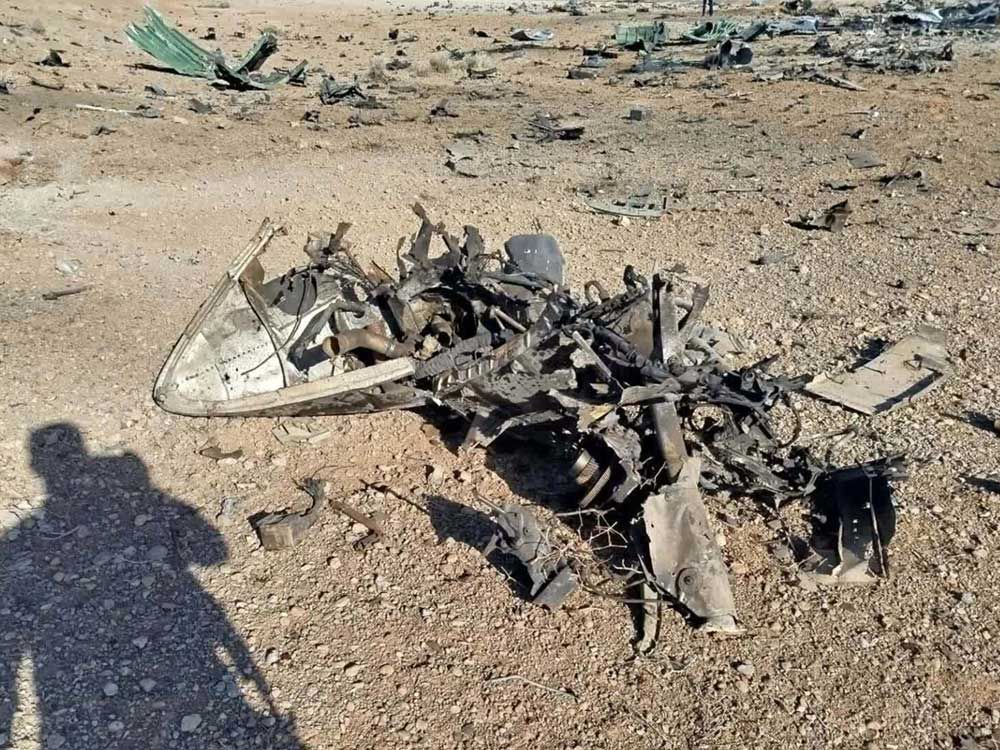
 vessel evacuation plans.