Iran War. . . USA Up 2-0 in the First Period

Ron in Regina

"Voice of the West" Party
Apr 9, 2008
32,858
11,824
113
Regina, Saskatchewan
Pakistan's army chief was visiting Tehran on a mediating mission on Monday as the United ‌States prepared to roll out "the greatest financial offensive ever" targeting Iran's trade partners.

Iran dismissed the U.S. threat, vowing to shut down all oil exports from the Gulf "if the economic war continues". It issued a new warning to shipping not to pass through the Strait of Hormuz without its permission, listing 45 ships it said had violated its rules and threatening retaliation for any ship-to-ship transfers with them.
U.S. Treasury Secretary Scott Bessent has promised to reveal severe measures on Iran, which has endured near-continuous economic sanctions since the Islamic Revolution of 1979, when he gives a press conference at 1 p.m. EDT (1700 GMT) on Monday.

"At dawn begins an economic D-Day — the single greatest financial offensive ever marshalled against an adversary," Bessent wrote in an opinion piece published in the Financial Times on Sunday.
 

petros

The Central Scrutinizer
Nov 21, 2008
121,165
15,054
113
Low Earth Orbit
Pakistan's army chief was visiting Tehran on a mediating mission on Monday as the United ‌States prepared to roll out "the greatest financial offensive ever" targeting Iran's trade partners.

Iran dismissed the U.S. threat, vowing to shut down all oil exports from the Gulf "if the economic war continues". It issued a new warning to shipping not to pass through the Strait of Hormuz without its permission, listing 45 ships it said had violated its rules and threatening retaliation for any ship-to-ship transfers with them.
U.S. Treasury Secretary Scott Bessent has promised to reveal severe measures on Iran, which has endured near-continuous economic sanctions since the Islamic Revolution of 1979, when he gives a press conference at 1 p.m. EDT (1700 GMT) on Monday.

"At dawn begins an economic D-Day — the single greatest financial offensive ever marshalled against an adversary," Bessent wrote in an opinion piece published in the Financial Times on Sunday.
Bombing isn't working. This could all end rapidly if Israel gets out of Lebanon.

The other day Israel launched an attack on Beirut, shortly after Iranian missiles hit an Israeli airbase.
 

Ron in Regina

"Voice of the West" Party
Apr 9, 2008
32,858
11,824
113
Regina, Saskatchewan
1787607036362.jpeg
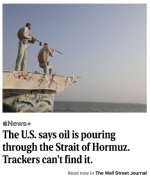
U.S. Says Oil Is Pouring Through Hormuz. Trackers Can't Find It.

DUBAI--The Trump administration says large volumes of oil are slipping through the Strait of Hormuz. The trackers whose job it is to count the world's oil shipments see much less.

Energy Secretary Chris Wright said last week the U.S. military had helped ship over 15 million barrels of crude and oil products out of the waterway last Tuesday. He put the average oil exports through the strait over a seven-day period at more than 8 million barrels a day. Earlier this month, Wright said the seven-day average stood at around 9 million barrels a day.
1787607115555.jpeg
What’s the truth here? Trump? Serious question.

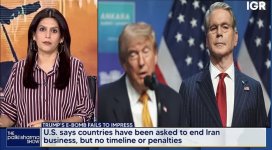
Then U.S. Treasury Secretary Scott Bessent said other ‌countries would need to sever business ties with Iran or risk being forced out of the dollar-based financial system? Does he mean the Petro-dollar-based financial system???

But he declined to identify the countries that would be targeted or reveal when those penalties would take effect, saying he would instead provide them time to comply with the new directive. "We are giving everyone the opportunity to remedy bad behavior. Why would I want to blow up the global financial system?" Bessent said at a news conference?
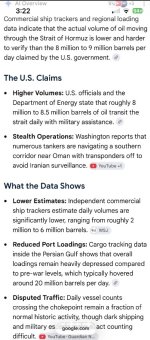
AI Overview:


The U.S. dollar-based financial system is the global network of banks, payment rails, and ledgers centered on the U.S. dollar, and the U.S. can exclude entities by blocking their access to dollar clearing channels and freezing their reserves.

The U.S. uses the Office of Foreign Assets Control (OFAC) to enforce economic penalties. It excludes targets through specific mechanisms:
  • Freezing Assets: The U.S. can freeze foreign dollar reserves sitting in U.S. institutions or the Federal Reserve.
  • Cutting Correspondent Access: The U.S. can forbid American banks from doing business with a specific foreign bank. This blocks that bank from clearing any U.S. dollar transactions.
  • Secondary Sanctions: The U.S. can punish any global bank or company that deals with a blacklisted target, forcing international firms to choose between the U.S. market or the targeted country.
How It Applies Globally
    • Global Reserve Currency: Central banks worldwide hold a large share of their foreign exchange reserves in U.S. dollars, mostly in safe U.S. Treasury securities, to stabilize their own economies and guard against financial shocks.
    • Trade Invoicing: Most global commodities—like oil and raw materials—are priced, bought, and sold in U.S. dollars, even when transactions do not involve U.S. companies.
    • Cross-Border Funding: International banks and corporations routinely use the dollar to issue debt, secure loans, and move capital across borders due to its unmatched liquidity and network effects.
    • The "Exorbitant Privilege": Because the world demands dollars, the U.S. government and domestic borrowers can borrow money at lower interest rates and run larger national debts with less risk of a currency crisis.
If the US actually does this above, or even threatens to do this above, will that throw the whole concept of of the fiat currency & specifically the petro-dollar out the window and into a garbage can in an alley somewhere?

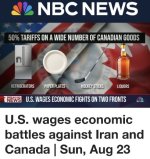
I wonder if this threat above for Iran is going to be used on Canada in the coming weeks or months or days or hours next?
1787612562540.jpeg
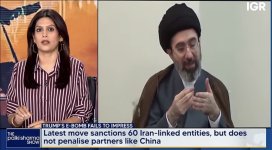
????????? Anyway, Bessent previously urged cooperation from China, the biggest buyer of Iranian oil ⁠for several years, although the U.S. blockade of Iran's ports, renewed in mid-July, has already cut Iranian oil flows to China.

Experts say Washington is wary of Chinese retaliation for any sanctions on its banks ahead of expected talks next month between U.S. President Donald Trump and Chinese President Xi Jinping, with any curbs on China's exports of critical minerals especially sensitive.
Maybe the US under Trump doesn’t have enough wars going on already that they need to look for some more? Asked about Chinese banks on Monday, Bessent said, "We want to make clear here today that no one is above the ⁠reach of U.S. sanctions."

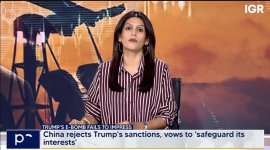
The Chinese Foreign Ministry said sanctions and pressure tactics do not help and Beijing would do what was necessary to protect China's interests. Good times.
 

petros

The Central Scrutinizer
Nov 21, 2008
121,165
15,054
113
Low Earth Orbit
View attachment 35444
U.S. Says Oil Is Pouring Through Hormuz. Trackers Can't Find It.

DUBAI--The Trump administration says large volumes of oil are slipping through the Strait of Hormuz. The trackers whose job it is to count the world's oil shipments see much less.

Energy Secretary Chris Wright said last week the U.S. military had helped ship over 15 million barrels of crude and oil products out of the waterway last Tuesday. He put the average oil exports through the strait over a seven-day period at more than 8 million barrels a day. Earlier this month, Wright said the seven-day average stood at around 9 million barrels a day.
View attachment 35445
What’s the truth here? Trump? Serious question.

Then U.S. Treasury Secretary Scott Bessent said other ‌countries would need to sever business ties with Iran or risk being forced out of the dollar-based financial system? Does he mean the Petro-dollar-based financial system???

But he declined to identify the countries that would be targeted or reveal when those penalties would take effect, saying he would instead provide them time to comply with the new directive. "We are giving everyone the opportunity to remedy bad behavior. Why would I want to blow up the global financial system?" Bessent said at a news conference?
AI Overview:


The U.S. dollar-based financial system is the global network of banks, payment rails, and ledgers centered on the U.S. dollar, and the U.S. can exclude entities by blocking their access to dollar clearing channels and freezing their reserves.

The U.S. uses the Office of Foreign Assets Control (OFAC) to enforce economic penalties. It excludes targets through specific mechanisms:
  • Freezing Assets: The U.S. can freeze foreign dollar reserves sitting in U.S. institutions or the Federal Reserve.
  • Cutting Correspondent Access: The U.S. can forbid American banks from doing business with a specific foreign bank. This blocks that bank from clearing any U.S. dollar transactions.
  • Secondary Sanctions: The U.S. can punish any global bank or company that deals with a blacklisted target, forcing international firms to choose between the U.S. market or the targeted country.
How It Applies Globally
    • Global Reserve Currency: Central banks worldwide hold a large share of their foreign exchange reserves in U.S. dollars, mostly in safe U.S. Treasury securities, to stabilize their own economies and guard against financial shocks.
    • Trade Invoicing: Most global commodities—like oil and raw materials—are priced, bought, and sold in U.S. dollars, even when transactions do not involve U.S. companies.
    • Cross-Border Funding: International banks and corporations routinely use the dollar to issue debt, secure loans, and move capital across borders due to its unmatched liquidity and network effects.
    • The "Exorbitant Privilege": Because the world demands dollars, the U.S. government and domestic borrowers can borrow money at lower interest rates and run larger national debts with less risk of a currency crisis.
If the US actually does this above, or even threatens to do this above, will that throw the whole concept of of the fiat currency & specifically the petro-dollar out the window and into a garbage can in an alley somewhere?

I wonder if this threat above for Iran is going to be used on Canada in the coming weeks or months or days or hours next?
View attachment 35449
????????? Anyway, Bessent previously urged cooperation from China, the biggest buyer of Iranian oil ⁠for several years, although the U.S. blockade of Iran's ports, renewed in mid-July, has already cut Iranian oil flows to China.

Experts say Washington is wary of Chinese retaliation for any sanctions on its banks ahead of expected talks next month between U.S. President Donald Trump and Chinese President Xi Jinping, with any curbs on China's exports of critical minerals especially sensitive.
Maybe the US under Trump doesn’t have enough wars going on already that they need to look for some more? Asked about Chinese banks on Monday, Bessent said, "We want to make clear here today that no one is above the ⁠reach of U.S. sanctions."

The Chinese Foreign Ministry said sanctions and pressure tactics do not help and Beijing would do what was necessary to protect China's interests. Good times.

1000010364.jpg

See better above.
 
Last edited: