Canada’s Military current state & equipment

Ron in Regina

"Voice of the West" Party
Apr 9, 2008
31,409
11,395
113
Regina, Saskatchewan
At least one nation is regretting its purchase of F-35s. Denmark has been embroiled in a dispute with the Trump administration over the president’s push to own Greenland. The small European country even deployed those jets to the Arctic island over the threats.
The petulance displayed by the U.S. ambassador to Canada is exactly what you might expect from Pete Hoekstra if he had just been informed that Canada intends to spend half the money earmarked for new F-35 fighter jets on the rival Swedish Gripen.
U.S. President Donald Trump’s envoy to Ottawa is warning of consequences to the continental defence pact if Canada does not move forward with the purchase of 88 F-35 fighter jets.
Regardless, all the signs point to Ottawa buying fewer F-35s than it said it would.
Rasmus Jarlov, head of the Danish parliament's defence committee, has described "second thoughts" over the order, but says the country has little choice now that it is their only operational fighter aircraft.
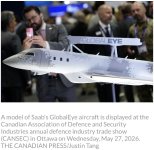
Sources have told National Post that half of the jet-fighter fleet Canada ends up buying (by value) could be Swedish. David McGuinty, the minister of defence, told the Post on Tuesday, “No decision has been reached.”

But reading Carney’s speech in Davos, it is hard to see how the government could come to any other conclusion than to diversify its suppliers.
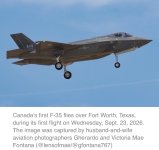
Carney ordered a review of the fighter jet purchase last March, to find out if buying the fifth-generation F-35s was really the best investment for Canada. Ottawa is already committed to purchasing at least 16 jets and is in the process of building the infrastructure to accommodate them. Cancelling the F-35 deal is not a feasible option. The first planes are due to be delivered this year, with the first eight going to Luke Air Force base in Arizona for pilot training.

But building a mixed fleet, as the Germans have done, is a realistic option (the German air force has around 138 Eurofighter Typhoons and has ordered 35 F-35s).
Jarlov has a message for Canada: "choose another fighter jet. They're in for repairs about half the time or even more," he said, "so the Americans have all the power of actually destroying our air force just by shutting down [parts] supplies."
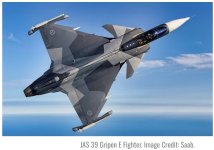
The most likely scenario seems to be that Canada will buy around 40 F-35s and complement them with up to 80 Saab Gripens, which would be made in Quebec.

The Gripens could be sole-sourced, using a national security clause, on the basis that the fighter came second to the F-35 in the most recent competition.

People who know their jets advised me the F-35 is a plane that will still be combat viable in 30 years and will likely prove be the springboard to autonomous systems.

But what use is superior capability if its use is dependent on an ally that has proven unreliable?
It is crazy , but the CBC pushes and the sheep eat it up . Elbows up Canada . Hoorah .
There have been concerns — denied by the manufacturer — that there is a “kill” switch that could disable the jet. But even if untrue, the F-35 relies on software upgrades that could be denied.
If the Carney government were to order the Swedish-built Gripen fighter jet, as it is considering, the ambassador says the arrangement with NORAD would still have to be rethought.
The U.S. remains a key ally of Canada. But for the first time in a century, the Canadian Forces are reportedly preparing military models to respond to a hypothetical American invasion. However unlikely that scenario is, the fact that it is no longer unthinkable suggests it is time to find new friends.
 

Ron in Regina

"Voice of the West" Party
Apr 9, 2008
31,409
11,395
113
Regina, Saskatchewan
For the past 10 months Prime Minister Mark Carney has been carefully treading a fine line on the ongoing review of Canada’s purchase of U.S.-built F-35 fighter jets.

Carney ordered a review of the F-35 purchase in mid-March in the wake of threats against Canadian sovereignty by U.S. President Donald Trump. At this point, the federal government is only committed to buy 16 F-35s — Carney will be making the final decision on whether to proceed with the additional purchase of another 72 of the stealth fighters.
The petulance displayed by the U.S. ambassador to Canada is exactly what you might expect from Pete Hoekstra if he had just been informed that Canada intends to spend half the money earmarked for new F-35 fighter jets on the rival Swedish Gripen.
1769734613208.jpeg
The prime minister has to contend with a number of factors in weighing his decision, including that the Royal Canadian Air Force has argued the F-35 is superior to the Saab Gripen, the other aircraft being considered as a result of Trump’s threats.
People who know their jets advised me the F-35 is a plane that will still be combat viable in 30 years and will likely prove be the springboard to autonomous systems.

But what use is superior capability if its use is dependent on an ally that has proven unreliable?
Pete Hoekstra, the U.S. ambassador to Canada, jumped into the mix. Over the course of several months, Hoekstra has launched into a series of insults against Canadians. Typical was a Jan. 15, 2026, interview with a Montreal radio station in which the ambassador stated the United States didn’t need Canada for anything.
There have been concerns — denied by the manufacturer — that there is a “kill” switch that could disable the jet. But even if untrue, the F-35 relies on software upgrades that could be denied.
Then in a Jan. 26 interview on CBC, Hoekstra warned Canadians they could face dire consequences if the Carney government didn’t buy the F-35. He stated that the joint U.S.-Canadian NORAD agreement would have to be changed, suggesting that Gripens wouldn’t be as “interchangeable, interoperable” with U.S.-operated F-35s.

Hoekstra also warned that the U.S. would start flying its F-35s into Canadian airspace to deal with any perceived threats…because respect for Canadian national sovereignty?
Wasn't the Gripen the runner up on the last F-35 procurement review?
Its what I hoped Canad wluld have bought in the first place. They can fly in the rain and arctic unlike the F35 garbage.
Anyway…now it seems U.S. President Donald Trump wants to sell toy airplanes to Canada. Talking about military aircraft in the Oval Office, Trump said, “certain allies, we’ll be selling them perhaps toned-down versions, toned down about 10 per cent, which probably makes sense because someday maybe they’re not our allies, right?” Dialed back versions of the F35?
A friend is a Hornet handler at CFB Cold Lake. Pilots and ground crews are currently doing F35 training in Texas and will still finish the program.

I gave her a call to get her version of "toned down". She says it'll most likely be the AI software not any hardware. Able to track fewer targets or coordinate as many drones.
Canada has already paid for but not received 16 of the Lockheed Martin fighters…& will we receive what we’ve already paid for? So “given the geopolitical environment, given the fact that there are options . . . (and) given the possibility of having substantial production of alternative aircraft in Canada.” Etc…
 

Taxslave2

Senate Member
Aug 13, 2022
5,342
2,943
113
Carney ordered a review of the fighter jet purchase last March, to find out if buying the fifth-generation F-35s was really the best investment for Canada. Ottawa is already committed to purchasing at least 16 jets and is in the process of building the infrastructure to accommodate them. Cancelling the F-35 deal is not a feasible option
How many reports are there going to be? At the current rate, they will be obsolete before we pay for them. The CF18s are getting to be like the Voodoos before them.
 
  • Like
Reactions: Ron in Regina

Ron in Regina

"Voice of the West" Party
Apr 9, 2008
31,409
11,395
113
Regina, Saskatchewan
How many reports are there going to be? At the current rate, they will be obsolete before we pay for them. The CF18s are getting to be like the Voodoos before them.
Ottawa has started to make payments for key components for 14 additional U.S.-built F-35s, even as the Carney government has been reviewing future fighter-jet purchases in the context of trade tensions with Washington, sources have told CBC News.

The money for these 14 aircraft is in addition to the contract for a first order of 16 F-35s, which will start being delivered to the Canadian Armed Forces at the end of the year.

According to sources, the new expenses are related to the purchase of so-called “long-lead items,” which are parts that must be ordered well in advance of the delivery of a fully assembled aircraft.
1770739198183.jpeg
Canada had to make these expenditures to maintain its place in the long-term delivery schedule and avoid being replaced by other buyers in the queue, sources said.
CBC News agreed to provide confidentiality to sources who were not authorized to publicly comment on the F-35 purchase, etc…In response to questions from CBC News, the Department of National Defence refused to confirm that new funds have been committed for new F-35s, saying the review of the proposed purchase is "still underway."
 
  • Like
Reactions: Taxslave2

Ron in Regina

"Voice of the West" Party
Apr 9, 2008
31,409
11,395
113
Regina, Saskatchewan
U.S. President Donald Trump’s envoy to Ottawa is warning of consequences to the continental defence pact if Canada does not move forward with the purchase of 88 F-35 fighter jets.
Canada’s new defence industrial strategy sets out a series of important, extraordinarily high benchmarks for the country to achieve over the next decade, including buying and maintaining most of the military’s equipment domestically.

The long-awaited plan, which was developed more as a response to NATO’s call for industrial clarity among allies than to annexation threats by the Trump administration, sets a goal of awarding 70 per cent of federal defence contracts to Canadian firms within a decade.
If the Carney government were to order the Swedish-built Gripen fighter jet, as it is considering, the ambassador says the arrangement with NORAD would still have to be rethought.

Well, at least he’s not threatening NATO?
It also proposes to raise the servicability rates of Canadian military equipment to 75 per cent of the navy’s ships, 80 per cent of the army’s vehicles and 85 per cent of the air force’s planes? Well, that sounds more like Gripen than F-35’s…

The strategy pours more money into defence-related research and development. It also proposes to increase Canada’s defence exports by 50 per cent, with the goal of creating an additional 125,000 jobs across the country by 2035.

At the core of the strategy is what’s being described as a “Build–Partner-Buy” procurement framework, which is intended to reverse what the document calls an over-reliance on foreign suppliers — notably the United States.

“Canada cannot afford to outsource its national defence,” the strategy states.

(“Seventy-five cents of every dollar of capital spending for defence goes to the United States. That's not smart," Carney told host David Cochrane)
 

Ron in Regina

"Voice of the West" Party
Apr 9, 2008
31,409
11,395
113
Regina, Saskatchewan
(YouTube & They Called Gripen Overrated — NATO Pilots Got a Rude Awakening!)
1771291155442.jpeg
1771293334676.jpeg
1771293556903.jpeg
For weeks Sweden has pitched Gripens as an alternative to Canada, a plan that a senior Canadian official said in Novemberwas “very interesting.” The potential for Ottawa to cut its long-planned F-35 buy also prompted what appeared to be a not very veiled threat from US Ambassador to Canada Pete Hoekstra last month.
1771293861627.jpeg
(YouTube & Pentagon Warns Canada on Gripen)
1771295849796.jpeg
If intelligently deployed, a mixed fleet can be a force multiplier. An RCAF fleet of some 30 to 40 F-35s dedicated to the NORAD mission and 70 to 80 Gripens supporting Arctic defence in Canada and also dedicated to NATO, might cost more to operate than an all-F-35 fleet. But that is not at all certain given the difference in flying costs. And it would provide more options and more independence than total reliance on the F-35, and greater industrial benefits.
 

petros

The Central Scrutinizer
Nov 21, 2008
119,745
14,774
113
Low Earth Orbit
(YouTube & They Called Gripen Overrated — NATO Pilots Got a Rude Awakening!)
View attachment 33293
View attachment 33294
View attachment 33295
For weeks Sweden has pitched Gripens as an alternative to Canada, a plan that a senior Canadian official said in Novemberwas “very interesting.” The potential for Ottawa to cut its long-planned F-35 buy also prompted what appeared to be a not very veiled threat from US Ambassador to Canada Pete Hoekstra last month.
View attachment 33296
(YouTube & Pentagon Warns Canada on Gripen)
View attachment 33297
If intelligently deployed, a mixed fleet can be a force multiplier. An RCAF fleet of some 30 to 40 F-35s dedicated to the NORAD mission and 70 to 80 Gripens supporting Arctic defence in Canada and also dedicated to NATO, might cost more to operate than an all-F-35 fleet. But that is not at all certain given the difference in flying costs. And it would provide more options and more independence than total reliance on the F-35, and greater industrial benefits.
I was always in favour of the Saab.
 
  • Like
Reactions: Ron in Regina

spaminator

Hall of Fame Member
Oct 26, 2009
39,893
3,754
113
Military reservists feel they’re treated as second-class soldiers: Canadian Forces analysis
Problem areas, a report says, include a lack of training and deployment opportunities for reservists as well as a bias that labels reservists as less competent.

Author of the article:David Pugliese • Ottawa Citizen
Published Feb 24, 2026 • Last updated 1 day ago • 3 minute read

A file photo of Canadian army reservists in the 37 Canadian Service Batallion.
A file photo of Canadian army reservists in the 37 Canadian Service Batallion. Photo by 37 CANADIAN BRIGADE GROUP /HANDOUT
Some Canadian Forces reservists feel they are being treated as second-class soldiers and don’t receive the same opportunities for training and deployments as their regular force counterparts, according to a military study.


The document, originally presented at an Oct. 24, 2025, academic conference on the reserves, outlined some of the initial findings from the report being compiled for the Director General Military Personnel Research and Analysis.


Data is still being analyzed and a final report is expected later this year, but the presentation outlined some of the key observations from reserve force personnel.

“There is a mindset within the Regular Navy that reservists are second-class citizens,” an unnamed senior naval officer told researchers. “And I think there are impediments to making sure reservists get trained to the same level as the Regular Force counterparts.”

While the initial analysis noted that the relationships between the full-time regular force and the part-time reservists was generally seen as positive, there were problem areas.


Those included a lack of training and deployment opportunities for reservists as well as a bias that labelled reservists as being less competent.

In addition, a number of reserve officers noted that regular force personnel tended to get priority for various opportunities.

“It’s very difficult to get career progressions and training, and deployments in particular that are necessary,” a senior air force officer noted. “This is by design because Regular Force counterparts have to get preference.”

A junior non-commissioned officer in the Canadian Army noted there was a lack of respect and that reservists were not allowed to do certain tasks when they were deployed. “They were kind of forced or shunted to a lesser role,” that individual told researchers.


The analysis could give senior military leaders more insight on what changes need to be made as they prepare the Canadian Forces for the future.

The analysis pointed to concerns with reserve pay and benefits as well as ongoing problems faced by reservists in taking time away from families and civilian jobs for military service.

“We have members who have gone on deployments, they want to deploy, they’re hungry to serve in that aspect, but then, based on past experiences with the issues that have come up with their pay and benefits, they’re not willing to go again,” a senior air force non-commissioned member told the researchers.

The Canadian military leadership is currently looking to the reservists to form the backbone of a significantly expanded force.


In October 2025, the Ottawa Citizen reported the Canadian military had set in motion an initiative to increase the number of its part-time soldiers from the current 28,000 to 400,000 as part of an overall mobilization plan.

The document, signed by Chief of the Defence Staff Gen. Jennie Carignan and then defence deputy minister Stefanie Beck on May 30, 2025, outlined the need to increase the current reserve force from 23,561 to 100,000 and supplementary and other reserves from the current 4,384 to 300,000.

In their document, Beck and Carignan noted the Canadian government had called for greater resiliency and autonomy on security matters. To achieve that goal, the Defence Mobilization Plan is needed, they added.


The Canadian Forces is also counting on public servants to volunteer for military service.

Federal and provincial employees would be given one-week training courses in how to handle firearms, drive trucks and fly drones, according to the mobilization document.

The public servants would be brought into the Supplementary Reserve, which is currently made up of inactive or retired members of the Canadian Forces willing to return to duty if called. At this point, there are 4,384 personnel in the Supplementary Reserves, but, in the case of an emergency, that would be boosted to 300,000, according to the planning outline from Beck and Carignan.

Department of National Defence spokesperson Andrée-Anne Poulin confirmed in a previous email that participation in the expanded reserve force would be voluntary. Neither DND nor the military would provide comment on the timelines for the creation of the mobilization plan.
 

Dixie Cup

Senate Member
Sep 16, 2006
6,531
4,116
113
Edmonton
Military reservists feel they’re treated as second-class soldiers: Canadian Forces analysis
Problem areas, a report says, include a lack of training and deployment opportunities for reservists as well as a bias that labels reservists as less competent.

Author of the article:David Pugliese • Ottawa Citizen
Published Feb 24, 2026 • Last updated 1 day ago • 3 minute read

A file photo of Canadian army reservists in the 37 Canadian Service Batallion.
A file photo of Canadian army reservists in the 37 Canadian Service Batallion. Photo by 37 CANADIAN BRIGADE GROUP /HANDOUT
Some Canadian Forces reservists feel they are being treated as second-class soldiers and don’t receive the same opportunities for training and deployments as their regular force counterparts, according to a military study.


The document, originally presented at an Oct. 24, 2025, academic conference on the reserves, outlined some of the initial findings from the report being compiled for the Director General Military Personnel Research and Analysis.


Data is still being analyzed and a final report is expected later this year, but the presentation outlined some of the key observations from reserve force personnel.

“There is a mindset within the Regular Navy that reservists are second-class citizens,” an unnamed senior naval officer told researchers. “And I think there are impediments to making sure reservists get trained to the same level as the Regular Force counterparts.”

While the initial analysis noted that the relationships between the full-time regular force and the part-time reservists was generally seen as positive, there were problem areas.


Those included a lack of training and deployment opportunities for reservists as well as a bias that labelled reservists as being less competent.

In addition, a number of reserve officers noted that regular force personnel tended to get priority for various opportunities.

“It’s very difficult to get career progressions and training, and deployments in particular that are necessary,” a senior air force officer noted. “This is by design because Regular Force counterparts have to get preference.”

A junior non-commissioned officer in the Canadian Army noted there was a lack of respect and that reservists were not allowed to do certain tasks when they were deployed. “They were kind of forced or shunted to a lesser role,” that individual told researchers.


The analysis could give senior military leaders more insight on what changes need to be made as they prepare the Canadian Forces for the future.

The analysis pointed to concerns with reserve pay and benefits as well as ongoing problems faced by reservists in taking time away from families and civilian jobs for military service.

“We have members who have gone on deployments, they want to deploy, they’re hungry to serve in that aspect, but then, based on past experiences with the issues that have come up with their pay and benefits, they’re not willing to go again,” a senior air force non-commissioned member told the researchers.

The Canadian military leadership is currently looking to the reservists to form the backbone of a significantly expanded force.


In October 2025, the Ottawa Citizen reported the Canadian military had set in motion an initiative to increase the number of its part-time soldiers from the current 28,000 to 400,000 as part of an overall mobilization plan.

The document, signed by Chief of the Defence Staff Gen. Jennie Carignan and then defence deputy minister Stefanie Beck on May 30, 2025, outlined the need to increase the current reserve force from 23,561 to 100,000 and supplementary and other reserves from the current 4,384 to 300,000.

In their document, Beck and Carignan noted the Canadian government had called for greater resiliency and autonomy on security matters. To achieve that goal, the Defence Mobilization Plan is needed, they added.


The Canadian Forces is also counting on public servants to volunteer for military service.

Federal and provincial employees would be given one-week training courses in how to handle firearms, drive trucks and fly drones, according to the mobilization document.

The public servants would be brought into the Supplementary Reserve, which is currently made up of inactive or retired members of the Canadian Forces willing to return to duty if called. At this point, there are 4,384 personnel in the Supplementary Reserves, but, in the case of an emergency, that would be boosted to 300,000, according to the planning outline from Beck and Carignan.

Department of National Defence spokesperson Andrée-Anne Poulin confirmed in a previous email that participation in the expanded reserve force would be voluntary. Neither DND nor the military would provide comment on the timelines for the creation of the mobilization plan.
I can see the reservists point. The regular forces aren't being funded enough so I doubt if the reserves are. Hopefully, the funds Carney is proposing to give the military will change this. I guess we'll have to wait & see. It may well be that all the funds will be utilized for infrastructure & equipment & not manpower.
 

pgs

Hall of Fame Member
Nov 29, 2008
28,958
8,360
113
B.C.
I can see the reservists point. The regular forces aren't being funded enough so I doubt if the reserves are. Hopefully, the funds Carney is proposing to give the military will change this. I guess we'll have to wait & see. It may well be that all the funds will be utilized for infrastructure & equipment & not manpower.
They are talking about using imported labor as troops , they work cheaper .