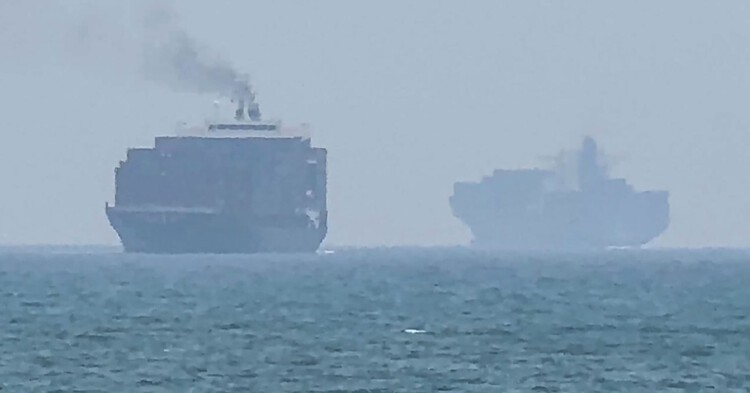
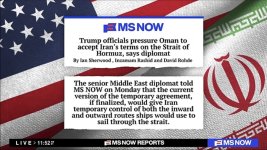
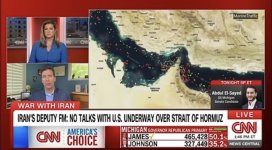
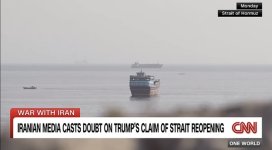
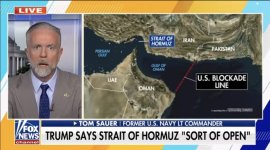
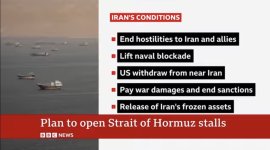
A U.S. official on Friday reported progress between Iran and Oman that could soon reopen the Strait of Hormuz, potentially restoring oil exports that have been disrupted by the five-month-old U.S. war with Iran.
The U.S. official, who declined to be identified, said Washington anticipated an agreement soon between the two countries, which sit on either side of the strait, so that “normal”(?) oil traffic could resume. A deal between Iran and Oman over control of the strategic waterway is seen as crucial to a wider peace agreement

.
"There is progress between Oman and Iran on the strait, and we expect a deal soon," a U.S. official told Reuters on Friday. "Once the deal is announced to restore commercial shipping without impediments(?), the United States will lift the blockade of Iranian ports."
A U.S. official on Friday reported progress between Iran and Oman that could soon reopen the Strait of Hormuz, potentially restoring oil exports that have been disrupted by the five-month-old U.S. war with Iran.

apple.news
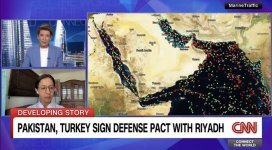
Alarmed at a regional conflagration that has brought Iranian missile fire onto Gulf oil exporters, Saudi Arabia, Pakistan and Turkey
signed a joint defense agreement in Mecca on Friday.
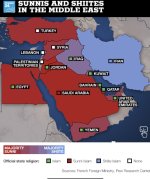
The pact among
three U.S. allies with majority Sunni Muslim populations is intended to strengthen collective deterrence against aggression and stipulates that
an armed attack against any of the three would be regarded as an attack on all, the countries said in a statement.
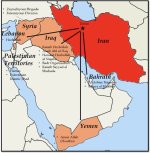

en.wikipedia.org
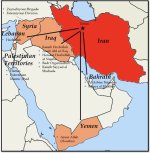
The suspension of diplomatic relations between Saudi Arabia and Iran is the latest step in a war of influence that the two rival powers have maintained in the Middle East for decades.
Their antagonism has its roots in the division between the two major currents of Islam,
Sunni and
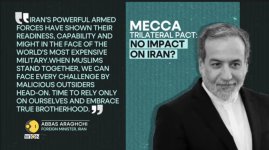
Shiite, but that could just be a coincidence. Turkey said the agreement was not aimed at any specific country

and was purely defensive. But it comes at a time of heightened tensions with
Shi'ite-majority Iran
.
Meanwhile, the U.S. has been trying to broker an end to fighting on another front of the war between Israel and
Iranian-backed Shi'ite group Hezbollah in southern Lebanon, but that’s potentially a separate but related (to Iran) situation.
Aug 08, 2026 01:25 GMT Investing.com -- The United States expects Iran and Oman to reach an agreement soon that would restore commercial shipping through the Strait of Hormuz, Reuters reported exclusively on Friday, citing a U.S. official. The official said Washington would lift its blockade of...
apple.news
America’s
Middle Eastern allies are contending with a new reality. One in which
Iran, whatever ceasefire or arrangement is reached to end the current war, will pose a growing and persistent threat. Iran has learned that its
drones and missiles afford it massive leverage to blackmail or otherwise attack regional targets. Nations like Saudi Arabia, Bahrain, the UAE, and Kuwait are most concerned with future Iranian attacks on their ports and energy plants.
Iran has been in the news a lot lately, trying to “not” have violence spread into a larger Middle Eastern conflict, while spreading violence in the region into a larger Middle Eastern conflict…or at least it sure seems like it from the outside looking in. Iran and Saudi Arabia are engaged in an...

forums.canadiancontent.net
Conventional interceptors can’t fill this gap. They are too few in supply, with supply bottlenecks restricting future resupply. They are also very expensive. In contrast, the Iranian-designed Shahed-style loitering drone costs roughly $20,000 and arrives in swarms.
To address this mismatch, the United States and the
Sunni monarchies should look at the example of Ukraine. At the start of the war in Feb. 2022, the Ukrainians realized expensive radars and missiles should be saved for ballistic threats, and built a cheap, layered web for everything else.
August 7, 2026 America’s Middle Eastern allies are contending with a new reality. One in which Iran, whatever ceasefire or arrangement is reached to end the current war, will pose a growing and persistent threat. Iran has learned that its drones and missiles afford it massive leverage to...
apple.news
Saudi Arabia and co. spent decades buying defenses against the most sophisticated weapons in Iran’s arsenal. But the nature of threat has changed. The key is to deny Iran the power to turn a handful of drones into leverage and dominance. It can be done. Ukraine proves it.