The Tarriff Hype.

Ron in Regina

"Voice of the West" Party
Apr 9, 2008
32,666
11,793
113
Regina, Saskatchewan
Canada is facing the prospect of entirely new tariffs from U.S. President Donald Trump’s administration after Washington claimed Ottawa has a poor track record on preventing importation of products of forced labour.
“The sweeping nature of the tariffs—which cover an estimated 99 percent of all imports into the U.S.—is raising questions. Interos.ai, a company that makes software that helps firms understand risks within their supply chains, says its database lists 1.3 million companies globally that are highly likely to be engaged in what it calls “unethical labor,” including forced labor, child labor, and other unethical practices, in the past year.
The move comes as Canada’s biggest free trade pact, CUSMANAFTAUSMCALMNOP, is up for renewal.
Yet, there appears to be little correlation between the prevalence of forced labor believed to be in a country and the level of tariffs imposed. According to data from Interos.ai, three of the top 10 countries for unethical labor (Mexico, Malaysia, and Bangladesh) are taxed at the lower rate of 10 percent. And several countries with little known forced labor, including Switzerland, New Zealand, Japan, and the United Kingdom are subject to the higher rate of 12.5 percent.

If the true purpose of the tariffs is to reduce forced labor, the logic is “a little hard to swallow follow” says Interos.ai CEO Ted Krantz—and suggests that it has more to do with bringing in income for the federal government or creating leverage for negotiating. Eighty percent of companies believed to be engaged in forced labor are based in China and India, he adds.

It feels like strategically you’re getting further and further away from the core intent and just pushing as many buttons as possible to try to have impact, which is probably more in the geopolitical game theory than it is a direct tactic against forced labor, based on the data we see,” says Krantz.

“I do think there’s good intent here, but it does feel like the overall strategy is still around top line and getting more tariffs in place to try to help the economic recovery.”

“Jamieson Greer, who leads the office, responded to the Post editorial in a statement on the office’s website, suggesting that the paper was advocating for “a laissez-faire approach to modern slavery.” He wrote that the EU’s ban on goods made with forced does not take effect until the end of 2027 and accused Canada of not stopping shipments that included goods made with forced labor..like…American alcohol exports to Canada?🤯

“The United States must ensure those commitments are effectively enforced, while continuing to use its leverage to expand the fight against slavery in global supply chains,” he wrote.

The tariffs are not based on the amount of forced labor believed to be taking place within their borders. Instead, the tariffs are based policies each country has on the books preventing goods made with forced labor from entering their markets, and how proactively those countries detaining shipments into the U.S. that contain goods believed to be made with forced labor…but what about detaining shipments “from” the U.S. that contain goods believed to be made with forced labour??? Exact statistical data detailing the specific percentage of US prison-made goods exported to other nations is unavailable, as the US government does not track this figure.
“The USTR release further explains that the tariff rate is 10 percent for economies that, in its own judgment, have made partial efforts to reduce imports made with forced labor: Canada, Ecuador, the European Union, Indonesia, Mexico, and Pakistan.

(Canada explicitly bans the importation of all goods from the US—or any other country—that are manufactured, mined, or produced wholly or in part by forced or prison labour. This prohibition is legally enforced under the Canada Customs Tariff and was integrated to meet trade commitments under CUSMA, which President Trump has stated he doesn’t want to renew)

Fifty-four other economies that “have failed to impose and effectively enforce a prohibition on the importation of goods produced with forced labor,” the agency says, are set to face a tariff of 12.5 percent.

“Even if the tariffs were imposed as a replacement to the IEEPA tariffs, Brittney Powell, a partner at the Washington, DC–based law firm Fox Rothschild., calls it “a clever policy decision,” because the Tariff Act of 1930 bans imports of goods made with forced labor. “To the extent that other countries don’t have a similar law or not enforcing those laws, the courts might find that the USTR was reasonable in finding that that constitutes an unfair trade practice,” she says.

While the Canadian importation ban is technically in full effect, watchdogs and human rights organizations have noted that goods produced via exploitative prison labour in the United States still occasionally enter the Canadian market, potentially leaving Canada open to this additional 10% tariff…by the U.S.🤔😳

This issue has sparked growing domestic advocacy urging the Canada Border Services Agency (CBSA) to increase its enforcement capabilities at border crossings. Because of this, the Government of Canada introduced legislation to strengthen the import ban framework, aiming to improve interception mechanisms at the border.

U.S. Ambassador to Canada Pete Hoekstra's speech at his Fourth of July party in Ottawa included a political nudge aimed at Canada, with American F-35 fighter jets flying over the crowd and a comment about some provinces' bans on American booze.🙄 American agricultural products and commodities produced by forced prison labor are entering global supply chains and being exported, though they are typically embedded as raw ingredients rather than sold directly as branded alcohol bottles for example, but catch22.

“Hoekstra set a goal on stage outside his official residence to get American liquor back on Canadian shelves by his next Independence Day party. "Next year, hopefully we can all take a toast of American bourbon semi-legally (except for Section 301 of the U.S. Trade Act of 1974 I guess) in the province of Ontario," Hoekstra said. "And toast the friendship and the relationship between the United States and Canada."
 

Ron in Regina

"Voice of the West" Party
Apr 9, 2008
32,666
11,793
113
Regina, Saskatchewan
“A Republican lawmaker in Washington is firing back at Canadian provinces for retaliating against U.S. President Donald Trump's tariffs by banning the sale of U.S. alcohol.

Claudia Tenney, a member of the House of Representatives whose district includes parts of northern New York, has introduced a bill aimed at further punishing Canada over restrictions on U.S. alcohol imports imposed by eight provincial governments.

She calls her bill the Combating Attacks on our National Alcoholic Drinks by Allies Act, or the CANADA Act. Cute.

"Canadian provinces cannot be allowed to hold American wineries, breweries, and distilleries hostage and attempt to ransom them," Tenney said Monday in a statement on her website….like America can’t hold entire industrial sectors in Canada hostage to Trumps tantrum of any particular delusion on any particular day?

“"American wineries, breweries, distilleries, and other beverage producers deserve fair access to Canadian markets, not discriminatory treatment from one of our closest trading partners," Tenney said.
1783370982465.jpeg
Tenney, if you have an issue, take it up with your own president. Seriously.

Tenney's statement does not mention what prompted the provinces' alleged "discriminatory treatment" of U.S. alcohol: the hefty tariffs Trump imposed on many Canadian exports and his frequent threats to make Canada the 51st state…but then maybe she doesn’t even know or doesn’t care or isn’t aware, etc…or doesn’t understand the term reciprocal (?) or that the Federal and Provincial governments are two different level levels of government doing two different things?

“U.S. exports of wine, beer and spirits to Canada plummeted in early 2025 as a result of the provincial retaliation. Now, provincial bans or not, I’m assuming that market share is gone and Canadian consumers will buy or not buy American alcoholic beverages based upon the clown show that is the Trump administration going forward.

The U.S. wine industry has called the collapse "catastrophic" and recently published figures showing the value of its exports to Canada went from $460 million US in 2024 to $103 million US in 2025, a drop of 78 per cent…so does that mean that Alberta & Saskatchewan are floating the difference of 22% of America’s alcohol exports into Canada? Damn…being the only 2 of 10 that aren’t stopping their citizens from voting with their own wallets?

“If made law, Tenney's legislation would direct the office of U.S. Trade Representative Jamieson Greer to investigate provincial liquor board restrictions on the import and distribution of U.S. products.

Under Section 301 of the Trade Act, the USTR has the power to impose penalties — including tariffs or import restrictions — if an investigation finds that a foreign government is engaging in a discriminatory practice that "burdens or restricts" U.S. commerce.

In short, the USTR not only conducts the investigation, it gets to determine the verdict and the sentence.
But….but Trump is bringing in his own laws with his own additional tariffs…that inevitably will conflict with this:
“Jamieson Greer, who leads the office, responded to the Post editorial in a statement on the office’s website, suggesting that the paper was advocating for “a laissez-faire approach to modern slavery.” He wrote that the EU’s ban on goods made with forced does not take effect until the end of 2027 and accused Canada of not stopping shipments that included goods made with forced labor..like…American alcohol exports to Canada?🤯
Yes, the same Jamieson Greer as above…
While the Canadian importation ban is technically in full effect, watchdogs and human rights organizations have noted that goods produced via exploitative prison labour in the United States still occasionally enter the Canadian market, potentially leaving Canada open to this additional 10% tariff…by the U.S.🤔😳
Leading to Trumps latest “pile-on” tariffs:
(Canada explicitly bans the importation of all goods from the US—or any other country—that are manufactured, mined, or produced wholly or in part by forced or prison labour. This prohibition is legally enforced under the Canada Customs Tariff and was integrated to meet trade commitments under CUSMA, which President Trump has stated he doesn’t want to renew)
So…damned if we do, & damned if we don’t?
“The sweeping nature of the tariffs—which cover an estimated 99 percent of all imports into the U.S.—is raising questions. Interos.ai, a company that makes software that helps firms understand risks within their supply chains, says its database lists 1.3 million companies globally that are highly likely to be engaged in what it calls “unethical labor,” including forced labor, child labor, and other unethical practices, in the past year.
Pick a lane…or does Canada get to chose which conflicting American laws we have to break to get the lower of the two inevitable tariffs?
U.S. Ambassador to Canada Pete Hoekstra's speech at his Fourth of July party in Ottawa included a political nudge aimed at Canada, with American F-35 fighter jets flying over the crowd and a comment about some provinces' bans on American booze.🙄 American agricultural products and commodities produced by forced prison labor are entering global supply chains and being exported, though they are typically embedded as raw ingredients rather than sold directly as branded alcohol bottles for example, but catch22.
A USTR investigation recently determined that 60 U.S. trading partners — including Canada and the European Union — are failing to do enough to keep forced labour out of their supply chains…& that’s forced prison labour on our doorstep from America and potentially the raw ingredients for American Alcohol products for export? Isn’t this alcohol ban just compliance with Trumps whims?
 
  • Like
Reactions: Taxslave2

Ron in Regina

"Voice of the West" Party
Apr 9, 2008
32,666
11,793
113
Regina, Saskatchewan
Yankee beer isn't worth the cost of walking to the beer store.
Not if the inputs (raw ingredients) could potentially have been made with prison labour, & justify’s more Trump tariffs for Canada accepting it into our markets.

An investigation by the Associated Press revealed that raw agricultural commodities, such as corn, wheat, and soybeans, grown by prisoners in state correctional facilities enter the supply chains of large agricultural conglomerates like Cargill. Because these bulk ingredients are mixed with non-prison farmed goods and heavily processed, any American brewery or distillery sourcing its malted barley, corn, or spirits from these major commodity traders and food processors potentially utilizes raw ingredients tied to prison labor.
 

pgs

Hall of Fame Member
Nov 29, 2008
29,297
8,635
113
B.C.
Not if the inputs (raw ingredients) could potentially have been made with prison labour, & justify’s more Trump tariffs for Canada accepting it into our markets.

An investigation by the Associated Press revealed that raw agricultural commodities, such as corn, wheat, and soybeans, grown by prisoners in state correctional facilities enter the supply chains of large agricultural conglomerates like Cargill. Because these bulk ingredients are mixed with non-prison farmed goods and heavily processed, any American brewery or distillery sourcing its malted barley, corn, or spirits from these major commodity traders and food processors potentially utilizes raw ingredients tied to prison labor.
Is that a bad or good thing ?
 
  • Like
Reactions: Taxslave2

Taxslave2

Senate Member
Aug 13, 2022
5,830
3,113
113
Not if the inputs (raw ingredients) could potentially have been made with prison labour, & justify’s more Trump tariffs for Canada accepting it into our markets.

An investigation by the Associated Press revealed that raw agricultural commodities, such as corn, wheat, and soybeans, grown by prisoners in state correctional facilities enter the supply chains of large agricultural conglomerates like Cargill. Because these bulk ingredients are mixed with non-prison farmed goods and heavily processed, any American brewery or distillery sourcing its malted barley, corn, or spirits from these major commodity traders and food processors potentially utilizes raw ingredients tied to prison labor.
I am not really understanding the significance of this. Canada also has prisoners involved in a variety of commercial endeavors. The fact that prisoners contribute to their keep seems like a plus, not a negative.
 

Ron in Regina

"Voice of the West" Party
Apr 9, 2008
32,666
11,793
113
Regina, Saskatchewan
I am not really understanding the significance of this. Canada also has prisoners involved in a variety of commercial endeavors. The fact that prisoners contribute to their keep seems like a plus, not a negative.
Canada use to…but I don’t think they do anymore, but I could be wrong. Through family I knew the guy who ran the autobody shop at the provincial prison in Regina and that got shut down years ago, as did they even having their own gardens.
Sourcing food from prisons .
That’s an interesting debate all in itself, but “farming out” prison labour to multinationals for a fraction of minimum wage…is somewhat questionable…& more so if what their labour is used for export commodities to countries that you’re gonna punish because they’re purchasing items from your country that Use this labour from prisons (forced labour). It is literally a damned if you do and damned if you don’t situation.

Currently the US is looking at legislation to punish Canada for not purchasing enough American alcohol (eight out of 10 provinces are currently banning the sale), and the US is looking at punishing countries that purchased goods using forced (like prison labour) labour…so in this situation, regardless of what Canada does, it’s gonna get punished?

I’m just looking at the irony here. Do you see the irony? It would be the same trade organization, punishing Canada, regardless of what it does in this above scenario.
 

spaminator

Hall of Fame Member
Oct 26, 2009
40,545
3,995
113
Study says 40% of Canadian businesses looking to relocate to U.S.
Companies looking for ways to adapt to trade uncertainty and competitive pressure

Author of the article:Gordon Anderson
Published Jul 10, 2026 • 2 minute read

free trade
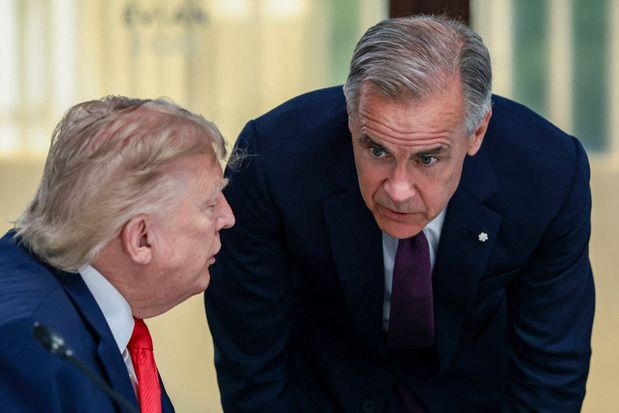
U.S. President Donald Trump (left) and Prime Minister Mark Carney (right) attend a work lunch as part of the G7 summit, in Evian, France, June 16, 2026. Photo by Evelyn Hockstein / POOL / AFP /Getty Images

The exodus to the U.S. continues for some Canadian-based businesses.


A new study by KPMG found that 40% or manufacturers in Canada have moved production south of the border or are considering the idea as they adapt to trade uncertainty and competitive pressure.

“Manufacturers have shown incredible resilience, adapting to tariffs and uncertainty to navigate this period of heightened volatility,” said Anamika Gadia, Partner and National Leader of Industrial Markets at KPMG Canada.

“But businesses can only operate in endurance mode for so long. Companies can delay investments, absorb higher costs and adjust their operations, but they can’t remain in a holding pattern indefinitely. At some point, uncertainty begins to shape long-term decisions about where investment, production and growth will occur.”

Some of the top reasons for the exodus to the U.S. include avoiding or reducing high import tariffs, ongoing trade uncertainty, lower operating costs and a more favourable tax environment.


Those same companies were asked what would encourage them to stay in Canada. The respondents said ensuring certainty around free trade, continuing tariff relief and remissions for imports from the U.S., lowering corporate taxes, improving cost of living and housing affordability for employees, and improved access to skilled workers could help change their plans.

On Canada Day, the Trump administration said the U.S. would not join Canada and Mexico in extending the free trade deal for another 16 years. The agreement remains in effect for 10 years while the three sides either negotiate changes or decide to withdraw from the pact.

Heavily dependent
The survey says that Canadian manufacturers remain heavily dependent on the U.S. market, with 61% agreeing their business cannot survive without access to it. Eighty-six per cent of manufacturers export goods outside Canada, and among exporters, 96% say their products are CUSMA-compliant, meaning they are not subject to tariffs.


“While tariffs are an obvious factor, Canadian manufacturers are making long-term decisions about where to locate based on a broader assessment of where they are most likely to have a competitive advantage,” says Joy Nott, Partner, Trade and Customs at KPMG Canada.

A survey of 275 manufacturers finds that 57% say they have paused, reduced or cancelled capital expenditure projects due to economic uncertainty, trade and tariff threats, while 42% have scaled back or paused research and development spending. Fifty-two per cent say they are currently operating in “endurance mode.”


“Sustaining Canada’s manufacturing sector will require businesses to continue investing in productivity, technology and market diversification, while governments work to reduce uncertainty and improve competitiveness,” Gadia said. “The question now is whether Canada can create the conditions that give manufacturers the confidence to keep building, investing and staying here.”

The study also noted that 80% of Canadian manufacturers plan to keep their headquarters in Canada. However, 11% plan to move their headquarters to the U.S. within the next five years.

“The greater risk isn’t where companies are today, but where future investment decisions are being made,” Gadia said. “Many manufacturers are pausing Canadian investments and reassessing where future growth and production capacity should be located.”

ganderson@postmedia.com
 
  • Sad
Reactions: Taxslave2

spaminator

Hall of Fame Member
Oct 26, 2009
40,545
3,995
113
Canadian manufacturers moving south as Mark Carney fails to deliver on trade
A new KPMG survey shows businesses scaling back investment and shifting production to the United States as Ottawa remains without a trade deal and Canada's manufacturing sector sheds jobs.

Author of the article:Brian Lilley
Published Jul 12, 2026 • 3 minute read

free trade
U.S. President Donald Trump (left) and Prime Minister Mark Carney (attend a work lunch as part of the G7 summit, in Evian, France, June 16, 2026. Photo by Evelyn Hockstein /Getty Images
As Mark Carney continues to claim that no deal is better than a bad deal, an increasing number of Canadian firms are looking to move manufacturing production south. Carney was elected on a promise to secure a trade deal with Donald Trump, yet 16 months later, there is still no deal and no sign of one.


That lack of certainty is starting to drive decisions at Canadian manufacturing firms, according to a new survey from KPMG.


Last week, the global consulting firm released a survey of business owners, executives and decision-makers at 275 Canadian manufacturing companies, ranging from firms with just over $10 million in annual sales to those generating more than $20 billion.

The results should be alarming.

KPMG found that 42% of firms have either already moved production to the United States or are considering doing so. Among firms with more than $300 million in annual sales, that figure rises to 49%, with 38% already having shifted some production south and another 11% considering it.

Those weren’t the only troubling findings.

KPMG also found that 36% are scaling back capital expenditures, while 12% have paused spending and another 9% have cancelled investments altogether.

Uncertainty is driving investment decisions
Canada’s most recent jobs report shows the country lost 17,000 manufacturing jobs in June. We have lost 52,000 manufacturing jobs since Carney became prime minister in March 2025 and 61,000 since January 2025, when Donald Trump’s tariff threats became a reality


“I know the president, I’ve dealt with the president in the past in my previous roles when he was in his first term, and I know how to negotiate,” Carney said during the Liberal leadership race that made him prime minister.

That hasn’t exactly worked out.

At times, talks have collapsed because Trump is unpredictable. At other times, they have fallen apart because of needless mistakes by Carney and his team. Consider Carney’s determination to proceed with the Digital Services Tax until Trump suspended all talks in June 2025. Or consider the decision to impose new fees on American automobiles and threaten legal action against U.S. automakers in October 2025, just as negotiations were beginning in earnest following Carney’s White House visit.

Manufacturers are voting with their feet
Is it any surprise that Canadian manufacturers have gone from warning that Trump’s tariffs posed an existential threat to actively planning a move south? KPMG found that 52% of manufacturers are operating in what they describe as “endurance mode,” meaning they are struggling simply to survive.


While Carney continues to deliver political messages about refusing to sign a bad deal, manufacturers are voting with their feet and their wallets.

Without guaranteed access to the American market, Canada becomes a less attractive place to invest.

We may not like that reality, but it remains reality.

Canada should not sign a bad deal simply for the sake of getting one. Yet Carney and his team do not appear to be pursuing a deal at all. Their strategy seems to be to wait out Trump, hoping Republicans lose the midterms and eventually the White House.

Given the loss of 61,000 manufacturing jobs, that is a risky plan.

Waiting for political change in Washington is not a strategy
It also ignores the reality that today’s Democratic Party is hardly a bastion of free trade. Leading figures such as Kamala Harris and Alexandria Ocasio-Cortez have expressed skepticism toward trade liberalization, while the Democratic Socialists of America, one of the party’s most energized factions, openly oppose free trade agreements.


Manufacturing jobs are disappearing, business investment is declining, and as Carney debates whether Canada is in a technical recession or a real one, few can deny that the economy is stalled at best. His apparent strategy is to wait for the rising radicals in the Democratic Party to replace the radicals in the Republican Party, despite the fact that both parties are increasingly skeptical of free trade.

It’s not going to work, and more Canadian jobs will be lost.

But for Carney, as long as opposing Trump boosts his polling numbers, the political incentives remain clear — even as Canada’s economy suffers.
 
  • Like
Reactions: Taxslave2

Taxslave2

Senate Member
Aug 13, 2022
5,830
3,113
113
Moving south make perfect sense for most manufacturer. Canada is a small market with heavy regulation and high taxation. The Us is a large market with mostly better tax laws. An interesting past experience in the opposite direction is a case in point. Back in the late 80s ish, when self darkening welding helmets came on the scene, may came with American flags and other US signage on them. Our welding supplier asked the supplier agent about making them with Canadian flags. The response? “ there are 30 million people total in Canada. There are 80 million blacks in the US. If we wanted to cater to a small market this is the one we would go after.”
 
  • Like
Reactions: Ron in Regina

55Mercury

rigid member
May 31, 2007
4,518
1,156
113
Moving south make perfect sense for most manufacturer. Canada is a small market with heavy regulation and high taxation. The Us is a large market with mostly better tax laws. An interesting past experience in the opposite direction is a case in point. Back in the late 80s ish, when self darkening welding helmets came on the scene, may came with American flags and other US signage on them. Our welding supplier asked the supplier agent about making them with Canadian flags. The response? “ there are 30 million people total in Canada. There are 80 million blacks in the US. If we wanted to cater to a small market this is the one we would go after.”
You'd think people could just go and buy stickers and put Canadian flag stickers over the American flags, or Dudley Do-Right stickers to cover the Statue of Liberty lol

Yeah there's a lot of dumb attitude down there. I remember as a kid in the '70s visiting my dad in Chicago and I made the mistake of trying to buy something with a Canadian quarter mixed in with the US change. The person at the cash said "sorry we don't take tokens here."

uh, ok
 

pgs

Hall of Fame Member
Nov 29, 2008
29,297
8,635
113
B.C.
You'd think people could just go and buy stickers and put Canadian flag stickers over the American flags, or Dudley Do-Right stickers to cover the Statue of Liberty lol

Yeah there's a lot of dumb attitude down there. I remember as a kid in the '70s visiting my dad in Chicago and I made the mistake of trying to buy something with a Canadian quarter mixed in with the US change. The person at the cash said "sorry we don't take tokens here."

uh, ok
Why would you think Canadian money should be acceptable in a foreign country ?
 

55Mercury

rigid member
May 31, 2007
4,518
1,156
113
Well I was a kid at the time but I would think that proximity and the fact that Canadians have no problem accepting American money at face value even when our dollar was higher than the US dollar for a few months way back when.
 
  • Like
Reactions: Ron in Regina

pgs

Hall of Fame Member
Nov 29, 2008
29,297
8,635
113
B.C.
Well I was a kid at the time but I would think that proximity and the fact that Canadians have no problem accepting American money at face value even when our dollar was higher than the US dollar for a few months way back when.
Most places along the border accept Canadian change at par , but not all .
 
  • Like
Reactions: Ron in Regina

Ron in Regina

"Voice of the West" Party
Apr 9, 2008
32,666
11,793
113
Regina, Saskatchewan
"Canada and Mexico purchase more U.S. manufactured goods than the next dozen U.S. trading partners combined and represent the top export markets for U.S. agricultural products," said Business Roundtable president Kristen Silverberg in an article for the Brookings Institution, a think-tank in Washington, D.C.
The Trump administration opted not to renew the trade pact, better known in Canada as:

“CUSMA/NAFTA/USMCA/LMNOP/EIEIO/T-MEC” at the start of July. Mexico and Canada had both requested a 16-year extension.
"The USMCA is the largest, fairest, most balanced, and modern trade agreement ever achieved. There’s never been anything like it," Trump told a signing ceremony in January 2020.
The continental trade agreement has shielded Canada and Mexico from many of Trump’s Trumpian tariffs but industries like steel, aluminum, automobiles, lumber, cabinetry, and many many other are being slammed with separate duties. Those sector-specific duties have been a key issue for Canada’s negotiators but Trump seems unwilling to shift his stance on the tariffs.
While the Canada-U.S. relationship has been rocked by Trump’s tariffs and threats of annexation, the American architect of CUSMA said he’s not worried about the trade deficit with Canada. Robert Lighthizer, the United States trade representative during the first Trump administration, said “there’s nothing wrong with having a trade deficit with someone who’s giving you energy.”😉
Mexico’s top diplomat Roberto Velasco Álvarez, Mexico's Secretary of Foreign Affairs says his government has no interest in striking a separate trade arrangement with Washington that would jettison the three-way United States-Mexico-Canada Agreement.

Negotiating as a unified North American bloc prevents the U.S. from playing its smaller neighbors against one another. By forming a united front, Canada and Mexico maintain stronger leverage in trade disputes and tariff negotiations.

The Mexicans next week are holding a third round of formal bilateral negotiations with the United States on the renewal of the USMCA. Formal negotiations between Canada and the U.S. have yet to begin.
What’s also not being mentioned is that the US has a population greater than double Mexico and Canada combined, and yet Canada in Mexico are the top importers of American goods on the planet…with the third largest being China…and again individually Canada or Mexico imports more than twice as much in American goods then China does.
Both Mr. Velasco and Ms. Anand declined to say whether Canada and Mexico’s embrace of Chinese-made electric vehicles will be an obstacle to renewal of the Trilateral Agreement for North America. Canada is trying to attract Chinese EV manufacturers to build in Canada and vehicles from China have captured a sizeable share of Mexico’s car market.

Mr. Velasco said there is only one Chinese vehicle manufacturer currently operating in Mexico and that sales of vehicles from China are mainly for the low end of the market. He said Chinese EVs are part of the trade discussions with the United States.
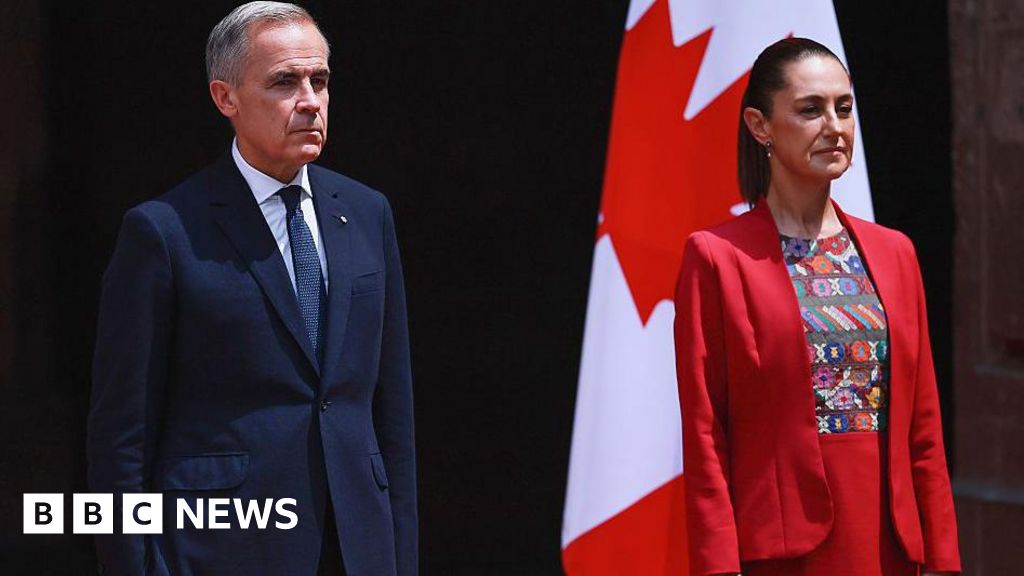
Canada and Mexico signed a strategic economic and security partnership pact. The agreement was formalized in September 2025 by Canadian Prime Minister Mark Carney and Mexican President Claudia Sheinbaum in Mexico City.

This bilateral deal focuses on strengthening trade corridors, boosting infrastructure development, and securing supply chains. It complements the trilateral USMCA (or CUSMA) framework while aiming to deepen ties as both nations navigate U.S. trade policies. Building on this, the Business Council of Canada and Mexican business groups also signed memorandums of understanding, with both governments reaffirming their shared goals during a Mexican trade mission to Canada.
 

Ron in Regina

"Voice of the West" Party
Apr 9, 2008
32,666
11,793
113
Regina, Saskatchewan
The program will request onshoring plans from companies that, if ⁠approved, will be eligible to import a commensurate level of primary aluminum into the United States at a reduced tariff rate equal ⁠to half of the otherwise applicable Section 232 rate, the White House said in the proclamation. Trump is leaning heavily on Section 232 of the Trade Expansion Act of 1962 and other statutory workarounds specifically to bypass the courts after his broad-based tariffs were struck down.🙄

Section 232 of ⁠the Trade Expansion Act of 1962 authorizes the president to adjust imports found to threaten U.S. national security…so of coarse Trump described aluminum as being critical to the U.S. economy and defence industrial base. Section 232 of ⁠the Trade Expansion Act of 1962 authorizes the president to adjust imports found to threaten U.S. national security.😉

In February 2026, the U.S. Supreme Court ruled 6-3 that Trump's sweeping "reciprocal" and fentanyl-related global tariffs were illegal. The High Court clarified that the International Emergency Economic Powers Act (IEEPA) of 1977 does not give the president unilateral power to tax imports during peacetime. Because the Supreme Court's ruling strictly applied to IEEPA, Trump immediately pivoted to alternative trade laws where executive authority is explicitly defined by Congress.

(Ironically, eight days later Trump went to war with Iran, except it wasn’t a war, but it was, and it wasn’t, depending on who Trump was talking to, but that’s a different story I guess)

How does this fit into the North American trading block of “Fortress North America” that Trump wants Canada and Mexico to toe the line of? The news story doesn’t say. It also doesn’t say how companies promising to relocate from other nations to America to ‘only’ be punished with 1/2 the tariff rate will bring the hydroelectric power making it advantageous to already be where they’re currently located with them to America.🤫

The "Fortress North America" concept is a geopolitical and economic strategy that advocates for integrating the United States, Canada, and Mexico to create a self-reliant continental bloc. Driven by global competition and trade protections, it shifts the focus from broad global free trade to regional security…but it’s diametrically opposed to Trump screwing over the other members in Fortress North America, in a ‘you can’t have your cake and eat your neighbours too’ sorta thing.🤔

Trump's personal trade vision is more narrowly focused on "Fortress North America," viewing aggressive, unilateral tariffs as the primary tool to onshore jobs rather than relying on deep, multilateral regional integration with neighbors.

Instead of an integrated continental fortress, Trump has previously explored more punitive trade measures, including broad global tariffs, and has even suggested using economic force to dissolve or more tightly control the Canada-U.S. border to eliminate trade deficits in specific industries like cars and lumber. Good times. If the goal is to punish your neighbours, don’t be upset when they’re forced to diversify their trade with others you may not wish them to.
 

Ron in Regina

"Voice of the West" Party
Apr 9, 2008
32,666
11,793
113
Regina, Saskatchewan
More Trump tariffs? Who would’ve thunk it? U.S. President Donald Trump is escalating “his” trade war against Canada, imposing 50-per-cent tariffs on a wide range of goods to hit back at Ottawa for retaliating against his previous tariffs. How dare the Canadians for not just grabbing their ankles?
Canada previously dropped most of its 2025 retaliatory tariffs against U.S. goods after the U.S. agreed to exempt CUSMA-compliant products, but steep counter-tariffs on U.S. steel, aluminum, and automobiles remain in place.

In a statement, the White House complained that Canada has fought back against Mr. Trump’s trade war. Other countries and trading blocs, including the United Kingdom, Japan and the European Union just lubed up and agreed to accept punitive U.S. trade measures in exchange for Mr. Trump not making their tariffs even higher.
“Over the past year and a half, only two countries have chosen to retaliate against President Trump’s tariffs rather than suck it up and take it laying down, just accepting the buggery and ‘negotiated’ a deal with the United States: the People’s Republic of China and Canada,” the statement said.

“In a surprise move on Monday, Mr. Trump signed three proclamations invoking Section 338 of the Depression-era Tariff Act to impose the levies on Canadian alcohol, dairy products, hockey sticks, cement, and hundreds of other exports.

The tariffs will take effect on Aug. 19 and will not include an exemption for goods trading under the U.S.-Mexico-Canada Agreement, which is still in effect until Canada Day in 2026, significantly broadening the economic damage Mr. Trump has been trying to inflict on one of his country’s closest allies and largest trading partners since he returned to office last year because Canada is one of his country’s closest allies and largest trading partners.

Is this “really” about Canada being one of two countries that didn’t just spread their butt cheeks for Trump? President Donald Trump did not impose any new financial punishments or tariffs against China today. Instead, the administration's primary trade actions focused on Canada—specifically, new 50% tariffs on various Canadian goods over alleged discriminatory treatment of U.S. autos and alcohol—and adjustments to domestic aluminum production.🤔
Curiously, the new tariffs will not apply to Canadian oil, gas, potash, fish or critical minerals, even though oil and gas is the main source of the U.S.’s goods trade deficit with Canada, which Mr. Trump has said he wants to eliminate.😐. Thankfully America doesn’t need anything from Canada.

“The President last year imposed hefty tariffs on steel, aluminum and autos, which disproportionately hit Canada because of the two countries’ integrated economies. Canada is also subject to Mr. Trump’s global baseline tariff but, until now, most goods were exempted so long as they complied with the USMCA.

Of particular irritation to the Trump administration have been the provinces, including Ontario, that have taken U.S. alcohol off store shelves in response to the tariffs. One of Mr. Trump’s orders Monday hits back by tariffing Canadian beer, wine, whisky, and numerous other alcoholic products, including plum wine. Imported cocktail ingredients will also be subject to the levy.”

I say put the American booze back on the shelves in the provinces that aren’t Alberta & Saskatchewan…let them collect dust to make Trump…content-ish…until the next plastic bag blows past in the wind.
Section 232 of ⁠the Trade Expansion Act of 1962 authorizes the president to adjust imports found to threaten U.S. national security…so of coarse Trump described aluminum as being critical to the U.S. economy and defence industrial base. Section 232 of ⁠the Trade Expansion Act of 1962 authorizes the president to adjust imports found to threaten U.S. national security.😉
I wonder if today’s tariffs against Canada (but not China) are due to threats against U.S. national security also? Hockey sticks and plum wine, etc…

Another order targets milk, whey and lactose in response to Canada’s supply management system, which limits dairy imports from the U.S. and other countries. In the order, the Trump administration complains that Canada allows in more dairy under its trade deal with Europe than it does from the U.S. Mr. Trump signed off on the current system when he negotiated the USMCA in his first term.🙄

In response to Canada’s retaliation against U.S. auto tariffs, the Trump administration will tariff a range of other products, including honey, down for stuffing pillows, bedsheets, horsehair, flower bulbs and “mosses and lichens” but certainly not against Canadian oil, gas, potash, fish or critical minerals.

Prime Minister Mark Carney tried last year to negotiate down Mr. Trump’s tariffs. He also made several concessions, including cancelling a planned digital services tax, reducing retaliatory tariffs, and complying with the President’s demands for stepped up military spending and border security, but it wasn’t submissive enough compared to other nations.
1784593495957.jpeg
Last week, the President seized on smoke from Canadian forest fires as another reason to impose tariffs…seriously…& that’s not from the Beaverton or Babylon Bee.
…but these ones are: