The Tarriff Hype.

Ron in Regina

"Voice of the West" Party
Apr 9, 2008
32,592
11,770
113
Regina, Saskatchewan
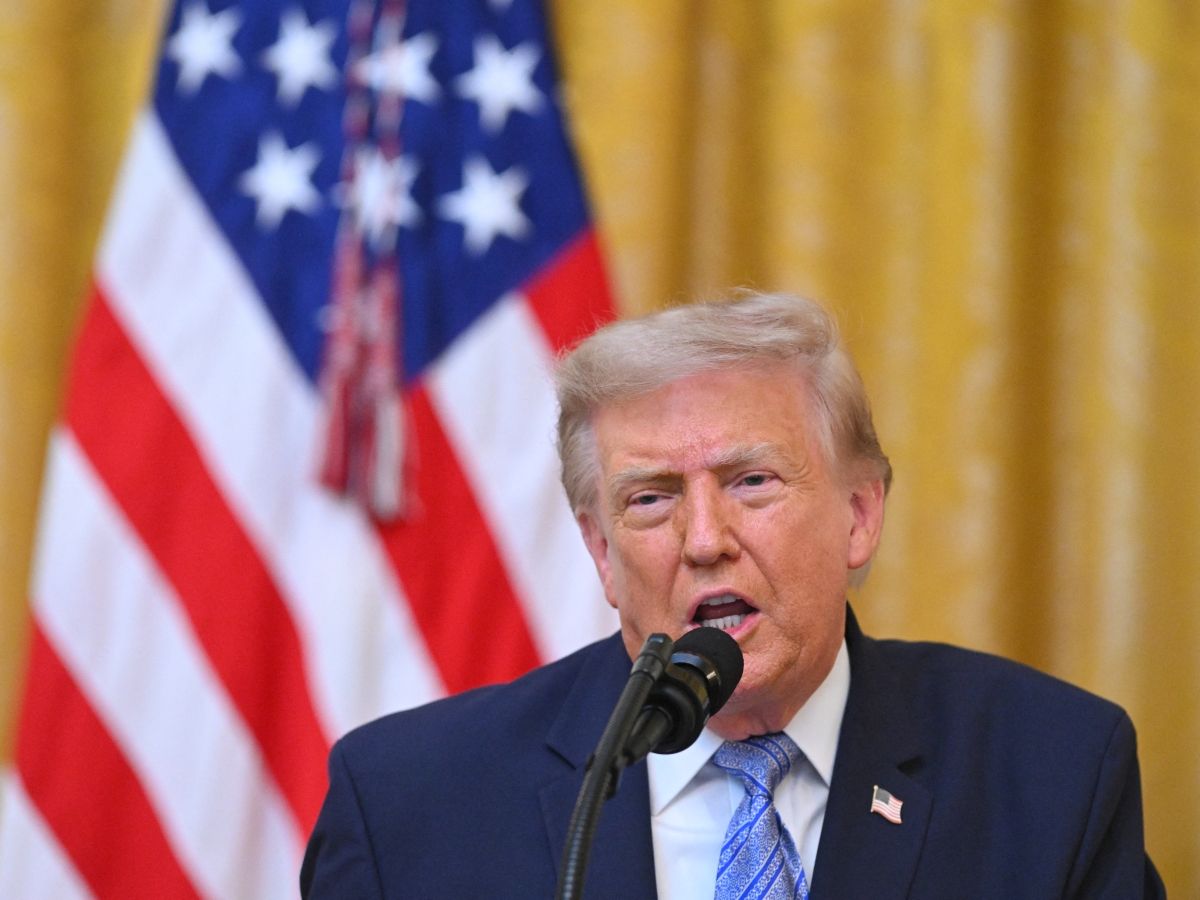
Canada is facing the prospect of entirely new tariffs from U.S. President Donald Trump’s administration after Washington claimed Ottawa has a poor track record on preventing importation of products of forced labour.
“The sweeping nature of the tariffs—which cover an estimated 99 percent of all imports into the U.S.—is raising questions. Interos.ai, a company that makes software that helps firms understand risks within their supply chains, says its database lists 1.3 million companies globally that are highly likely to be engaged in what it calls “unethical labor,” including forced labor, child labor, and other unethical practices, in the past year.
The move comes as Canada’s biggest free trade pact, CUSMANAFTAUSMCALMNOP, is up for renewal.
Yet, there appears to be little correlation between the prevalence of forced labor believed to be in a country and the level of tariffs imposed. According to data from Interos.ai, three of the top 10 countries for unethical labor (Mexico, Malaysia, and Bangladesh) are taxed at the lower rate of 10 percent. And several countries with little known forced labor, including Switzerland, New Zealand, Japan, and the United Kingdom are subject to the higher rate of 12.5 percent.

If the true purpose of the tariffs is to reduce forced labor, the logic is “a little hard to swallow follow” says Interos.ai CEO Ted Krantz—and suggests that it has more to do with bringing in income for the federal government or creating leverage for negotiating. Eighty percent of companies believed to be engaged in forced labor are based in China and India, he adds.

It feels like strategically you’re getting further and further away from the core intent and just pushing as many buttons as possible to try to have impact, which is probably more in the geopolitical game theory than it is a direct tactic against forced labor, based on the data we see,” says Krantz.

“I do think there’s good intent here, but it does feel like the overall strategy is still around top line and getting more tariffs in place to try to help the economic recovery.”

“Jamieson Greer, who leads the office, responded to the Post editorial in a statement on the office’s website, suggesting that the paper was advocating for “a laissez-faire approach to modern slavery.” He wrote that the EU’s ban on goods made with forced does not take effect until the end of 2027 and accused Canada of not stopping shipments that included goods made with forced labor..like…American alcohol exports to Canada?🤯

“The United States must ensure those commitments are effectively enforced, while continuing to use its leverage to expand the fight against slavery in global supply chains,” he wrote.

The tariffs are not based on the amount of forced labor believed to be taking place within their borders. Instead, the tariffs are based policies each country has on the books preventing goods made with forced labor from entering their markets, and how proactively those countries detaining shipments into the U.S. that contain goods believed to be made with forced labor…but what about detaining shipments “from” the U.S. that contain goods believed to be made with forced labour??? Exact statistical data detailing the specific percentage of US prison-made goods exported to other nations is unavailable, as the US government does not track this figure.
“The USTR release further explains that the tariff rate is 10 percent for economies that, in its own judgment, have made partial efforts to reduce imports made with forced labor: Canada, Ecuador, the European Union, Indonesia, Mexico, and Pakistan.

(Canada explicitly bans the importation of all goods from the US—or any other country—that are manufactured, mined, or produced wholly or in part by forced or prison labour. This prohibition is legally enforced under the Canada Customs Tariff and was integrated to meet trade commitments under CUSMA, which President Trump has stated he doesn’t want to renew)

Fifty-four other economies that “have failed to impose and effectively enforce a prohibition on the importation of goods produced with forced labor,” the agency says, are set to face a tariff of 12.5 percent.

“Even if the tariffs were imposed as a replacement to the IEEPA tariffs, Brittney Powell, a partner at the Washington, DC–based law firm Fox Rothschild., calls it “a clever policy decision,” because the Tariff Act of 1930 bans imports of goods made with forced labor. “To the extent that other countries don’t have a similar law or not enforcing those laws, the courts might find that the USTR was reasonable in finding that that constitutes an unfair trade practice,” she says.

While the Canadian importation ban is technically in full effect, watchdogs and human rights organizations have noted that goods produced via exploitative prison labour in the United States still occasionally enter the Canadian market, potentially leaving Canada open to this additional 10% tariff…by the U.S.🤔😳

This issue has sparked growing domestic advocacy urging the Canada Border Services Agency (CBSA) to increase its enforcement capabilities at border crossings. Because of this, the Government of Canada introduced legislation to strengthen the import ban framework, aiming to improve interception mechanisms at the border.

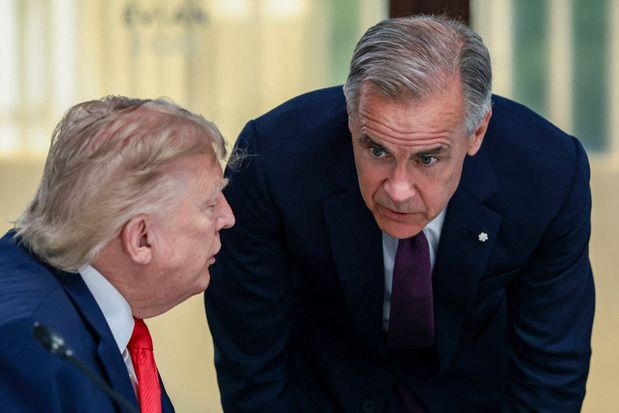
U.S. Ambassador to Canada Pete Hoekstra's speech at his Fourth of July party in Ottawa included a political nudge aimed at Canada, with American F-35 fighter jets flying over the crowd and a comment about some provinces' bans on American booze.🙄 American agricultural products and commodities produced by forced prison labor are entering global supply chains and being exported, though they are typically embedded as raw ingredients rather than sold directly as branded alcohol bottles for example, but catch22.

“Hoekstra set a goal on stage outside his official residence to get American liquor back on Canadian shelves by his next Independence Day party. "Next year, hopefully we can all take a toast of American bourbon semi-legally (except for Section 301 of the U.S. Trade Act of 1974 I guess) in the province of Ontario," Hoekstra said. "And toast the friendship and the relationship between the United States and Canada."
 

Ron in Regina

"Voice of the West" Party
Apr 9, 2008
32,592
11,770
113
Regina, Saskatchewan
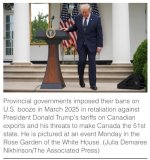
“A Republican lawmaker in Washington is firing back at Canadian provinces for retaliating against U.S. President Donald Trump's tariffs by banning the sale of U.S. alcohol.

Claudia Tenney, a member of the House of Representatives whose district includes parts of northern New York, has introduced a bill aimed at further punishing Canada over restrictions on U.S. alcohol imports imposed by eight provincial governments.

She calls her bill the Combating Attacks on our National Alcoholic Drinks by Allies Act, or the CANADA Act. Cute.

"Canadian provinces cannot be allowed to hold American wineries, breweries, and distilleries hostage and attempt to ransom them," Tenney said Monday in a statement on her website….like America can’t hold entire industrial sectors in Canada hostage to Trumps tantrum of any particular delusion on any particular day?

“"American wineries, breweries, distilleries, and other beverage producers deserve fair access to Canadian markets, not discriminatory treatment from one of our closest trading partners," Tenney said.
1783370982465.jpeg
Tenney, if you have an issue, take it up with your own president. Seriously.

Tenney's statement does not mention what prompted the provinces' alleged "discriminatory treatment" of U.S. alcohol: the hefty tariffs Trump imposed on many Canadian exports and his frequent threats to make Canada the 51st state…but then maybe she doesn’t even know or doesn’t care or isn’t aware, etc…or doesn’t understand the term reciprocal (?) or that the Federal and Provincial governments are two different level levels of government doing two different things?

“U.S. exports of wine, beer and spirits to Canada plummeted in early 2025 as a result of the provincial retaliation. Now, provincial bans or not, I’m assuming that market share is gone and Canadian consumers will buy or not buy American alcoholic beverages based upon the clown show that is the Trump administration going forward.

The U.S. wine industry has called the collapse "catastrophic" and recently published figures showing the value of its exports to Canada went from $460 million US in 2024 to $103 million US in 2025, a drop of 78 per cent…so does that mean that Alberta & Saskatchewan are floating the difference of 22% of America’s alcohol exports into Canada? Damn…being the only 2 of 10 that aren’t stopping their citizens from voting with their own wallets?

“If made law, Tenney's legislation would direct the office of U.S. Trade Representative Jamieson Greer to investigate provincial liquor board restrictions on the import and distribution of U.S. products.

Under Section 301 of the Trade Act, the USTR has the power to impose penalties — including tariffs or import restrictions — if an investigation finds that a foreign government is engaging in a discriminatory practice that "burdens or restricts" U.S. commerce.

In short, the USTR not only conducts the investigation, it gets to determine the verdict and the sentence.
But….but Trump is bringing in his own laws with his own additional tariffs…that inevitably will conflict with this:
“Jamieson Greer, who leads the office, responded to the Post editorial in a statement on the office’s website, suggesting that the paper was advocating for “a laissez-faire approach to modern slavery.” He wrote that the EU’s ban on goods made with forced does not take effect until the end of 2027 and accused Canada of not stopping shipments that included goods made with forced labor..like…American alcohol exports to Canada?🤯
Yes, the same Jamieson Greer as above…
While the Canadian importation ban is technically in full effect, watchdogs and human rights organizations have noted that goods produced via exploitative prison labour in the United States still occasionally enter the Canadian market, potentially leaving Canada open to this additional 10% tariff…by the U.S.🤔😳
Leading to Trumps latest “pile-on” tariffs:
(Canada explicitly bans the importation of all goods from the US—or any other country—that are manufactured, mined, or produced wholly or in part by forced or prison labour. This prohibition is legally enforced under the Canada Customs Tariff and was integrated to meet trade commitments under CUSMA, which President Trump has stated he doesn’t want to renew)
So…damned if we do, & damned if we don’t?
“The sweeping nature of the tariffs—which cover an estimated 99 percent of all imports into the U.S.—is raising questions. Interos.ai, a company that makes software that helps firms understand risks within their supply chains, says its database lists 1.3 million companies globally that are highly likely to be engaged in what it calls “unethical labor,” including forced labor, child labor, and other unethical practices, in the past year.
Pick a lane…or does Canada get to chose which conflicting American laws we have to break to get the lower of the two inevitable tariffs?
U.S. Ambassador to Canada Pete Hoekstra's speech at his Fourth of July party in Ottawa included a political nudge aimed at Canada, with American F-35 fighter jets flying over the crowd and a comment about some provinces' bans on American booze.🙄 American agricultural products and commodities produced by forced prison labor are entering global supply chains and being exported, though they are typically embedded as raw ingredients rather than sold directly as branded alcohol bottles for example, but catch22.
A USTR investigation recently determined that 60 U.S. trading partners — including Canada and the European Union — are failing to do enough to keep forced labour out of their supply chains…& that’s forced prison labour on our doorstep from America and potentially the raw ingredients for American Alcohol products for export? Isn’t this alcohol ban just compliance with Trumps whims?
 
  • Like
Reactions: Taxslave2

Ron in Regina

"Voice of the West" Party
Apr 9, 2008
32,592
11,770
113
Regina, Saskatchewan
Yankee beer isn't worth the cost of walking to the beer store.
Not if the inputs (raw ingredients) could potentially have been made with prison labour, & justify’s more Trump tariffs for Canada accepting it into our markets.

An investigation by the Associated Press revealed that raw agricultural commodities, such as corn, wheat, and soybeans, grown by prisoners in state correctional facilities enter the supply chains of large agricultural conglomerates like Cargill. Because these bulk ingredients are mixed with non-prison farmed goods and heavily processed, any American brewery or distillery sourcing its malted barley, corn, or spirits from these major commodity traders and food processors potentially utilizes raw ingredients tied to prison labor.
 

pgs

Hall of Fame Member
Nov 29, 2008
29,276
8,615
113
B.C.
Not if the inputs (raw ingredients) could potentially have been made with prison labour, & justify’s more Trump tariffs for Canada accepting it into our markets.

An investigation by the Associated Press revealed that raw agricultural commodities, such as corn, wheat, and soybeans, grown by prisoners in state correctional facilities enter the supply chains of large agricultural conglomerates like Cargill. Because these bulk ingredients are mixed with non-prison farmed goods and heavily processed, any American brewery or distillery sourcing its malted barley, corn, or spirits from these major commodity traders and food processors potentially utilizes raw ingredients tied to prison labor.
Is that a bad or good thing ?
 
  • Like
Reactions: Taxslave2

Taxslave2

Senate Member
Aug 13, 2022
5,790
3,095
113
Not if the inputs (raw ingredients) could potentially have been made with prison labour, & justify’s more Trump tariffs for Canada accepting it into our markets.

An investigation by the Associated Press revealed that raw agricultural commodities, such as corn, wheat, and soybeans, grown by prisoners in state correctional facilities enter the supply chains of large agricultural conglomerates like Cargill. Because these bulk ingredients are mixed with non-prison farmed goods and heavily processed, any American brewery or distillery sourcing its malted barley, corn, or spirits from these major commodity traders and food processors potentially utilizes raw ingredients tied to prison labor.
I am not really understanding the significance of this. Canada also has prisoners involved in a variety of commercial endeavors. The fact that prisoners contribute to their keep seems like a plus, not a negative.
 

Ron in Regina

"Voice of the West" Party
Apr 9, 2008
32,592
11,770
113
Regina, Saskatchewan
I am not really understanding the significance of this. Canada also has prisoners involved in a variety of commercial endeavors. The fact that prisoners contribute to their keep seems like a plus, not a negative.
Canada use to…but I don’t think they do anymore, but I could be wrong. Through family I knew the guy who ran the autobody shop at the provincial prison in Regina and that got shut down years ago, as did they even having their own gardens.
Sourcing food from prisons .
That’s an interesting debate all in itself, but “farming out” prison labour to multinationals for a fraction of minimum wage…is somewhat questionable…& more so if what their labour is used for export commodities to countries that you’re gonna punish because they’re purchasing items from your country that Use this labour from prisons (forced labour). It is literally a damned if you do and damned if you don’t situation.

Currently the US is looking at legislation to punish Canada for not purchasing enough American alcohol (eight out of 10 provinces are currently banning the sale), and the US is looking at punishing countries that purchased goods using forced (like prison labour) labour…so in this situation, regardless of what Canada does, it’s gonna get punished?

I’m just looking at the irony here. Do you see the irony? It would be the same trade organization, punishing Canada, regardless of what it does in this above scenario.