


Scientific method - Wikipedia, the free encyclopedia
Truth and belief
Main article: Truth
Belief can alter observations; those with a particular belief will often see things as reinforcing their belief, even if they do not.[9] Needham's Science and Civilization in China uses the 'flying horse' image as an example of observation: in it, a horse's legs are depicted as splayed, when the stop-action picture by Eadweard Muybridge shows otherwise. Note that at the moment that no hoof is touching the ground, the horse's legs are gathered together and are not splayed.
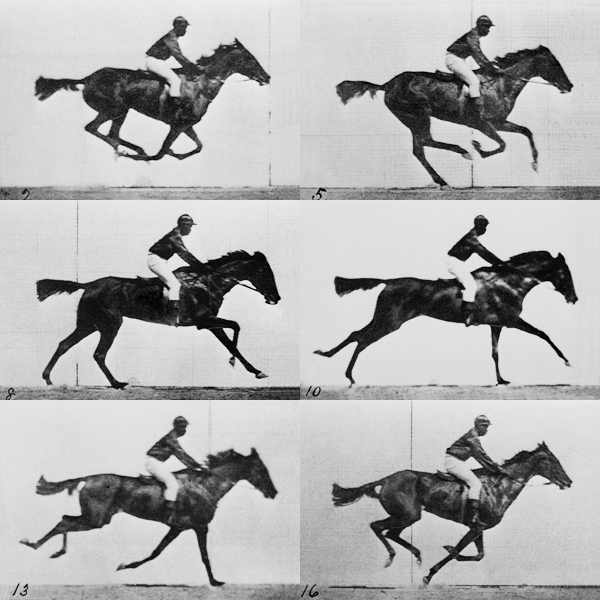

Eadweard Muybridge's studies of a horse galloping
Earlier paintings depict the incorrect flying horse observation. This demonstrates Ludwik Fleck's caution that people observe what they expect to observe, until shown otherwise; our beliefs will affect our observations (and therefore our subsequent actions). The purpose of the scientific method is to test a hypothesis, a belief about how things are, via repeatable experimental observations which can contradict the hypothesis so as to fight this observer bias

 a criminal man in the prison of Pilate) that was crucified.


