Trudeau Has Buried Us In Debt

spaminator

Hall of Fame Member
Oct 26, 2009
41,014
4,147
113
Carney Liberals play fast and loose with federal books
Government will spend an added $38 billion this year over last

Author of the article:Lorne Gunter
Published Sep 26, 2026 • Last updated 19 hours ago • 3 minute read
Prime Minister Mark Carney speaks during Question Period in the House of Commons on Parliament Hill in Ottawa on Thursday, Sept. 24, 2026.
Prime Minister Mark Carney speaks during Question Period in the House of Commons on Parliament Hill in Ottawa on Thursday, Sept. 24, 2026. Photo by HYUNGCHEOL PARK /Postmedia

That’s the only fiscal strategy the Carney Liberals is good at.


They will spend an added $38 billion this year over last.

The Canadian Taxpayers Federation (CTF) calculates the federal government will spend $594.8 billion in 2026-27 And much of that — nearly $65 billion — will be borrowed money,

Interest on the national debt, which sits at about $1.4 trillion, will cost Ottawa (and taxpayers) nearly $59 billion this year. That’s more than federal health transfers to provinces ($57.4B) or total GST revenue ($53.4B), according to the CTF.

The only federal spending areas that exceed interest payments are seniors’ benefits and children’s benefits.

Yet despite all this, the federal Liberals keep insisting they will balance the “operating budget” by 2027-28. Prime Minister Mark Carney told his investment summit in Toronto last week that means the government’s day-to-day expenses will be in balance one year ahead of the schedule they set for balance in last year’s budget.


Not so fast. Parliamentary Budget Officer (PBO) Annette Ryan said Thursday it is highly doubtful the $547-billion operating budget will be balanced before 2030, a full two years later than Carey’s sunny projections.

And here’s where the coverup comes in.

Since last year, the Carney government has split federal spending into two budgets, operating and capital. The operating budget pays out health, education and welfare transfers to the province, funds seniors’ subsides and child tax credits, most of the civil service’s payroll, the purchase of supplies, rent and so on.

Meanwhile the capital budget is supposed to cover infrastructure, major projects and anything else that might be consider an “investment.”

But according to the PBO, the government plays accounting games with the capital budget, mislabelling a lot of operational spending as capital investment, thereby making operational spending seem lower than it actually is.

Ryan pointed out the way Ottawa defines its operating and capital spending is inconsistent, and isn’t as transparent as the definition used in other jurisdictions, such as the United Kingdom and Singapore, that have split budgets.


Having two sets of books, which is essentially what the Liberals are doing, allows the Carney government to hide a lot of operation spending in the investment column, thereby making it look as if they are balancing the budget quicker.

To top off its three-card monte budget process, the Liberals are taking credit for fiscal prudence that they are not practising.

John Fragos, spokesperson for Finance Minister François-Philippe Champagne, told reporters at last week’s summit, “A persisting commitment to fiscal prudence, discipline and spending efficiency … has moved up balancing the operating budget agenda by a whole year.”

Of course, the budget — operating or otherwise — will not be balanced ahead of schedule, or maybe never.

But to the extent that federal revenues are closing the gap with expenditures, it’s largely the benefit of higher-than-expected oil revenues.

Federal tax revenues were projected to rise just over three per cent this year. So far they have risen nearly 10 per cent, thanks to oil prices that are about 50 per cent higher than anticipated.


Want to know why Carney is going along with Premier Danielle Smith’s insistence that Alberta energy not be used as a bargaining chip in trade talks with the United States? It is solely because without the current level income from oil, Ottawa’s balanced-budget claims would evaporate.

Are there any plans by the Liberals to cut federal spending in a meaningful way? They claim to have marked out $60 billion in spending reductions over the next five years.

But as I said above, federal spending this year is slated to increase by $38 billion. Just this one year of spending increases could wipe out more than two years of planned cuts. One step forward, two steps back.

And there is no real evidence the Carney Liberals are taking a scalpel to spending.
 
  • Like
Reactions: Ron in Regina

spaminator

Hall of Fame Member
Oct 26, 2009
41,014
4,147
113
Deputy mayor’s pals given huge DEI payday by city hall
City hall has paid consultants with personal ties to Ausma Malik and a key Chow staffer more than half a million dollars since 2022

Author of the article:Justin Holmes
Published Oct 08, 2026 • Last updated 8 hours ago • 6 minute read
Zahra Ebrahim and Ausma Malik
Zahra Ebrahim posted this photo of her and Deputy Mayor Ausma Malik to social media in 2022. She wrote then that she had signed the nomination papers for her “dear friend” during her aborted 2018 run for Toronto city council. Photo by x.com/zahraeb


Toronto city hall has given hundreds of thousands of dollars to a DEI consulting firm with long, personal ties to both Olivia Chow’s most trusted staffer and one of her deputy mayors, the Toronto Sun has learned.


Contracts, invoices and other documents, some obtained via freedom of information and some publicly available, show more than $500,000 in taxpayer money has been paid to Monumental Projects Inc. since 2022.

In the fall of that year, Ausma Malik was elected the councillor for Spadina-Fort York. Malik has personal relationships going back years with Monumental’s founders, Zahra Ebrahim and Kofi Hope.

Ebrahim and Hope are also listed as founding advisers by the political organization Progress Toronto. Despite that, Progress Toronto founder Michal Hay appears to have personally signed a Monumental Projects expense on behalf of Chow, while serving as chief of staff to the mayor in 2023.


In a series of statements, city hall confirmed its contracts with Monumental “on two separate projects” in 2022, but did not acknowledge invoices dated from 2023 to 2025, when Chow and Malik were in power.

“The city’s procurement processes include conflict-of-interest requirements for both suppliers and staff,” Genevieve Sharkey, the city’s chief procurement officer, said in a statement.

“Suppliers are required to disclose potential conflicts, and staff involved in procurement activities must comply with the city’s procurement policies, ethical standards and applicable bylaws.”

Kofi Hope and Zahra Ebrahim
Kofi Hope and Zahra Ebrahim are co-founders of the DEI consulting firm Monumental Projects. They are also both listed as founding advisers with Progress Toronto, an organization founded by Mayor Olivia Chow’s political lieutenant Michal Hay. Photo by monumentalprojects.ca
‘Equity tool,’ ‘gender-specific lens’
Nora Cole, who works with Malik’s re-election campaign, said in a brief statement that none of Monumental’s work was for the councillor’s office and pointed to the city’s procurement protocols.

In a written statement, Monumental defended its work but did not address questions about the founders’ ties to Malik and Chow.


“We are proud that since 2020, Monumental has been delivering the highest quality work to a range of clients across Canada,” the statement said. “We approach every bid with the highest standards of integrity. For each tender we consider, we follow the qualification requirements, instructions and procurement processes established by our clients.”

Representatives for Chow did not respond to a request for comment, nor did Progress Toronto.

Monumental was paid for DEI-related consulting work, including training, speaking and public engagement, involving a range of departments at city hall, from the parks division to housing and planning all the way to the mayor’s office.

Many of the contracts and invoices were provided to the Sun by the political advocacy group Integrity TO, which obtained them in a pair of freedom-of-information requests. That group was founded by Daniel Tate, a vocal critic of Chow and her allies on city council, who is running for council in a downtown ward next to Malik’s.


One request contained two six-figure Monumental contracts, one of them a sole-source deal.

The sole-source contract was for the planning department, with a listed delivery date of April 2023, totalling $107,563. Monumental was tasked with revising the city’s “equity tool with a gender-specific lens to support and reinforce work on the making space tool kit.”

It’s unclear if Monumental got any of that money, as city hall said that as of this month, “no invoices have been processed against this purchase order.” The city confirmed, however, that in late 2022, it paid Monumental $28,999.19 for specialized “gender equity research.”

Another contract, dating from March 2022, was for $124,116.67. That bought five months of “public engagement services for the City of Toronto’s recognition review for the economic development and culture division,” with two options to renew for one month.


Part of that so-called recognition review was city hall’s maligned initiative to rename public assets bearing the name of Henry Dundas. A list of invoices makes that plain, saying Monumental’s contract was for a “City of Toronto naming project.”

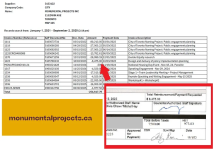
City list of Monumental Projects invoices
This list of City of Toronto invoices paid to consulting firm Monumental Projects was provided to the Toronto Sun. Michal Hay, then Olivia Chow’s chief of staff, signed for one of the expenses. Photo by City of Toronto
Work for mayor’s office, police
That list comes from the other freedom-of-information request, which contains $254,617.79 worth of Monumental invoices since March 2022. However, $149,126.10 of it was payouts for Monumental’s naming project contract.

The $28,999.19 “gender equity research” invoice is also part of that list. The city said that deal was awarded under delegated authority for contracts below $50,000.

The other invoices date from Chow’s term, from October 2023 to June 2025. Hay signed for an $8,475 “full-day strategy session” for Chow’s office, held in July 2023, a few weeks after her byelection win.

Other invoices include $17,515 for an unlabelled “team leadership meeting,” $22,035 for unspecified workshops and a $1,977.50 Nuit Blanche “artist fee.”


Hope, meanwhile, appears to have been paid $500 directly to speak on a panel at an anti-racist planning event at Metro Hall in November 2024. A flyer obtained by the Sun suggests the event was put on by the city’s housing secretariat’s Black Staff Community of Practice group.

Details on other payments were obtained from publicly available sources, such as an April report to the Toronto Police Services board. Documents show the police paid $152,640 in 2025 for Monumental’s “yearlong co-design engagement process … to address race- and identity-based disparities in police responses to mental-health crises in Toronto.”

(Toronto Police had yet to provide a response at the time of publication.)

Another $107,615 to Monumental, paid out for two projects, was found in a city registry for consulting services expenses.

One project, done for $26,115 in 2023 for the city’s HR department, was to “identify the best practices of intersectional gender equity inclusion work.” The other, at a $81,500 cost to city taxpayers in 2024, involved engagement work related to Nuit Blanche, done for TO Live.


Zahra Ebrahim endorsement
Monumental Projects co-founder Zahra Ebrahim has endorsed both Olivia Chow and, recently, Ausma Malik for office. Photo by Ausma Malik via Instagram
On the Waterfront
Monumental has also done work for Waterfront Toronto, which was founded by all three levels of government and operates at arm’s length from city hall. Malik has been on that agency’s board since 2022. (Andrew MacLeod, who is CEO of Postmedia, which owns the Sun, is also on the board.)

Waterfront Toronto said Monumental was part of a team last year that won an engagement deal for Ookwemin Minising, a chunk of land that had been known as Villiers Island before a rebranding under Chow. While the agency gave no details on the money spent, it said that contract was won in an open procurement process.

A search of the city’s bids portal found only one publicly posted contract won by Monumental: a 2022 public engagement deal for $121,970, which was the initial estimate for its naming project work. It’s unclear how many other deals were put through competitive processes and how many were simply offered to Monumental.

It’s also possible that the records obtained by the Sun may account for individual payments more than once, given they come from an array of sources, or that other payments are unaccounted for. The Sun asked for definitive totals for payments to Monumental, both since its 2020 founding and since Malik won election in 2022, but city hall ignored that request.


Whatever conflict-of-interest rules were followed, Ebrahim did publicly endorse Chow for mayor in 2023 and, just recently, Malik for re-election in Spadina-Fort York.

Malik’s ties to the Monumental founders go back far before her time in politics. A Toronto Star article from 2017 said she had met Hope “more than a decade” before that year, while fighting police policies in the wake of the Summer of the Gun.

Meanwhile, Ebrahim already knew her “dear friend” well enough to sign her nomination papers in 2018 for Malik’s first planned council run, aborted when the city’s ward map was redrawn.

Ebrahim, Hope and Hay all contributed financially to Malik’s 2018 campaign, city filings show, with Hay pitching in the maximum $1,200.

jholmes@postmedia.com
 

spaminator

Hall of Fame Member
Oct 26, 2009
41,014
4,147
113
1791532356353.png
 

Dixie Cup

Senate Member
Sep 16, 2006
6,814
4,274
113
Edmonton
Deputy mayor’s pals given huge DEI payday by city hall
City hall has paid consultants with personal ties to Ausma Malik and a key Chow staffer more than half a million dollars since 2022

Author of the article:Justin Holmes
Published Oct 08, 2026 • Last updated 8 hours ago • 6 minute read
Zahra Ebrahim and Ausma Malik
Zahra Ebrahim posted this photo of her and Deputy Mayor Ausma Malik to social media in 2022. She wrote then that she had signed the nomination papers for her “dear friend” during her aborted 2018 run for Toronto city council. Photo by x.com/zahraeb


Toronto city hall has given hundreds of thousands of dollars to a DEI consulting firm with long, personal ties to both Olivia Chow’s most trusted staffer and one of her deputy mayors, the Toronto Sun has learned.


Contracts, invoices and other documents, some obtained via freedom of information and some publicly available, show more than $500,000 in taxpayer money has been paid to Monumental Projects Inc. since 2022.

In the fall of that year, Ausma Malik was elected the councillor for Spadina-Fort York. Malik has personal relationships going back years with Monumental’s founders, Zahra Ebrahim and Kofi Hope.

Ebrahim and Hope are also listed as founding advisers by the political organization Progress Toronto. Despite that, Progress Toronto founder Michal Hay appears to have personally signed a Monumental Projects expense on behalf of Chow, while serving as chief of staff to the mayor in 2023.


In a series of statements, city hall confirmed its contracts with Monumental “on two separate projects” in 2022, but did not acknowledge invoices dated from 2023 to 2025, when Chow and Malik were in power.

“The city’s procurement processes include conflict-of-interest requirements for both suppliers and staff,” Genevieve Sharkey, the city’s chief procurement officer, said in a statement.

“Suppliers are required to disclose potential conflicts, and staff involved in procurement activities must comply with the city’s procurement policies, ethical standards and applicable bylaws.”

Kofi Hope and Zahra Ebrahim
Kofi Hope and Zahra Ebrahim are co-founders of the DEI consulting firm Monumental Projects. They are also both listed as founding advisers with Progress Toronto, an organization founded by Mayor Olivia Chow’s political lieutenant Michal Hay. Photo by monumentalprojects.ca
‘Equity tool,’ ‘gender-specific lens’
Nora Cole, who works with Malik’s re-election campaign, said in a brief statement that none of Monumental’s work was for the councillor’s office and pointed to the city’s procurement protocols.

In a written statement, Monumental defended its work but did not address questions about the founders’ ties to Malik and Chow.


“We are proud that since 2020, Monumental has been delivering the highest quality work to a range of clients across Canada,” the statement said. “We approach every bid with the highest standards of integrity. For each tender we consider, we follow the qualification requirements, instructions and procurement processes established by our clients.”

Representatives for Chow did not respond to a request for comment, nor did Progress Toronto.

Monumental was paid for DEI-related consulting work, including training, speaking and public engagement, involving a range of departments at city hall, from the parks division to housing and planning all the way to the mayor’s office.

Many of the contracts and invoices were provided to the Sun by the political advocacy group Integrity TO, which obtained them in a pair of freedom-of-information requests. That group was founded by Daniel Tate, a vocal critic of Chow and her allies on city council, who is running for council in a downtown ward next to Malik’s.


One request contained two six-figure Monumental contracts, one of them a sole-source deal.

The sole-source contract was for the planning department, with a listed delivery date of April 2023, totalling $107,563. Monumental was tasked with revising the city’s “equity tool with a gender-specific lens to support and reinforce work on the making space tool kit.”

It’s unclear if Monumental got any of that money, as city hall said that as of this month, “no invoices have been processed against this purchase order.” The city confirmed, however, that in late 2022, it paid Monumental $28,999.19 for specialized “gender equity research.”

Another contract, dating from March 2022, was for $124,116.67. That bought five months of “public engagement services for the City of Toronto’s recognition review for the economic development and culture division,” with two options to renew for one month.


Part of that so-called recognition review was city hall’s maligned initiative to rename public assets bearing the name of Henry Dundas. A list of invoices makes that plain, saying Monumental’s contract was for a “City of Toronto naming project.”

City list of Monumental Projects invoices
This list of City of Toronto invoices paid to consulting firm Monumental Projects was provided to the Toronto Sun. Michal Hay, then Olivia Chow’s chief of staff, signed for one of the expenses. Photo by City of Toronto
Work for mayor’s office, police
That list comes from the other freedom-of-information request, which contains $254,617.79 worth of Monumental invoices since March 2022. However, $149,126.10 of it was payouts for Monumental’s naming project contract.

The $28,999.19 “gender equity research” invoice is also part of that list. The city said that deal was awarded under delegated authority for contracts below $50,000.

The other invoices date from Chow’s term, from October 2023 to June 2025. Hay signed for an $8,475 “full-day strategy session” for Chow’s office, held in July 2023, a few weeks after her byelection win.

Other invoices include $17,515 for an unlabelled “team leadership meeting,” $22,035 for unspecified workshops and a $1,977.50 Nuit Blanche “artist fee.”


Hope, meanwhile, appears to have been paid $500 directly to speak on a panel at an anti-racist planning event at Metro Hall in November 2024. A flyer obtained by the Sun suggests the event was put on by the city’s housing secretariat’s Black Staff Community of Practice group.

Details on other payments were obtained from publicly available sources, such as an April report to the Toronto Police Services board. Documents show the police paid $152,640 in 2025 for Monumental’s “yearlong co-design engagement process … to address race- and identity-based disparities in police responses to mental-health crises in Toronto.”

(Toronto Police had yet to provide a response at the time of publication.)

Another $107,615 to Monumental, paid out for two projects, was found in a city registry for consulting services expenses.

One project, done for $26,115 in 2023 for the city’s HR department, was to “identify the best practices of intersectional gender equity inclusion work.” The other, at a $81,500 cost to city taxpayers in 2024, involved engagement work related to Nuit Blanche, done for TO Live.


Zahra Ebrahim endorsement
Monumental Projects co-founder Zahra Ebrahim has endorsed both Olivia Chow and, recently, Ausma Malik for office. Photo by Ausma Malik via Instagram
On the Waterfront
Monumental has also done work for Waterfront Toronto, which was founded by all three levels of government and operates at arm’s length from city hall. Malik has been on that agency’s board since 2022. (Andrew MacLeod, who is CEO of Postmedia, which owns the Sun, is also on the board.)

Waterfront Toronto said Monumental was part of a team last year that won an engagement deal for Ookwemin Minising, a chunk of land that had been known as Villiers Island before a rebranding under Chow. While the agency gave no details on the money spent, it said that contract was won in an open procurement process.

A search of the city’s bids portal found only one publicly posted contract won by Monumental: a 2022 public engagement deal for $121,970, which was the initial estimate for its naming project work. It’s unclear how many other deals were put through competitive processes and how many were simply offered to Monumental.

It’s also possible that the records obtained by the Sun may account for individual payments more than once, given they come from an array of sources, or that other payments are unaccounted for. The Sun asked for definitive totals for payments to Monumental, both since its 2020 founding and since Malik won election in 2022, but city hall ignored that request.


Whatever conflict-of-interest rules were followed, Ebrahim did publicly endorse Chow for mayor in 2023 and, just recently, Malik for re-election in Spadina-Fort York.

Malik’s ties to the Monumental founders go back far before her time in politics. A Toronto Star article from 2017 said she had met Hope “more than a decade” before that year, while fighting police policies in the wake of the Summer of the Gun.

Meanwhile, Ebrahim already knew her “dear friend” well enough to sign her nomination papers in 2018 for Malik’s first planned council run, aborted when the city’s ward map was redrawn.

Ebrahim, Hope and Hay all contributed financially to Malik’s 2018 campaign, city filings show, with Hay pitching in the maximum $1,200.

jholmes@postmedia.com
Meh, nothing will happen & voters will simply vote them back in despite the grift.
 

spaminator

Hall of Fame Member
Oct 26, 2009
41,014
4,147
113
Feds spent $440M on Microsoft licences, can’t say how many are used
The federal government paid $289.1 million to purchase 648,443 licences for Microsoft 365, and $21.3 million for 192,137 licences for Windows

Author of the article:Bryan Passifiume
Published Oct 16, 2026 • Last updated 16 hours ago • 2 minute read
Microsoft has been valued as high as $700 a share.
Microsoft has been valued as high as $700 a share. Photo by Getty Images

OTTAWA — The federal government spent over $440 million on Microsoft product licences, but some government agencies can’t say how many of those are actually being put to use.


Data contained within a response to an order paper question filed by Tory industry critic Adam Chambers shows the money was spent on software licences between March 2025 and March 2026 for a variety of products, including the Windows operating system, Microsoft 365, SQL Server, programmer tools such as GitHub and Visual Studio, Teams, and M365 Copilot.

SSC has no idea how many licences are used
Shared Services Canada (SSC), the federal agency responsible for government-wide IT services, accounted for the bulk of that spending — shelling out $407.8 million on bulk software purchases for itself and other federal departments and agencies.

The federal government paid $289.1 million to purchase 648,443 licences for Microsoft 365, and $21.3 million for 192,137 licences for Windows.


Seventy-one per cent of SSC’s spending went to Microsoft 365 — the all-inclusive corporate software package consisting of Microsoft Office, Teams, OneDrive and SharePoint.


Individual departments spent tens of millions of dollars more purchasing their own Microsoft products, but SSC says it has no way of determining if any of the licences, including the ones it buys, are actually being put to use.

“Departments and agencies are responsible for assigning and managing their Microsoft licenses within their allocation,” SSC’s response read.

“Shared Services Canada does not have the ability to track or monitor license usage. As a result, Shared Services Canada is unable to provide a single, consolidated figure for the total number of users able to access Microsoft products across all licensing types.”

Other departments, such as Public Safety Canada, said they’re likewise unable to track unused licences, adding no metric exists to provide for that data.


Analysis of the response by the Toronto Sun revealed more than 70,000 unused licences across all reporting departments.


$69K spent on licences that weren’t used
Statistics Canada said it paid for 2,608 software licences that aren’t being used, including 210 of 446 SQL Server Enterprise licences from a $1.05-million purchase, and 897 of the agency’s 1,095 Visio licences.

Just under $69,000 was spent by Employment and Social Development Canada on 150 Teams Rooms licences for boardroom video equipment, none of which were used.

Some departments, however, reported their stockpile of unused licences was intentional.

Parks Canada said it keeps spare licences on hand for use by seasonal workers, and StatCan for hires related to the census.

The Canadian Taxpayers Federation, which first flagged the figures on Friday, said taxpayers deserve better.

“Cancelling unused subscriptions is the most basic step any family takes to find savings and taxpayers demand the same from the government,” said Franco Terrazzano, the federation’s federal director.

“A former finance minister told Canadians she cancelled her Disney+ subscription to save money. Now it’s time for the current finance minister to tell bureaucrats to cancel the taxpayer-funded subscriptions they’re not using.”

bpassifiume@postmedia.com
X: @bryanpassifiume
 

bob the dog

Council Member
Aug 14, 2020
2,137
1,444
113
Feds spent $440M on Microsoft licences, can’t say how many are used
The federal government paid $289.1 million to purchase 648,443 licences for Microsoft 365, and $21.3 million for 192,137 licences for Windows

Author of the article:Bryan Passifiume
Published Oct 16, 2026 • Last updated 16 hours ago • 2 minute read
Microsoft has been valued as high as $700 a share.
Microsoft has been valued as high as $700 a share. Photo by Getty Images

OTTAWA — The federal government spent over $440 million on Microsoft product licences, but some government agencies can’t say how many of those are actually being put to use.


Data contained within a response to an order paper question filed by Tory industry critic Adam Chambers shows the money was spent on software licences between March 2025 and March 2026 for a variety of products, including the Windows operating system, Microsoft 365, SQL Server, programmer tools such as GitHub and Visual Studio, Teams, and M365 Copilot.

SSC has no idea how many licences are used
Shared Services Canada (SSC), the federal agency responsible for government-wide IT services, accounted for the bulk of that spending — shelling out $407.8 million on bulk software purchases for itself and other federal departments and agencies.

The federal government paid $289.1 million to purchase 648,443 licences for Microsoft 365, and $21.3 million for 192,137 licences for Windows.


Seventy-one per cent of SSC’s spending went to Microsoft 365 — the all-inclusive corporate software package consisting of Microsoft Office, Teams, OneDrive and SharePoint.


Individual departments spent tens of millions of dollars more purchasing their own Microsoft products, but SSC says it has no way of determining if any of the licences, including the ones it buys, are actually being put to use.

“Departments and agencies are responsible for assigning and managing their Microsoft licenses within their allocation,” SSC’s response read.

“Shared Services Canada does not have the ability to track or monitor license usage. As a result, Shared Services Canada is unable to provide a single, consolidated figure for the total number of users able to access Microsoft products across all licensing types.”

Other departments, such as Public Safety Canada, said they’re likewise unable to track unused licences, adding no metric exists to provide for that data.


Analysis of the response by the Toronto Sun revealed more than 70,000 unused licences across all reporting departments.


$69K spent on licences that weren’t used
Statistics Canada said it paid for 2,608 software licences that aren’t being used, including 210 of 446 SQL Server Enterprise licences from a $1.05-million purchase, and 897 of the agency’s 1,095 Visio licences.

Just under $69,000 was spent by Employment and Social Development Canada on 150 Teams Rooms licences for boardroom video equipment, none of which were used.

Some departments, however, reported their stockpile of unused licences was intentional.

Parks Canada said it keeps spare licences on hand for use by seasonal workers, and StatCan for hires related to the census.

The Canadian Taxpayers Federation, which first flagged the figures on Friday, said taxpayers deserve better.

“Cancelling unused subscriptions is the most basic step any family takes to find savings and taxpayers demand the same from the government,” said Franco Terrazzano, the federation’s federal director.

“A former finance minister told Canadians she cancelled her Disney+ subscription to save money. Now it’s time for the current finance minister to tell bureaucrats to cancel the taxpayer-funded subscriptions they’re not using.”

bpassifiume@postmedia.com
X: @bryanpassifiume
Meanwhile private industry spent zero
 

spaminator

Hall of Fame Member
Oct 26, 2009
41,014
4,147
113
Canada cuts OSAP for private college students while earmarking millions for students abroad
While Ontario cuts of provincial and federally funded OSAP loans and grants for private college students, comes news Canada has earmarked millions for training and aid for Guyana and other countries

Author of the article:Joe Warmington
Published Oct 16, 2026 • Last updated 1 day ago • 4 minute read
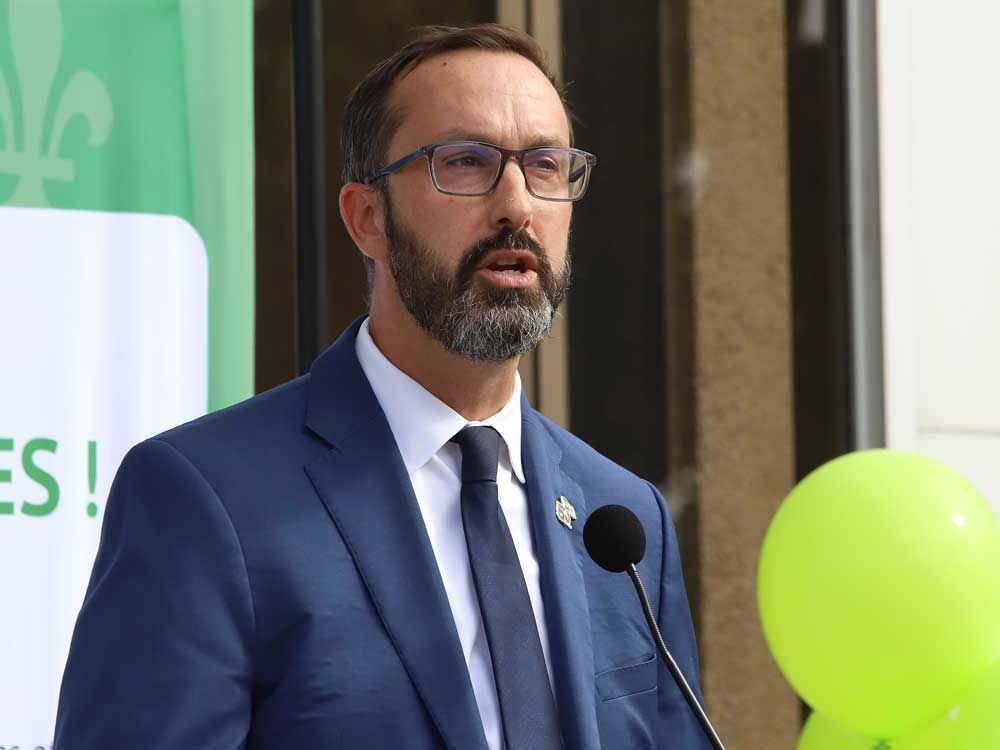
Nolan Quinn, Minister of Colleges, Universities, Research Excellence and Security, takes part in a celebration at the University of Sudbury marking the 50th anniversary of the Franco-Ontarian flag in Sudbury, Ont. on Thursday Sept. 25, 2025.
Nolan Quinn, Minister of Colleges, Universities, Research Excellence and Security, takes part in a celebration at the University of Sudbury marking the 50th anniversary of the Franco-Ontarian flag in Sudbury, Ont. on Thursday Sept. 25, 2025. Photo by John Lappa /Sudbury Star/Postmedia Network

There are still millions of dollars in taxpayers’ money available for training and education, but that cash is earmarked for other countries and not for Ontario kids.


If any of those private college students who have had their OSAP cut off are looking for a way to get funding, perhaps emigrate to beautiful Guyana, which is still getting its Canadian taxpayer assistance. In fact, on the Global Affairs website, it highlights “$39.2 million in further funding for four new international assistance projects aimed at advancing climate action, biodiversity conservation, food security, economic resilience, sustainable and inclusive governance, health, and gender equality.”

But there is more.

“Canada also announced a new partnership with the Government of Guyana to contribute up to $9.5 million in support of their One Guyana Digital Skills Development Program,” says the Government of Canada website. “This initiative will promote economic opportunities and gender equality by empowering thousands of young Guyanese with skills and training for the digital economy. Further, Canada announced $ 120 million in funding to the Government of Guyana, which will be provided over 10 years through a policy-based loan with the Inter-American Development Bank (IDB).”


And even on Oct. 15, while 80,000 private college kids are not getting their OSAP, Immigration, Refugees and Citizenship Canada (IRCC) posted to X a recruiting drive to encourage the “best and brightest” international students to do their graduate studies or research in Canada at institutions established originally to educate our own “best and brightest.”


It seems, however, to be good to be from somewhere else.

If you are having trouble paying your rent or grocery bill, at least you can know where that money you pay in HST or payroll tax is going.

Who knew?

The Canadian government says this will allow “Guyana’s Ministry of Human Services and Social Security to efficiently deliver social programs and promote gender equality” and “Canada is extending its support to Guyana through innovative programs, encompassing essential Maternal, Newborn, and Child Health services for Indigenous communities and remote hinterland populations lacking access to quality healthcare.”


Money for Guyana but not for Ontario students
This week Prime Minister Mark Carney spoke with Guyana’s president Dr. Mohamed Irfaan Ali — for the second time this year — about the warm “people to people” ties between the two great countries.

“The Prime Minister and the President discussed deepening ties in trade and investment between the two countries,” said an Oct. 14 statement from the PMO.

Meanwhile, there are thousands of students, some with small children, who attend private Ontario colleges that teach a trade or are faith-based who are no longer getting assistance — a problem for many deep into the semester who can’t pay their bills.


Time to take care of Ontario students first?
The federal government does say on its website that new funding for private or for-profit international schools has been suspended but is still available until 2029 for those already in the system. A tracker website lists a series of international public universities — from Iran to Gaza, to Israel to the United States to Malaysia — that appear to be eligible to apply for funding to attend as well.

With the federal government paying up to 60% of the money doled out through OSAP, perhaps Canadian taxpayer assistance to foreign countries could be reduced and that money instead be used to save our Ontario students’ academic year? Take care of our own first? Premier Doug Ford’s government has indicated they are working on another short-term solution to help these struggling people, which in turn could help these in-good-standing colleges which rely on tuition to keep their lights on.

“We understand this is creating uncertainty for students and are working quickly to develop options for low-interest, third-party loans facilitated by financial institutions to help students through this period of transition,” said Bianca Giacoboni, press secretary of Minister of Colleges, Universities, Research Excellence and Security Nolan Quinn.


OPP investigation and KPMG audit in limbo
If this happens, this could be a lifesaver for students in limbo. I have asked for more information on this and will report back to you once I hear some concrete details on how this would work or if it’s more wishful thinking than realistic.

Meanwhile, this mysterious, unexplained mess of a situation remains unresolved.

“The OPP has received a referral from the Ontario government and is currently reviewing the information provided,” OPP spokesperson Tracey Mellersh told the Toronto Sun on Oct. 9. Then on Oct. 15, she reiterated that “the review of the referral remains ongoing.”

So how about the KPMG audit? Why are people and institutions, who have done nothing wrong, being punished?


“While the ministry’s initial investigations focused on a few schools, with the ministry since taking action to not renew OSAP at six campuses, in recent weeks we’ve seen evidence of systemic issues,” explains Giacoboni. “At this time, we do not have assurances from the audit team that the issues are not more widespread, leaving us with no choice but to pause OSAP payments to all private institutions to protect taxpayer dollars and hold bad actors accountable.”

This is such a mess. As Bryan Passifiume, some schools are going to court to try to get this reversed. What should happen is both Ford and Carney take money from international programs and fund out this school year for unfairly victimized students while they sort it all out.

Don’t scapegoat Canadian single mothers trying to better themselves by cutting off their assistance in October while there’s enough money to fund gender or climate programs in other countries.
 

spaminator

Hall of Fame Member
Oct 26, 2009
41,014
4,147
113
Toronto City Hall hired PR firm for winter strategy despite 100-person team
While the city insists its comms division spent 'zero dollars' on consultants, invoices were addressed to that unit’s seventh-floor offices

Author of the article:Justin Holmes
Published Oct 23, 2026 • Last updated 16 hours ago • 4 minute read
A man shovels snow in Toronto on Feb. 17, 2025.
A man shovels snow in Toronto on Feb. 17, 2025. City hall brought in consultants to craft a winter weather communications strategy in the months after that disastrous snowstorm. Photo by Ernest Doroszuk/Toronto Sun files

The City of Toronto appears to have outsourced last year’s high-profile winter weather strategy to a PR consultant and marketing firm, despite employing about 100 people in its internal strategic communications division, the Toronto Sun has learned.


That revelation follows an official denial by city hall that its communications division spends money on external consultants, which a top bureaucrat insisted is still “accurate.”

City hall spent $185,000 for Apex Public Relations to manage communications on the city’s housing strategy and winter weather, for a period from late 2025 until the early months of this year, a series of invoices show. Those invoices were provided to the Sun after a freedom-of-information request.


That means Apex was around during last year’s high-profile push by Mayor Olivia Chow to develop an “all-hands-on-deck” response to severe blizzards, although the city gave no details about the work the PR firm did. That messaging came after city hall struggled for days to clear snow after a storm in February 2025, which Chow declared “unacceptable.”

Part of Apex’s winter weather work involved reviewing ads by a marketing company called King Ursa. Invoices from King Ursa were also provided to the Sun as part of its freedom-of-information request, and four of them cover “winter ops” work.

Neither Apex nor King Ursa responded to a request for comment.


The invoices show King Ursa has handled nearly a dozen of the city’s communications files since February 2025. Three invoices, for example, covered its work on a “storytelling campaign” for the city’s 2026 budget.

In a brief statement, Russell Baker, the city’s communications director, defended the use of “added expertise” to supplement the division’s work, allowing regular staff to focus on informing the public about municipal matters.

More than 90% of work – the “vast majority” – is done in-house, Baker added.

Sidewalk snow clearing
A City of Toronto plow clears the sidewalks in a residential area in East York on Ferris Rd., east of Dawes Rd., on Tuesday, Jan. 25, 2022. Photo by Jack Boland/Toronto Sun files
‘Division spent zero dollars’
The city denied its communications division spends money on consultants after a related freedom-of-information request this spring. In a letter issued in May, which included a brief statement by chief communications officer Julia Oosterman, it told the Sun that said a search for such spending came up empty.

“The strategic communications division has spent zero dollars on external communications agencies, marketing and other consultants. Our budget is 91% salaries and benefits,” Oosterman said.


However, all the invoices from King Ursa are addressed to the seventh floor of the west tower of Toronto City Hall, where Oosterman’s communications division is based. Most of Apex’s invoices are simply addressed to city hall, but one from last October explicitly lists one of Oosterman’s staff at SPEC – an acronym for her division – on the shipping address.

King Ursa’s work has not been a secret, as city hall approved a $7.8-million two-year contract for the firm in November 2024. Fourteen other companies had been part of a bidding process won by King Ursa.

That deal is for “advertising agency services for strategic public and employee communications.” Oosterman has the option to extend the contract by up to three years.

However, in his statement, Baker said it was “accurate that zero dollars were spent from the communications budget.”

“At the time of the previous (freedom-of-information) request in May, budgets for marketing and advertising were held within the individual divisions and not centrally within communications,” Baker’s statement said.


Apex billed $115,419.33 for work on the city’s housing communications strategy, with invoices ranging from October 2025 to this May. That included scripting and storyboarding for videos, the development of a logo and slogan, and related work.

While city hall was asked to specify which logo and slogan were developed, most of the Sun’s questions about Apex and King Ursa went unanswered.

Olivia Chow at press conference
Toronto Mayor Olivia Chow is seen outside of Toronto City Hall in June 2023. Photo by ERNEST DOROSZUK /TORONTO SUN FILES
To market, to market
Apex billed another $69,661.11 for its work on “extreme winter weather” communications, with invoices dating from November 2025 to this March. That included the “development of an overall winter brand narrative” to guide “all communications and marketing efforts for the project.”

This spending overlapped with Chow’s rollout of an “all-hands-on-deck” approach to the city’s winter woes, as well as her call for a paid snow shovelling program modelled on a concept out of New York City.

It’s unclear who came up with the “all-hands-on-deck” line although it appears in a presentation from yet another external firm, Municipal VU Consulting. That presentation on winter maintenance was done in time for a committee meeting in early November 2025.


King Ursa’s marketing work didn’t come cheap, as it often bills as high as $150 an hour. Its three invoices for the 2026 budget’s “storytelling campaign” came to $22,125, $50,607.06 and $92,886, although the city wouldn’t confirm if it paid all three amounts or if the largest figure represents a final total.

City hall also ignored a question about whether King Ursa’s invoiced work is covered by its $7.8-million contract, and did not provide grand totals for paid work done by either that firm or Apex.

Since last February, King Ursa’s work for city hall has included an update to the SafeTO campaign, plus marketing for city hall’s anti-discrimination Toronto For All campaign, rental renovation licences, basement flooding prevention, museums, recycling, micro-mobility vehicles and safety, and a housing-related workshop series.

jholmes@postmedia.com
 

spaminator

Hall of Fame Member
Oct 26, 2009
41,014
4,147
113
Ontario Premier Doug Ford spending taxpayer money on self-promotional ads
Taxpayers can’t afford to pay for ads to promote Ford and his party when the government is diving into deep debt and interest charges are soaring

Author of the article:Noah Jarvis
Published Oct 23, 2026 • Last updated 14 hours ago • 3 minute read
Ontario Premier Doug Ford
Ontario Premier Doug Ford. Photo by TIM KROCHAK /Postmedia Network
Ontario Premier Doug Ford is breaking the bank on self-promotional government advertisements and making former premier Kathleen Wynne look fiscally responsible.


Anyone who lives in Ontario can tell you that advertisements from the provincial government are almost inescapable. Even if you don’t live in Ontario, you’ve probably seen these ads when surfing the web or watching a Blue Jays game.


That’s because Ford has been cranking up his spending on advertisements to record highs.

The Ford government broke the record on government advertising by spending $112 million in 2024-25.

The Ford government decided to break its record again by spending $117 million on advertisements in 2025-26, according to freedom of information records released to the Canadian Taxpayers Federation.

That’s nearly double the $62.6 million the Wynne government spent in its biggest-spending year, 2017-18.

kathleen wynne
Former Ontario Premier Kathleen Wynne defends her decisions as Premier at Queens’ Park, in Toronto, Ont. on Monday December 3, 2018. (Stan Behal/Toronto Sun/Postmedia Network)
Ford government exercised restraint with ad budget in early years
The Ford government had exercised some restraint with its advertising budget in the early years. The government spent $16.9 million on advertising in 2018-19. Spending on government advertising spiked during the COVID-19 pandemic but dropped back down to $33.7 million in 2022-23 as pandemic-era restrictions waned.


Now the Ford government is cranking up ad spending again. Not for important public announcements, but instead for self-promotion.

The Ford government is spending $51.8 million on “Protect Ontario” branded advertising campaigns.

This includes $19.6 million for a general “Protect Ontario” campaign, $12.1 million for the “Protect Ontario: Ring of Fire” campaign, $9.8 million for the “Protect Ontario: Energy” campaign, $7.8 million for the “Protect Ontario: Workers” campaign and $2.4 million for the “Protect Ontario: Capital Projects” campaign.

“Protect Ontario” was the Progressive Conservatives’ campaign slogan during the 2025 provincial election.

The government isn’t airing these ads for the public’s benefit. The government isn’t giving the public important information about wildfire prevention, flu shots or tax changes that would justify this spending. It’s all about self-promotion.


Predecessor weakened government’s advertising rules
The reason Ford is allowed to air self-promotional ads is that his predecessor weakened the government’s advertising rules.


The Dalton McGuinty government introduced the Government Advertising Act in 2004 to limit what advertisements the government can run to important information while barring partisan advertising.

Just 11 years later, the Wynne government changed the law to remove rules restricting the governing party from running advertisements that advance the governing party’s interests and gutted the auditor general’s powers to block the government from running self-serving advertisements.

Now the shackles are off and the Ford government is using its powers to full effect.

The auditor general highlighted six ad campaigns the Ford government ran in 2024-25 that would have violated the pre-2015 advertising rules. The auditor general noted the ads “appeared designed to improve Ontarians’ impression of the state of Ontario, the subtext of which promotes the governing party.”

Of those six campaigns, Ford extended four and spent $14 million on them in 2025-26.


PCs previously opposed Liberals loosening of ad rules
The Progressive Conservatives opposed the Liberals loosening the advertising rules at the time. PC MPP Sylvia Jones criticized then-deputy premier Deb Matthews for what Jones called “partisan government advertising” and called on the Liberals to restore the old advertising rules.

“Ontarians expect their government to respect tax dollars, not spend millions on partisan ads,” Jones said.

Nine years later, Jones is the deputy premier of a government spending $51.8 million on ads with her party’s campaign slogan plastered on them.

Ford should take Jones’ comments from 2017 seriously.

Governments should never use their powers in office and control of taxpayer money to sway the views of voters. It is unfair and undemocratic.

And taxpayers can’t afford to pay for advertisements to promote Ford and his party when the government is diving into deep debt and interest charges are soaring.

Ford needs to stop trying to make himself look good with taxpayer money. That means slashing the government’s advertising budget and restoring the government’s old advertising rules.

– Noah Jarvis is the Ontario Director of the Canadian Taxpayers Federation
 

spaminator

Hall of Fame Member
Oct 26, 2009
41,014
4,147
113
Brace for more spending, rising deficits in coming budget: experts
Mark Carney Government will table 2026 Budget on Nov. 5

Author of the article:Bryan Passifiume
Published Oct 22, 2026 • Last updated 1 day ago • 2 minute read
Centre Block on Parliament Hill in Ottawa, Ont. on Sunday, May 25 2025 Bryan Passifiume/Toronto Sun/Postmedia Network
Centre Block on Parliament Hill in Ottawa on Sunday, May 25, 2025. Photo by Bryan Passifiume /Toronto Sun

OTTAWA — Don’t expect any belt tightening.


As the federal government prepares to release the Mark Carney Liberal government’s second budget in two weeks, David-Alexandre Brassard — chief economist with Chartered Professional Accountants of Canada (CPA Canada) told the Toronto Sun he doesn’t anticipate much in the way of cost-cutting.

“I’m expecting new spending, a bit of a lack of fiscal constraint,” he said.

Budget coming Nov. 5
While the federal government traditionally tabled budgets in the spring, last year’s budget was the first in a permanent restructuring of the federal government’s annual fiscal cycle, with budgets now arriving in the fall.

That change also shifts the government’s customary fall economic statements to the spring.

The new schedule allows fiscal planning to be based directly on audited public accounts from the previous fiscal year, rather than partial financial information.

Fall budgets also allow major spending plans to be easily integrated into the Main Estimates — the government’s formal spending requests to Parliament — before the start of the fiscal year.


New spending, little restraint
Brassard told the Sun he’s expecting new spending and little restraint, noting that every budget and fiscal update from the Carney government so far has featured new big spending commitments.

“The government did a comprehensive spending review, and the end result is that spending will grow by 2.8% over the next five years,” he said. “Every single year over the next five years, so not exactly that constraining, to be honest.”

The deficit currently sits at around 2.1% of GDP, Brassard said — a hefty sum for an economy not in recession.

Interest on Canada’s debt remains the fastest-growing line on federal spreadsheets, Brassard said, noting that interest costs has doubled over the past five years and is on track to cost every Canadian $2,000 by the end of the 2030 fiscal year.

“Debt should not be growing faster than the economy outside of a deep recession,” he said.


Among the asks coming from CPA Canada are commitments towards a declining debt-to-GDP ratio, a real path towards returning to balanced budgets and reporting that ties government spending to results — but Brassard isn’t optimistic.

“We’re going to have rising deficits,” he said. “We’re going to have a government that congratulates itself on not being as bad as the U.S.”

Tax system needs a re-think
Ryan Minor, CPA Canada’s tax director, told the Sun he expects to see new measures to bolster Canada’s lagging productivity and weak business investment, but he’s heard of no leaks regarding specific changes to taxation.

He said a full review of Canada’s tax system — which he said has been patched together since 1917 — would be welcome.

“We tend to … adjust the Income Tax Act in a piecemeal fashion without much introspection,” he said.

Neither Minor nor Brassard say they don’t expect any quick fixes in terms of boosting productivity.

“If the productivity challenge of Canada could be fixed by one single intervention, we would have fixed it by now,” Brassard said.

bpassifiume@postmedia.com
X: @bryanpassifiume
 

Taxslave2

Senate Member
Aug 13, 2022
5,959
3,171
113
Sounds like the great economist does not understand the concept of balanced budgets. Or fiscal prudence. Or the people pulling his strings want to bankrupt Canada.