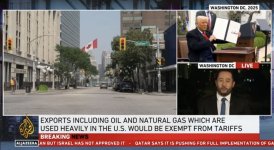
The Tarriff Hype.

Ron in Regina

"Voice of the West" Party
Apr 9, 2008
32,815
11,821
113
Regina, Saskatchewan
1786712189983.jpeg
Chinese President Xi Jinping is scheduled to visit the United States on September 24, 2026, for a high-level meeting with U.S. President Donald Trump. Apparently, Chinese President Xi Jinping is not impressed by garish, ostentatious displays of wealth. In fact, his political brand is built on strict austerity, discipline, and a fierce anti-corruption campaign aimed at cracking down on flashy over-indulgence…so I wonder where this meeting is going to take place?
1786712536321.jpeg
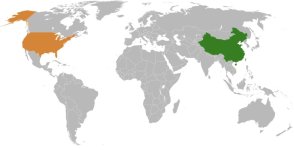
(Ironically America is in Orange at this point)
 

Ron in Regina

"Voice of the West" Party
Apr 9, 2008
32,815
11,821
113
Regina, Saskatchewan
Donald Trump's trade envoy says the administration will not accept any form of retaliation from Canada if the U.S. president follows through on his latest tariff threat.
1786729471726.jpeg
"For us, this is not a trade war. We have domestic supply chains we're trying to protect," U.S. Trade Representative Jamieson Greer told reporters in Des Moines, Iowa, on Friday.
Ugh…us too? Trying to protect domestic supply chains, and international supply chains, and bilateral supply chains and trilateral supply chains, etc…
We (Canada) didn’t go looking for a trade fight with Trump (neither did the rest of the world though I guess), but everybody got one. Canada seems to be getting singled out for extra Trumpian measures because we didn’t instantly capitulate to the coercion…& now we seem to be getting further threatened because of that.
1786751559200.jpeg
1786751579387.jpegWe’re the tail on the American dog, with a tiny economic footprint comparatively, so we just can’t do that tit for tat that a nation like China can do, as it would just be beyond stupid for us to do so.
Perhaps what we can do though, is just remove or adjust the preferential rates for critical minerals, potash and oil, etc…that America gets for Canadian natural resources, and let them pay something closer to fair market value. Not enough to lose them as customers, but enough to let it be known that we are a sovereign nation and not an unincorporated US territory.

Canada and the U.S. have ramped up trade talks after Trump again threatened to slap a hefty 50 per cent tariff on hundreds of Canadian goods starting Aug. 19.
About half of America’s oil production uses imported crude, and of that about 2/3rds comes from Canada. About 85% of America’s aluminum needs come from imported aluminum, and about 90% of that comes from Canada. About 90% of America’s potash consumption is imported, and about 90% of that comes from Canada. About 90% of America’s uranium consumption comes from imported uranium, & about 1/3rd of that comes from Canada, etc…interesting when you look at what’s covered in Trumps coming 338 Tariffs & what’s exempted from them.
 

Ron in Regina

"Voice of the West" Party
Apr 9, 2008
32,815
11,821
113
Regina, Saskatchewan
The United States and Canada as the two sides in this negotiation, are inching closer to a deal to avert the imposition of punitive 50 percent tariffs being imposed by one side in this same negotiation, on such Canadian products as hockey sticks, wine and cement, according to industry executives and trade specialists following the talks.

Details remain fluid, and recent talks were contentious ahead of an early-Wednesday deadline. But the emerging accord could pair Canadian tariff capitulation concessions along with commitments made under duress on energy, defence and critical minerals in return for the U.S. agreeing to shelve President Donald Trump’s new and probably illegal coercive Section 338 tariffs and relax his own levies on steel and aluminum, according to those following the talks until Trump decides otherwise regardless of any agreement, who spoke on the condition of anonymity to discuss confidential deliberations, according to The Washington Post.
Donald Trump's trade envoy says the administration will not accept any form of retaliation from Canada if the U.S. president follows through on his latest tariff threat.
President Donald Trump’s unprecedented use of Section 338 of the Tariff Act of 1930 to slap 50% tariffs on Canadian goods is widely viewed by trade experts as a “legally vulnerable” and coercive workaround, and it is anticipated to face strict challenges in U.S. courts, the USMCA arbitration panel, and the World Trade Organization (WTO), but that can take from months to years, but the Trump administration is already threatening Canada not to utilize these avenues.

The imposition of the newest Trumpian tariffs, especially at a trade-chilling 50 percent, would exacerbate anti-U.S. sentiment in Canada, which is already raw after Trump’s repeated gibes about turning Canada into the 51st U.S. state. The once harmonious — and nearly tariff-free — relationship between the U.S. and its northern neighbor has witnessed a dizzying exchange of trade blows over the past year.

Last month, the president invoked an untested provision of an almost century old law known as “Section 338” to threaten the new levies, saying Canada’s retaliation for his 2025 tariffs amounted to unwarranted “discrimination” against U.S. merchandise.

Administration officials including Treasury Secretary Scott Bessent and Jamieson Greer, the president’s chief trade negotiator, took offence at Carney’s decision to retaliate last year, noting that only Canada and China responded to Trump’s “Liberation Day” tariffs, which were ultimately found to be illegal by the U.S.’s own Supreme Court, which ruled 6–3 on February 20, 2026.
The Canadian government says it had every right to hit back after Trump imposes a 25% tariff on products of Canada except for energy products, which will be subject to a 10% tariff, both effective February 4, 2025. Administration officials say the Canadian retaliation unjustly penalized three American industries — alcohol, autos and dairy.
There is only one PornHub. Does China have PornHub?
I honestly don’t know, but it probably has a cheaper knock off version, with a similar name like CornHub, etc…but I’d have to look that up.

91porn is a popular online platform that hosts user-submitted and homemade adult videos, largely featuring content relevant to Chinese-speaking users.😲. I feel like I’ve probably found my way onto a watchlist trying to find a Wikipedia page about this though.😳
 

petros

The Central Scrutinizer
Nov 21, 2008
121,146
15,049
113
Low Earth Orbit
.I honestly don’t know, but it probably has a cheaper knock off version, with a similar name like CornHub, etc…but I’d have to look that up.

91porn is a popular online platform that hosts user-submitted and homemade adult videos, largely featuring content relevant to Chinese-speaking users.😲. I feel like I’ve probably found my way onto a watchlist trying to find a Wikipedia page about this though.😳
1786811818237.png
 
  • Like
Reactions: Ron in Regina

Ron in Regina

"Voice of the West" Party
Apr 9, 2008
32,815
11,821
113
Regina, Saskatchewan
No U.S. president used Section 338 of the Tariff Act of 1930 for nearly a century after its creation, until President Donald Trump invoked it on July 20, 2026, to place 50% tariffs on a range of Canadian goods. Past administrations only used the threat of the statute as a diplomatic lever.
Donald Trump's trade envoy says the administration will not accept any form of retaliation from Canada if the U.S. president follows through on his latest tariff threat.
Washington wants the immediate return of American alcohol to provincial store shelves (a provincial, not federal, decision), removal of retaliatory counter-tariffs, adjustments to dairy quotas, and export quotas on metals. Canada is pushing for meaningful relief and zero-Trump tariff setups on core economic sectors, including autos, steel, aluminum, and softwood lumber, which the U.S. proposal has largely failed to adequately address.

Canadian representatives warned their U.S. counterparts under U.S. Trade Representative Jamieson Greer that if the aggressive August 19 tariffs go through as threatened by the White House, making or sustaining a broader trade agreement will become practically impossible due to intense political and public backlash in Canada.

Canadian officials and negotiators informed the United States that they are unsatisfied with the latest U.S. counter-offer, signalling that American reductions on sectoral tariffs do not go far enough and that U.S. demands and stipulations are not sufficient to finalize a comprehensive deal ahead of the next August 19 Trump imposed tariff deadline.
President Donald Trump’s unprecedented use of Section 338 of the Tariff Act of 1930 to slap 50% tariffs on Canadian goods is widely viewed by trade experts as a “legally vulnerable” and coercive workaround, and it is anticipated to face strict challenges in U.S. courts, the USMCA arbitration panel, and the World Trade Organization (WTO), but that can take from months to years, but the Trump administration is already threatening Canada not to utilize these avenues.
These might be found on a store shelf near you in the immediate-ish future before they end up in your pantry. We have to remember that our retaliatory tariffs if that’s a route we take raise costs to our people and retaliation should be confined to those areas that get maximum American attention at minimum cost to ourselves.
 

petros

The Central Scrutinizer
Nov 21, 2008
121,146
15,049
113
Low Earth Orbit
.These might be found on a store shelf near you in the immediate-ish future before they end up in your pantry. We have to remember that our retaliatory tariffs if that’s a route we take raise costs to our people and retaliation should be confined to those areas that get maximum American attention at minimum cost to ourourselves.
Hmmmm, I'd say we'll be look further south.

The United States remains the world's largest single corn producer (averaging roughly 15-16 billion bushels or 380+ million metric tonnes annually), but Brazil and Argentina have rapidly expanded output. Brazil produces about 140 to 143 million metric tonnes, and Argentina produces around 55 to 63 million metric tonnes. Together, South America heavily rivals and sometimes exceeds U.S. export dominance.
 
  • Like
Reactions: Ron in Regina

Ron in Regina

"Voice of the West" Party
Apr 9, 2008
32,815
11,821
113
Regina, Saskatchewan
Iowa Sen. Chuck Grassley said U.S. President Donald Trump's threat to hit an array of Canadian goods with new tariffs should serve as a "wake-up call to Canada to make some changes."
….the emerging accord could pair Canadian tariff capitulation concessions along with commitments made under duress on energy, defence and critical minerals in return for the U.S. agreeing to shelve President Donald Trump’s new and probably illegal coercive Section 338 tariffs and relax his own levies on steel and aluminum, according to those following the talks until Trump decides otherwise regardless of any agreement, who spoke on the condition of anonymity to discuss confidential deliberations, according to The Washington Post.
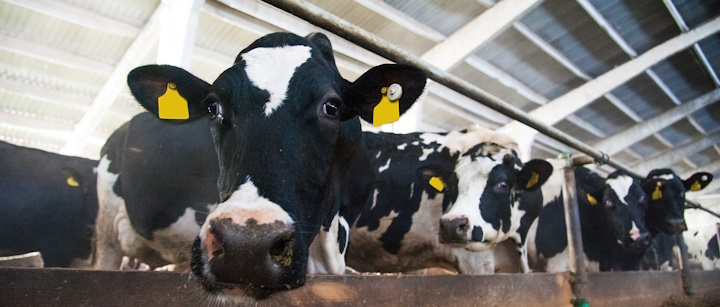
Grassley has long said that CUSMA should remain in place. On Friday, he said Trump wants to "tweak" the agreement a little bit and accused Canada of not upholding its CUSMA commitments to dairy access even though the United States has never exceeded Canada's duty-free dairy tariff-rate quotas (TRQs) to pay the high over-quota penalties. American dairy exports to Canada consistently stay below the allowed zero-tariff limits, meaning the prohibitive 200% to 300% over-quota tariffs are practically never triggered or paid.

U.S. dairy exports regularly fail to fill the allocated duty-free limits. Utilization rates for many categories hover around 42% to 60% so this is only an issue for the low information American voters who have just never educated themselves on this situation. Under the Canada-United States-Mexico Agreement (CUSMA/USMCA) that Grassley either doesn’t understand or isn’t aware of, Canada sets specific volume caps where American dairy enters with low or zero duty. The U.S. fails to fill its maximum zero-tariff allowance in major categories like fluid milk, staying well beneath the limits, but if that where to ever happen then shipments cross those caps, tariffs spike past 200%.

Below these quotas, American dairy sales to Canada face zero tariffs. The United States–Mexico–Canada Agreement, or USMCA, a trade agreement negotiated by the first Trump administration, had raised the thresholds for the protectionist tariffs. Some American industry stakeholders argue that Canadian regulations impede the United States’ ability to reach these quotas, but U.S. dairy has never faced triple-digit tariffs.
 

petros

The Central Scrutinizer
Nov 21, 2008
121,146
15,049
113
Low Earth Orbit
Iowa Sen. Chuck Grassley said U.S. President Donald Trump's threat to hit an array of Canadian goods with new tariffs should serve as a "wake-up call to Canada to make some changes."

Grassley has long said that CUSMA should remain in place. On Friday, he said Trump wants to "tweak" the agreement a little bit and accused Canada of not upholding its CUSMA commitments to dairy access even though the United States has never exceeded Canada's duty-free dairy tariff-rate quotas (TRQs) to pay the high over-quota penalties. American dairy exports to Canada consistently stay below the allowed zero-tariff limits, meaning the prohibitive 200% to 300% over-quota tariffs are practically never triggered or paid.

U.S. dairy exports regularly fail to fill the allocated duty-free limits. Utilization rates for many categories hover around 42% to 60% so this is only an issue for the low information American voters who have just never educated themselves on this situation. Under the Canada-United States-Mexico Agreement (CUSMA/USMCA) that Grassley either doesn’t understand or isn’t aware of, Canada sets specific volume caps where American dairy enters with low or zero duty. The U.S. fails to fill its maximum zero-tariff allowance in major categories like fluid milk, staying well beneath the limits, but if that where to ever happen then shipments cross those caps, tariffs spike past 200%.

Below these quotas, American dairy sales to Canada face zero tariffs. The United States–Mexico–Canada Agreement, or USMCA, a trade agreement negotiated by the first Trump administration, had raised the thresholds for the protectionist tariffs. Some American industry stakeholders argue that Canadian regulations impede the United States’ ability to reach these quotas, but U.S. dairy has never faced triple-digit tariffs.
You know what's coming next eh?

America goose.
 
  • Like
Reactions: Ron in Regina

Ron in Regina

"Voice of the West" Party
Apr 9, 2008
32,815
11,821
113
Regina, Saskatchewan
Iowa Sen. Chuck Grassley said U.S. President Donald Trump's threat to hit an array of Canadian goods with new tariffs should serve as a "wake-up call to Canada to make some changes."
This weekend, hundreds of thousands of people are attending the Iowa State Fair — a major attraction featuring several days of entertainment, a rodeo and even a life-size butter cow that's been carved every year since 1911.

Much like the Calgary Stampede in Canada, the Iowa State Fair is a crucial stop for politicians to meet voters, making it a hotbed for political debates — especially when U.S. midterms are coming up.

1786897249470.jpeg
And this year, one of the topics on Iowans' minds is U.S. President Donald Trump's trade war.
Grassley has long said that CUSMA should remain in place. On Friday, he said Trump wants to "tweak" the agreement a little bit and accused Canada of not upholding its CUSMA commitments to dairy access even though the United States has never exceeded Canada's duty-free dairy tariff-rate quotas (TRQs) to pay the high over-quota penalties.
“This policy has been very chaotic, and our farmers have struggled to figure out what's going on," said Aaron Lehman, a fifth-generation family farmer and president of the Iowa Farmers Union.

"If we were getting to a situation that meant fairer trade eventually for farmers, I think farmers would understand that sometimes it's necessary to go through some pain. But we're not seeing us getting any closer.”
Under the Canada-United States-Mexico Agreement (CUSMA/USMCA) that Grassley either doesn’t understand or isn’t aware of, Canada sets specific volume caps where American dairy enters with low or zero duty.
We've lost many international customers of ours who no longer see us as reliable trade partners and they're going to countries where they have a more predictable trade policy, more reasonable trade policy."

For farmers like Lehman, that economic pain may reach another level in just a few days. Canada is Iowa's largest export market, accounting for 30 per cent of the state's total goods exports in 2025, according to the U.S. government.” Canada is the largest customer (top export market) for 27 U.S. states according to the latest Progressive Policy Institute report. While historical numbers fluctuated as high as 36 states depending on yearly trade flows, economic shifts have stabilized Canada as the primary customer for just over half of the United States.
Below these quotas, American dairy sales to Canada face zero tariffs. The United States–Mexico–Canada Agreement, or USMCA, a trade agreement negotiated by the first Trump administration, had raised the thresholds for the protectionist tariffs.
But that key trading relationship could be upended on Aug. 19, if Trump imposes his threatened 50 per cent tariffs on hundreds of Canadian goods. The two countries are working over the weekend to secure a trade deal, but it so far remains out of reach.

Other farmers who spoke to CBC News in Iowa also expressed concern about Trump's economic agenda, especially toward Canada. Jack Ploen, who farms about 80 hectares in Avoca, Iowa, said Canada is "our most valuable partner in the world and in the trading sector."

"I'm a Republican, but I think Donald went too far in some of the things he does," Ploen said. "And he's pushed a lot of people away. A lot of countries are standoffish with us because of his policies. I support some of what he does, but not everything."
U.S. dairy exports regularly fail to fill the allocated duty-free limits. Utilization rates for many categories hover around 42% to 60% so this is only an issue for the low information American voters who have just never educated themselves on this situation
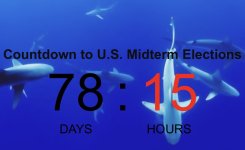
Lehman (who’s also the president of the Iowa Farmers Union) said Trump's economic policies are damaging his relationship with Iowa farmers, and it's showing up in political polling ahead of the midterm elections in November.
1786893217566.jpeg
During the last gubernatorial race in 2022, the Republican candidate Kim Reynolds beat the Democratic challenger by more than 200,000 votes. In the 2024 presidential election, Trump won the state by a similar margin — a huge victory.

But in 2026, polling suggests Democrats are either in the lead or very competitive in key races, such as the ones for Iowa governor or U.S. senator.

"All indications are that conditions are extremely difficult," Lehman said. "Farmers, ordinary families are all struggling to get by, and so our races are very, very competitive for the first time in a number of years."

On Friday, at a manufacturing facility in Iowa, U.S. Trade Representative Jamieson Greer touted Trump's economic strategy and said the U.S. government is committed to making American industry competitive with tariffs and tax cuts. "We're seeing a transition from an economy that was focused on government spending, government jobs, subsidies for all these different programs… to an economy that's focused on American workers," Greer said.

Ashley Hinson, the Republican nominee in the 2026 U.S. Senate election in Iowa, has previously said the Canada-U.S.-Mexico Agreement should be renewed but some changes should be made for fairer market access.
U.S. dairy exports regularly fail to fill the allocated duty-free limits. Utilization rates for many categories hover around 42% to 60% so this is only an issue for the low information American voters who have just never educated themselves on this situation.
On Friday, Iowa Sen. Chuck Grassley told The Canadian Press that Trump is likely using his tariff threat against Canada as a lever, and the Canadian government should view his moves as a wake-up call to make changes.
Despite a flurry of negotiations toward a tariff deal this past week that were expected to stretch into this weekend, sources tell CBC News that Canada and the U.S. remain far apart as Trump's deadline looms.

The sources said the federal government does not believe a tariff deal is imminent because there are still major disagreements between the two sides.

One source with knowledge of the talks said optimism on the Canadian side is eroding and the Americans are not budging from their latest offer. That offer includes a proposal that could see the sectoral tariffs on autos halved to 12.5 per cent, an offer that the Canadian side believes is not good enough, the source said. Industry sources previously told CBC News that Canadian negotiators have aggressively made it clear they see the Aug. 19 date as a cliff-type moment, meaning there would be no political appetite among Canadians to keep talks going if the 50 per cent tariffs come into force.

1786896978076.jpeg
Manitoba ships more than three-million young pigs to the United States each year and about two million go directly to Iowa.

"We're not pushing those pigs down here. They're pulling them from us," Préjet said. "There's a need. There's a demand. We just kind of come down to just remind everybody the importance of our relationship."

Canada's Ambassador to the United States Mark Wiseman took park in the traditional pork chop flip — which was successful on the second try — and stood for photos with the Iowa Pork Queen Saturday afternoon.

Agriculture Minister Heath MacDonald, Minneapolis Consul General Beth Richardson and representatives from Quebec and Alberta also attended.
“I'll be super, super honest, I don't know a lot about it," said 33-year-old Kaitlin Becker about Iowa's relationship with Canada. Becker isn't alone. Many Iowans at the fair didn't know about the state's relationship with Canada and didn’t feel comfortable talking about the current upheaval caused by Trump's tariffs and threats of annexation.
 

Ron in Regina

"Voice of the West" Party
Apr 9, 2008
32,815
11,821
113
Regina, Saskatchewan
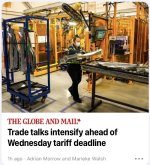
The latest arbitrary deadline to a gratuitous threat made by an untrustworthy president falls this week when Aug. 19 arrives and the U.S. does or does not introduce 50 per cent tariffs on a package of Canadian goods.

Five sources briefed on the discussions said Trump’s section 232 tariffs on autos and lumber remained the biggest points of contention. According to the sources, American negotiators have opposed lowering those tariffs on lumber and proposed reducing the tariffs on autos to 15 per cent – a number that is too high for Canada to accept.

Canada is trying to negotiate a deal that will avoid Trump’s new tariffs under Section 338 of the Smoot-Hawley Tariff Act of 1930, which Mr. Trump has threatened to bring in on Wednesday. Ottawa is also seeking to lower Trump’s levies on steel, aluminum, autos and lumber that Mr. Trump imposed last year under Section 232 of the Trade Expansion Act of 1962.

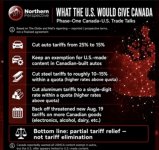
The Globe has previously reported that the United States is considering lowering − but not eliminating − the Trump Section 232 tariffs and shelving the Trump Section 338 tariffs in exchange for several concessions from Canada including eliminating retaliatory auto tariffs, agreeing to Washington’s interpretation of how dairy quotas should be allocated, and ending Provincial boycotts of American alcohol.

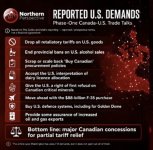
On Sunday, four of the sources told The Globe that the U.S. has demanded that Canada accept a tariff rate of 15 per cent on autos exported to the U.S. plus a continued exemption for the portion of the vehicles that are American content in exchange for Canada lifting its retaliatory tariffs. But, two of those sources said, Canada has argued that such a tariff is still too high for the industry (on both sides of the border?) to remain viable, as profit margins are in the single digits.

Those two sources and another one said Canada has also proposed that the full value of all content originating from within the United States-Mexico-Canada Agreement zone be exempted from the tariff, meaning the levy would only apply to the value of components from outside North America.
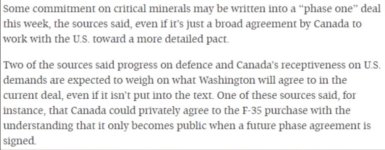
On forestry, the U.S. does not want to offer any reduction of Section 232 tariffs on the sector, three of the sources said. Instead, the U.S. has argued that Canada should wait for the results of a separate review by the U.S. Department of Commerce that is expected to reduce a different set of tariffs on softwood lumber, one of the sources said.

However, whatever piece of paper negotiators wave should a last-minute “deal” be reached won’t be worth the ink wasted on the signatures, as long as Trump is president the U.S. can’t be trusted to keep its word. A quick-fix tariff accord could be signed at breakfast and broken before lunch.another of the sources said the fear in Canada is that Washington would simply raise the Section 232 tariffs on lumber when the other ones are lowered.

Mr. Carney has previously said that all options will be on the table if the U.S. imposes the new Section 338 tariffs on Wednesday. However, he has ruled out using Canada’s oil exports to retaliate. Ms. Charette has told U.S. negotiators that the imposition of the new tariffs would represent a “cliff” in negotiations: If they come into effect, Ottawa would be forced to retaliate. It’s difficult to know just where the current talks lie. Official pronouncements, strategic leaks and expert analysis are all over the map.
U.S. Trade Representative Jamieson Greer has not bothered traveling to Canada for the tariff negotiations; instead, Canadian officials like Trade Minister Dominic LeBlanc and Chief Negotiator Janice Charette routinely travel to Washington, D.C. repeatedly, or meet with him virtually.

Greer stays based in the U.S., holding meetings in his Washington offices or departments (and occasionally making public comments elsewhere in the U.S., like the Iowa State Fair) rather than visiting Canadian soil for these talks.
 

Ron in Regina

"Voice of the West" Party
Apr 9, 2008
32,815
11,821
113
Regina, Saskatchewan
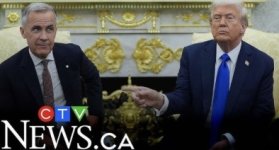
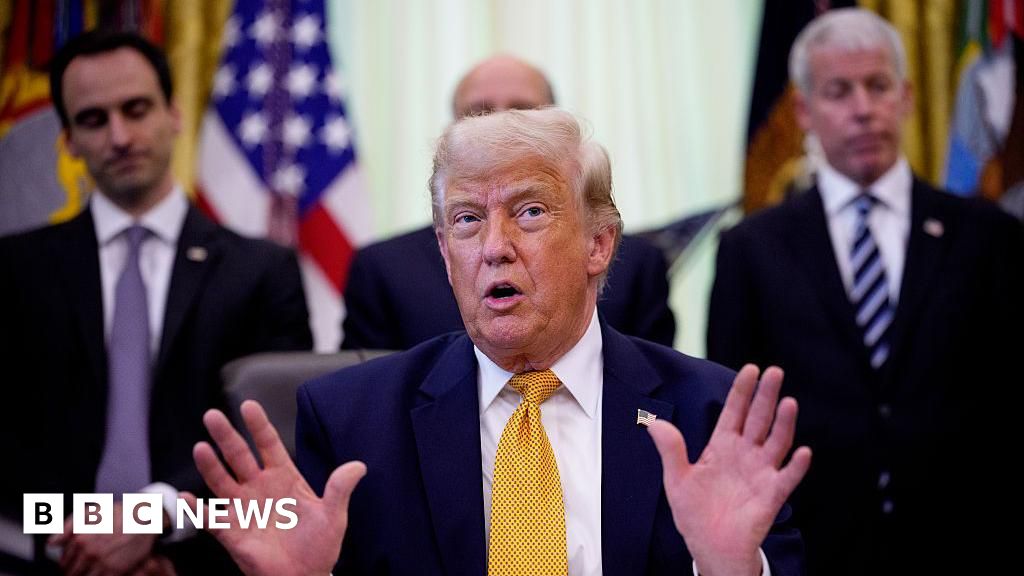
US President Donald Trump approaches trade negotiations with Canada less as a traditional exercise in mutual give-and-take and more as a high-stakes pressure campaign. By leveraging imminent threats of steep tariffs—such as the targeted 50% levies on billions in Canadian goods—the U.S. strategy aims to extract maximum policy concessions upfront.
1786996649796.jpegCanada dropped its digital services tax and rolled back the Online Streaming Act to appease the U.S. However, these early moves did little (or nothing) to stop pressure. The Trump administration still demands changes to dairy quotas, the removal of provincial bans on U.S. alcohol, and the end of Canada's retaliatory auto tariffs. Past concessions have not stopped new tariff threats and the best indicator of future behaviour is past behaviour.
U.S. Trade Representative Jamieson Greer has not bothered traveling to Canada for the tariff negotiations; instead, Canadian officials like Trade Minister Dominic LeBlanc and Chief Negotiator Janice Charette routinely travel to Washington, D.C. repeatedly, or meet with him virtually.
Trump's threatened 50% tariffs on Canadian goods are designed primarily as aggressive leverage rather than an inevitable certainty, though whether concessions can satisfy his administration before the August 19 deadline remains fluid. High-level trade negotiations between Ottawa (not in Ottawa) and Washington (from Washington or the Idaho State Fair) continue actively down to the wire in theory.
During a press conference in St. John’s, N.L. on Monday, Carney would not say what a good deal for Canada would look like and described the negotiations with the Americans as very intense and delicate. The prime minister added that it’s not the time to talk about negotiations in public.
A 50% tariff is simply not something that manufacturers can absorb, nor can we reasonably expect our U.S. customers to absorb it. ... It could make certain Canadian-made products economically noncompetitive in the U.S. market virtually overnight.
 

pgs

Hall of Fame Member
Nov 29, 2008
29,323
8,658
113
B.C.
US President Donald Trump approaches trade negotiations with Canada less as a traditional exercise in mutual give-and-take and more as a high-stakes pressure campaign. By leveraging imminent threats of steep tariffs—such as the targeted 50% levies on billions in Canadian goods—the U.S. strategy aims to extract maximum policy concessions upfront.
View attachment 35380Canada dropped its digital services tax and rolled back the Online Streaming Act to appease the U.S. However, these early moves did little (or nothing) to stop pressure. The Trump administration still demands changes to dairy quotas, the removal of provincial bans on U.S. alcohol, and the end of Canada's retaliatory auto tariffs. Past concessions have not stopped new tariff threats and the best indicator of future behaviour is past behaviour.

Trump's threatened 50% tariffs on Canadian goods are designed primarily as aggressive leverage rather than an inevitable certainty, though whether concessions can satisfy his administration before the August 19 deadline remains fluid. High-level trade negotiations between Ottawa (not in Ottawa) and Washington (from Washington or the Idaho State Fair) continue actively down to the wire in theory.
During a press conference in St. John’s, N.L. on Monday, Carney would not say what a good deal for Canada would look like and described the negotiations with the Americans as very intense and delicate. The prime minister added that it’s not the time to talk about negotiations in public.
A 50% tariff is simply not something that manufacturers can absorb, nor can we reasonably expect our U.S. customers to absorb it. ... It could make certain Canadian-made products economically noncompetitive in the U.S. market virtually overnight.
I say put our elbows up and demand the Presidency go back to who was the people’s choice . Hillary was robbed and Canada pays the price .
 

Ron in Regina

"Voice of the West" Party
Apr 9, 2008
32,815
11,821
113
Regina, Saskatchewan
I say put our elbows up and demand the Presidency go back to who was the people’s choice . Hillary was robbed and Canada pays the price .
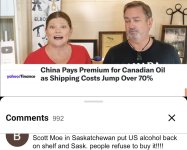
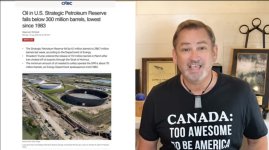
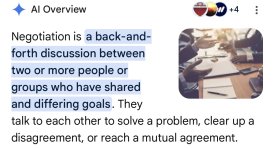
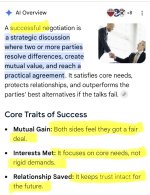
Or….or be aware of what’s going on, and what is being asked of both sides in what is supposed to be a “give & take” negotiation.
1787013740569.jpeg
1787013977056.jpeg
Is that we’re seeing here? Or is it some else that’s more coercive and less negotiable?
 

pgs

Hall of Fame Member
Nov 29, 2008
29,323
8,658
113
B.C.
Or….or be aware of what’s going on, and what is being asked of both sides in what is supposed to be a “give & take” negotiation.
View attachment 35381
View attachment 35382
Is that we’re seeing here? Or is it some else that’s more coercive and less negotiable?
I don’t know what is going to be the final agreement and don’t care . The smart business people in both Canada and America will find a way to work around the tariffs in a mutually profitable manor as they have always done . And I might add as most are still doing now .