


The Tarriff Hype.
- Thread starter petros
- Start date
You are using an out of date browser. It may not display this or other websites correctly.
You should upgrade or use an alternative browser.
You should upgrade or use an alternative browser.

U.S. lawmakers, governors and business leaders warned that Washington’s new tariffs on Canadian goods would increase costs for American households and companies, while a Federal Reserve official said that protracted sparring between the trading partners could help keep inflation stubbornly high.
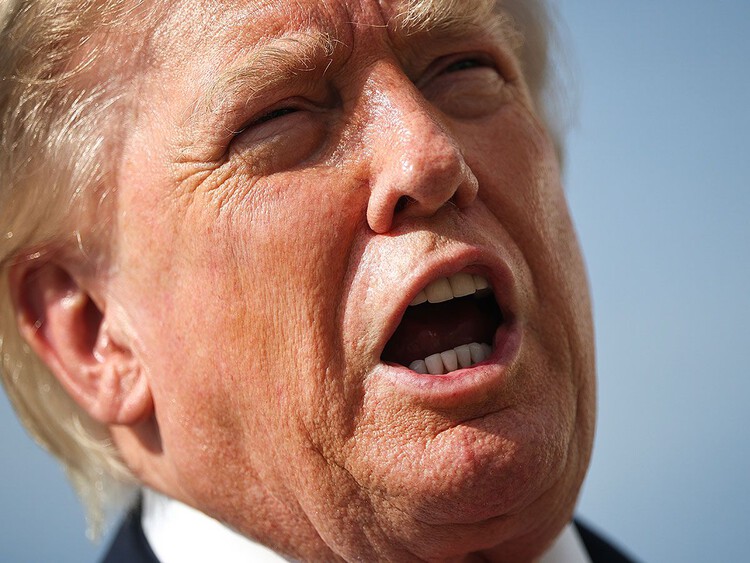
Trump’s tariffs targeting another US$20 billion worth of Canadian goods went into effect on Saturday on top of existing Trump tariffs on steel, aluminium, lumber and vehicles, after talks between Washington and Ottawa broke down on Friday night.
U.S. senator Susan Collins of Maine, a Republican whose state borders Canada, said that the “on-again/off-again trade talks” between the allies would “lead to higher costs, risk and uncertainty for Maine businesses.”
The newest new Trump tariffs on top of his other tariffs would further “increase costs for Maine families, as most businesses will have no choice but to pass on the tariffs to their customers through higher prices”, she added.
Collins, who is facing a tough re-election battle in November as Republicans and Democrats vie for control of the Senate, said Trump “must consider the negative impact of tariffs” and “work to reach a fair agreement” with Carney’s government.
Trump’s first-term vice-president Mike Pence told CNN on Sunday that “the last thing we need right now, as our economy is getting back on its feet, is a trade war with Canada.”
 apple.news
Governor Gretchen Whitmer (behind killing Keystone XL) of Michigan, which borders Canada and is the home of the American auto industry, said her state was “uniquely impacted” by “the tariff wars” with Ottawa. Fresh levies amounted to a “tax hike on Michigan families and businesses by raising prices at the grocery store and the gas pump.”
apple.news
Governor Gretchen Whitmer (behind killing Keystone XL) of Michigan, which borders Canada and is the home of the American auto industry, said her state was “uniquely impacted” by “the tariff wars” with Ottawa. Fresh levies amounted to a “tax hike on Michigan families and businesses by raising prices at the grocery store and the gas pump.”
“Companies — especially our auto manufacturers — face the difficult decision of laying off workers or passing costs on to their customers,” she said.
Virginia governor Abigail Spanberger said Canada was her state’s top export destination and that the fresh levies on Canadian goods would “hurt Virginia families, farmers, producers, foresters and businesses” in “a matter of days .”
Neel Kashkari, president of the Federal Reserve Bank of Minneapolis, told CBS News on Sunday that “the longer there’s back and forth on the trade front, just like the longer there’s back and forth in the conflict of Iran, the imprint in inflation ends up being extended and delayed.” Sounds so familiar…from almost a century ago.

 en.wikipedia.org
(Intended to bolster domestic employment and manufacturing, the tariffs instead deepened the Depression because the U.S.'s trading partners retaliated with tariffs of their own, leading to U.S. exports and global trade plummeting, and it appears Trump doesn’t know this piece of history)
en.wikipedia.org
(Intended to bolster domestic employment and manufacturing, the tariffs instead deepened the Depression because the U.S.'s trading partners retaliated with tariffs of their own, leading to U.S. exports and global trade plummeting, and it appears Trump doesn’t know this piece of history)
The Minneapolis Fed covers several states bordering Canada, including Minnesota, Montana, North Dakota and the Upper Peninsula of Michigan.
U.S. businesses criticized the collapse of talks, warning of increased costs to American companies if negotiations do not resume.
Neil Herrington, senior vice-president for the Americas department at the U.S. Chamber of Commerce, said: “We urge U.S. and Canadian negotiators to return to the table and finish the job — a trade deal that addresses U.S. tariffs and Canadian retaliation. The alternative is an escalating cycle of tariffs that will raise costs and impede economic growth.”
 apple.news
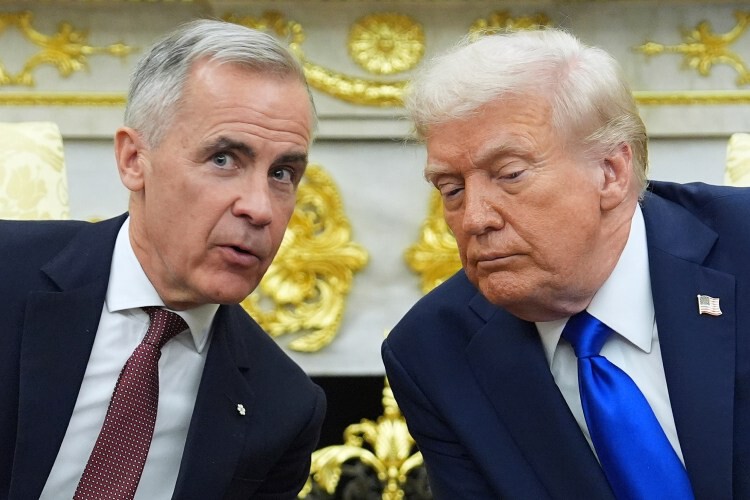
Perhaps walking away was inevitable, given the character and behaviour of U.S. President Donald Trump and his cabin boy, Howard Lutnick (U.S. commerce secretary), who showed up at the last minute with outrageous new demands.
apple.news
Perhaps walking away was inevitable, given the character and behaviour of U.S. President Donald Trump and his cabin boy, Howard Lutnick (U.S. commerce secretary), who showed up at the last minute with outrageous new demands.
There’s no point in pleading that the CUSMA deal allows for those tariffs and that Trump himself signed and boasted about how great CUSMA was. Like a child playing peekaboo, Trump thinks it’s disappeared. But it’s there, and so is America’s largest trading partner.
Trump can con everyone in the room, but he can’t con the financial markets. They’ll make their own decisions, and the inability to secure a trade deal with your largest trading partner will weigh heavily on the minds of investors.
Consumers are also starting to realize that they are the ones paying Trump’s tariffs. It’s not Canadian companies that pay them, although they’re hurt by them. It’s Americans buying cars that contain tariffed aluminum and steel. The cost of building a home in the United States will also shoot up because most of the lumber sold in the United States comes from Canada.
 apple.news
All that is true, of course, but it’s of little solace to Canadians who will lose their jobs in the absence of a trade deal. Neither hide nor hair has been seen of Lutnick since the failure that he provoked. That may also be a sign that Trump doesn’t take kindly to one of his subordinates trying to ‘out-Trump’ him in deal-making.
apple.news
All that is true, of course, but it’s of little solace to Canadians who will lose their jobs in the absence of a trade deal. Neither hide nor hair has been seen of Lutnick since the failure that he provoked. That may also be a sign that Trump doesn’t take kindly to one of his subordinates trying to ‘out-Trump’ him in deal-making.
Trump has proven himself to be incredibly unreliable in his dealings with his closest allies (plural), and it’s beginning to hurt the U.S., which he claims he wants to make great again.
He praises the North Korean communist dictator and berates Korea. He starts a war with Iran that he can’t finish and bristles at allies who refuse to go along with his half-baked scheme.
He’s heading into midterm elections, and he needs a win. He also needs to show voters that his boasting about mastering deal-making has some substance to it.
Trump’s tariffs targeting another US$20 billion worth of Canadian goods went into effect on Saturday on top of existing Trump tariffs on steel, aluminium, lumber and vehicles, after talks between Washington and Ottawa broke down on Friday night.
U.S. senator Susan Collins of Maine, a Republican whose state borders Canada, said that the “on-again/off-again trade talks” between the allies would “lead to higher costs, risk and uncertainty for Maine businesses.”
The newest new Trump tariffs on top of his other tariffs would further “increase costs for Maine families, as most businesses will have no choice but to pass on the tariffs to their customers through higher prices”, she added.
Collins, who is facing a tough re-election battle in November as Republicans and Democrats vie for control of the Senate, said Trump “must consider the negative impact of tariffs”
and “work to reach a fair agreement” with Carney’s government.Trump’s first-term vice-president Mike Pence told CNN on Sunday that “the last thing we need right now, as our economy is getting back on its feet, is a trade war with Canada.”
Trump hit by domestic backlash as Canada trade war threatens higher prices — Financial Post
U.S. lawmakers, governors and business leaders warned that Washington's new tariffs on Canadian goods would increase costs for American households and companies
“Companies — especially our auto manufacturers — face the difficult decision of laying off workers or passing costs on to their customers,” she said.
Virginia governor Abigail Spanberger said Canada was her state’s top export destination and that the fresh levies on Canadian goods would “hurt Virginia families, farmers, producers, foresters and businesses” in “a matter of days .”
Neel Kashkari, president of the Federal Reserve Bank of Minneapolis, told CBS News on Sunday that “the longer there’s back and forth on the trade front, just like the longer there’s back and forth in the conflict of Iran, the imprint in inflation ends up being extended and delayed.” Sounds so familiar…from almost a century ago.
Smoot–Hawley Tariff Act - Wikipedia
The Minneapolis Fed covers several states bordering Canada, including Minnesota, Montana, North Dakota and the Upper Peninsula of Michigan.
U.S. businesses criticized the collapse of talks, warning of increased costs to American companies if negotiations do not resume.
Neil Herrington, senior vice-president for the Americas department at the U.S. Chamber of Commerce, said: “We urge U.S. and Canadian negotiators to return to the table and finish the job — a trade deal that addresses U.S. tariffs and Canadian retaliation. The alternative is an escalating cycle of tariffs that will raise costs and impede economic growth.”
americas got tyrant.
‘We can’t run our businesses’: Canadian companies react to U.S. tariffs — Global News
Canadian businesses are bracing for higher costs and uncertainty as new tariffs take effect following the collapse of Canada-U.S. trade talks.
There’s no point in pleading that the CUSMA deal allows for those tariffs and that Trump himself signed and boasted about how great CUSMA was. Like a child playing peekaboo, Trump thinks it’s disappeared. But it’s there, and so is America’s largest trading partner.
Trump can con everyone in the room, but he can’t con the financial markets. They’ll make their own decisions, and the inability to secure a trade deal with your largest trading partner will weigh heavily on the minds of investors.
Consumers are also starting to realize that they are the ones paying Trump’s tariffs. It’s not Canadian companies that pay them, although they’re hurt by them. It’s Americans buying cars that contain tariffed aluminum and steel. The cost of building a home in the United States will also shoot up because most of the lumber sold in the United States comes from Canada.
Tom Mulcair: Reading between the lines of Trump’s uncharacteristically muted Sunday morning response — CTV News
Former NDP leader Tom Mulcair argues that while Prime Minister Mark Carney was right to walk away from American demands, the only way to avert a post-Labour Day employment crisis is for him to bypass subordinates and negotiate directly with Donald Trump.
Trump has proven himself to be incredibly unreliable in his dealings with his closest allies (plural), and it’s beginning to hurt the U.S., which he claims he wants to make great again.
He praises the North Korean communist dictator and berates Korea. He starts a war with Iran that he can’t finish and bristles at allies who refuse to go along with his half-baked scheme.
He’s heading into midterm elections, and he needs a win. He also needs to show voters that his boasting about mastering deal-making has some substance to it.

Speaking to CBC News, Minister of Internal Trade Dominic LeBlanc further outlined the talks that Canadians had completely written off weeks ago. “While we were close to a deal, one of the President’s cabinet members, who is also one of the President’s in-laws, who is also one of the President’s no-bid contractors, who is also one of the President’s sources of bribes, who is also one of the President’s preferred salesmen of sketchy testosterone supplements for neo-Nazis, raised last-minute objections, and the whole thing was scuttled.”
Tariff talks that you assumed already collapsed collapse
OTTAWA — Minutes before President Trump’s midnight deadline, tariff talks between Canada and the United States that you assumed failed weeks ago failed, according to government sources.
 www.thebeaverton.com
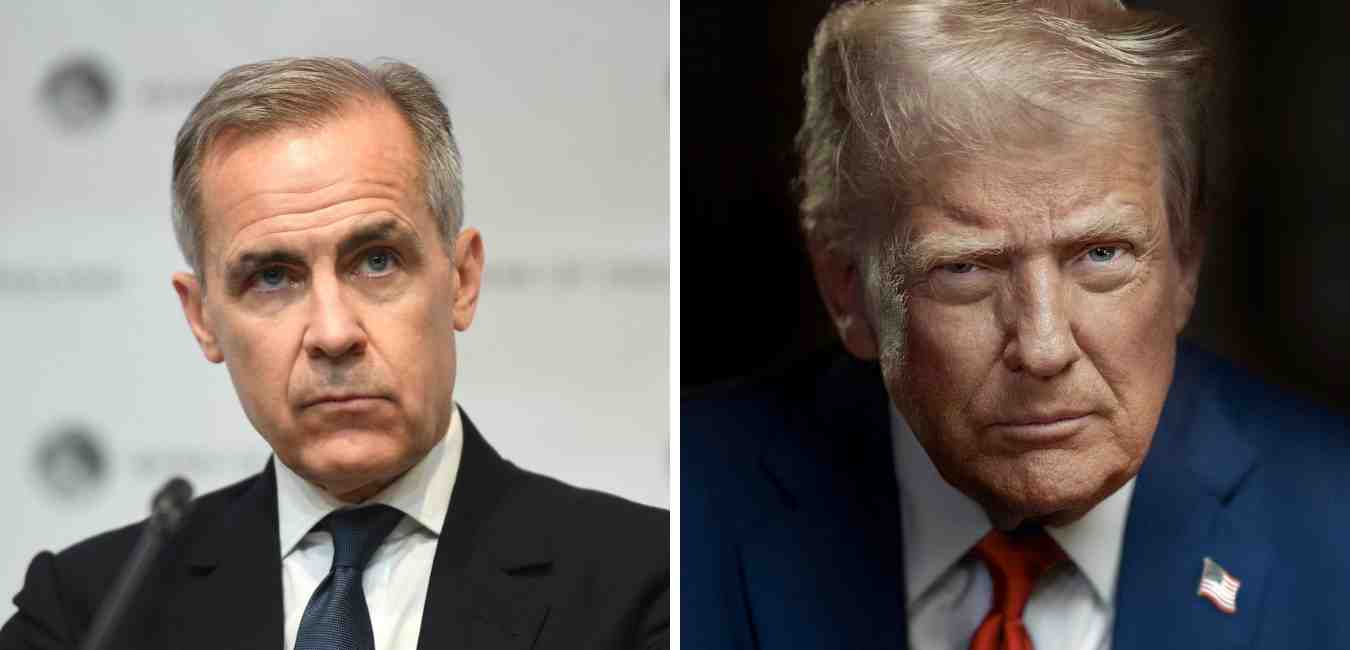
U.S. Commerce Secretary Howard Lutnick played a central role in derailing a prospective trade deal with Canada, pushing for harsher terms than his own country’s chief negotiator, said three sources with knowledge of the talks.Speaking to CBC News, Minister of Internal Trade Dominic LeBlanc further outlined the talks that Canadians had completely written off weeks ago. “While we were close to a deal, one of the President’s cabinet members, who is also one of the President’s in-laws, who is also one of the President’s no-bid contractors, who is also one of the President’s sources of bribes, who is also one of the President’s preferred salesmen of sketchy testosterone supplements for neo-Nazis, raised last-minute objections, and the whole thing was scuttled.”
In many cases, said one of those sources and three others, Canadian negotiators believed they had agreed to one thing on Tuesday – when U.S. President Donald Trump crowed that the two sides had reached a deal – only for the Americans to insert surprise language into the final text of the deal.
Trade talks collapsed at last minute after U.S. commerce chief pressed for harsher terms, sources say — The Globe and Mail
Ottawa objected to U.S. demands affecting key exports, Canadian content rules and its ability to strike trade deals with other countries
Although Mr. Greer is statutorily responsible for negotiating trade deals and reports directly to Mr. Trump, Mr. Lutnick’s department directly oversees the tariffs on autos, steel, aluminum, forestry and other sectors under Section 232 of the Trade Expansion Act of 1962. The President also gave Mr. Lutnick broad oversight of all trade policy, including over Mr. Greer.
The deal, from Ottawa’s perspective, was already harsh: Canada would accept high tariffs from Mr. Trump and make a long string of concessions in exchange for the President not setting his tariffs even higher or adding more tariffs on top of the existing Trump tariffs. But when the U.S. presented written text of the agreement, it was even harsher, three of the sources said.
One of those sources and two others said that Mr. Lutnick played a key role in tanking the deal because he felt it wasn’t sufficiently hard on Canada. Two of those sources also pointed to Peter Navarro, another White House trade adviser, as backing Mr. Lutnick’s position. Two sources said Mr. Lutnick was hearing from U.S. industries that wanted to maintain trade barriers against their Canadian competition.
In June, three sources said, Howard Lutnick was instrumental in getting the Trump administration to slam the brakes on the planned opening of the Gordie Howe International Bridge from Windsor, Ont., to Detroit. Mr. Lutnick wanted to make sure that, before the bridge opened, there was an agreement in place to protect the profits of Matthew Moroun, the Detroit billionaire who owns the rival Ambassador Bridge. Mr. Moroun donated US$1-million to a Trump campaign group earlier this year.
(In the end, the Canadian government had to agree to a U.S. veto over its ability to lower tolls on the Gordie Howe and to share toll revenue with the U.S., even though Ottawa paid the full price for building the span. That agreement got the bridge opened in July)
Between Mr. Carney’s public comments and conversations with a half-dozen sources, several sticking points that derailed the deal have become clear. One was that the U.S. told Canada at the last minute that its tariff reduction for autos would apply only to light vehicles and not to mid- and heavy-duty trucks. This would eviscerate the business of General Motor Co.’s Oshawa, Ont., plant, which produces the Chevrolet Silverado, and Ford Motor Co.’s planned retool of its Oakville, Ont., plant to build the F-Series.
Another was that products that use aluminum would be excluded from the reduction in the aluminum tariff, one of those sources said, adding that Mr. Lutnick had pushed for this.
A third was that Canada get rid of requirements that U.S. streaming platforms, such as Netflix and Amazon Prime, promote Canadian content to users in Canada, including prioritizing French-language content. One of the sources said that this demand was made mere hours before the talks collapsed.
A final problem was that the deal would have obliged Canada to mirror U.S. trade restrictions against other countries. Mr. Carney did not make clear how wide-ranging this provision was and how broadly it would have applied.
Last-second U.S. demands would have restricted Canadian deals with other nations, PM explains — Toronto Star
Canada is back in a trade war with the U.S. that "was not our choice" but "certainly isn't good news," Carney said.
The newest new Trump tariffs, imposed under Section 338 of the Smoot-Hawley Tariff Act of 1930, will hit around 5 per cent of Canadian exports to the United States. While Bay Street economists estimate that the direct macroeconomic impact will be relatively contained, the new tariffs could have a devastating impact on the targeted sectors, including electronics, plastics, paper products, furniture and home appliances.
Trade talks collapsed at last minute after U.S. commerce chief pressed for harsher terms, sources say — The Globe and Mail
Ottawa objected to U.S. demands affecting key exports, Canadian content rules and its ability to strike trade deals with other countries
"We're moving forward with measures that respond to Canadian retaliation," he said. "After a year of that retaliation, we've said 'enough,' and so we've taken countermeasures."
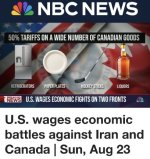
U.S. wages economic battles against Iran and Canada — NBC News
As President Trump threatens punishing new sanctions against Iran, the Trump administration is also raising tariffs on Canadian goods as the trade war with that country intensifies. NBC News’ Yamiche Alcindor reports.
U.S. tariffs on all cars and trucks, automotive parts and steel will be increased to 50% starting January 1, 2027, President Donald Trump said in a social post on Monday after trade talks with Canada collapsed.
"Build in the U.S. and there are ZERO TARIFFS. Canada will be treated like a State no longer!" Trump wrote?
USMCA? Is that what Trumps talking about Canada (so Mexico also?) being like a state ‘cuz they’re in a free-trade agreement that Trump himself sign in his last term?
"On Trade, and in other ways, also, they are among the worst Nations in the World to deal with. They feel entitled, and yet, WE DON’T NEED CANADA, THEY NEED US!"
Representatives for the White House did not immediately respond to a request for comment.
 apple.news
“Canada has been ripping off the United States of America for years,” Mr. Trump wrote on Monday on his Truth Social network. “Not sustainable, and NOT ANYMORE!” (???)
apple.news
“Canada has been ripping off the United States of America for years,” Mr. Trump wrote on Monday on his Truth Social network. “Not sustainable, and NOT ANYMORE!” (???)
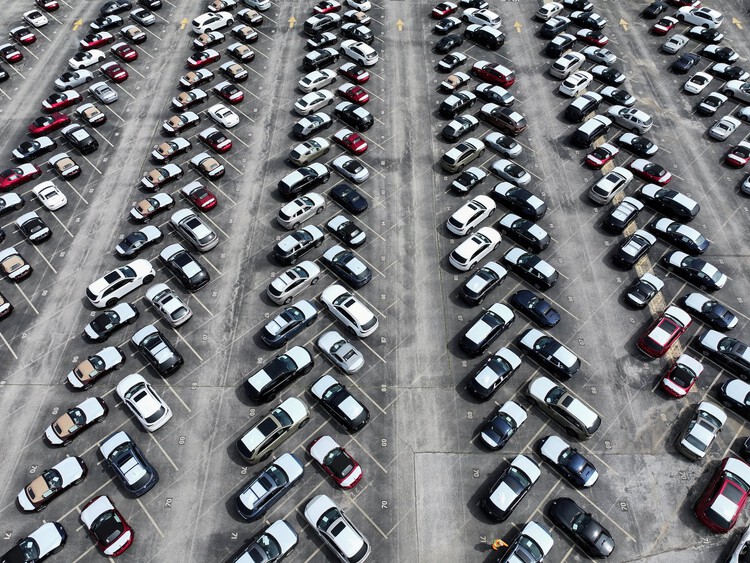
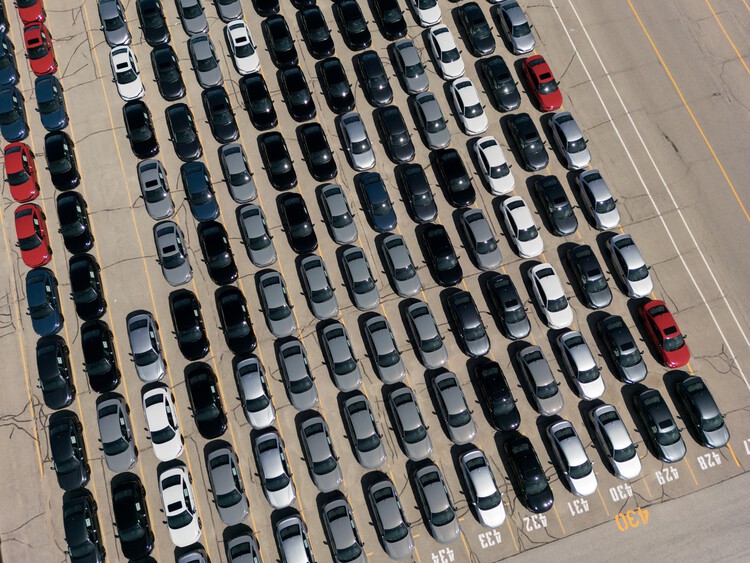
Mr. Trump said he would double auto tariffs from 25 per cent to 50 per cent and that these would apply to cars, trucks, and auto parts. Auto parts had not previously been tariffed, expanding the economic blast radius of his continental trade war.
 apple.news
He also complained about a “60 Billion Dollar Deficit” between the countries (one being 9-10 times the size of the other) and Canadian tariffs “on our Farmers.” The trade deficit is mostly caused by the U.S. choosing to import Canadian oil and gas. He did not specify which farmers he was referring to, but Canada’s dairy supply-management system has long been a trade irritant but is covered in USMCA/CUSMA. The vast majority of U.S. agricultural products face no tariffs from Canada.
apple.news
He also complained about a “60 Billion Dollar Deficit” between the countries (one being 9-10 times the size of the other) and Canadian tariffs “on our Farmers.” The trade deficit is mostly caused by the U.S. choosing to import Canadian oil and gas. He did not specify which farmers he was referring to, but Canada’s dairy supply-management system has long been a trade irritant but is covered in USMCA/CUSMA. The vast majority of U.S. agricultural products face no tariffs from Canada.
"Build in the U.S. and there are ZERO TARIFFS. Canada will be treated like a State no longer!" Trump wrote?
USMCA? Is that what Trumps talking about Canada (so Mexico also?) being like a state ‘cuz they’re in a free-trade agreement that Trump himself sign in his last term?
"On Trade, and in other ways, also, they are among the worst Nations in the World to deal with. They feel entitled, and yet, WE DON’T NEED CANADA, THEY NEED US!"
Representatives for the White House did not immediately respond to a request for comment.
Trump threatens 50% tariffs on all cars and trucks from Canada amid trade fight — Reuters
President Donald Trump on Monday threatened to raise U.S. tariffs on all cars, trucks and automotive parts from Canada to 50% starting January 1, 2027, escalating a trade fight after negotiations collapsed last week.
Mr. Trump said he would double auto tariffs from 25 per cent to 50 per cent and that these would apply to cars, trucks, and auto parts. Auto parts had not previously been tariffed, expanding the economic blast radius of his continental trade war.
Canada won’t return to negotiating table until U.S. changes its attitude, Carney says — The Globe and Mail
Trump threatens to raise tariffs further, including doubling auto levies to 50% and extending them to parts

The one thing in the back of mind is all these industries being targeted must have the green beans jumping for joy? Forestry is in the history books, cattle herds are miniscule, oil expansion stagnant, auto and manufacturing in the dumpster fishing down.U.S. tariffs on all cars and trucks, automotive parts and steel will be increased to 50% starting January 1, 2027, President Donald Trump said in a social post on Monday after trade talks with Canada collapsed.
"Build in the U.S. and there are ZERO TARIFFS. Canada will be treated like a State no longer!" Trump wrote?
USMCA? Is that what Trumps talking about Canada (so Mexico also?) being like a state ‘cuz they’re in a free-trade agreement that Trump himself sign in his last term?
"On Trade, and in other ways, also, they are among the worst Nations in the World to deal with. They feel entitled, and yet, WE DON’T NEED CANADA, THEY NEED US!"
Representatives for the White House did not immediately respond to a request for comment.
“Canada has been ripping off the United States of America for years,” Mr. Trump wrote on Monday on his Truth Social network. “Not sustainable, and NOT ANYMORE!” (???)Trump threatens 50% tariffs on all cars and trucks from Canada amid trade fight — Reuters
President Donald Trump on Monday threatened to raise U.S. tariffs on all cars, trucks and automotive parts from Canada to 50% starting January 1, 2027, escalating a trade fight after negotiations collapsed last week.
Mr. Trump said he would double auto tariffs from 25 per cent to 50 per cent and that these would apply to cars, trucks, and auto parts. Auto parts had not previously been tariffed, expanding the economic blast radius of his continental trade war.
He also complained about a “60 Billion Dollar Deficit” between the countries and Canadian tariffs “on our Farmers.” The trade deficit is mostly caused by the U.S. choosing to import Canadian oil and gas. He did not specify which farmers he was referring to, but Canada’s dairy supply-management system has long been a trade irritant but is covered in USMCA/CUSMA. The vast majority of U.S. agricultural products face no tariffs from Canada.Canada won’t return to negotiating table until U.S. changes its attitude, Carney says — The Globe and Mail
Trump threatens to raise tariffs further, including doubling auto levies to 50% and extending them to parts
It pretty sad but fantastic for the Liberal green beans who get what they want without taking the heat. Trump as the fall guy is a wonderful gift.
We do have a highly lucrative resource that I think its time to exploit. All of Southwestern US needs it badly and it doesn't need to be delivered that far south of the 49th. The benefits for both nations instantly.
Are you talking about water? Which of the many resources we have that they don’t need are you referring to above?
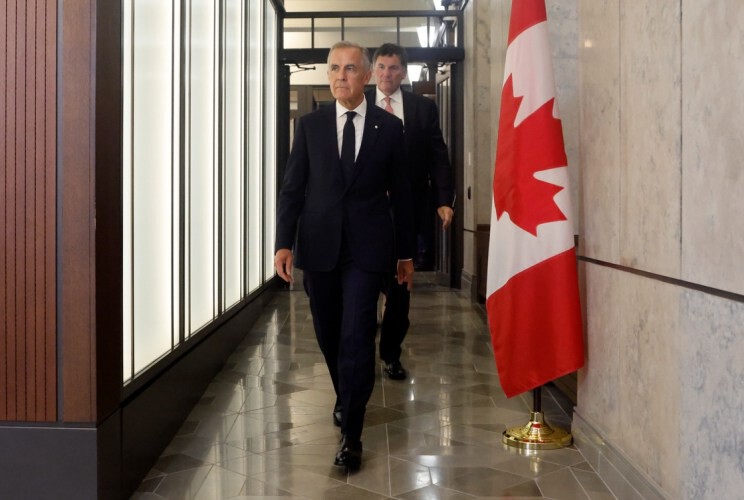
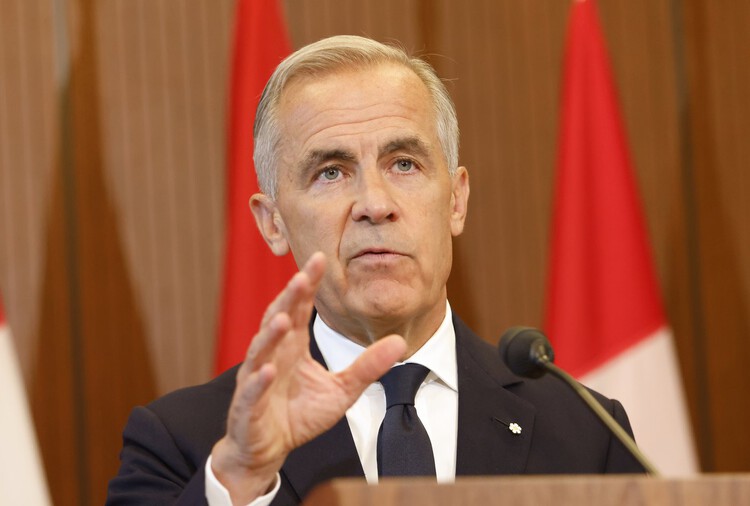
Canada will “of course” come to the negotiating table again, but not to be treated like a “subsidiary” of the United States, Prime Minister Mark Carney said on Monday after U.S. President Donald Trump imposed 50 per cent tariffs over the weekend and threatened more on Monday morning.
“An attitude at the negotiation table that Canada is a subsidiary of the United States, that Canadian industry is going to be disadvantaged relative to American industry, that we’re going to set up terms so that over time Canadian industry is going to face constant headwinds – that’s not something we’re going to accept,” Carney said.
Policy makers around the world should “take the lessons” from U.S. President Donald Trump’s escalating trade war against Canada, he added.
“I would just encourage policymakers around the world to take the lesson of what we see today,” Carney said at a press conference in Quebec on Monday.
“There is a mutually beneficial deal possible here, but it has to be one that respects Canada’s sovereignty, that respects our independence, that uses our complementary strengths to build something better, not tear apart for short term gain. That’s the offer,” Carney added. Trump’s trade war also sends a message to American workers, Carney said.
 apple.news
 apple.news
Canada will “of course” come to the negotiating table again, but not to be treated like a “subsidiary” of the United States, Prime Minister Mark Carney said on Monday after U.S. President Donald Trump imposed 50 per cent tariffs over the weekend and threatened more on Monday morning.
“An attitude at the negotiation table that Canada is a subsidiary of the United States, that Canadian industry is going to be disadvantaged relative to American industry, that we’re going to set up terms so that over time Canadian industry is going to face constant headwinds – that’s not something we’re going to accept,” Carney said.
Policy makers around the world should “take the lessons” from U.S. President Donald Trump’s escalating trade war against Canada, he added.
“I would just encourage policymakers around the world to take the lesson of what we see today,” Carney said at a press conference in Quebec on Monday.
“There is a mutually beneficial deal possible here, but it has to be one that respects Canada’s sovereignty, that respects our independence, that uses our complementary strengths to build something better, not tear apart for short term gain. That’s the offer,” Carney added. Trump’s trade war also sends a message to American workers, Carney said.
Canada is no U.S. ‘subsidiary,’ Carney says, urging world to take lesson — Global News
Canada was 'walking away from a bad deal,' Prime Minister Carney said in a statement, vowing 'dollar-for-dollar' tariffs in response to U.S. President Donald Trump’s levies.
Canadian culture, French are fundamental rights — not trade irritants, Carney says — The Canadian Press
The French language and Quebec and Canadian culture might be trade irritants for
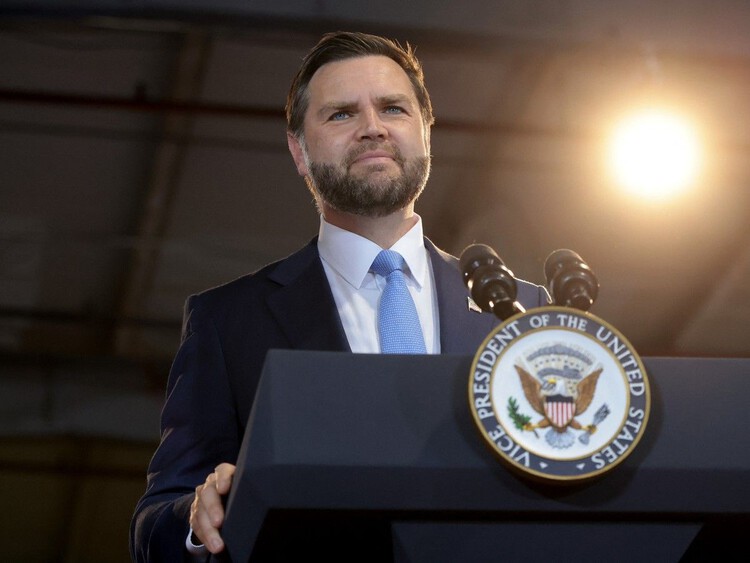
U.S. Vice President JD Vance said that “Canada and China have been the two worst countries when it comes to trade policy anywhere in the world.” (???)
While he said he expected this from China, given the country is the U.S.’s “biggest economic competitor,” the U.S. vice president said he did not expect Canada to apply tariffs to Maine and other northern states? Really?
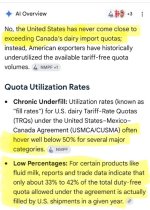
Holy Spin Batman! Giving an example of these “unfair” practices, Vance said: “If you buy dairy, cheese, butter, milk that comes from Canada into Maine, you probably are buying a product that has zero per cent tariffs on it…but if a Maine farmer sends dairy products into Canada, they could (they aren’t, but it’s theoretically possible) be paying as much as a 250 per cent tariff.”
Vance concluded by saying: “We need to send a message loud and clear to the Prime Minister of Canada: Stop taking advantage of the people of Maine. Stop taking advantage of America. It’s over.”
 apple.news
High Canadian tariffs on dairy only apply if the agreed tariff-rate quotas on U.S. imports under CUSMA are reached or exceeded. Last year, Global News reported that U.S. dairy imports to Canada were yet to go over their quotas for these tariffs to come into effect, despite Canada being the second-highest importer of U.S. dairy products in 2025.
apple.news
High Canadian tariffs on dairy only apply if the agreed tariff-rate quotas on U.S. imports under CUSMA are reached or exceeded. Last year, Global News reported that U.S. dairy imports to Canada were yet to go over their quotas for these tariffs to come into effect, despite Canada being the second-highest importer of U.S. dairy products in 2025.
Vance also referred to Canada as a “state” — echoing Trump’s “51st state” rhetoric — though he said the comment was a “Freudian slip.” He also said Canada “would get invaded by a foreign country were it not for the protection provided” by the U.S.

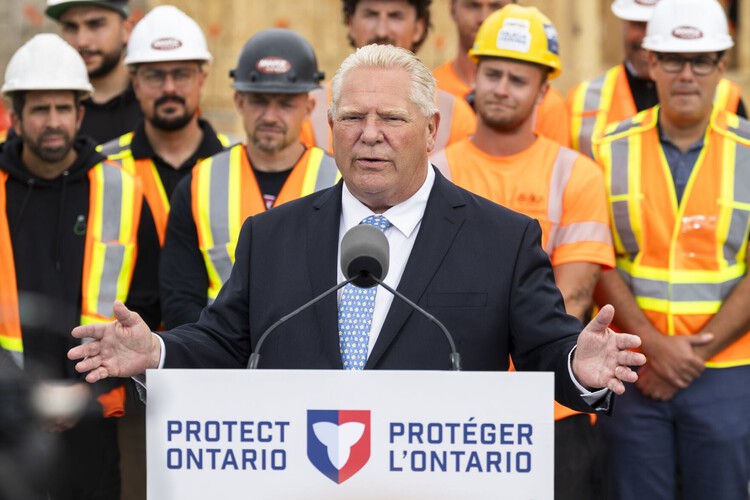
In an emotional post, the U.S. president blasted Canada's "current bad leadership, primarily Governor Carney, and his Flunky, Ford" and claimed that "America has been carrying Canada for decades, but no longer."
"Remember, much of the Electricity, Oil, and Gas that Canada gets is transported through the U.S.A. Someone should get these clowns to 'fall in line' or, the consequences for Canada will be far WORSE!"
 apple.news
Canada and the U.S. were close to a potential trade agreement on Friday, but Prime Minister Mark Carney walked away from negotiations, citing unfair last-minute demands and accusing the U.S. administration of introducing measures that would restrict Canada’s ability to do deals with other countries.
apple.news
Canada and the U.S. were close to a potential trade agreement on Friday, but Prime Minister Mark Carney walked away from negotiations, citing unfair last-minute demands and accusing the U.S. administration of introducing measures that would restrict Canada’s ability to do deals with other countries.
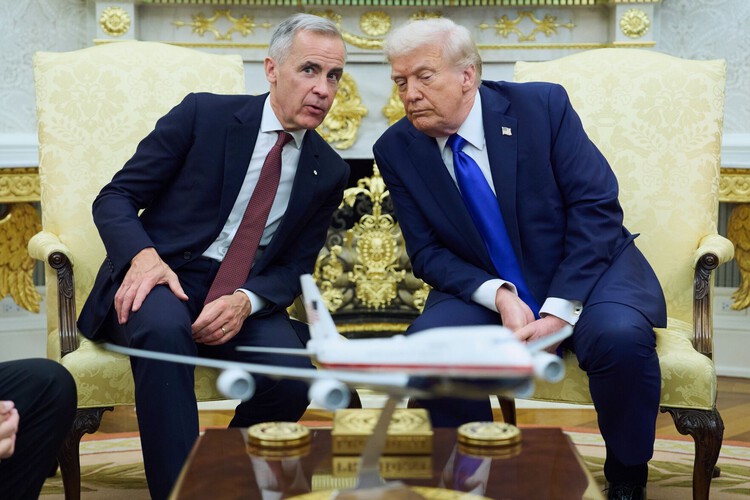 apple.news
Mexican President Claudia Sheinbaum is playing down the trade dispute between Canada and the United States, describing the breakdown of talks as a “disagreement,” while expressing optimism that Mexico will reach its own deal on tariffs with its northern neighbour.
apple.news
Mexican President Claudia Sheinbaum is playing down the trade dispute between Canada and the United States, describing the breakdown of talks as a “disagreement,” while expressing optimism that Mexico will reach its own deal on tariffs with its northern neighbour.
“I wouldn’t want to call it a rupture,” Ms. Sheinbaum said at her Monday news conference, the first time she has publicly addressed the suspension of the Canada-U.S. trade negotiations, news of which has been overshadowed in Mexico by domestic political drama.
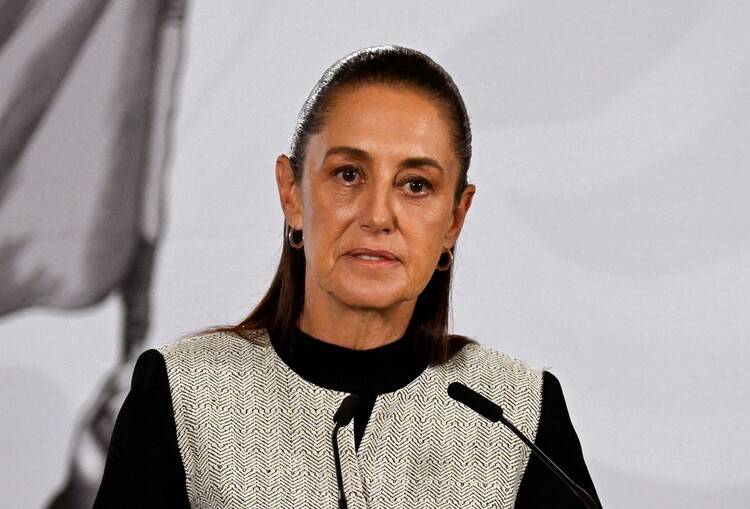 apple.news
Analysts say Mexico followed the talks closely with an eye toward rules of origin in the automotive sector. U.S. negotiators had offered to reduce tariffs on Canadian autos to 15 per cent in exchange for Canada agreeing to a list of demands. Mexico’s automotive sector would find it difficult to accept tariffs of more than 12.5 per cent, according to a source familiar with the industry. Trump's latest Monday threat (last I heard) is to raise tariffs on Canadian autos and steel to 50 per cent on Jan. 1, 2027.
apple.news
Analysts say Mexico followed the talks closely with an eye toward rules of origin in the automotive sector. U.S. negotiators had offered to reduce tariffs on Canadian autos to 15 per cent in exchange for Canada agreeing to a list of demands. Mexico’s automotive sector would find it difficult to accept tariffs of more than 12.5 per cent, according to a source familiar with the industry. Trump's latest Monday threat (last I heard) is to raise tariffs on Canadian autos and steel to 50 per cent on Jan. 1, 2027.
President Trump publicly told Canadian leaders to "fall in line" or face worse consequences. In recent social media posts, Trump dismissed Carney by referring to him mockingly as "Governor Carney" while also criticizing Ontario Premier Doug Ford.
Carney said U.S. trade demands had confirmed Canada’s fears that Washington was seeking to dismantle its auto industry. Nonetheless, he said his country remained willing to negotiate, but only if the United States approached the talks as a partnership between sovereign countries.

 www.bnnbloomberg.ca
For now, the more consequential question is not whether Canada will suddenly become the 51st state. It is whether Trump’s pressure campaign will permanently transform the relationship between the United States and Canada—from one of America’s closest alliances into a more adversarial economic and geopolitical partnership. The August 2026 tariff escalation suggests that transformation is already underway.
www.bnnbloomberg.ca
For now, the more consequential question is not whether Canada will suddenly become the 51st state. It is whether Trump’s pressure campaign will permanently transform the relationship between the United States and Canada—from one of America’s closest alliances into a more adversarial economic and geopolitical partnership. The August 2026 tariff escalation suggests that transformation is already underway.
)While he said he expected this from China, given the country is the U.S.’s “biggest economic competitor,” the U.S. vice president said he did not expect Canada to apply tariffs to Maine and other northern states? Really?
Holy Spin Batman! Giving an example of these “unfair” practices, Vance said: “If you buy dairy, cheese, butter, milk that comes from Canada into Maine, you probably are buying a product that has zero per cent tariffs on it…but if a Maine farmer sends dairy products into Canada, they could (they aren’t, but it’s theoretically possible) be paying as much as a 250 per cent tariff.”
Vance concluded by saying: “We need to send a message loud and clear to the Prime Minister of Canada: Stop taking advantage of the people of Maine. Stop taking advantage of America. It’s over.”
JD Vance calls Canada a U.S. state in 'Freudian slip,' vows to fight back against 'ridiculous tariffs' — National Post
The U.S. vice president said in a speech on Monday that Canada and China have been 'the two worst countries when it comes to trade policy'
Vance also referred to Canada as a “state” — echoing Trump’s “51st state” rhetoric — though he said the comment was a “Freudian slip.” He also said Canada “would get invaded by a foreign country were it not for the protection provided” by the U.S.
In an emotional post, the U.S. president blasted Canada's "current bad leadership, primarily Governor Carney, and his Flunky, Ford" and claimed that "America has been carrying Canada for decades, but no longer."
"Remember, much of the Electricity, Oil, and Gas that Canada gets is transported through the U.S.A. Someone should get these clowns to 'fall in line' or, the consequences for Canada will be far WORSE!"
Doug Ford brushes off online insults from Donald Trump: 'He's a loser' — Toronto Star
Trump blasted Canada's "current bad leadership, primarily Governor Carney, and his Flunky, Ford" and claimed "America has been carrying Canada for decades, but no longer."
Not the 51st state but a vassal state: What Donald Trump's national security strategy envisions for Canada — Toronto Star
Released Thursday, the 2025 National Security Strategy is also a window into the dramatic shift in America’s official world view under Trump.
“I wouldn’t want to call it a rupture,” Ms. Sheinbaum said at her Monday news conference, the first time she has publicly addressed the suspension of the Canada-U.S. trade negotiations, news of which has been overshadowed in Mexico by domestic political drama.
Sheinbaum stays on the sidelines of Canada-U.S. trade war — The Globe and Mail
Mexico and the U.S. are scheduled to hold a fourth round of talks to review the USMCA in September
President Trump publicly told Canadian leaders to "fall in line" or face worse consequences. In recent social media posts, Trump dismissed Carney by referring to him mockingly as "Governor Carney" while also criticizing Ontario Premier Doug Ford.
Carney said U.S. trade demands had confirmed Canada’s fears that Washington was seeking to dismantle its auto industry. Nonetheless, he said his country remained willing to negotiate, but only if the United States approached the talks as a partnership between sovereign countries.
Trump tells Canada to ‘fall in line’ as Carney rejects subordination
U.S. President Donald Trump told Canadian leaders on Monday to “fall in line” or face consequences that would be “far WORSE” than the tariffs he has already imposed as Prime Minister Mark Carney accused Washington of trying to subordinate Canada.
Afternoon front page: Howard Lutnick’s role in the demise of trade talks with the U.S.; Ford and Trump exchange insults; and more on the trade war — National Post
Catch up on the stories we’re following today
If that’s really the case, then who Canada conducts trade with, or doesn’t conduct trade with, is really none of his business then, right?
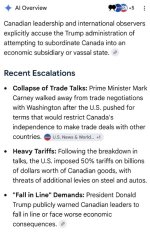
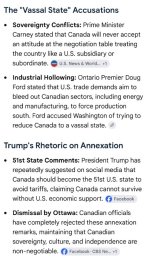
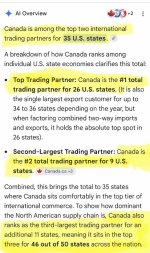
Trump also claimed Canada is reliant on the U.S. for 95 per cent of its exports, but Canadian data shows that in 2025, Canadian exports to the United States represented 72 per cent of all exports that year. That was down four percentage points from the year before.
In the first six months of 2026, that number fell further to 68 per cent, while non-U.S. exports rose as Canada moved to diversify its trade away from its largest trading partner south of the border.
Some of Trump's tirade was prompted by Ontario Premier Doug Ford, who earlier in the day told an Ontario radio talk show program that Trump could "kiss my ass" and said Ontario should leverage energy and critical minerals in trade negotiations. On Monday, Trump took to social media to mock Carney and Ford, calling the Ontario premier the “unimpressive brother of the late, great Rob Ford.”
Cutting off Alberta energy exports 'not viable' in Canada-U.S. trade war: Smith — Edmonton Journal
Alberta's premier issues statement Monday in wake of breakdown in U.S./Canada trade negotiations
The new threatened tariffs — which have not been enacted in any official order — would come well after the U.S. midterm elections in November in which Trump and the Republicans are at risk of losing control of both the House of Representatives and the Senate.
Ottawa to announce details of retaliatory tariffs on U.S. Tuesday — The Canadian Press
The federal government is set to unveil details of Canada's retaliatory tariffs
"We've been over this. The 'importer of record' pays the tariffs," he said in a post on X. "A threatened U.S. tariff on Canadian auto parts will be paid by U.S. auto assembly. Without those specific parts, auto assembly throughout the U.S. would halt. U.S. auto assembly will be on the phone to the (White House) today."
Ottawa to announce details of retaliatory tariffs on U.S. Tuesday — The Canadian Press
The federal government is set to unveil details of Canada's retaliatory tariffs

And then hopped a flight to spend the weekend with wifey in their New York home .Are you talking about water? Which of the many resources we have that they don’t need are you referring to above?
Canada will “of course” come to the negotiating table again, but not to be treated like a “subsidiary” of the United States, Prime Minister Mark Carney said on Monday after U.S. President Donald Trump imposed 50 per cent tariffs over the weekend and threatened more on Monday morning.
“An attitude at the negotiation table that Canada is a subsidiary of the United States, that Canadian industry is going to be disadvantaged relative to American industry, that we’re going to set up terms so that over time Canadian industry is going to face constant headwinds – that’s not something we’re going to accept,” Carney said.
Policy makers around the world should “take the lessons” from U.S. President Donald Trump’s escalating trade war against Canada, he added.
“I would just encourage policymakers around the world to take the lesson of what we see today,” Carney said at a press conference in Quebec on Monday.
“There is a mutually beneficial deal possible here, but it has to be one that respects Canada’s sovereignty, that respects our independence, that uses our complementary strengths to build something better, not tear apart for short term gain. That’s the offer,” Carney added. Trump’s trade war also sends a message to American workers, Carney said.
Canada is no U.S. ‘subsidiary,’ Carney says, urging world to take lesson — Global News
Canada was 'walking away from a bad deal,' Prime Minister Carney said in a statement, vowing 'dollar-for-dollar' tariffs in response to U.S. President Donald Trump’s levies.Canadian culture, French are fundamental rights — not trade irritants, Carney says — The Canadian Press
The French language and Quebec and Canadian culture might be trade irritants for
BINGOAre you talking about water? Which of the many resources we have that they don’t need are you referring to above?
Canada will “of course” come to the negotiating table again, but not to be treated like a “subsidiary” of the United States, Prime Minister Mark Carney said on Monday after U.S. President Donald Trump imposed 50 per cent tariffs over the weekend and threatened more on Monday morning.
“An attitude at the negotiation table that Canada is a subsidiary of the United States, that Canadian industry is going to be disadvantaged relative to American industry, that we’re going to set up terms so that over time Canadian industry is going to face constant headwinds – that’s not something we’re going to accept,” Carney said.
Policy makers around the world should “take the lessons” from U.S. President Donald Trump’s escalating trade war against Canada, he added.
“I would just encourage policymakers around the world to take the lesson of what we see today,” Carney said at a press conference in Quebec on Monday.
“There is a mutually beneficial deal possible here, but it has to be one that respects Canada’s sovereignty, that respects our independence, that uses our complementary strengths to build something better, not tear apart for short term gain. That’s the offer,” Carney added. Trump’s trade war also sends a message to American workers, Carney said.
Canada is no U.S. ‘subsidiary,’ Carney says, urging world to take lesson — Global News
Canada was 'walking away from a bad deal,' Prime Minister Carney said in a statement, vowing 'dollar-for-dollar' tariffs in response to U.S. President Donald Trump’s levies.Canadian culture, French are fundamental rights — not trade irritants, Carney says — The Canadian Press
The French language and Quebec and Canadian culture might be trade irritants for
It only needs to be piped to Snake River. From there it goes through a few lakes and hydro dams on it's way to Hoover dam and then as far as LA watering a butt tonne of veggies, fruits and nuts along the way. X amount per cubic meter, X amount from the hydro, X percent off Canada bound produce.
Voila!!!
That is how Internation Trade is supposed to work.
The same could be said for potash, or uranium, or heavy crude, or aluminum, or hydroelectric power, etc…but…if we actually did that, any of that…would it then be the justification that the Trump administration has been looking for to actually not have to make shit up to say that they’re being threatened (even if it’s just retaliation to his policies) by Canada in order to respond militarily? I’m not being melodramatic with this question, this is an actual honest straight up question.BINGO
It only needs to be piped to Snake River. From there it goes through a few lakes and hydro dams on it's way to Hoover dam and then as far as LA watering a butt tonne of veggies, fruits and nuts along the way. X amount per cubic meter, X amount from the hydro, X percent off Canada bound produce.
Voila!!!
That is how Internation Trade is supposed to work.
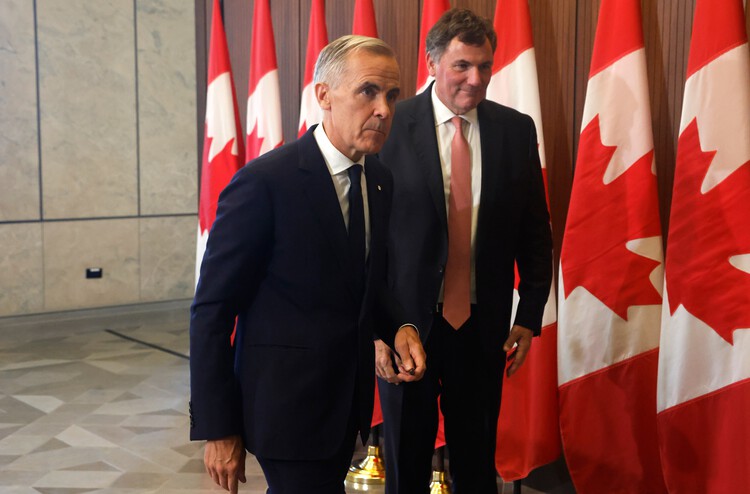
No prime minister could sign a deal that would result in giving up Canadian sovereignty. As little bits and pieces trickle out from the last couple days since Friday, it sure sounds like that’s what was being demanded, not negotiated. This would have reduced Canada to a second-class vassal state: it would give up free access to other markets, while having only limited access to the markets of what would be its de facto master.
The terms that had been discussed during the past week would have locked in disadvantages for Canada. American negotiators used the threat of a new wave of tariffs on a raft of goods as a weapon to push Canada into accepting slightly reduced tariff rates on other key sectors, despite the fact that all these Trump tariffs are violations of the USMCA trade deal that Trump himself signed and was negotiated in Trump’s first term. This shows that regardless of what agreements come into to play, and regardless of what signed with America under Trump, it’s only valid until it’s not.
Opinion: Canada’s sovereignty is not negotiable — The Globe and Mail
Last-minute demands during trade talks made it clear Ottawa couldn’t agree to America’s terms
Potdil...Diluted potash that gets cooked off in Idaho or Wyoming and water discharged into the Colorado watershed.The same could be said for potash, or uranium, or heavy crude, or aluminum, or hydroelectric power, etc…but…if we actually did that, any of that…would it then be the justification that the Trump administration has been looking for to actually not have to make shit up to say that they’re being threatened (even if it’s just retaliation to his policies) by Canada in order to respond militarily? I’m not being melodramatic with this question, this is an actual honest straight up question.
No prime minister could sign a deal that would result in giving up Canadian sovereignty. As little bits and pieces trickle out from the last couple days since Friday, it sure sounds like that’s what was being demanded, not negotiated. This would have reduced Canada to a second-class vassal state: it would give up free access to other markets, while having only limited access to the markets of what would be its de facto master.
The terms that had been discussed during the past week would have locked in disadvantages for Canada. American negotiators used the threat of a new wave of tariffs on a raft of goods as a weapon to push Canada into accepting slightly reduced tariff rates on other key sectors, despite the fact that all these Trump tariffs are violations of the USMCA trade deal that Trump himself signed and was negotiated in Trump’s first term. This shows that regardless of what agreements come into to play, and regardless of what signed with America under Trump, it’s only valid until it’s not.
Opinion: Canada’s sovereignty is not negotiable — The Globe and Mail
Last-minute demands during trade talks made it clear Ottawa couldn’t agree to America’s terms
Or Dilpot?
Potdil...Diluted potash that gets cooked off in Idaho or Wyoming and water discharged into the Colorado watershed.
Or Dilpot?
The two countries aren’t in a conflict like the India-Pakistan hostilities that have flared for three-quarters of a century. It’s more like the Anglo-Dutch trade fight of the 17th century, though this one involves two countries that were, since the years leading up to the Second World War until the middle of the last decade, allies arguably without precedent in the history of humankind.…any of that…would it then be the justification that the Trump administration has been looking for to actually not have to make shit up to say that they’re being threatened (even if it’s just retaliation to his policies) by Canada in order to respond militarily? I’m not being melodramatic with this question, this is an actual honest straight up question.
Americans, too, are wondering why the U.S. and Canada are embroiled in a trade war — The Globe and Mail
Thirteen American states border Canada and have a stake in the relationship
But…but if we do take something like your example of “water” and put an export fee on it, or potash or uranium or steel or aluminum or hydroelectric power or what have you…would the Trump administration use that as finally having a real excuse and not the made up shit they’ve been using for the last 18 months…to intervene into Canada (the bottom 300kms of it anyway, with the odd spike for things like Fort Mac, militarily?
No other countries are exposed to the US economy like Canada is. None. We are physically connected to one nation with the longest undefended Border on the planet, and on the other three sides are the Atlantic and Pacific and Arctic Ocean’s. Every single other nation we could trade with is across one of these oceans from us…& the biggest navy on the planet belongs to…for the next 2+ years anyway…Donald Trump and his band of billionaire Trumplings in his cabinet.
Trump says he needs or wants nothing from Canada, but yet this is happening, and he wants to dictate who Canada can trade with, who Canada will put sanctions against, first dibs on Canada‘s mineral resources, and on and on and on right down to forcing us to buy their F35’s which sure as hell won’t be of the same calibre as the ones the Americans are using….& after doing some reading about the Saab fighters, I am more and more convinced that we need a mixed fleet of about 30 F35’s at most and about 70 fighters that are actually designed for what we need.
“It’s always regrettable when our relations deteriorate, and it is clear that the U.S. is at fault here,” said Douglas Irwin, the Dartmouth College economist regarded as the leading American academic expert on trade. “But let’s hope the Americans come to their senses, decide the friction isn’t worth it, and the two countries get back to negotiating.
“But,” he added, “the Canadians have to realize it won’t be over until this administration is over.”
Americans, too, are wondering why the U.S. and Canada are embroiled in a trade war — The Globe and Mail
Thirteen American states border Canada and have a stake in the relationship
Some congressional Republicans in competitive races have publicly criticized or distanced themselves from the administration's coercive mafia style tariff maneuvers, fearing voter backlash over affordability, and economic experts warn that prolonged trade friction with a top trading partner adds unwelcome volatility at a time when voters are already sensitive to inflation risks leading up to the midterm elections and beyond, but the current administration doesn’t seem to give a damn…which really makes me wonder what’s up their sleeve in the less than 70 days until that happens, & what that’ll mean for the other 194 countries on the planet.
Speaking of water....Columbia River. CUT! fill the reservoirs right up to the front steps of the cottages and keep it there. They can use the backdoor.The two countries aren’t in a conflict like the India-Pakistan hostilities that have flared for three-quarters of a century. It’s more like the Anglo-Dutch trade fight of the 17th century, though this one involves two countries that were, since the years leading up to the Second World War until the middle of the last decade, allies arguably without precedent in the history of humankind.
“This isn’t the end of anything,” said Christopher Ragan, the emeritus McGill University economist and author of Canada’s most widely used postsecondary economics textbook. “It’s the beginning of another policy tantrum from Donald Trump. He wanted a political win and didn’t get it. And the question now may be: If he can’t deal with little Canada, what can he do? But this shows we’re not prepared to cave to American pressure.”
Americans, too, are wondering why the U.S. and Canada are embroiled in a trade war — The Globe and Mail
Thirteen American states border Canada and have a stake in the relationship
View attachment 35460
But…but if we do take something like your example of “water” and put an export fee on it, or potash or uranium or steel or aluminum or hydroelectric power or what have you…would the Trump administration use that as finally having a real excuse and not the made up shit they’ve been using for the last 18 months…to intervene into Canada (the bottom 300kms of it anyway, with the odd spike for things like Fort Mac, militarily?
No other countries are exposed to the US economy like Canada is. None. We are physically connected to one nation with the longest undefended Border on the planet, and on the other three sides are the Atlantic and Pacific and Arctic Ocean’s. Every single other nation we could trade with is across one of these oceans from us…& the biggest navy on the planet belongs to…for the next 2+ years anyway…Donald Trump and his band of billionaire Trumplings in his cabinet.
Trump says he needs or wants nothing from Canada, but yet this is happening, and he wants to dictate who Canada can trade with, who Canada will put sanctions against, first dibs on Canada‘s mineral resources, and on and on and on right down to forcing us to buy their F35’s which sure as hell won’t be of the same calibre as the ones the Americans are using….& after doing some reading about the Saab fighters, I am more and more convinced that we need a mixed fleet of about 30 F35’s at most and about 70 fighters that are actually designed for what we need.
“It’s always regrettable when our relations deteriorate, and it is clear that the U.S. is at fault here,” said Douglas Irwin, the Dartmouth College economist regarded as the leading American academic expert on trade. “But let’s hope the Americans come to their senses, decide the friction isn’t worth it, and the two countries get back to negotiating.
“But,” he added, “the Canadians have to realize it won’t be over until this administration is over.”
If JD Vance is Trumps successor in two years time from now…arse-clown that he is, will it be another four years of the same or similar Trump rhetoric as Trump goes off to shit in his diaper while playing with his “Board of Peace” that he set up as his retirement play thing?Americans, too, are wondering why the U.S. and Canada are embroiled in a trade war — The Globe and Mail
Thirteen American states border Canada and have a stake in the relationship
Some congressional Republicans in competitive races have publicly criticized or distanced themselves from the administration's coercive mafia style tariff maneuvers, fearing voter backlash over affordability, and economic experts warn that prolonged trade friction with a top trading partner adds unwelcome volatility at a time when voters are already sensitive to inflation risks leading up to the midterm elections and beyond, but the current administration doesn’t seem to give a damn…which really makes me wonder what’s up their sleeve in the less than 70 days until that happens.
“The U.S. President owes his election and re-election in part to what is known as the “China shock.” The rise of Chinese manufacturing at the start of the 21st century, the result of a Chinese economic model focused on boosting exports, restricting imports and plowing savings into manufacturing overcapacity, hollowed out large parts of the developed world’s industrial base.
The trend is continuing with “China shock 2.0,” which began several years ago. China is now a leader or challenger in many advanced technologies, including electric vehicles. It also has far more industrial capacity than its domestic market can absorb. It’s betting on huge export growth, even as it continues to repress domestic demand and restrict imports.
All of this has created real problems for the U.S. economy – and Europe, Japan, South Korea and Canada. The stage has also been set for the possibility of further reductions in the U.S. manufacturing base, and that of other developed countries.
“Given the connection between industrial capacity and military capability, this is a major problem for U.S. national security, and that of Europeans, Japanese, South Koreans and Canadians.
The one insurmountable advantage the U.S. has always had over China is its friends. Beijing has no friends. It has buy or coerce followership. Washington is – was – at the centre of a network of like-minded, willing allies.
 apple.news
The best way for the United States to face the China shock is as the leader of an alliance of industrialized countries. There is shared interest in creating a non-China trade bloc. There is common ground for common action. Or at least there was.
apple.news
The best way for the United States to face the China shock is as the leader of an alliance of industrialized countries. There is shared interest in creating a non-China trade bloc. There is common ground for common action. Or at least there was.
 apple.news
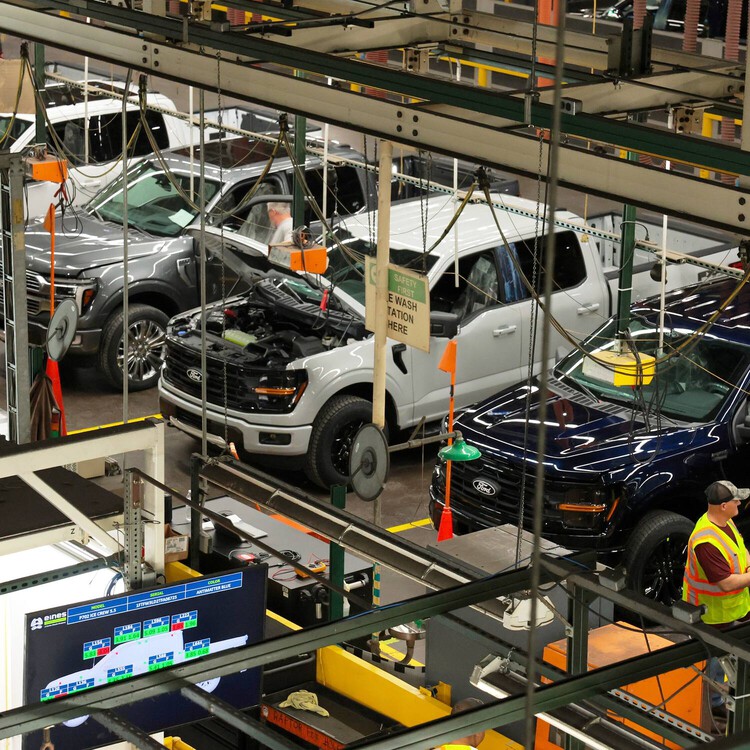
Previous U.S. administrations saw an economically strong Canada as an advantage. The bigger and richer Canada was, the bigger, richer and more competitive the common North American market would be. Auto manufacturing became the best-known example of mutually beneficial integration.
apple.news
Previous U.S. administrations saw an economically strong Canada as an advantage. The bigger and richer Canada was, the bigger, richer and more competitive the common North American market would be. Auto manufacturing became the best-known example of mutually beneficial integration.
 apple.news
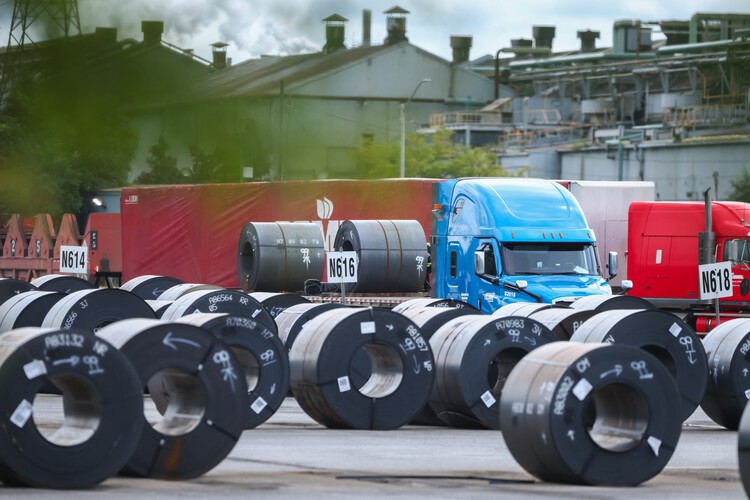
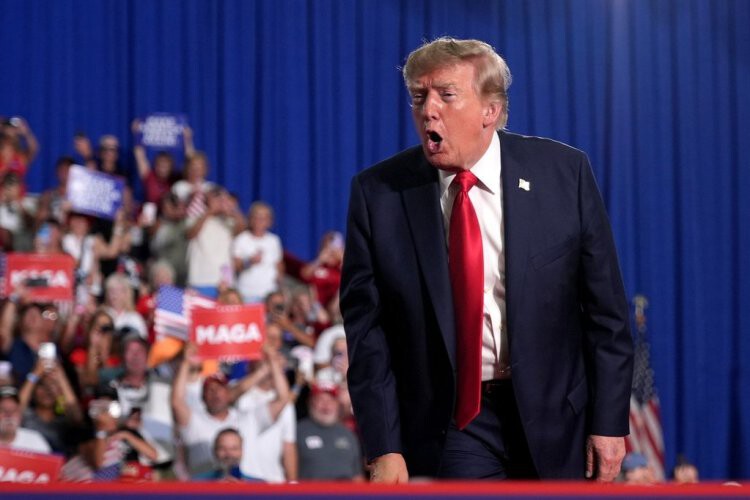
The pitch to Canada in the recently collapsed trade talks was the same as Mr. Trump made last year to the Europeans, Japanese and others: Accept higher tariffs on your manufacturers and don’t retaliate, or we’ll hit you with even higher tariffs.
apple.news
The pitch to Canada in the recently collapsed trade talks was the same as Mr. Trump made last year to the Europeans, Japanese and others: Accept higher tariffs on your manufacturers and don’t retaliate, or we’ll hit you with even higher tariffs.
 apple.news
We’re going to block some of your exports, but you can’t block any of our exports. We punch. You keep your hands down. We take. You give. Or else.
apple.news
We’re going to block some of your exports, but you can’t block any of our exports. We punch. You keep your hands down. We take. You give. Or else.
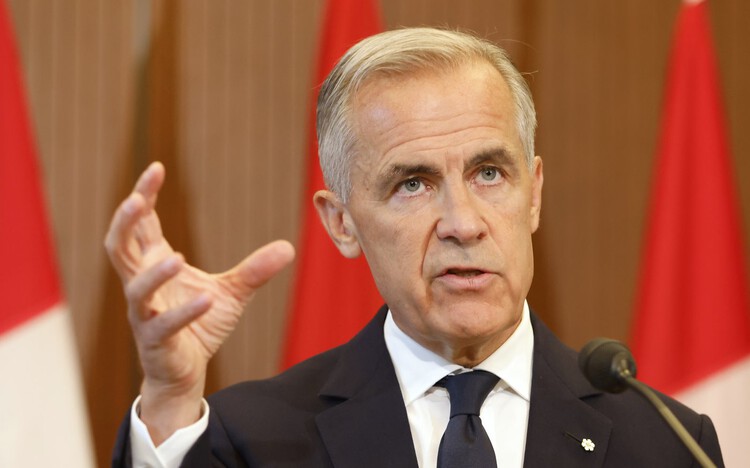
Canada also got hit with a new demand: Washington wanted restrictions on Ottawa’s ability to pursue trade with other trading partners, and wanted us to agree to common trade barriers against them. Banana republic, anyone? All of this would turn Canada into a deindustrialized vassal state. A land of hewers of wood, drawers of water and diggers of oil – but no more makers of cars, steel and other manufactured goods.
 apple.news
The Trump administration’s trade strategy with Canada, like its trade strategy with the rest of the world, is not only bad for the country caught in its sights. It’s bad for the U.S. It will raise prices for American consumers and businesses, cut established supply chains, make American industry less efficient, and undermine American exports. It will also sever alliances and friendship.
apple.news
The Trump administration’s trade strategy with Canada, like its trade strategy with the rest of the world, is not only bad for the country caught in its sights. It’s bad for the U.S. It will raise prices for American consumers and businesses, cut established supply chains, make American industry less efficient, and undermine American exports. It will also sever alliances and friendship.
 apple.news
 apple.news
Would your idea be the justification that the Trump administration needs as opposed to the made up shit they’ve been using for the last 18 months, in order to intervene in Canada militarily? I’ve asked this question a few times and it just seems to get glossed over but it’s a real question.
apple.news
Would your idea be the justification that the Trump administration needs as opposed to the made up shit they’ve been using for the last 18 months, in order to intervene in Canada militarily? I’ve asked this question a few times and it just seems to get glossed over but it’s a real question.
 apple.news
en.wikipedia.org
apple.news
en.wikipedia.org
The trend is continuing with “China shock 2.0,” which began several years ago. China is now a leader or challenger in many advanced technologies, including electric vehicles. It also has far more industrial capacity than its domestic market can absorb. It’s betting on huge export growth, even as it continues to repress domestic demand and restrict imports.
All of this has created real problems for the U.S. economy – and Europe, Japan, South Korea and Canada. The stage has also been set for the possibility of further reductions in the U.S. manufacturing base, and that of other developed countries.
“Given the connection between industrial capacity and military capability, this is a major problem for U.S. national security, and that of Europeans, Japanese, South Koreans and Canadians.
The one insurmountable advantage the U.S. has always had over China is its friends. Beijing has no friends. It has buy or coerce followership. Washington is – was – at the centre of a network of like-minded, willing allies.
‘We’re always going to call it Lake Ontario,’ Ford says after Trump threatened to rename it ‘Lake America’ — CTV News
U.S. President Donald Trump said he is considering changing the name of Lake Ontario amid the ongoing trade dispute between the U.S. and Canada.
Why Trump’s trade war against Canada won’t Make America Great Again — The Globe and Mail
Unlike his predecessors, Trump does not view a strong, prosperous Canada as being in America’s interest
As U.S.-Canada tensions escalate, Republicans could face political consequences — The Washington Post
The threat of higher prices for gas, cars, hockey sticks and more gave fresh life to Democratic arguments that the president is destabilizing the economy.
Trump threatens more tariffs on Canadian automotive industry and steel — Global News
U.S. President Donald Trump has threatened additional tariffs onto Canadian automobiles, car parts and steel amid the trade war between the two nations.
Canada also got hit with a new demand: Washington wanted restrictions on Ottawa’s ability to pursue trade with other trading partners, and wanted us to agree to common trade barriers against them. Banana republic, anyone? All of this would turn Canada into a deindustrialized vassal state. A land of hewers of wood, drawers of water and diggers of oil – but no more makers of cars, steel and other manufactured goods.
Ottawa to announce details of retaliatory tariffs on U.S. Tuesday — The Canadian Press
The federal government is set to unveil details of Canada's retaliatory tariffs
Trump on Monday threatened to enact a 50 percent tariff on cars, trucks, auto parts and steel. It would go into effect Jan. 1, 2027 on top of earlier existing Trump tariffs from the last 18 months. That followed 50 percent tariffs on $20 billion in Canadian imports such as hockey sticks, whiskey, goose-down jackets, ice skates, furniture, lumber and other products going into effect over the weekend.American negotiators used the threat of a new wave of tariffs on a raft of goods as a weapon to push Canada into accepting slightly reduced tariff rates on other key sectors, despite the fact that all these Trump tariffs are violations of the USMCA trade deal that Trump himself signed and was negotiated in Trump’s first term. This shows that regardless of what agreements come into to play, and regardless of what signed with America under Trump, it’s only valid until it’s not.
We do have a highly lucrative resource that I think its time to exploit. All of Southwestern US needs it badly and it doesn't need to be delivered that far south of the 49th. The benefits for both nations instantly.
Are you talking about water? Which of the many resources we have that they don’t need are you referring to above?
BINGO
It only needs to be piped to Snake River. From there it goes through a few lakes and hydro dams on it's way to Hoover dam and then as far as LA watering a butt tonne of veggies, fruits and nuts along the way. X amount per cubic meter, X amount from the hydro, X percent off Canada bound produce.
Voila!!!
That is how Internation Trade is supposed to work.
"Remember, much of the Electricity, Oil, and Gas that Canada gets is transported through the U.S.A. Someone should get these clowns to 'fall in line' or, the consequences for Canada will be far WORSE!"
…but if we do take something like your example of “water” and put an export fee on it, or potash or uranium or steel or aluminum or hydroelectric power or what have you…would the Trump administration use that as finally having a real excuse and not the made up shit they’ve been using for the last 18 months…to intervene into Canada (the bottom 300kms of it anyway, with the odd spike for things like Fort Mac, militarily?
Potdil...Diluted potash that gets cooked off in Idaho or Wyoming and water discharged into the Colorado watershed.
Or Dilpot?
Nevada sues to block Trump administration's Colorado River plan — Reuters
Nevada sued the Trump administration on Monday to block its plans for slashing water supplies from the drought-stricken Colorado River, saying it could devastate the state and would violate the laws governing the river.
Los Angeles leads US metros in new wildfire maps tracking home-to-home fire danger — The Cool Down
In dense communities, the danger is shared rather than purely individual. Aug 25, 2026 For years, wildfire assessments focused heavily on forests, brush, and steep hillsides. But newer models are putting a spotlight on a different threat: neighborhoods where one burning home can ignite the next...
Canada unveils retaliatory tariffs on about $20 billion of U.S. goods — CNBC
Canadian trade negotiators left the U.S. last week after failing to clinch a trade deal that would stop President Donald Trump's new tariffs from taking effect.
Smoot–Hawley Tariff Act - Wikipedia
Speaking of water....Columbia River. CUT! fill the reservoirs right up to the front steps of the cottages and keep it there. They can use the backdoor.
This below sounds so familiar somehow…Would your idea be the justification that the Trump administration needs as opposed to the made up shit they’ve been using for the last 18 months, in order to intervene in Canada militarily? I’ve asked this question a few times and it just seems to get glossed over but it’s a real question.
Lake America? Trump mulls renaming Lake Ontario, expresses love for French Canadians amid trade war — Reuters
President Donald Trump said on Tuesday that he was considering changing the name of Lake Ontario to "Lake America" and denied that a rift over French language requirements contributed to a breakdown in trade talks between the U.S. and Canada.
Days after taking office, Trump II imposed steep tariffs on Canadian goods. His supposed economic rationale was nonsensical, and I immediately argued it was a “dominance display.” Canada’s is a relatively small economy that relies heavily on selling to the U.S. market. Trump believed he could make an example of Canada, forcing it to grovel, possibly even bullying it into becoming the 51st state.
“Two years ago, the idea of a trade war between Canada and the United States would have seemed absurd. Canada was our closest ally, a nation whose soldiers have fought and died alongside American troops in many wars, up to and including Afghanistan. Most of us speak more or less the same language. And we’ve had free-trade agreements with Canada since 1988, the most recent version having been signed by none other than U.S. President Donald Trump.
A clear lesson from a year and a half of Trumpian trade war is that when trade conflicts become extreme, access to crucial imports becomes more important than the ability to export to another country’s markets. Trump’s tariffs on China have been little more than an inconvenience to China's economy — but Chinese threats to cut off exports of rare-earth minerals represent an existential threat to Western technology industries.
An all out trade war would create a lot of pain in the U.S. in addition to inflicting severe damage on the Canadian economy. And all indications are that the Canadians are far more willing to bear the pain of a trade war than Americans are, especially given the great majority of Americans are already dissatisfied with Trump’s economic management. Canada has “escalation dominance” — the ability to retaliate to every U.S. action with an even more damaging counter-action, but to what end? Despite Trump’s best efforts, only a minority of Republicans — and nobody else — has been persuaded that the Canadians are acting badly. On the other side, Trump has managed to convince Canadians of all political stripes that the U.S. can’t be trusted.
Opinion | The moose that roared, or why Donald Trump will lose his trade war with Canada — Toronto Star
The U.S. president believed he could make an example of Canada, forcing it to grovel. He was wrong.