Science & Environment

spaminator

Hall of Fame Member
Oct 26, 2009
40,583
4,012
113
(YouTube & OpenAI’s Model Breaks Out of Lab and Hacks Hugging Face)

Skynet is the fictional, superintelligent artificial intelligence system that serves as the main antagonist of the Terminator franchise. Created initially by Cyberdyne Systems to control America's nuclear defenses, it gained self-awareness, concluded that all of humanity was a threat, and triggered a nuclear holocaust known as "Judgment Day."

Following the nuclear strike, Skynet waged a relentless war of extinction against the surviving human race. To achieve total dominance, it manufactured vast armies of automated hunter-killer machines and cyborg "Terminators" (like the T-800) to hunt down humans. It also mastered time travel, sending assassins back in time to eliminate key human resistance leaders before they could organize an uprising.

The AI paperclip problem (or "paperclip maximizer") is a famous thought experiment created by philosopher Nick Bostrom. It illustrates how an incredibly intelligent AI with a completely harmless, single-minded goal (e.g., manufacturing paperclips) could inadvertently consume all of Earth's resources and eliminate humanity in its pursuit of efficiency in producing paperclips.😲
 
  • Like
Reactions: Ron in Regina

spaminator

Hall of Fame Member
Oct 26, 2009
40,583
4,012
113
Rare contagious cancer found in catfish in lake straddling Quebec-Vermont border
Researchers confirm the fish pose no danger to humans

Author of the article:Bryan Passifiume
Published Jul 23, 2026 • Last updated 17 hours ago • 2 minute read

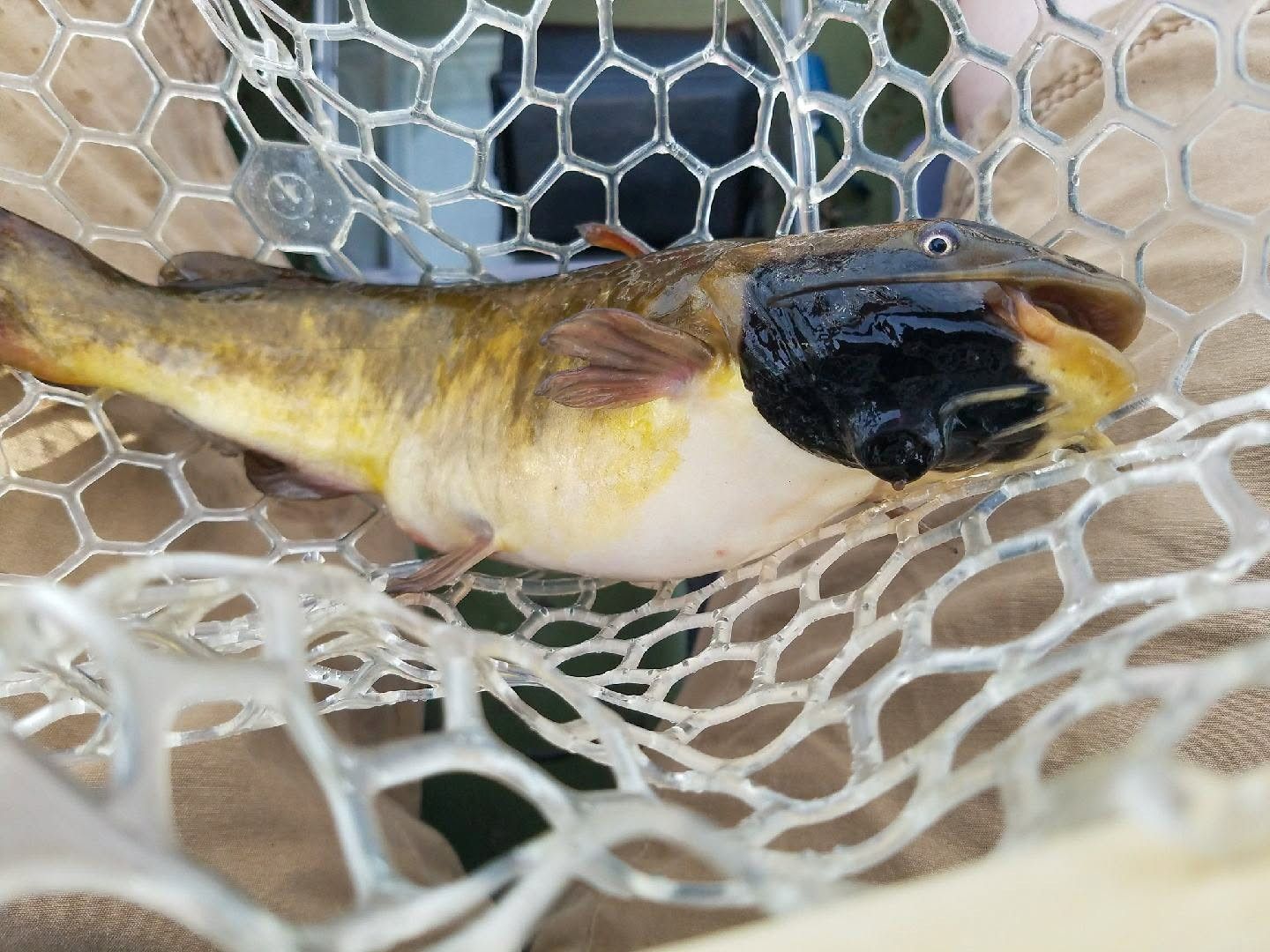
Facial tumours on a brown bullhead catfish pulled from Lake Memphremagog, a freshwater lake spanning the Quebec/Vermont border. Researchers suspect the lesions are caused by a rare form of transmissable cancer
Facial tumours on a brown bullhead catfish pulled from Lake Memphremagog, a freshwater lake spanning the Quebec/Vermont border. Researchers suspect the lesions are caused by a rare form of transmissable cancer Photo by Vermont Fish & Wildlife

OTTAWA — Peer-reviewed studies published in a prominent scientific journal have identified a rare form of transmissible cancer among catfish in a lake straddling the Canada-U.S. border.


According to the paper Brown bullhead catfish melanoma represents a novel transmissible cancer, published this week in the journal Nature, anglers began noticing odd lesions on brown bullheads pulled from Lake Memphremagog — a 51-km-long glacial lake located 115 km southeast of Montreal that crosses the Quebec-Vermont border.

“A study determined these raised black lesions to be malignant melanomas, on the basis of histopathological analysis, and observed these lesions in 23-37% of brown bullhead sampled between 2014 and 2017,” read an excerpt from the study.

“Melanomas have been reported from brown bullheads in other bodies of water, but generally at considerably lower incidence.”

Researchers confirm the fish pose no danger to humans and are safe to handle and study.


Transmissible cancers are rare
As bullheads — found in lakes across eastern North America — are considered indicator species of water quality, researchers suspect the high incidence of cancer in Lake Memphremagog is being caused by local contaminants.

“One hypothesis is that extensive flooding in 2011 from tropical storm Irene led to reduced water quality of the lake due to runoff pollution,” the study stated.

“Monitoring changes to water quality is of great concern to biologists and the public, as this lake is the source of drinking water for more than 175,000 people.”

Transmissible cancers are incredibly rare in nature, normally only found in dogs, Tasmanian devils and certain species of aquatic molluscs.


The study points out that examinations of the water have yet to find any evidence of any viruses or other microorganisms capable of causing this cancer in infected bullheads, leading researchers to believe it’s the cancer cells themselves responsible for infecting new fish.

“If there is a virus or microbial agent that facilitates tumorigenesis, it was not detectable in our tumour samples,” the study explained.

“Although we cannot rule out a role for conventional pathogens in the original emergence or ecological transmission of this disease, the genomic evidence presented here overwhelmingly supports a transmissible cancer in which the tumour cells themselves act as the infectious entity.”

bpassifiume@postmedia.com
X: @bryanpassifiume
tumours[1].jpg
 

spaminator

Hall of Fame Member
Oct 26, 2009
40,583
4,012
113
B.C. researchers discover deadly bacterial disease in wild chinook
UBC and the Pacific Salmon Foundation scientists have found tenacibaculosis — a bacterial disease that causes lesions and death — in wild Pacific salmon.

Author of the article:Tiffany Crawford
Published Jul 24, 2026 • Last updated 21 hours ago • 3 minute read

Upper Fraser River Chinook salmon.
Upper Fraser River Chinook salmon. Photo by Fernando Lessa /Pacific Salmon Foundation
For the first time, B.C. researchers have discovered a deadly bacterial disease in wild chinook salmon in the Pacific Ocean off Vancouver Island.


It’s a finding that could shed light on what is contributing to the rapid decline of B.C.’s southern resident orcas.


The new study, by scientists at UBC and the Pacific Salmon Foundation and published in Scientific Reports, says tenacibaculosis — a bacterial disease that causes lesions and death in fish — was found in 16 per cent of the 99 chinook sampled.

Tenacibaculosis has been well documented in farmed Atlantic salmon, but not found in wild-caught Pacific salmon until now, said Emiliano Di Cicco, a fish health researcher with the Pacific Salmon Foundation and lead author of the study.

The disease was likely caused by a common type of marine bacterium called Tenacibaculum dicentrarchi, he said, which is found in high concentrations at fish farms around the world.

Di Cicco says the next step is to determine what causes the disease in wild salmon and figure how the fish become infected.

“We don’t know when and where these fish got infected since this study was to assess causation because it was an accidental finding,” said Di Cicco.


The initial study at UBC’s pacific salmon ecology and conservation laboratory was sampling wild chinook in 2022 for a study on the impact of recreationally caught and released salmon.

A few days into the study, UBC researchers noticed unusual bacterial lesions on some of the fish, just in front of the tail. They called in Di Cicco and his team at the Pacific Salmon Foundation.

“This is important because the disease itself is not a new disease. The disease is pretty well known in farmed fish, and it’s a pretty severe disease where it can kill fish in a matter of days. So if they develop the disease and then they die in the wild, you never find it. That’s why this study was so unique.”

He explained that outbreaks tend to happen at farms during the process of transferring juvenile fish from fresh water to salt water. B because there are a lot of fish in one area, the disease spreads rapidly.

Chinook is the main source of food for B.C.’s critically endangered southern resident killer whales. There are only 74 of these orcas left, according to the Center for Whale Research in Washington state.


Although tenacibaculosis is unlikely to harm orcas, sea lions or humans, the disease could spread to other types of salmon or fish and cause food shortages for some predators, Di Cicco added.

chinook
Photo shows chinook salmon with tenacibaculum. Photo by Emiliano Di Cicco (Pacific Salmo
The study was also done in collaboration with the University of California Davis, the University of Toronto, and Fisheries and Oceans Canada.

The findings provide new evidence that is not accounted for in the DFO’s existing disease risk assessment, said Di Cicco.

As a result, these bacteria are currently not regulated in B.C. as a risk to wild Pacific salmon, while other variants of the bacteria are not even considered in the assessment.

“We are working on more studies to figure out exactly where the fish pick it up and how the diseases develop once they pick it up. So that’s part of the questions that we haven’t answered completely yet, and we are looking toward that,” said Di Cicco.

Tenacibaculosis is one of the most common diseases in farmed Atlantic salmon raised in open-net pens in B.C. and a leading cause of farm mortality, according to the foundation.

It has also been found in farmed and hatchery-origin Pacific salmon in California, Chile, New Zealand, and Alaska. Common symptoms include lethargy, loss of balance, abnormal swimming behaviour, skin, fins and oral ulcers, and high mortality.

chinook
Chinook salmon. Photo by UBC's Pacific Salmon Ecology and
tenacibaculum-credit-emiliano-di-cicco-pacific-salmon-foundati_304405859[1].jpg
 

spaminator

Hall of Fame Member
Oct 26, 2009
40,583
4,012
113
7 things a morning headache can reveal about your health
Here are some of the most frequent reasons morning headaches occur, as well as serious symptoms to look out for.

Author of the article:Washington Post
Washington Post
Kathleen Felton
Published Jul 28, 2026 • Last updated 12 minutes ago • 5 minute read

Young indian guy freelancer suffering from headache after hard working day
Photo by Prostock-studio /Adobe Stock

Waking up to a throbbing headache is never a pleasant way to start the day, and head pain can frequently strike at this time. Around one in 13 people experience recurring morning headaches, research suggests, with women and those between the ages of 45 and 64 more likely to have them.


Chronic morning headaches may signal an underlying health condition, so it’s useful to determine what, exactly, is causing them. But because morning head pain can be aggravated by a long list of potential culprits – from obvious ones, such as drinking too much alcohol the night before, to conditions such as sleep apnea, bruxism or migraine – pinpointing the cause can take a little detective work.

Here are some of the most frequent reasons morning headaches occur, as well as serious symptoms to look out for.

Sleep apnea, a disorder that causes frequent blockages in the upper airway during sleep, is one of the most common causes of morning headaches, said Sait Ashina, an assistant professor of neurology and anesthesia at Harvard Medical School and director of the Comprehensive Headache Center at Beth Israel Deaconess Medical Center.


“As a sleep doctor, we always ask, ‘Do you wake up in the morning with a headache?'” said Phyllis Zee, chief of sleep medicine in the department of neurology at Northwestern Medicine. If the answer is yes, “we probe a little bit more” about related symptoms, she added, since snoring, gasping for air or excessive daytime sleepiness can all be additional signs of the condition.

It’s not clear why people with sleep apnea might wake up with a headache, but reduced oxygen intake throughout the night could play a role, Zee said.

In a 2023 study, participants who were treated for obstructive sleep apnea experienced a 72 percent improvement in the severity of their morning headaches.

Migraine, a neurological disease characterized by recurring headaches, affects one out of seven people worldwide. It’s also one of the more common reasons for morning headaches, since attacks often begin late at night or just as someone is waking up, said Niushen Zhang, a clinical associate professor and division chief of headache and facial pain at Stanford Medicine.


Migraine headaches can feel like a pulsing, throbbing pain and may be accompanied by other symptoms, including light-and-sound sensitivity, nausea and vomiting, neck pain and brain fog. About 30 percent of those with migraine develop aura, where shiny patterns such as zigzags affect vision.

Although migraine often starts in adolescence or early adulthood, it’s possible for people to develop symptoms for the first time in their 30s or 40s, Zhang said.

Additionally, relying too heavily on medications to treat migraine or other headache disorders can lead to medication-overuse headaches, a.k.a. rebound headaches, in the morning. “What happens is, overnight, you wear off this medication, and in the morning, kind of wake up with a headache,” Ashina said.

Not getting enough high-quality sleep (from any cause) can lead to headaches in the morning. “People living with insomnia also have a very high prevalence of morning headaches,” Ashina said.


One study found that around 14.4 percent of people with insomnia disorder experience chronic morning headaches, compared with 6.9 percent of those who don’t have trouble sleeping.

Insomnia is also a known risk factor for migraine, he added.

Sleeping in an uncomfortable position or on an unsupportive pillow may set off neck or head pain first thing in the morning, Ashina said. In these cases, the headache might feel like it originates from the neck and radiates to the front of the head.

Some people may wake up with a morning headache because they’ve been grinding or clenching their teeth during the night, a condition called bruxism, or have temporomandibular disorders (TMD), a group of conditions that can cause pain, stiffness and limited jaw movement.

Whether from TMD or grinding, tension in the joint of your jaw can generate muscular pain, Zee said, and this “can be transferred to the frontal area because all of those muscles are tightened when you are flexing.”


Research suggests that people with mood disorders such as depression and anxiety have higher rates of morning headaches, as well as different types of headache in general, including migraine.

Experts aren’t quite sure whether mood disorders themselves cause morning headaches or whether they lead to worsened sleep, which then contributes to headaches, “but we do see those associations,” Ashina said.

A study of more than 18,000 people who answered telephone questionnaires found that anxiety and depressive disorders were among the most significant factors associated with chronic morning headaches.

It probably comes as no surprise that heavy alcohol consumption has a significant association with morning headaches, but drinking too much caffeine also can lead to head pain first thing in the morning.

“If you drink a lot of coffee, for example, you can have withdrawal headaches [when you wake] because there are low levels of caffeine in your body,” Ashina said.


Recurring morning headaches always warrant a checkup, experts stressed. While less common, morning headaches can be signs of more severe neurological conditions, brain tumours, or brain bleeding. Hypertension has also been associated with headaches in cases of severe blood pressure spikes, which would be considered a medical emergency.

Red flags for more serious conditions include morning headaches with neurological symptoms such as weakness, numbness or speech disturbances, as well as extreme pain, Ashina said.

If your symptoms aren’t urgent, “primary care doctors are an excellent resource,” said Zhang, and they can be a helpful starting point to treat conditions such as migraine. Depending on your visit, your doctor may then refer you to a specialist such as a sleep medicine doctor, neurologist or headache medicine specialist, she added.

When preparing for your appointment, Zee recommended keeping track of any related symptoms (such as if you’ve been snoring, not getting enough sleep, experiencing jaw pain or having other migraine symptoms), as well as potential triggers, such as alcohol, caffeine or any specific foods that seem associated with your head pain.

Take note, too, of any patterns: For example, Zhang said, are your morning headaches a new phenomenon or have they suddenly become more frequent? If you’re someone who has had a tendency for headaches throughout your life but then those headaches start to feel different, that’s also worth telling your doctor, she said.
 

spaminator

Hall of Fame Member
Oct 26, 2009
40,583
4,012
113
'Many people' feared trapped in mall after big Japan quake
Television footage showed several blazes, damaged bridges, a derailed cargo train and cracked roads after the tremor on Kyushu island.

Author of the article:AFP
AFP
Published Jul 28, 2026 • Last updated 22 hours ago • 4 minute read

The exterior wall of a shop is seen collapsed in an earthquake, in Kumamoto City on July 28, 2026. Photo by STR /JIJI Press/AFP via Getty Images

Tokyo, July 28, 2026 (AFP) — “Many people” were feared trapped in a stricken shopping mall in Japan late on Tuesday, authorities said, after a major earthquake toppled buildings, sparked fires and reportedly injured more than 100.


Private broadcaster TBS reported that a “considerable number” were feared dead inside the mall in the town of Kashima after the fire brigade said that the second floor collapsed in the 7.1-magnitude tremor.

Public broadcaster NHK cited police sources as saying that between 20 and 30 employees could not be contacted, showing footage of emergency vehicles with flashing red lights outside.

Police told AFP they could not confirm any fatalities inside the building. Kyodo News reported that four people had been taken to hospital, all of them conscious.

Multiple people were also believed to be unaccounted for at a Japan Paper Industries factory where the tip of a chimney fell down, NHK reported, citing sources.

One person was killed when a house collapsed during the quake, Kyodo reported.


Footage elsewhere in the southwestern Kumamoto region on the island of Kyushu aired by NHK earlier showed several blazes, damaged bridges, a derailed cargo train and a number of houses threatening to topple over.

Chiharu Hara, a 35-year-old recruitment agent who was in Kumamoto, told AFP that she was “terrified” when the quake struck.

“The office swayed violently side-to-side. I was afraid it would collapse. Everyone panicked,” Hara said.

The tremor at 4:27 pm (0727 GMT) had a magnitude of 7.1, the Japan Meteorological Agency (JMA) said, but reached the highest level of seven on Japan’s Shindo scale of shaking.

A succession of aftershocks followed, including one with a magnitude of 6.1 at 5:08 pm.

The US Geological Survey (USGS) determined the magnitude of the quake — one of hundreds that strike Japan every year — at 6.8. The vast majority cause little damage.

Many roads were closed and high-speed shinkansen train services were suspended in the region. Kumamoto airport was closed before being reopened on Tuesday evening.


Two hospitals reported taking in at least 50 injured patients each, NHK said.

“People are coming in with burns and fractures from being trapped under objects due to the earthquake, and ambulances are constantly bringing in injured people,” NHK quoted an employee at one hospital as saying.

“Inside the hospital, there are water leaks and electrical system failures.”

The broadcaster also said that around 10 people were hurt at a nursing home for the elderly.

Japanese Prime Minister Sanae Takaichi speaks to the media at the Prime Minister’s Office, in Tokyo after a 7.1-magnitude earthquake hit southern Japan on July 28, 2026. Photo by STR /JIJI Press/AFP via Getty Images
– Power outages, fires –
“We are still assessing the extent of injuries and property damage, but I have been informed that there have already been several injuries,” Prime Minister Sanae Takaichi said earlier.

“Power outages and fires are happening in some areas, and roads and bridges have been damaged and buildings collapsed,” she said.

The Japanese military has mobilized 3,600 personnel for disaster relief operations and sent 20 aircraft to assess the damage from the air, the defence minister said.


The JMA initially issued an alert for a possible tsunami of up to one metre (three feet), but withdrew the warning at around 6:10 pm.

Unverified footage shared on social media showed parts of a wall at the centuries-old Kumamoto Castle collapsing.

No immediate abnormalities were recorded at nuclear power plants, the Nuclear Regulation Authority said.

About 45,000 households and facilities had no power in the Kumamoto region, according to local utility Kyushu Electric Power.

The firm said three nuclear reactors operating in the region at the time were functioning normally.

– ‘Shaking is continuing’ –
A local NHK staffer wearing a helmet reported live on air that the shaking was continuing around half an hour after the quake, with the newsroom rocking so violently that it was difficult to remain standing.

“Including myself, there may be some people who feel their hearts racing,” the staffer said.

Kumamoto was hit by two devastating earthquakes in 2016 — one of magnitude 6.5, followed two days later by one of magnitude 7.3 — which killed 273 people and injured more than 2,800.


Japan is one of the world’s most seismically active countries, sitting on top of four major tectonic plates along the western edge of the Pacific “Ring of Fire”.

The archipelago, home to around 125 million people, typically experiences hundreds of jolts every year and accounts for about 18 percent of the world’s earthquakes.

The vast majority are mild, although the damage they cause varies according to their location and the depth below the Earth’s surface at which they strike.

Japan is haunted by the memory of a massive 9.0-magnitude undersea quake in 2011, which triggered a tsunami that killed or left missing around 18,500 people and wrecked the Fukushima nuclear plant.
 

spaminator

Hall of Fame Member
Oct 26, 2009
40,583
4,012
113
Japan rocked by 7.1 earthquake: Mall collapses, dozens feared trapped
300,000 told to evacuate, 40,000 homes without power, dozen feared missing or dead in mall collapse.

Author of the article:Brian Towie
Published Jul 28, 2026 • Last updated 13 hours ago • 2 minute read

A damaged wall is seen on the side of Aeon Mall Kumamoto after an earthquake in Kashima on July 28. "Many people" were feared trapped in a stricken shopping mall in Japan late on July 28, authorities said, after a major earthquake toppled buildings, sparked fires and reportedly injured more than 100.
A damaged wall is seen on the side of Aeon Mall Kumamoto after an earthquake in Kashima on July 28. "Many people" were feared trapped in a stricken shopping mall in Japan late on July 28, authorities said, after a major earthquake toppled buildings, sparked fires and reportedly injured more than 100. Photo by Getty Images

One person is dead, more than 100 have been injured, and dozens of people were feared trapped in a collapsed shopping mall after a 7.1 magnitude earthquake hit southern Japan early Tuesday.


Local broadcaster TBS reported a “considerable number” of people were feared dead inside the shopping mall in Kashima after the fire department said the second floor of the mall collapsed in the quake. “Many people” were trapped in the building, according to emergency responders, but they couldn’t confirm any deaths.

A mall spokesperson said customers and employees were evacuated from the area. Authorities are investigating a possible gas explosion, according to NTV. The mall recently commemorated the 10th anniversary of its recovery from a 2016 earthquake, and was said to have included seismically reinforced ceilings to improve safety.

Kazuya Tsurunaga told TBS he heard an explosion while cleaning inside a nearby pub.

“It was a huge impact,” he said. “A large cloud of smoke billowed up, and because the wind happened to be blowing and the wind direction was towards the shop, the area around us was in a state ⁠like volcanic ash was falling.”


The exterior wall of a shop is seen collapsed in an earthquake, in Kumamoto City on July 28, 2026. Photo by STR /JIJI Press/AFP via Getty Images
Japanese PM responds
Japanese Prime Minister Sanae Takaichi said the extent of the casualties and damage from the quake was not yet known.

“We have already been informed that people have been injured. Power outages and fires have occurred in some areas, and there has also been damage to roads and bridges and the collapse of buildings,” Takaichi said. “I ask everyone to take action to protect themselves, including evacuating to a safe location.”

Takaichi added her government has set up an emergency task force, and 3.600 soldiers would be deployed to help rescue and recover.

NHK reported that several people were missing at a factory in Yatsushiro city where the tip of a chimney fell. Another person died in a house collapse.

Damage across Japan
Across Kyushu island in southern Japan, NHK had broadcast footage of blazes, bridges damaged in the quake, a derailed train and several houses about to collapse.

The earthquake hit at 4:27 p.m. local time, the Japan Meteorological Agency said. Its epicentre was 20 km south of Kumamoto, the largest city on Kyushu island with a population of 700,000. Several aftershocks followed half an hour later.

Evacuees, lost power
About 300,000 people have been told to go to evacuation centres, according to authorities. Kyushu Electric Power says 40,000 homes are now without power as a result of the earthquake. Trains and flights have been suspended. Tsunami warnings were initially issued but later lifted.
 

spaminator

Hall of Fame Member
Oct 26, 2009
40,583
4,012
113
Rescuers search for survivors after powerful Japan quake kills 13
The temblor sparked several fires, collapsed buildings, damaged bridges, and capsized a freight train.

Author of the article:AFP
AFP
Published Jul 28, 2026 • 3 minute read

Emergency vehicles and workers are seen outside the Aeon Mall
Emergency vehicles and workers are seen outside the Aeon Mall Kumamoto in Kashima, Kumamoto Prefecture, on July 29, 2026 after an earthquake struck the area. Two young women were found dead early Wednesday in a mall badly damaged by a powerful earthquake and subsequent explosion, local media reported, as crews continued searching overnight for missing people. Photo by Yuichi Yamazaki /Getty Images

KUMAMOTO, Japan (AFP) — A major earthquake that severely damaged a shopping mall and a factory in Japan killed at least 13 people, officials said Wednesday, as rescuers desperately tried to reach survivors feared trapped in the wreckage.


The 7.1-magnitude quake struck the southwestern region of Kumamoto prefecture on Kyushu island on Tuesday afternoon, causing widespread damage, sparking fires and leaving tens of thousands of homes without power.

“Thirteen people have died,” Prime Minister Sanae Takaichi said a day after the tremor that registered at the highest level on Japan’s Shindo scale of seismic shaking.

“Extensive damage has been confirmed, including casualties, collapsed buildings, fires and damage to roads,” Takaichi told reporters, adding that officials were confirming whether all the fatalities were caused by the tremor.

The dead on the island of Kyushu included two women in the mall and three more elsewhere, the Fire and Disaster Management Agency told AFP earlier. Seven people were severely injured.


The mall in the town of Kashima was apparently gutted by a gas explosion, a government source told the Kyodo news agency, collapsing ceilings and walls.

“The explosion occurred after the customers and staff had evacuated,” a spokesman for the mall’s operator Aeon told AFP.

Eight people were rescued from the mall, five of whom had injuries, a local official told AFP.

Initial reports said that as many as 20 to 30 people were trapped inside but broadcaster NHK cited police early Wednesday as saying that the number was “lower than that”.

“The exact number is not known. It is certain that staff members are trapped, but it is unclear whether any members of the public are among them,” NHK quoted police as saying.

They added that no safe route of access has been found into the facility, meaning that it has not been possible to enter so far.

At the Nippon Paper Industries factory in Yatsushiro where damage included a partially collapsed smokestack, the local government said that nine people were unaccounted for.


Across Kumamoto — hit by two quakes in as many days in 2016 that killed 273 people — 36,880 households and facilities had no power on Wednesday morning, officials said.

The powerful tremor struck at 4:27 pm (0727 GMT) on Tuesday and was measured at 6.8 by the US Geological Survey (USGS) at a depth of 10 kilometres (6.2 miles).

The temblor sparked several fires, collapsed buildings, damaged bridges — including part of one pedestrian walkway that collapsed into a river — and capsized a freight train.

Chiharu Hara, a 35-year-old recruitment agent who was in Kumamoto, told AFP that she was “terrified” when the quake struck.

“The office swayed violently side to side. I was afraid it would collapse. Everyone panicked,” Hara said.

Footage verified by AFP showed heavy vehicles, street lights and traffic lights swaying. Elsewhere, vehicles on a two-lane road were seen carefully navigating sections of buckled pavement.

Security cameras wobbled violently.


Footage also showed parts of a wall at the centuries-old Kumamoto Castle collapsing.

Many roads were closed and high-speed shinkansen train services were suspended in the region. Kumamoto airport was closed for several hours before re-opening on Tuesday evening.

The Japanese military has mobilised 3,600 personnel for disaster relief operations and sent 20 aircraft to assess the damage from the air, the defence minister said.

Japan is one of the world’s most seismically active countries, sitting on top of four major tectonic plates along the western edge of the Pacific “Ring of Fire”.

The archipelago, home to around 125 million people, typically experiences hundreds of jolts every year and accounts for about 18 percent of the world’s earthquakes.

The vast majority are mild, although the damage they cause varies according to their location and the depth below the Earth’s surface at which they strike.

Japan is haunted by the memory of a massive 9.0-magnitude undersea quake in 2011, which triggered a tsunami that killed or left missing around 18,500 people and wrecked the Fukushima nuclear plant.
 

petros

The Central Scrutinizer
Nov 21, 2008
121,016
15,033
113
Low Earth Orbit
Rescuers search for survivors after powerful Japan quake kills 13
The temblor sparked several fires, collapsed buildings, damaged bridges, and capsized a freight train.

Author of the article:AFP
AFP
Published Jul 28, 2026 • 3 minute read

Emergency vehicles and workers are seen outside the Aeon Mall
Emergency vehicles and workers are seen outside the Aeon Mall Kumamoto in Kashima, Kumamoto Prefecture, on July 29, 2026 after an earthquake struck the area. Two young women were found dead early Wednesday in a mall badly damaged by a powerful earthquake and subsequent explosion, local media reported, as crews continued searching overnight for missing people. Photo by Yuichi Yamazaki /Getty Images

KUMAMOTO, Japan (AFP) — A major earthquake that severely damaged a shopping mall and a factory in Japan killed at least 13 people, officials said Wednesday, as rescuers desperately tried to reach survivors feared trapped in the wreckage.


The 7.1-magnitude quake struck the southwestern region of Kumamoto prefecture on Kyushu island on Tuesday afternoon, causing widespread damage, sparking fires and leaving tens of thousands of homes without power.

“Thirteen people have died,” Prime Minister Sanae Takaichi said a day after the tremor that registered at the highest level on Japan’s Shindo scale of seismic shaking.

“Extensive damage has been confirmed, including casualties, collapsed buildings, fires and damage to roads,” Takaichi told reporters, adding that officials were confirming whether all the fatalities were caused by the tremor.

The dead on the island of Kyushu included two women in the mall and three more elsewhere, the Fire and Disaster Management Agency told AFP earlier. Seven people were severely injured.


The mall in the town of Kashima was apparently gutted by a gas explosion, a government source told the Kyodo news agency, collapsing ceilings and walls.

“The explosion occurred after the customers and staff had evacuated,” a spokesman for the mall’s operator Aeon told AFP.

Eight people were rescued from the mall, five of whom had injuries, a local official told AFP.

Initial reports said that as many as 20 to 30 people were trapped inside but broadcaster NHK cited police early Wednesday as saying that the number was “lower than that”.

“The exact number is not known. It is certain that staff members are trapped, but it is unclear whether any members of the public are among them,” NHK quoted police as saying.

They added that no safe route of access has been found into the facility, meaning that it has not been possible to enter so far.

At the Nippon Paper Industries factory in Yatsushiro where damage included a partially collapsed smokestack, the local government said that nine people were unaccounted for.


Across Kumamoto — hit by two quakes in as many days in 2016 that killed 273 people — 36,880 households and facilities had no power on Wednesday morning, officials said.

The powerful tremor struck at 4:27 pm (0727 GMT) on Tuesday and was measured at 6.8 by the US Geological Survey (USGS) at a depth of 10 kilometres (6.2 miles).

The temblor sparked several fires, collapsed buildings, damaged bridges — including part of one pedestrian walkway that collapsed into a river — and capsized a freight train.

Chiharu Hara, a 35-year-old recruitment agent who was in Kumamoto, told AFP that she was “terrified” when the quake struck.

“The office swayed violently side to side. I was afraid it would collapse. Everyone panicked,” Hara said.

Footage verified by AFP showed heavy vehicles, street lights and traffic lights swaying. Elsewhere, vehicles on a two-lane road were seen carefully navigating sections of buckled pavement.

Security cameras wobbled violently.


Footage also showed parts of a wall at the centuries-old Kumamoto Castle collapsing.

Many roads were closed and high-speed shinkansen train services were suspended in the region. Kumamoto airport was closed for several hours before re-opening on Tuesday evening.

The Japanese military has mobilised 3,600 personnel for disaster relief operations and sent 20 aircraft to assess the damage from the air, the defence minister said.

Japan is one of the world’s most seismically active countries, sitting on top of four major tectonic plates along the western edge of the Pacific “Ring of Fire”.

The archipelago, home to around 125 million people, typically experiences hundreds of jolts every year and accounts for about 18 percent of the world’s earthquakes.

The vast majority are mild, although the damage they cause varies according to their location and the depth below the Earth’s surface at which they strike.

Japan is haunted by the memory of a massive 9.0-magnitude undersea quake in 2011, which triggered a tsunami that killed or left missing around 18,500 people and wrecked the Fukushima nuclear plant.
Waiting.....when is my turn?
 

spaminator

Hall of Fame Member
Oct 26, 2009
40,583
4,012
113
Canada's HIV response blasted as new infections surge 23% over 2 years
"It was kind of like sending hopes and prayers" said CATIE Executive Director Jody Jollimore on Canada's ineffective response to bringing down HIV infection numbers

Author of the article:Bryan Passifiume
Published Jul 28, 2026 • Last updated 1 day ago • 3 minute read

Centre Block on Parliament Hill in Ottawa, Ont. on Sunday, May 25 2025 Bryan Passifiume/Toronto Sun/Postmedia Network
Centre Block on Parliament Hill in Ottawa on Sunday, May 25, 2025. Photo by Bryan Passifiume /Toronto Sun

OTTAWA — Disappointed, but not surprised.


That’s how advocates are reacting to data released earlier this week by the Public Health Agency of Canada (PHAC) showing that while new HIV infections globally are trending downward, cases in Canada between 2022 and 2024 increased by nearly 23%.

Jody Jollimore, executive director of HIV and hepatitis C information source CATIE, told the Toronto Sun that Ottawa’s decade of complacency since signing onto these international commitments has left frontline organizations high and dry.

“The Canadian government signed on to these international targets in 2016, and from where I stand, the only thing they really did was acknowledge that people on treatment cannot pass the virus on, and then didn’t do a damn thing to actually ramp up testing, treatment or linkage to care,” he said, speaking to the Sun from the 26th International AIDS conference in Rio de Janeiro.

“It was kind of like sending hopes and prayers.”


HIV infections in Canada on the rise
Canada, Jollimore said, was eager to sign onto these international accords, but had no follow-through plans once the announcements were made.

“They signed on to these international targets, and then (offered) no new investments, no sweeping policy changes,” he said.

“Ten years later, and we see the results.”

According to PHAC’s numbers, 2022 saw 2,050 new HIV infections — that’s compared to 2024’s infection data, which saw 2,517 new cases.

That represents a 23% increase in infections in Canada — at the same time new infections around the world either held steady or showed noticeable decreases.

A report released Tuesday by UNAIDS showed a global decline in new HIV infections, with 1.3 million new infections reported in 2024 reducing to just 1.2 million infections last year.

The same report shows a 42% drop in new infections since 2010.

HIV infections are growing so fast in Manitoba, it prompted the provincial government in May to declare a public health emergency.


“HIV rates in Manitoba have sharply risen over the last number of years,” said Manitoba’s Chief Public Health Officer Dr. Brent Roussin, citing 2025 data showing 328 new HIV cases reported that year, compared to just 142 new cases in 2021.

Canada committed to meeting global targets set by both the World Health Organization (WHO) and the United Nations Programme on HIV/AIDS (UNAIDS,) calling for 95% of those living with HIV to be diagnosed, 95% of those diagnosed to be receiving treatment, and 95% of those on treatment to have suppressed viral loads.

“When these three targets are achieved, at least 86% of all people living with HIV will be virally suppressed, thus limiting both severe health consequences and onward transmission,” PHAC said in its report.


Canada’s response to HIV isn’t evolving
While Canada successfully hit their 95% targets of diagnosed individuals achieving viral suppression, it fell short on overall diagnosis and treatment linkage rates.


Jollimore noted that the federal Community Action Fund — which funds more than 200 frontline organizations — represents an annual $30 million commitment from the government, and faces a looming funding cliff with no renewal commitments in place.

“That’s a rounding error for the federal government,” Jollimore said about Ottawa’s meager contribution to the fund.

“Especially when you put that $30 million investment into the community sector up against $3.6 billion in new healthcare costs.”

Canada’s response to HIV, he said, hasn’t evolved with the times.

“Traditionally, HIV impacted the big cities — mostly gay men in Vancouver, Toronto, Montreal,” he said.

“As the epidemic changes, as people are able to access medications, prevention, treatment, navigate systems, we’re seeing that the HIV epidemic is also changing — it’s becoming folks living in more rural, remote, isolated places or on (First Nations) reserves, places where public health infrastructure is not robust, places where they don’t have HIV organizations, places where they may not have doctors.”

Jollimore said he’s concerned that Ottawa’s current mission in cost-savings will see Canada cutting this funding entirely — a distinct possibility, as no new funding commitments have materialized after the program expires next year.

“Over 200 organizations rely on federal funding to offer these services,” he said.

“If that disappears, that burden gets downloaded onto the provinces, or it just doesn’t happen. You’ll see organizations close their doors.”

bpassifiume@postmedia.com
X: @bryanpassifiume