


Generating lots of revenue neutral carbon taxes , is my guess .Arctic ridge over Sask. breaks 26 more daily cold weather records
Rosetown area broke a record set in 1922 with a new low of –38.1 C
Julia Peterson - CBC News
Posted: February 15, 2021
Last Updated: 6 Hours Ago
After another frigid weekend in Saskatchewan, Environment Canada is reporting a new spate of record daily minimum temperatures.
On Saturday, 17 areas of the province set record lows.
The Rosetown area broke a record that had stood for nearly 100 years — since 1922 — with a new low of –38.1 C. Records keeping in the area started in 1913.
The Nipawin area recorded temperatures of –43.9 C, breaking the previous low for that day of –42.8 C set in 1936. Records in this area have been kept since 1927.
Other records set on Saturday included:
Nine more daily low temperature records fell on Sunday:
- Broadview area, –41.4 C.
- Coronach area, –37.2 C.
- Elbow area, –40.1 C.
- Hudson Bay area, –41.9 C.
- Indian Head area, –41.1 C.
- Kindersley area, –36.4 C.
- Last Mountain Lake, –42.5 C.
- Lucky Lake area, –36.3 C.
- Meadow Lake area, –37.6 C.
- Melfort area, –41.7 C.
- Rockglen area, –32.9 C.
- Watrous area, –41.5 C.
- Weyburn area, –38.4 C.
- Wynyard area, –39.2 C.
- Yorkton area, –39.2 C.
According to Kyle Fougere, a meteorologist with Environment and Climate Change Canada, it is fairly typical to see some extra-cold temperatures in Saskatchewan in February.
- Assiniboia area, –34.2.
- Coronach area, –36.7.
- Elbow area, –37.5.
- Kindersley area, –34.4.
- Lucky Lake area, –33.3.
- Rockglen area, –32.6.
- Watrous area, –36.2.
- Weyburn area, –36.7.
- Yorkton area, –36.5.
"This has been a particularly cold one — we've had very cold temperatures [with] overnight lows of below –40 for several days in Saskatchewan over the last 10 days," he said.
Our cooling world
- Thread starter Walter
- Start date
You are using an out of date browser. It may not display this or other websites correctly.
You should upgrade or use an alternative browser.
You should upgrade or use an alternative browser.

Death and frostbite is not an option.
Burn Mama Gaia's farts or die.
Burn Mama Gaia's farts or die.

You reported at least 3 posts of fake news Pete they were all before temperature was recorded so it didn't exist before thatArctic ridge over Sask. breaks 26 more daily cold weather records
Rosetown area broke a record set in 1922 with a new low of –38.1 C
Julia Peterson - CBC News
Posted: February 15, 2021
Last Updated: 6 Hours Ago
After another frigid weekend in Saskatchewan, Environment Canada is reporting a new spate of record daily minimum temperatures.
On Saturday, 17 areas of the province set record lows.
The Rosetown area broke a record that had stood for nearly 100 years — since 1922 — with a new low of –38.1 C. Records keeping in the area started in 1913.
The Nipawin area recorded temperatures of –43.9 C, breaking the previous low for that day of –42.8 C set in 1936. Records in this area have been kept since 1927.
Other records set on Saturday included:
Nine more daily low temperature records fell on Sunday:
- Broadview area, –41.4 C.
- Coronach area, –37.2 C.
- Elbow area, –40.1 C.
- Hudson Bay area, –41.9 C.
- Indian Head area, –41.1 C.
- Kindersley area, –36.4 C.
- Last Mountain Lake, –42.5 C.
- Lucky Lake area, –36.3 C.
- Meadow Lake area, –37.6 C.
- Melfort area, –41.7 C.
- Rockglen area, –32.9 C.
- Watrous area, –41.5 C.
- Weyburn area, –38.4 C.
- Wynyard area, –39.2 C.
- Yorkton area, –39.2 C.
According to Kyle Fougere, a meteorologist with Environment and Climate Change Canada, it is fairly typical to see some extra-cold temperatures in Saskatchewan in February.
- Assiniboia area, –34.2.
- Coronach area, –36.7.
- Elbow area, –37.5.
- Kindersley area, –34.4.
- Lucky Lake area, –33.3.
- Rockglen area, –32.6.
- Watrous area, –36.2.
- Weyburn area, –36.7.
- Yorkton area, –36.5.
"This has been a particularly cold one — we've had very cold temperatures [with] overnight lows of below –40 for several days in Saskatchewan over the last 10 days," he said.

Pre 1952You reported at least 3 posts of fake news Pete they were all before temperature was recorded so it didn't exist before that

Well climate is always and has always changed. Do you think the weather/climate was the same 500 or 1000 years ago? Unlikely. It ebbs & flows. Stating categorically that climate change is a "major crisis" is being rather naïve & disingenuous. Mankind has adapted over the decades (centuries) to whatever Mother Nature throws at us and will continue to do so. Maybe next February the temps will be much better or worse - we won't know until it actually happens. The whole Climate scenario is simply a tax grab for governments & people who are pushing this stupidity to line their own pockets & we need to fight back because it's going to get VERY expensive to heat our homes now & in the future whenever the cold weather hits. Fossil fuels will be what saves us & green energy will be our downfall.

Snow falls in north, Jerusalem as wintry weather hits Israel
Rains lash the coast in storm expected to last several days; fears of flooding in desert areas
 www.timesofisrael.com
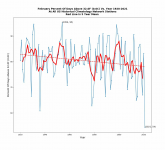
February in the US is trending cooler over past 100 years with 2021 being the coldest before even being done with.
The next 6 days at record highs still wouldnt help.

Wern’t the planets formed by an explosion?
Earth must be cooling since then.
I think the cancer causing wind mills in Tx. Have created a cooling effect that will save the world by balancing The fires in Australia, obviously.


Earth must be cooling since then.
I think the cancer causing wind mills in Tx. Have created a cooling effect that will save the world by balancing The fires in Australia, obviously.
No, are you?Are you sniffing glue?
Ive never tried it.
Do you like it?

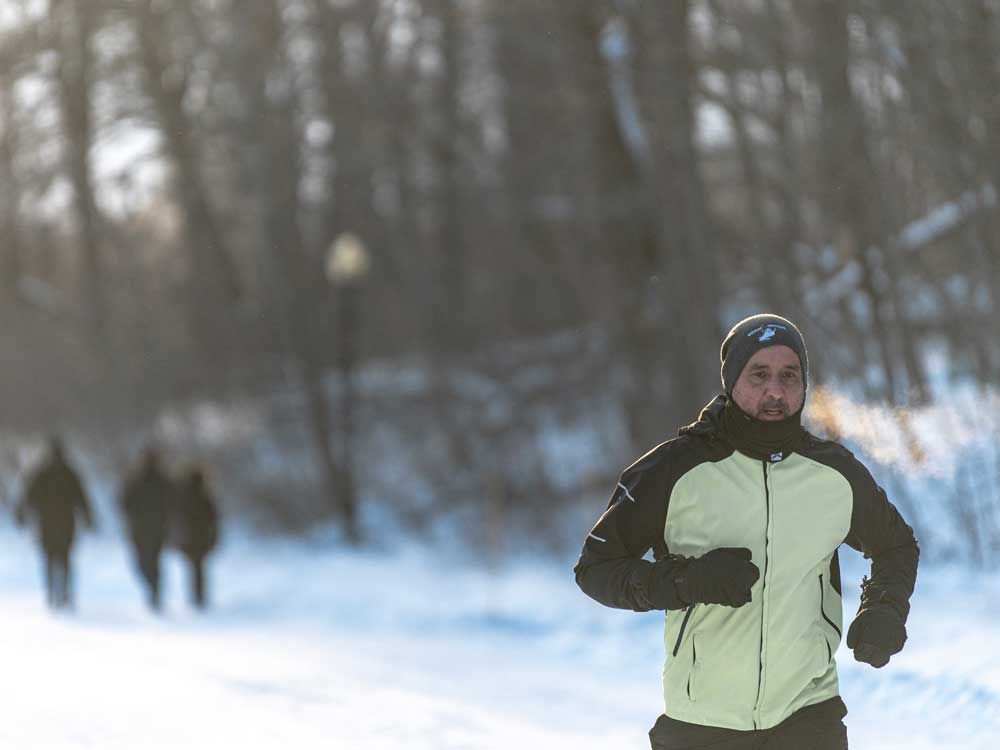
Extreme cold weather hitting most of Canada with temperatures plunging to -55C this weekend
Along with the cold temperatures, the Greater Toronto Area is also under a winter storm warning
Author of the article:Ling Hui
Published Jan 23, 2026 • Last updated 21 hours ago • 2 minute read
Frigid temperatures are sweeping across most of Canada, from eastern Alberta to Newfoundland and Labrador, with the wind chill ranging from a bone-numbing low of -30C to -55C expected over the weekend.
Residents in Saskatchewan, Manitoba and northern Ontario will have to contend with the coldest temperatures as Environment Canada issued a rare orange warning Friday, stating a “multi-day episode of very cold wind chills is expected” until Sunday.
Northern Saskatchewan is facing the brunt of the Arctic blast, with the weather agency stating that the region will be hit with wind chill values between -45C and -55C Friday night and into Saturday morning, while northern Manitoba should brace for wind chills in the -45C to -50C range during the weekend.
“Wind chill values may improve slightly during daytime hours, but are expected to drop back below -45C each night for the next several nights,” it said.
In Regina and parts of Manitoba, officials closed schools and cancelled buses and field trips.
Officials in Regina also said they was making available an overnight warming bus that travels between shelters until Monday.
Environment Canada issued a yellow warning for the eastern parts of Alberta, noting that “wind chill values near -40C may return tonight for a few communities.”
The deep-freeze is also sweeping into Ontario, with the weather agency warning of wind chill values ranging from -35C to -45C beginning Friday night and continuing into Sunday morning.
Along with the cold weather, the Greater Toronto Area is also under a winter storm warning, with snowfall amounts forecast between 20 and 30 centimetres on Sunday, Environment Canada said.
Visibility could be “near zero at times in blowing snow with winds gusting to 50 km/h,” it warned.
The City of Toronto said it has dispatched extra outreach teams to encourage people to seek shelter indoors.
The Arctic air is expected to hit New Brunswick well into the weekend, with Environment Canada warning of wind chills between -30C to -39C Saturday morning until Sunday morning. Northwestern areas of the province will be hit with the coldest temperatures, it said.
Residents in the affected regions are being advised to dress warmly, wear extra layers and cover up exposed skin to avoid frost bite.
— with files from the Canadian Press
 torontosun.com
Along with the cold temperatures, the Greater Toronto Area is also under a winter storm warning
Author of the article:Ling Hui
Published Jan 23, 2026 • Last updated 21 hours ago • 2 minute read
Frigid temperatures are sweeping across most of Canada, from eastern Alberta to Newfoundland and Labrador, with the wind chill ranging from a bone-numbing low of -30C to -55C expected over the weekend.
Residents in Saskatchewan, Manitoba and northern Ontario will have to contend with the coldest temperatures as Environment Canada issued a rare orange warning Friday, stating a “multi-day episode of very cold wind chills is expected” until Sunday.
Northern Saskatchewan is facing the brunt of the Arctic blast, with the weather agency stating that the region will be hit with wind chill values between -45C and -55C Friday night and into Saturday morning, while northern Manitoba should brace for wind chills in the -45C to -50C range during the weekend.
“Wind chill values may improve slightly during daytime hours, but are expected to drop back below -45C each night for the next several nights,” it said.
In Regina and parts of Manitoba, officials closed schools and cancelled buses and field trips.
Officials in Regina also said they was making available an overnight warming bus that travels between shelters until Monday.
Environment Canada issued a yellow warning for the eastern parts of Alberta, noting that “wind chill values near -40C may return tonight for a few communities.”
The deep-freeze is also sweeping into Ontario, with the weather agency warning of wind chill values ranging from -35C to -45C beginning Friday night and continuing into Sunday morning.
Along with the cold weather, the Greater Toronto Area is also under a winter storm warning, with snowfall amounts forecast between 20 and 30 centimetres on Sunday, Environment Canada said.
Visibility could be “near zero at times in blowing snow with winds gusting to 50 km/h,” it warned.
The City of Toronto said it has dispatched extra outreach teams to encourage people to seek shelter indoors.
The Arctic air is expected to hit New Brunswick well into the weekend, with Environment Canada warning of wind chills between -30C to -39C Saturday morning until Sunday morning. Northwestern areas of the province will be hit with the coldest temperatures, it said.
Residents in the affected regions are being advised to dress warmly, wear extra layers and cover up exposed skin to avoid frost bite.
— with files from the Canadian Press
Extreme cold weather hitting most of Canada with temperatures plunging to -55C this weekend
Frigid temperatures are sweeping across most of Canada this weekend, from eastern Alberta to Newfoundland and Labrador. Read more.
A week or so ago CBC was telling us 2026 is forecast to be the hottest ever .Extreme cold weather hitting most of Canada with temperatures plunging to -55C this weekend
Along with the cold temperatures, the Greater Toronto Area is also under a winter storm warning
Author of the article:Ling Hui
Published Jan 23, 2026 • Last updated 21 hours ago • 2 minute read
Frigid temperatures are sweeping across most of Canada, from eastern Alberta to Newfoundland and Labrador, with the wind chill ranging from a bone-numbing low of -30C to -55C expected over the weekend.
Residents in Saskatchewan, Manitoba and northern Ontario will have to contend with the coldest temperatures as Environment Canada issued a rare orange warning Friday, stating a “multi-day episode of very cold wind chills is expected” until Sunday.
Northern Saskatchewan is facing the brunt of the Arctic blast, with the weather agency stating that the region will be hit with wind chill values between -45C and -55C Friday night and into Saturday morning, while northern Manitoba should brace for wind chills in the -45C to -50C range during the weekend.
“Wind chill values may improve slightly during daytime hours, but are expected to drop back below -45C each night for the next several nights,” it said.
In Regina and parts of Manitoba, officials closed schools and cancelled buses and field trips.
Officials in Regina also said they was making available an overnight warming bus that travels between shelters until Monday.
Environment Canada issued a yellow warning for the eastern parts of Alberta, noting that “wind chill values near -40C may return tonight for a few communities.”
The deep-freeze is also sweeping into Ontario, with the weather agency warning of wind chill values ranging from -35C to -45C beginning Friday night and continuing into Sunday morning.
Along with the cold weather, the Greater Toronto Area is also under a winter storm warning, with snowfall amounts forecast between 20 and 30 centimetres on Sunday, Environment Canada said.
Visibility could be “near zero at times in blowing snow with winds gusting to 50 km/h,” it warned.
The City of Toronto said it has dispatched extra outreach teams to encourage people to seek shelter indoors.
The Arctic air is expected to hit New Brunswick well into the weekend, with Environment Canada warning of wind chills between -30C to -39C Saturday morning until Sunday morning. Northwestern areas of the province will be hit with the coldest temperatures, it said.
Residents in the affected regions are being advised to dress warmly, wear extra layers and cover up exposed skin to avoid frost bite.
— with files from the Canadian Press
Extreme cold weather hitting most of Canada with temperatures plunging to -55C this weekend
Frigid temperatures are sweeping across most of Canada this weekend, from eastern Alberta to Newfoundland and Labrador. Read more.

Yes, and if you hit the lottery for a hundred bucks one day, that means you're making $36,500 per year on the lottery!A week or so ago CBC was telling us 2026 is forecast to be the hottest ever .
Ah, global warming.Extreme cold weather hitting most of Canada with temperatures plunging to -55C this weekend
Along with the cold temperatures, the Greater Toronto Area is also under a winter storm warning
Author of the article:Ling Hui
Published Jan 23, 2026 • Last updated 21 hours ago • 2 minute read
Frigid temperatures are sweeping across most of Canada, from eastern Alberta to Newfoundland and Labrador, with the wind chill ranging from a bone-numbing low of -30C to -55C expected over the weekend.
Residents in Saskatchewan, Manitoba and northern Ontario will have to contend with the coldest temperatures as Environment Canada issued a rare orange warning Friday, stating a “multi-day episode of very cold wind chills is expected” until Sunday.
Northern Saskatchewan is facing the brunt of the Arctic blast, with the weather agency stating that the region will be hit with wind chill values between -45C and -55C Friday night and into Saturday morning, while northern Manitoba should brace for wind chills in the -45C to -50C range during the weekend.
“Wind chill values may improve slightly during daytime hours, but are expected to drop back below -45C each night for the next several nights,” it said.
In Regina and parts of Manitoba, officials closed schools and cancelled buses and field trips.
Officials in Regina also said they was making available an overnight warming bus that travels between shelters until Monday.
Environment Canada issued a yellow warning for the eastern parts of Alberta, noting that “wind chill values near -40C may return tonight for a few communities.”
The deep-freeze is also sweeping into Ontario, with the weather agency warning of wind chill values ranging from -35C to -45C beginning Friday night and continuing into Sunday morning.
Along with the cold weather, the Greater Toronto Area is also under a winter storm warning, with snowfall amounts forecast between 20 and 30 centimetres on Sunday, Environment Canada said.
Visibility could be “near zero at times in blowing snow with winds gusting to 50 km/h,” it warned.
The City of Toronto said it has dispatched extra outreach teams to encourage people to seek shelter indoors.
The Arctic air is expected to hit New Brunswick well into the weekend, with Environment Canada warning of wind chills between -30C to -39C Saturday morning until Sunday morning. Northwestern areas of the province will be hit with the coldest temperatures, it said.
Residents in the affected regions are being advised to dress warmly, wear extra layers and cover up exposed skin to avoid frost bite.
— with files from the Canadian Press
Extreme cold weather hitting most of Canada with temperatures plunging to -55C this weekend
Frigid temperatures are sweeping across most of Canada this weekend, from eastern Alberta to Newfoundland and Labrador. Read more.
As cold-stunned invasive iguanas fall from trees, Floridians scoop them up for killing
The dry, scaly deluge is a familiar forecast in those parts
Author of the article:Washington Post
Washington Post
Ruby Mellen, Jhaan Elker
Published Feb 05, 2026 • 3 minute read
*** BESTPIX *** Cold-Stunned Iguanas Are Rounded Up In Miami, As Cold Weather Continues In Florida
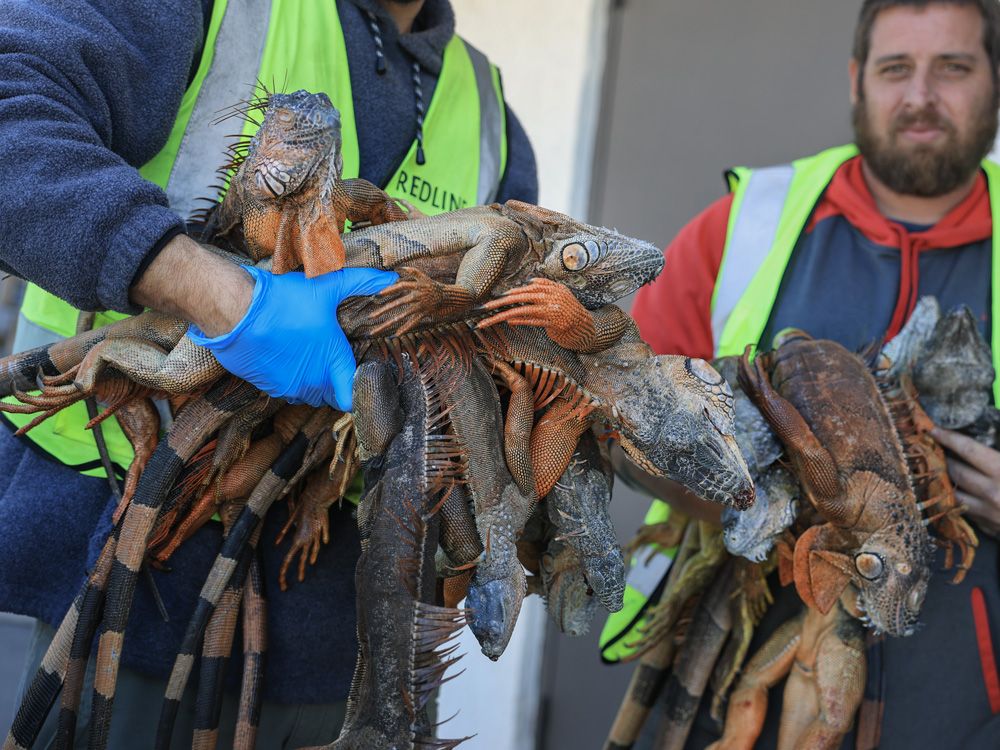
Blake Wilkins and Andrew Baron, who are Redline Iguana Removal trappers, unload cold-stunned as well as dead green iguanas from the back of a pickup truck after they collected them during a cold spell on February 02, 2026, in Hollywood, Florida. South Florida has seen back-to-back nights of overnight temperatures in the mid-thirties. The cold-blooded invasive species fall from trees when temperatures get too low. Blake Wilkins, a trapper for Redline Iguana Removal, said in the last two days, they have collected about 2500 iguanas, and he has never seen anything like it in his years of trapping. (Photo by Joe Raedle/Getty Images)
Ryan Izquierdo woke up on a recent morning groggy, cold and most of all ready – to go iguana hunting.
Temperatures in Jupiter, Florida, where the 27-year-old social media star lives, had dipped well below 50 degrees, as a cold front swallowed much of the East Coast in snowfall and record-breaking low temperatures. As flurries fell on parts of the state, residents braced for the inevitable: Cold-stunned green iguanas – one of Floridians’ most reviled invasive pests – began to lose consciousness and fall out of trees.
The dry, scaly deluge is a familiar forecast in those parts. These cold-blooded reptiles’ nervous systems shut down when temperatures dip into the 40s and below. They become paralyzed and fall from their leafy perches. This time, for some unlikely conservationists, as well as state officials, that meant killing season.
In a first, officials capitalized on the paralyzed pests and told residents they could bring them in for disposal.
“This is the first time we have organized a removal effort of invasive iguanas,” said Shannon Knowles, communications director for the Florida Fish and Wildlife Conservation Commission (FWC).
“South Florida has not experienced this level of cold weather in many years,” she added. “So we used this opportunity to remove this invasive non-native species from the landscape.”
The commission issued an executive order that allowed people without permits to gather and transport the iguanas to one of several offices to be humanely killed, “or, in some cases, transferred to permittees for live animal sales.”
Typically people can themselves humanely or painlessly do away with green iguanas when they see them, but they’re not allowed to transport them. Knowles added that people lined up, cloth bags and bins brimming with the lizards, to drop them off Sunday and Monday. While she said the commission did not yet have an official estimate, Izquierdo was floored by what he saw.
“It was a madhouse,” Izquierdo said of the FWC site near Fort Lauderdale where he deposited about 100 iguanas Monday. “There were iguanas that were pushing six to six-and-a-half feet long. They look like dragons, absolutely crazy.”
Green iguanas are a scourge of South Florida. First documented in the 1960s, their population has since exploded to, by some estimates, more than 1 million. They’ve wreaked havoc on the region’s infrastructure, burrowing holes around homes, sidewalks and seawalls. They’ve chewed through some of the state’s most crucial native plants such as nickerbean, which helps sustain the endangered Miami Blue butterfly.
Izquierdo has been catching iguanas since he was 10 years old. In his grandmother’s backyard, he found them to use as fishing bait for peacock bass.
“I’ve always loved nature and the outdoors,” he said.
Now, he makes a living out of it as a content creator, documenting his fishing excursions around the world. But as the dipping temperatures created a new opportunity last weekend, he decided to temporarily pivot to the quest he dubbed “a Florida man Easter egg hunt for dinosaurs.”
He jumped into his pickup truck and began hunting.
In warm temperatures, iguanas are almost impossible to nab. You need either a gun or a 15-foot-long pole with an invisible lasso attached to it, Izquierdo said.
“If you want to do iguana management, this is a good time to do it because they’re very vulnerable to removal,” said Frank Mazzotti, a professor of wildlife ecology at the University of Florida.
But in the cold, chase proved easy and bountiful. “This is the most I’ve ever found,” he said. “We were practically almost stepping on them.”
Despite the fun and viral Instagram reels, he’s not immune to the difficult decisions that come with maintaining a balanced ecosystem.
“They’re animals, so people do have a soft spot in their heart for them and so do I because they’re really cool, especially the little baby ones,” Izquierdo said. “But you have to look at the bigger picture of things.”
He’s passionate about making the most of a dead green iguana. On Monday night, he and his friends baked an iguana pizza, (delicious, he said, they’re nicknamed “chicken of the trees”) and he plans to use the skin and some meat for fishing lures and bait.
On Tuesday morning, as the temperatures in Florida finally began to creep up to milder levels, Izquierdo sat in his truck, filled with about a dozen stunned iguanas, knowing his hours of hunting were numbered.
“As the temperature starts climbing back up, it’s going to get back to normal,” he said. Two motionless lizards, a male and a female, lay in his lap. “Yeah, these iguanas will be back about their business.”
![2259618389[1].jpg](https://forums.canadiancontent.net/data/attachments/31/31399-8983277c17151bf29d279d7b04325f13.jpg "2259618389[1].jpg")
 torontosun.com
The dry, scaly deluge is a familiar forecast in those parts
Author of the article:Washington Post
Washington Post
Ruby Mellen, Jhaan Elker
Published Feb 05, 2026 • 3 minute read
*** BESTPIX *** Cold-Stunned Iguanas Are Rounded Up In Miami, As Cold Weather Continues In Florida
Blake Wilkins and Andrew Baron, who are Redline Iguana Removal trappers, unload cold-stunned as well as dead green iguanas from the back of a pickup truck after they collected them during a cold spell on February 02, 2026, in Hollywood, Florida. South Florida has seen back-to-back nights of overnight temperatures in the mid-thirties. The cold-blooded invasive species fall from trees when temperatures get too low. Blake Wilkins, a trapper for Redline Iguana Removal, said in the last two days, they have collected about 2500 iguanas, and he has never seen anything like it in his years of trapping. (Photo by Joe Raedle/Getty Images)
Ryan Izquierdo woke up on a recent morning groggy, cold and most of all ready – to go iguana hunting.
Temperatures in Jupiter, Florida, where the 27-year-old social media star lives, had dipped well below 50 degrees, as a cold front swallowed much of the East Coast in snowfall and record-breaking low temperatures. As flurries fell on parts of the state, residents braced for the inevitable: Cold-stunned green iguanas – one of Floridians’ most reviled invasive pests – began to lose consciousness and fall out of trees.
The dry, scaly deluge is a familiar forecast in those parts. These cold-blooded reptiles’ nervous systems shut down when temperatures dip into the 40s and below. They become paralyzed and fall from their leafy perches. This time, for some unlikely conservationists, as well as state officials, that meant killing season.
In a first, officials capitalized on the paralyzed pests and told residents they could bring them in for disposal.
“This is the first time we have organized a removal effort of invasive iguanas,” said Shannon Knowles, communications director for the Florida Fish and Wildlife Conservation Commission (FWC).
“South Florida has not experienced this level of cold weather in many years,” she added. “So we used this opportunity to remove this invasive non-native species from the landscape.”
The commission issued an executive order that allowed people without permits to gather and transport the iguanas to one of several offices to be humanely killed, “or, in some cases, transferred to permittees for live animal sales.”
Typically people can themselves humanely or painlessly do away with green iguanas when they see them, but they’re not allowed to transport them. Knowles added that people lined up, cloth bags and bins brimming with the lizards, to drop them off Sunday and Monday. While she said the commission did not yet have an official estimate, Izquierdo was floored by what he saw.
“It was a madhouse,” Izquierdo said of the FWC site near Fort Lauderdale where he deposited about 100 iguanas Monday. “There were iguanas that were pushing six to six-and-a-half feet long. They look like dragons, absolutely crazy.”
Green iguanas are a scourge of South Florida. First documented in the 1960s, their population has since exploded to, by some estimates, more than 1 million. They’ve wreaked havoc on the region’s infrastructure, burrowing holes around homes, sidewalks and seawalls. They’ve chewed through some of the state’s most crucial native plants such as nickerbean, which helps sustain the endangered Miami Blue butterfly.
Izquierdo has been catching iguanas since he was 10 years old. In his grandmother’s backyard, he found them to use as fishing bait for peacock bass.
“I’ve always loved nature and the outdoors,” he said.
Now, he makes a living out of it as a content creator, documenting his fishing excursions around the world. But as the dipping temperatures created a new opportunity last weekend, he decided to temporarily pivot to the quest he dubbed “a Florida man Easter egg hunt for dinosaurs.”
He jumped into his pickup truck and began hunting.
In warm temperatures, iguanas are almost impossible to nab. You need either a gun or a 15-foot-long pole with an invisible lasso attached to it, Izquierdo said.
“If you want to do iguana management, this is a good time to do it because they’re very vulnerable to removal,” said Frank Mazzotti, a professor of wildlife ecology at the University of Florida.
But in the cold, chase proved easy and bountiful. “This is the most I’ve ever found,” he said. “We were practically almost stepping on them.”
Despite the fun and viral Instagram reels, he’s not immune to the difficult decisions that come with maintaining a balanced ecosystem.
“They’re animals, so people do have a soft spot in their heart for them and so do I because they’re really cool, especially the little baby ones,” Izquierdo said. “But you have to look at the bigger picture of things.”
He’s passionate about making the most of a dead green iguana. On Monday night, he and his friends baked an iguana pizza, (delicious, he said, they’re nicknamed “chicken of the trees”) and he plans to use the skin and some meat for fishing lures and bait.
On Tuesday morning, as the temperatures in Florida finally began to creep up to milder levels, Izquierdo sat in his truck, filled with about a dozen stunned iguanas, knowing his hours of hunting were numbered.
“As the temperature starts climbing back up, it’s going to get back to normal,” he said. Two motionless lizards, a male and a female, lay in his lap. “Yeah, these iguanas will be back about their business.”
As cold-stunned invasive iguanas fall from trees, Floridians scoop them up for killing
Ryan Izquierdo woke up on a recent morning groggy, cold and most of all ready - to go iguana hunting.
Are they spraying crap over the State? Apparently, Bill Gates was supposedly helping to spray crap in the atmosphere to "cool" the earth. Is this the result or is it nonsense?As cold-stunned invasive iguanas fall from trees, Floridians scoop them up for killing
The dry, scaly deluge is a familiar forecast in those parts
Author of the article:Washington Post
Washington Post
Ruby Mellen, Jhaan Elker
Published Feb 05, 2026 • 3 minute read
*** BESTPIX *** Cold-Stunned Iguanas Are Rounded Up In Miami, As Cold Weather Continues In Florida
Blake Wilkins and Andrew Baron, who are Redline Iguana Removal trappers, unload cold-stunned as well as dead green iguanas from the back of a pickup truck after they collected them during a cold spell on February 02, 2026, in Hollywood, Florida. South Florida has seen back-to-back nights of overnight temperatures in the mid-thirties. The cold-blooded invasive species fall from trees when temperatures get too low. Blake Wilkins, a trapper for Redline Iguana Removal, said in the last two days, they have collected about 2500 iguanas, and he has never seen anything like it in his years of trapping. (Photo by Joe Raedle/Getty Images)
Ryan Izquierdo woke up on a recent morning groggy, cold and most of all ready – to go iguana hunting.
Temperatures in Jupiter, Florida, where the 27-year-old social media star lives, had dipped well below 50 degrees, as a cold front swallowed much of the East Coast in snowfall and record-breaking low temperatures. As flurries fell on parts of the state, residents braced for the inevitable: Cold-stunned green iguanas – one of Floridians’ most reviled invasive pests – began to lose consciousness and fall out of trees.
The dry, scaly deluge is a familiar forecast in those parts. These cold-blooded reptiles’ nervous systems shut down when temperatures dip into the 40s and below. They become paralyzed and fall from their leafy perches. This time, for some unlikely conservationists, as well as state officials, that meant killing season.
In a first, officials capitalized on the paralyzed pests and told residents they could bring them in for disposal.
“This is the first time we have organized a removal effort of invasive iguanas,” said Shannon Knowles, communications director for the Florida Fish and Wildlife Conservation Commission (FWC).
“South Florida has not experienced this level of cold weather in many years,” she added. “So we used this opportunity to remove this invasive non-native species from the landscape.”
The commission issued an executive order that allowed people without permits to gather and transport the iguanas to one of several offices to be humanely killed, “or, in some cases, transferred to permittees for live animal sales.”
Typically people can themselves humanely or painlessly do away with green iguanas when they see them, but they’re not allowed to transport them. Knowles added that people lined up, cloth bags and bins brimming with the lizards, to drop them off Sunday and Monday. While she said the commission did not yet have an official estimate, Izquierdo was floored by what he saw.
“It was a madhouse,” Izquierdo said of the FWC site near Fort Lauderdale where he deposited about 100 iguanas Monday. “There were iguanas that were pushing six to six-and-a-half feet long. They look like dragons, absolutely crazy.”
Green iguanas are a scourge of South Florida. First documented in the 1960s, their population has since exploded to, by some estimates, more than 1 million. They’ve wreaked havoc on the region’s infrastructure, burrowing holes around homes, sidewalks and seawalls. They’ve chewed through some of the state’s most crucial native plants such as nickerbean, which helps sustain the endangered Miami Blue butterfly.
Izquierdo has been catching iguanas since he was 10 years old. In his grandmother’s backyard, he found them to use as fishing bait for peacock bass.
“I’ve always loved nature and the outdoors,” he said.
Now, he makes a living out of it as a content creator, documenting his fishing excursions around the world. But as the dipping temperatures created a new opportunity last weekend, he decided to temporarily pivot to the quest he dubbed “a Florida man Easter egg hunt for dinosaurs.”
He jumped into his pickup truck and began hunting.
In warm temperatures, iguanas are almost impossible to nab. You need either a gun or a 15-foot-long pole with an invisible lasso attached to it, Izquierdo said.
“If you want to do iguana management, this is a good time to do it because they’re very vulnerable to removal,” said Frank Mazzotti, a professor of wildlife ecology at the University of Florida.
But in the cold, chase proved easy and bountiful. “This is the most I’ve ever found,” he said. “We were practically almost stepping on them.”
Despite the fun and viral Instagram reels, he’s not immune to the difficult decisions that come with maintaining a balanced ecosystem.
“They’re animals, so people do have a soft spot in their heart for them and so do I because they’re really cool, especially the little baby ones,” Izquierdo said. “But you have to look at the bigger picture of things.”
He’s passionate about making the most of a dead green iguana. On Monday night, he and his friends baked an iguana pizza, (delicious, he said, they’re nicknamed “chicken of the trees”) and he plans to use the skin and some meat for fishing lures and bait.
On Tuesday morning, as the temperatures in Florida finally began to creep up to milder levels, Izquierdo sat in his truck, filled with about a dozen stunned iguanas, knowing his hours of hunting were numbered.
“As the temperature starts climbing back up, it’s going to get back to normal,” he said. Two motionless lizards, a male and a female, lay in his lap. “Yeah, these iguanas will be back about their business.”
View attachment 33137
As cold-stunned invasive iguanas fall from trees, Floridians scoop them up for killing
Ryan Izquierdo woke up on a recent morning groggy, cold and most of all ready - to go iguana hunting.
Washington? Yes 100%. I have undeniable photo evidence.Are they spraying crap over the State? Apparently, Bill Gates was supposedly helping to spray crap in the atmosphere to "cool" the earth. Is this the result or is it nonsense?

Based at Whidby Island AFB WA.
You working at the same lottery booth as Don?Yes, and if you hit the lottery for a hundred bucks one day, that means you're making $36,500 per year on the lottery!