


THE ILLOGIC OF ATHEISM
by Miles Mathis
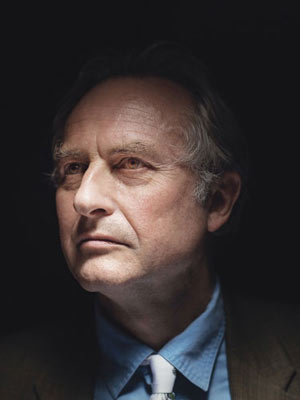
Richard Dawkins
For this reason, I find atheists to be just as sanctimonious, illogical, and tiresome as the deists and theists, if not moreso. Because the atheists are often more highly educated and often better able to argue (in limited ways), they use this education and argument to prop themselves up in the ugliest ways. They blow apart the beliefs of religious people and imagine this solidifies their own beliefs in some way. But it never does. People of faith are actually more consistent in their views, since they never claim to believe in science anyway. They are not immediately hypocritical, at least, since it is possible for them create a closed system of illogic that circles back in a self-affirming way. The search for truth is no part of their system, so it is no failure when they find none. But atheists cannot say the same. They base their system on science, so that the very first instant they fail to act scientifically, they are back to zero. Yes, it is the same zero as the theists' zero, but the theists aren't measuring and the atheists are. A theist at zero is just a theist, and no harm done. But an atheist at zero has had a fall, and must be damaged.
To put it in philosophical terms, the atheist has chosen a position that is epistemologically stronger than the theist. By stronger, I do not mean that the atheist is more likely to be right, I mean that the position of the atheist requires more proof. The theist does not say he knows that God exists, he says he believes it. Faith is a belief whereas knowledge is a certainty. This gives the religious person some wiggle room. He doesn't need to talk of proofs, since a belief is never based on proofs. Belief and faith are built mainly on willpower. Atheists will say that such a foundation is quicksand, and I tend to agree, but atheists stand in even waterier mud. The atheist claims to be quite certain that there is no god, and he claims to be contemptuous of unsupported belief, so he must provide us with some firm foundation for his “knowledge.” This he can never do. If there are no proofs that God or gods exist, there are also no proofs they do not exist. The atheist is just as unscientific as the theist. The atheist's stance is just as mired in belief as the theist's, but the atheist also claims to disdain belief. So he must disdain himself. The Illogic of Atheism by Miles Mathis
by Miles Mathis
Richard Dawkins
For this reason, I find atheists to be just as sanctimonious, illogical, and tiresome as the deists and theists, if not moreso. Because the atheists are often more highly educated and often better able to argue (in limited ways), they use this education and argument to prop themselves up in the ugliest ways. They blow apart the beliefs of religious people and imagine this solidifies their own beliefs in some way. But it never does. People of faith are actually more consistent in their views, since they never claim to believe in science anyway. They are not immediately hypocritical, at least, since it is possible for them create a closed system of illogic that circles back in a self-affirming way. The search for truth is no part of their system, so it is no failure when they find none. But atheists cannot say the same. They base their system on science, so that the very first instant they fail to act scientifically, they are back to zero. Yes, it is the same zero as the theists' zero, but the theists aren't measuring and the atheists are. A theist at zero is just a theist, and no harm done. But an atheist at zero has had a fall, and must be damaged.
To put it in philosophical terms, the atheist has chosen a position that is epistemologically stronger than the theist. By stronger, I do not mean that the atheist is more likely to be right, I mean that the position of the atheist requires more proof. The theist does not say he knows that God exists, he says he believes it. Faith is a belief whereas knowledge is a certainty. This gives the religious person some wiggle room. He doesn't need to talk of proofs, since a belief is never based on proofs. Belief and faith are built mainly on willpower. Atheists will say that such a foundation is quicksand, and I tend to agree, but atheists stand in even waterier mud. The atheist claims to be quite certain that there is no god, and he claims to be contemptuous of unsupported belief, so he must provide us with some firm foundation for his “knowledge.” This he can never do. If there are no proofs that God or gods exist, there are also no proofs they do not exist. The atheist is just as unscientific as the theist. The atheist's stance is just as mired in belief as the theist's, but the atheist also claims to disdain belief. So he must disdain himself. The Illogic of Atheism by Miles Mathis


