


Iranically Iran, Middle East’s Karen…
- Thread starter Ron in Regina
- Start date
You are using an out of date browser. It may not display this or other websites correctly.
You should upgrade or use an alternative browser.
You should upgrade or use an alternative browser.
Looks like gas will hit $2.00/liter by mid week. We got a $.20 increase last week because some pipeline in the us is down.
If it gets rid of these fucking zealots, I'll take the hit.

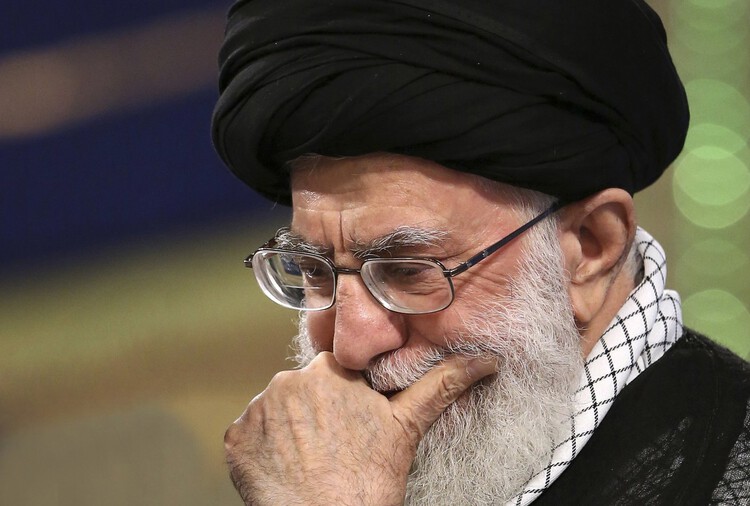
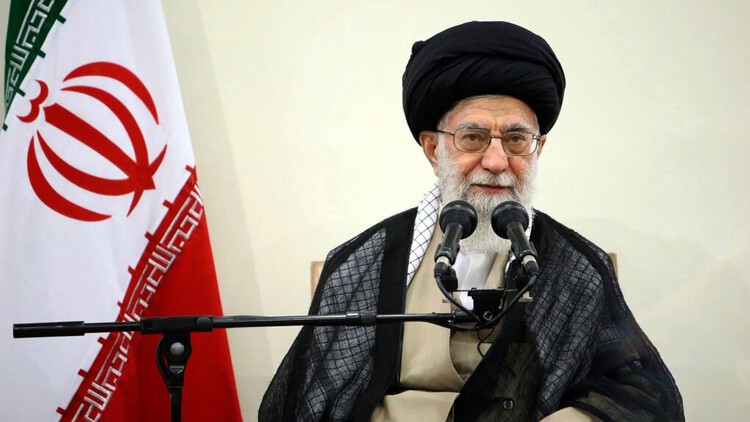
The United States killed Iranian Supreme Leader Ayatollah Ali Khamenei, President Donald Trump said Saturday, announcing an assassination that he said gave Iranians their “greatest chance” to “take back" their country but that also put the future of the Islamic Republic in doubt and raised the risk of regional instability.
Trump has not just committed the United States to toppling a foreign government. He’s trying to end a revolution — a process that he will struggle to influence, especially in the absence of US ground troops.
Anyway, if confirmed, the killing of Khamenei in the second Trump administration assault on Iran in eight months, appeared certain to create a leadership vacuum given the absence of a known successor and because the 86-year-old supreme leader had final say on all major policies during his decades in power. He led Iran’s clerical establishment and its paramilitary Revolutionary Guard, the two main centers of power in the governing theocracy.
 apple.news
Sen. Jack Reed, the top Democrat on the Armed Services Committee, warned of “consequences that will outlast this presidency.”
apple.news
Sen. Jack Reed, the top Democrat on the Armed Services Committee, warned of “consequences that will outlast this presidency.”
“Against the clear wishes of the American people, President Trump has thrust our nation into a major war with Iran — one he never made a case for, never sought congressional authority for, and for which he has no endgame,” Reed said in a statement.
The danger — seen as the most likely scenario by U.S. intelligence assessments cited by CNN — is that the clerical regime could simply be replaced by equally hardline remnants of the Islamic Revolutionary Guard Corps. A classic strongman Middle East government might mean imminent threats to the U.S. or Israel. But it would fall far short of the popular awakening Trump hopes for.
The worst-case scenario is a disintegration of central control in Tehran over major cities that leads to armed factions creating rival fiefdoms that pose a serious risk of civil war and national fracturing. Refugee crises could follow and destabilize the region for years to come.
There’s little in Trump’s mindset or conduct that suggests he’s got the depth or staying power for such an outcome.
Still, some Republicans are adamant the U.S. will not get sucked into another long-term conflict that would strain American resources and the public’s will?
 apple.news
Trump's attack on Iran is a huge election-year gamble that heightens the risks for Republicans as they try to stay in power in Congress in November.
apple.news
Trump's attack on Iran is a huge election-year gamble that heightens the risks for Republicans as they try to stay in power in Congress in November.
Public opinion polls consistently show Americans' top concern is the rising cost of living. Much of Trump's first 13 months in office, however, has been dominated by foreign policy issues. Republican congressional leaders worry disgruntled voters could punish them in November.
If Trump just ignores Congress & Congressional Leaders anyway, as long as the Republicans have at least 1/3 of the seats in Congress… he can just veto things for the next 1000-ish days anyway, can’t he?


Well, the U.S. has started attacking Iran along with Israel.
Iran did not immediately confirm the death.Yep…to what end? It’s an ugly can of worms. This won’t be brief, & isAmericaTrump committed to actual troops entering Iran, or is this hit-and-run to create a power vacuum for the IRGC to fill?
Trump has not just committed the United States to toppling a foreign government. He’s trying to end a revolution — a process that he will struggle to influence, especially in the absence of US ground troops.
Anyway, if confirmed, the killing of Khamenei in the second Trump administration assault on Iran in eight months, appeared certain to create a leadership vacuum given the absence of a known successor and because the 86-year-old supreme leader had final say on all major policies during his decades in power. He led Iran’s clerical establishment and its paramilitary Revolutionary Guard, the two main centers of power in the governing theocracy.
Iran’s supreme leader killed in major attack by US and Israel — The Canadian Press
DUBAI, United Arab Emirates (AP) — Iranian Supreme Leader
“Against the clear wishes of the American people, President Trump has thrust our nation into a major war with Iran — one he never made a case for, never sought congressional authority for, and for which he has no endgame,” Reed said in a statement.
The danger — seen as the most likely scenario by U.S. intelligence assessments cited by CNN — is that the clerical regime could simply be replaced by equally hardline remnants of the Islamic Revolutionary Guard Corps. A classic strongman Middle East government might mean imminent threats to the U.S. or Israel. But it would fall far short of the popular awakening Trump hopes for.
The worst-case scenario is a disintegration of central control in Tehran over major cities that leads to armed factions creating rival fiefdoms that pose a serious risk of civil war and national fracturing. Refugee crises could follow and destabilize the region for years to come.
There’s little in Trump’s mindset or conduct that suggests he’s got the depth or staying power for such an outcome.
Still, some Republicans are adamant the U.S. will not get sucked into another long-term conflict that would strain American resources and the public’s will?
What the death of Iran’s supreme leader means — CTV News
U.S. President Donald Trump placed a huge wager by launching a massive air assault on Iran despite having done little to prepare Americans for a new Middle East war with immense risks and years of future consequences.
Public opinion polls consistently show Americans' top concern is the rising cost of living. Much of Trump's first 13 months in office, however, has been dominated by foreign policy issues. Republican congressional leaders worry disgruntled voters could punish them in November.
If Trump just ignores Congress & Congressional Leaders anyway, as long as the Republicans have at least 1/3 of the seats in Congress… he can just veto things for the next 1000-ish days anyway, can’t he?

That’s soooo 8-ish months ago though.not that long ago the trumptychrist said that iran was no longer able to make nukes.


not that long ago the trumptychrist said that iran was no longer able to make nukes.
The exact word from Trump was "obllierated". Was that a lie?That’s soooo 8-ish months ago though.

Britain confirms RAF are in operation over Iran but did not take part in strikes
"The primary aim of the United Kingdom is that Iran must not be allowed to develop a nuclear weapon"
Speaking at Downing Street, British Prime Minister Keir Starmer said that British planes "are in the sky today" in the Middle East "as part of co-ordinated regional defensive operations to protect our people, our interests and our allies".
"It is vital we prevent further escalation and return to a diplomatic process," he adds and says that he also wants to see "peace and security and the protection of civilian life".
"The primary aim of the United Kingdom is that Iran must not be allowed to develop a nuclear weapon"
Speaking at Downing Street, British Prime Minister Keir Starmer said that British planes "are in the sky today" in the Middle East "as part of co-ordinated regional defensive operations to protect our people, our interests and our allies".
"It is vital we prevent further escalation and return to a diplomatic process," he adds and says that he also wants to see "peace and security and the protection of civilian life".
Israel and the US have launched fresh waves of intensive attacks across Iran on the second day of their military campaign to overthrow the country’s government, which has plunged the Middle East into a new regional conflict with no certain timeline or outcome.
The renewed violence on Sunday comes amid heated rhetoric from Washington and Tehran that suggests further escalation in the coming hours and days.
The US president, Donald Trump, said on Sunday that the US would hit Iran “with a force that has never been seen before” if Tehran carried out threats to retaliate after the death of the supreme leader, Ayatollah Ali Khamenei, in an Israeli airstrike on Saturday.
Iranian retaliation has targeted Israel as well as civilian infrastructure and US military bases across the Arab Gulf states. Loud blasts were heard for a second day on Sunday in Dubai and over Qatar’s capital, Doha, witnesses said.
Puffs of white smoke from missile interceptions were glimpsed in the skies over Dubai, while billows of dark smoke rose over its port, one of the busiest in the Middle East.
Dubai’s Burj Al Arab hotel and its airport, which handles more than 1,000 flights a day, were damaged in Iranian attacks overnight on sites that also hit airports in Abu Dhabi and Kuwait. The airport in Dubai, the world’s busiest international travel hub, remained shut, along with other major Middle East airports, causing one of global aviation’s most severe disruptions in years.
Ships have reported hearing a radio broadcast purporting to come from the Iranian navy announcing that transit through the vital strait of Hormuz, the narrow maritime corridor which is a crucial chokepoint for the world’s oil supplies, was banned, raising expectations of a sharp jump in oil prices. Authorities in Oman reported damage to at least one oil tanker, though it was not immediately clear who attacked the vessel.
There are few details of damage or casualties in Iran, but Iranian authorities said more than 100 children were killed at a school in the southern city of Minab.
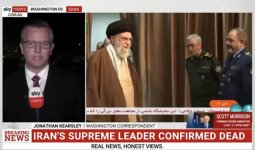
Senior Iranian officials said a temporary leadership group would be appointed and Ghalibaf also said Iran would “continue Khamenei’s path”.
Iran’s leaders have faced multiple crises in recent months, with an economy suffering from US and other sanctions, massive protests that were bloodily repressed in January, and regional proxies severely weakened by Israeli attacks, & that whole ‘water’ thing but shhhh…
Many Israeli officials appeared convinced that the death of Khamenei would prompt an almost immediate country-wide uprising, analysts in Israel said.
But while the deaths of Khamenei and other Iranian leaders will undoubtedly weaken the regime, Iran’s rulers still have strong support among parts of the 93 million population and key institutions, such as the powerful and ideologically committed Islamic Revolutionary Guard Corps, remain loyal.
The US and Israeli offensive has rocked much of the Islamic world. There were protests in Pakistan, where police on Sunday clashed with protesters who breached the outer wall of the US consulate in Karachi, leaving nine people dead, and outside the Green Zone in the Iraqi capital, Baghdad, where the US embassy is located.
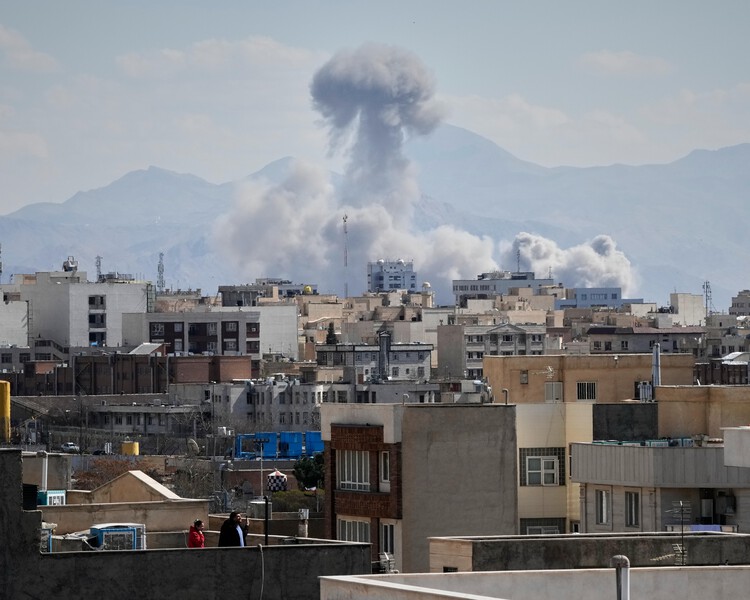 apple.news
As of early 2026, Iran stands largely isolated among Middle Eastern governments in its conflict with the U.S. and Israel, with key support coming only from its non-state "Axis of Resistance" proxies: Hezbollah in Lebanon, the Houthi movement in Yemen, and various militias in Iraq and Syria. Many regional neighbors, including Saudi Arabia, the UAE, Bahrain, and Qatar, condemned Iran's retaliatory strikes and, in some cases, helped intercept missiles.
apple.news
As of early 2026, Iran stands largely isolated among Middle Eastern governments in its conflict with the U.S. and Israel, with key support coming only from its non-state "Axis of Resistance" proxies: Hezbollah in Lebanon, the Houthi movement in Yemen, and various militias in Iraq and Syria. Many regional neighbors, including Saudi Arabia, the UAE, Bahrain, and Qatar, condemned Iran's retaliatory strikes and, in some cases, helped intercept missiles.
As tensions escalate, Iran appears isolated in the region, as its primary ally, the so-called "Axis of Resistance", has received significant blows from Israel over the past few years.

This "axis of resistance" includes groups such as Hezbollah in Lebanon, the Popular Mobilisation Forces (PMF) in Iraq, and the Houthi militants in Yemen, as well as Hamas in Gaza. Iran also maintains a strong ground influence in Iraq and Yemen. Over the past week, there has also been a noticeable acceleration of military cooperation between Iran, Russia, and China.
Another Asian power that has maintained close ties with Iran is Pakistan – the only Islamic country with a nuclear arsenal. However, Islamabad had made its allegiances very clear during the 12-day Israel-Iran war in June 2025, when Pakistani leaders distanced themselves from Tehran.
Amid Iran's retaliation to Israel-US joint attacks, several Middle Eastern powers, including the UAE, Qatar and Kuwait, have vowed to respond to Tehran for "a dangerous escalation".
The renewed violence on Sunday comes amid heated rhetoric from Washington and Tehran that suggests further escalation in the coming hours and days.
The US president, Donald Trump, said on Sunday that the US would hit Iran “with a force that has never been seen before” if Tehran carried out threats to retaliate after the death of the supreme leader, Ayatollah Ali Khamenei, in an Israeli airstrike on Saturday.
Iranian retaliation has targeted Israel as well as civilian infrastructure and US military bases across the Arab Gulf states. Loud blasts were heard for a second day on Sunday in Dubai and over Qatar’s capital, Doha, witnesses said.
Puffs of white smoke from missile interceptions were glimpsed in the skies over Dubai, while billows of dark smoke rose over its port, one of the busiest in the Middle East.
Dubai’s Burj Al Arab hotel and its airport, which handles more than 1,000 flights a day, were damaged in Iranian attacks overnight on sites that also hit airports in Abu Dhabi and Kuwait. The airport in Dubai, the world’s busiest international travel hub, remained shut, along with other major Middle East airports, causing one of global aviation’s most severe disruptions in years.
Ships have reported hearing a radio broadcast purporting to come from the Iranian navy announcing that transit through the vital strait of Hormuz, the narrow maritime corridor which is a crucial chokepoint for the world’s oil supplies, was banned, raising expectations of a sharp jump in oil prices. Authorities in Oman reported damage to at least one oil tanker, though it was not immediately clear who attacked the vessel.
There are few details of damage or casualties in Iran, but Iranian authorities said more than 100 children were killed at a school in the southern city of Minab.
Senior Iranian officials said a temporary leadership group would be appointed and Ghalibaf also said Iran would “continue Khamenei’s path”.
Iran’s leaders have faced multiple crises in recent months, with an economy suffering from US and other sanctions, massive protests that were bloodily repressed in January, and regional proxies severely weakened by Israeli attacks, & that whole ‘water’ thing but shhhh…
Trump said the airstrikes aimed to end a decades-long threat from Iran and ensure it could not develop a nuclear weapon.The exact word from Trump was "obllierated". Was that a lie?
Many Israeli officials appeared convinced that the death of Khamenei would prompt an almost immediate country-wide uprising, analysts in Israel said.
But while the deaths of Khamenei and other Iranian leaders will undoubtedly weaken the regime, Iran’s rulers still have strong support among parts of the 93 million population and key institutions, such as the powerful and ideologically committed Islamic Revolutionary Guard Corps, remain loyal.
The US and Israeli offensive has rocked much of the Islamic world. There were protests in Pakistan, where police on Sunday clashed with protesters who breached the outer wall of the US consulate in Karachi, leaving nine people dead, and outside the Green Zone in the Iraqi capital, Baghdad, where the US embassy is located.
US and Israel launch new wave of attacks on Iran amid threat of escalation — Guardian US
Trump threatens Tehran with force ‘never seen before’ if it pursues retaliation after Khamenei’s death
As tensions escalate, Iran appears isolated in the region, as its primary ally, the so-called "Axis of Resistance", has received significant blows from Israel over the past few years.
- The US and Israel launched coordinated strikes targeting Iran's top leaders after months of planning
- Iran retaliated with missile attacks on Israel and US bases in the Middle East, including UAE and Kuwait.
This "axis of resistance" includes groups such as Hezbollah in Lebanon, the Popular Mobilisation Forces (PMF) in Iraq, and the Houthi militants in Yemen, as well as Hamas in Gaza. Iran also maintains a strong ground influence in Iraq and Yemen. Over the past week, there has also been a noticeable acceleration of military cooperation between Iran, Russia, and China.
Another Asian power that has maintained close ties with Iran is Pakistan – the only Islamic country with a nuclear arsenal. However, Islamabad had made its allegiances very clear during the 12-day Israel-Iran war in June 2025, when Pakistani leaders distanced themselves from Tehran.
Amid Iran's retaliation to Israel-US joint attacks, several Middle Eastern powers, including the UAE, Qatar and Kuwait, have vowed to respond to Tehran for "a dangerous escalation".
Which has what to do with gas prices in BC? Other than our government doesn't look after taxpayers.A refinery in California was shuttered.
Senator no nuts should stick to his knitting.Sen. Jack Reed, the top Democrat on the Armed Services Committee, warned of “consequences that will outlast this presidency.”
“Against the clear wishes of the American people, President Trump has thrust our nation into a major war with Iran — one he never made a case for, never sought congressional authority for, and for which he has no endgame,” Reed said in a statement.
Is Senator no nuts wrong though? Is he misspoken here? Lying? Uninformed?Senator no nuts should stick to his knitting.
We're in the same fuel market. Washington refineries have to fill the gap.Which has what to do with gas prices in BC? Other than our government doesn't look after taxpayers.
Normal Trump over exaggerating exaggeration Bigly. Probably the Biggest & Best exaggeration ever known to mankind.The exact word from Trump was "obllierated". Was that a lie?
An oil refinery closure in California impacts Canadian fuel prices—particularly in British Columbia—by reducing the overall supply on the West Coast, a relatively isolated market. As California refineries shut down, Washington state refineries must divert more fuel south to cover the shortfall, creating a supply scarcity that drives up prices in Western Canada.Which has what to do with gas prices in BC? Other than our government doesn't look after taxpayers.
We're in the same fuel market. Washington refineries have to fill the gap.
Yes. Perhaps not legally, but morally wrong. This bureaucratic blame game is why the Ayatolahs managed to terorize Iran for so long. You might be a few years too young to remember the Better Red than Dead, that the left spewed because they did not have to balls to fight for freedom and democracy, even on paper?Is Senator no nuts wrong though? Is he misspoken here? Lying? Uninformed?
There is an old quote that goes something like "evil wins when good people do nothing". Dementia Donny might be an asshole, but to the Iranian citizens he is now a hero.
No. Not at all.Is Senator no nuts wrong though? Is he misspoken here? Lying? Uninformed?
Exaggeration to wipe the egg off the face of Netanyahu for losing the 12 Day War.Normal Trump over exaggerating exaggeration Bigly. Probably the Biggest & Best exaggeration ever known to mankind.
Piss poor excuse to raise prices. Especially when much of the oil comes from Canada in the first place. There used to be 3 refineries in the lower mainland, now there is one smallish one. Encroching population forced the other two out, with the airport mentality trying to close the last one. The worst thing is we have a government that thinks high gas prices, and the taxes that go along with it are a good thing.An oil refinery closure in California impacts Canadian fuel prices—particularly in British Columbia—by reducing the overall supply on the West Coast, a relatively isolated market. As California refineries shut down, Washington state refineries must divert more fuel south to cover the shortfall, creating a supply scarcity that drives up prices in Western Canada.
Who are the evil ones?There is an old quote that goes something like "evil wins when good people do nothing". Dementia Donny might be an asshole, but to the Iranian citizens he is now a hero.
IOCO and Chevron in Pt Moody just said "fuck it" over green bean bullshit and a shortage of domestic feedstock. TMX saved Parkland refinery from being shuttered too. BC govt didn't want Alaskan oil sailing through Burrard and Barnet. They shuttered the BC Hydro gas fired power plant in Pt Moody purely over image. There was zero reason otherwise.Piss poor excuse to raise prices. Especially when much of the oil comes from Canada in the first place. There used to be 3 refineries in the lower mainland, now there is one smallish one. Encroching population forced the other two out, with the airport mentality trying to close the last one. The worst thing is we have a government that thinks high gas prices, and the taxes that go along with it are a good thing.

According to the news, there were 44 others in his regime that were killed also. It's a good start....just sayin.The United States killed Iranian Supreme Leader Ayatollah Ali Khamenei, President Donald Trump said Saturday, announcing an assassination that he said gave Iranians their “greatest chance” to “take back" their country but that also put the future of the Islamic Republic in doubt and raised the risk of regional instability.
Iran did not immediately confirm the death.
Trump has not just committed the United States to toppling a foreign government. He’s trying to end a revolution — a process that he will struggle to influence, especially in the absence of US ground troops.
Anyway, if confirmed, the killing of Khamenei in the second Trump administration assault on Iran in eight months, appeared certain to create a leadership vacuum given the absence of a known successor and because the 86-year-old supreme leader had final say on all major policies during his decades in power. He led Iran’s clerical establishment and its paramilitary Revolutionary Guard, the two main centers of power in the governing theocracy.
Sen. Jack Reed, the top Democrat on the Armed Services Committee, warned of “consequences that will outlast this presidency.”Iran’s supreme leader killed in major attack by US and Israel — The Canadian Press
DUBAI, United Arab Emirates (AP) — Iranian Supreme Leader
“Against the clear wishes of the American people, President Trump has thrust our nation into a major war with Iran — one he never made a case for, never sought congressional authority for, and for which he has no endgame,” Reed said in a statement.
The danger — seen as the most likely scenario by U.S. intelligence assessments cited by CNN — is that the clerical regime could simply be replaced by equally hardline remnants of the Islamic Revolutionary Guard Corps. A classic strongman Middle East government might mean imminent threats to the U.S. or Israel. But it would fall far short of the popular awakening Trump hopes for.
The worst-case scenario is a disintegration of central control in Tehran over major cities that leads to armed factions creating rival fiefdoms that pose a serious risk of civil war and national fracturing. Refugee crises could follow and destabilize the region for years to come.
There’s little in Trump’s mindset or conduct that suggests he’s got the depth or staying power for such an outcome.
Still, some Republicans are adamant the U.S. will not get sucked into another long-term conflict that would strain American resources and the public’s will?
Trump's attack on Iran is a huge election-year gamble that heightens the risks for Republicans as they try to stay in power in Congress in November.What the death of Iran’s supreme leader means — CTV News
U.S. President Donald Trump placed a huge wager by launching a massive air assault on Iran despite having done little to prepare Americans for a new Middle East war with immense risks and years of future consequences.
View attachment 33469
Public opinion polls consistently show Americans' top concern is the rising cost of living. Much of Trump's first 13 months in office, however, has been dominated by foreign policy issues. Republican congressional leaders worry disgruntled voters could punish them in November.
If Trump just ignores Congress & Congressional Leaders anyway, as long as the Republicans have at least 1/3 of the seats in Congress… he can just veto things for the next 1000-ish days anyway, can’t he?
View attachment 33470