


How Is Your Garden Coming Along?
- Thread starter petros
- Start date
You are using an out of date browser. It may not display this or other websites correctly.
You should upgrade or use an alternative browser.
You should upgrade or use an alternative browser.



How to tick-proof your yard
While you can't entirely prevent ticks from taking up residence near your property, there are ways to make the landscape less welcoming to them
Author of the article:Washington Post
Washington Post
Kathleen Felton
Published Apr 29, 2026 • Last updated 21 hours ago • 6 minute read
Ixodes ricinus, Tick: Small, reddish-brown body, black front, eight legs, on green leaves. are vectors of tick-borne encephalitis and borreliosis
Photo by Getty Images
Spring is here in the Northern Hemisphere, which means tick season (and allergy season) is either just kicking off or already in full swing, depending on where you’re located. With more activity comes a heightened risk of tick-borne illnesses – the most infamous of which is Lyme disease, transmitted by the black-legged tick (a.k.a. deer tick) – especially if you spend a lot of time outdoors and have pets.
Many people know to be tick-aware on a hike or camping trip, “but maybe they are not taking the same precautions when they go into their own backyards,” said Neeta Connally, a medical entomologist who oversees the Tickborne Disease Prevention Laboratory at Western Connecticut State University. Some research suggests the majority of tick exposure occurs during everyday outdoor activities such as gardening, barbecuing, playing sports and walking pets.
While there’s been some good news lately – such as a new Lyme disease vaccine in development – climate change might also be increasing the range of ticks and the types of diseases they carry. “There are more ticks, and an increasing number of those ticks also have a number of pathogens, so every bite poses a much, much greater risk,” said Michel Shamoon-Pour, co-director of the Binghamton University Tick-Borne Disease Center.
While you can’t entirely prevent ticks from taking up residence near your property, there are ways to make the landscape less welcoming to them. Other smart prevention strategies can help keep your and your loved ones safer while enjoying your outdoor space.
There are many tick species throughout the United States. Some, such as the black-legged tick and the lone star tick, like shady, moist, forested areas; others, such as the American dog tick and Gulf Coast tick, prefer grassy fields, forest edges and open trails. Knowing which types of ticks you’re most likely to encounter can help you best tailor the tick-prevention tips to your property.
First, scope out areas where ticks thrive. Because black-legged ticks are susceptible to drying out, you’re most likely to encounter them in parts of residential yards where the air stays humid, said Thomas Mather, a professor of public health entomology and director of the University of Rhode Island TickEncounter Resource Center. “They’re not going to be out in the middle of the lawn, necessarily, because it’d be too dry out there for them, so they’d be in the shadier edges,” he said. This is especially true if your backyard is adjacent to or contains shrubs or woodland.
One tick you are more likely to see on a sunny spot of grass is the American dog tick; this species has a “thicker, waxy covering, so they can hold all of their internal moisture better,” Mather said. American dog ticks don’t spread Lyme disease bacteria, but they can transmit Rocky Mountain spotted fever. The Gulf Coast tick and Rocky Mountain wood tick also thrive in similarly dry and open grassy areas.
Maximize sun exposure. Because black-legged ticks favour moist, humid environments, “it’s possible that by managing your landscape, your garden, your grounds, so that there’s a lot of light penetration from the sun, the ticks may do slightly worse,” said Richard Ostfeld, a disease ecologist at the Cary Institute of Ecosystem Studies. Cutting back tree overgrowth and trimming bushes to reduce shade can limit the number of tick-friendly areas. Make sure you suit up correctly when doing these tasks. (More on how to do that below.)
Clear out piles of leaves. Leaf litter and brush piles are ideal tick habitats: In one 2022 study of Staten Island yards, log and brush piles were associated with the presence of a variety of tick species. Black-legged ticks can be carried to these piles by deer or small animals, and once there, they thrive, thanks to the moisture and shade the leaves provide, explained Peter Krause, a senior research scientist in the Department of Epidemiology and Public Health at the Yale School of Public Health.
Consider a barrier. There’s no evidence that creating a mulch, gravel or wood chip barrier next to wooded areas prevents ticks from crawling to your property. (They’re more likely to make their way in on animal hosts, noted Ostfeld.) But this kind of landscaping can be beneficial if you have young children. “It’s not that the tick wouldn’t be in a wood chip barrier,” explained Mather, but it creates a clear boundary, “so you could teach your kids, ‘Don’t go across the wood chips because there are ticks.'”
Choose safer spots for play equipment and recreation areas. Swing sets, trampolines and outdoor furniture are best located away from high-risk edges. Place these items close to your house or in the center of your yard where the sun can shine on them and “make it a little less humid, so that it’s less hospitable for ticks,” Connally said.
Keep grass short. Tall grasslands may harbor black-legged ticks, but it’s unclear how often you need to mow your lawn to reduce them. In a 2019 field study from the U.S. Forest Service conducted in Springfield, Massachusetts, for example, ticks weren’t detected on residential lawns regardless of mowing frequency. Still, maintaining your lawn is a good idea, since it’s possible that with “very short grass, the ticks won’t be as abundant,” Krause said.
Take steps to manage wildlife. Ticks don’t crawl far. They enter your property largely on the bodies of mice, chipmunks, deer, birds or other mammals, said Ostfeld. Keeping log piles, bird feeders and bird baths away from your home can prevent these animals – and any ticks hitching a ride – from getting too close. Mice and chipmunks like to live in stone walls, Connally added. Sealing up or removing them can help, as can removing waste and closing trash bins that might attract rodents.
Treat your yard with repellent. Applying a tick repellent to your yard – which usually comes in a spray or granular form – has been shown to reduce tick numbers, so could be worth considering if your property has high-risk areas. However, Ostfeld noted that there’s no evidence that shows using tick-control substances in residential areas reduces the probability of getting sick from a tick-borne disease, and in addition to killing ticks, pesticides may harm insects such as beetles and bees. “You can use some pesticides judiciously, perhaps in the edge areas or ground cover or bushes,” said Jean Tsao, a disease ecologist and professor in the Department of Fisheries and Wildlife at Michigan State University. Early spring is the best time to treat your yard, she added.
Nymphal ticks are active in spring and summer, and because they’re smaller than adult ticks – about the size of a poppy seed – they can be difficult to spot. Wearing light-colored clothing when gardening makes ticks a little easier to see, and tucking pants into your socks means fewer gaps of skin they can access.
Insect repellents registered with the Environmental Protection Agency, such as DEET and picaridin, can be used on skin.
One of your best bets to protect against ticks is using a 0.5 percent permethrin spray on shoes or outdoor clothing, experts said. This synthetic pesticide is available in a number of forms, such as in pretreated clothing or aerosols or sprays that last multiple washings, and “provides a really good protective layer,” said Shamoon-Pour.
After coming back indoors, perform a tick check, paying close attention to your ears, belly button, underarms and between your legs. You can also take a shower within two hours and put clothing in the wash or, at the very least, directly in the dryer on high heat for 10 minutes, said Connally. “[Ticks] can’t handle the high heat,” she explained, “and it’s easy enough to do.”
Fear of ticks shouldn’t prevent people from enjoying their backyards, Shamoon-Pour stressed, but it’s good to be prepared because tick-borne diseases could have rare but devastating complications. Putting in a little extra legwork can help you stay safe and enjoy your time outdoors.
![GettyImages-2220379771-scaled[1].jpg](https://forums.canadiancontent.net/data/attachments/32/32511-c260a0cf25824f1f25dde165256c3af1.jpg "GettyImages-2220379771-scaled[1].jpg")

 torontosun.com
While you can't entirely prevent ticks from taking up residence near your property, there are ways to make the landscape less welcoming to them
Author of the article:Washington Post
Washington Post
Kathleen Felton
Published Apr 29, 2026 • Last updated 21 hours ago • 6 minute read
Ixodes ricinus, Tick: Small, reddish-brown body, black front, eight legs, on green leaves. are vectors of tick-borne encephalitis and borreliosis
Photo by Getty Images
Spring is here in the Northern Hemisphere, which means tick season (and allergy season) is either just kicking off or already in full swing, depending on where you’re located. With more activity comes a heightened risk of tick-borne illnesses – the most infamous of which is Lyme disease, transmitted by the black-legged tick (a.k.a. deer tick) – especially if you spend a lot of time outdoors and have pets.
Many people know to be tick-aware on a hike or camping trip, “but maybe they are not taking the same precautions when they go into their own backyards,” said Neeta Connally, a medical entomologist who oversees the Tickborne Disease Prevention Laboratory at Western Connecticut State University. Some research suggests the majority of tick exposure occurs during everyday outdoor activities such as gardening, barbecuing, playing sports and walking pets.
While there’s been some good news lately – such as a new Lyme disease vaccine in development – climate change might also be increasing the range of ticks and the types of diseases they carry. “There are more ticks, and an increasing number of those ticks also have a number of pathogens, so every bite poses a much, much greater risk,” said Michel Shamoon-Pour, co-director of the Binghamton University Tick-Borne Disease Center.
While you can’t entirely prevent ticks from taking up residence near your property, there are ways to make the landscape less welcoming to them. Other smart prevention strategies can help keep your and your loved ones safer while enjoying your outdoor space.
There are many tick species throughout the United States. Some, such as the black-legged tick and the lone star tick, like shady, moist, forested areas; others, such as the American dog tick and Gulf Coast tick, prefer grassy fields, forest edges and open trails. Knowing which types of ticks you’re most likely to encounter can help you best tailor the tick-prevention tips to your property.
First, scope out areas where ticks thrive. Because black-legged ticks are susceptible to drying out, you’re most likely to encounter them in parts of residential yards where the air stays humid, said Thomas Mather, a professor of public health entomology and director of the University of Rhode Island TickEncounter Resource Center. “They’re not going to be out in the middle of the lawn, necessarily, because it’d be too dry out there for them, so they’d be in the shadier edges,” he said. This is especially true if your backyard is adjacent to or contains shrubs or woodland.
One tick you are more likely to see on a sunny spot of grass is the American dog tick; this species has a “thicker, waxy covering, so they can hold all of their internal moisture better,” Mather said. American dog ticks don’t spread Lyme disease bacteria, but they can transmit Rocky Mountain spotted fever. The Gulf Coast tick and Rocky Mountain wood tick also thrive in similarly dry and open grassy areas.
Maximize sun exposure. Because black-legged ticks favour moist, humid environments, “it’s possible that by managing your landscape, your garden, your grounds, so that there’s a lot of light penetration from the sun, the ticks may do slightly worse,” said Richard Ostfeld, a disease ecologist at the Cary Institute of Ecosystem Studies. Cutting back tree overgrowth and trimming bushes to reduce shade can limit the number of tick-friendly areas. Make sure you suit up correctly when doing these tasks. (More on how to do that below.)
Clear out piles of leaves. Leaf litter and brush piles are ideal tick habitats: In one 2022 study of Staten Island yards, log and brush piles were associated with the presence of a variety of tick species. Black-legged ticks can be carried to these piles by deer or small animals, and once there, they thrive, thanks to the moisture and shade the leaves provide, explained Peter Krause, a senior research scientist in the Department of Epidemiology and Public Health at the Yale School of Public Health.
Consider a barrier. There’s no evidence that creating a mulch, gravel or wood chip barrier next to wooded areas prevents ticks from crawling to your property. (They’re more likely to make their way in on animal hosts, noted Ostfeld.) But this kind of landscaping can be beneficial if you have young children. “It’s not that the tick wouldn’t be in a wood chip barrier,” explained Mather, but it creates a clear boundary, “so you could teach your kids, ‘Don’t go across the wood chips because there are ticks.'”
Choose safer spots for play equipment and recreation areas. Swing sets, trampolines and outdoor furniture are best located away from high-risk edges. Place these items close to your house or in the center of your yard where the sun can shine on them and “make it a little less humid, so that it’s less hospitable for ticks,” Connally said.
Keep grass short. Tall grasslands may harbor black-legged ticks, but it’s unclear how often you need to mow your lawn to reduce them. In a 2019 field study from the U.S. Forest Service conducted in Springfield, Massachusetts, for example, ticks weren’t detected on residential lawns regardless of mowing frequency. Still, maintaining your lawn is a good idea, since it’s possible that with “very short grass, the ticks won’t be as abundant,” Krause said.
Take steps to manage wildlife. Ticks don’t crawl far. They enter your property largely on the bodies of mice, chipmunks, deer, birds or other mammals, said Ostfeld. Keeping log piles, bird feeders and bird baths away from your home can prevent these animals – and any ticks hitching a ride – from getting too close. Mice and chipmunks like to live in stone walls, Connally added. Sealing up or removing them can help, as can removing waste and closing trash bins that might attract rodents.
Treat your yard with repellent. Applying a tick repellent to your yard – which usually comes in a spray or granular form – has been shown to reduce tick numbers, so could be worth considering if your property has high-risk areas. However, Ostfeld noted that there’s no evidence that shows using tick-control substances in residential areas reduces the probability of getting sick from a tick-borne disease, and in addition to killing ticks, pesticides may harm insects such as beetles and bees. “You can use some pesticides judiciously, perhaps in the edge areas or ground cover or bushes,” said Jean Tsao, a disease ecologist and professor in the Department of Fisheries and Wildlife at Michigan State University. Early spring is the best time to treat your yard, she added.
Nymphal ticks are active in spring and summer, and because they’re smaller than adult ticks – about the size of a poppy seed – they can be difficult to spot. Wearing light-colored clothing when gardening makes ticks a little easier to see, and tucking pants into your socks means fewer gaps of skin they can access.
Insect repellents registered with the Environmental Protection Agency, such as DEET and picaridin, can be used on skin.
One of your best bets to protect against ticks is using a 0.5 percent permethrin spray on shoes or outdoor clothing, experts said. This synthetic pesticide is available in a number of forms, such as in pretreated clothing or aerosols or sprays that last multiple washings, and “provides a really good protective layer,” said Shamoon-Pour.
After coming back indoors, perform a tick check, paying close attention to your ears, belly button, underarms and between your legs. You can also take a shower within two hours and put clothing in the wash or, at the very least, directly in the dryer on high heat for 10 minutes, said Connally. “[Ticks] can’t handle the high heat,” she explained, “and it’s easy enough to do.”
Fear of ticks shouldn’t prevent people from enjoying their backyards, Shamoon-Pour stressed, but it’s good to be prepared because tick-borne diseases could have rare but devastating complications. Putting in a little extra legwork can help you stay safe and enjoy your time outdoors.
How to tick-proof your yard
Spring is here which means tick season is either just kicking off or already in full swing, depending on where you're located.
Squash bees key to successful veggie garden
All the buzz on how to get your winged friends to help along your harvest
Author of the article:Laura Shantora Nelles
Published May 19, 2026 • Last updated 23 hours ago • 4 minute read
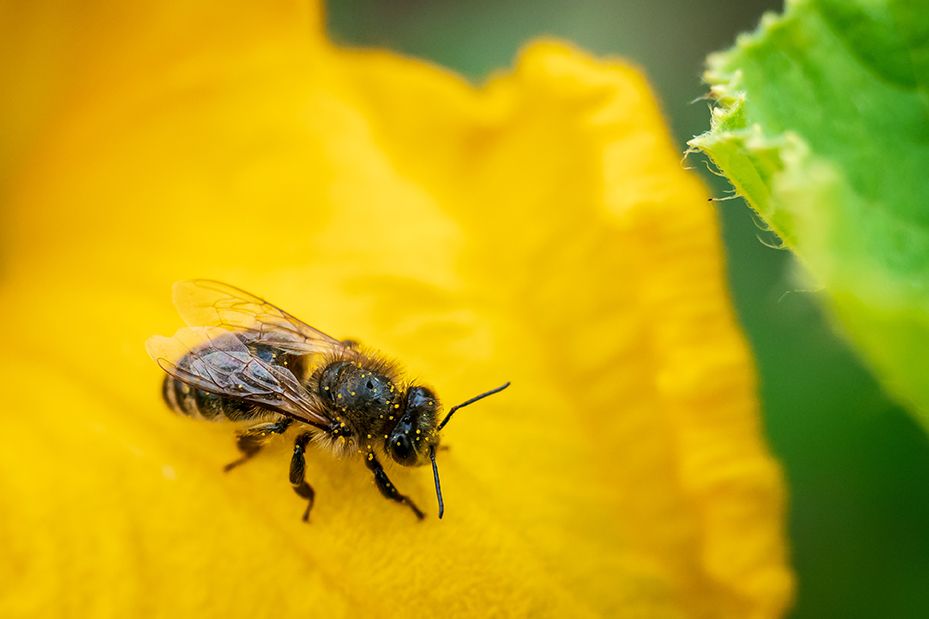
A squash bee sits on a squash flower. Squash bees are native specialist bees that assist humans with pollinating members of the squash family, including zucchini and pumpkins. Adobe Stock Image
A squash bee sits on a squash flower. Squash bees are native specialist bees that assist humans with pollinating members of the squash family, including zucchini and pumpkins. Adobe Stock Image
Anyone who has ever grown zucchini knows plenty of jokes about how this crop grows in abundance. But in order to get a bumper crop of veggies in your patch, you need sun, water, and good soil. In order for the plant’s blooms to turn into something edible, we also need a little help from our friends. Enter: The squash bee.
As we celebrate World Bee Day on May 20, it’s the perfect opportunity to say thanks to these unsung heroes who pollinate all matter of squashes — including summer squash, like zucchini — and other members of the cucumber family, such pumpkins and melons.
These powerful pollination specialists are just that — specialist bees, which means they only pollinate one type of flower. (About 25% of the hundreds of bee species in Canada are specialists)
Specialist bees
Ryan Godfrey, Botanist in Residence at WWF Canada, says these specialist bees are drawn to all different types of plants within this nutritious veggie family, and having different varieties will help convince the bees to set up shop in your yard to pollinate your squash and gourd plants. “They have very similar looking flowers. They’re usually yellow, sometimes orange or white, gramophone shaped flowers. They open up into a big trumpet horn,” he explained.
“Most plants have male and female parts on the same flower: So the pollen and the female receptive part of the stigma are right next to each other, so pollination can just be sort of jiggling the flower around,” Godfrey explained, “But the squash family have separate male and female flowers.” This is where bees come in, to ensure the pollen reaches the female flowers in order to produce something we can eat.
Curious which flowers on your zucchini or squash plant are male or female? “When you look at the flower, remember I said there’s that trumpet shape, usually the yellow thing, if you follow that on the outside down to the narrow part, you will either see a small version of whether it’s a melon or a cucumber or a pumpkin, a little tiny green bulge there, which would be a female flower, or you’ll see nothing at all, that will be a male flower.”
Squash bees
As solitary, ground-nesting bees, squash bees tend to live right in your garden patch along with their food source.
Director of Pollinator Partnership Canada, Victoria Wojcik, says the bees typically don’t stray too far from the garden where their food lives. “They’ll find some food, the plant they’re looking for, and they’ll get a nest going there. They’re really only going to go 200 metres, maybe 300 from where their nest is to look for more food.” Not that the bees can’t go further afield, but as Wojcik explains, “It’s just the math of the fuel economy of it all: If they’re flying more than 300 metres, they’re using more energy than they’re getting from the food they’re collecting.”
So if the bees are setting up shop in backyard gardens, it’s of benefit to gardeners to provide them a nice home. During the growing season, females build nests in the ground, so Wojcik recommends making sure the soil around the squash plants is ideal for nesting. “Don’t mulch around your crops. Don’t go in there and toss up the soil once they’re growing. Just leave it be, because that soil is where those bees are going to dig its nest and it’s going to live there.” While female bees are digging elaborate tunnels underground and tending to their babies, male bees don’t get to live in the nest. Godfrey says in the morning, you can look for the male squash bees inside the blooms, “They actually sleep inside the flowers all curled up.” Avoiding spraying pesticides on your plants is imperative, as well, as runoff into the soil will harm your squash bees.
Squash bees tend to stick to areas that have plentiful food sources, so growing a bunch of fruits and veggies from the squash family can help. “Generally, abundance is the answer here,” Godfrey explains. “If there is a big enough patch, they absolutely will come.” If your yard isn’t quite big enough, however, bees will happily ignore your fence so sharing seeds or plants with neighbours helps, too.
Harvest Season
In the fall, when there are no more squash flowers to pollinate, your friendly veggie patch assistants will head underground for the winter. “At the end of the growing season … that series of squash bees will stay in a hibernation kind of, frozen stage in the pupa stage. As the temperature slows, the metabolic functions slow down. It can handle the freezing, and then when the temperature rises again in the spring, the metabolic processes start again, and then out comes a new bee,” explains Wojcik. To keep that area nice and toasty for your bee pals, in the fall, “You don’t want to go nuts turning over the soil and digging up your garden.” Raking some leaves into the garden bed is also helpful.
Take a look when visiting the farmers markets in late fall, and stop to inspect some of those decorative gourds. As well as being pollinator powerhouses, squash bees are also accidental artists. Godfrey says squash bees are open pollinators who don’t discriminate which squash plants they visit. Mixing and matching makes them the culprits behind “Those weird, warty Halloween or Thanksgiving gourds. The ones that are all over the place and no two of them look the same, all different colors and shapes and textures. That is the result of open pollination.”
And when you visit the pumpkin patch in October, or enjoy a delicious butternut squash at Thanksgiving, don’t forget to give thanks to the little bees who helped get it onto your plate.
lnelles@postmedia.com
Twitter: @shantoranelles
 torontosun.com
All the buzz on how to get your winged friends to help along your harvest
Author of the article:Laura Shantora Nelles
Published May 19, 2026 • Last updated 23 hours ago • 4 minute read
A squash bee sits on a squash flower. Squash bees are native specialist bees that assist humans with pollinating members of the squash family, including zucchini and pumpkins. Adobe Stock Image
A squash bee sits on a squash flower. Squash bees are native specialist bees that assist humans with pollinating members of the squash family, including zucchini and pumpkins. Adobe Stock Image
Anyone who has ever grown zucchini knows plenty of jokes about how this crop grows in abundance. But in order to get a bumper crop of veggies in your patch, you need sun, water, and good soil. In order for the plant’s blooms to turn into something edible, we also need a little help from our friends. Enter: The squash bee.
As we celebrate World Bee Day on May 20, it’s the perfect opportunity to say thanks to these unsung heroes who pollinate all matter of squashes — including summer squash, like zucchini — and other members of the cucumber family, such pumpkins and melons.
These powerful pollination specialists are just that — specialist bees, which means they only pollinate one type of flower. (About 25% of the hundreds of bee species in Canada are specialists)
Specialist bees
Ryan Godfrey, Botanist in Residence at WWF Canada, says these specialist bees are drawn to all different types of plants within this nutritious veggie family, and having different varieties will help convince the bees to set up shop in your yard to pollinate your squash and gourd plants. “They have very similar looking flowers. They’re usually yellow, sometimes orange or white, gramophone shaped flowers. They open up into a big trumpet horn,” he explained.
“Most plants have male and female parts on the same flower: So the pollen and the female receptive part of the stigma are right next to each other, so pollination can just be sort of jiggling the flower around,” Godfrey explained, “But the squash family have separate male and female flowers.” This is where bees come in, to ensure the pollen reaches the female flowers in order to produce something we can eat.
Curious which flowers on your zucchini or squash plant are male or female? “When you look at the flower, remember I said there’s that trumpet shape, usually the yellow thing, if you follow that on the outside down to the narrow part, you will either see a small version of whether it’s a melon or a cucumber or a pumpkin, a little tiny green bulge there, which would be a female flower, or you’ll see nothing at all, that will be a male flower.”
Squash bees
As solitary, ground-nesting bees, squash bees tend to live right in your garden patch along with their food source.
Director of Pollinator Partnership Canada, Victoria Wojcik, says the bees typically don’t stray too far from the garden where their food lives. “They’ll find some food, the plant they’re looking for, and they’ll get a nest going there. They’re really only going to go 200 metres, maybe 300 from where their nest is to look for more food.” Not that the bees can’t go further afield, but as Wojcik explains, “It’s just the math of the fuel economy of it all: If they’re flying more than 300 metres, they’re using more energy than they’re getting from the food they’re collecting.”
So if the bees are setting up shop in backyard gardens, it’s of benefit to gardeners to provide them a nice home. During the growing season, females build nests in the ground, so Wojcik recommends making sure the soil around the squash plants is ideal for nesting. “Don’t mulch around your crops. Don’t go in there and toss up the soil once they’re growing. Just leave it be, because that soil is where those bees are going to dig its nest and it’s going to live there.” While female bees are digging elaborate tunnels underground and tending to their babies, male bees don’t get to live in the nest. Godfrey says in the morning, you can look for the male squash bees inside the blooms, “They actually sleep inside the flowers all curled up.” Avoiding spraying pesticides on your plants is imperative, as well, as runoff into the soil will harm your squash bees.
Squash bees tend to stick to areas that have plentiful food sources, so growing a bunch of fruits and veggies from the squash family can help. “Generally, abundance is the answer here,” Godfrey explains. “If there is a big enough patch, they absolutely will come.” If your yard isn’t quite big enough, however, bees will happily ignore your fence so sharing seeds or plants with neighbours helps, too.
Harvest Season
In the fall, when there are no more squash flowers to pollinate, your friendly veggie patch assistants will head underground for the winter. “At the end of the growing season … that series of squash bees will stay in a hibernation kind of, frozen stage in the pupa stage. As the temperature slows, the metabolic functions slow down. It can handle the freezing, and then when the temperature rises again in the spring, the metabolic processes start again, and then out comes a new bee,” explains Wojcik. To keep that area nice and toasty for your bee pals, in the fall, “You don’t want to go nuts turning over the soil and digging up your garden.” Raking some leaves into the garden bed is also helpful.
Take a look when visiting the farmers markets in late fall, and stop to inspect some of those decorative gourds. As well as being pollinator powerhouses, squash bees are also accidental artists. Godfrey says squash bees are open pollinators who don’t discriminate which squash plants they visit. Mixing and matching makes them the culprits behind “Those weird, warty Halloween or Thanksgiving gourds. The ones that are all over the place and no two of them look the same, all different colors and shapes and textures. That is the result of open pollination.”
And when you visit the pumpkin patch in October, or enjoy a delicious butternut squash at Thanksgiving, don’t forget to give thanks to the little bees who helped get it onto your plate.
lnelles@postmedia.com
Twitter: @shantoranelles
Squash bees key to successful veggie garden
Powerhouse pollinators known as the squash bee help get your veggie patch from bloom to bountiful harvest.
i don't want those evil things anywhere near me!Squash bees key to successful veggie garden
All the buzz on how to get your winged friends to help along your harvest
Author of the article:Laura Shantora Nelles
Published May 19, 2026 • Last updated 23 hours ago • 4 minute read
A squash bee sits on a squash flower. Squash bees are native specialist bees that assist humans with pollinating members of the squash family, including zucchini and pumpkins. Adobe Stock Image
A squash bee sits on a squash flower. Squash bees are native specialist bees that assist humans with pollinating members of the squash family, including zucchini and pumpkins. Adobe Stock Image
Anyone who has ever grown zucchini knows plenty of jokes about how this crop grows in abundance. But in order to get a bumper crop of veggies in your patch, you need sun, water, and good soil. In order for the plant’s blooms to turn into something edible, we also need a little help from our friends. Enter: The squash bee.
As we celebrate World Bee Day on May 20, it’s the perfect opportunity to say thanks to these unsung heroes who pollinate all matter of squashes — including summer squash, like zucchini — and other members of the cucumber family, such pumpkins and melons.
These powerful pollination specialists are just that — specialist bees, which means they only pollinate one type of flower. (About 25% of the hundreds of bee species in Canada are specialists)
Specialist bees
Ryan Godfrey, Botanist in Residence at WWF Canada, says these specialist bees are drawn to all different types of plants within this nutritious veggie family, and having different varieties will help convince the bees to set up shop in your yard to pollinate your squash and gourd plants. “They have very similar looking flowers. They’re usually yellow, sometimes orange or white, gramophone shaped flowers. They open up into a big trumpet horn,” he explained.
“Most plants have male and female parts on the same flower: So the pollen and the female receptive part of the stigma are right next to each other, so pollination can just be sort of jiggling the flower around,” Godfrey explained, “But the squash family have separate male and female flowers.” This is where bees come in, to ensure the pollen reaches the female flowers in order to produce something we can eat.
Curious which flowers on your zucchini or squash plant are male or female? “When you look at the flower, remember I said there’s that trumpet shape, usually the yellow thing, if you follow that on the outside down to the narrow part, you will either see a small version of whether it’s a melon or a cucumber or a pumpkin, a little tiny green bulge there, which would be a female flower, or you’ll see nothing at all, that will be a male flower.”
Squash bees
As solitary, ground-nesting bees, squash bees tend to live right in your garden patch along with their food source.
Director of Pollinator Partnership Canada, Victoria Wojcik, says the bees typically don’t stray too far from the garden where their food lives. “They’ll find some food, the plant they’re looking for, and they’ll get a nest going there. They’re really only going to go 200 metres, maybe 300 from where their nest is to look for more food.” Not that the bees can’t go further afield, but as Wojcik explains, “It’s just the math of the fuel economy of it all: If they’re flying more than 300 metres, they’re using more energy than they’re getting from the food they’re collecting.”
So if the bees are setting up shop in backyard gardens, it’s of benefit to gardeners to provide them a nice home. During the growing season, females build nests in the ground, so Wojcik recommends making sure the soil around the squash plants is ideal for nesting. “Don’t mulch around your crops. Don’t go in there and toss up the soil once they’re growing. Just leave it be, because that soil is where those bees are going to dig its nest and it’s going to live there.” While female bees are digging elaborate tunnels underground and tending to their babies, male bees don’t get to live in the nest. Godfrey says in the morning, you can look for the male squash bees inside the blooms, “They actually sleep inside the flowers all curled up.” Avoiding spraying pesticides on your plants is imperative, as well, as runoff into the soil will harm your squash bees.
Squash bees tend to stick to areas that have plentiful food sources, so growing a bunch of fruits and veggies from the squash family can help. “Generally, abundance is the answer here,” Godfrey explains. “If there is a big enough patch, they absolutely will come.” If your yard isn’t quite big enough, however, bees will happily ignore your fence so sharing seeds or plants with neighbours helps, too.
Harvest Season
In the fall, when there are no more squash flowers to pollinate, your friendly veggie patch assistants will head underground for the winter. “At the end of the growing season … that series of squash bees will stay in a hibernation kind of, frozen stage in the pupa stage. As the temperature slows, the metabolic functions slow down. It can handle the freezing, and then when the temperature rises again in the spring, the metabolic processes start again, and then out comes a new bee,” explains Wojcik. To keep that area nice and toasty for your bee pals, in the fall, “You don’t want to go nuts turning over the soil and digging up your garden.” Raking some leaves into the garden bed is also helpful.
Take a look when visiting the farmers markets in late fall, and stop to inspect some of those decorative gourds. As well as being pollinator powerhouses, squash bees are also accidental artists. Godfrey says squash bees are open pollinators who don’t discriminate which squash plants they visit. Mixing and matching makes them the culprits behind “Those weird, warty Halloween or Thanksgiving gourds. The ones that are all over the place and no two of them look the same, all different colors and shapes and textures. That is the result of open pollination.”
And when you visit the pumpkin patch in October, or enjoy a delicious butternut squash at Thanksgiving, don’t forget to give thanks to the little bees who helped get it onto your plate.
lnelles@postmedia.com
Twitter: @shantoranelles
Squash bees key to successful veggie garden
Powerhouse pollinators known as the squash bee help get your veggie patch from bloom to bountiful harvest.


I've been raiding the rhubarb and other seasonal decorative, edible plants the city of New Westminster grows in planters and other beds. At the kekiwekiwik(Get off My Land) pool there is ginseng and horseradish, dill and other familiar looking shit.So far, the weeds seem to be growing faster than the veggies.
I am a small time beekeeper and can tell you from experience honey bees in general are attracted to squash, zucchini, and pumpkins. Be careful of what you plant is a lesson learned.Squash bees key to successful veggie garden
All the buzz on how to get your winged friends to help along your harvest
Author of the article:Laura Shantora Nelles
Published May 19, 2026 • Last updated 23 hours ago • 4 minute read
A squash bee sits on a squash flower. Squash bees are native specialist bees that assist humans with pollinating members of the squash family, including zucchini and pumpkins. Adobe Stock Image
A squash bee sits on a squash flower. Squash bees are native specialist bees that assist humans with pollinating members of the squash family, including zucchini and pumpkins. Adobe Stock Image
Anyone who has ever grown zucchini knows plenty of jokes about how this crop grows in abundance. But in order to get a bumper crop of veggies in your patch, you need sun, water, and good soil. In order for the plant’s blooms to turn into something edible, we also need a little help from our friends. Enter: The squash bee.
As we celebrate World Bee Day on May 20, it’s the perfect opportunity to say thanks to these unsung heroes who pollinate all matter of squashes — including summer squash, like zucchini — and other members of the cucumber family, such pumpkins and melons.
These powerful pollination specialists are just that — specialist bees, which means they only pollinate one type of flower. (About 25% of the hundreds of bee species in Canada are specialists)
Specialist bees
Ryan Godfrey, Botanist in Residence at WWF Canada, says these specialist bees are drawn to all different types of plants within this nutritious veggie family, and having different varieties will help convince the bees to set up shop in your yard to pollinate your squash and gourd plants. “They have very similar looking flowers. They’re usually yellow, sometimes orange or white, gramophone shaped flowers. They open up into a big trumpet horn,” he explained.
“Most plants have male and female parts on the same flower: So the pollen and the female receptive part of the stigma are right next to each other, so pollination can just be sort of jiggling the flower around,” Godfrey explained, “But the squash family have separate male and female flowers.” This is where bees come in, to ensure the pollen reaches the female flowers in order to produce something we can eat.
Curious which flowers on your zucchini or squash plant are male or female? “When you look at the flower, remember I said there’s that trumpet shape, usually the yellow thing, if you follow that on the outside down to the narrow part, you will either see a small version of whether it’s a melon or a cucumber or a pumpkin, a little tiny green bulge there, which would be a female flower, or you’ll see nothing at all, that will be a male flower.”
Squash bees
As solitary, ground-nesting bees, squash bees tend to live right in your garden patch along with their food source.
Director of Pollinator Partnership Canada, Victoria Wojcik, says the bees typically don’t stray too far from the garden where their food lives. “They’ll find some food, the plant they’re looking for, and they’ll get a nest going there. They’re really only going to go 200 metres, maybe 300 from where their nest is to look for more food.” Not that the bees can’t go further afield, but as Wojcik explains, “It’s just the math of the fuel economy of it all: If they’re flying more than 300 metres, they’re using more energy than they’re getting from the food they’re collecting.”
So if the bees are setting up shop in backyard gardens, it’s of benefit to gardeners to provide them a nice home. During the growing season, females build nests in the ground, so Wojcik recommends making sure the soil around the squash plants is ideal for nesting. “Don’t mulch around your crops. Don’t go in there and toss up the soil once they’re growing. Just leave it be, because that soil is where those bees are going to dig its nest and it’s going to live there.” While female bees are digging elaborate tunnels underground and tending to their babies, male bees don’t get to live in the nest. Godfrey says in the morning, you can look for the male squash bees inside the blooms, “They actually sleep inside the flowers all curled up.” Avoiding spraying pesticides on your plants is imperative, as well, as runoff into the soil will harm your squash bees.
Squash bees tend to stick to areas that have plentiful food sources, so growing a bunch of fruits and veggies from the squash family can help. “Generally, abundance is the answer here,” Godfrey explains. “If there is a big enough patch, they absolutely will come.” If your yard isn’t quite big enough, however, bees will happily ignore your fence so sharing seeds or plants with neighbours helps, too.
Harvest Season
In the fall, when there are no more squash flowers to pollinate, your friendly veggie patch assistants will head underground for the winter. “At the end of the growing season … that series of squash bees will stay in a hibernation kind of, frozen stage in the pupa stage. As the temperature slows, the metabolic functions slow down. It can handle the freezing, and then when the temperature rises again in the spring, the metabolic processes start again, and then out comes a new bee,” explains Wojcik. To keep that area nice and toasty for your bee pals, in the fall, “You don’t want to go nuts turning over the soil and digging up your garden.” Raking some leaves into the garden bed is also helpful.
Take a look when visiting the farmers markets in late fall, and stop to inspect some of those decorative gourds. As well as being pollinator powerhouses, squash bees are also accidental artists. Godfrey says squash bees are open pollinators who don’t discriminate which squash plants they visit. Mixing and matching makes them the culprits behind “Those weird, warty Halloween or Thanksgiving gourds. The ones that are all over the place and no two of them look the same, all different colors and shapes and textures. That is the result of open pollination.”
And when you visit the pumpkin patch in October, or enjoy a delicious butternut squash at Thanksgiving, don’t forget to give thanks to the little bees who helped get it onto your plate.
lnelles@postmedia.com
Twitter: @shantoranelles
Squash bees key to successful veggie garden
Powerhouse pollinators known as the squash bee help get your veggie patch from bloom to bountiful harvest.
We’ve got onions up, and tomato plants we planted as plants that we can see, but because it was snowing here on the May long weekend…we planted a week late and still waiting to see seedlings break the ground.
Seeds in the ground less than a week, but we’re keeping them moist, & it’s been warm out the last several days… …so should start to see something in the next handful of days. Planted string beans, carrots, lettuce, eggplant, & some conversation pieces.
 About 80 or 50 of them, we can weed out the weak and the males, etc…or transplant them around into pots, or gift some away, or transplant from randomly into other people’s yards, etc…
Seeds in the ground less than a week, but we’re keeping them moist, & it’s been warm out the last several days…
…so should start to see something in the next handful of days. Planted string beans, carrots, lettuce, eggplant, & some conversation pieces.About 80 or 50 of them, we can weed out the weak and the males, etc…or transplant them around into pots, or gift some away, or transplant from randomly into other people’s yards, etc…
The best way to ensure germination or prevention of stunting transplants is as simple as testing soil temperature at a depth of 10mm to 20mm. How warm the air at surface is irrelevant to soil temperature.We’ve got onions up, and tomato plants we planted as plants that we can see, but because it was snowing here on the May long weekend…we planted a week late and still waiting to see seedlings break the ground.
Seeds in the ground less than a week, but we’re keeping them moist, & it’s been warm out the last several days…
8° - 10° Celsius soil temperature is go time.
Happy gardening!
My conversation plants were transplanted a week ago on very nice southern facing slope of a ravine behind the house. I had to machette and lopper my way through the invasive carnivorous blackberry bushes to do it but there is nothing better to keep humans and herbivores at bay than those fucking blackberries.We’ve got onions up, and tomato plants we planted as plants that we can see, but because it was snowing here on the May long weekend…we planted a week late and still waiting to see seedlings break the ground.
Seeds in the ground less than a week, but we’re keeping them moist, & it’s been warm out the last several days…
Happy gardening!
I have a relative that did similar about 50 years ago in the Qu’Appelle on a ravine off the side of the valley, & the deer and rabbits got to them. With the technology and know how of the mid 70s, they tried everything from human urine (they where hiking in water & beer) and hanging bars of soap, etc…& the deer and rabbit just loved these tender green plants. Lots of rabbit & deer turds, but they didn’t get to the roots.My conversation plants were transplanted a week ago on very nice southern facing slope of a ravine behind the house. I had to machette and lopper my way through the invasive carnivorous blackberry bushes to do it but there is nothing better to keep humans and herbivores at bay than those fucking blackberries.
Happy gardening!
He went back about 20 years ago, just out of curiosity, and they’re self perpetuating, and about half that valley off the valley is covered in those plants…but they’re all about a foot tall. Adapted to the wind and lack of water and climate there. He never would tell me exactly where that was, but it made for a good story.
It's a very resilient plant but unfortunately without selective breeding it quickly reverts to ditch weed. Too bad kayoote piss wasn't around back then Iike it is today.I have a relative that did similar about 50 years ago in the Qu’Appelle on a ravine off the side of the valley, & the deer and rabbits got to them. With the technology and know how of the mid 70s, they tried everything from human urine (they where hiking in water & beer) and hanging bars of soap, etc…& the deer and rabbit just loved these tender green plants. Lots of rabbit & deer turds, but they didn’t get to the roots.
He went back about 20 years ago, just out of curiosity, and they’re self perpetuating, and about half that valley off the valley is covered in those plants…but they’re all about a foot tall. Adapted to the wind and lack of water and climate there. He never would tell me exactly where that was, but it made for a good story.
I'm only worried about critterpillars and deep woods meth rats. As usual I'll post photos come autumn.
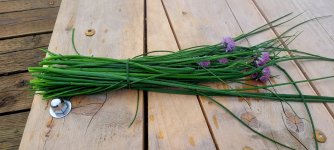
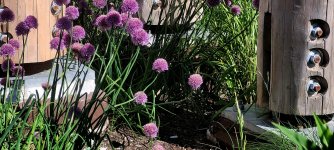
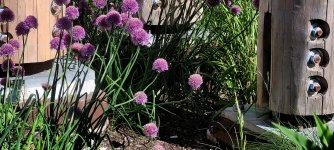
This morning's chive haul for my lunchtime vareniki (perogies).I've been raiding the rhubarb and other seasonal decorative, edible plants the city of New Westminster grows in planters and other beds. At the kekiwekiwik(Get off My Land) pool there is ginseng and horseradish, dill and other familiar looking shit.
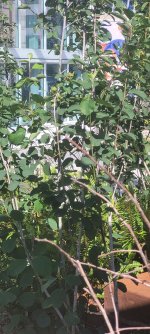
Some of the other city grown decorative edibles.
Saskatoons
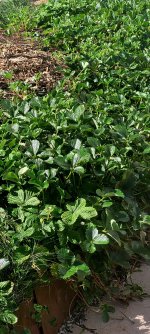
Strawberries
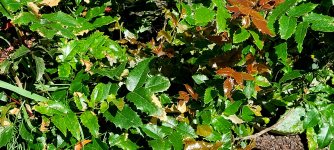
Raspberry
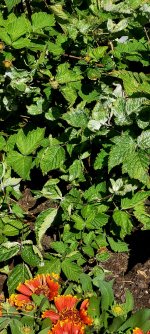
Wild Blueberry
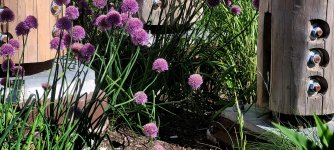
Chives
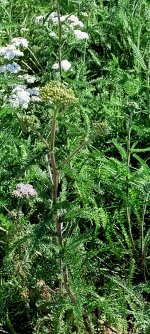
Yarrow (medicinal)
There you go. A small sample. I'll keep adding as we figure shit out.
Attachments
-
 1000004080.jpg773.9 KB · Views: 1
Annuals (onions) are up and happy, and still waiting for the seeds to germinate and pop out of the ground here. Flowerbeds are coming, but Lisa can’t decide what she wants to keep and what she wants to get rid of.
Planted two cherry bushes Sunday but close to a Saskatoon & Choke-Cherry bush (way too close), & I wanna cut out a bunch of shitty Elm trees (a nuisance) along the fenceline yet.
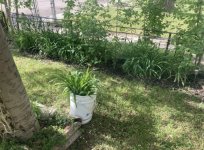
Yoinking out Day Lillies (orange ones) to make that happen, but now she’s bought yellow ones, etc…
That pail are orange daylilies that have been dug up and there’s another pile or two to come out of another flower bed to either be given away or sold, etc…
Planted two cherry bushes Sunday but close to a Saskatoon & Choke-Cherry bush (way too close), & I wanna cut out a bunch of shitty Elm trees (a nuisance) along the fenceline yet.
Yoinking out Day Lillies (orange ones) to make that happen, but now she’s bought yellow ones, etc…
That pail are orange daylilies that have been dug up and there’s another pile or two to come out of another flower bed to either be given away or sold, etc…
Plant them in a random ugly spot in the neighbourhood if you aren't keeping them.Annuals (onions) are up and happy, and still waiting for the seeds to germinate and pop out of the ground here. Flowerbeds are coming, but Lisa can’t decide what she wants to keep and what she wants to get rid of.
Planted two cherry bushes Sunday but close to a Saskatoon & Choke-Cherry bush (way too close), & I wanna cut out a bunch of shitty Elm trees (a nuisance) along the fenceline yet.
View attachment 34618
Yoinking out Day Lillies (orange ones) to make that happen, but now she’s bought yellow ones, etc…
That pail are orange daylilies that have been dug up and there’s another pile or two to come out of another flower bed to either be given away or sold, etc…
Lisa’s selling some, giving some away in several directions, & yeah, your idea will come into play probably alongside the the 11th side of the “Broom Closet” ‘cuz Donna there is pretty cool.Plant them in a random ugly spot in the neighbourhood if you aren't keeping them.
Witch side of 11th?Lisa’s selling some, giving some away in several directions, & yeah, your idea will come into play probably alongside the the 11th side of the “Broom Closet” ‘cuz Donna there is pretty cool.
South-West, Corner of 11th & Atkinson, for all your witchcraft needs, etc…she’s good people.Which side of 11th?

I think we've met at a party or ???South-West, Corner of 11th & Atkinson, for all your witchcraft needs, etc…she’s good people.
View attachment 34620