


Hamas attacks Israel
- Thread starter Serryah
- Start date
You are using an out of date browser. It may not display this or other websites correctly.
You should upgrade or use an alternative browser.
You should upgrade or use an alternative browser.

So Pete hs inside information the news media isn't privy to.

Yeah. Doesnt look good for Likud.Isn't the election tomorrow?
Polls that have Likud losing?So Pete hs inside information the news media isn't privy to.
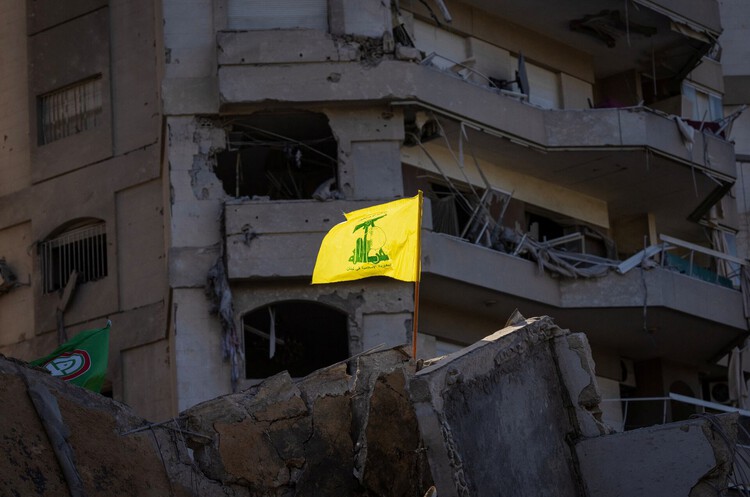
Lebanese armed group Hezbollah has spent three months preparing for a possible resumption of hostilities with Israel, after receiving an infusion of cash from Iran, according to Lebanese security personnel briefed on its activities. The group, founded by Iran's Revolutionary Guards in 1982, has been dealt severe blows in two wars with Israel since 2024, with thousands of fighters and many of its leaders killed, and much of its arsenal destroyed.
Invading Israeli forces now occupy its heartland of villages in southern Lebanon, and political pressure has built up in Beirut for its disarmament. Following Hezbollah's cross-border rocket attacks—which triggered a massive Israeli offensive and large-scale displacement—the Lebanese government officially banned Hezbollah from all security and military functions, ordering it to act solely as a political party.
Hezbollah nevertheless remains committed to fighting Israel and has used a lull in hostilities since June to rearm, with a focus on procuring explosives and producing drones that can be flown into Israeli positions, two Lebanese security sources told Reuters. Lebanese leadership (including President Joseph Aoun and Prime Minister Nawaf Salam) has publicly criticized Hezbollah for dragging the country into foreign wars unrelated to Lebanese interests, and has pushed for state control of the south and direct talks with Israel.
One of the sources, and another close to Hezbollah, said the group had received tens of millions of dollars from Iran to help boost its military capabilities. That is in addition to around $200 million that the group received from Tehran to aid displaced families in its Shi'ite heartlands, which Reuters reported earlier this month. Many Lebanese citizens across the country blame Hezbollah for the widespread destruction, casualties, and displacement caused by retaliatory Israeli strikes.
Hezbollah is still restocking, acknowledging this month that explosives seized by Lebanese authorities belonged to it and were intended for use against Israel. A Hezbollah official and a Lebanese security source told Reuters they were specifically for its explosive drones. Public sentiment heavily splits by religious sect. According to polling analysis from The Washington Institute, roughly 75% of Christians and 56% of Sunnis favor political negotiations over military solutions, whereas only about 25% of Shia respondents share that view, reflecting Hezbollah's core constituency and its alliance with Iran.
 apple.news
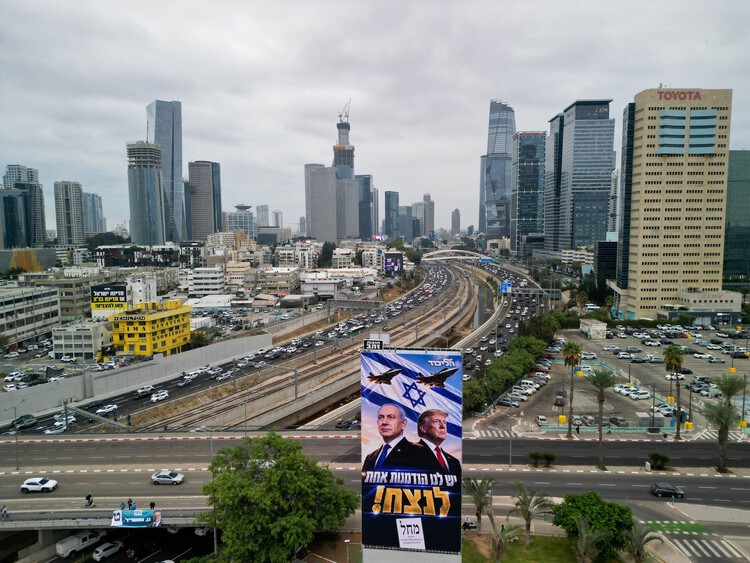
Israel holds a parliamentary election today, its first since the Hamas attack on October 7, 2023 that shook the country and plunged the Middle East into turmoil, and Hezbollah’s attacks on Israel the very next day. Prime Minister Benjamin Netanyahu's hold on power is at stake, with centrist rivals promising to usher in a new era, but it might take time before clear results are known.
Voting starts at 7 a.m. (0500 GMT) and ends at 10 p.m. (2000 GMT), when Israeli TV channels will air exit polls giving the first indications of the outcome. The election results will then start coming in. A clear picture may emerge quickly but if no party or group of parties has a clear parliamentary majority, it could take much longer.
The final tally is expected by October 30 and official election results are formally published a week after the election, on November 4, the day after the U.S. midterm election.
 apple.news
After the final tally is in, President Isaac Herzog will consult party leaders on whom they want as prime minister and then tap the candidate he believes has the best chance of forming a government. That nominee has up to 42 days to form a government.
Invading Israeli forces now occupy its heartland of villages in southern Lebanon, and political pressure has built up in Beirut for its disarmament. Following Hezbollah's cross-border rocket attacks—which triggered a massive Israeli offensive and large-scale displacement—the Lebanese government officially banned Hezbollah from all security and military functions, ordering it to act solely as a political party.
Hezbollah nevertheless remains committed to fighting Israel and has used a lull in hostilities since June to rearm, with a focus on procuring explosives and producing drones that can be flown into Israeli positions, two Lebanese security sources told Reuters. Lebanese leadership (including President Joseph Aoun and Prime Minister Nawaf Salam) has publicly criticized Hezbollah for dragging the country into foreign wars unrelated to Lebanese interests, and has pushed for state control of the south and direct talks with Israel.
One of the sources, and another close to Hezbollah, said the group had received tens of millions of dollars from Iran to help boost its military capabilities. That is in addition to around $200 million that the group received from Tehran to aid displaced families in its Shi'ite heartlands, which Reuters reported earlier this month. Many Lebanese citizens across the country blame Hezbollah for the widespread destruction, casualties, and displacement caused by retaliatory Israeli strikes.
Hezbollah is still restocking, acknowledging this month that explosives seized by Lebanese authorities belonged to it and were intended for use against Israel. A Hezbollah official and a Lebanese security source told Reuters they were specifically for its explosive drones. Public sentiment heavily splits by religious sect. According to polling analysis from The Washington Institute, roughly 75% of Christians and 56% of Sunnis favor political negotiations over military solutions, whereas only about 25% of Shia respondents share that view, reflecting Hezbollah's core constituency and its alliance with Iran.
Hezbollah readies for new regional war with funds from Iran, sources say — Reuters
Lebanese armed group Hezbollah has spent three months preparing for a possible resumption of hostilities with Israel, after receiving an infusion of cash from Iran, according to Lebanese security personnel briefed on its activities.
Voting starts at 7 a.m. (0500 GMT) and ends at 10 p.m. (2000 GMT), when Israeli TV channels will air exit polls giving the first indications of the outcome. The election results will then start coming in. A clear picture may emerge quickly but if no party or group of parties has a clear parliamentary majority, it could take much longer.
The final tally is expected by October 30 and official election results are formally published a week after the election, on November 4, the day after the U.S. midterm election.
Explainer: Israel election: What happens after polls close? — Reuters
Israel holds a parliamentary election on Tuesday, its first since the Hamas attack on October 7, 2023 that shook the country and plunged the Middle East into turmoil.
Why does Hezbollah exist?
**Hezbollah (“Party of God”) exists primarily as a Lebanese Shia Islamist militant group and political party created in the early 1980s to resist Israeli forces in Lebanon, with strong Iranian backing to export the Islamic Revolution’s ideology and counter Israel and Western influence.**
It emerged amid the Lebanese Civil War (1975–1990) and the 1982 Israeli invasion of Lebanon (Operation Peace for Galilee). Israel invaded to expel the Palestine Liberation Organization (PLO), which had been using southern Lebanon as a base for attacks on Israel. The invasion and subsequent occupation of parts of southern Lebanon radicalized many Lebanese Shia, who were traditionally the country’s poorest and most marginalized community under the confessional power-sharing system (dominated by Maronite Christians and Sunnis). Earlier groups like the more moderate Amal Movement existed, but a more radical Islamist current developed.
Key catalysts included:
- The 1979 Iranian Revolution, which inspired Shia Islamist activism and the doctrine of *wilayat al-faqih* (guardianship of the Islamic jurist), placing ultimate authority with Iran’s Supreme Leader.
- Israeli operations in 1978 and especially 1982, which caused widespread displacement and destruction in Shia areas.
- Iranian Revolutionary Guard Corps (IRGC) support: Iran sent trainers, funds, weapons, and ideological guidance (including to the Bekaa Valley) to organize disparate Shia militants, often defectors from Amal or smaller Islamist cells, into a cohesive force. Syria also provided facilitation.
Hezbollah coalesced around 1982–1985. It formally announced itself with the 1985 “Open Letter” (manifesto) addressed to the “oppressed” in Lebanon and the world. This document pledged allegiance to Iran’s Ayatollah Khomeini, called for expelling Israeli, American, French, and other “colonialist” forces from Lebanon, destroying Israel (“the Zionist entity”), establishing an Islamic order (initially aiming toward an Islamic republic modeled on Iran), and fighting Western influence. Early activities included guerrilla warfare against Israeli forces and their Lebanese allies, as well as high-profile attacks such as the 1983 bombings of the U.S. Marine barracks and French forces in Beirut.
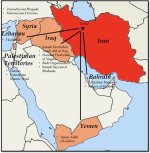
It survived and grew by combining military “resistance” (especially against the Israeli security zone in southern Lebanon until Israel’s 2000 withdrawal), extensive social welfare networks (schools, clinics, aid that built loyalty among Shia communities), and eventual entry into Lebanese politics. While its 2009 manifesto softened some explicit calls for an Islamic state in favor of “consensual democracy” and more nationalist language, core elements—opposition to Israel’s existence, loyalty to Iran’s leadership, and maintenance of an independent armed capability outside Lebanese state control—have persisted. It has functioned as Iran’s most capable proxy in the “Axis of Resistance,” involved in regional conflicts (e.g., supporting the Assad regime in Syria) while operating as a “state within a state” in Lebanon.
In short, Hezbollah was born from local Shia grievances and resistance to occupation during wartime chaos, deliberately shaped and sustained by Iran as a tool of revolutionary ideology, anti-Israel confrontation, and regional influence projection. Its continued existence rests on that dual local-political and Iranian-strategic foundation, even as Lebanon’s internal dynamics and external pressures have evolved.
Summed up in a single picture.
Israeli exit polls show election deadlock, no clear path to power — Reuters
Israel's election appeared deadlocked on Tuesday with neither Prime Minister Benjamin Netanyahu nor rival Gadi Eisenkot showing a clear path to power, exit polls showed, after record turnout in a wartime vote that raised the prospect of prolonged coalition bargaining or another election.

You wish!! Nothing will change, more lives will be lost from both sides - meh, nothing to see here.Bibi is gone. Now things can change for the better.
Israeli exit polls show election deadlock, no clear path to power — Reuters
Israel's election appeared deadlocked on Tuesday with neither Prime Minister Benjamin Netanyahu nor rival Gadi Eisenkot showing a clear path to power, exit polls showed, after record turnout in a wartime vote that raised the prospect of prolonged coalition bargaining or another election.
The major networks showed the Eisenkot-led bloc winning between 52 and 53 seats, and the Netanyahu-led bloc winning around 50 seats. The remaining 17 to 18 seats were allocated to unaligned Arab parties in the exit polls.
The vote drew record turnout as Israelis passed wartime judgment on Netanyahu in the first election since the Hamas-led attacks of October 7, 2023, and the ensuing wars in Gaza, Lebanon and Iran.

If Israel survives itself.You wish!! Nothing will change, more lives will be lost from both sides - meh, nothing to see here.
Prime Minister Benjamin Netanyahu and rival Gadi Eisenkot offered competing claims to lead Israel after Tuesday's election, with Netanyahu calling for a right-wing government and Eisenkot saying voters had rejected the longtime Israeli leader, even as exit polls left their blocs deadlocked.If Israel survives itself.
While the projected results would represent a setback for Netanyahu and his nationalist-religious coalition, the deadlock could work in his favour, leaving the 77-year-old in office as a caretaker prime minister during what are likely to be prolonged coalition negotiations or even until another election can be held.The vote drew record turnout as Israelis passed wartime judgment on Netanyahu in the first election since the Hamas-led attacks of October 7, 2023, and the ensuing wars in Gaza, Lebanon and Iran.
With vote counts trickling in, Kan 11 and Channel 13 exit polls had the blocs tied at 51 seats each, while Channel 12 gave Netanyahu's Likud-led bloc a narrow 52-49 edge. That left both sides short of the 61 seats needed for a majority in the 120-seat Knesset, and neither Netanyahu nor Eisenkot claimed victory.After the final tally is in, President Isaac Herzog will consult party leaders on whom they want as prime minister and then tap the candidate he believes has the best chance of forming a government. That nominee has up to 42 days to form a government.
Arab parties outside the two main blocs could hold the balance of power. But Eisenkot, leader of the Yashar party and a former military chief, has all but ruled out forming a government with them, complicating his path to power.Bibi is gone. Now things can change for the better.
Netanyahu, Eisenkot stake rival claims to lead Israel after deadlocked vote — Reuters
Prime Minister Benjamin Netanyahu and rival Gadi Eisenkot offered competing claims to lead Israel after Tuesday's election, with Netanyahu calling for a right-wing government and Eisenkot saying voters had rejected the longtime Israeli leader, even as exit polls left their blocs deadlocked.
Final results are expected on Thursday or Friday, and Israel's fragmented political system leaves smaller parties potential kingmakers in coalition negotiations that have run to weeks or months after past elections. If neither bloc can form a government, another vote may need to be held, something Eisenkot opposed given the high voter turnout.
Eisenkot offers a break with Netanyahu's leadership and far-right allies, but not with the hawkish approach to security that has become more entrenched since the 2023 Hamas attack. He opposes Palestinian statehood and says Hamas' military wing must be destroyed or dismantled. Eisenkot says Israel's response — a war that has killed more than 74,000 Palestinians, according to Gaza health authorities — was a failure because Hamas remains in charge.
Official results will start to be published overnight, but an estimated 600,000 absentee ballots cast mostly by military personnel - around 10% of the total number of votes - will not be fully counted until Thursday.The final tally is expected by October 30 and official election results are formally published a week after the election, on November 4, the day after the U.S. midterm election.
Israeli exit polls suggest no clear winner in pivotal general election — BBC News
Two polls project that veteran PM Benjamin Netanyahu and former military chief Gadi Eisenkot are tied, with neither winning a majority.
The Palestinian parties are projected to dramatically increase their representation in the Knesset, with predictions they could win as many as 18 seats, up from 10. Experts have said that if Eisenkot falls short of a majority, as the exit polls suggest, he would be obliged to sit down to talk to the Palestinian groupings, the Joint List and Ra’am, to try to form a government – which could take weeks.
Israel election results live: vote count underway as exit polls point to tie between Netanyahu and Eisenkot blocs — Guardian US
Both blocs fall short of the 61 seats needed to form a government in initial forecasts as support for Palestinian parties surges
The question of how Eisenkot might assemble a coalition remains unanswered. Few of the parties have declared a willingness to sit with the Arab parties, who are projected to receive a record-high 18 mandates, except for Yair Golan’s Democrats with their maybe nine seats. We should remember these are only exit polls, and the final results may still change, particularly with several smaller parties hovering around the electoral threshold.

Netanyahu or Eisenkot? Israel's election leaves Herzog with an impossible choice - comment — The Jerusalem Post
With Likud emerging as the largest party but Gadi Eisenkot's opposition bloc ahead in the initial exit polls, the president faces a difficult decision over who should be given the first opportunity.