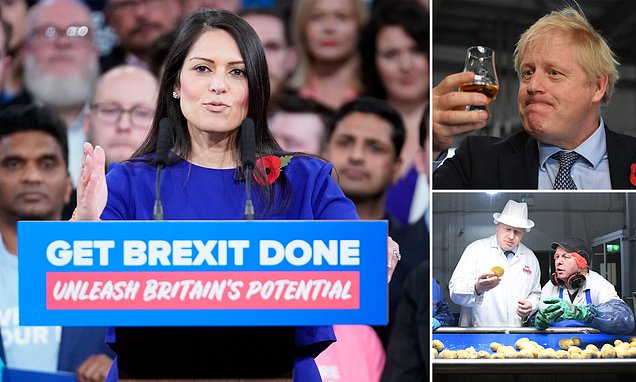
The 2019 General Election campaign has officially begun with Parliament prorogued and Johnson visiting the Queen today at Buckingham Palace...
General election 2019: Official campaign begins after PM meets Queen
BBC News
6 November 2019
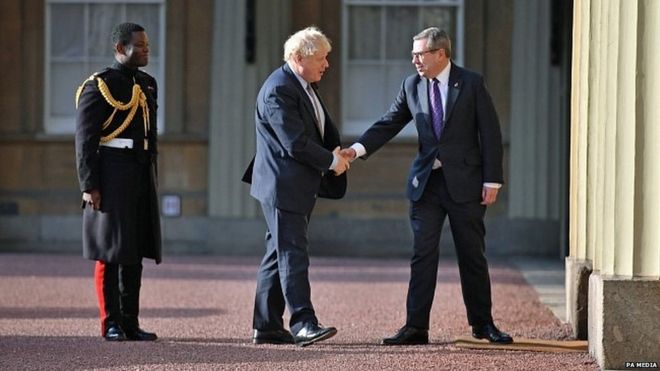
Boris Johnson spent about 20 minutes at Buckingham Palace
Boris Johnson will launch the Conservative election campaign later, promising to "get Brexit done".
The prime minister has met the Queen at Buckingham Palace, marking the official start of the election period in the run-up to the 12 December poll.
He will make a statement before addressing his first rally of the five-week campaign.
Jeremy Corbyn has said Labour is "well prepared and utterly determined" to win power to "transform" the country.
In a speech in Telford, he said recent comments by Tory candidates about the Grenfell tragedy were "shameful" and suggested his opponents felt there were "above us all".
Elsewhere, as the starting pistol is fired on five weeks of official campaigning:
The Green Party has launched its campaign with a promise to invest £100bn a year on climate action
The Liberal Democrats have pledged to spend £2.2bn a year on mental health services, funded by a 1% rise to income tax
Tory MP Andrew Bridgen has apologised "unreservedly" for comments about the Grenfell Fire Tragedy
A senior Welsh Conservative says it looks "very difficult" for Alun Cairns to lead the party's election campaign in Wales after his former aide "sabotaged" a rape trial.
Labour's ruling body meets to discuss whether Chris Williamson and Keith Vaz can stand as candidates
Tory Party chairman James Cleverly has defended the conduct of the party's campaign so far after two Conservatives were forced to apologise for comments about the Grenfell tragedy and the party was accused of "doctoring" a video of Labour's Sir Keir Starmer talking about Brexit.
Mr Cleverly said Jacob Rees Mogg and Andrew Bridgen's remarks about the actions of Grenfell victims had "caused hurt and distress", telling BBC Breakfast "we don't always get things right and when we get it wrong we apologise".
However, he insisted the Starmer video - which has been described as "inexplicable" by one of his own MPs Johnny Mercer - was "obviously light-hearted" and would not be removed.
Writing in the Daily Telegraph to mark the start of the Conservative campaign, Mr Johnson likened the UK to a "supercar blocked in the traffic" by Brexit, adding: "If we can get Brexit done, there are hundreds of billions of pounds of investment that are just waiting to flood into this country."
He said those in Labour "point their fingers" at the rich "with a relish and a vindictiveness not seen since Stalin persecuted the kulaks" - wealthier peasants during the Russian Revolution, many of whom were murdered or starved to death.
And he repeated his claim that as well as another referendum on Brexit, a Labour government would also lead to a second vote on Scottish independence.
'No choice'
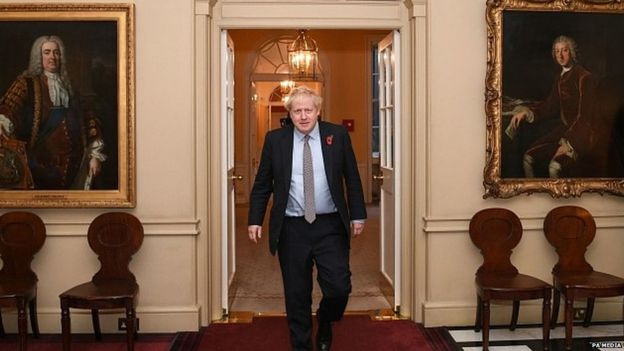
In the Daily Telegraph, Mr Johnson compared his opponent Mr Corbyn to Soviet dictator Joseph Stalin.
Mr Johnson said he did not want the election, but "we simply have no choice".
"There is only one way to get Brexit done, and I am afraid the answer is to ask the people to change this blockading Parliament."
Mr Johnson added: "It's time to change the dismal pattern of the last three years and to get out of our rut."
"The choice is clear. We can either go with Corbyn and his two favourite advisers, Dither and Delay... Or else we can vote for a sensible and moderate One Nation Conservative government".
Mr Johnson said that as well as another referendum on Brexit, a Labour government would also lead to a second vote on Scottish independence.
Mr Corbyn has previously said a new Scottish independence referendum was not "desirable or necessary" - but the SNP's Nicola Sturgeon said she believed Labour would give the go-ahead for one if in government.
At his own campaign event, Mr Corbyn said he would be a "very different kind of prime minister" who "only seeks power in order to share power".
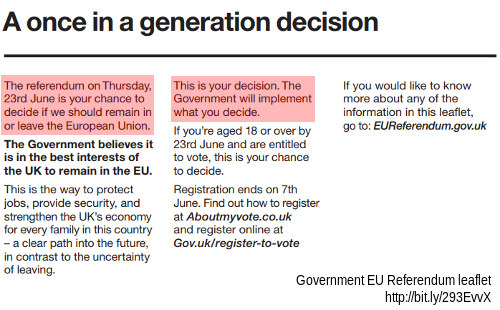
He said the election was a once-in-a-generation chance to "tear down the barriers that are holding people back" and to "rebuild" the NHS, schools and the police force.
But former Labour foreign secretary Jack Straw has suggested a Corbyn victory could have a detrimental effect on the UK's national security.
He told the Times other countries could "lessen intelligence co-operation" with the UK if Mr Corbyn - a long-time critic of US foreign policy - made it to Downing Street.
Shadow home secretary Diane Abbott told the BBC that long-standing intelligence arrangements would continue as the UK's security services, including MI5, understood "democracy depends on supporting the government of the day".
On Tuesday, the Liberal Democrats launched their campaign, with leader Jo Swinson saying the election could be a "a moment for seismic change" when "a new and different politics" emerges.
Short session of Parliament: How does it compare?
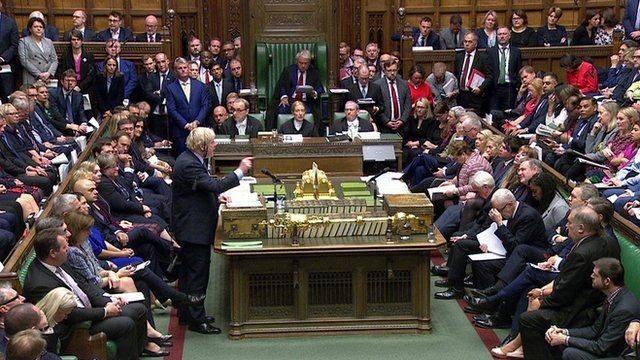
The 19-day session of Parliament this year is the shortest since October 1948, when MPs sat for just 10 days.
That session was called purely as part of efforts to amend the Parliament Act to reduce the powers of the House of Lords.
In February 1974, MPs sat for 60 days before Edward Heath's Conservative government called a snap general election.
A 1922 session of Parliament lasted only 17 days, as MPs met to pass legislation to approve the Irish Free State.
A year earlier, there was a four-day session purely to approve the Anglo-Irish Treaty.
https://www.bbc.co.uk/news/election-2019-50311003
General election 2019: Official campaign begins after PM meets Queen
BBC News
6 November 2019
Boris Johnson spent about 20 minutes at Buckingham Palace
Boris Johnson will launch the Conservative election campaign later, promising to "get Brexit done".
The prime minister has met the Queen at Buckingham Palace, marking the official start of the election period in the run-up to the 12 December poll.
He will make a statement before addressing his first rally of the five-week campaign.
Jeremy Corbyn has said Labour is "well prepared and utterly determined" to win power to "transform" the country.
In a speech in Telford, he said recent comments by Tory candidates about the Grenfell tragedy were "shameful" and suggested his opponents felt there were "above us all".
Elsewhere, as the starting pistol is fired on five weeks of official campaigning:
The Green Party has launched its campaign with a promise to invest £100bn a year on climate action
The Liberal Democrats have pledged to spend £2.2bn a year on mental health services, funded by a 1% rise to income tax
Tory MP Andrew Bridgen has apologised "unreservedly" for comments about the Grenfell Fire Tragedy
A senior Welsh Conservative says it looks "very difficult" for Alun Cairns to lead the party's election campaign in Wales after his former aide "sabotaged" a rape trial.
Labour's ruling body meets to discuss whether Chris Williamson and Keith Vaz can stand as candidates
Tory Party chairman James Cleverly has defended the conduct of the party's campaign so far after two Conservatives were forced to apologise for comments about the Grenfell tragedy and the party was accused of "doctoring" a video of Labour's Sir Keir Starmer talking about Brexit.
Mr Cleverly said Jacob Rees Mogg and Andrew Bridgen's remarks about the actions of Grenfell victims had "caused hurt and distress", telling BBC Breakfast "we don't always get things right and when we get it wrong we apologise".
However, he insisted the Starmer video - which has been described as "inexplicable" by one of his own MPs Johnny Mercer - was "obviously light-hearted" and would not be removed.
Writing in the Daily Telegraph to mark the start of the Conservative campaign, Mr Johnson likened the UK to a "supercar blocked in the traffic" by Brexit, adding: "If we can get Brexit done, there are hundreds of billions of pounds of investment that are just waiting to flood into this country."
He said those in Labour "point their fingers" at the rich "with a relish and a vindictiveness not seen since Stalin persecuted the kulaks" - wealthier peasants during the Russian Revolution, many of whom were murdered or starved to death.
And he repeated his claim that as well as another referendum on Brexit, a Labour government would also lead to a second vote on Scottish independence.
'No choice'
In the Daily Telegraph, Mr Johnson compared his opponent Mr Corbyn to Soviet dictator Joseph Stalin.
Mr Johnson said he did not want the election, but "we simply have no choice".
"There is only one way to get Brexit done, and I am afraid the answer is to ask the people to change this blockading Parliament."
Mr Johnson added: "It's time to change the dismal pattern of the last three years and to get out of our rut."
"The choice is clear. We can either go with Corbyn and his two favourite advisers, Dither and Delay... Or else we can vote for a sensible and moderate One Nation Conservative government".
Mr Johnson said that as well as another referendum on Brexit, a Labour government would also lead to a second vote on Scottish independence.
Mr Corbyn has previously said a new Scottish independence referendum was not "desirable or necessary" - but the SNP's Nicola Sturgeon said she believed Labour would give the go-ahead for one if in government.
At his own campaign event, Mr Corbyn said he would be a "very different kind of prime minister" who "only seeks power in order to share power".
He said the election was a once-in-a-generation chance to "tear down the barriers that are holding people back" and to "rebuild" the NHS, schools and the police force.
But former Labour foreign secretary Jack Straw has suggested a Corbyn victory could have a detrimental effect on the UK's national security.
He told the Times other countries could "lessen intelligence co-operation" with the UK if Mr Corbyn - a long-time critic of US foreign policy - made it to Downing Street.
Shadow home secretary Diane Abbott told the BBC that long-standing intelligence arrangements would continue as the UK's security services, including MI5, understood "democracy depends on supporting the government of the day".
On Tuesday, the Liberal Democrats launched their campaign, with leader Jo Swinson saying the election could be a "a moment for seismic change" when "a new and different politics" emerges.
Short session of Parliament: How does it compare?
The 19-day session of Parliament this year is the shortest since October 1948, when MPs sat for just 10 days.
That session was called purely as part of efforts to amend the Parliament Act to reduce the powers of the House of Lords.
In February 1974, MPs sat for 60 days before Edward Heath's Conservative government called a snap general election.
A 1922 session of Parliament lasted only 17 days, as MPs met to pass legislation to approve the Irish Free State.
A year earlier, there was a four-day session purely to approve the Anglo-Irish Treaty.
https://www.bbc.co.uk/news/election-2019-50311003