


Science & Environment
- Thread starter socratus
- Start date
You are using an out of date browser. It may not display this or other websites correctly.
You should upgrade or use an alternative browser.
You should upgrade or use an alternative browser.

history repeats itself.Adolf Hitler likely had genetic condition limiting sexual development: research
Popular Second World War songs often mocked leader's anatomy but lacked any scientific basis
Author of the article:AFP
AFP
Published Nov 13, 2025 • 2 minute read
Adolf Hitler is pictured with his dog in an exhibition in Berlin in 2016.
Adolf Hitler is pictured with his dog in an exhibition in Berlin in 2016.
LONDON — Adolf Hitler most likely suffered from the genetic condition Kallmann Syndrome that can manifest itself in undescended testicles and a micropenis, researchers and documentary makers said Thursday, following DNA testing of the Nazi dictator’s blood.
The new research also quashes the suggestion that Hitler had Jewish ancestry.
Popular Second World War songs often mocked Hitler’s anatomy but lacked any scientific basis.
The findings by an international team of scientists and historians now appear to confirm longstanding suspicions around his sexual development.
“No one has ever really been able to explain why Hitler was so uncomfortable around women throughout his life, or why he probably never entered into intimate relations with women,” said Alex Kay of the University of Potsdam.
“But now we know that he had Kallmann Syndrome, this could be the answer we’ve been looking for,” he said.
The research findings are featured in a new documentary, “Hitler’s DNA: Blueprint of a Dictator”, due to be broadcast on Saturday.
The testing found a “high likelihood” that Hitler had Kallmann Syndrome and “very high” scores — in the top one percent — for a predisposition to autism, schizophrenia and biopolar disorder, programme makers Blink Films said.
The research team stressed that such conditions, however, could not explain or excuse Hitler’s warmongering or racist policies.
Over 50 million people are estimated to have died in the Second World War, including six million Jews who were systematically murdered.
No Jewish grandfather
The testing was made possible after researchers obtained a sample of Hitler’s blood from a piece of material taken from the sofa on which he shot himself.
Kallmann Syndrome often results in “low testosterone levels, undescended testicles and can result in a micropenis,” Blink Films said.
The DNA results additionally rule out the possibility that Hitler had a Jewish grandfather via his grandmother, who was rumoured to have got pregnant by an employer in whose house she worked.
“Analysis of the DNA debunks this myth by showing that the Y chromosome data matches the DNA of Hitler’s male line relative. If he had Jewish ancestry (through an outside relationship), that match wouldn’t be there,” the production company added.
Geneticist Turi King, known for identifying the remains of medieval king Richard III and who also worked on the project, said Hitler’s genes put him in a category of people who were often sent to the gas chambers by the Nazis.
“Hitler’s policies are completely around eugenics,” said the expert in ancient and forensic DNA at the University of Bath in western England.
“If he had been able to look at his own DNA… he almost certainly would have sent himself,” she said.
The two-part documentary is scheduled to begin on the U.K.’s Channel 4 on Saturday.

Adolf Hitler likely had genetic condition limiting sexual development: research
Adolf Hitler most likely suffered from Kallmann Syndrome that can manifest itself in undescended testicles and a micropenis.torontosun.com


Small penis linked ‘Golden State Killer’ to sex assaults
According to a new book written by Sacramento, Calif., district attorney Thien Ho, it was the small penis of Joseph James DeAngelo Jr. that helped cops link him to many crimes
Author of the article:Eddie Chau
Published Nov 17, 2025 • Last updated 15 hours ago • 1 minute read
Joseph James DeAngelo, the suspected "Golden State Killer", appears in court for his arraignment on April 27, 2018 in Sacramento, California.
It appears the Golden State Killer was caught because of a very tiny physical feature.
According to a new book written by Sacramento, Calif., district attorney Thien Ho, it was the small penis of Joseph James DeAngelo Jr. that helped cops link him to many crimes.
The book, The People vs. the Golden State Killer, outlines how cops believed DeAngelo, who was arrested on suspicion of crimes around California, might have also been a suspect they named the “East Side Rapist.”
DeAngelo was believed to have killed at least 12, sexually assaulted more than 45 people and burglarized hundreds of homes in California in the 1970s and 1980s. For his crimes, DeAngelo was nicknamed the Golden State Killer.
Ho wrote that victims of the sexual assaults all described the suspect as having a small manhood.
“I need circumstantial evidence corroborating his identity as the EAR (East Side Rapist). I need to confirm the extreme smallness of his penis,” Ho wrote, per Page Six.
Ho noted there was no DNA linking DeAngelo to the cases.
A photo of accused rapist and killer Joseph James DeAngelo is displayed during a news conference on April 25, 2018 in Sacramento, California.
After DeAngelo was arrested, police and a photographer had the task of taking pictures of his genitalia. In the book, Ho wrote that the cameraman kneeled down to do the task, but “grew frustrated after several failed attempts.”
“(One of the cops) threw up his hands in the air in exasperation and barked … ‘There’s nothing there,'” Ho wrote.
Cops described De Angelo’s penis as being “smaller than the circumference of a dime,” and its length is “equal to the tip of your pinky.”
“We had the circumstantial evidence we needed in order to corroborate the testimonies of DeAngelo’s victims,” Ho wrote.
DeAngelo pleaded guilty to 26 crimes in 2020, which include the sexual assaults in the East Area. He was sentenced to multiple consecutive life sentences with no chance of parole.

 pagesix.com

 torontosun.com
According to a new book written by Sacramento, Calif., district attorney Thien Ho, it was the small penis of Joseph James DeAngelo Jr. that helped cops link him to many crimes
Author of the article:Eddie Chau
Published Nov 17, 2025 • Last updated 15 hours ago • 1 minute read
Joseph James DeAngelo, the suspected "Golden State Killer", appears in court for his arraignment on April 27, 2018 in Sacramento, California.
It appears the Golden State Killer was caught because of a very tiny physical feature.
According to a new book written by Sacramento, Calif., district attorney Thien Ho, it was the small penis of Joseph James DeAngelo Jr. that helped cops link him to many crimes.
The book, The People vs. the Golden State Killer, outlines how cops believed DeAngelo, who was arrested on suspicion of crimes around California, might have also been a suspect they named the “East Side Rapist.”
DeAngelo was believed to have killed at least 12, sexually assaulted more than 45 people and burglarized hundreds of homes in California in the 1970s and 1980s. For his crimes, DeAngelo was nicknamed the Golden State Killer.
Ho wrote that victims of the sexual assaults all described the suspect as having a small manhood.
“I need circumstantial evidence corroborating his identity as the EAR (East Side Rapist). I need to confirm the extreme smallness of his penis,” Ho wrote, per Page Six.
Ho noted there was no DNA linking DeAngelo to the cases.
A photo of accused rapist and killer Joseph James DeAngelo is displayed during a news conference on April 25, 2018 in Sacramento, California.
After DeAngelo was arrested, police and a photographer had the task of taking pictures of his genitalia. In the book, Ho wrote that the cameraman kneeled down to do the task, but “grew frustrated after several failed attempts.”
“(One of the cops) threw up his hands in the air in exasperation and barked … ‘There’s nothing there,'” Ho wrote.
Cops described De Angelo’s penis as being “smaller than the circumference of a dime,” and its length is “equal to the tip of your pinky.”
“We had the circumstantial evidence we needed in order to corroborate the testimonies of DeAngelo’s victims,” Ho wrote.
DeAngelo pleaded guilty to 26 crimes in 2020, which include the sexual assaults in the East Area. He was sentenced to multiple consecutive life sentences with no chance of parole.
‘Golden State Killer’ may have only been caught because of his micropenis: ‘There’s nothing there!’
IT’S been a huge week for micro-penises — especially those belonging to psychopaths.
Small penis linked ‘Golden State Killer’ to sex assaults
It appears the Golden State Killer was caught because of a very tiny physical feature.
Giant spider web found in Greek-Albanian border cave: study
The spiders share the cave with numerous other insects, including centipedes, scorpions and beetles.
Author of the article:AFP
AFP
Published Nov 20, 2025 • 1 minute read
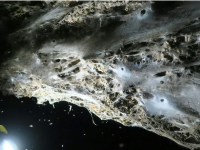
The web was discovered in a cave on the border of Greece and Albania.
The web was discovered in a cave on the border of Greece and Albania.
Athens (AFP) — Scientists have discovered a giant spider web spanning about half the size of a tennis court and with some 111,000 spiders in a cave on the border between Greece and Albania.
The web in the “Sulfur Cave” in the Vromoner Gorge covers some 106 square metres (1,140 square feet), according to the study in the publication Subterranean Biology.
In it are some 69,000 domestic house spiders (Tegenaria domestica), in addition to over 42,000 of Prinerigone vagans dwarf weavers (Linyphiidae), the study said.
The researchers from universities and natural history museums in Albania, Romania, Belgium, Germany and Italy called the discovery “the first documented case of colonial web formation” of two species that are normally solitary.
Based on its spatial distribution and dimensions, species composition and population density, in addition to the food resources, the spider colony is unique and remarkable, they said.
This is “the first documented case of colonial web formation in these species”, the experts said, adding that the structure is formed “of numerous individual funnel-shaped webs”.
The cave, so called because of its abundance of the chemical, completely straddles the border — its entrance is in Greece, while the deepest sections are under Albanian soil.
Springs located in the deep recesses of the cave feed a sulfidic stream which flows through the entire length of the main cave passage, the study said.
The spiders share the cave with numerous other insects, including centipedes, scorpions and beetles.
The discovery was first reported by members of the Czech Speleological Society, the study said.
 torontosun.com
The spiders share the cave with numerous other insects, including centipedes, scorpions and beetles.
Author of the article:AFP
AFP
Published Nov 20, 2025 • 1 minute read
The web was discovered in a cave on the border of Greece and Albania.
The web was discovered in a cave on the border of Greece and Albania.
Athens (AFP) — Scientists have discovered a giant spider web spanning about half the size of a tennis court and with some 111,000 spiders in a cave on the border between Greece and Albania.
The web in the “Sulfur Cave” in the Vromoner Gorge covers some 106 square metres (1,140 square feet), according to the study in the publication Subterranean Biology.
In it are some 69,000 domestic house spiders (Tegenaria domestica), in addition to over 42,000 of Prinerigone vagans dwarf weavers (Linyphiidae), the study said.
The researchers from universities and natural history museums in Albania, Romania, Belgium, Germany and Italy called the discovery “the first documented case of colonial web formation” of two species that are normally solitary.
Based on its spatial distribution and dimensions, species composition and population density, in addition to the food resources, the spider colony is unique and remarkable, they said.
This is “the first documented case of colonial web formation in these species”, the experts said, adding that the structure is formed “of numerous individual funnel-shaped webs”.
The cave, so called because of its abundance of the chemical, completely straddles the border — its entrance is in Greece, while the deepest sections are under Albanian soil.
Springs located in the deep recesses of the cave feed a sulfidic stream which flows through the entire length of the main cave passage, the study said.
The spiders share the cave with numerous other insects, including centipedes, scorpions and beetles.
The discovery was first reported by members of the Czech Speleological Society, the study said.
Giant spider web found in Greek-Albanian border cave: study
The discovery was first reported by members of the Czech Speleological Society, the study said.
JFK's granddaughter Tatiana Schlossberg reveals terminal cancer diagnosis
One of her doctors said she might live for about another year
Author of the article:Associated Press
Associated Press
Published Nov 22, 2025 • 2 minute read
Tatiana Schlossberg, the daughter of Caroline Kennedy and Edwin Schlossberg, addresses an audience during the John F. Kennedy Profile in Courage Award ceremony, at the John F. Kennedy Presidential Library and Museum in Boston, Oct. 29, 2023.
Tatiana Schlossberg, the daughter of Caroline Kennedy and Edwin Schlossberg, addresses an audience during the John F. Kennedy Profile in Courage Award ceremony, at the John F. Kennedy Presidential Library and Museum in Boston, Oct. 29, 2023.
John F. Kennedy’s granddaughter disclosed Saturday that she has terminal cancer, writing in an essay in The New Yorker that one of her doctors said she might live for about another year.
Tatiana Schlossberg, the daughter of Kennedy’s daughter, Caroline Kennedy, and Edwin Schlossberg, wrote that she was diagnosed in May 2024 at 34. After the birth of her second child, her doctor noticed her white blood cell count was high. It turned out to be acute myeloid leukemia with a rare mutation, mostly seen in older people, she wrote.
Her essay was published on the 62nd anniversary of her grandfather’s assassination.
Schlossberg, an environmental journalist, wrote she has undergone rounds of chemotherapy and two stem cell transplants, the first using cells from her sister and the next from an unrelated donor, and participated in clinical trials. During the latest trial, she wrote that her doctor told her “he could keep me alive for a year, maybe.”
Schlossberg said the policies pushed by her cousin Robert F. Kennedy Jr., the U.S. Health and Human Services secretary, could hurt cancer patients like her. Caroline Kennedy urged senators to reject RFK Jr.’s confirmation.
“As I spent more and more of my life under the care of doctors, nurses, and researchers striving to improve the lives of others, I watched as Bobby cut nearly a half billion dollars for research into mRNA vaccines, technology that could be used against certain cancers,” she wrote in the essay.
Schlossberg wrote about her fears that her daughter and son won’t remember her. She feels cheated and sad that she won’t get to keep living “the wonderful life” she had with her husband, George Moran. While her parents and siblings try to hide their pain from her, she said she feels it every day.
“For my whole life, I have tried to be good, to be a good student and a good sister and a good daughter, and to protect my mother and never make her upset or angry,” she wrote. “Now I have added a new tragedy to her life, to our family’s life, and there’s nothing I can do to stop it.”

 torontosun.com
One of her doctors said she might live for about another year
Author of the article:Associated Press
Associated Press
Published Nov 22, 2025 • 2 minute read
Tatiana Schlossberg, the daughter of Caroline Kennedy and Edwin Schlossberg, addresses an audience during the John F. Kennedy Profile in Courage Award ceremony, at the John F. Kennedy Presidential Library and Museum in Boston, Oct. 29, 2023.
Tatiana Schlossberg, the daughter of Caroline Kennedy and Edwin Schlossberg, addresses an audience during the John F. Kennedy Profile in Courage Award ceremony, at the John F. Kennedy Presidential Library and Museum in Boston, Oct. 29, 2023.
John F. Kennedy’s granddaughter disclosed Saturday that she has terminal cancer, writing in an essay in The New Yorker that one of her doctors said she might live for about another year.
Tatiana Schlossberg, the daughter of Kennedy’s daughter, Caroline Kennedy, and Edwin Schlossberg, wrote that she was diagnosed in May 2024 at 34. After the birth of her second child, her doctor noticed her white blood cell count was high. It turned out to be acute myeloid leukemia with a rare mutation, mostly seen in older people, she wrote.
Her essay was published on the 62nd anniversary of her grandfather’s assassination.
Schlossberg, an environmental journalist, wrote she has undergone rounds of chemotherapy and two stem cell transplants, the first using cells from her sister and the next from an unrelated donor, and participated in clinical trials. During the latest trial, she wrote that her doctor told her “he could keep me alive for a year, maybe.”
Schlossberg said the policies pushed by her cousin Robert F. Kennedy Jr., the U.S. Health and Human Services secretary, could hurt cancer patients like her. Caroline Kennedy urged senators to reject RFK Jr.’s confirmation.
“As I spent more and more of my life under the care of doctors, nurses, and researchers striving to improve the lives of others, I watched as Bobby cut nearly a half billion dollars for research into mRNA vaccines, technology that could be used against certain cancers,” she wrote in the essay.
Schlossberg wrote about her fears that her daughter and son won’t remember her. She feels cheated and sad that she won’t get to keep living “the wonderful life” she had with her husband, George Moran. While her parents and siblings try to hide their pain from her, she said she feels it every day.
“For my whole life, I have tried to be good, to be a good student and a good sister and a good daughter, and to protect my mother and never make her upset or angry,” she wrote. “Now I have added a new tragedy to her life, to our family’s life, and there’s nothing I can do to stop it.”
JFK's granddaughter Tatiana Schlossberg reveals terminal cancer diagnosis
John F. Kennedy's granddaughter Tatiana Schlossberg disclosed Saturday that she has terminal cancer.
Polar vortex to put the chill on much of Canada this winter
Weather event is one of the earliest on record, set to bring Arctic air mass south beginning in December
Author of the article:Spiro Papuckoski
Published Nov 25, 2025 • Last updated 13 hours ago • 2 minute read
Many Canadians should prepare to bundle up with extra layers in the coming weeks as a polar vortex plunges us into the cold. Read more.
Pedestrians walk through the falling snow as Calgary was hit with the first serious snowfall of the season, Monday, Nov. 24, 2025.
Many Canadians should prepare to bundle up with extra layers in the coming weeks.
That’s because a polar vortex will send colder Arctic air masses farther south this winter.
According to the Weather Network, an extreme warming event happening in the upper stratosphere has the potential to disturb the polar vortex and send temperatures plunging well below freezing, starting sometime in December.
The weather event is also one of the earliest on record.
What is a polar vortex?
The polar vortex is a large area of low pressure and cold air which hovers thousands of metres over the Earth’s north and south poles.
The counter-clockwise flow of air, which doesn’t exist at ground level, is stronger during the winter months but weakens during the summer.
When the polar vortex is disrupted in the northern hemisphere, it collapses and sends freezing temperatures with the jet stream farther south over a larger area.
This phenomenon, called a sudden stratospheric warming, is not only experienced in North America but in Europe and Asia, as well.
Why is it happening now?
The Weather Network says the polar vortex has been disrupted only three times in November since it was first documented 70 years ago.
During those weather events in Canada, temperatures in December dropped to insanely frigid levels.
Despite that, areas in the Arctic could see higher-than-normal temperatures during these weather patterns as the colder air is displaced and no extra cooling is created.
More snow?
With colder temperatures, comes with a higher chance of snow.
According to Severe Weather Europe, the latest forecast data shows the potential for higher snowfall accumulation, beginning in December.
That’s because a weak or disrupted polar vortex leads to a snowy start to winter.
Long-range forecast?
At the beginning of December, southern Canada is expected to be colder than usual.
But by the end of the month, that cold air mass will continue to flow into the northern, central, and eastern United States, ensuring a white Christmas and New Year’s holidays.
The weather pattern could continue well into January as a high-pressure area over Greenland and the North Pacific will keep temperatures below normal by mid-winter.
Keeping up to date
While there is no cause for concern, people can stay informed by following the latest local forecast and any special weather statements from Environment Canada.
 weather.gc.ca

 theweathernetwork.com
 torontosun.com
Weather event is one of the earliest on record, set to bring Arctic air mass south beginning in December
Author of the article:Spiro Papuckoski
Published Nov 25, 2025 • Last updated 13 hours ago • 2 minute read
Many Canadians should prepare to bundle up with extra layers in the coming weeks as a polar vortex plunges us into the cold. Read more.
Pedestrians walk through the falling snow as Calgary was hit with the first serious snowfall of the season, Monday, Nov. 24, 2025.
Many Canadians should prepare to bundle up with extra layers in the coming weeks.
That’s because a polar vortex will send colder Arctic air masses farther south this winter.
According to the Weather Network, an extreme warming event happening in the upper stratosphere has the potential to disturb the polar vortex and send temperatures plunging well below freezing, starting sometime in December.
The weather event is also one of the earliest on record.
What is a polar vortex?
The polar vortex is a large area of low pressure and cold air which hovers thousands of metres over the Earth’s north and south poles.
The counter-clockwise flow of air, which doesn’t exist at ground level, is stronger during the winter months but weakens during the summer.
When the polar vortex is disrupted in the northern hemisphere, it collapses and sends freezing temperatures with the jet stream farther south over a larger area.
This phenomenon, called a sudden stratospheric warming, is not only experienced in North America but in Europe and Asia, as well.
Why is it happening now?
The Weather Network says the polar vortex has been disrupted only three times in November since it was first documented 70 years ago.
During those weather events in Canada, temperatures in December dropped to insanely frigid levels.
Despite that, areas in the Arctic could see higher-than-normal temperatures during these weather patterns as the colder air is displaced and no extra cooling is created.
More snow?
With colder temperatures, comes with a higher chance of snow.
According to Severe Weather Europe, the latest forecast data shows the potential for higher snowfall accumulation, beginning in December.
That’s because a weak or disrupted polar vortex leads to a snowy start to winter.
Long-range forecast?
At the beginning of December, southern Canada is expected to be colder than usual.
But by the end of the month, that cold air mass will continue to flow into the northern, central, and eastern United States, ensuring a white Christmas and New Year’s holidays.
The weather pattern could continue well into January as a high-pressure area over Greenland and the North Pacific will keep temperatures below normal by mid-winter.
Keeping up to date
While there is no cause for concern, people can stay informed by following the latest local forecast and any special weather statements from Environment Canada.
Weather Information - Environment Canada
Environment Canada's weather web site provides official weather warnings, current conditions, forecasts, and weather models, for public and marine areas in Canada. Canadian weather RADAR, tropical storm tracking, lightning activity, UV index, and AQHI index values also available.
Canada, welcome back the polar vortex! - The Weather Network
An extreme warming event high in the atmosphere is threatening to disrupt the polar vortex. We break down what that could mean for Canadians
theweathernetwork.com
BRRRRR: Polar vortex to put the chill on much of Canada this winter
Many Canadians should prepare to bundle up with extra layers in the coming weeks as a polar vortex plunges us into the cold. Read more.
Deadly deer disease may have spread in B.C.
Six cases of chronic wasting disease have been found in the province, all in the Kootenay region
Author of the articleavid Carrigg
Published Nov 24, 2025 • Last updated 14 hours ago • 1 minute read
Another case of chronic wasting disease may have appeared in B.C.
Another case of chronic wasting disease may have appeared in B.C.
A possible case of chronic wasting disease has been detected in a deer that was killed by a hunter in the Okanagan, the province said Monday.
The B.C. Water, Land and Resource Stewardship Ministry said initial testing by a provincial lab on a sample taken from the male white-tailed deer, that was killed east of Enderby, indicated it could have contracted the infectious and deadly disease.
Conclusive testing must be done by the Canadian Food Inspection Agency, with results expected in early December.
There have been six confirmed cases of the disease in B.C. since 2024, all in the Kootenay region. The disease doesn’t spread to humans, but people shouldn’t eat meat from an infected animal.
“This is the first potential detection in the Okanagan and the first identified outside B.C.’s existing CWD (chronic wasting disease) management zone in the Kootenay region,” the ministry said.
B.C. hunters are encouraged to provide samples for testing from harvested deer, elk and moose as part of the province’s chronic wasting disease mitigation program.
Recent actions to help manage the disease include the removal and testing of urban deer in Cranbrook and Kimberley; mandatory testing for harvested deer, moose and elk in the Kootenay region; carcass transport restrictions; and continuing monitoring with First Nations and local governments, the ministry said.
The provincial wildlife veterinarian has assembled an incident management team made up of provincial and First Nation partners to prepare for potential next steps before the CFIA’s test result.
dcarrigg@postmedia.com
 torontosun.com
Six cases of chronic wasting disease have been found in the province, all in the Kootenay region
Author of the article
avid CarriggPublished Nov 24, 2025 • Last updated 14 hours ago • 1 minute read
Another case of chronic wasting disease may have appeared in B.C.
Another case of chronic wasting disease may have appeared in B.C.
A possible case of chronic wasting disease has been detected in a deer that was killed by a hunter in the Okanagan, the province said Monday.
The B.C. Water, Land and Resource Stewardship Ministry said initial testing by a provincial lab on a sample taken from the male white-tailed deer, that was killed east of Enderby, indicated it could have contracted the infectious and deadly disease.
Conclusive testing must be done by the Canadian Food Inspection Agency, with results expected in early December.
There have been six confirmed cases of the disease in B.C. since 2024, all in the Kootenay region. The disease doesn’t spread to humans, but people shouldn’t eat meat from an infected animal.
“This is the first potential detection in the Okanagan and the first identified outside B.C.’s existing CWD (chronic wasting disease) management zone in the Kootenay region,” the ministry said.
B.C. hunters are encouraged to provide samples for testing from harvested deer, elk and moose as part of the province’s chronic wasting disease mitigation program.
Recent actions to help manage the disease include the removal and testing of urban deer in Cranbrook and Kimberley; mandatory testing for harvested deer, moose and elk in the Kootenay region; carcass transport restrictions; and continuing monitoring with First Nations and local governments, the ministry said.
The provincial wildlife veterinarian has assembled an incident management team made up of provincial and First Nation partners to prepare for potential next steps before the CFIA’s test result.
dcarrigg@postmedia.com
Surveillance and testing for Chronic Wasting Disease
Outline of how to submiting a cervid head for chronic wasting disease testing in British Columbia
gov.bc.ca
Deadly deer disease may have spread in B.C.
Six cases of chronic wasting disease have been found in the province, all in the Kootenay region
Mystery foot belongs to ancient human relative: scientists
New fossils including a jawbone with 12 teeth found at the site show that the foot was that of A. deyiremeda.
Author of the article:AFP
AFP
by Daniel Lawler
Published Nov 26, 2025 • 3 minute read
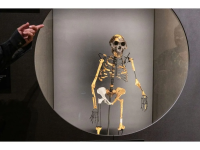
The new research could raise about the status of the famous Australopithecus afarensis skeleton 'Lucy'.
The new research could raise about the status of the famous Australopithecus afarensis skeleton 'Lucy'. Photo by Michal Cizek /AFP/File
PARIS — Newly discovered fossils prove that a mysterious foot found in Ethiopia belongs to a little-known, recently named ancient human relative who lived alongside the species of the famous Lucy, scientists said Wednesday.
The discovery is the latest twist in the tale of human evolution and could even cast some doubt on the status of Lucy’s species, Australopithecus afarensis, as the direct ancestor of Homo sapiens.
Until the foot was discovered in Burtele in northeastern Ethiopia in 2009, Lucy’s species was thought to be the only human relative living in the area more than three million years ago.
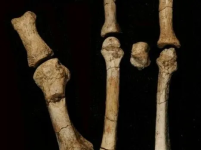
But the appendage clearly does not belong to Lucy’s species because it has an opposable toe — similar to a thumb — allowing its owner to grab onto tree branches like apes.
The team of scientists who found the mystery foot went on to name a new species, Australopithecus deyiremeda, in 2015 based on some roughly 3.4-million-year-old jaw bones found in Burtele.
Announcement met with scepticism
The announcement was met with some scepticism in scientific circles. Due to the scarcity of fossils, attempts to add a new branch to the human family tree usually provoke fierce debate.
The team was also unable to say that the foot bones — dubbed the Burtele foot — belonged to their new species.
Now, in a study published in the journal Nature, the scientists announced that new fossils including a jawbone with 12 teeth found at the site show that the foot was that of A. deyiremeda.
“We have no doubt about the Burtele foot belonging to the same species as these teeth and the jaw,” lead study author, Yohannes Haile-Selassie of Arizona State University, told AFP.
The research also revealed more details about this species, offering further clues about who could have been the true ancestor of us Homo sapiens.
‘Co-existence deep in our ancestry’
A CT scan of the teeth suggested that A. deyiremeda was more primitive than its cousin Lucy, the study said.
Isotope analysis of the teeth meanwhile showed that its diet consisted mainly of leaves, fruit and nuts of trees.
The grasping big toe also suggested this human relative spent more time in the trees. Big toes played an important role in human evolution, allowing our ancestors to leave the trees behind and walk on two legs.
The newly discovered appendage clearly does not belong to Lucy’s species because it has an opposable toe. (Yohannes HAILE-SELASSIE/Institute of Human Origins at Arizona State University/AFP)
The newly discovered appendage clearly does not belong to Lucy’s species because it has an opposable toe. (Yohannes HAILE-SELASSIE/Institute of Human Origins at Arizona State University/AFP) Photo by Yohannes HAILE-SELASSIE /Institute of Human Origins at Arizona State University/AFP
A lingering question about A. deyiremeda was how it could have co-existed with Lucy’s species at the same place and time, Haile-Selassie said.
The new research suggests that the former spent its time in the forest, more likely eating from trees, while the latter spent more time on the ground, a difference that allowed them to live together.
It also demonstrates that “co-existence is deep in our ancestry”, Haile-Selassie emphasised.
Finding our roots
John McNabb, a palaeolithic archaeologist at the U.K.’s University of Southampton not involved in the study, praised the new research.
“There will always be sceptics, but I think these new finds, and their validation of older ones, will help many researchers to be more accepting of A. deyiremeda,” he told AFP.
It also “adds a new player into the mix” in the search for the identity of our true ancestor, McNabb added.
Because A. deyiremeda was more primitive and had a less human-like foot than Lucy, it is unlikely to dethrone her as the prime suspect in this search, both scientists agreed.
But the discovery “opens this possibility that we might still find more species within that time period because it looks like the Australopiths were experimenting with bipedality”, or walking on two legs, Haile-Selassie said.
“Could there be another species which could be a better candidate to be the ancestor of the genus Homo?” he asked.
“We don’t know — it depends on what we find.”
 torontosun.com
New fossils including a jawbone with 12 teeth found at the site show that the foot was that of A. deyiremeda.
Author of the article:AFP
AFP
by Daniel Lawler
Published Nov 26, 2025 • 3 minute read
The new research could raise about the status of the famous Australopithecus afarensis skeleton 'Lucy'.
The new research could raise about the status of the famous Australopithecus afarensis skeleton 'Lucy'. Photo by Michal Cizek /AFP/File
PARIS — Newly discovered fossils prove that a mysterious foot found in Ethiopia belongs to a little-known, recently named ancient human relative who lived alongside the species of the famous Lucy, scientists said Wednesday.
The discovery is the latest twist in the tale of human evolution and could even cast some doubt on the status of Lucy’s species, Australopithecus afarensis, as the direct ancestor of Homo sapiens.
Until the foot was discovered in Burtele in northeastern Ethiopia in 2009, Lucy’s species was thought to be the only human relative living in the area more than three million years ago.
But the appendage clearly does not belong to Lucy’s species because it has an opposable toe — similar to a thumb — allowing its owner to grab onto tree branches like apes.
The team of scientists who found the mystery foot went on to name a new species, Australopithecus deyiremeda, in 2015 based on some roughly 3.4-million-year-old jaw bones found in Burtele.
Announcement met with scepticism
The announcement was met with some scepticism in scientific circles. Due to the scarcity of fossils, attempts to add a new branch to the human family tree usually provoke fierce debate.
The team was also unable to say that the foot bones — dubbed the Burtele foot — belonged to their new species.
Now, in a study published in the journal Nature, the scientists announced that new fossils including a jawbone with 12 teeth found at the site show that the foot was that of A. deyiremeda.
“We have no doubt about the Burtele foot belonging to the same species as these teeth and the jaw,” lead study author, Yohannes Haile-Selassie of Arizona State University, told AFP.
The research also revealed more details about this species, offering further clues about who could have been the true ancestor of us Homo sapiens.
‘Co-existence deep in our ancestry’
A CT scan of the teeth suggested that A. deyiremeda was more primitive than its cousin Lucy, the study said.
Isotope analysis of the teeth meanwhile showed that its diet consisted mainly of leaves, fruit and nuts of trees.
The grasping big toe also suggested this human relative spent more time in the trees. Big toes played an important role in human evolution, allowing our ancestors to leave the trees behind and walk on two legs.
The newly discovered appendage clearly does not belong to Lucy’s species because it has an opposable toe. (Yohannes HAILE-SELASSIE/Institute of Human Origins at Arizona State University/AFP)
The newly discovered appendage clearly does not belong to Lucy’s species because it has an opposable toe. (Yohannes HAILE-SELASSIE/Institute of Human Origins at Arizona State University/AFP) Photo by Yohannes HAILE-SELASSIE /Institute of Human Origins at Arizona State University/AFP
A lingering question about A. deyiremeda was how it could have co-existed with Lucy’s species at the same place and time, Haile-Selassie said.
The new research suggests that the former spent its time in the forest, more likely eating from trees, while the latter spent more time on the ground, a difference that allowed them to live together.
It also demonstrates that “co-existence is deep in our ancestry”, Haile-Selassie emphasised.
Finding our roots
John McNabb, a palaeolithic archaeologist at the U.K.’s University of Southampton not involved in the study, praised the new research.
“There will always be sceptics, but I think these new finds, and their validation of older ones, will help many researchers to be more accepting of A. deyiremeda,” he told AFP.
It also “adds a new player into the mix” in the search for the identity of our true ancestor, McNabb added.
Because A. deyiremeda was more primitive and had a less human-like foot than Lucy, it is unlikely to dethrone her as the prime suspect in this search, both scientists agreed.
But the discovery “opens this possibility that we might still find more species within that time period because it looks like the Australopiths were experimenting with bipedality”, or walking on two legs, Haile-Selassie said.
“Could there be another species which could be a better candidate to be the ancestor of the genus Homo?” he asked.
“We don’t know — it depends on what we find.”
Mystery foot belongs to ancient human relative: scientists
Newly discovered fossils prove that a mysterious foot found in Ethiopia belongs to a recently named ancient human relative. Read more.

Its just aliens. Neanderthals weren't fat, they were just "big boned". Why big boned?Mystery foot belongs to ancient human relative: scientists
New fossils including a jawbone with 12 teeth found at the site show that the foot was that of A. deyiremeda.
Author of the article:AFP
AFP
by Daniel Lawler
Published Nov 26, 2025 • 3 minute read
The new research could raise about the status of the famous Australopithecus afarensis skeleton 'Lucy'.
The new research could raise about the status of the famous Australopithecus afarensis skeleton 'Lucy'. Photo by Michal Cizek /AFP/File
PARIS — Newly discovered fossils prove that a mysterious foot found in Ethiopia belongs to a little-known, recently named ancient human relative who lived alongside the species of the famous Lucy, scientists said Wednesday.
The discovery is the latest twist in the tale of human evolution and could even cast some doubt on the status of Lucy’s species, Australopithecus afarensis, as the direct ancestor of Homo sapiens.
Until the foot was discovered in Burtele in northeastern Ethiopia in 2009, Lucy’s species was thought to be the only human relative living in the area more than three million years ago.
But the appendage clearly does not belong to Lucy’s species because it has an opposable toe — similar to a thumb — allowing its owner to grab onto tree branches like apes.
The team of scientists who found the mystery foot went on to name a new species, Australopithecus deyiremeda, in 2015 based on some roughly 3.4-million-year-old jaw bones found in Burtele.
Announcement met with scepticism
The announcement was met with some scepticism in scientific circles. Due to the scarcity of fossils, attempts to add a new branch to the human family tree usually provoke fierce debate.
The team was also unable to say that the foot bones — dubbed the Burtele foot — belonged to their new species.
Now, in a study published in the journal Nature, the scientists announced that new fossils including a jawbone with 12 teeth found at the site show that the foot was that of A. deyiremeda.
“We have no doubt about the Burtele foot belonging to the same species as these teeth and the jaw,” lead study author, Yohannes Haile-Selassie of Arizona State University, told AFP.
The research also revealed more details about this species, offering further clues about who could have been the true ancestor of us Homo sapiens.
‘Co-existence deep in our ancestry’
A CT scan of the teeth suggested that A. deyiremeda was more primitive than its cousin Lucy, the study said.
Isotope analysis of the teeth meanwhile showed that its diet consisted mainly of leaves, fruit and nuts of trees.
The grasping big toe also suggested this human relative spent more time in the trees. Big toes played an important role in human evolution, allowing our ancestors to leave the trees behind and walk on two legs.
The newly discovered appendage clearly does not belong to Lucy’s species because it has an opposable toe. (Yohannes HAILE-SELASSIE/Institute of Human Origins at Arizona State University/AFP)
The newly discovered appendage clearly does not belong to Lucy’s species because it has an opposable toe. (Yohannes HAILE-SELASSIE/Institute of Human Origins at Arizona State University/AFP) Photo by Yohannes HAILE-SELASSIE /Institute of Human Origins at Arizona State University/AFP
A lingering question about A. deyiremeda was how it could have co-existed with Lucy’s species at the same place and time, Haile-Selassie said.
The new research suggests that the former spent its time in the forest, more likely eating from trees, while the latter spent more time on the ground, a difference that allowed them to live together.
It also demonstrates that “co-existence is deep in our ancestry”, Haile-Selassie emphasised.
Finding our roots
John McNabb, a palaeolithic archaeologist at the U.K.’s University of Southampton not involved in the study, praised the new research.
“There will always be sceptics, but I think these new finds, and their validation of older ones, will help many researchers to be more accepting of A. deyiremeda,” he told AFP.
It also “adds a new player into the mix” in the search for the identity of our true ancestor, McNabb added.
Because A. deyiremeda was more primitive and had a less human-like foot than Lucy, it is unlikely to dethrone her as the prime suspect in this search, both scientists agreed.
But the discovery “opens this possibility that we might still find more species within that time period because it looks like the Australopiths were experimenting with bipedality”, or walking on two legs, Haile-Selassie said.
“Could there be another species which could be a better candidate to be the ancestor of the genus Homo?” he asked.
“We don’t know — it depends on what we find.”
View attachment 32172View attachment 32173
Mystery foot belongs to ancient human relative: scientists
Newly discovered fossils prove that a mysterious foot found in Ethiopia belongs to a recently named ancient human relative. Read more.
From a planet with more gravity than Earth.
Obstructive sleep apnea linked to Parkinson’s disease: Study
Those with sleep apnea were nearly twice as likely to have developed Parkinson's six years after those diagnoses
Author of the article:Washington Post
Washington Post
Kelly Kasulis Cho
Published Nov 27, 2025 • Last updated 15 hours ago • 3 minute read
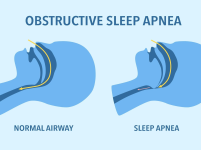
Obstructive sleep apnea
Obstructive sleep apnea
Researchers have found a potential link between obstructive sleep apnea and the development of Parkinson’s disease, according to a new study.
Obstructive sleep apnea – a disorder in which a person experiences a fully or partially collapsed airway during sleep, causing a lack of oxygen and non-restorative rest – affects millions of people and often goes undiagnosed, according to the American Medical Association. Parkinson’s disease, an incurable progressive movement disorder, is the second-most common neurodegenerative disorder in the United States and is thought to affect about 1.1 million people.
In the study, published in the journal JAMA Neurology on Monday, researchers combed through the health records of more than 11 million U.S. veterans from 1999 to 2022. Nearly 14 per cent of them had sleep apnea, and those with sleep apnea were nearly twice as likely to have developed Parkinson’s six years after those diagnoses than those who did not have the sleep disorder.
Among those who treated their sleep apnea with continuous positive airway pressure therapy – also known as CPAP – early in their diagnoses, Parkinson’s case numbers were “significantly reduced,” the study stated.
Gregory Scott, one of the study’s co-authors and an assistant professor of pathology in Oregon Health and Science University’s School of Medicine, said in a release that obstructive sleep apnea is “not at all a guarantee” that someone will develop Parkinson’s, “but it significantly increases the chances.”
Symptoms of sleep apnea include snoring, gasping for air, fatigue even after a perceived full night of sleep, and frequent waking during the night. Parkinson’s disease is associated with a long list of potential symptoms, including tremors, difficulty moving or walking, problems with balance, drooling, sleep disorders, and issues speaking or swallowing.
Danny Eckert, an expert in obstructive sleep apnea and a professor at Flinders University’s College of Medicine and Public Health in Australia, called it an “interesting and novel finding” that adds to a growing body of research suggesting that repeated sleep disruption – no matter the cause – “has a range of adverse outcomes.”
Another sleep condition, rapid eye movement sleep behavior disorder, was also linked to Parkinson’s disease, he said.
“One of the cautionary notes is that it was not a randomized trial,” Eckert added, “so the people who seem to be doing better that were on CPAP therapy may just be the ones that are more likely to adapt a healthy lifestyle.”
Though the study does not prove obstructive sleep apnea causes Parkinson’s disease, experts believe it may offer a clue to where researchers could dig further.
Kin Yuen, a sleep medicine physician and assistant clinical professor at the University of California at San Francisco, said the findings are not surprising given that poor sleep tends to be associated with worse neurological outcomes. It also remains unclear how strong the links between obstructive sleep apnea and Parkinson’s truly are.
However, one theory is that the “repeated lack of oxygen” caused by obstructive sleep apnea may “impair the brain’s ‘repair’ during sleep,” she said in an email.
“Clinically, patients with Parkinson’s syndrome or disease are often seen in sleep clinics because of comorbid obstructive sleep apnea,” Yuen added.
Lee Neilson, the study’s lead author and an assistant professor of neurology at Oregon Health and Science University, offered a similar theory.
“If you stop breathing and oxygen is not at a normal level, your neurons are probably not functioning at a normal level either,” he said. “Add that up night after night, year after year, and it may explain why fixing the problem by using CPAP may build in some resilience against neurodegenerative conditions, including Parkinson’s.”
 torontosun.com
Those with sleep apnea were nearly twice as likely to have developed Parkinson's six years after those diagnoses
Author of the article:Washington Post
Washington Post
Kelly Kasulis Cho
Published Nov 27, 2025 • Last updated 15 hours ago • 3 minute read
Obstructive sleep apnea
Obstructive sleep apnea
Researchers have found a potential link between obstructive sleep apnea and the development of Parkinson’s disease, according to a new study.
Obstructive sleep apnea – a disorder in which a person experiences a fully or partially collapsed airway during sleep, causing a lack of oxygen and non-restorative rest – affects millions of people and often goes undiagnosed, according to the American Medical Association. Parkinson’s disease, an incurable progressive movement disorder, is the second-most common neurodegenerative disorder in the United States and is thought to affect about 1.1 million people.
In the study, published in the journal JAMA Neurology on Monday, researchers combed through the health records of more than 11 million U.S. veterans from 1999 to 2022. Nearly 14 per cent of them had sleep apnea, and those with sleep apnea were nearly twice as likely to have developed Parkinson’s six years after those diagnoses than those who did not have the sleep disorder.
Among those who treated their sleep apnea with continuous positive airway pressure therapy – also known as CPAP – early in their diagnoses, Parkinson’s case numbers were “significantly reduced,” the study stated.
Gregory Scott, one of the study’s co-authors and an assistant professor of pathology in Oregon Health and Science University’s School of Medicine, said in a release that obstructive sleep apnea is “not at all a guarantee” that someone will develop Parkinson’s, “but it significantly increases the chances.”
Symptoms of sleep apnea include snoring, gasping for air, fatigue even after a perceived full night of sleep, and frequent waking during the night. Parkinson’s disease is associated with a long list of potential symptoms, including tremors, difficulty moving or walking, problems with balance, drooling, sleep disorders, and issues speaking or swallowing.
Danny Eckert, an expert in obstructive sleep apnea and a professor at Flinders University’s College of Medicine and Public Health in Australia, called it an “interesting and novel finding” that adds to a growing body of research suggesting that repeated sleep disruption – no matter the cause – “has a range of adverse outcomes.”
Another sleep condition, rapid eye movement sleep behavior disorder, was also linked to Parkinson’s disease, he said.
“One of the cautionary notes is that it was not a randomized trial,” Eckert added, “so the people who seem to be doing better that were on CPAP therapy may just be the ones that are more likely to adapt a healthy lifestyle.”
Though the study does not prove obstructive sleep apnea causes Parkinson’s disease, experts believe it may offer a clue to where researchers could dig further.
Kin Yuen, a sleep medicine physician and assistant clinical professor at the University of California at San Francisco, said the findings are not surprising given that poor sleep tends to be associated with worse neurological outcomes. It also remains unclear how strong the links between obstructive sleep apnea and Parkinson’s truly are.
However, one theory is that the “repeated lack of oxygen” caused by obstructive sleep apnea may “impair the brain’s ‘repair’ during sleep,” she said in an email.
“Clinically, patients with Parkinson’s syndrome or disease are often seen in sleep clinics because of comorbid obstructive sleep apnea,” Yuen added.
Lee Neilson, the study’s lead author and an assistant professor of neurology at Oregon Health and Science University, offered a similar theory.
“If you stop breathing and oxygen is not at a normal level, your neurons are probably not functioning at a normal level either,” he said. “Add that up night after night, year after year, and it may explain why fixing the problem by using CPAP may build in some resilience against neurodegenerative conditions, including Parkinson’s.”
Obstructive sleep apnea linked to Parkinson’s disease: Study
Researchers have found a potential link between obstructive sleep apnea and the development of Parkinson's disease, according to a new study
How volcanoes upend the story of what sparked the Black Death
But a new study suggests that a perfect storm of volcanic eruptions, crop failure, famine and medieval globalization converged to unleash the Black Death across Europe.
Author of the article:Washington Post
Washington Post
Carolyn Y. Johnson
Published Dec 05, 2025 • 4 minute read
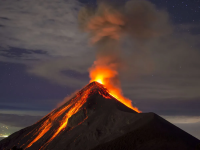
Volcano eruption captured at night, from the Volcano Fuego near Antigua, Guatemala
Picture shot around 10:00 PM, on the rim of the Acatenango Volcano which is right next to the volcano Fuego.
For centuries, the prevailing explanation of how the Black Death entered medieval Europe was a simple narrative of biological warfare. During a siege of Caffa, a Genoa-controlled port city on the Crimean Peninsula, a Mongol army catapulted plague-infested bodies over the city walls, according to a historical account. It was a simple narrative, with a clear villain.
But a new study published Thursday adds to a body of evidence that upends that grisly origin story, suggesting that a perfect storm of volcanic eruptions, crop failure, famine and medieval globalization converged in the mid-1300s to unleash the Black Death across Europe.
The paper in the journal Communications Earth & Environment is the latest in a wave of recent scientific and historical evidence that is rewriting our understanding of the bubonic plague pandemic that tore across medieval Europe, killing more than half of the people it infected, more than half a millennium ago.
The plague is transmitted by insects that feed on blood, such as fleas, and usually cycles through rodent populations – but has jumped into humans, sparking three deadly pandemics that killed millions.
Martin Bauch, a medieval historian at the Leibniz Institute for the History and Culture of Eastern Europe and Ulf Büntgen, an environmental systems scientist who studies tree rings to understand the past climate at the University of Cambridge, teamed up to reexamine data from ice cores, unusual tree rings and historical records to reconstruct a different narrative rooted in a chain of interconnected environmental and societal events.
In broad strokes, they found a volcanic eruption, or a series of them around the year 1345 spewed sulphur into the atmosphere. This triggered a climate downturn, with cool summers and rainy growing seasons afflicting large parts of the Mediterranean and Western Europe. Crop failures followed, along with a famine across large swaths of medieval Europe. The Italian maritime republics of Genoa and Venice had been in a war with the Mongols of the Golden Horde, but agreed to lift the embargo to import grain to feed starving people.
Around the autumn of 1347, grain imports began to resume. On the ships that brought much-needed food were stowaways: the plague pathogen.
“As I was reading it, this is the next puzzle piece,” said Hannah Barker, an associate professor of history at Arizona State University who uncovered the plague-grain trade connection and was not involved in the study. “We had good information on the historical side, on the grain trade. The next question is: why 1347, why not 1353, why not 1342 – what was it that was special about that year? It is several causes coming together.”
Blue tree rings, famine and fleas
The study of the Black Death had already been revolutionized by the study of ancient DNA. The bacterium that causes plague, Yersinia pestis, has been recovered from ancient remains and studied. The ancestor to the pathogen that causes the Black Death can be traced to the Bronze Age in central Eurasia and the foothills of the Tien Shan mountains in what is today Kyrgyzstan. Scholars also agreed the pathogen came to Europe from the Black Sea. But how?
Bauch had long been intrigued by the period from 1345 to 1347 because those years stood out, meteorologically. There were historical reports of extreme precipitation and severe flooding in Italy that ravaged the harvest and washed away fields.
Bauch studies historical chronicles, letters, treaties. But he connected with Büntgen who was also interested in those years, with a focus on the ancient climate record.
Ice cores record the effects of volcanic eruptions: when sulphur is ejected into the atmosphere and is then deposited as sulphate aerosols. They became interested in one such eruption, or series of eruptions, that occurred around the year 1345. Historical accounts from this time also reported unusually foggy and hazy skies and unexpected lunar eclipses, which may have occurred when the moon is veiled by volcanic ash and gas.
Studies of the growth rings in trees from the Spanish Pyrenees Mountains showed an odd aberration in those years – blue rings. These occur when the growth conditions are not favourable. What was extremely rare was to see consecutive blue growth rings between 1345 and 1347. That suggested a climate downturn in southern Europe. A famine spread across much of Spain, France, north and central Italy, Egypt and the eastern Mediterranean.
Then, medieval geopolitics entered the story: war and famine.
“You have explicit orders to Venetian officials: Buy grain at any cost and send all the ships to go get it, and fill them with grain. We need them very urgently,” Bauch said.
But it turns out, as Bauch’s study suggested, that the plague was a stowaway.
Science, history, archaeology collide
The plague field now encompasses people with different expertise, from those who study the Yersinia pestis pathogen itself, historians who pore over records, archaeologists who uncover new remains and others.
Maria Spyrou, who specializes in studying pathogen genomics and infectious-disease history at the University of Tübingen, said in an email that the new study is an interesting reconstruction of the detailed historical events that could have sparked the Black Death in Europe. She noted that it is in line with her own studies, which traced the evolution of the plague pathogen that caused the Black Death to Eurasia.
That leaves one of the hottest questions in the history of the plague wide open.
“What is still unclear, however, is the mechanisms by which Yersinia pestis spread from central Asia to the Black Sea prior to 1345,” Spyrou said.
The gradually unravelling history of the Black Death may also contain a warning for the future. It illustrates how climate change, coupled with globalization, could seed other pandemics.
“It’s the scientific information that kind of broke the dam,” Barker said. “The DNA first, and now the climate research, is causing historians to ask new questions. And once we start asking new questions, we find new information, we look in places that nobody was looking before. Things are changing really fast.”
 torontosun.com
But a new study suggests that a perfect storm of volcanic eruptions, crop failure, famine and medieval globalization converged to unleash the Black Death across Europe.
Author of the article:Washington Post
Washington Post
Carolyn Y. Johnson
Published Dec 05, 2025 • 4 minute read
Volcano eruption captured at night, from the Volcano Fuego near Antigua, Guatemala
Picture shot around 10:00 PM, on the rim of the Acatenango Volcano which is right next to the volcano Fuego.
For centuries, the prevailing explanation of how the Black Death entered medieval Europe was a simple narrative of biological warfare. During a siege of Caffa, a Genoa-controlled port city on the Crimean Peninsula, a Mongol army catapulted plague-infested bodies over the city walls, according to a historical account. It was a simple narrative, with a clear villain.
But a new study published Thursday adds to a body of evidence that upends that grisly origin story, suggesting that a perfect storm of volcanic eruptions, crop failure, famine and medieval globalization converged in the mid-1300s to unleash the Black Death across Europe.
The paper in the journal Communications Earth & Environment is the latest in a wave of recent scientific and historical evidence that is rewriting our understanding of the bubonic plague pandemic that tore across medieval Europe, killing more than half of the people it infected, more than half a millennium ago.
The plague is transmitted by insects that feed on blood, such as fleas, and usually cycles through rodent populations – but has jumped into humans, sparking three deadly pandemics that killed millions.
Martin Bauch, a medieval historian at the Leibniz Institute for the History and Culture of Eastern Europe and Ulf Büntgen, an environmental systems scientist who studies tree rings to understand the past climate at the University of Cambridge, teamed up to reexamine data from ice cores, unusual tree rings and historical records to reconstruct a different narrative rooted in a chain of interconnected environmental and societal events.
In broad strokes, they found a volcanic eruption, or a series of them around the year 1345 spewed sulphur into the atmosphere. This triggered a climate downturn, with cool summers and rainy growing seasons afflicting large parts of the Mediterranean and Western Europe. Crop failures followed, along with a famine across large swaths of medieval Europe. The Italian maritime republics of Genoa and Venice had been in a war with the Mongols of the Golden Horde, but agreed to lift the embargo to import grain to feed starving people.
Around the autumn of 1347, grain imports began to resume. On the ships that brought much-needed food were stowaways: the plague pathogen.
“As I was reading it, this is the next puzzle piece,” said Hannah Barker, an associate professor of history at Arizona State University who uncovered the plague-grain trade connection and was not involved in the study. “We had good information on the historical side, on the grain trade. The next question is: why 1347, why not 1353, why not 1342 – what was it that was special about that year? It is several causes coming together.”
Blue tree rings, famine and fleas
The study of the Black Death had already been revolutionized by the study of ancient DNA. The bacterium that causes plague, Yersinia pestis, has been recovered from ancient remains and studied. The ancestor to the pathogen that causes the Black Death can be traced to the Bronze Age in central Eurasia and the foothills of the Tien Shan mountains in what is today Kyrgyzstan. Scholars also agreed the pathogen came to Europe from the Black Sea. But how?
Bauch had long been intrigued by the period from 1345 to 1347 because those years stood out, meteorologically. There were historical reports of extreme precipitation and severe flooding in Italy that ravaged the harvest and washed away fields.
Bauch studies historical chronicles, letters, treaties. But he connected with Büntgen who was also interested in those years, with a focus on the ancient climate record.
Ice cores record the effects of volcanic eruptions: when sulphur is ejected into the atmosphere and is then deposited as sulphate aerosols. They became interested in one such eruption, or series of eruptions, that occurred around the year 1345. Historical accounts from this time also reported unusually foggy and hazy skies and unexpected lunar eclipses, which may have occurred when the moon is veiled by volcanic ash and gas.
Studies of the growth rings in trees from the Spanish Pyrenees Mountains showed an odd aberration in those years – blue rings. These occur when the growth conditions are not favourable. What was extremely rare was to see consecutive blue growth rings between 1345 and 1347. That suggested a climate downturn in southern Europe. A famine spread across much of Spain, France, north and central Italy, Egypt and the eastern Mediterranean.
Then, medieval geopolitics entered the story: war and famine.
“You have explicit orders to Venetian officials: Buy grain at any cost and send all the ships to go get it, and fill them with grain. We need them very urgently,” Bauch said.
But it turns out, as Bauch’s study suggested, that the plague was a stowaway.
Science, history, archaeology collide
The plague field now encompasses people with different expertise, from those who study the Yersinia pestis pathogen itself, historians who pore over records, archaeologists who uncover new remains and others.
Maria Spyrou, who specializes in studying pathogen genomics and infectious-disease history at the University of Tübingen, said in an email that the new study is an interesting reconstruction of the detailed historical events that could have sparked the Black Death in Europe. She noted that it is in line with her own studies, which traced the evolution of the plague pathogen that caused the Black Death to Eurasia.
That leaves one of the hottest questions in the history of the plague wide open.
“What is still unclear, however, is the mechanisms by which Yersinia pestis spread from central Asia to the Black Sea prior to 1345,” Spyrou said.
The gradually unravelling history of the Black Death may also contain a warning for the future. It illustrates how climate change, coupled with globalization, could seed other pandemics.
“It’s the scientific information that kind of broke the dam,” Barker said. “The DNA first, and now the climate research, is causing historians to ask new questions. And once we start asking new questions, we find new information, we look in places that nobody was looking before. Things are changing really fast.”
How volcanoes upend the story of what sparked the Black Death
For centuries, the prevailing explanation of how the Black Death entered medieval Europe was a simple narrative of biological warfare.

These regions in Canada have the best chance of seeing the Geminids meteor shower this weekend
One of the most spectacular celestial shows of the year is set to peak this weekend, and lunar conditions are expected to provide convenient viewing windows on Friday and Saturday evening for people across Canada – as long as clouds don’t get in the way.
saw a good one last night
Photog finds thousands of dinosaur footprints near Italian Winter Olympic venue
Author of the article:Associated Press
Associated Press
Colleen Barry
Published Dec 16, 2025 • 2 minute read
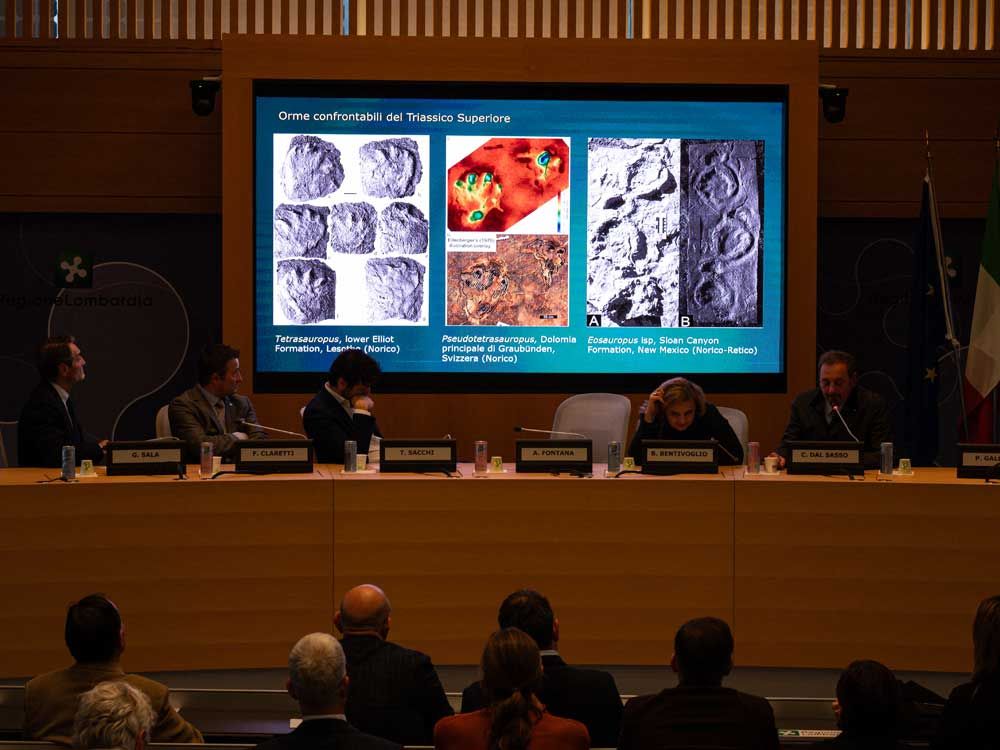
Paleontologist at the Natural History Museum of Milan Cristiano Dal Sasso (right) comments photos on a screen during a press conference to present the discovery of thousands of dinosaur tracks discovered in Italy's Stelvio National Park near the areas that will host the Milano-Cortina 2026 Olympic Games, in Milan on Dec. 16, 2025. The tracks are estimated to belong to Late Triassic prosauropod dinosaurs, dating back 210 million years.
Paleontologist at the Natural History Museum of Milan Cristiano Dal Sasso (right) comments photos on a screen during a press conference to present the discovery of thousands of dinosaur tracks discovered in Italy's Stelvio National Park near the areas that will host the Milano-Cortina 2026 Olympic Games, in Milan on Dec. 16, 2025. The tracks are estimated to belong to Late Triassic prosauropod dinosaurs, dating back 210 million years. Photo by Piero CRUCIATTI /AFP via Getty Images
MILAN — A wildlife photographer stumbled upon one of the oldest and largest known collections of dinosaur footprints, dating back about 210 million years to the Triassic Period, high in an Italian national park near the 2026 Milan Cortina Winter Olympic venue of Bormio, officials announced Tuesday.
The discovery in the Stelvio National Park was striking for the sheer number of footprints, estimated at as many as 20,000 over some five kilometres, and the location near the Swiss border, once a prehistoric coastal area, that has never previously yielded dinosaur tracks, experts said.
“This time reality really surpasses fantasy,” said Cristiano Dal Sasso, a paleontologist at Milan’s Natural History Museum, who received the first call from wildlife photographer Elio Della Ferrera after making the discovery.
The dinosaur prints are believed to have been made by long-necked bipedal herbivores that were up to 10 metres (33 feet) long, weighing up to four tons, similar to a Plateosaurus, Dal Sasso said. Some of the tracks were 40 centimetres wide, with visible claws.
The footprints indicated that the dinosaurs travelled in packs and they sometimes stopped in circular formations, possibly as a protective measure.
“There are very obvious traces of individuals that have walked at a slow, calm, quiet rhythmic pace, without running,” Dal Sasso told a press conference.
The tracks were discovered by Della Ferrera, who set out to photograph deer and vultures in September when his camera was trained on a vertical wall about 600 metres (nearly 2,000 feet) above the nearest road.
The location, some 2,400 to 2,800 metres (7,900-9,200 feet) above sea level on a north-facing wall that is mostly in the shade, made the footprints, though in plain sight, particularly hard to spot without a very strong lens, Dal Sasso said.
Della Ferra said something strange caught his eye, and he scaled a vertical rock wall with some difficulty to get a closer look.
“The huge surprise was not so much in discovering the footprints, but in discovering such a huge quantity,” Della Ferrara said. “There are really tens of thousands of prints up there, more or less well-preserved.”
The entrance of the park, where the prints were discovered, is located just two kilometres from the mountain town of Bormio, where Men’s Alpine skiing will be held during the Feb. 6-22 Games.
Lombardy regional governor, Attilio Fontana, hailed the discovery as a “gift for the Olympics,” even if the site is too remote to access in the winter, and plans for eventual public access have not been made.
 torontosun.com
Author of the article:Associated Press
Associated Press
Colleen Barry
Published Dec 16, 2025 • 2 minute read
Paleontologist at the Natural History Museum of Milan Cristiano Dal Sasso (right) comments photos on a screen during a press conference to present the discovery of thousands of dinosaur tracks discovered in Italy's Stelvio National Park near the areas that will host the Milano-Cortina 2026 Olympic Games, in Milan on Dec. 16, 2025. The tracks are estimated to belong to Late Triassic prosauropod dinosaurs, dating back 210 million years.
Paleontologist at the Natural History Museum of Milan Cristiano Dal Sasso (right) comments photos on a screen during a press conference to present the discovery of thousands of dinosaur tracks discovered in Italy's Stelvio National Park near the areas that will host the Milano-Cortina 2026 Olympic Games, in Milan on Dec. 16, 2025. The tracks are estimated to belong to Late Triassic prosauropod dinosaurs, dating back 210 million years. Photo by Piero CRUCIATTI /AFP via Getty Images
MILAN — A wildlife photographer stumbled upon one of the oldest and largest known collections of dinosaur footprints, dating back about 210 million years to the Triassic Period, high in an Italian national park near the 2026 Milan Cortina Winter Olympic venue of Bormio, officials announced Tuesday.
The discovery in the Stelvio National Park was striking for the sheer number of footprints, estimated at as many as 20,000 over some five kilometres, and the location near the Swiss border, once a prehistoric coastal area, that has never previously yielded dinosaur tracks, experts said.
“This time reality really surpasses fantasy,” said Cristiano Dal Sasso, a paleontologist at Milan’s Natural History Museum, who received the first call from wildlife photographer Elio Della Ferrera after making the discovery.
The dinosaur prints are believed to have been made by long-necked bipedal herbivores that were up to 10 metres (33 feet) long, weighing up to four tons, similar to a Plateosaurus, Dal Sasso said. Some of the tracks were 40 centimetres wide, with visible claws.
The footprints indicated that the dinosaurs travelled in packs and they sometimes stopped in circular formations, possibly as a protective measure.
“There are very obvious traces of individuals that have walked at a slow, calm, quiet rhythmic pace, without running,” Dal Sasso told a press conference.
The tracks were discovered by Della Ferrera, who set out to photograph deer and vultures in September when his camera was trained on a vertical wall about 600 metres (nearly 2,000 feet) above the nearest road.
The location, some 2,400 to 2,800 metres (7,900-9,200 feet) above sea level on a north-facing wall that is mostly in the shade, made the footprints, though in plain sight, particularly hard to spot without a very strong lens, Dal Sasso said.
Della Ferra said something strange caught his eye, and he scaled a vertical rock wall with some difficulty to get a closer look.
“The huge surprise was not so much in discovering the footprints, but in discovering such a huge quantity,” Della Ferrara said. “There are really tens of thousands of prints up there, more or less well-preserved.”
The entrance of the park, where the prints were discovered, is located just two kilometres from the mountain town of Bormio, where Men’s Alpine skiing will be held during the Feb. 6-22 Games.
Lombardy regional governor, Attilio Fontana, hailed the discovery as a “gift for the Olympics,” even if the site is too remote to access in the winter, and plans for eventual public access have not been made.
Photog finds thousands of dinosaur footprints near Italian Winter Olympic venue
A wildlife photographer stumbled upon one of the oldest and largest known collections of dinosaur footprints.
Hmm. . . I can only conclude. . . dinosaurs have been here!
Not sure they were all that interested in the Olympics.
Not sure they were all that interested in the Olympics.
The winter solstice is descending on the Northern Hemisphere. Here’s what to know
Author of the article:Associated Press
Associated Press
Published Dec 18, 2025 • 2 minute read
People celebrate the Winter Solstice sunrise celebrations at Stonehenge, England, Saturday, Dec. 21, 2024.
People celebrate the Winter Solstice sunrise celebrations at Stonehenge, England, Saturday, Dec. 21, 2024.
Yes the darkest day of the year is here, but that means brighter days are ahead.
Sunday is the shortest day of the year north of the equator, where the solstice marks the start of astronomical winter. It’s the opposite in the Southern Hemisphere, where it is the longest day of the year and summer will start.
The word “solstice” comes from the Latin words “sol” for sun and “stitium” which can mean “pause” or “stop.” The solstice is an end of the sun’s annual march higher or lower in the sky. The winter solstice is when the sun makes its shortest, lowest arc. The good news for sun lovers: It then starts climbing again and days will get a little longer every day until late June.
People have marked solstices for eons with celebrations and monuments such as Stonehenge, which was designed to align with the sun’s paths at the solstices. But what is happening in the heavens? Here’s what to know about the Earth’s orbit.
What is the solstice?
As the Earth travels around the sun, it does so at an angle, making the sun’s warmth and light fall unequally on the northern and southern halves of the planet for most of the year.
The solstices mark the times when the Earth’s tilt toward or away from the sun is at its maximum. This means the hemispheres are getting very different amounts of sunlight — and days and nights are at their most unequal.
At the Northern Hemisphere’s winter solstice the upper half of the Earth is at its furthest lean away from the sun — leading to the shortest day and longest night of the year. The winter solstice falls can fall between Dec. 20 and 23 — this year it’s the 21st.
The opposite happens at a Northern Hemisphere summer solstice: The upper half of the Earth is leaning toward the sun, creating the longest day and shortest night of the year. This solstice falls between June 20 and 22.
What is the equinox?
During the equinox, the Earth’s axis and its orbit align so that both hemispheres get an equal amount of sunlight.
The word equinox comes from two Latin words meaning equal and night. That’s because on the equinox, day and night last almost the same amount of time — though one may get a few extra minutes, depending on where you are on the planet.oo
The Northern Hemisphere’s fall — or autumnal — equinox can land between Sept. 21 and 24, depending on the year. Its spring — or vernal — equinox can land between March 19 and 21.
What’s the difference between meteorological and astronomical seasons?
These are just two different ways to carve up the year.
While astronomical seasons depend on how the Earth moves around the sun, meteorological seasons are defined by the weather. Meteorologists break down the year into three-month seasons based on annual temperature cycles. By that calendar, spring starts on March 1, summer on June 1, fall on Sept. 1 and winter on Dec. 1.
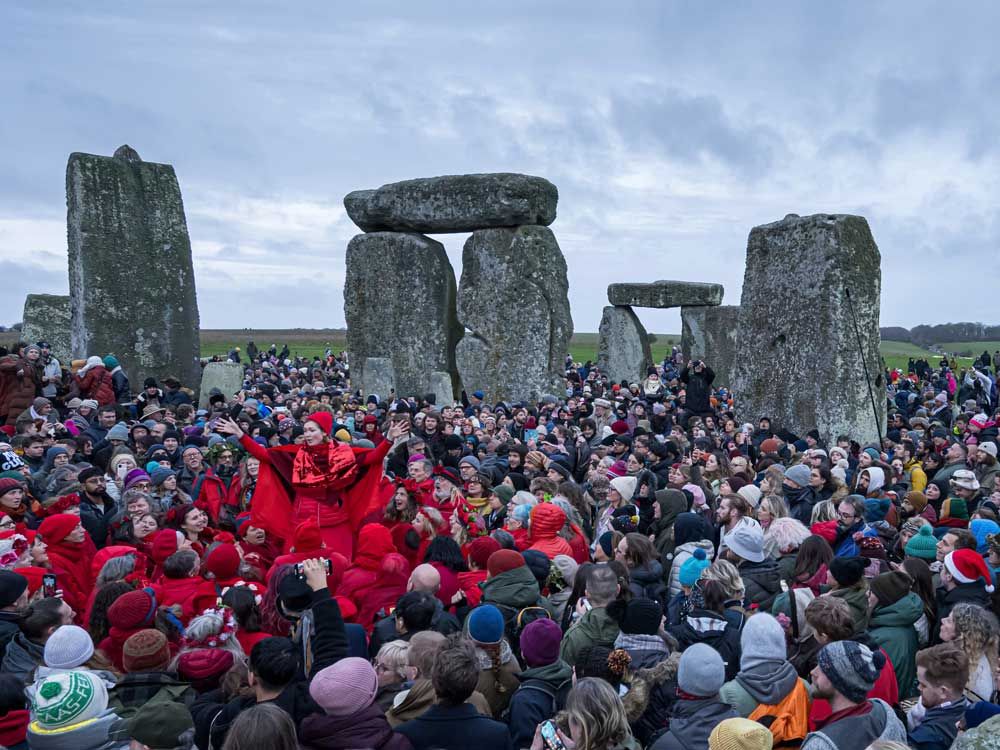
 torontosun.com
Author of the article:Associated Press
Associated Press
Published Dec 18, 2025 • 2 minute read
People celebrate the Winter Solstice sunrise celebrations at Stonehenge, England, Saturday, Dec. 21, 2024.
People celebrate the Winter Solstice sunrise celebrations at Stonehenge, England, Saturday, Dec. 21, 2024.
Yes the darkest day of the year is here, but that means brighter days are ahead.
Sunday is the shortest day of the year north of the equator, where the solstice marks the start of astronomical winter. It’s the opposite in the Southern Hemisphere, where it is the longest day of the year and summer will start.
The word “solstice” comes from the Latin words “sol” for sun and “stitium” which can mean “pause” or “stop.” The solstice is an end of the sun’s annual march higher or lower in the sky. The winter solstice is when the sun makes its shortest, lowest arc. The good news for sun lovers: It then starts climbing again and days will get a little longer every day until late June.
People have marked solstices for eons with celebrations and monuments such as Stonehenge, which was designed to align with the sun’s paths at the solstices. But what is happening in the heavens? Here’s what to know about the Earth’s orbit.
What is the solstice?
As the Earth travels around the sun, it does so at an angle, making the sun’s warmth and light fall unequally on the northern and southern halves of the planet for most of the year.
The solstices mark the times when the Earth’s tilt toward or away from the sun is at its maximum. This means the hemispheres are getting very different amounts of sunlight — and days and nights are at their most unequal.
At the Northern Hemisphere’s winter solstice the upper half of the Earth is at its furthest lean away from the sun — leading to the shortest day and longest night of the year. The winter solstice falls can fall between Dec. 20 and 23 — this year it’s the 21st.
The opposite happens at a Northern Hemisphere summer solstice: The upper half of the Earth is leaning toward the sun, creating the longest day and shortest night of the year. This solstice falls between June 20 and 22.
What is the equinox?
During the equinox, the Earth’s axis and its orbit align so that both hemispheres get an equal amount of sunlight.
The word equinox comes from two Latin words meaning equal and night. That’s because on the equinox, day and night last almost the same amount of time — though one may get a few extra minutes, depending on where you are on the planet.oo
The Northern Hemisphere’s fall — or autumnal — equinox can land between Sept. 21 and 24, depending on the year. Its spring — or vernal — equinox can land between March 19 and 21.
What’s the difference between meteorological and astronomical seasons?
These are just two different ways to carve up the year.
While astronomical seasons depend on how the Earth moves around the sun, meteorological seasons are defined by the weather. Meteorologists break down the year into three-month seasons based on annual temperature cycles. By that calendar, spring starts on March 1, summer on June 1, fall on Sept. 1 and winter on Dec. 1.
The winter solstice is descending on the Northern Hemisphere. Here’s what to know
Yes the darkest day of the year is here, but that means brighter days are ahead.
Wait. . . this is news? This has been common knowledge for at least 7000 years!
Evangeline Lilly reveals traumatic brain injury months after concussion
The Canadian actress and 'Lost' star blacked out on a beach in Hawaii last May and smashed her face open on a rock.
Author of the article:Spiro Papuckoski
Published Jan 03, 2026 • Last updated 2 hours ago • 3 minute read
Canadian actress Evangeline Lilly shared a health update to begin the new year, but the news wasn’t positive.
The Lost star revealed she suffered a traumatic brain injury (TBI) after blacking out on a beach in Hawaii last May and smashing her face open on a rock.
Lilly, 46, said a lot of her fans had asked how she was doing and wanted to know her test results for the brain scans.
“It’s late on January 1, the first day of 2026, and I’m entering into this new year — the year of the horse — with some bad news about my concussion,” she said in an Instagram video shared Friday.
“The results came back from the scans, and almost every area of my brain is functioning at a decreased capacity. So, I do have brain damage from the TBI and possibly other factors going on.”
Lilly said the job now is to get to the bottom of the diagnosis with her doctors and do the hard work on healing fully from the brain injury.
“Which I don’t look forward to because I feel like hard work is all I do,” she chuckled. “But that’s OK.”
She said her cognitive decline following the injury has helped slow down her life and have a more restful end of the year, noting that the Christmas holiday was the most calmest since having children 14 years ago.
“(I’m) feeling extraordinarily grateful and blessed to be able to play one more day, one more year, on this beautiful living planet.”
In July, Lilly said she had dental surgery and saw a brain specialist in Hawaii.
However, the actress had been seeking answers for months to explain issues her cognitive decline.
“Comforting to know my cognitive decline isn’t just peri-menopause, discomforting to know what an uphill battle it will be to try to reverse the deficiencies,” she captioned the video.
Lilly revealed her brain injury May 30 on Instagram and wrote in detail on her Substack page about fainting spells she first began experiencing as a child and which continued into adulthood.
Canadian actress Evangeline Lilly shared these images of her face after she fainted and blacked out on a beach in Hawaii last May.
Canadian actress Evangeline Lilly shared these images of her face after she fainted and blacked out on a beach in Hawaii last May. Photo by Evangeline Lilly /Instagram
Her doctor believed it was hypoglycemia after ruling out epilepsy.
Other health issues came up and her physician began doing more blood work. Hypoglycemia was then ruled out.
“What was making me become so cognitively checked out that the doctors thought I might have epilepsy as a child?” she wrote. “What was causing me to faint periodically throughout my adult life?”
Lilly said a nurse at the hospital where she was being treated for her facial injury told her that most patients who faint and black out are never given a medical diagnosis and “live in the mystery of not knowing.”
However, Lilly says she has a spiritual answer to explain her lifelong health struggles.
“I have come to believe that this ‘checking out’ is a result of my little soul reaching her limit of what she feels she can cope with in this life, and she ‘leaves the building’, so to speak. Or ‘leaves the meat suit’ might be a better way of putting it.”
She also said the fainting spells are her brain’s way of telling her to slow down.
“It is my conclusion, after enough of these episodes and enough medical testing to rule out different factors, that my soul longs to return. That when she has had enough, when the pain becomes too great, the stresses beyond overwhelming, the shattered idealism crushing, my soul exits my body and returns to pure spirit.”


 instagram.com
 instagram.com

 torontosun.com
The Canadian actress and 'Lost' star blacked out on a beach in Hawaii last May and smashed her face open on a rock.
Author of the article:Spiro Papuckoski
Published Jan 03, 2026 • Last updated 2 hours ago • 3 minute read
Canadian actress Evangeline Lilly shared a health update to begin the new year, but the news wasn’t positive.
The Lost star revealed she suffered a traumatic brain injury (TBI) after blacking out on a beach in Hawaii last May and smashing her face open on a rock.
Lilly, 46, said a lot of her fans had asked how she was doing and wanted to know her test results for the brain scans.
“It’s late on January 1, the first day of 2026, and I’m entering into this new year — the year of the horse — with some bad news about my concussion,” she said in an Instagram video shared Friday.
“The results came back from the scans, and almost every area of my brain is functioning at a decreased capacity. So, I do have brain damage from the TBI and possibly other factors going on.”
Lilly said the job now is to get to the bottom of the diagnosis with her doctors and do the hard work on healing fully from the brain injury.
“Which I don’t look forward to because I feel like hard work is all I do,” she chuckled. “But that’s OK.”
She said her cognitive decline following the injury has helped slow down her life and have a more restful end of the year, noting that the Christmas holiday was the most calmest since having children 14 years ago.
“(I’m) feeling extraordinarily grateful and blessed to be able to play one more day, one more year, on this beautiful living planet.”
In July, Lilly said she had dental surgery and saw a brain specialist in Hawaii.
However, the actress had been seeking answers for months to explain issues her cognitive decline.
“Comforting to know my cognitive decline isn’t just peri-menopause, discomforting to know what an uphill battle it will be to try to reverse the deficiencies,” she captioned the video.
Lilly revealed her brain injury May 30 on Instagram and wrote in detail on her Substack page about fainting spells she first began experiencing as a child and which continued into adulthood.
Canadian actress Evangeline Lilly shared these images of her face after she fainted and blacked out on a beach in Hawaii last May.
Canadian actress Evangeline Lilly shared these images of her face after she fainted and blacked out on a beach in Hawaii last May. Photo by Evangeline Lilly /Instagram
Her doctor believed it was hypoglycemia after ruling out epilepsy.
Other health issues came up and her physician began doing more blood work. Hypoglycemia was then ruled out.
“What was making me become so cognitively checked out that the doctors thought I might have epilepsy as a child?” she wrote. “What was causing me to faint periodically throughout my adult life?”
Lilly said a nurse at the hospital where she was being treated for her facial injury told her that most patients who faint and black out are never given a medical diagnosis and “live in the mystery of not knowing.”
However, Lilly says she has a spiritual answer to explain her lifelong health struggles.
“I have come to believe that this ‘checking out’ is a result of my little soul reaching her limit of what she feels she can cope with in this life, and she ‘leaves the building’, so to speak. Or ‘leaves the meat suit’ might be a better way of putting it.”
She also said the fainting spells are her brain’s way of telling her to slow down.
“It is my conclusion, after enough of these episodes and enough medical testing to rule out different factors, that my soul longs to return. That when she has had enough, when the pain becomes too great, the stresses beyond overwhelming, the shattered idealism crushing, my soul exits my body and returns to pure spirit.”
Evangeline Lilly on Instagram: ""I fainted at the beach. And fell face first into a boulder. At the hospital, the nurses and doctor went straight into action, more determined to find the cause of my blackout than to stitch up the hole punctured into
93K likes, 7,585 comments - evangelinelillyofficial on May 30, 2025: ""I fainted at the beach. And fell face first into a boulder. At the hospital, the nurses and doctor went straight into action, more determined to find the cause of my blackout than to stitch up the hole punctured into my face...
instagram.com
Evangeline Lilly on Instagram: "Verdict's in...I do have brain damage from my tbi. Comforting to know my cognitive decline isn't just peri-menopause, discomforting to know what an uphill battle it will be to try to reverse the deficiencies. Thank y
112K likes, 6,592 comments - evangelinelillyofficial on January 2, 2026: "Verdict's in...I do have brain damage from my tbi. Comforting to know my cognitive decline isn't just peri-menopause, discomforting to know what an uphill battle it will be to try to reverse the deficiencies. Thank you...
instagram.com

Evangeline Lilly reveals traumatic brain injury months after concussion
Canadian actress Evangeline Lilly shared a health update to begin the new year, but the news wasn't positive. Read more.
i originally planned to post this in the the lost thread. the lost thread appears to have been lost.Evangeline Lilly reveals traumatic brain injury months after concussion
The Canadian actress and 'Lost' star blacked out on a beach in Hawaii last May and smashed her face open on a rock.
Author of the article:Spiro Papuckoski
Published Jan 03, 2026 • Last updated 2 hours ago • 3 minute read
Canadian actress Evangeline Lilly shared a health update to begin the new year, but the news wasn’t positive.
The Lost star revealed she suffered a traumatic brain injury (TBI) after blacking out on a beach in Hawaii last May and smashing her face open on a rock.
Lilly, 46, said a lot of her fans had asked how she was doing and wanted to know her test results for the brain scans.
“It’s late on January 1, the first day of 2026, and I’m entering into this new year — the year of the horse — with some bad news about my concussion,” she said in an Instagram video shared Friday.
“The results came back from the scans, and almost every area of my brain is functioning at a decreased capacity. So, I do have brain damage from the TBI and possibly other factors going on.”
Lilly said the job now is to get to the bottom of the diagnosis with her doctors and do the hard work on healing fully from the brain injury.
“Which I don’t look forward to because I feel like hard work is all I do,” she chuckled. “But that’s OK.”
She said her cognitive decline following the injury has helped slow down her life and have a more restful end of the year, noting that the Christmas holiday was the most calmest since having children 14 years ago.
“(I’m) feeling extraordinarily grateful and blessed to be able to play one more day, one more year, on this beautiful living planet.”
In July, Lilly said she had dental surgery and saw a brain specialist in Hawaii.
However, the actress had been seeking answers for months to explain issues her cognitive decline.
“Comforting to know my cognitive decline isn’t just peri-menopause, discomforting to know what an uphill battle it will be to try to reverse the deficiencies,” she captioned the video.
Lilly revealed her brain injury May 30 on Instagram and wrote in detail on her Substack page about fainting spells she first began experiencing as a child and which continued into adulthood.
Canadian actress Evangeline Lilly shared these images of her face after she fainted and blacked out on a beach in Hawaii last May.
Canadian actress Evangeline Lilly shared these images of her face after she fainted and blacked out on a beach in Hawaii last May. Photo by Evangeline Lilly /Instagram
Her doctor believed it was hypoglycemia after ruling out epilepsy.
Other health issues came up and her physician began doing more blood work. Hypoglycemia was then ruled out.
“What was making me become so cognitively checked out that the doctors thought I might have epilepsy as a child?” she wrote. “What was causing me to faint periodically throughout my adult life?”
Lilly said a nurse at the hospital where she was being treated for her facial injury told her that most patients who faint and black out are never given a medical diagnosis and “live in the mystery of not knowing.”
However, Lilly says she has a spiritual answer to explain her lifelong health struggles.
“I have come to believe that this ‘checking out’ is a result of my little soul reaching her limit of what she feels she can cope with in this life, and she ‘leaves the building’, so to speak. Or ‘leaves the meat suit’ might be a better way of putting it.”
She also said the fainting spells are her brain’s way of telling her to slow down.
“It is my conclusion, after enough of these episodes and enough medical testing to rule out different factors, that my soul longs to return. That when she has had enough, when the pain becomes too great, the stresses beyond overwhelming, the shattered idealism crushing, my soul exits my body and returns to pure spirit.”
View attachment 32646
Evangeline Lilly on Instagram: ""I fainted at the beach. And fell face first into a boulder. At the hospital, the nurses and doctor went straight into action, more determined to find the cause of my blackout than to stitch up the hole punctured into
93K likes, 7,585 comments - evangelinelillyofficial on May 30, 2025: ""I fainted at the beach. And fell face first into a boulder. At the hospital, the nurses and doctor went straight into action, more determined to find the cause of my blackout than to stitch up the hole punctured into my face...Evangeline Lilly on Instagram: "Verdict's in...I do have brain damage from my tbi. Comforting to know my cognitive decline isn't just peri-menopause, discomforting to know what an uphill battle it will be to try to reverse the deficiencies. Thank y
112K likes, 6,592 comments - evangelinelillyofficial on January 2, 2026: "Verdict's in...I do have brain damage from my tbi. Comforting to know my cognitive decline isn't just peri-menopause, discomforting to know what an uphill battle it will be to try to reverse the deficiencies. Thank you...Evangeline Lilly reveals traumatic brain injury months after concussion
Canadian actress Evangeline Lilly shared a health update to begin the new year, but the news wasn't positive. Read more.
When did humanity take its first step? Scientists say they now know.
A new analysis of these primordial bones offers evidence that Sahelanthropus was our first known ancestor to regularly walk on two feet
Author of the article:Washington Post
Washington Post
Dino Grandoni
Published Jan 05, 2026 • 4 minute read
The craniums, ulnae and femurs of, from left, a chimpanzee, Sahelanthropus and Australopithecus.
The craniums, ulnae and femurs of, from left, a chimpanzee, Sahelanthropus and Australopithecus. Photo by Scott Williams/NYU and Jason Heaton/University of Alabama Birmingham /Scott Williams/NYU and Jason Heaton/University of Alabama Birmingham
More than two decades ago, scientists digging in Central Africa unearthed the 7-million-year-old remains of what may be one of the earliest known human ancestors.
Only a few fossils were recovered from the desert in northern Chad: a skull, a leg bone, a couple of arm bones. Ever since the discovery, scientists have been trying to put together those puzzle pieces to answer a question that gets to the heart of what it means to be human.
Did this ancient ape-man, dubbed Sahelanthropus tchadensis, mostly stride on two feet, like modern humans do? Or did the creature primarily crawl on all fours, like most of the animal kingdom?
A new analysis of these primordial bones offers evidence that Sahelanthropus was our first known ancestor to regularly walk on two feet, a sign that bipedalism evolved early in our lineage and constitutes an evolutionary hallmark of our kind. The interpretation, if it holds, would push back the date at which early hominins stood tall by about a million years.
But the new study is unlikely to settle the long-simmering debate over whether Sahelanthropus walked on two or four feet. And it underscores just how little scientists still know about human evolution, with only a handful of fossilized bones of early hominids ever unearthed after decades of digging.
“I’m fairly convinced that this thing was a biped,” said Scott Williams, a New York University evolutionary morphologist who led the new study, published in Science Advances on Friday. But, he added, “I’d be foolish to think that it would settle it.”
A team led by French paleoanthropologist Michel Brunet discovered the fossils in the early 2000s in Chad’s Djurab Desert. The cranium seemed to belong to an adult male with a chimpanzee-size brain but a humanlike face. The placement of the opening at the base of the skull, through which the spinal cord passed, suggested a more upright posture. The individual was nicknamed Toumai, which means “hope of life.”
Standing up was a key moment in our ancestors’ evolution. It freed the forelimbs to develop into hands and encouraged the growth of bigger brains to use those hands to make and wield tools.
But other scientists questioned that early interpretation of the skull opening. And an initial analysis of the leg bone showed it was shaped like those of chimpanzees and bonobos, suggesting something that ambled on all fours.
For the latest study, researchers performed a detailed analysis of the limb bones. In the femur, they found a natural twisting, similar to that in humans, which points the feet forward and aids in walking. The team also found a bump in the leg bone – again, similar to our own – where the femur is attached to the butt muscles, which is key for standing and running.
But the feature that “really sold the case for bipedalism,” according to Williams, was the presence of a something called the femoral tubercle. This is the place where a ligament tethering the pelvis to the femur is attached. The ligament is the strongest in the human body, and is key to preventing the torso from toppling backward when we stand up.
“It’s a subtle feature,” Williams said, “so it wasn’t recognized by the other groups.”
Williams recalled holding a 3D-printed model of the Sahelanthropus bone in one hand and a human femur in the other, and noticing the similar tubercles. Before finding them, “we were all sort of on the fence about Sahelanthropus, and whether we thought it was a biped.”
Franck Guy and Guillaume Daver, researchers at France’s University of Poitiers who have previously argued Sahelanthropus was bipedal, were pleased the independent team led by Williams backed up their findings.
The new study “not only confirms our initial interpretations of the adaptations and locomotion of the earliest hominin Sahelanthropus, but also puts forward new arguments supporting its terrestrial habitual bipedalism,” they said in a statement.
But Roberto Macchiarelli, a paleoanthropologist who has argued the fossils did not come from a biped, said the femur has been too warped and damaged by time to show the twisting and tubercle that would prove Sahelanthropus regularly walked on two legs.
“Body proportions in Sahelanthropus are 100 percent apelike, certainly not ape-hominin ‘intermediate,'” Macchiarelli said in an email. “Compared to most scientific disciplines and research,” he added, “paleoanthropology is deeply affected by competition and politics.”
Macchiarelli also noted the researchers relied on a cast, not the original specimen, for their analysis of the femur. Williams said he confirmed the presence of the femoral tubercle on the actual fossil with French researchers.
Guy and Daver agreed the new paper will not settle the controversy. “Indeed, closing the debate would require the discovery of new remains,” they said.
To that end, their team plans to return to the desert in Chad this year to hunt for more fossils.
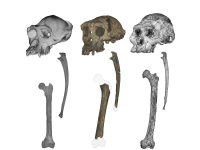
 torontosun.com
A new analysis of these primordial bones offers evidence that Sahelanthropus was our first known ancestor to regularly walk on two feet
Author of the article:Washington Post
Washington Post
Dino Grandoni
Published Jan 05, 2026 • 4 minute read
The craniums, ulnae and femurs of, from left, a chimpanzee, Sahelanthropus and Australopithecus.
The craniums, ulnae and femurs of, from left, a chimpanzee, Sahelanthropus and Australopithecus. Photo by Scott Williams/NYU and Jason Heaton/University of Alabama Birmingham /Scott Williams/NYU and Jason Heaton/University of Alabama Birmingham
More than two decades ago, scientists digging in Central Africa unearthed the 7-million-year-old remains of what may be one of the earliest known human ancestors.
Only a few fossils were recovered from the desert in northern Chad: a skull, a leg bone, a couple of arm bones. Ever since the discovery, scientists have been trying to put together those puzzle pieces to answer a question that gets to the heart of what it means to be human.
Did this ancient ape-man, dubbed Sahelanthropus tchadensis, mostly stride on two feet, like modern humans do? Or did the creature primarily crawl on all fours, like most of the animal kingdom?
A new analysis of these primordial bones offers evidence that Sahelanthropus was our first known ancestor to regularly walk on two feet, a sign that bipedalism evolved early in our lineage and constitutes an evolutionary hallmark of our kind. The interpretation, if it holds, would push back the date at which early hominins stood tall by about a million years.
But the new study is unlikely to settle the long-simmering debate over whether Sahelanthropus walked on two or four feet. And it underscores just how little scientists still know about human evolution, with only a handful of fossilized bones of early hominids ever unearthed after decades of digging.
“I’m fairly convinced that this thing was a biped,” said Scott Williams, a New York University evolutionary morphologist who led the new study, published in Science Advances on Friday. But, he added, “I’d be foolish to think that it would settle it.”
A team led by French paleoanthropologist Michel Brunet discovered the fossils in the early 2000s in Chad’s Djurab Desert. The cranium seemed to belong to an adult male with a chimpanzee-size brain but a humanlike face. The placement of the opening at the base of the skull, through which the spinal cord passed, suggested a more upright posture. The individual was nicknamed Toumai, which means “hope of life.”
Standing up was a key moment in our ancestors’ evolution. It freed the forelimbs to develop into hands and encouraged the growth of bigger brains to use those hands to make and wield tools.
But other scientists questioned that early interpretation of the skull opening. And an initial analysis of the leg bone showed it was shaped like those of chimpanzees and bonobos, suggesting something that ambled on all fours.
For the latest study, researchers performed a detailed analysis of the limb bones. In the femur, they found a natural twisting, similar to that in humans, which points the feet forward and aids in walking. The team also found a bump in the leg bone – again, similar to our own – where the femur is attached to the butt muscles, which is key for standing and running.
But the feature that “really sold the case for bipedalism,” according to Williams, was the presence of a something called the femoral tubercle. This is the place where a ligament tethering the pelvis to the femur is attached. The ligament is the strongest in the human body, and is key to preventing the torso from toppling backward when we stand up.
“It’s a subtle feature,” Williams said, “so it wasn’t recognized by the other groups.”
Williams recalled holding a 3D-printed model of the Sahelanthropus bone in one hand and a human femur in the other, and noticing the similar tubercles. Before finding them, “we were all sort of on the fence about Sahelanthropus, and whether we thought it was a biped.”
Franck Guy and Guillaume Daver, researchers at France’s University of Poitiers who have previously argued Sahelanthropus was bipedal, were pleased the independent team led by Williams backed up their findings.
The new study “not only confirms our initial interpretations of the adaptations and locomotion of the earliest hominin Sahelanthropus, but also puts forward new arguments supporting its terrestrial habitual bipedalism,” they said in a statement.
But Roberto Macchiarelli, a paleoanthropologist who has argued the fossils did not come from a biped, said the femur has been too warped and damaged by time to show the twisting and tubercle that would prove Sahelanthropus regularly walked on two legs.
“Body proportions in Sahelanthropus are 100 percent apelike, certainly not ape-hominin ‘intermediate,'” Macchiarelli said in an email. “Compared to most scientific disciplines and research,” he added, “paleoanthropology is deeply affected by competition and politics.”
Macchiarelli also noted the researchers relied on a cast, not the original specimen, for their analysis of the femur. Williams said he confirmed the presence of the femoral tubercle on the actual fossil with French researchers.
Guy and Daver agreed the new paper will not settle the controversy. “Indeed, closing the debate would require the discovery of new remains,” they said.
To that end, their team plans to return to the desert in Chad this year to hunt for more fossils.
When did humanity take its first step? Scientists say they now know.
Only a few fossils were recovered from the desert in northern Chad: a skull, a leg bone, a couple of arm bones.
Sounds like bullshit to me. Why did we nearly stop evolving?When did humanity take its first step? Scientists say they now know.
A new analysis of these primordial bones offers evidence that Sahelanthropus was our first known ancestor to regularly walk on two feet
Author of the article:Washington Post
Washington Post
Dino Grandoni
Published Jan 05, 2026 • 4 minute read
The craniums, ulnae and femurs of, from left, a chimpanzee, Sahelanthropus and Australopithecus.
The craniums, ulnae and femurs of, from left, a chimpanzee, Sahelanthropus and Australopithecus. Photo by Scott Williams/NYU and Jason Heaton/University of Alabama Birmingham /Scott Williams/NYU and Jason Heaton/University of Alabama Birmingham
More than two decades ago, scientists digging in Central Africa unearthed the 7-million-year-old remains of what may be one of the earliest known human ancestors.
Only a few fossils were recovered from the desert in northern Chad: a skull, a leg bone, a couple of arm bones. Ever since the discovery, scientists have been trying to put together those puzzle pieces to answer a question that gets to the heart of what it means to be human.
Did this ancient ape-man, dubbed Sahelanthropus tchadensis, mostly stride on two feet, like modern humans do? Or did the creature primarily crawl on all fours, like most of the animal kingdom?
A new analysis of these primordial bones offers evidence that Sahelanthropus was our first known ancestor to regularly walk on two feet, a sign that bipedalism evolved early in our lineage and constitutes an evolutionary hallmark of our kind. The interpretation, if it holds, would push back the date at which early hominins stood tall by about a million years.
But the new study is unlikely to settle the long-simmering debate over whether Sahelanthropus walked on two or four feet. And it underscores just how little scientists still know about human evolution, with only a handful of fossilized bones of early hominids ever unearthed after decades of digging.
“I’m fairly convinced that this thing was a biped,” said Scott Williams, a New York University evolutionary morphologist who led the new study, published in Science Advances on Friday. But, he added, “I’d be foolish to think that it would settle it.”
A team led by French paleoanthropologist Michel Brunet discovered the fossils in the early 2000s in Chad’s Djurab Desert. The cranium seemed to belong to an adult male with a chimpanzee-size brain but a humanlike face. The placement of the opening at the base of the skull, through which the spinal cord passed, suggested a more upright posture. The individual was nicknamed Toumai, which means “hope of life.”
Standing up was a key moment in our ancestors’ evolution. It freed the forelimbs to develop into hands and encouraged the growth of bigger brains to use those hands to make and wield tools.
But other scientists questioned that early interpretation of the skull opening. And an initial analysis of the leg bone showed it was shaped like those of chimpanzees and bonobos, suggesting something that ambled on all fours.
For the latest study, researchers performed a detailed analysis of the limb bones. In the femur, they found a natural twisting, similar to that in humans, which points the feet forward and aids in walking. The team also found a bump in the leg bone – again, similar to our own – where the femur is attached to the butt muscles, which is key for standing and running.
But the feature that “really sold the case for bipedalism,” according to Williams, was the presence of a something called the femoral tubercle. This is the place where a ligament tethering the pelvis to the femur is attached. The ligament is the strongest in the human body, and is key to preventing the torso from toppling backward when we stand up.
“It’s a subtle feature,” Williams said, “so it wasn’t recognized by the other groups.”
Williams recalled holding a 3D-printed model of the Sahelanthropus bone in one hand and a human femur in the other, and noticing the similar tubercles. Before finding them, “we were all sort of on the fence about Sahelanthropus, and whether we thought it was a biped.”
Franck Guy and Guillaume Daver, researchers at France’s University of Poitiers who have previously argued Sahelanthropus was bipedal, were pleased the independent team led by Williams backed up their findings.
The new study “not only confirms our initial interpretations of the adaptations and locomotion of the earliest hominin Sahelanthropus, but also puts forward new arguments supporting its terrestrial habitual bipedalism,” they said in a statement.
But Roberto Macchiarelli, a paleoanthropologist who has argued the fossils did not come from a biped, said the femur has been too warped and damaged by time to show the twisting and tubercle that would prove Sahelanthropus regularly walked on two legs.
“Body proportions in Sahelanthropus are 100 percent apelike, certainly not ape-hominin ‘intermediate,'” Macchiarelli said in an email. “Compared to most scientific disciplines and research,” he added, “paleoanthropology is deeply affected by competition and politics.”
Macchiarelli also noted the researchers relied on a cast, not the original specimen, for their analysis of the femur. Williams said he confirmed the presence of the femoral tubercle on the actual fossil with French researchers.
Guy and Daver agreed the new paper will not settle the controversy. “Indeed, closing the debate would require the discovery of new remains,” they said.
To that end, their team plans to return to the desert in Chad this year to hunt for more fossils.
View attachment 32671
When did humanity take its first step? Scientists say they now know.
Only a few fossils were recovered from the desert in northern Chad: a skull, a leg bone, a couple of arm bones.