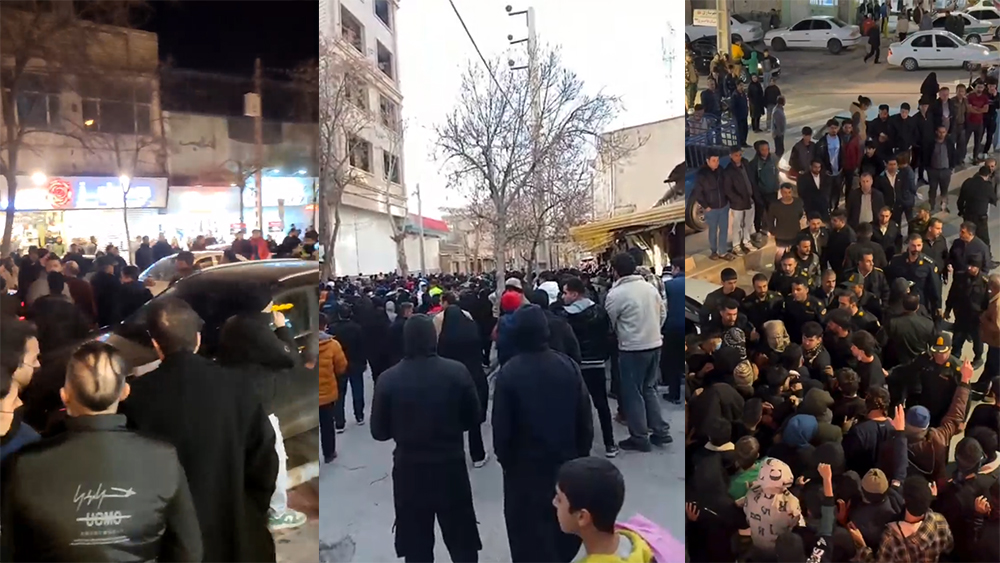
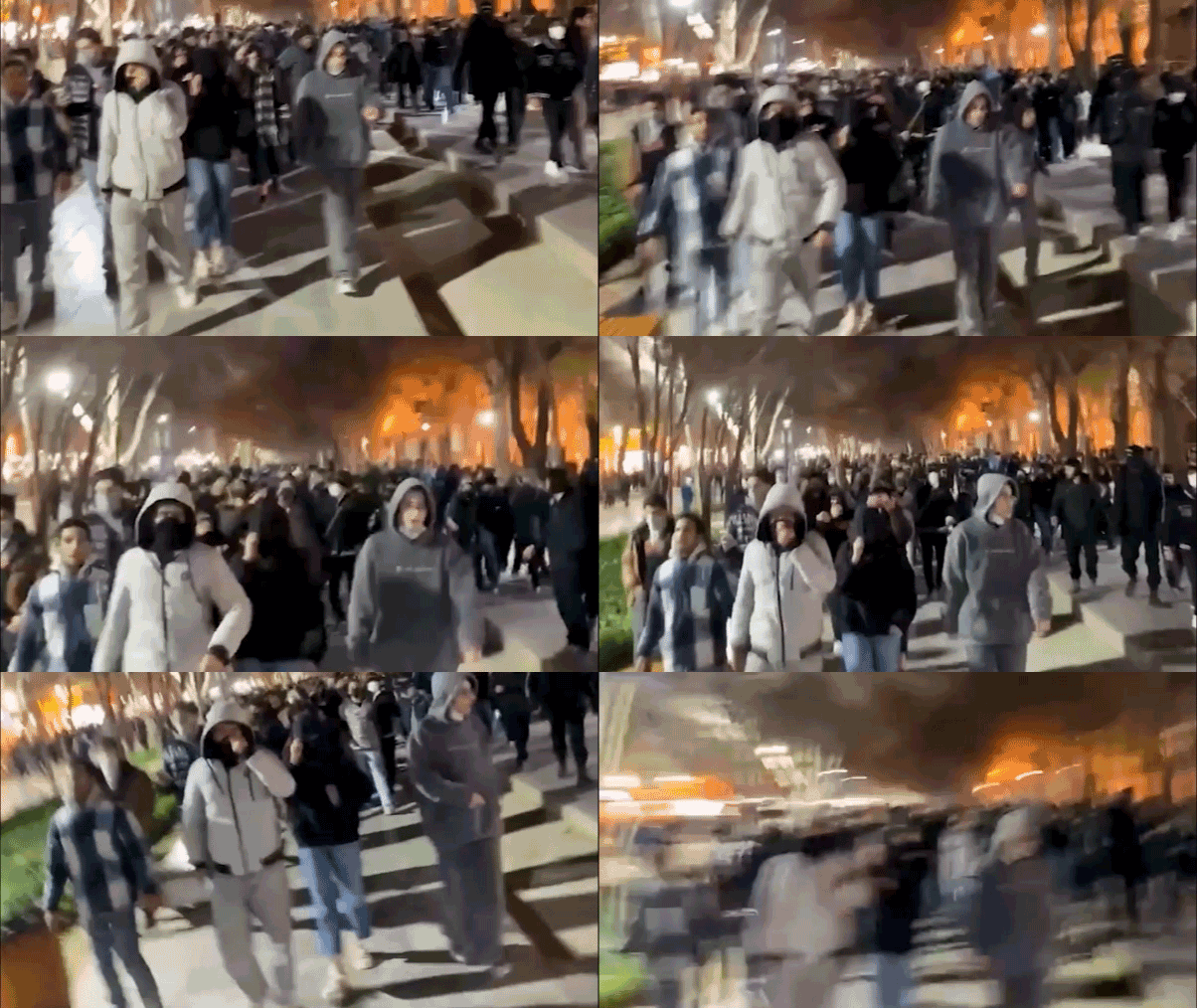
The widening protests in Iran over the country’s worsening economy escalated Thursday, with demonstrators clashing with police in multiple provinces, leaving several people dead.
At least three protesters were killed and 17 others wounded during an attack on a police station in Iran’s western province of Lorestan, the semiofficial Fars News Agency reported.
So…if Iranian civilians are arming themselves from the police stations that they’re attacking and looting, I wonder what they’re using to put out the fires from these protests if there’s almost no water?
Maybe buckets of sand above (?) because the protesters are using the fire extinguishers to mask their movement like smoke bombs? The clashes between activists and security forces have intensified since the protests kicked off over the weekend, triggered by degrading economic hardships, currency devaluation and poor living conditions.
The recent demonstrations are the biggest in Iran since three years ago, when a country-wide uprising flared up over the death of 22-year-old Mahsa Amini, who died in police custody. Amini was arrested for allegedly improperly wearing her headscarf.
But a crisis has been long brewing. The government and people of Iran can no longer tolerate each other. The symbol of a young Iranian girl, Mahsa Amini, murdered by the “morality police” in 2022 reignited the revolutionary attitudes of many Iranians who no longer wish to live under a totalitarian theocracy. A few years before,
in November 2019, the regime suppressed another country-wide uprising by killing thousands of civilians. And two years before that,
a government crackdown on protesters killed hundreds more.
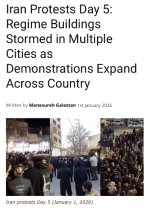
The nationwide uprising in Iran entered a critical new phase on January 1, 2026. What began on December 28, 2025, as a protest by merchants against a catastrophic currency collapse has, by its fifth consecutive day, metamorphosed into a full-scale political insurrection.
As of Thursday, January 1, the distinct line between economic grievance and revolutionary demand has dissolved. From the seizure of government buildings in western provinces to the unprecedented chants against the clergy in their traditional stronghold of Qom, the events of the last 24 hours indicate that the wall of fear protecting the theocracy is rapidly crumbling.
The nationwide uprising in Iran entered a critical new phase on January 1, 2026. What began on December 28, 2025, as a protest by merchants against a

www.ncr-iran.org
The most dramatic shift in the uprising’s trajectory occurred in western Iran, particularly in the city of Lordegan in the Chaharmahal and Bakhtiari province. On the morning of January 1, heavy confrontations erupted between citizens and state security forces. According to reports from the ground, security units deployed lethal force against unarmed protesters, resulting in at least two confirmed deaths and numerous injuries.
However, the use of live ammunition failed to disperse the crowds. In a display of fury that underscores the depth of public rage, protesters in Lordegan did not retreat but instead advanced upon the city’s administrative center. Demonstrators successfully seized and inflicted heavy damage on several symbols of the regime’s authority, including the Governorate building, the local office of the Foundation of Martyrs (Bonyad Shahid), and the judiciary building.
Anti-regime protests entered a fifth day as demonstrations spread across Tehran and other cities, with reports of deaths emerging amid escalating nationwide unrest.

www.foxnews.com
The specific targeting of the Foundation of Martyrs and the Judiciary reflects a direct rejection of the regime’s ideological and repressive apparatus.
(YouTube & censorship in Iranian sports channel)
This escalation was not isolated to Lordegan. A qualitative shift in tactics was observed in neighboring regions, where youth moved from street demonstrations to the active takeover of security installations. In Azna, protesters occupied a security force base, setting fire to a vehicle used for suppression.
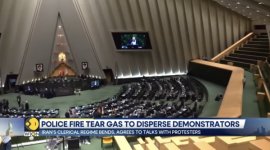
Protesters and security forces clashed in several Iranian cities on Thursday, with six reported killed, the first deaths since the cost-of-living demonstrations broke out.

www.france24.com
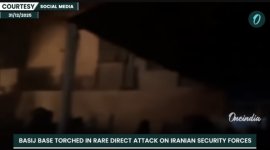
Simultaneously, in Farsan, locals besieged a base of the paramilitary Basij force, effectively trapping the regime’s agents inside. In Darreh Shahr, footage emerged of demonstrators tearing down banners of Supreme Leader Ali Khamenei, symbolically dismantling the regime’s presence in the city.
A significant psychological blow to the clerical establishment on day five was the entry of Qom into the uprising. Known as the ideological capital and the regime’s power base, Qom has historically been a city the regime counts on for support or at least passivity.
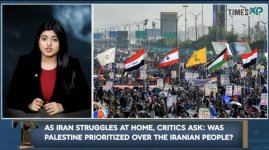
Demonstrations against deteriorating living conditions have widened to include criticism of how Iran is governed

www.theguardian.com
On Thursday, however, the streets of Qom became the scene of intense clashes. Videos circulating from the city show demonstrators fighting back against security forces and, in several instances, forcing the armed agents to flee.
The chants echoing through the streets of Qom—specifically “Mullahs must get lost”—signal a profound ideological collapse. When the populace in the religious heartland explicitly rejects the ruling clergy, the theocracy loses its claim to legitimacy even among its purported constituency.
By Mostafa Salem, CNN (CNN) — Iran’s leadership lashed out Friday after US President Donald Trump threatened intervention amid deadly protests, with Iranian officials warning that American troops in the region could be targeted if Washington interferes. “If Iran shots (sic) and violently kills...

kioncentralcoast.com
In the capital, Tehran, the economic unrest that sparked the uprising has hardened into political defiance. At the Central Fruit and Vegetable Market (Meidan Tarebar), a vital hub for the city’s food distribution, merchants and protesters stood firm for the second day.
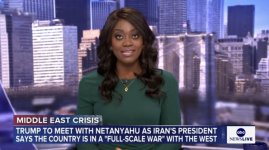
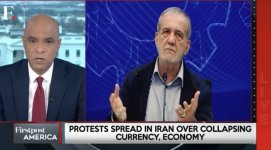
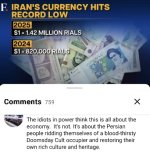
Iran's President Masoud Pezeshkian says there is not much he can do as the currency has rapidly depreciated, with $1 now trading at around 1.4 million rials.

www.euronews.com
Security forces attempted to break the strike using tear gas, but the market remained paralyzed. The slogans here have shifted decisively away from price complaints to fundamental political demands, with crowds chanting “Death to Khamenei” and “No Gaza, No Lebanon, I Sacrifice my Life for Iran.”
Recognizing the dangerous potential of a unified front between the bazaar and the universities, the regime has intensified its crackdown on students. In a cowardly move under the cover of darkness, security agents and plainclothes officers raided the dormitories of Beheshti University (National University) in Tehran overnight. Reports confirm that several female students were abducted during the raid. However, the assault failed to silence the students; facing the dormitories, large groups of students gathered to chant “Disgrace, Disgrace” at the repressors.
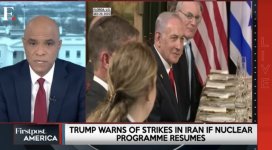
Israeli Prime Minister Benjamin Netanyahu raised the possibility of renewed military strikes on Iran during a meeting with US President Donald Trump on Monday, including what one US official described as a potential round two in 2026, Axios reported.

www.iranintl.com
I wonder

if there are going to be protests globally in the west on university campuses with re-Greta out center stage about what’s happening in Iran right now?








 kashmirobserver.net




www.iranintl.com
www.aljazeera.com

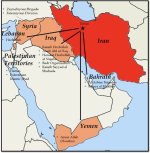
 But they’ve got a gajillion Brazilian missiles all aimed at all the countries they’ve declared outright war against, so they’ve got that going for them.



 www.jpost.com


 The Supreme Leader, or “Vali-ye Faqih” – a significant title granting its holder ultimate authority over all state and religious affairs – was reportedly incommunicado and confined to a secure underground bunker for his own safety during a 12-day war with Israel in June (that Iran of coarse won spectacularly, a conflict that caught Tehran off guard despite decades of preparation.
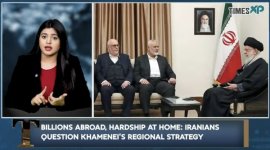
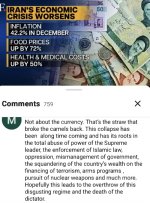
 In the months that followed, Iran’s struggling population watched their nation grow increasingly dysfunctional with mounting crises. Persistent electricity blackouts, record inflation and soaring unemployment have left citizens disillusioned by their powerless leadership.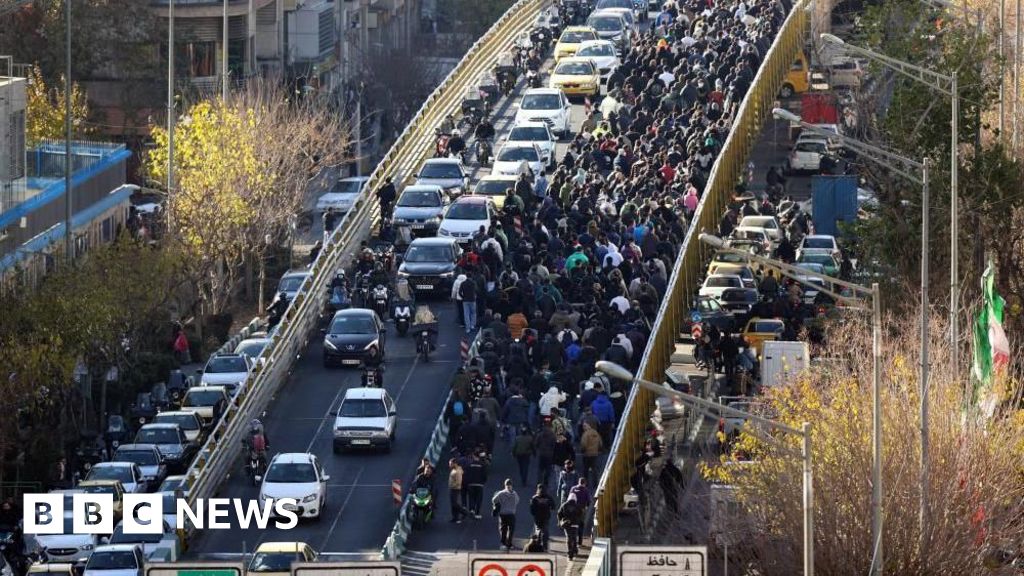
 www.bbc.com