


I didn't know 911 linked up veterinarians with buggered fucks.The Humane Society doesn’t have big enough shovels?
I didn't know 911 linked up veterinarians with buggered fucks.The Humane Society doesn’t have big enough shovels?

 youtube.com

Been happening all over Europe especially Spain.Sinaloa gets around.
Poland RAIDS A Cartel Drug Lab in Radańska
Twitch: https://www.twitch.tv/kagan_dunlap Gaming Channel: https://www.youtube.com/@KaganDunlapGamesX: https://twitter.com/kagan_m_dunlap?lang=en Join My Dis...


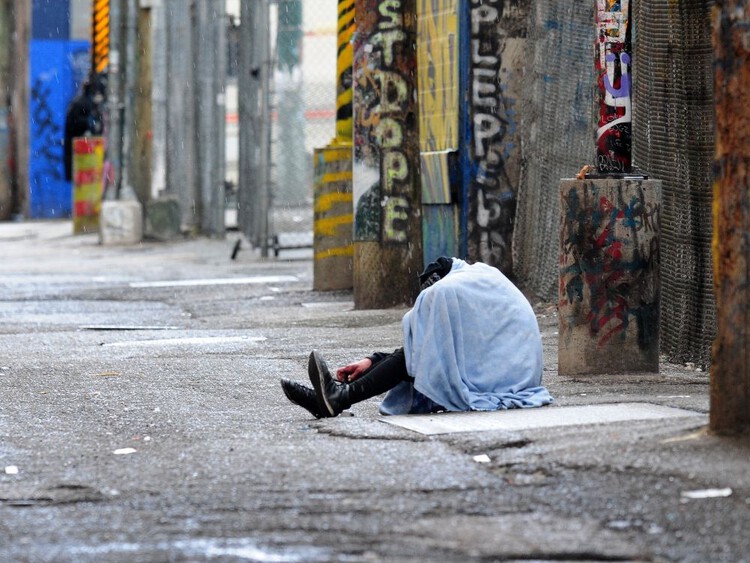
Apparently, the government's definition of "compassion" is different from its original interpretation.British Columbia recently mandated that, starting from the end of this month, most “safer supply” drugs must be consumed under medical supervision in an effort to keep them from being diverted to the black market. While this reform is laudable and will help keep dangerous opioids off Canadian streets, it is reprehensible that the province dragged its feet for years here.
Although the BC NDP aggressively championed safer supply throughout the 2010s and 2020s, it eventually backpedalled after media reports showed that many recipients sell their free hydromorphone to purchase illicit street fentanyl, and that this floods communities with diverted opioids, fuelling addiction.
This course-correction was glacial and grudging, though. When the National Post, citing over a dozen addiction doctors across Canada, first reported on widespread safer supply diversion in mid-2023, the BC NDP insisted that the program was not contributing to addictions or deaths and that diverted hydromorphone seizures were not increasing.
Later that year, dozens of addiction doctors signed two public letters warning about safer supply diversion and begging for mandatory witnessed consumption. B.C.’s top doctor, Bonnie Henry, also produced a report which confirmed, through extensive consultation with the province’s doctors and addicts, that safer supply diversion is a “common occurrence.”
Earlier this month, the province released new guidelines — which come into effect on Dec. 30 — mandating witnessed consumption for all safer supply patients. These guidelines still allow unwitnessed doses in exceptional circumstances, but qualifying criteria now match those used for traditional addiction medications such as methadone, which means that they are clearer and stricter than before.
While this is an improvement, it is still possible that some clinicians will creatively interpret these criteria to prescribe unwitnessed safer supply opioids to diversion-prone patients. If there is a lesson to be learned from the past few years, it is that many safer supply prescribers cannot be trusted to practice responsibly — many of them even claim that opioid diversion is a good thing.
Adam Zivo: B.C. winds down practice of sending addicts home with free drugs — National Post
Users of 'safer supply' drugs need medical supervision. It shouldn't have taken years for the province to learn thatapple.news
MAID is compassion !Apparently, the government's definition of "compassion" is different from its original interpretation.
Not necessarily. I'd say it's a "convenience" for some people, including medical professionals!!MAID is compassion !
My experience with it is positive. It needs to be fairly tightly controlled, but I don’t think it’s a bad thing at all.MAID is compassion !
And the system , however the point I was trying to make is that despite all the interventions and harm reduction addicts are still dying off in alarming numbers .Not necessarily. I'd say it's a "convenience" for some people, including medical professionals!!
Wasn’t really making a point about Maid but the dying addicts . That said I agree with you mostly .My experience with it is positive. It needs to be fairly tightly controlled, but I don’t think it’s a bad thing at all.
true that!And the system , however the point I was trying to make is that despite all the interventions and harm reduction addicts are still dying off in alarming numbers .
MAID is compassion !
My experience with it is positive. It needs to be fairly tightly controlled, but I don’t think it’s a bad thing at all.
Wasn’t really making a point about Maid but the dying addicts . That said I agree with you mostly .
The more MAID the more organs that can be harvested for those in need.true that!
Yup .The more MAID the more organs that can be harvested for those in need.
Naloxone should be banned. People on fentanyl hate life and they get high to avoid living it. Give them what they want.
Keeping them alive only benefits the Addiction and Homeless Industrial Complex.
WASHINGTON — The United States Drug Enforcement Administration’s latest threat assessment says fentanyl “super laboratories” in Canada are a growing source of concern — after U.S. President Donald Trump used cross-border traffic in the deadly drug to justify hitting imports of Canadian goods with tariffs.

 www.bbc.com

 .
. Where fentanyl harms are highest
(The total amount of fentanyl seized by U.S. officials so far this year at the Canadian border is approximately three kilograms. At the Mexican border, it's approximately 3,221 kilograms)
Puts the illegal (according to the US courts) fentanyl tariff by Trump on Canada in perspective.In 2025, U.S. border officials in the Detroit sector seized more than 4,200 kilograms of illegal drugs, including nearly 15 kilograms of fentanyl, according to statistics provided by CBP. But the statistics don't reveal the direction the drugs were travelling.
They have nothing to do with Trump hence are not newsworthy.Any information on the fentanyl labs in B.C.? We heard about it once, but nothing since, at least I haven't. There's supposed to be criminal gangs & cartels involved. So???? What's happened to them?


