


Stonehenge's builders may have built the famous monument where they did because of the presence of warm pools nearby.
A small series of shallow pools close to Stonehenge, in Amesbury, have remained undisturbed for tens of thousands of years.
Hidden in a private estate and surrounded by trees, the inconspicuous plot which sits alongside the A303 in Amesbury, is believed to be a mesolithic landscape dating back to 7,596BC.
It is fed by a spring which keeps the pools warm at a constant 11 degrees, even during the depths of winter.
Scientists visited the site in 2010 when temperatures were sub-zero and found that the water remained unaffected by the surrounding snow.
This gave them reason to believe that the area may have been one of great importance during and immediately after the ice age.
Scientists have also discovered what ancient Britons were eating at the monument.
Archeologists from the University of Buckingham discovered fragments of an 8,000 year-old charred toad leg nearby the monument.
The remains were found alongside fish bones at the site and are the earliest evidence of a cooked toad or frog anywhere in the world, scientists say.
Archaeologists unearthed the leg alongside small fish vertebrate bones of trout or salmon as well as burnt aurochs' bones (the predecessors of cows).
'Stonehenge's secret revealed at last': Ice Age man was drawn nearby pools which never froze over
Warm spring is just walking distance from the stones
They explain why mesolithic settlers were in the area
Post ice-age wildlife would have flocked to the water
By Aaron Sharp
19 October 2013
Daily Mail
Daily Mail
The age-old secret of why Stonehenge was built where it was can now be revealed, according to historians.
The reason for the stone monument's location has remained one of the great unsolved mysteries of British prehistory, with no one theory accepted as correct.
But now a team of scientists working in Amesbury, a short distance from where the landmark sits on a hillside, believe the discovery of a warm water spring could be the key to solving the riddle.
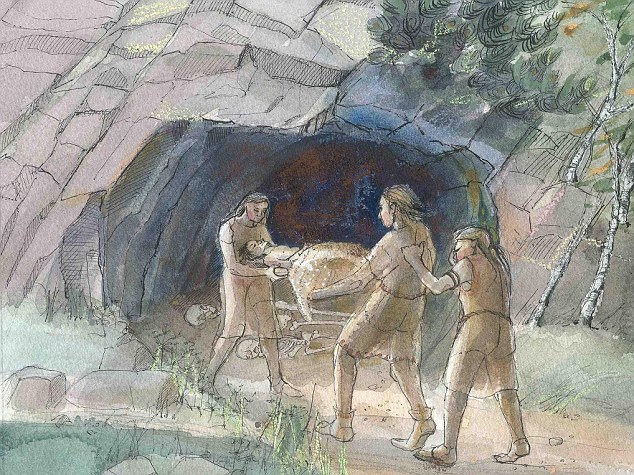
Pre-historic: An area of warm springs close to Stonehenge are likely have been home to Mesolithic cavemen. They may have chosen to live by the pools, which scientists say would be 'irresistible' to passing wildlife
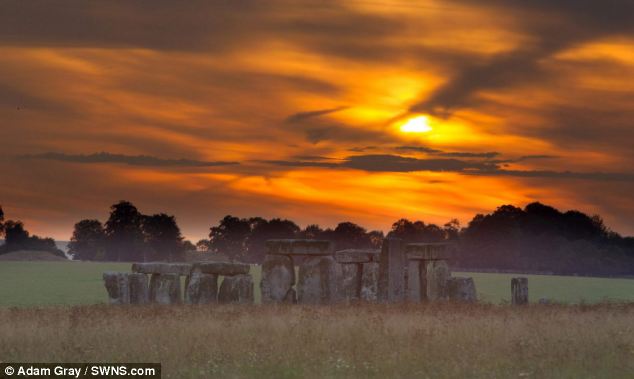
Breakthrough: The pools, which are just walking distance from the famous stones in Amesbury give an explanation of why Mesolithic settlers were in the area and to why the monument was built where it was
A small series of shallow pools close to Stonehenge have remained undisturbed for tens of thousands of years.
Hidden in a private estate and surrounded by trees, the inconspicuous plot which sits alongside the A303 in Amesbury, is believed to be a mesolithic landscape dating back to 7,596BC.
It is fed by a spring which keeps the pools warm at a constant 11 degrees, even during the depths of winter.
Scientists visited the site in 2010 when temperatures were sub-zero and found that the water remained unaffected by the surrounding snow.
This gave them reason to believe that the area may have been one of great importance during and immediately after the ice age.
The warm water, it is claimed, would have been irresistible to passing wildlife who migrated north as the ice, which had previously dominated much of the earth's surface, retreated to the poles.
Andy Rhind-Tutt, chairman of the Amesbury Museum and Heritage Trust, who has surveyed the site over years, believes the springs are a vital to unlocking the mystery of Stonehenge.
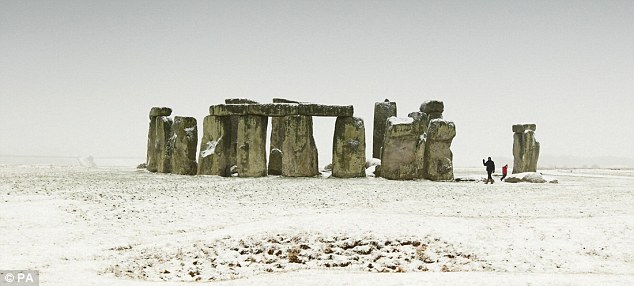
Ice attraction: Scientists visited the area in minus ten degree temperatures and found that the pools were still a 'tepid' 11 degrees above freezing
He told The Times: 'The belief has always been that Stonehenge would not have been built here without there being something special about the area.
'We believe the answer lies in the springs which feed the River Avon. We came here in January when it was -10 degrees and the water was still tepid.
'The pools were surrounded by green grass when everywhere else was frozen.'
'The pools were surrounded by green grass when everywhere else was frozen.'
The discovery of water close to the neolithic monument also gave archeologists a candid look at pre-historic diets.
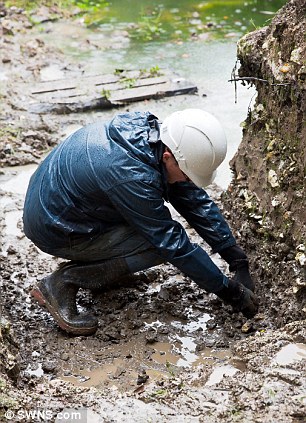
An archaeological dig, which took place a mile away from Stonehenge found frogs legs
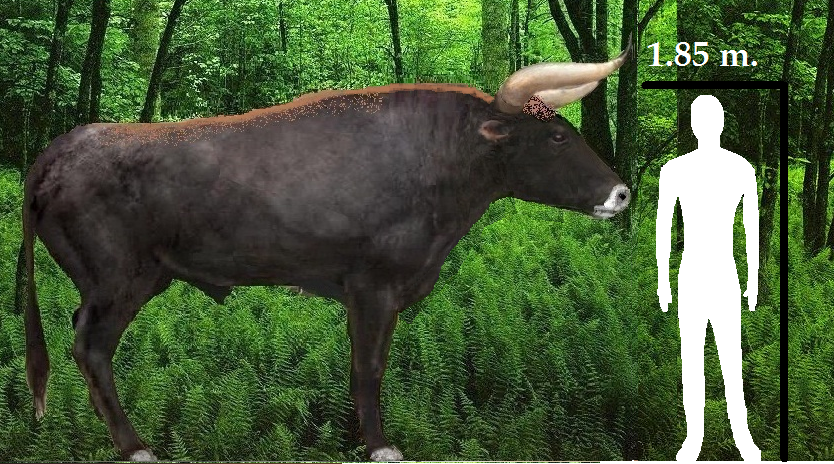
Ancient Britons ate aurochs, which lived in Europe, North America and Asia. The last one became extinct in Poland in 1627
Archeologists from the University of Buckingham discovered fragments of an 8,000 year-old charred toad leg nearby.
The remains which were found alongside fish bones at the site are the earliest evidence of a cooked toad or frog anywhere in the world, scientists say.
Archaeologists unearthed the leg alongside small fish vertebrate bones of trout or salmon as well as burnt aurochs' bones (the predecessors of cows).
David Jacques, senior research fellow in archaeology at the University of Buckingham, said: 'It would appear that thousands of years ago people were eating a Heston Blumenthal-style menu on this site, one-and-a-quarter miles from Stonehenge, consisting of toads' legs, aurochs, wild boar and red deer with hazelnuts for main, another course of salmon and trout and finishing off with blackberries.
'This is significant for our understanding of the way people were living around 5,000 years before the building of Stonehenge and it begs the question - where are the frogs now?'


