Trudeau Is Going To Bury Us In Debt

spaminator

Hall of Fame Member
Oct 26, 2009
39,572
3,677
113
$1.03M spent hosting two government conferences: documents
Costs included $37K for staff per diems, hundreds of thousands in lunches and dinners, $1.3K for musical spoons

Author of the article:Bryan Passifiume
Published Nov 20, 2025 • Last updated 10 hours ago • 3 minute read

Taxpayers spent $71.4 billion on the federal civil service in the 2024/25 fiscal year — that's up from $39.6 billion a decade ago. Read on.
OTTAWA — $94,000 dinners, $915 flower arrangements and $1,340 for “musical spoons.”


That’s just a small list of expenses incurred for a pair of plush government conferences in 2024 that collectively cost taxpayers $1.03 million, according to government disclosures.


Held last year in Montreal from July 5 to 8, the 49th annual Assemblée Parlementaire de la Francophonie cost taxpayers $631,569 for the three-day event — a figure that includes accommodations, transportation, food, per diems and artistic performances.

$303K hospitality, $156K hotel rooms for Francophone conference
“You know the government is spending way too much money when it could have taken everyone out for lunch at the Keg, ordered the most expensive meal on the menu and still saved taxpayers money,” said Franco Terrazzano, federal director of the Canadian Taxpayers Association.


“It seems like every time the government hosts a conference, it goes out of its way to spend taxpayers’ money as extravagantly as possible.”

Attendees and participants billed a total of $155,565.23 in accommodation charges for 27 staff and 86 unnamed “participants,” musicians and security staff, $87,339.45 for transportation, $20,567 in per diems and $303,585.57 in hospitality charges.

In addition, three Parliamentary staffers and two security personnel charged $1,720 for a “site visit” one month before the actual event.

Pricey catering, dinners for conference
The largest hospitality charges were listed as “lunch and breaks” for delegates, totalling $198,273.81 for 475 people at the Fairmont Queen Elizabeth.


That totals roughly $417 per person.

As well, $28,940 was charged for a “dinner buffet and lunch boxes” for 85 participants.

Around $79,300 was spent for a July 8 “cultural dinner” for 475 participants catered by Montreal’s Las Olas Traiteur, who bill themselves as “creator of gourmet emotions.”

Other charges for that dinner include $11,305.23 for three performers — Mi’kmaq artist Megan Leinen, acrobatic troupe Le Monastère, and Ottawa-based trad-rock band Les Rats d’Swompe — and $1,339.67 for an undetermined number of “musical spoons” purchased from Amazon.

Months prior to the event, $53,475.97 was spent in preparation — including $6,200 on designing and printing of “cultural artistic” notebooks and delegate bags, and $6,476.25 for a July 5 “dinner for bureau members.”


$405K to host NATO Parliamentary Assembly conference
Later that year, $405,418 was spent to host the 70th annual session of the NATO Parliamentary Assembly, also held in Montreal, from Nov. 22 to 25.

The event was attended by a delegation of senators and MPs, led by chair of the Canadian NATO Parliamentary Association Julie Dzerowicz.

For that event, $46,220.89 was spent on transportation, $62,987.05 for accommodations for 25 staff, two security workers and seven panelists, $21,047.60 for per diems, and $227.546.53 for hospitality.

There was also a “site visit” to the NATO Parliamentary Association’s spring session, held from May 24 to 27 in the Bulgarian capital of Sofia, but full costs on that trip weren’t immediately known.


As well, $15,283.86 was spent on a four-day, nine-person site visit from Oct. 1 to 4.

$36,034 was spent on “health breaks” for nearly 600 participants — actually meals from Montreal oyster bay Maestro, who also received an additional $52,181 to cater the Nov. 22 welcome reception and a Nov. 25 luncheon.

Dinners for the event cost $134,000 — a cost that includes a $94,937.16 for a Nov. 24 dinner reception facilitated by Éloize Studios/Cirque Éloize.

As well, nearly $13,000 was spent on lanyards, lapel pins, pens and scarves for delegate gift bags.

“Why is the government spending a thousand dollars on musical spoons for a dinner show when it could have just grabbed a couple spoons off the tables?” Terrazzano wondered.

“The government needs to stop looking for ways to blow taxpayers’ money.”

bpassifiume@postmedia.com
X: @bryanpassifiume
 

pgs

Hall of Fame Member
Nov 29, 2008
28,773
8,245
113
B.C.
$1.03M spent hosting two government conferences: documents
Costs included $37K for staff per diems, hundreds of thousands in lunches and dinners, $1.3K for musical spoons

Author of the article:Bryan Passifiume
Published Nov 20, 2025 • Last updated 10 hours ago • 3 minute read

Taxpayers spent $71.4 billion on the federal civil service in the 2024/25 fiscal year — that's up from $39.6 billion a decade ago. Read on.
OTTAWA — $94,000 dinners, $915 flower arrangements and $1,340 for “musical spoons.”


That’s just a small list of expenses incurred for a pair of plush government conferences in 2024 that collectively cost taxpayers $1.03 million, according to government disclosures.


Held last year in Montreal from July 5 to 8, the 49th annual Assemblée Parlementaire de la Francophonie cost taxpayers $631,569 for the three-day event — a figure that includes accommodations, transportation, food, per diems and artistic performances.

$303K hospitality, $156K hotel rooms for Francophone conference
“You know the government is spending way too much money when it could have taken everyone out for lunch at the Keg, ordered the most expensive meal on the menu and still saved taxpayers money,” said Franco Terrazzano, federal director of the Canadian Taxpayers Association.


“It seems like every time the government hosts a conference, it goes out of its way to spend taxpayers’ money as extravagantly as possible.”

Attendees and participants billed a total of $155,565.23 in accommodation charges for 27 staff and 86 unnamed “participants,” musicians and security staff, $87,339.45 for transportation, $20,567 in per diems and $303,585.57 in hospitality charges.

In addition, three Parliamentary staffers and two security personnel charged $1,720 for a “site visit” one month before the actual event.

Pricey catering, dinners for conference
The largest hospitality charges were listed as “lunch and breaks” for delegates, totalling $198,273.81 for 475 people at the Fairmont Queen Elizabeth.


That totals roughly $417 per person.

As well, $28,940 was charged for a “dinner buffet and lunch boxes” for 85 participants.

Around $79,300 was spent for a July 8 “cultural dinner” for 475 participants catered by Montreal’s Las Olas Traiteur, who bill themselves as “creator of gourmet emotions.”

Other charges for that dinner include $11,305.23 for three performers — Mi’kmaq artist Megan Leinen, acrobatic troupe Le Monastère, and Ottawa-based trad-rock band Les Rats d’Swompe — and $1,339.67 for an undetermined number of “musical spoons” purchased from Amazon.

Months prior to the event, $53,475.97 was spent in preparation — including $6,200 on designing and printing of “cultural artistic” notebooks and delegate bags, and $6,476.25 for a July 5 “dinner for bureau members.”


$405K to host NATO Parliamentary Assembly conference
Later that year, $405,418 was spent to host the 70th annual session of the NATO Parliamentary Assembly, also held in Montreal, from Nov. 22 to 25.

The event was attended by a delegation of senators and MPs, led by chair of the Canadian NATO Parliamentary Association Julie Dzerowicz.

For that event, $46,220.89 was spent on transportation, $62,987.05 for accommodations for 25 staff, two security workers and seven panelists, $21,047.60 for per diems, and $227.546.53 for hospitality.

There was also a “site visit” to the NATO Parliamentary Association’s spring session, held from May 24 to 27 in the Bulgarian capital of Sofia, but full costs on that trip weren’t immediately known.


As well, $15,283.86 was spent on a four-day, nine-person site visit from Oct. 1 to 4.

$36,034 was spent on “health breaks” for nearly 600 participants — actually meals from Montreal oyster bay Maestro, who also received an additional $52,181 to cater the Nov. 22 welcome reception and a Nov. 25 luncheon.

Dinners for the event cost $134,000 — a cost that includes a $94,937.16 for a Nov. 24 dinner reception facilitated by Éloize Studios/Cirque Éloize.

As well, nearly $13,000 was spent on lanyards, lapel pins, pens and scarves for delegate gift bags.

“Why is the government spending a thousand dollars on musical spoons for a dinner show when it could have just grabbed a couple spoons off the tables?” Terrazzano wondered.

“The government needs to stop looking for ways to blow taxpayers’ money.”

bpassifiume@postmedia.com
X: @bryanpassifiume
There is nothing like spending other people’s money .
 

spaminator

Hall of Fame Member
Oct 26, 2009
39,572
3,677
113
Federal government's 10-day, $1.5B fiscal year spending spree
Department of National Defence far outspends all other agencies as Canada struggles to meet NATO 2% defence spending benchmark

Author of the article:Bryan Passifiume
Published Nov 27, 2025 • Last updated 6 hours ago • 3 minute read

Canadian Prime Minister Mark Carney
OTTAWA — The federal government spent $1.5 billion in a 10-day end-of-fiscal-year spending spree, newly-released records suggest.


And as Canada struggles to meet NATO’s 2%-of-GDP defence spending benchmark, the Department of National Defence far outspent all other departments.


According to a response from an order paper question filed by Conservative MP Connie Cody, government departments bought hundreds of millions of dollars in equipment, office supplies, artwork and appliances, all in the span of a little more than a week,

“If you want proof that government bureaucrats have way too many tax dollars on their hands, look no further than the government’s March Madness spending sprees,” said the Canadian Taxpayers Federation’s Franco Terrazzano.

“It sure seems like government bureaucrats look for ways to burn through cash at the end of each year so they can keep demanding more money from taxpayers the next year.”


DND spent $771 million in 10 days
Between March 22 and March 31, 2025 — the end of the federal government’s fiscal year — federal departments spent $382 million on supplies, and $1.1 billion on equipment and machinery, with the Department of National Defence (DND) racking up the biggest bill at $771 million.

Those equipment costs include $3.5M to General Dynamics Ordnance and Tactical Systems for “bombs and missiles,” $1.7 million to KNDS Deutschland — the German-based manufacturer of Canada’s Leopard 2 battle tanks, and $205,000 on office furniture — with many pieces purchased from other government agencies like the Correctional Service of Canada.

$279,218 was also spent on purchasing various types of fuel from the United States Army and United States Air Force,


Among the largest purchases by DND include $12,985,600 to General Dynamics Land Systems listed as “non-military motor vehicle including trailer,” $29,790,116.86 to Irving Shipbuilding for “ship/boats/auxiliary vessel/maritime system,” and $32,140,544 for “bombs and missiles” to a vendor named “Canada Foreign Military Sales” — likely a direct purchase from the United States government.

Joe Varner, deputy director of the Conference of Defence Associations and senior fellow at Macdonald-Laurier Institute, tells the Toronto Sun the DND’s big spend isn’t by accident.

“The government’s trying to reach the 2% of GDP defence spending that they’ve committed to for NATO,” he said. “One of the only ways to do that is through foreign military sales and direct purchases.”


$4.3M for VIA Rail iPhones, CRA spent $50K on employee awards
Other big-spending departments include $99.3 million by the Department of Fisheries and Oceans, and $78.5 million by Shared Services Canada.

VIA Rail spent $4.3 million between March 22 and March 31, including $1.5 million to Rogers to purchase 2,800 phones for onboard and station staff, plus $72,777 for accessories and $25,987 on Blu Element phone cases, $543,032 on diesel, and $10,518 on locomotive parts.

The Canada Revenue Agency, who spent $6 million, paid nearly $50,000 to various vendors for several hundred awards for staff, including tangible plaudits for long service and retirement.


Some departments were unable to provide details on where money was spent, including the Department of Canadian Heritage, which listed over 450 line items as “not readily available in the organization’s tracking systems.”


Spending in some departments remain a mystery
Some departments refused to release any spending data at all, including many agencies of Canadian Heritage such as the Canadian Broadcasting Corporation, Canada Council of the Arts, most museums and Telefilm Canada.

Public Safety Canada likewise refused to offer a breakdown of their nearly $2.5 million in last-minute spending, as did the Canada Border Services Agency for the $26 million they spent in the last week of March, and Correctional Service Canada for their $33 million spend.


The Canadian Security Intelligence Service declined to answer due to their mandate and operational requirements.

The RCMP said it was impossible to provide details on their $89-million spend as their expenses aren’t tracked in a central database, citing their existence as a “decentralized organization comprised of over 700 detachments in 150 communities.”

“Maybe the CRA should figure out how to operate a phone before it spends tens of thousands of dollars showering its bureaucrats with awards,” Terrazzano said.

“If you asked Canadians whether they would rather pay for a brand-new hospital or bureaucrats’ 10-day March madness spending spree, I bet most Canadians would choose the hospital.”

bpassifiume@postmedia.com
X: @bryanpassifiume
 
  • Like
Reactions: bob the dog

spaminator

Hall of Fame Member
Oct 26, 2009
39,572
3,677
113
Mark Carney outspent Justin Trudeau on 2025 cabinet retreat: Documents
September's cabinet planning forum at Pan Pacific Toronto cost $532Gs, more than Trudeau's 2023 Charlottetown retreat

Author of the article:Bryan Passifiume
Published Dec 04, 2025 • 2 minute read

Mark Carney at Liberal cabinet retreat, Toronto, Thursday, Sept. 4, 2025.
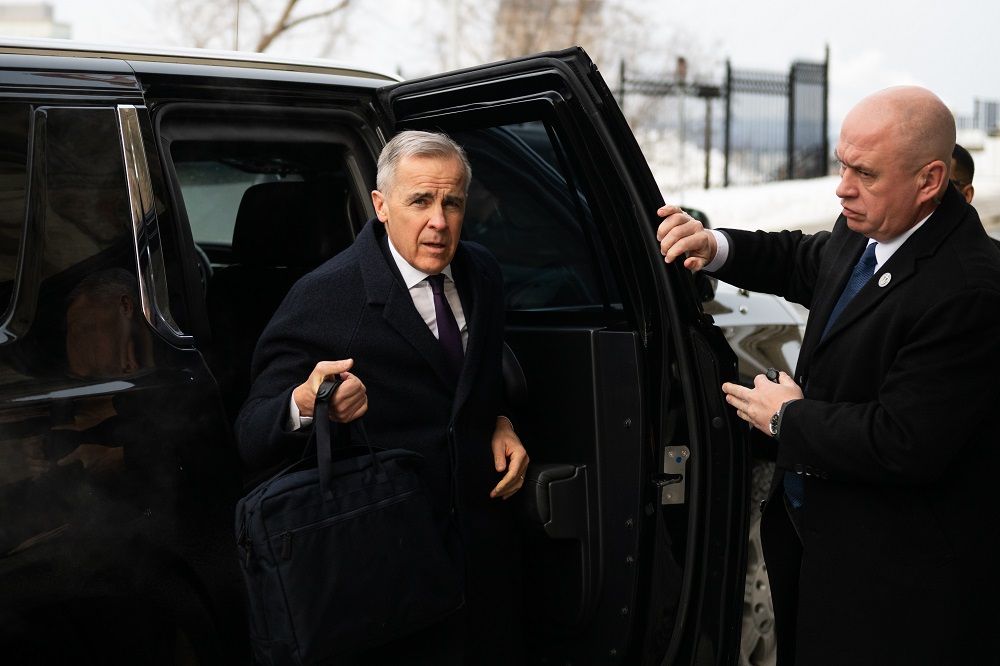
Prime Minister Mark Carney leaves the Liberal cabinet retreat in Toronto on Thursday, Sept. 4, 2025.
OTTAWA — Prime Minister Mark Carney’s two-day cabinet retreat cost thousands more than similar retreats organized by his predecessor, new documents revealed.


According to a response to an order paper question filed by Conservative MP Kerry Diotte, the pre-session cabinet confab — held this year at the Pan Pacific Toronto in York Mills — cost taxpayers $532,372.24.


That’s more than two recent cabinet retreats organized by former prime minister Justin Trudeau — his 2023 retreat in Charlottetown, P.E.I., cost $485,196, while the one held in 2022 in Vancouver cost $471,070.

“If you’re spending thousands of dollars more than Trudeau on meetings, you’re spending too much money,” said Franco Terrazzano, the federal director of the Canadian Taxpayers Federation.

“It’s going to be hard for politicians to explain to taxpayers why all of the meeting rooms in Ottawa weren’t good enough.”


Variety of agencies, departments spent money on cabinet planning forum
Booking the venue for this year’s cabinet planning forum cost the Privy Council Office $250,402.35 — with accommodations at $18,446.41, $6,696.37 for airfare, $8,176.90 for meals and incidentals and $4,985.32 for other transportation.

As well, $78,774.14 was paid to Newmarket A/V rental house Duoson Multimedia, $39,870.13 to Commissionaires for security and $8,072.72 for shipping costs.

Flying the prime minister one way from Ottawa to Toronto on Sept. 4 — plus the plane’s empty return flight to Ottawa — cost $3,015.05 for 2,267.7 litres of fuel.

A wide variety of government agencies and departments spent money to facilitate the event — Agriculture and Agri-Food Canada spent $4,798.03, including $3,558.19 on airfare to Toronto for the minister and their chief of staff, as well as meals, taxi and hotel accommodations for the pair.


Some departments not forthcoming with info
Employment and Social Development Canada spent $16,994.11 — more than most other departments — but provided no details on how that money was spent.

The RCMP spent $28,927 on the cabinet planning forum, but likewise declined to provide a breakdown due to security concerns.

Interpretation services were provided by the Translation Bureau — an agency of Public Services and Procurement Canada — costing $30,622, including $8,663 in travel expenses, $11,226 for interpretation services and $10,734 for travel time, based on the employee group’s hourly rate.

Government translators are paid a set per diem for travel.

The Treasury Board of Canada secretariat paid $2,870.85 in travel expenses for Treasury Board President Shafqat Ali, while Health Canada paid $4,529 so Health Minister Marjorie Michel and her chief of staff could attend the retreat.

“Carney told Canadians he was going to cut waste and he should start by not dropping half a million bucks on meetings,” Terrazzano said.

“We need a culture change in Ottawa and that needs to start with the prime minister and ministers respecting taxpayers’ hard-earned money.”

bpassifiume@postmedia.com
X: @bryanpassifiume
 

spaminator

Hall of Fame Member
Oct 26, 2009
39,572
3,677
113
Mark Carney outspent Justin Trudeau on 2025 cabinet retreat: Documents
September's cabinet planning forum at Pan Pacific Toronto cost $532Gs, more than Trudeau's 2023 Charlottetown retreat

Author of the article:Bryan Passifiume
Published Dec 04, 2025 • 2 minute read

Mark Carney at Liberal cabinet retreat, Toronto, Thursday, Sept. 4, 2025.
Prime Minister Mark Carney leaves the Liberal cabinet retreat in Toronto on Thursday, Sept. 4, 2025.
OTTAWA — Prime Minister Mark Carney’s two-day cabinet retreat cost thousands more than similar retreats organized by his predecessor, new documents revealed.


According to a response to an order paper question filed by Conservative MP Kerry Diotte, the pre-session cabinet confab — held this year at the Pan Pacific Toronto in York Mills — cost taxpayers $532,372.24.


That’s more than two recent cabinet retreats organized by former prime minister Justin Trudeau — his 2023 retreat in Charlottetown, P.E.I., cost $485,196, while the one held in 2022 in Vancouver cost $471,070.

“If you’re spending thousands of dollars more than Trudeau on meetings, you’re spending too much money,” said Franco Terrazzano, the federal director of the Canadian Taxpayers Federation.

“It’s going to be hard for politicians to explain to taxpayers why all of the meeting rooms in Ottawa weren’t good enough.”


Variety of agencies, departments spent money on cabinet planning forum
Booking the venue for this year’s cabinet planning forum cost the Privy Council Office $250,402.35 — with accommodations at $18,446.41, $6,696.37 for airfare, $8,176.90 for meals and incidentals and $4,985.32 for other transportation.

As well, $78,774.14 was paid to Newmarket A/V rental house Duoson Multimedia, $39,870.13 to Commissionaires for security and $8,072.72 for shipping costs.

Flying the prime minister one way from Ottawa to Toronto on Sept. 4 — plus the plane’s empty return flight to Ottawa — cost $3,015.05 for 2,267.7 litres of fuel.

A wide variety of government agencies and departments spent money to facilitate the event — Agriculture and Agri-Food Canada spent $4,798.03, including $3,558.19 on airfare to Toronto for the minister and their chief of staff, as well as meals, taxi and hotel accommodations for the pair.


Some departments not forthcoming with info
Employment and Social Development Canada spent $16,994.11 — more than most other departments — but provided no details on how that money was spent.

The RCMP spent $28,927 on the cabinet planning forum, but likewise declined to provide a breakdown due to security concerns.

Interpretation services were provided by the Translation Bureau — an agency of Public Services and Procurement Canada — costing $30,622, including $8,663 in travel expenses, $11,226 for interpretation services and $10,734 for travel time, based on the employee group’s hourly rate.

Government translators are paid a set per diem for travel.

The Treasury Board of Canada secretariat paid $2,870.85 in travel expenses for Treasury Board President Shafqat Ali, while Health Canada paid $4,529 so Health Minister Marjorie Michel and her chief of staff could attend the retreat.

“Carney told Canadians he was going to cut waste and he should start by not dropping half a million bucks on meetings,” Terrazzano said.

“We need a culture change in Ottawa and that needs to start with the prime minister and ministers respecting taxpayers’ hard-earned money.”

bpassifiume@postmedia.com
X: @bryanpassifiume
 

spaminator

Hall of Fame Member
Oct 26, 2009
39,572
3,677
113
Federal public servants earning more than $150Gs grew 96% over five years
27,261 federal public workers received more than $150,000 in salary, benefits, OT and bonuses in the 2024-25 fiscal year

Author of the article:Bryan Passifiume
Published Dec 05, 2025 • Last updated 1 day ago • 2 minute read

Parliament Hill from the Bank of Canada plaza in Ottawa.
OTTAWA — The number of federal public servants who took home more than $150,000 in the last fiscal year grew by 96% over the past five years, newly released documents suggest.


That’s a 28% increase from the year previous, according to the Treasury Board Secretariat.


In a response to an order paper question filed by Richmond Hill South MP Vincent Ho, the Secretariat said that 27,261 federal public workers received more than $150,000 in salary, benefits, overtime and bonuses in the 2024-25 fiscal year (FY).

That’s compared to the 21,271 public servants with annual take-homes of more than $150,000 recorded in the 2023-24 fiscal year.

In the 2024-25 fiscal year, 20,200 public workers earned more than $150,000, while 4,960 earned $200,000 or more, 1,399 earned $250,000 or more, 654 earned more than $300,000, and 42 earned over $400,000.

What they made previously
Public servants in higher salary brackets saw steady increases over the past five years except for those who took home $500,000 — only six workers earned more than half a million dollars in government pay, compared to 17 in FY 2023-24 and 2022-23, and six in 2021-22 and 2020-21.


As for how many federal workers earned more than $150,000 in previous years:

— FY 2023-24: 21,271

— FY 2022-23: 14,257

— FY 2021-22: 12,340

— FY 2020-21: 13,842

These counts, according to the documents, include all executive branch employees, core public administration, and federal agencies across all classifications, including indeterminate (permanent employee), term (hired for a certain period of time), casual (short-term hires), and students — and also include deputy ministers and Governor-in-Council appointees.

The numbers do not include federal judges, Royal Canadian Mounted Police and Canadian Forces members, as they are not considered members of the federal public service.

As well, employees of Canadian Security Intelligence Service (CSIS), the National Capital Commission, Invest Canada Hub, and the Northern Pipeline Agency are not included in this list, as they maintain different payment systems outside of the central federal Phoenix pay system.


Federal bureaucracy never been bigger
The federal public servant population is currently the largest in Canadian history, growing by 40% over the past decade, while Canada’s population over the same time period only grew by 14%.

This year’s numbers put the current public service population at nearly 358,000, making the federal government Canada’s biggest employer.

As the federal government does not publish an annual “sunshine list,” numbers of high-salary federal public servants aren’t as readily known as their provincial counterparts.

According to this year’s disclosure, more than 377,000 Ontario public servants earned over $100,000 last fiscal year, topped by Ontario Power Generation CEO Kenneth Hartwick, whose salary and benefits amounted to around $2 million.

bpassifiume@postmedia.com
X: @bryanpassifiume