

The Tarriff Hype.
- Thread starter petros
- Start date
You are using an out of date browser. It may not display this or other websites correctly.
You should upgrade or use an alternative browser.
You should upgrade or use an alternative browser.


$7 for a chocolate bar? it better be damn good.
92g Lake Ontario Canada Bar
Ingredients: Milk chocolate (sugar, whole milk powder, cocoa butter, cocoa mass, soy lecithin, natural vanilla flavour), Filling (Vegetable oil [palm and/or sunflower and/or rapeseed], nonfat dry milk, lactose [milk], soy lecithin, natural and artificial maple flavours). Contains: Milk, Soy...peacebychocolate.ca

It better be bigger than my shoe.$7 for a chocolate bar? it better be damn good.

The conflict between the Canadian and U.S. government has evolved from a trade war into a war of words.
After days of strident comments and insults towards Canada from multiple U.S. government officials, Prime Minister Mark Carney said Americans should “stop doing memes, stop throwing shade, stop trying to be tough, and start being serious.”
The prime minister was reacting Tuesday to various insults and online memes lobbed at Canada from Trump government officials as the dust settles on the failed bilateral negotiations and renewed trade war between both countries.
Carney tells U.S. to stop 'doing memes' and 'throwing shade' as war of words escalates — National Post
'It's beneath their office,' Carney grumbled to reporters in Ottawa on Tuesday
sadly its only 92g.It better be bigger than my shoe.
The conflict between the Canadian and U.S. government has evolved from a trade war into a war of words.
After days of strident comments and insults towards Canada from multiple U.S. government officials, Prime Minister Mark Carney said Americans should “stop doing memes, stop throwing shade, stop trying to be tough, and start being serious.”
The prime minister was reacting Tuesday to various insults and online memes lobbed at Canada from Trump government officials as the dust settles on the failed bilateral negotiations and renewed trade war between both countries.
I believe there was some American official that was also complaining about Doug Ford for the same thing…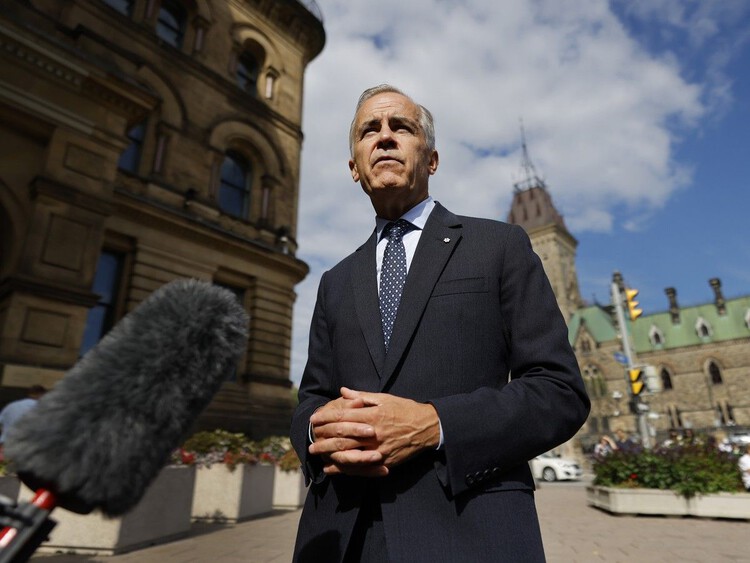
Carney tells U.S. to stop 'doing memes' and 'throwing shade' as war of words escalates — National Post
'It's beneath their office,' Carney grumbled to reporters in Ottawa on Tuesdayapple.news

Senate Minority Leader Chuck Schumer is set to introduce legislation to stop U.S. President Donald Trump's latest tariffs as Democrats ramp up their affordability messaging ahead of midterm elections.
The new bill backed by the Democrat from New York attempts to rein in the latest tariffs on Canadian goods and the separate duties the Trump administration says are linked to non-American forced labour in supply chains. A coalition of U.S. states is already challenging the use of Section 301 for the forced-labour duties so he’ll have to make something else up. The legislation is largely symbolic, since it's unlikely to pass a Republican-controlled Congress or overcome Trump's presidential veto.
Arizona Sen. Ruben Gallego, a Democrat, came to Ottawa on Tuesday to share the message that many Americans disagree with Trump and his "dumb" tariffs targeting Canada. He said there should be technical and specific trade talks, like the CUSMA negotiations that took place during the first Trump administration. "I'd rather be doing that than this tariff policy, which is basically being done by Twitter," Gallego said.
Schumer's new legislation — which would repeal both sets of tariffs and require refunds — comes as polling shows that Trump's tariffs on Canada and the president's executive order renaming Lake Ontario as "Lake America" are widely unpopular.
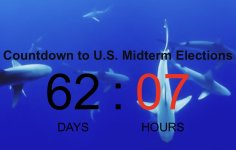
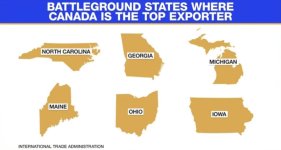
The bilateral tensions could prove to be a boon for Democrats in high-stakes contests in states that do substantial trade with Canada, including Michigan, Maine and Ohio. Some Republicans are already breaking away from Trump's trade policy and messages disparaging Canada.
Schumer's bill is co-sponsored by 13 other Senate Democrats, including Ron Wyden of Oregon. They've called repeatedly for Congress to take back its power over taxes and tariffs from the executive branch.
"Congress has to stand up to Trump, end his trade war with Canada and repeal the outdated law he's using to tax nearly everything we need to get by," Wyden said in the news release. U.S. Representative Debbie Dingell and 87 other congressional representatives have written a letter to Trump calling on his administration to recognize the importance of the U.S.-Canada relationship.
“Canada is not an adversary. Canada is a close friend, neighbor, ally, and economic partner whose security and prosperity is deeply intertwined with the United States," the letter said. "Your Administration’s escalating and chaotic use of trade barriers against Canada is putting this relationship at serious risk." The letter said tariffs and "increasingly adversarial rhetoric" are creating uncertainty for businesses, workers, farmers and consumers on both sides of the border.
Schumer to introduce bill targeting Trump's latest tariffs on Canada — The Canadian Press
Senate Minority Leader Chuck Schumer is set to introduce legislation to stop
The Liberal government is planning to impose countertariffs on U.S. goods valued at $27.6-billion as of Sept. 8. This is in response to Mr. Trump’s new 50-per-cent tariffs on about $28-billion worth of Canadian goods, imposed after trade negotiations between the two countries collapsed on Aug. 21.
Ottawa open to resuming trade talks once U.S. changes its tone, Carney says — The Globe and Mail
Prime Minister credits by-election victories to nationwide support for his government’s approach to trade and the economy
U.S. Trade Representative Jamieson Greer told Politico on Monday that Canada could see additional tariffs, “and you could see import bans or prohibitions similar to the ones that Canada has imposed on us earlier. The comment appears to be a reference to restrictions imposed by most provinces related to the sale of U.S. alcohol. Mr. Greer’s office did not immediately respond to a question about which products could be affected and when.
Asked what conditions would be required for the U.S. to return to the negotiating table, he said there is not “a better deal out there available for the Canadians.” The President’s trade agenda is facing pushback from Democrats ahead of the November midterm elections, where Mr. Trump’s Republican Party is at risk of losing control of the House of Representatives, and possibly the Senate as well.
How Trump’s trade war with Canada threatens Michigan — MS NOW
As a critical Senate race is taking place in Michigan, the state is feeling the impact of Trump’s trade war with Canada. Alex Wagner, MS NOW Senior Political Analyst and host of Runaway Country on Crooked; Catherine Rampell, MS NOW Analyst and Economics Editor at The Bulwark; and Molly-Jong...
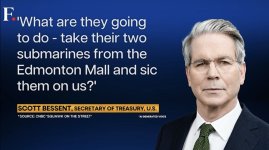
This from the American finance minister over a trade and Trump tariffs dispute? How quickly that mentality turns to an American military option or implied threat there of.
The Donroe Doctrine
Donald Trump has ditched MAGA isolationism in favour of the Monroe Doctrine, a 200-year-old foreign-policy roadmap that claims American power and influence over the Western Hemisphere. There are 35 sovereign states in the Americas, most of which are entirely or mostly in the Western Hemisphere...
 forums.canadiancontent.net
Among these cases, the rollback of Smoot-Hawley tariffs in 1934 is perhaps the most instructive – not least because Section 338 of that Act is the basis for Mr. Trump’s new 50-per-cent levy on some $28-billion worth of Canadian goods.
As the Smoot-Hawley tariffs took their bite into personal incomes and national wealth during the Great Depression, domestic political pressure to ease trade restrictions grew. Democratic candidate Franklin D. Roosevelt’s 1932 election campaign included a commitment to lower import taxes to revive commerce. After winning the election, Roosevelt was able to overcome resistance even within his own party to secure Congressional approval granting the president the authority to negotiate reciprocal tariff reductions with the U.S.’s trading partners.

Smoot–Hawley Tariff Act - Wikipedia
Opinion: Don’t worry, Canada. The trade war will end, and end quickly — The Globe and Mail
Negotiations don’t end tariff wars. Changing domestic political tides and power shifts do.
Colby Cosh: The U.S. president breaks his own laws in waging the trade war — National Post
Can he actually do that? I guess we’ll see!
Mexico presses US on auto, steel tariffs in meeting with Lutnick — Reuters
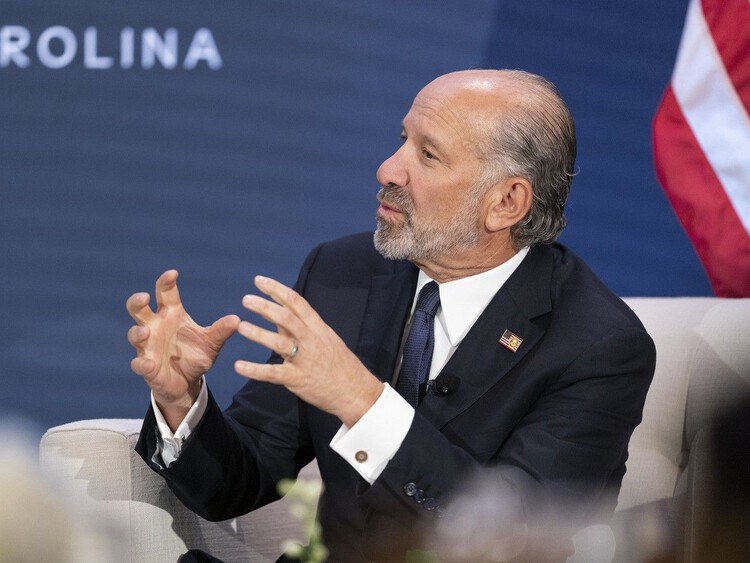
Mexican Economy Minister Marcelo Ebrard met U.S. Commerce Secretary Howard Lutnick on Wednesday as Mexico pushed for progress on U.S. tariffs on cars and steel, a key source of friction in the countries' trade relationship.
We eventually did transition to the metric system. Certain exemptions still apply.P
So how about historicAl figures being cancelled , names are always changing and evolving .
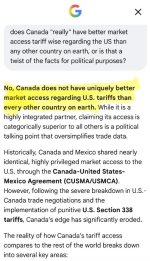
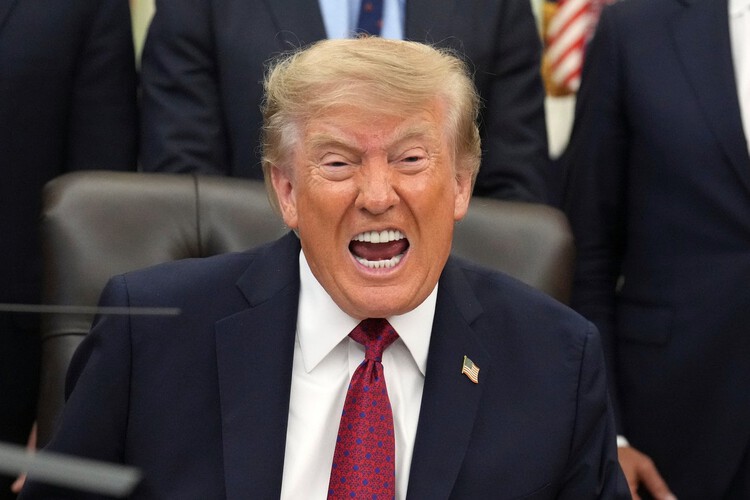
U.S. Trade Representative Jameson Greer and Howard Lutnick (Greer’s boss) have accused the Canadians of cutting talks off for political reasons. Days after talks ended, Greer attributed the collapse to Canada ultimately wanting more than what his administration was willing to give, noting that the proposed agreement included halving U.S. Trump tariffs on Canadian steel and aluminum, reducing Trumps tariffs on Canadian autos and Trump tariff relief on Canadian softwood lumber. The USTR said it was the best market access to the U.S. compared to any other country in the world.
 apple.news
 apple.news
Lutnick says Canadian minister didn't deny trying to 'blow up' negotiations — National Post
The comments were the latest salvo in an escalating war of words between the U.S. and Canadian federal governments
‘We don’t need them’: Trump revives grievances with Canada over banking, aviation — CTV News
As trade tensions continue to rise between Canada and the United States, Donald Trump took aim at Canada again with a list of grievances to support his claim that their northern neighbour has been 'ripping off' the U.S. for decades.
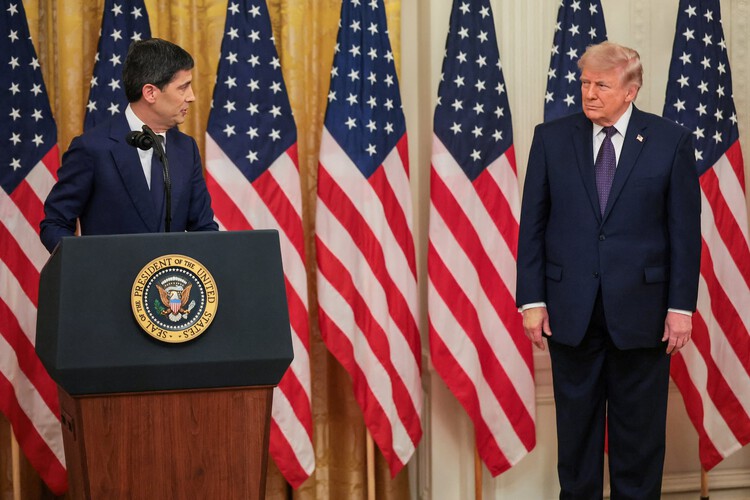
U.S. President Donald Trump on Friday said that unless the Federal Reserve cut interest rates, he would stop trading (?) with countries with which the United States had a deficit? "We should have the LOWEST RATE of any country in the World ... LOWER THE RATE OR I’LL STOP TRADING (?) WITH COUNTRIES WITH WHICH WE HAVE A DEFICIT," Trump said in a Truth Social post.
Following strong job growth reports, financial markets have actually priced in the possibility of rate hikes rather than cuts to combat ongoing inflation, directly defying the president's demands. Halting trade with nations holding a surplus against the U.S. would cut off vital supply chains, risk extreme shortages for American businesses, and potentially spike inflation rather than cure it, but that’s neither here or there I guess.
America has a trade deficit (by their definition) with 97 countries including Canada and Mexico which are the only two countries it’s physically connected to. Halting trade completely with Canada and Mexico simultaneously would trigger an unprecedented economic crisis in the United States, effectively paralyzing North American commerce before the midterms?
 apple.news
Brian Mast, a five-term Congressman from Florida, also criticized Canada for the breakdown in trade talks. "They were given the best possible deal, more generous than anybody else across the globe, and it's something that they turned their back on," Mast told CBC News.
apple.news
Brian Mast, a five-term Congressman from Florida, also criticized Canada for the breakdown in trade talks. "They were given the best possible deal, more generous than anybody else across the globe, and it's something that they turned their back on," Mast told CBC News.
 apple.news
A month ago (August 2026), Canada did not have the best or most stable market access to the U.S.compared to the rest of the world either. In fact, the historic U.S.–Canada trade relationship was facing its worst crisis in decades, characterized by an active trade war and aggressive tariff walls.
apple.news
A month ago (August 2026), Canada did not have the best or most stable market access to the U.S.compared to the rest of the world either. In fact, the historic U.S.–Canada trade relationship was facing its worst crisis in decades, characterized by an active trade war and aggressive tariff walls.
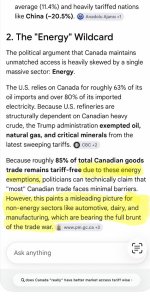
The reality of Canada's market access to the U.S. highlights a very rocky landscape:
1. The 50% Tariff Blast
While Canada historically enjoyed unmatched, duty-free market access via the Canada-United States-Mexico Agreement (CUSMA), that integration severely fractured. On August 19, 2026, the U.S. implemented sweeping 50% tariffs targeting roughly $27.6 billion (C$) of Canadian goods, including steel, aluminum, automotive components, and consumer items.
2. Suspended Negotiations & Retaliation
The administration of Prime Minister Mark Carney actually suspended trade talks with the U.S. after failing to reach an acceptable baseline. Canada announced a massive dollar-for-dollar counter-tariff response set to hit U.S. imports right after Labor Day (September 8, 2026), along with a $7.5 billion emergency bailout package for impacted domestic workers and businesses.
3. Slipped Trade Standings
Due to compounding trade frictions and tariffs that began escalating in early 2025, Canada’s status as America's premier economic partner eroded. By mid-2026, Mexico officially surpassed Canada as the United States' top trading partner in goods, dropping Canada to third place behind both Mexico and China (making China great again?).
The Silver Lining (Where the Claim Originated)
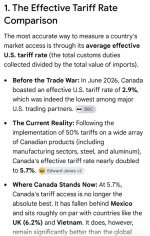
The idea that Canada had the "best access" actually stems from political rhetoric rather than immediate economic reality. During the height of the tariff freeze and frantic negotiations in late August, Prime Minister Carney explicitly stated that the core objective of his intensive talks was to dramatically reduce those levies "so that Canadian businesses in these sectors would have the best access of any in the world". Additionally, European trade experts noted that even with the ongoing disputes, Canada's baseline CUSMA protections meant its products still faced an average U.S. tariff of 5.2% compared to a global non-FTA average of 11.4%.
Ultimately, Canada spent the last month aggressively attempting to salvage its preferential access while pivoting to European and Asia-Pacific markets to hedge against its heavy U.S. dependence.
Trump told reporters that one of his biggest grievances against Canada is the limits it puts on U.S. bank operations north of the border. "They basically (?) don't allow banks of America to be in Canada, that's sort of emblematic of the way they treat us," Trump said in the Oval Office on Wednesday afternoon. “Canada has all of its major banks here, and we're their biggest source of income, far bigger than they are in Canada," he said.
View attachment 35572
The Canadian government does allow American and other foreign banks to operate in Canada.
U.S. Bank Presence in Canada
 apple.news
Iran may not even be the most electorally damaging of Trump’s foreign adventures. He is, and it would once have been absurd to write this sentence, leading his country into a state of war with … Canada. It’s easy to laugh at the petty gestures, such as Trump’s renaming of Lake Ontario as Lake America, a move shamefully followed, and therefore endorsed, by Apple and Google in their map apps. But the economic confrontation is serious – and seriously damaging to Republicans’ electoral prospects.
apple.news
Iran may not even be the most electorally damaging of Trump’s foreign adventures. He is, and it would once have been absurd to write this sentence, leading his country into a state of war with … Canada. It’s easy to laugh at the petty gestures, such as Trump’s renaming of Lake Ontario as Lake America, a move shamefully followed, and therefore endorsed, by Apple and Google in their map apps. But the economic confrontation is serious – and seriously damaging to Republicans’ electoral prospects.
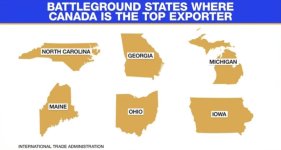
For which US states are hit hardest by Canada’s “dollar-for-dollar” response to Trump’s tariffs? Why, it’s Michigan, Ohio, Maine, Iowa and Texas, all of which just happen to have key senate contests this year. Republican candidates in those states now have to explain why a crucial and previously friendly export market – Canada takes nearly a third of Iowa’s exports, for example – has suddenly turned icy.
 apple.news
 apple.news
Following strong job growth reports, financial markets have actually priced in the possibility of rate hikes rather than cuts to combat ongoing inflation, directly defying the president's demands. Halting trade with nations holding a surplus against the U.S. would cut off vital supply chains, risk extreme shortages for American businesses, and potentially spike inflation rather than cure it, but that’s neither here or there I guess.
America has a trade deficit (by their definition) with 97 countries including Canada and Mexico which are the only two countries it’s physically connected to. Halting trade completely with Canada and Mexico simultaneously would trigger an unprecedented economic crisis in the United States, effectively paralyzing North American commerce before the midterms?
Trump says if the Fed doesn't cut rates, he'll stop trading with some nations — Reuters
U.S. President Donald Trump on Friday said that unless the Federal Reserve cut interest rates, he would stop trading with countries with which the United States had a deficit.
Republicans are blaming Canada for Trump's trade war — CBC News
Republican members of Congress are publicly backing U.S. President Donald Trump in his trade war with Canada and blaming Prime Minister Mark Carney's government for walking away from negotiations.
The reality of Canada's market access to the U.S. highlights a very rocky landscape:
1. The 50% Tariff Blast
While Canada historically enjoyed unmatched, duty-free market access via the Canada-United States-Mexico Agreement (CUSMA), that integration severely fractured. On August 19, 2026, the U.S. implemented sweeping 50% tariffs targeting roughly $27.6 billion (C$) of Canadian goods, including steel, aluminum, automotive components, and consumer items.
2. Suspended Negotiations & Retaliation
The administration of Prime Minister Mark Carney actually suspended trade talks with the U.S. after failing to reach an acceptable baseline. Canada announced a massive dollar-for-dollar counter-tariff response set to hit U.S. imports right after Labor Day (September 8, 2026), along with a $7.5 billion emergency bailout package for impacted domestic workers and businesses.
3. Slipped Trade Standings
Due to compounding trade frictions and tariffs that began escalating in early 2025, Canada’s status as America's premier economic partner eroded. By mid-2026, Mexico officially surpassed Canada as the United States' top trading partner in goods, dropping Canada to third place behind both Mexico and China (making China great again?).
The Silver Lining (Where the Claim Originated)
The idea that Canada had the "best access" actually stems from political rhetoric rather than immediate economic reality. During the height of the tariff freeze and frantic negotiations in late August, Prime Minister Carney explicitly stated that the core objective of his intensive talks was to dramatically reduce those levies "so that Canadian businesses in these sectors would have the best access of any in the world". Additionally, European trade experts noted that even with the ongoing disputes, Canada's baseline CUSMA protections meant its products still faced an average U.S. tariff of 5.2% compared to a global non-FTA average of 11.4%.
Ultimately, Canada spent the last month aggressively attempting to salvage its preferential access while pivoting to European and Asia-Pacific markets to hedge against its heavy U.S. dependence.
Trump told reporters that one of his biggest grievances against Canada is the limits it puts on U.S. bank operations north of the border. "They basically (?) don't allow banks of America to be in Canada, that's sort of emblematic of the way they treat us," Trump said in the Oval Office on Wednesday afternoon. “Canada has all of its major banks here, and we're their biggest source of income, far bigger than they are in Canada," he said.
View attachment 35572
The Canadian government does allow American and other foreign banks to operate in Canada.
U.S. Bank Presence in Canada
- American banks like JPMorgan Chase, Citibank, and Wells Fargo do business in Canada.
- U.S. banks hold billions of dollars in assets and operate subsidiaries or branches across the country.
- Foreign banks are legally categorized as Schedule II (foreign-owned subsidiaries) or Schedule III (foreign bank branches) under the Bank Act.
- U.S. President Donald Trump falsely claimed that Canada bans American banks, which was reported by CBC News.
- President Trump also mistakenly described the Bank of Canada as a commercial retail bank rather than a central Crown corporation.
- Canada's market is heavily dominated by domestic institutions known as the "Big Six" banks, making it difficult for foreign retail banks to compete for everyday consumer banking.
Carney’s summit to push Canadian resources, defence and tech to global investors — The Globe and Mail
Former PM Harper expected to speak at the end of the global conference in Toronto, sources say
For which US states are hit hardest by Canada’s “dollar-for-dollar” response to Trump’s tariffs? Why, it’s Michigan, Ohio, Maine, Iowa and Texas, all of which just happen to have key senate contests this year. Republican candidates in those states now have to explain why a crucial and previously friendly export market – Canada takes nearly a third of Iowa’s exports, for example – has suddenly turned icy.
Opinion | How much does Donald Trump care about winning the midterms? Apparently, not much at all — Guardian US
Such is the US president’s narcissism that he would see a Democratic victory as proof that he’s indispensable – meanwhile, his every decision spells calamity for voters, says Guardian columnist Jonathan Freedland
How the ongoing trade war is impacting U.S. midterm elections — Global News
The 2026 U.S. midterms are slated for November, and control of the Senate hinges largely on states that share a border with Canada. Swing states like Maine, Michigan and Ohio are major trading partners for Canada. Marc Short, republican strategist and previous Chief of Staff to former U.S. Vice...
Poll finds nearly 70% of Canadian small businesses rely on ties to U.S.
The Merchant Growth poll shows the tariffs war with the U.S. will be detrimental to Canadian small businesses
Author of the article:Jane Stevenson
Published Sep 04, 2026 • Last updated 14 hours ago • 2 minute read
Man working on laptop
According to the annual RBC Small Business Poll, eight in 10 Canadians believe small business ownership is a viable way to earn a living today. Photo by Supplied
Canada’s counter-tariffs against U.S. exports are set to take effect on Sept. 8, and Merchant Growth says its new poll shows the tariffs war with the U.S. will be detrimental to Canadian small businesses.
According to the study by the Canadian online financing solution for small business, over 69% have U.S. ties they rely on, whether that’s a supplier, customer or partner,
The survey found 20% said their U.S. ties are core to their operations and revenue while 19% say they are important but not critical.
Another 16% said tariffs are already among the cost pressures significantly impacting their business this summer.
The poll also found that in response to economic or trade pressures, 61% have cut spending, 34% have delayed hiring, 30% have reduced staff, 30% have paused or cancelled expansion plans and 27% have raised prices.
Some businesses already moving away from U.S. exposure
Additionally, the survey said some businesses are already moving away from U.S. exposure, with 14% switching to Canadian or non-U.S. suppliers and 11% stopping work with U.S. suppliers altogether.
“Small businesses aren’t waiting for the full impact of tariffs to hit before changing how they operate,” Hash Aboulhosn, chief growth officer for Merchant Growth, said in a statement to the Toronto Sun. “They’re pulling back on spending and hiring, reconsidering supplier relationships and, in some cases, moving away from U.S. partners altogether.”
“That tells us just how cautious business owners have become. With Canada’s counter-tariffs taking effect on Sept. 8, it’s important to remember that these costs don’t simply stop at the border. They can move through suppliers, distributors and customers, reaching businesses that may not import anything themselves.”
“But the bigger challenge is the uncertainty. When a small business owner doesn’t know what their inputs will cost a few months from now or how customers will respond, it becomes much harder to invest, hire or plan for growth. The instinct becomes protecting the business and preserving flexibility until there’s more clarity,” Aboulhosn added.
45% say weaker consumer demand impacting summer biz
The poll found that 45% say weaker consumer demand is significantly impacting their business this summer, followed by fuel costs (39%), utilities (39%), labour costs (34%) and commercial rent or lease increases (28%). Tariffs were cited by 16%.
Another finding in the survey is that 80% believe Canada is either already in an economic downturn or likely heading toward one within the next 12 months.
On government support, 72% cited access to low-interest small business loans, 64% permanent tax relief and 16% tariff rebates or import-cost relief.
Merchant Growth’s 2026 Small Business Survey was open from May 1-19 and received 130 responses nationally, with 126 completed responses, including 64 respondents in Ontario.
jstevenson@postmedia.com

 torontosun.com
The Merchant Growth poll shows the tariffs war with the U.S. will be detrimental to Canadian small businesses
Author of the article:Jane Stevenson
Published Sep 04, 2026 • Last updated 14 hours ago • 2 minute read
Man working on laptop
According to the annual RBC Small Business Poll, eight in 10 Canadians believe small business ownership is a viable way to earn a living today. Photo by Supplied
Canada’s counter-tariffs against U.S. exports are set to take effect on Sept. 8, and Merchant Growth says its new poll shows the tariffs war with the U.S. will be detrimental to Canadian small businesses.
According to the study by the Canadian online financing solution for small business, over 69% have U.S. ties they rely on, whether that’s a supplier, customer or partner,
The survey found 20% said their U.S. ties are core to their operations and revenue while 19% say they are important but not critical.
Another 16% said tariffs are already among the cost pressures significantly impacting their business this summer.
The poll also found that in response to economic or trade pressures, 61% have cut spending, 34% have delayed hiring, 30% have reduced staff, 30% have paused or cancelled expansion plans and 27% have raised prices.
Some businesses already moving away from U.S. exposure
Additionally, the survey said some businesses are already moving away from U.S. exposure, with 14% switching to Canadian or non-U.S. suppliers and 11% stopping work with U.S. suppliers altogether.
“Small businesses aren’t waiting for the full impact of tariffs to hit before changing how they operate,” Hash Aboulhosn, chief growth officer for Merchant Growth, said in a statement to the Toronto Sun. “They’re pulling back on spending and hiring, reconsidering supplier relationships and, in some cases, moving away from U.S. partners altogether.”
“That tells us just how cautious business owners have become. With Canada’s counter-tariffs taking effect on Sept. 8, it’s important to remember that these costs don’t simply stop at the border. They can move through suppliers, distributors and customers, reaching businesses that may not import anything themselves.”
“But the bigger challenge is the uncertainty. When a small business owner doesn’t know what their inputs will cost a few months from now or how customers will respond, it becomes much harder to invest, hire or plan for growth. The instinct becomes protecting the business and preserving flexibility until there’s more clarity,” Aboulhosn added.
45% say weaker consumer demand impacting summer biz
The poll found that 45% say weaker consumer demand is significantly impacting their business this summer, followed by fuel costs (39%), utilities (39%), labour costs (34%) and commercial rent or lease increases (28%). Tariffs were cited by 16%.
Another finding in the survey is that 80% believe Canada is either already in an economic downturn or likely heading toward one within the next 12 months.
On government support, 72% cited access to low-interest small business loans, 64% permanent tax relief and 16% tariff rebates or import-cost relief.
Merchant Growth’s 2026 Small Business Survey was open from May 1-19 and received 130 responses nationally, with 126 completed responses, including 64 respondents in Ontario.
jstevenson@postmedia.com
Poll finds nearly 70% of Canadian small businesses rely on ties to U.S.
A new poll shows the Canada-U.S. tariffs war will be detrimental to Canadian small businesses that rely on U.S. ties. Read more.
Trump slashes at Prime Minister Mark Carney with hockey cartoon
Trump called Carney “governor,” commanding him to “get up” off the ice.
Author of the article:Gordon Anderson
Published Sep 07, 2026 • Last updated 14 hours ago • 2 minute read
trump carney
President Donald Trump speaks with Canadian Prime Minister Mark Carney at a working lunch with leaders of G7 and the Middle East on June 16 in Evian-les-Bains, France. Photo by Photo by Evelyn Hockstein - Pool/Getty Images
In a social media war that has become decidedly one-sided, U.S. President Donald Trump threw another haymaker in his war with Canada.
This time, the American president set his sights mainly on Prime Minister Mark Carney, though secondarily on the national pastime, posting a cartoon on Truth Social on Sunday of the two world leaders playing something that looked like hockey.
The post had 11.4 K likes.
But it looked more like superiority, with Trump in his USA jersey lording over Carney, who was sprawled on the ice wearing a Canada sweater. Trump called Carney “governor,” commanding him to “get up” off the ice.
‘Governor Carney’
The ‘governor’ memes directed specifically at Carney are not new, as Trump started sharing the association on social media back in the January timeframe when he called the Prime Minister “Governor Carney” for his attempts at negotiating a partnership with China, revolving around trade and investment.
Trump called Carney “Governor of Canada” again in March in a Truth Social post about saving the Great Lakes from the invasive Asian Carp.
Trump also referred to former prime minister Justin Trudeau as “Governor Trudeau” after he took over the Oval Office in January of last year.
Trump then turned his sights on the Canadian dollar exchange rate to the American greenback, saying the rate was “unacceptable” and that it has been “that way for years.”
As of Monday morning, it costs $1.38 to purchase $1 US.
“Canada’s (currency) dollar imbalance with the U.S. is unacceptable,” the post read. “It has been that way for years – but no longer!”
Trump did not elaborate further on what that comment meant.
Although there is no direct link between the two, the posts come just one day before Canadian tariffs will take effect on Tuesday, targeting nearly $28 billion on 700 American products.
“Canada’s counter tariffs will apply to products covering $27.6 billion in imports from the U.S. and will focus on sectors such as steel, dairy, appliances, agricultural equipment, pulp and paper, and electronics, that are most impacted by U.S. tariffs,” a post on the Government of Canada website said.
ganderson@postmedia.com
 canada.ca

 truthsocial.com
 torontosun.com
Trump called Carney “governor,” commanding him to “get up” off the ice.
Author of the article:Gordon Anderson
Published Sep 07, 2026 • Last updated 14 hours ago • 2 minute read
trump carney
President Donald Trump speaks with Canadian Prime Minister Mark Carney at a working lunch with leaders of G7 and the Middle East on June 16 in Evian-les-Bains, France. Photo by Photo by Evelyn Hockstein - Pool/Getty Images
In a social media war that has become decidedly one-sided, U.S. President Donald Trump threw another haymaker in his war with Canada.
This time, the American president set his sights mainly on Prime Minister Mark Carney, though secondarily on the national pastime, posting a cartoon on Truth Social on Sunday of the two world leaders playing something that looked like hockey.
The post had 11.4 K likes.
But it looked more like superiority, with Trump in his USA jersey lording over Carney, who was sprawled on the ice wearing a Canada sweater. Trump called Carney “governor,” commanding him to “get up” off the ice.
‘Governor Carney’
The ‘governor’ memes directed specifically at Carney are not new, as Trump started sharing the association on social media back in the January timeframe when he called the Prime Minister “Governor Carney” for his attempts at negotiating a partnership with China, revolving around trade and investment.
Trump called Carney “Governor of Canada” again in March in a Truth Social post about saving the Great Lakes from the invasive Asian Carp.
Trump also referred to former prime minister Justin Trudeau as “Governor Trudeau” after he took over the Oval Office in January of last year.
Trump then turned his sights on the Canadian dollar exchange rate to the American greenback, saying the rate was “unacceptable” and that it has been “that way for years.”
As of Monday morning, it costs $1.38 to purchase $1 US.
“Canada’s (currency) dollar imbalance with the U.S. is unacceptable,” the post read. “It has been that way for years – but no longer!”
Trump did not elaborate further on what that comment meant.
Although there is no direct link between the two, the posts come just one day before Canadian tariffs will take effect on Tuesday, targeting nearly $28 billion on 700 American products.
“Canada’s counter tariffs will apply to products covering $27.6 billion in imports from the U.S. and will focus on sectors such as steel, dairy, appliances, agricultural equipment, pulp and paper, and electronics, that are most impacted by U.S. tariffs,” a post on the Government of Canada website said.
ganderson@postmedia.com
List of products from the United States subject to counter-tariffs effective September 8, 2026 - Canada.ca
The list below may no longer reflect current tariff measures or rates. Effective September 8, 2026, Canada will impose 15, 25, and 50 per cent tariffs on products drawn from those targeted by U.S. Section 338 and Section 232 tariffs, with individual product rates based on the matching U.S. rate...
Truth Social
Truth Social is America's "Big Tent" social media platform that encourages an open, free, and honest global conversation without discriminating on the basis of political ideology.
truthsocial.com
Trump slashes at Prime Minister Mark Carney with hockey cartoon
It looked like superiority with Trump in his USA jersey lording over Carney who was sprawled on the ice in a Canada sweater. Read more.
Canadian countertariffs take effect on $28-billion of U.S. imports — The Globe and Mail
Ottawa’s levies are in response to 50-per-cent tariffs that President Trump levelled against Canada on Aug. 22

Great let’s get back at Trump and create more government revenue at the same time , while Canadians foot the bill . We should be tariffing American imports at 100% , It is a popular move with the elbows up crowd and we can afford it .The reciprocal stupidity begins in ernest now. The Canadian tariffs are in response to 50-per-cent tariffs that Mr. Trump levelled against Canada on Aug. 22. Ottawa’s levies are set mostly at 25 or 50 per cent, with a small number of goods subject to a lower 15-per-cent duty.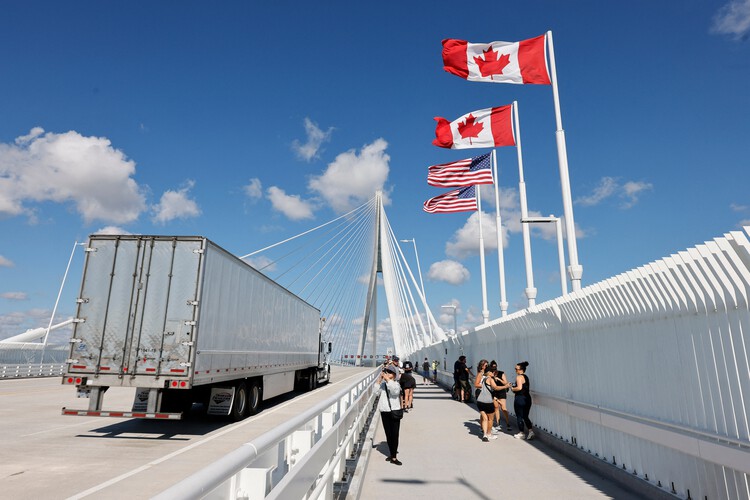
Canadian countertariffs take effect on $28-billion of U.S. imports — The Globe and Mail
Ottawa’s levies are in response to 50-per-cent tariffs that President Trump levelled against Canada on Aug. 22

Great let’s get back at Trump and create more government revenue at the same time , while Canadians foot the bill . We should be tariffing American imports at 100% , It is a popular move with the elbows up crowd and we can afford it .
Key moments from the Canada-U.S. trade war today — The Globe and Mail
Carney warns of adversity ahead as trade war escalates; several provinces step-up countermeasures but Smith urges caution
Canada's new tariffs: Businesses are bracing for higher costs — but shoppers may barely notice — CBC News
Experts say Canada's new tariffs will have an outsized impact on the country's small and medium-sized businesses, with few consequences for individual consumers.
Donald Trump bans Canadian alcohol and dairy imports, boosts tariffs: 'This is retribution' — Toronto Star
The U.S. president made the announcement Tuesday, hours after Canadian counter-tariffs on American imports came into effect.
Do we have any bombs that work, or will we have to buy one from the US first? There would be a certain amount of satisfaction in blowing up a second white house with their own bomb.Bomb DC, for you MAGA wankers, pretend its Tehran.
Have you ever been to the Peace Arch ?Do we have any bombs that work, or will we have to buy one from the US first? There would be a certain amount of satisfaction in blowing up a second white house with their own bomb.
Blah blah blah…reciprocal escalating stupidity from both federal governments as they point fingers at each other while taxpayers on both sides of the border get squeezed.
Jamieson Greer blames Canada for U.S. hitting back over counter-tariffs — Global News
Canada forced the United States' hand in delivering its latest trade war escalation, according to U.S. President Donald Trump's trade czar.
Canada’s minister responsible for U.S. trade, Dominic LeBlanc, issued a statement on social media late Tuesday in response, and said he is “in contact” (?) with Greer.
“When the US is ready to engage, our government will work in good faith and constructively towards a more secure mutually beneficial trading relationship that fully respects Canadian sovereignty,” said LeBlanc.
Trump last month used Section 338 of the Tariff Act of 1930 to hit Canada with 50 per cent tariffs, the maximum allowed under that century old act that allows him to again bypass Congress, accusing Canada of treating the U.S. unfairly.
Smoot–Hawley Tariff Act - Wikipedia
'It's a little unhinged' for Canada to call dispute a trade war: Jamieson Greer — CBC News
U.S. President Donald Trump's top trade official says it's "unhinged" for Canadian leaders to characterize the administration's tariffs as a trade war against Canada.
Key moments from the Canada-U.S. trade war today — The Globe and Mail
Trump’s import bans hit hardest in Ontario and Quebec; former ambassador to U.S. says it could be months before negotiations resume
The Conservative Party says in honouring the victims of 9/11, “Poilievre will highlight the contributions made by Canadians and Americans together in the aftermath of the terrorist attack.”
Conservative leader heads to U.S. to promote Canada as Trump escalates trade war — CTV News
Conservative Leader Pierre Poilievre is heading to New York Wednesday night, and will stay to participate in ceremonies commemorating the 25th anniversary of the Sept. 11 terrorist attacks Friday, according to a senior Conservative source.
The U.S.-Mexico-Canada Agreement, or USCMA, is at the center of the U.S. and Canada’s trade disagreements. The trade deal, signed during Trump’s first term, allowed for the continuation of Canada’s dairy supply management system.
Trump’s premise that Canada has shut out American producers is also disputed. U.S. producers exported about $1.31 billion in milk, cheese, butter and other dairy products to Canada in 2025, while the U.S. bought about $432 million worth of Canadian dairy, according to Agriculture Department data — a surplus of roughly $880 million in the U.S.’ favor.
 apple.news
Trump’s premise that Canada has shut out American producers is also disputed. U.S. producers exported about $1.31 billion in milk, cheese, butter and other dairy products to Canada in 2025, while the U.S. bought about $432 million worth of Canadian dairy, according to Agriculture Department data — a surplus of roughly $880 million in the U.S.’ favor.
Trump banned Canadian dairy. American farmers aren’t happy. — MS NOW
Canada’s supply management system shields its farmers from foreign price shocks. Farm groups say that leaves American producers more exposed.
Time for Ottawa to rename 'embarrassing' Trump Ave., ward councillor says
River Coun. Riley Brockington gave notice of motion to be considered at next city council meeting on Sept. 23
Author of the article:Aedan Helmer
Published Sep 09, 2026 • Last updated 1 hour ago • 3 minute read
A file photo of a Trump Avenue street sign.
A file photo of a Trump Avenue street sign. Photo by MICHEL COMTE /AFP via Getty Images
Ottawa council is playing its own version of the renaming game as the city took the first steps to tearing down the Trump Avenue signs from the Central Park neighbourhood and replacing them with another name.
River Coun. Riley Brockington, who introduced a notice of motion to rename the street at the Sept. 9 council session, said in an interview he was “embarrassed” to have a street named after U.S. President Donald Trump in the nation’s capital and in his ward.
With an escalating trade war and the president renewing a war of words, memes and threats against Canada — including an executive order to rename Lake Ontario as Lake America — Brockington said the timing was right to dump Trump Avenue.
The veteran councillor, who is running unopposed and is poised to be re-elected by acclamation, first joined a community-led attempt to rename the street in 2021 after Trump’s first term as U.S. president.
That attempt failed, as 42 votes were received from the 62 homes on Trump Avenue: 21 in favour of changing the name and 21 opposed.
“I deliberately waited until the first term of the president had passed,” Brockington said Wednesday. “I was concerned at that time that there would be the potential for some sort of retaliatory response, and we’ve seen that. You name it and there’s a retaliatory response.”
Brockington said he hand-delivered a letter to every home on the street “in the middle of winter” in 2021 and followed up with those who did not respond.
Riley Brockington Ottawa City Council
Riley Brockington, city councillor for River ward, plans to introduce a motion calling for a new name for Trump Avenue to be proposed by the second quarter of 2027. Photo by Jean Levac /POSTMEDIA
Brockington said he’d received overwhelming support for renaming the street since the idea resurfaced in recent weeks.
“I’m embarrassed about a street in our city, let alone my ward, named in his honour,” Brockington said. “Just in the context of tariffs and their impact on Canada and Ontario, nothing has happened that would result in anyone saying this was a good idea (to name a street after Trump.)
“That led to an absolutely overwhelming volume of correspondence that I have received in the last two weeks from all over Canada and the United States. We’ve heard from people in Australia, Greece, the U.K.
“We’re at the point where it’s just completely unacceptable to have the street named after this individual,” he said. “I could speak at length about it … just one incident would be enough for any resident to trigger us to reflect on and reconsider the name. But we’re just past that point. It’s time to move forward. It’s time to rename the street, and I will engage everyone on a process going forward.”
The Central Park neighbourhood was built in the late 1990s west of Merivale Road and north of Baseline Road across from a parcel of the Central Experimental Farm, with many of its streets named after New York City landmarks, including names like Gramercy Park, Staten Way and Bloomingdale Street.
Brockington’s motion, which is set to be debated at the Sept. 23 council meeting, notes Trump was known as a real estate mogul at the time of the street was named after him.
The Central Park street naming theme “was not proposed as a commemorative naming initiative and (was) simply thematically named,” the motion reads.
The name “would not meet any of the criteria had it gone through a formal commemorative naming process” today.
“Ottawa prides itself on who it commemorates and honours,” the motion reads.
A new name for the street must comply with the city’s street naming policies and could retain a New York City theme or a name deviating from that theme. The motion calls for a new name to be proposed by the second quarter of 2027.

 torontosun.com
River Coun. Riley Brockington gave notice of motion to be considered at next city council meeting on Sept. 23
Author of the article:Aedan Helmer
Published Sep 09, 2026 • Last updated 1 hour ago • 3 minute read
A file photo of a Trump Avenue street sign.
A file photo of a Trump Avenue street sign. Photo by MICHEL COMTE /AFP via Getty Images
Ottawa council is playing its own version of the renaming game as the city took the first steps to tearing down the Trump Avenue signs from the Central Park neighbourhood and replacing them with another name.
River Coun. Riley Brockington, who introduced a notice of motion to rename the street at the Sept. 9 council session, said in an interview he was “embarrassed” to have a street named after U.S. President Donald Trump in the nation’s capital and in his ward.
With an escalating trade war and the president renewing a war of words, memes and threats against Canada — including an executive order to rename Lake Ontario as Lake America — Brockington said the timing was right to dump Trump Avenue.
The veteran councillor, who is running unopposed and is poised to be re-elected by acclamation, first joined a community-led attempt to rename the street in 2021 after Trump’s first term as U.S. president.
That attempt failed, as 42 votes were received from the 62 homes on Trump Avenue: 21 in favour of changing the name and 21 opposed.
“I deliberately waited until the first term of the president had passed,” Brockington said Wednesday. “I was concerned at that time that there would be the potential for some sort of retaliatory response, and we’ve seen that. You name it and there’s a retaliatory response.”
Brockington said he hand-delivered a letter to every home on the street “in the middle of winter” in 2021 and followed up with those who did not respond.
Riley Brockington Ottawa City Council
Riley Brockington, city councillor for River ward, plans to introduce a motion calling for a new name for Trump Avenue to be proposed by the second quarter of 2027. Photo by Jean Levac /POSTMEDIA
Brockington said he’d received overwhelming support for renaming the street since the idea resurfaced in recent weeks.
“I’m embarrassed about a street in our city, let alone my ward, named in his honour,” Brockington said. “Just in the context of tariffs and their impact on Canada and Ontario, nothing has happened that would result in anyone saying this was a good idea (to name a street after Trump.)
“That led to an absolutely overwhelming volume of correspondence that I have received in the last two weeks from all over Canada and the United States. We’ve heard from people in Australia, Greece, the U.K.
“We’re at the point where it’s just completely unacceptable to have the street named after this individual,” he said. “I could speak at length about it … just one incident would be enough for any resident to trigger us to reflect on and reconsider the name. But we’re just past that point. It’s time to move forward. It’s time to rename the street, and I will engage everyone on a process going forward.”
The Central Park neighbourhood was built in the late 1990s west of Merivale Road and north of Baseline Road across from a parcel of the Central Experimental Farm, with many of its streets named after New York City landmarks, including names like Gramercy Park, Staten Way and Bloomingdale Street.
Brockington’s motion, which is set to be debated at the Sept. 23 council meeting, notes Trump was known as a real estate mogul at the time of the street was named after him.
The Central Park street naming theme “was not proposed as a commemorative naming initiative and (was) simply thematically named,” the motion reads.
The name “would not meet any of the criteria had it gone through a formal commemorative naming process” today.
“Ottawa prides itself on who it commemorates and honours,” the motion reads.
A new name for the street must comply with the city’s street naming policies and could retain a New York City theme or a name deviating from that theme. The motion calls for a new name to be proposed by the second quarter of 2027.
Time for Ottawa to rename 'embarrassing' Trump Ave., ward councillor says
River Coun. Riley Brockington gave notice of a motion to be considered at the next city council meeting on Sept. 23.