Last week, the United States Trade Representative (USTR) launched
investigations into 60 economies under Section 301(b) of the U.S. Trade Act of 1974 to determine whether they have failed to impose or enforce bans on imports produced with forced labour. But critics in the Washington beltway say the 301 probes are basically a “show trial” and that the verdict is sure to go against trading partners such as Canada.
Canada and Mexico, two of America’s biggest trading partners, are being grouped together with China and dozens of other countries for these investigations. The probes will examine whether Ottawa’s forced-labour rules and framework, including the 2023 Fighting Against Forced Labour and Child Labour in Supply Chains Act, are sufficient for screening goods produced by child or forced labour.
The inclusion of Canada “was unbelievably shocking to me,” said Clark Packard, research fellow at CATO’s Herbert A. Stiefel Center for Trade Policy Studies.
“This poisons the well in terms of any USMCA negotiation,” Packard added, referring to the renegotiation of the U.S.-Mexico-Canada trade agreement scheduled for July.
Section 301 gives the U.S. trade representative power to unilaterally restrict imports or suspend trade agreements over trade practices it considers unjustifiable, unreasonable or discriminatory, or that burden domestic commerce.
Investigations under the section, which follow a formalized process of consultations and hearings, usually take around 12 months to complete. But U.S. trade officials have already said they expect the probes to be completed within five months so that new tariffs can replace the time-limited Section 122 duties.
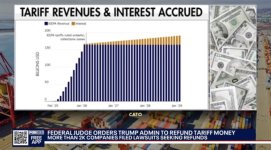
Those were the duties imposed by President Donald Trump after his use of global tariffs under the International Emergency Economic Powers Act (IEEPA)
were ruled invalid by the U.S. Supreme Court in February. However, the Section 122 duties, which give the president temporary tariff power to address a severe balance-of-payments shortage or currency crisis, are only good for five months.
This means the conclusion of the 301 investigation into Canada could coincide with this
summer’s USMCA review.
So, is this really about Canada using forced labour?
This question drew laughs from Washington trade watchers.
The U.S. has begun forced labour probes into 60 economies that critics say are a ‘show trial’ that will allow Trump to slap new tariffs on trading partners such as Canada

apple.news
“This has nothing to do with forced labour,” said Inu Manak, senior fellow for international trade at the Council on Foreign Relations.
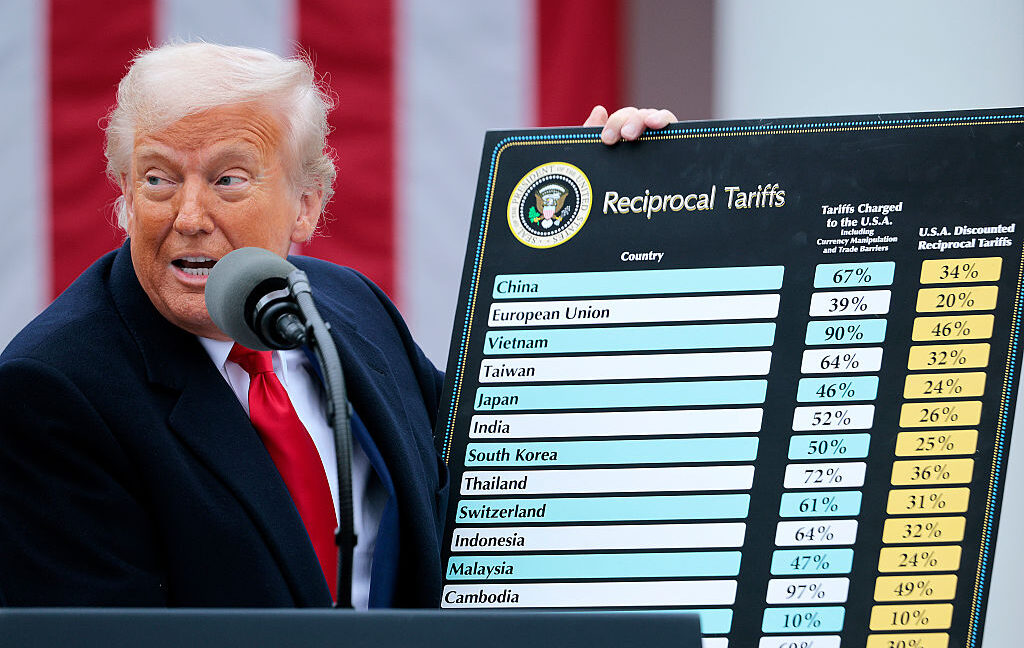
She explained that these and the other probes recently launched by the administration also under Section 301 — looking at allegations of structural overcapacity and excessive production of major products like autos, steel and semiconductors — are part of an effort to rebuild the IEEPA tariff wall as comprehensively as possible, covering more than 70 countries.
Packard agreed. “It’s an egregious claim,” he said. “I think the United States is just grasping at straws and doing anything it can to make the case for tariffs on all these countries.”
He thinks the administration is constructing a pretext to defend the tariffs it’s already planning by alleging multiple violations, as it anticipates the inevitable legal challenges.
Forced labour is a serious issue and worth addressing, said Andrew Hale, fellow at Advancing American Freedom, a conservative advocacy group. But by declaring that the 301 probes will take just five months, he said the administration is not following the right process and thus “doing this in bad faith.”
“They’re just trying to replicate what they lost with IEEPA,” he said.
The critics also pointed to the hypocrisy of the probes, given that plenty of textiles made in factories in China categorized as using forced Uyghur labour are sold in the U.S. and worn by Americans. Packard noted that U.S. prisons also use labour practices that mirror the administration’s forced-labour critiques.
Still, the allegations have been filed, and Canada is very likely to be found in violation.
“Section 301 allows the U.S. government to be basically a detective, a prosecutor, and a judge and jury,” said Packard, calling it a “show trial.”
“We know the USTR is going to come back with affirmative answers … the fix is in.”
The resulting tariff level, however, is anyone’s guess. The statute allows Trump to place any percentage of tariff he chooses for as long as he likes, against all or some Canadian products.
Packard and Manak assume the U.S. administration will keep USMCA-compliant goods exempted, as it did when using the IEEPA and Section 122 tariffs, but there are no guarantees. Placing high tariffs on all goods would obviously undermine the trade deal.
That would be hugely problematic for both Canada and the United States, given their high level of trade integration.
“I don’t think he’s going to go that far,”

Manak said, noting how disruptive that would be to U.S. manufacturing? “But I think (the U.S. will) threaten it to get other concessions from Canada.”
The timing will be key for both Trump and Ottawa. If U.S. inflation rises as a result of tariffs and the current war with Iran, affordability issues may be key to the U.S. midterm elections in November. In fact, many already predict that Republicans are facing a sound defeat, at least in the House. This could change the political dynamic, leaving Trump a lame duck with an antagonistic Congress that slows him down.
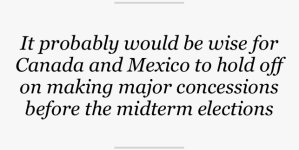
That is why Manak advises Ottawa to be patient when renegotiations begin this summer. The talks could go on well past November.








 This crisis is inflating costs for automotive, packaging, and aerospace industries, with analysts forecasting a 1.5 million metric ton global deficit.