

That would be my bet. Just not the official version.Most likely a joint operation.
The Donroe Doctrine
- Thread starter Ron in Regina
- Start date
You are using an out of date browser. It may not display this or other websites correctly.
You should upgrade or use an alternative browser.
You should upgrade or use an alternative browser.


The last one the US blew up with a missile was so 11 days ago, but compared to everything else that’s going on it just wasn’t that newsworthy I guess. Barely mentioned.
Blew up a speedboat in the Caribbean I mean, and they say four dead, without a trial or a judge or jurisdiction…but with all the other craziness going on in the world, it got a mention and got drowned out (no pun intended).
4 killed in military strike on alleged drug boat in Caribbean — The Hill
The U.S. military blew up another alleged drug-trafficking go-fast boat in the Caribbean on Sunday, killing four “narco-terrorists,” the U.S. Southern Command (Southcom) announced.
Etc…the latest boat strike comes as Defense Secretary Pete Hegseth indicated over the weekend that U.S. service members might be redeployed from Europe to the Western Hemisphere as the Trump administration intensifies its deadly campaign against drug cartels in South America.Its absolutely necessary to fire Hellfire Missiles from Reaper Drones at civilian boats in International Waters completely destroying everything (including any evidence of any wrongdoing or lack there of) because pre-Trump-second-term there was just no way to stop or intercept a boat to investigate and arrest and convict anyone if they were guilty of a crime, right?
Hegseth told reporters on Saturday that “some of those capabilities are going to move elsewhere, either back home to the big, beautiful base that we’re going to build that we announced a couple of days ago, or to a different posture in the Western Hemisphere as we get after these designated terrorist organizations.”
The Trump administration has described the boat strike campaign as part of its effort to cut off the trafficking of illegal drugs in the region and as one of the ways to protect the American homeland. Some law-of-experts, rights activists and Democratic lawmakers have denounced the strikes as summary executions.

Summary execution - Simple English Wikipedia, the free encyclopedia
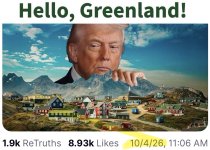
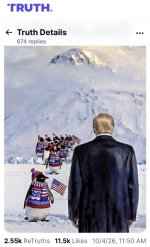

'It's Sociopathic': Trump Torched Over Fresh Hints He Wants To Take Over Greenland — HuffPost
The US president posted two bizarre images on his Truth Social platform.

That is true unfortunately!!When everyone around you joins a herd , it is hard to resist . Just look to Covid for an example .
US seizes $3 million in fuel shipments to Cuba as crackdown continues — Reuters
The US said on Wednesday it had seized 90 separate shipments of biodiesel bound for Cuba worth nearly $3 million, the second time in a week US authorities have announced the seizure of "illegal" fuel en route to the island nation.
The Trump administration's fuel blockade on Cuba has been called "illegal" by the United Nations and "economic warfare" by Cuba`s communist-run government. It has vastly worsened ongoing blackouts, water shortages and inflation across the island, pushing the island toward a humanitarian crisis.
I have to say that this is one activity (for lack of a better word) that I don't agree with Trump doing. For what purpose? It's the people who suffer, not the leadership.The enforcement action comes as the Trump administration continues to strangle Cuba's energy sector, allowing only relatively small shipments of fuel to reach the island's private sector in a program aimed at undercutting the Cuban government.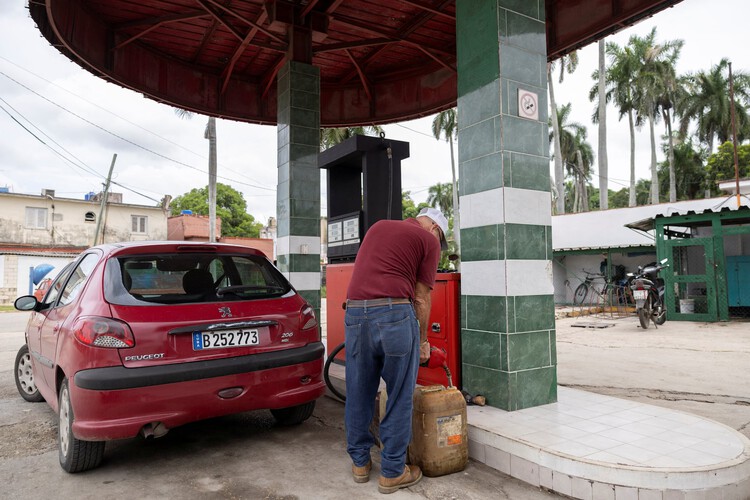
US seizes $3 million in fuel shipments to Cuba as crackdown continues — Reuters
The US said on Wednesday it had seized 90 separate shipments of biodiesel bound for Cuba worth nearly $3 million, the second time in a week US authorities have announced the seizure of "illegal" fuel en route to the island nation.apple.news
The Trump administration's fuel blockade on Cuba has been called "illegal" by the United Nations and "economic warfare" by Cuba`s communist-run government. It has vastly worsened ongoing blackouts, water shortages and inflation across the island, pushing the island toward a humanitarian crisis.
Even if it was just the government that suffered, it’s a sovereign nation that’s not at war with America, & America claims that it’s not a war with Cuba, so…..???I have to say that this is one activity (for lack of a better word) that I don't agree with Trump doing. For what purpose? It's the people who suffer, not the leadership.

Thats the point.I have to say that this is one activity (for lack of a better word) that I don't agree with Trump doing. For what purpose? It's the people who suffer, not the leadership.
Who cares? Its the same America its always been. Whats different? We see what our parents didnt, how shitty and corrupt it is.Even if it was just the government that suffered, it’s a sovereign nation that’s not at war with America, & America claims that it’s not a war with Cuba, so…..???
The enforcement action comes as the Trump administration continues to strangle Cuba's energy sector, allowing only relatively small shipments of fuel to reach the island's private sector in a program aimed at undercutting the Cuban government.
The Trump administration's fuel blockade on Cuba has been called "illegal" by the United Nations and "economic warfare" by Cuba`s communist-run government. It has vastly worsened ongoing blackouts, water shortages and inflation across the island, pushing the island toward a humanitarian crisis.
U.S. ambassador warns Canada to 'keep your nose out of American politics' — Toronto Star
Ambassador Pete Hoekstra is suggesting Canada might be conducting "election interference" ahead of his country's midterm votes in November.


Keep your nose out of American politics just like America is keeping its nose out of Canadian politics, and Cuban politics, and Venezuelan politics, and Iranian politics, and Danish politics, and so on so forth….right?"Keep your nose out of American politics, you know, four weeks before an election," Hoekstra says. "We see all of that … We're monitoring it, we're evaluating it, and if some of it becomes election interference, then American will respond to it."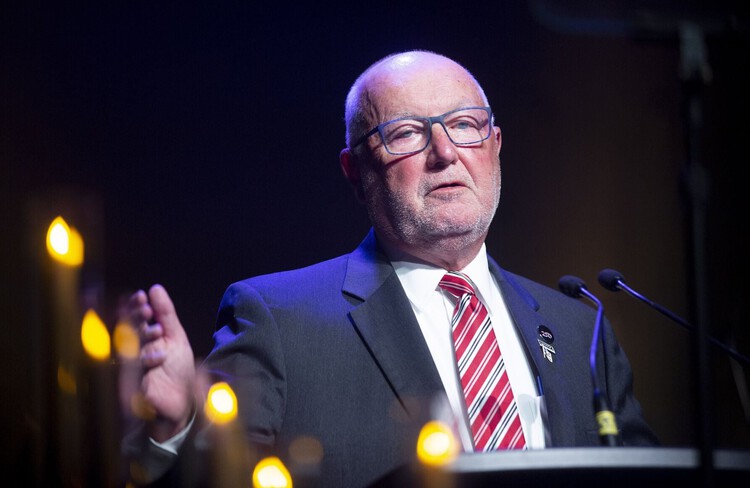
U.S. ambassador warns Canada to 'keep your nose out of American politics' — Toronto Star
Ambassador Pete Hoekstra is suggesting Canada might be conducting "election interference" ahead of his country's midterm votes in November.
Do unto others as…etc…?
Keep your nose out of American politics just like America is keeping its nose out of Canadian politics, and Cuban politics, and Venezuelan politics, and Iranian politics, and Danish politics, and so on so forth….right?
Do unto others as…etc…?
"Keep your nose out of American politics, you know, four weeks before an election," Hoekstra says. "We see all of that … We're monitoring it, we're evaluating it, and if some of it becomes election interference, then American will respond to it."U.S. ambassador warns Canada to 'keep your nose out of American politics' — Toronto Star
Ambassador Pete Hoekstra is suggesting Canada might be conducting "election interference" ahead of his country's midterm votes in November.
‘We got Greenland’: Trump pushes a made-up line about ownership of the arctic island — MS NOW
The more the president falsely claims he successfully acquired Greenland, the more important it becomes to set the record straight.