Space Thread

spaminator

Hall of Fame Member
Oct 26, 2009
41,063
4,162
113
Stunning images of sun's surface hailed as 'major step forward' for science
National Solar Observatory captures images of 'solar landscape unlike any that had been seen before'

Author of the article:Jane Stevenson
Published Aug 06, 2026 • 2 minute read

The sun's surface
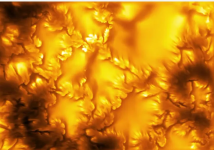
The most detailed images of the sun's surface yet were taken by the National Science Foundation's Daniel K. Inouye Solar Telescope Photo by NSF/NSO/AURA/MPS

“A solar landscape unlike any that had been seen before.”


That was how the U.S. National Science Foundation’s National Solar Observatory described the most detailed images taken of the sun’s surface.

The images of the sun’s surface or photosphere were captured by the Daniel K. Inouye Solar Telescope — the world’s most powerful solar telescope — on the island of Maui in Hawaii.

The findings were published Wednesday in the journal Nature.

When scientists saw the results of the telescope’s capabilities, they realized they’d snapped photos of the sun’s bright outer shell at higher resolution than ever before with tiny swirling patterns like small whirlpools showing up in the images.

The U.S National
The U.S. National Science Foundation Daniel K. Inouye Solar Telescope, built and managed by the NSF National Solar Observatory, in Maui (NSF-NSO-AURA) Photo by NSF/NSO/AURA
Solar landscape unlike anything else
The images “reveal a solar landscape unlike any that had been seen before, uncovering small-scale and dynamic swirls everywhere at the edges of magnetic areas,” the NSF’s National Solar Observatory said in an Wednesday news release.


The ripples on the sun’s surface are caused by a well-known phenomenon called the Kelvin-Helmholtz instability (KHI).

“An effect caused by fluid motion, KHI occurs when two fluids slide past each other at different velocities creating a ‘shear’ at the interface — causing small disturbances to grow into striking wave-like or spiraling vortices that look like breaking ocean waves, “ said the news release.

”Since its original formulation by Lord Kelvin and Hermann von Helmholtz around 1870, KHI has been observed and investigated across many areas of physics, including fluid dynamics, meteorology, oceanography, heliosphysics, and astrophysics. The instability is observed at a variety of scales from small lake and ocean waves (in windy conditions) and cloud formations on Earth, to the atmospheres of gas giants like Jupiter and Saturn.”


‘Major step forward’ for solar science
Dr. David Boboltz, deputy director at the National Solar Observatory, said the discovery, “backed up by analysis of numerical simulations, is a major step forward in our understanding of the dynamics and evolution of solar and stellar plasma and will serve as a basis for future discoveries.”


Researchers suggest that KHI might be a key reason why the Sun’s outer atmosphere gets so hot and why magnetic energy builds up and fuels solar flares and eruptions that can send bursts of energy toward Earth, affecting satellites, power grids and other technology.

“We believe that the discovery of Kelvin-Helmholtz instability in the solar photosphere, backed up by analysis of numerical simulations, is a major step forward in our understanding of the dynamics and evolution of solar and stellar plasma and will serve as a basis for future discoveries,” said Boboltz in a statement.

The next phase of analysis includes using computer programs that can automatically spot and study these swirling patterns aided by the high resolution data from the Inouye Solar Telescope.
1786094550056.png
 
  • Like
Reactions: Ron in Regina

spaminator

Hall of Fame Member
Oct 26, 2009
41,063
4,162
113
Milky Way's fastest star discovered spinning around black hole
Star S301 is two billion times fainter than the star Betelgeuse in our sky

Author of the article:AFP
AFP
Bénédicte Salvetat Rey
Published Aug 20, 2026 • Last updated 14 hours ago • 2 minute read
Our home galaxy, the Milky Way, has supermassive black hole sitting at its heart.
Our home galaxy, the Milky Way, has supermassive black hole sitting at its heart. Photo by Handout /NASA/AFP/File

Astronomers have discovered the fastest star in the Milky Way zooming at 25,000 kilometres a second around the supermassive black hole at the centre of our galaxy.


The star, named S301, orbits so dangerously close to the black hole that scientists believe it can shed light on this unimaginably powerful cosmic monster — and test out Albert Einstein’s theory of relativity.

“Decades carefully tracking stars orbiting our galaxy’s central black hole, Sagittarius A*, have led to this breakthrough discovery,” Reinhard Genzel of the Max Planck Institute for Extraterrestrial Physics in Germany said in a statement.

“Because it orbits so close to Sagittarius A*, S301 opens a new window to the fundamental properties of spacetime in this extreme black-hole environment,” added Genzel, who shared a 2020 physics Nobel prize for discovering the black hole.

To spot S301 — which is two billion times fainter than the star Betelgeuse in our sky — the team of astronomers used the European Southern Observatory’s Very Large Telescope in the Chilean desert.


They first noticed the star in 2023, and have been tracking its orbit since.

“What is special about this star is that it’s orbiting Sagittarius A* on a very tight orbit, taking just 8.7 years to complete it,” explained Felix Mang, a co-author of a new study describing the discovery.

The star gets roughly as close to the black hole as Saturn gets to our Sun, which is “unprecedented”, the PhD student emphasised.

– Torn from its partner –
When the star gets closest to the immense suck of the black hole, it is travelling around 25,000 kilometres per second (15,500 miles per second).

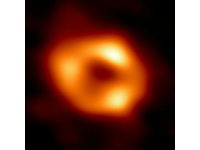
The Sagittarius A* black hole. Scientists hope to learn more about it by studying this speedy star’s orbit. (Handout/European Southern Observatory/AFP/File)
That is 100,000 times faster than a commercial airplane, or more than eight percent of the speed of light, making it the fastest star ever detected in our galaxy.

Scientists believe that S301 was once part of a binary star system that was torn apart by the almighty pull of the black hole.

While S301 became trapped in the black hole’s gravity, its partner star was blasted out with such force it likely left the galaxy entirely.


The astronomers will get another good look at the star when it makes its next closest approach to the black hole in 2031.

The team hopes that data from two complete orbits will allow them to determine the star’s trajectory with enough precision they can also directly measure the black hole’s rotation.

Like most objects in the universe, black holes are thought to spin.

Einstein’s theory of general relativity predicted that a spinning black hole would drag spacetime along with it, twisting it in a way that changes the orbits of the surrounding stars.

Within the next 10 years, the astronomers hope to use S301 to measure the black hole’s spin for the first time.

“Without this star, we would need to measure the motion of other stars for several more decades to get anywhere close to measuring the spin of the black hole,” explained French astronomer and study co-author Juan Osorno.

The study was published in Nature on Wednesday.
1787298087153.pnga927f31a865e6cb02b9772bb23b9c9a6a94dc4a8-e1787245079412[1].jpg
 
  • Like
Reactions: Ron in Regina

55Mercury

rigid member
May 31, 2007
4,686
1,256
113
The only relativity to this planet, or anyone living today, of anything 'quantum' won't exist for a million years, so...

Irrelative?...well, irregardless... irrelevant at the very least.
 

spaminator

Hall of Fame Member
Oct 26, 2009
41,063
4,162
113
Nobel physics prize honours work on 'ghostly messengers' from outer space
The academy explained that high energy neutrinos are created in the same environments as other particles.

Author of the article:AFP
AFP
Johannes LEDEL
Published Oct 06, 2026 • 3 minute read

The Swedish academy commended Francis Halzen's work on high-energy neutrinos. Photo by Christine OLSSON /TT NEWS AGENCY/AFP

Stockholm (AFP) — Belgian physicist Francis Halzen on Tuesday won the Nobel physics prize for groundbreaking work using South Pole ice to capture neutrinos originating in the distant cosmos, providing insight into the far reaches of space.


“This year’s prize is about ghostly messengers from space,” Ellen Moons, secretary general of the Royal Swedish Academy of Sciences, told a news conference.

Halzen was honoured “for decisive contributions to the IceCube Neutrino Observatory and the discovery of high-energy neutrinos of astrophysical origin”, the jury said.

The Royal Swedish Academy of Sciences said Halzen’s work had been fundamental for the observatory — “a cubic kilometre of ice that is equipped with light sensors” — and has “paved the way for a new kind of astronomy”.

Using the observatory, researchers can capture neutrinos — rare subatomic particles — “from extremely energy-rich processes in the distant universe”.

Halzen, 82, was born in Tienen, Belgium and is a professor at the University of Wisconsin-Madison in the United States, where he is a citizen.


“It was a great surprise, and I obviously didn’t expect it,” he told the news conference by telephone shortly after the prize was announced.

“But it’s a great pleasure to hear about this prize,” Halzen said.

– Courageous people –
The academy explained that high energy neutrinos are created in the same environments as other particles.

“However, unlike other particles, neutrinos reach us without changing direction or losing energy. This means they can provide information that is not available in any other way,” it said in a statement.

Halzen first presented his idea for the observatory in 1988 and his idea quickly gained the support of other researchers.

Preliminary testing was conducted just a few years later but the observatory was not completed until 2011.

“Cosmic neutrinos with extremely high energies are very rare, so an enormous volume of ice is needed to observe an adequate number of collisions,” the jury explained.

“For me, the main pleasure of it, besides winning the Nobel Prize, is that I hope this reflects on the really courageous people who joined me in the beginning of this project,” Halzen said.


The award is the second Nobel of the season, after the medicine prize was awarded on Monday to US psychiatrist and neurologist Karl Deisseroth and German scientists Peter Hegemann and Georg Nagel.

The researchers were honoured for their pioneering work in the field of optogenetics, which involves controlling nerve signals with light.

– Peace prize lobbying –
Last year, the Nobel Prize in Physics went to Briton John Clarke, Frenchman Michel Devoret and American John Martinis for putting quantum mechanics into action and enabling the development of all kinds of digital technology from cellphones to a new generation of computers.

The physics prize will be followed by the chemistry one on Wednesday.

The literature laureate will be revealed on Thursday, with some pundits suggesting that the Swedish Academy could follow up last year’s award to Hungary’s Laszlo Krasznahorkai with a woman writer, possibly from Latin America.

The most keenly anticipated award — the peace prize — is due on Friday.


US President Donald Trump lobbied intensively last year to get the prize — and Venezuelan opposition leader Maria Corina Machado ended up giving him her Nobel medal — and the committee is aware he will be watching closely again.

The economics prize wraps up the Nobel season on October 12.

The Nobel consists of a diploma, a gold medal and a 12-million-kronor ($1.2-million) prize sum, which is shared if there is more than one winner in a discipline.

The laureates will receive their prizes at a formal ceremony on December 10, the anniversary of the death in 1896 of scientist Alfred Nobel, who created the prizes in his will.
 
  • Like
Reactions: Ron in Regina

spaminator

Hall of Fame Member
Oct 26, 2009
41,063
4,162
113
University of Calgary researchers confirm meteoric aging among astronauts
Research shows 40-year-old astronaut ages 20 years for every six month spent in orbit

Author of the article:Bill Kaufmann
Published Nov 02, 2026 • 3 minute read
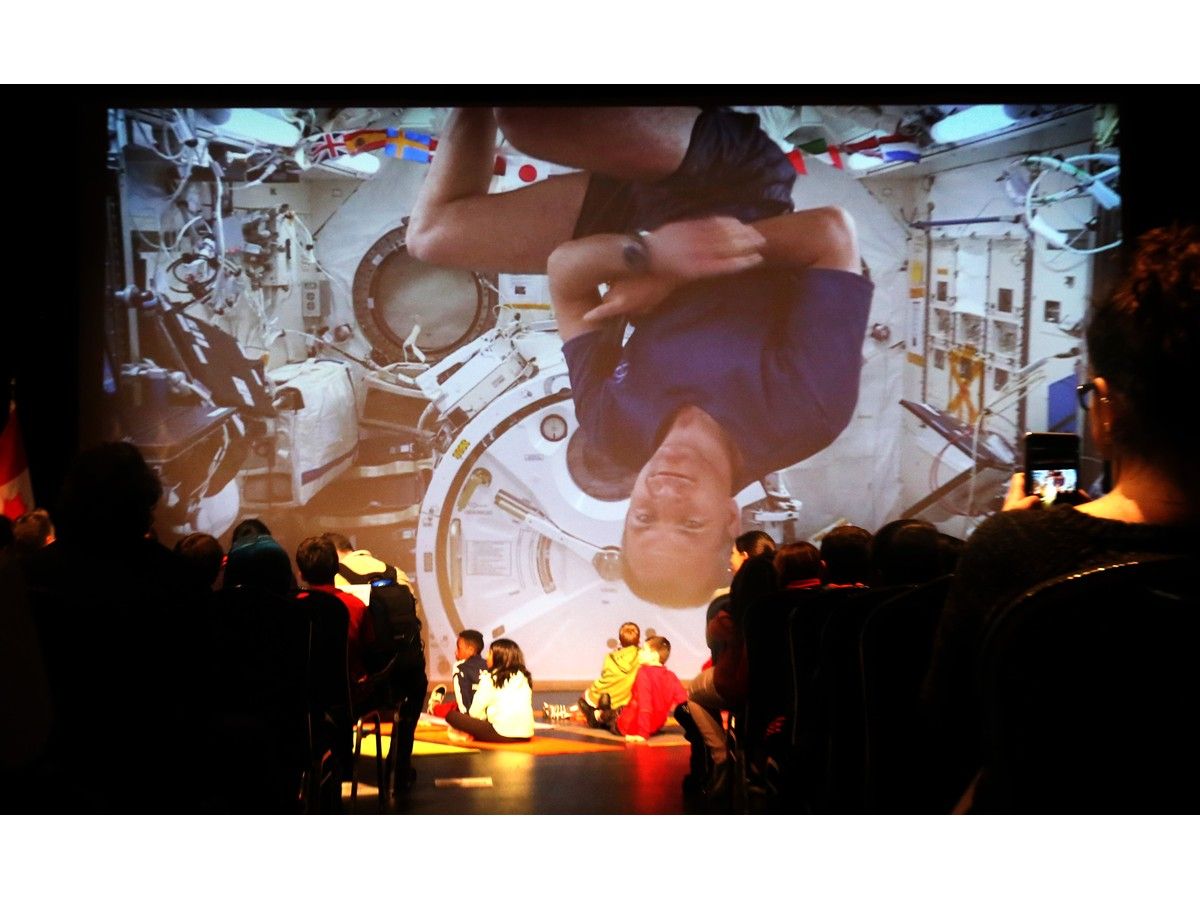
Canadian astronaut David Saint-Jacques talks to students of Saint-Rémi School from the International Space Station. The Canada Aviation and Space Museum had an exhibit created in collaboration with the Canadian Space Agency that broke down the biggest health challenges faced by astronauts while living and working in space, in 2019.
Canadian astronaut David Saint-Jacques talks to students of Saint-Rémi School from the International Space Station. The Canada Aviation and Space Museum had an exhibit created in collaboration with the Canadian Space Agency that broke down the biggest health challenges faced by astronauts while living and working in space, in 2019. Jean Levac/Postmedia News
University of Calgary researchers have confirmed more than a few wrinkles in the science of astronaut aging while adding some new ones.


But the main thrust in the study of 18 denizens of the International Space Station (ISS) is that a 40-year-old astronaut ages 20 years for every six month spent in orbit.


“They are at least 20 years older compared to people on earth,” said Giuseppe Iaria, a professor of Cognitive Neuroscience in the Department of Psychology in the Faculty of Arts at the U of C.

“There’s an accelerated aging process that affect the entire physiology of humans — it’s significant.”

That research conducted from 2016 to 2026 assessed the impacts of the lack of gravity and heightened levels of radiation and stress as well as isolation and different brain patterns on a host of anatomical systems, said Iaria, who’s also the director of and research chair of the Canadian Space Health Research Network (CSHRN).

That includes impacts to immunology, skeletal, muscular and vascular systems and the brain, he said.

Those insights are being presented at a three-day CSHRN symposium this week at Montreal’s McGill University that also involves NASA, the Canadian Space Agency and the European Space Agency.


What’s been unveiled by the U of C research on how space travel becomes time travel is how the brain is impacted by months in orbit, said Iaria.

“What we weren’t expecting is that when astronauts come back, their brain has shifted upwards, it’s almost touching the top of the skull because all of the liquids move down,” said the academic.

“When you use software to analyze that it’s based on the brain being in the centre of the skull so we’ve proposed new ways to analyze data.”

What was also apparent was the greatly accelerated rate of tiny brain bleeds, or microbleeds up to 1 millimetre in size found in astronauts who’ve done multiple stints beyond earth’s atmosphere, said Iaria.

Larger numbers of these microbleeds are typically found in the elderly, those in their 70s or 80s, he said.

“In people who’ve travelled to space more than once, we find these individuals have a higher number of brain bleeds than than 80-year-old people,” said Iaria.

The brains of those confined in smaller spaces with a more limited scope of activity are forced to adapt to that very different reality, said the researcher, who collaborated with Dr. Ford Burles, a research associate in the Department of Psychiatry in the Cumming School of Medicine.


“When the brain is exposed to a new environment, its functional activity changes, it’s a very dynamic tool,” said Iaria.

“When you don’t have gravity, the brain changes in a way not just based on the nervous system.”

Fortunately, researchers have found half of that time lost can be made up once the astronauts have been back on earth for a year — through rehab, training and just living on on terra firma, noted Iaria.

And he noted findings culled from a tiny population of space explorers can be applied to more earthly medicine.

“Think of isolation and confining — we experienced that during the pandemic and inactivity — microgravity really translates into inactivity in human beings,” said Iaria.

“It really comes back to human health on earth.”

Even so, the work done by Iaria’s U of C team can’t help but raise questions about how the human body copes with considerably extended space travel or colonization, said Iaria.

A round trip to Mars, for instance, would last 18 to 36 months.


“Everything we’ve learned on how damaging space travel would be on astronauts is based generally on six months and very close to earth,” said Iaria.

“So you’re thinking about a completely different game, we have no knowledge…it’s the elephant in the room.”

But the sacrifices made by astronauts don’t seem to have dampened the dream of rocketing beyond earth’s gravitational grasp, he said.

“It’s not something that’s stopping astronauts from going there,” said Iaria.

BKaufmann@postmedia.com

X: @BillKaufmannjrn

Catch up with the day’s headlines, curated by our editors and delivered to your email inbox at lunchtime on every business day. Sign up now for the Calgary Herald Noon News Roundup.