

The fool is not always unfortunate, nor the wise man always successful; yet never had a fool a thorough enjoyment; never was a wise man wholly unhappy.No genius. He throws shit at the wall. 1 in 50 hurls nets a splat and the media goes nuts.
Science & Environment
- Thread starter socratus
- Start date
You are using an out of date browser. It may not display this or other websites correctly.
You should upgrade or use an alternative browser.
You should upgrade or use an alternative browser.

Health Canada issues recall over blood pressure medication mix-up
Taking midodrine instead of amlodipine could lead to serious health risks
Author of the article enette Wilford
Published Feb 09, 2026 • Last updated 1 day ago • 1 minute read
MAR-amlodipine 2.5 mg tablets, left, and Midodrine 2.5 mg.
MAR-amlodipine 2.5 mg tablets, left, and Midodrine 2.5 mg. Photo by Supplied /Health Canada
A blood pressure medication mix-up has led to a Canada-wide recall.
Health Canada has recalled MAR-Amlodipine 5 mg tablets, which treat high blood pressure and chest pain, as some bottles may contain the wrong drug.
Marcan Pharmaceuticals Inc. says certain bottles labelled as MAR-Amlodipine may actually contain midodrine 2.5 mg tablets, a medication used to treat low blood pressure.
Taking midodrine instead of amlodipine could lead to serious health risks, including dangerously high blood pressure, dizziness, fainting, slow heartbeats, and potential organ damage, according to the agency.
Additionally, children may face a higher risk of harm if they take the incorrect medication.
MAR-amlodipine 2.5 mg tablets, left, and Midodrine 2.5 mg.
MAR-amlodipine 2.5 mg tablets, left, and Midodrine 2.5 mg. Photo by Supplied /Health Canada
What to look for
To discern the difference in medications, the correct MAR-Amlodipine tablets have eight sides, are white to off-white in colour, and have the numbers “210” and “5” printed on one side (pictured above, on the left).
Meanwhile, Midodrine 2.5 mg tablets (pictured above, on the right), which were mistakenly put in the bottles, are round in shape and are marked with “M2.”
The affected product is MAR-Amlodipine 5 mg, DIN 02371715, from lots 2472021 and 2472021A, with an expiry date of July 2027, according to the public advisory.
Consumers with questions can contact Marcan Pharmaceuticals Inc. directly, and health-care professionals are being asked to carefully check bottles before dispensing and report any issues.
What to do if you have or have taken wrong meds
If your bottle of MAR-Amlodipine contains the wrong tablets, do not take them and return them to your pharmacy.
If you accidentally took the wrong medication, see a health-care professional or call 911 if you feel dizzy, have unusually high blood pressure or a slow heartbeat, Health Canada advises.
If you are experiencing chest pain, a sudden headache, impaired speech or are unable to move or feel part of your body, seek immediate medical attention.

 torontosun.com
Taking midodrine instead of amlodipine could lead to serious health risks
Author of the article
enette WilfordPublished Feb 09, 2026 • Last updated 1 day ago • 1 minute read
MAR-amlodipine 2.5 mg tablets, left, and Midodrine 2.5 mg.
MAR-amlodipine 2.5 mg tablets, left, and Midodrine 2.5 mg. Photo by Supplied /Health Canada
A blood pressure medication mix-up has led to a Canada-wide recall.
Health Canada has recalled MAR-Amlodipine 5 mg tablets, which treat high blood pressure and chest pain, as some bottles may contain the wrong drug.
Marcan Pharmaceuticals Inc. says certain bottles labelled as MAR-Amlodipine may actually contain midodrine 2.5 mg tablets, a medication used to treat low blood pressure.
Taking midodrine instead of amlodipine could lead to serious health risks, including dangerously high blood pressure, dizziness, fainting, slow heartbeats, and potential organ damage, according to the agency.
Additionally, children may face a higher risk of harm if they take the incorrect medication.
MAR-amlodipine 2.5 mg tablets, left, and Midodrine 2.5 mg.
MAR-amlodipine 2.5 mg tablets, left, and Midodrine 2.5 mg. Photo by Supplied /Health Canada
What to look for
To discern the difference in medications, the correct MAR-Amlodipine tablets have eight sides, are white to off-white in colour, and have the numbers “210” and “5” printed on one side (pictured above, on the left).
Meanwhile, Midodrine 2.5 mg tablets (pictured above, on the right), which were mistakenly put in the bottles, are round in shape and are marked with “M2.”
The affected product is MAR-Amlodipine 5 mg, DIN 02371715, from lots 2472021 and 2472021A, with an expiry date of July 2027, according to the public advisory.
Consumers with questions can contact Marcan Pharmaceuticals Inc. directly, and health-care professionals are being asked to carefully check bottles before dispensing and report any issues.
What to do if you have or have taken wrong meds
If your bottle of MAR-Amlodipine contains the wrong tablets, do not take them and return them to your pharmacy.
If you accidentally took the wrong medication, see a health-care professional or call 911 if you feel dizzy, have unusually high blood pressure or a slow heartbeat, Health Canada advises.
If you are experiencing chest pain, a sudden headache, impaired speech or are unable to move or feel part of your body, seek immediate medical attention.
Health Canada issues recall over blood pressure medication mix-up
A blood pressure medication mix-up has led to a Canada-wide recall. Some bottles of MAR-Amlodipine 5 mg tablets contain the wrong drug.
It's a snake-eat-snake world, new research says
New research says snakes will eat each other more commonly than previously thought.
Author of the article:Brian Towie
Published Feb 17, 2026 • Last updated 13 hours ago • 2 minute read
Researchers have found widespread evidence of a penchant for cannibalism in snakes. Getty Images
Researchers have found widespread evidence of a penchant for cannibalism in snakes. Getty Images
A newly released study shows that snakes are more cannibalistic than previously thought.
Snakes will commonly prey on other species of snake, but cannibalism in this case is when a snake will eat one of its own. And researchers say it happens more often than they thought.
“Going from a few scattered reports to compiling more than 500 documented events was honestly astonishing,” says Bruna Falcao, a master’s student at the University of Sao Paulo in Brazil, who conducted the research while an undergrad at the University of Sao Carlos. “Each new record reinforced the idea that cannibalism in snakes is not an anomaly or a rare curiosity, but a widespread and ecologically relevant behaviour that we had been systematically underestimating.”
Found in 207 species of snakes
In 2022, Falcao found a preserved Brazilian lancehead viper with a younger snake of the same species in its stomach. That inspired her to begin her research into cannibalism in snakes, with one record dating back to 1892.
In research published in November, Falcao and her team found 503 cases of reported cannibalism in at least 207 species of snake. The cases were widely spread geographically and in terms of taxonomy, which suggests that snake cannibalism has multiple origins.
“Cannibalism may have also arisen independently in the snake evolutionary tree at least 11 times,” says study co-author Omar Entiauspe-Neto, a PhD student at the University of Sao Paulo.
Among the least surprising groups found to eat others of their species were the elapids — which includes cobras and kraits. Elapids were responsible for about 19% of the recorded cannibalism events. Conservation scientist Max Jones recalled a 2019 case of a male cobra eating a female looking to mate.
Female is more deadly than the male
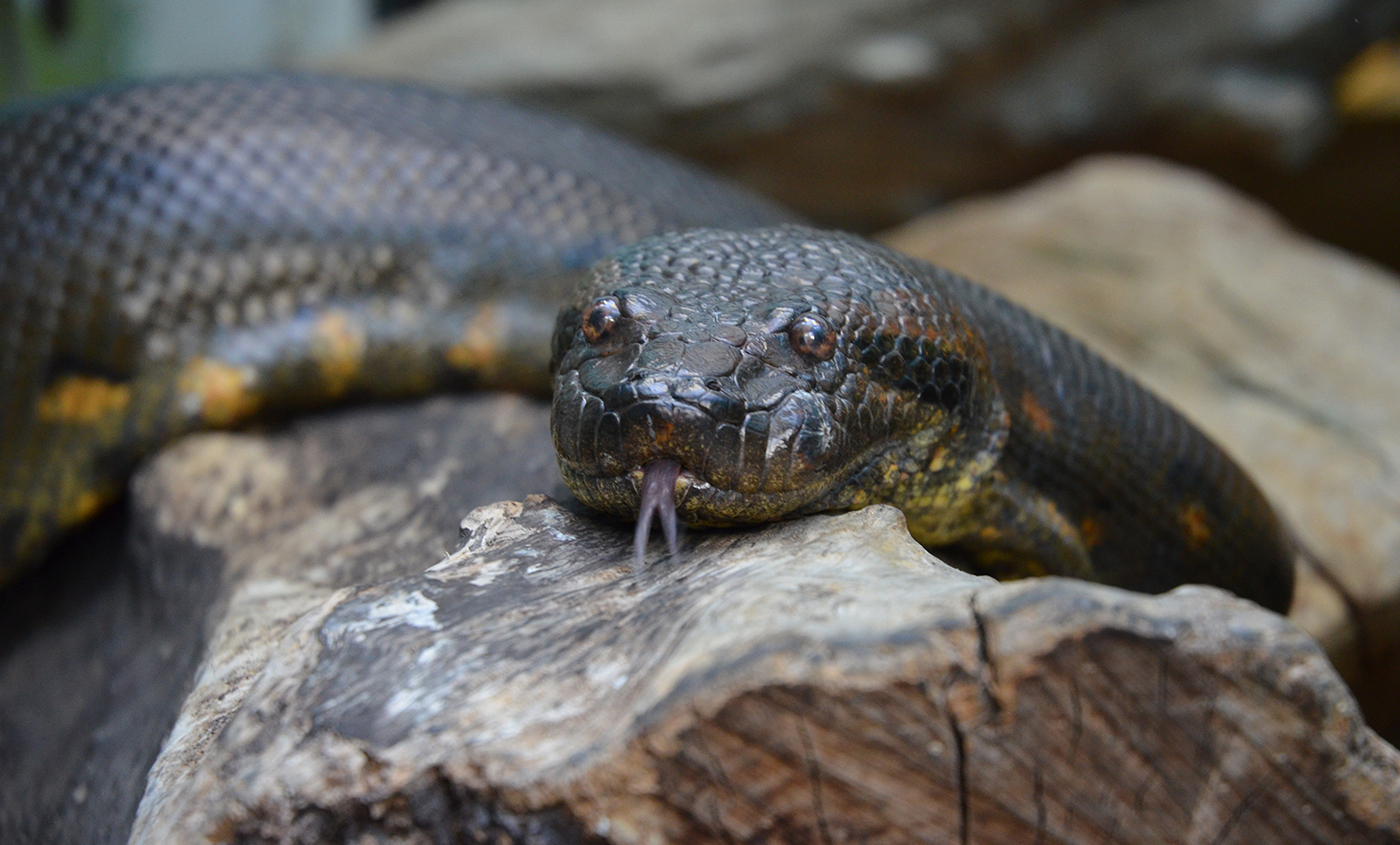
In anacondas, the reverse happens. Green anaconda females are larger than males and are polyandrous, which means several males mate with the same female. A female will be surrounded by a harem of suitors, select the strongest males to mate with and eat the smaller, inferior males, possibly to both reduce sperm competition and retain energy to produce fertilized eggs, says Entiauspe-Neto.
The most cannibalistic snakes reported by the team were in the Colubridae family — which includes species such as venomous boomslangs. It represented 29% of all cannibalism reports. The authors argue most cases in this family were related to a lack of other food sources, since this family doesn’t typically prey on snakes.
Mom consumes own eggs
The report says several families of snake are known for maternal cannibalism, cases in which the mother consumes her own eggs. There could be a number of reasons for this, researchers say: They could be weeding out bad, dead or rotten eggs to reduce smells that could attract predators who would eat the viable ones. Or, she could just be hungry.
“Eating those nonviable offspring could protect the viable offspring,” Entiauspe-Neto says. “We found a high proportion of (boa family) snakes doing that, which are usually the ones that exhibit maternal care.”
“None of us expected that … snakes could be so cannibalistic, and no one was talking about it,” Falcao added. “The more we were searching, the more cases we found.”
Falcao said that although this study reveals insight into serpentine dietary habits, there is still more research to be done.
 nationalzoo.si.edu

 inaturalist.org
 torontosun.com
New research says snakes will eat each other more commonly than previously thought.
Author of the article:Brian Towie
Published Feb 17, 2026 • Last updated 13 hours ago • 2 minute read
Researchers have found widespread evidence of a penchant for cannibalism in snakes. Getty Images
Researchers have found widespread evidence of a penchant for cannibalism in snakes. Getty Images
A newly released study shows that snakes are more cannibalistic than previously thought.
Snakes will commonly prey on other species of snake, but cannibalism in this case is when a snake will eat one of its own. And researchers say it happens more often than they thought.
“Going from a few scattered reports to compiling more than 500 documented events was honestly astonishing,” says Bruna Falcao, a master’s student at the University of Sao Paulo in Brazil, who conducted the research while an undergrad at the University of Sao Carlos. “Each new record reinforced the idea that cannibalism in snakes is not an anomaly or a rare curiosity, but a widespread and ecologically relevant behaviour that we had been systematically underestimating.”
Found in 207 species of snakes
In 2022, Falcao found a preserved Brazilian lancehead viper with a younger snake of the same species in its stomach. That inspired her to begin her research into cannibalism in snakes, with one record dating back to 1892.
In research published in November, Falcao and her team found 503 cases of reported cannibalism in at least 207 species of snake. The cases were widely spread geographically and in terms of taxonomy, which suggests that snake cannibalism has multiple origins.
“Cannibalism may have also arisen independently in the snake evolutionary tree at least 11 times,” says study co-author Omar Entiauspe-Neto, a PhD student at the University of Sao Paulo.
Among the least surprising groups found to eat others of their species were the elapids — which includes cobras and kraits. Elapids were responsible for about 19% of the recorded cannibalism events. Conservation scientist Max Jones recalled a 2019 case of a male cobra eating a female looking to mate.
Female is more deadly than the male
In anacondas, the reverse happens. Green anaconda females are larger than males and are polyandrous, which means several males mate with the same female. A female will be surrounded by a harem of suitors, select the strongest males to mate with and eat the smaller, inferior males, possibly to both reduce sperm competition and retain energy to produce fertilized eggs, says Entiauspe-Neto.
The most cannibalistic snakes reported by the team were in the Colubridae family — which includes species such as venomous boomslangs. It represented 29% of all cannibalism reports. The authors argue most cases in this family were related to a lack of other food sources, since this family doesn’t typically prey on snakes.
Mom consumes own eggs
The report says several families of snake are known for maternal cannibalism, cases in which the mother consumes her own eggs. There could be a number of reasons for this, researchers say: They could be weeding out bad, dead or rotten eggs to reduce smells that could attract predators who would eat the viable ones. Or, she could just be hungry.
“Eating those nonviable offspring could protect the viable offspring,” Entiauspe-Neto says. “We found a high proportion of (boa family) snakes doing that, which are usually the ones that exhibit maternal care.”
“None of us expected that … snakes could be so cannibalistic, and no one was talking about it,” Falcao added. “The more we were searching, the more cases we found.”
Falcao said that although this study reveals insight into serpentine dietary habits, there is still more research to be done.
Green anaconda
Always free of charge, the Smithsonian’s National Zoo is one of Washington D.C.’s, and the Smithsonian’s, most popular tourist destinations, with more than 2 million visitors from all over the world each year. The Zoo instills a lifelong commitment to conservation through engaging experiences...
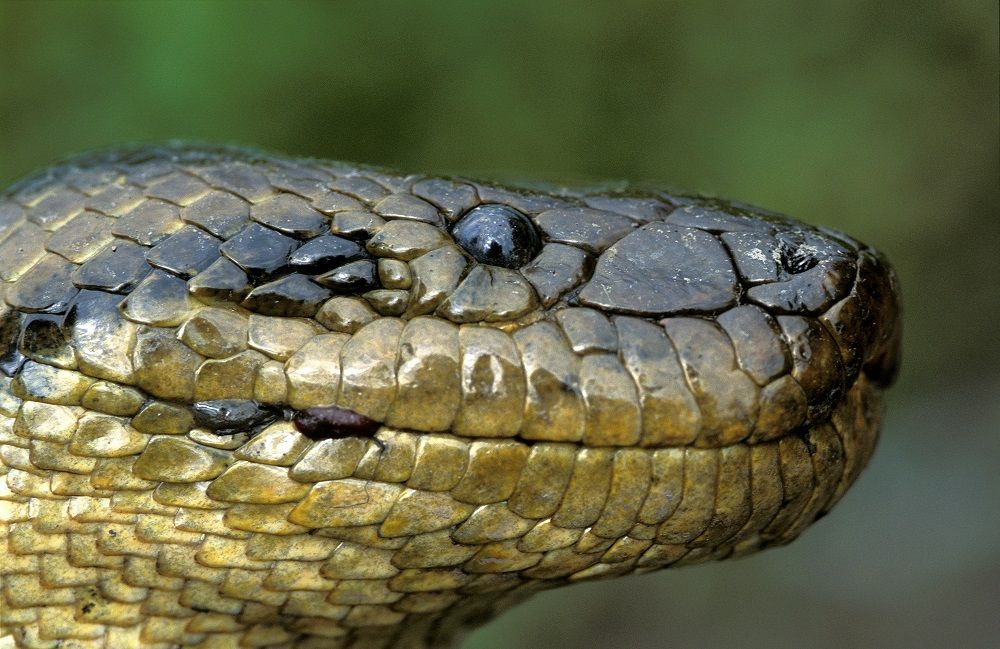
Brazilian Lancehead (Bothrops moojeni)
Bothrops moojeni, commonly known in English as the Brazilian lancehead, is a species of venomous snake in the family Viperidae. It is a pit viper endemic to South America. (Source: Wikipedia, '', http://en.wikipedia.org/wiki/Bothrops_moojeni, CC BY-SA 3.0 . Photo: (c) Jessica dos Anjos, all...
inaturalist.org
It's a snake-eat-snake world, new research says
New research says that snakes are more cannibalistic than previously thought. Read more.

From the Epstein Files?It's a snake-eat-snake world, new research says
New research says snakes will eat each other more commonly than previously thought.
Author of the article:Brian Towie
Published Feb 17, 2026 • Last updated 13 hours ago • 2 minute read
Researchers have found widespread evidence of a penchant for cannibalism in snakes. Getty Images
Researchers have found widespread evidence of a penchant for cannibalism in snakes. Getty Images
A newly released study shows that snakes are more cannibalistic than previously thought.
Snakes will commonly prey on other species of snake, but cannibalism in this case is when a snake will eat one of its own. And researchers say it happens more often than they thought.
“Going from a few scattered reports to compiling more than 500 documented events was honestly astonishing,” says Bruna Falcao, a master’s student at the University of Sao Paulo in Brazil, who conducted the research while an undergrad at the University of Sao Carlos. “Each new record reinforced the idea that cannibalism in snakes is not an anomaly or a rare curiosity, but a widespread and ecologically relevant behaviour that we had been systematically underestimating.”
Found in 207 species of snakes
In 2022, Falcao found a preserved Brazilian lancehead viper with a younger snake of the same species in its stomach. That inspired her to begin her research into cannibalism in snakes, with one record dating back to 1892.
In research published in November, Falcao and her team found 503 cases of reported cannibalism in at least 207 species of snake. The cases were widely spread geographically and in terms of taxonomy, which suggests that snake cannibalism has multiple origins.
“Cannibalism may have also arisen independently in the snake evolutionary tree at least 11 times,” says study co-author Omar Entiauspe-Neto, a PhD student at the University of Sao Paulo.
Among the least surprising groups found to eat others of their species were the elapids — which includes cobras and kraits. Elapids were responsible for about 19% of the recorded cannibalism events. Conservation scientist Max Jones recalled a 2019 case of a male cobra eating a female looking to mate.
Female is more deadly than the male
In anacondas, the reverse happens. Green anaconda females are larger than males and are polyandrous, which means several males mate with the same female. A female will be surrounded by a harem of suitors, select the strongest males to mate with and eat the smaller, inferior males, possibly to both reduce sperm competition and retain energy to produce fertilized eggs, says Entiauspe-Neto.
The most cannibalistic snakes reported by the team were in the Colubridae family — which includes species such as venomous boomslangs. It represented 29% of all cannibalism reports. The authors argue most cases in this family were related to a lack of other food sources, since this family doesn’t typically prey on snakes.
Mom consumes own eggs
The report says several families of snake are known for maternal cannibalism, cases in which the mother consumes her own eggs. There could be a number of reasons for this, researchers say: They could be weeding out bad, dead or rotten eggs to reduce smells that could attract predators who would eat the viable ones. Or, she could just be hungry.
“Eating those nonviable offspring could protect the viable offspring,” Entiauspe-Neto says. “We found a high proportion of (boa family) snakes doing that, which are usually the ones that exhibit maternal care.”
“None of us expected that … snakes could be so cannibalistic, and no one was talking about it,” Falcao added. “The more we were searching, the more cases we found.”
Falcao said that although this study reveals insight into serpentine dietary habits, there is still more research to be done.
Green anaconda
Always free of charge, the Smithsonian’s National Zoo is one of Washington D.C.’s, and the Smithsonian’s, most popular tourist destinations, with more than 2 million visitors from all over the world each year. The Zoo instills a lifelong commitment to conservation through engaging experiences...Brazilian Lancehead (Bothrops moojeni)
Bothrops moojeni, commonly known in English as the Brazilian lancehead, is a species of venomous snake in the family Viperidae. It is a pit viper endemic to South America. (Source: Wikipedia, '', http://en.wikipedia.org/wiki/Bothrops_moojeni, CC BY-SA 3.0 . Photo: (c) Jessica dos Anjos, all...It's a snake-eat-snake world, new research says
New research says that snakes are more cannibalistic than previously thought. Read more.

Must be…just like this:From the Epstein Files?

Researcher from Manitoba university helps identify oldest known fossilized vomit — National Post
Paleontologist Mark MacDougall, who co-authored a study about it, says the find provides direct evidence of predator-prey relationships in a 'prehistoric time capsule'
That beats coprolite hands down.Must be…just like this:
View attachment 33334

Researcher from Manitoba university helps identify oldest known fossilized vomit — National Post
Paleontologist Mark MacDougall, who co-authored a study about it, says the find provides direct evidence of predator-prey relationships in a 'prehistoric time capsule'apple.news
Less….digested…so more…informative?That beats coprolite hands down.
Female tortoises walk off cliffs to avoid sexually aggressive males, says study
The males' sexual aggression 'seems to be causing an extinction vortex' of the females
Author of the article:Eddie Chau
Published Feb 18, 2026 • Last updated 18 hours ago • 1 minute read
Close up of three young hermann turtles on a synthetic grass with daisyflower
Close-up of three isolated young hermann turtles. Photo by Getty Images
Well, that’s one way to avoid unwanted sexually charged partners.
A new study suggests that sexual aggression may be the reason why female tortoises walk off cliffs.
The researchers behind the study say that male Hermann’s tortoises largely outnumber their female equivalents on Golem Grad island in North Macedonia. In some areas of the island, there are 19 males for every one female.
The study – Sex Ratio Bias Triggers Demographic Suicide in a Dense Tortoise Population – noted female tortoise numbers continue to spiral downwards because of the sexual aggression of the males, The New York Times reported.
Researchers found some female tortoises will walk off high cliffs, with some of them dying, to avoid the horny mates.
The study also showed that harassed female tortoises reproduce less and have lower annual survival rates compared to female counterparts from a neighbouring mainland population.
Tortoises die young
Dr. Dragan Arsovski, an ecologist at the Macedonian Ecological Society, reviewed 16 years worth of data for the study.
Researchers predicted that the last female on Golem Grade will die in 2083.
After data revealed that high number of females died young, Arsovski studied the tortoises’ mating behaviour, which found that multiple males would pursue one female.
“She’s literally buried by males, Arsovski said, per The New York Times.
Researchers noted male tortoises would bump, bite, mount and violently poke fleeing females with their sharp tail tip. A majority of the female tortoises were also found with injuries to their genitals.
Arsovski said while males also walk off cliffs, there’s a “very significantly higher proportion of females that do die like this.”
The males’ sexual aggression “seems to be causing an extinction vortex” of the females, Jeanine Refsnider, an evolutionary ecologist at the University of Toledo, told The Times.
Refsnider said she’s never “heard of anything like that” in a natural setting that doesn’t involve human interference.
 torontosun.com
The males' sexual aggression 'seems to be causing an extinction vortex' of the females
Author of the article:Eddie Chau
Published Feb 18, 2026 • Last updated 18 hours ago • 1 minute read
Close up of three young hermann turtles on a synthetic grass with daisyflower
Close-up of three isolated young hermann turtles. Photo by Getty Images
Well, that’s one way to avoid unwanted sexually charged partners.
A new study suggests that sexual aggression may be the reason why female tortoises walk off cliffs.
The researchers behind the study say that male Hermann’s tortoises largely outnumber their female equivalents on Golem Grad island in North Macedonia. In some areas of the island, there are 19 males for every one female.
The study – Sex Ratio Bias Triggers Demographic Suicide in a Dense Tortoise Population – noted female tortoise numbers continue to spiral downwards because of the sexual aggression of the males, The New York Times reported.
Researchers found some female tortoises will walk off high cliffs, with some of them dying, to avoid the horny mates.
The study also showed that harassed female tortoises reproduce less and have lower annual survival rates compared to female counterparts from a neighbouring mainland population.
Tortoises die young
Dr. Dragan Arsovski, an ecologist at the Macedonian Ecological Society, reviewed 16 years worth of data for the study.
Researchers predicted that the last female on Golem Grade will die in 2083.
After data revealed that high number of females died young, Arsovski studied the tortoises’ mating behaviour, which found that multiple males would pursue one female.
“She’s literally buried by males, Arsovski said, per The New York Times.
Researchers noted male tortoises would bump, bite, mount and violently poke fleeing females with their sharp tail tip. A majority of the female tortoises were also found with injuries to their genitals.
Arsovski said while males also walk off cliffs, there’s a “very significantly higher proportion of females that do die like this.”
The males’ sexual aggression “seems to be causing an extinction vortex” of the females, Jeanine Refsnider, an evolutionary ecologist at the University of Toledo, told The Times.
Refsnider said she’s never “heard of anything like that” in a natural setting that doesn’t involve human interference.
Female tortoises walk off cliffs to avoid sexually aggressive males, says study
A new study suggests that sexual aggression may be the reason why female tortoises walk off cliffs. Read more.
White Sands National Park has some of the most archaeologically rich sand in North America, and it is within this New Mexico landscape that the oldest footprints ever found on the continent were discovered. Research now dates those footprints to roughly 23,000 years old—about 10,000 years before it was previously believed humans existed in North America.
 apple.news
Archaeologists Found 23,000-Year-Old Footprints That Rewrite the Story of Humans in America — Popular Mechanics
New Mexico’s ancient sands reveal the oldest-known traces of early inhabitants.
Annunaski. Gilgamesh et al were Ukrainian.White Sands National Park has some of the most archaeologically rich sand in North America, and it is within this New Mexico landscape that the oldest footprints ever found on the continent were discovered. Research now dates those footprints to roughly 23,000 years old—about 10,000 years before it was previously believed humans existed in North America.
Archaeologists Found 23,000-Year-Old Footprints That Rewrite the Story of Humans in America — Popular Mechanics
New Mexico’s ancient sands reveal the oldest-known traces of early inhabitants.
Proof we were here first.
All for the love of lapis lazuli.
New approach roughly predicts when Alzheimer’s symptoms begin
A simple blood test can help diagnose Alzheimer's
Author of the article:Washington Post
Washington Post
Carolyn Y. Johnson
Published Feb 19, 2026 • Last updated 22 hours ago • 4 minute read
Scientists showed in a new study published Thursday that they could use blood draws to build a “clock” for Alzheimer’s disease that could roughly predict when symptoms will develop, findings that could eventually transform how the illness is diagnosed and treated.
A simple blood test can help diagnose Alzheimer’s, but the study in the journal Nature Medicine shows how these kinds of tests could one day play a greater role in preventing the insidious, memory-robbing illness. In the new study, researchers built a model that could use blood test results to forecast symptom onset within a margin of three to four years.
The technique is not yet precise enough to predict the course of a patient’s trajectory. But it could be used to identify which patients would benefit if companies are able to develop drugs to treat the disease before symptoms develop.
In the short term, the approach could accelerate the research to identify such treatments by recruiting the ideal study participants: people with no symptoms, but who are at high risk for developing them soon.
Clinical trials are expensive and time-consuming to run, particularly for diseases such as Alzheimer’s in which the people being studied could begin to experience cognitive decline in a year or a decade.
Suzanne E. Schindler, a dementia specialist at Washington University School of Medicine in St. Louis who helped lead the study, said she’s been involved with research studies that are attempting to test treatments before people have cognitive impairment. When those people receive a positive test, she said, they immediately ask: “So how long do I have before I develop symptoms?”
“The kind of statistical models we’ve had in the past do not address that question. You’re positive, so you’re higher risk. But you could develop symptoms in one year, in 15 years, or never – we have no idea,” Schindler said.
Using blood tests to identify people who are likely to develop symptoms in the short term could offer a faster and more efficient way to find promising treatments, according to Schindler.
As the clock developed in the new study is refined, it could become part of the toolbox that has evolved radically in recent years for early diagnosis and treatment.
But the recently approved treatments have a relatively modest effect in slowing the advancement of Alzheimer’s. Two highly anticipated ongoing clinical trials test whether drugs given to people who are not yet cognitively impaired could be more beneficial.
“If that turns out to be the case, that really increases the potential role of a clock that could give a prediction of when symptoms are likely to develop,” said Andrew Saykin, director of the Indiana Alzheimer’s Disease Research Center who was not involved in the study. “If we could predict [disease onset] within a year or so, that would be really valuable. I think it’s closing in, but not there yet.”
Building an Alzheimer’s ‘clock’
The research team focused on one specific protein, called p-tau217, that is a sign that a hallmark of Alzheimer’s – clumps of misfolded proteins called amyloid plaques – has begun to build up in the brain. The new treatments remove the buildup of the plaques in the brain. Several commercially available tests measure this protein and are used to help diagnose people with cognitive problems.
The researchers cautioned that these tests are not intended to be used outside of a research setting in people without cognitive symptoms.
In the study, the team examined the levels of this protein over time in participants in two long-running Alzheimer’s databases and found that people with higher levels in their blood developed symptoms more quickly. They also found that age was another risk factor. When levels of this protein began to rise in a person who was 60, it took two decades for their symptoms to develop. At age 80, it took 11 years.
The research team sees this work as a first step and is making its work freely available in the hopes that other groups will use it to improve the model. It said other markers of Alzheimer’s in the blood may be used to refine their predictions.
Gil Rabinovici, a neurologist at the University of California at San Francisco who also was not involved in the study, said the work was exciting because it will help anchor abstract lab results to a timeline – something that would help clinicians, research participants and eventually patients understand risk. He predicted it could have clear benefits in helping researchers recruit the right patients for clinical trials to determine whether treatments are effective.
But before anyone could use these tests to predict individual risk, Rabinovici said the clock would need to be tested on larger, more diverse populations to see if the same patterns held up.
Several Alzheimer’s experts said the benefits of a predictive test will be closely linked to the development of drugs that slow or stop the progression of the disease when given early. Medicine involves balancing the risks of harm from a treatment from the benefit.
“When treatments for this population have received regulatory approval, those individuals who are at highest risk of developing symptoms will inevitably be prioritized for treatment,” Clifford Jack, a neuroradiologist at the Mayo Clinic who was not involved in the study, said in an email. “How soon a currently asymptomatic person is to developing symptoms will be a key piece of the decision-making matrix.”
 torontosun.com
A simple blood test can help diagnose Alzheimer's
Author of the article:Washington Post
Washington Post
Carolyn Y. Johnson
Published Feb 19, 2026 • Last updated 22 hours ago • 4 minute read
Scientists showed in a new study published Thursday that they could use blood draws to build a “clock” for Alzheimer’s disease that could roughly predict when symptoms will develop, findings that could eventually transform how the illness is diagnosed and treated.
A simple blood test can help diagnose Alzheimer’s, but the study in the journal Nature Medicine shows how these kinds of tests could one day play a greater role in preventing the insidious, memory-robbing illness. In the new study, researchers built a model that could use blood test results to forecast symptom onset within a margin of three to four years.
The technique is not yet precise enough to predict the course of a patient’s trajectory. But it could be used to identify which patients would benefit if companies are able to develop drugs to treat the disease before symptoms develop.
In the short term, the approach could accelerate the research to identify such treatments by recruiting the ideal study participants: people with no symptoms, but who are at high risk for developing them soon.
Clinical trials are expensive and time-consuming to run, particularly for diseases such as Alzheimer’s in which the people being studied could begin to experience cognitive decline in a year or a decade.
Suzanne E. Schindler, a dementia specialist at Washington University School of Medicine in St. Louis who helped lead the study, said she’s been involved with research studies that are attempting to test treatments before people have cognitive impairment. When those people receive a positive test, she said, they immediately ask: “So how long do I have before I develop symptoms?”
“The kind of statistical models we’ve had in the past do not address that question. You’re positive, so you’re higher risk. But you could develop symptoms in one year, in 15 years, or never – we have no idea,” Schindler said.
Using blood tests to identify people who are likely to develop symptoms in the short term could offer a faster and more efficient way to find promising treatments, according to Schindler.
As the clock developed in the new study is refined, it could become part of the toolbox that has evolved radically in recent years for early diagnosis and treatment.
But the recently approved treatments have a relatively modest effect in slowing the advancement of Alzheimer’s. Two highly anticipated ongoing clinical trials test whether drugs given to people who are not yet cognitively impaired could be more beneficial.
“If that turns out to be the case, that really increases the potential role of a clock that could give a prediction of when symptoms are likely to develop,” said Andrew Saykin, director of the Indiana Alzheimer’s Disease Research Center who was not involved in the study. “If we could predict [disease onset] within a year or so, that would be really valuable. I think it’s closing in, but not there yet.”
Building an Alzheimer’s ‘clock’
The research team focused on one specific protein, called p-tau217, that is a sign that a hallmark of Alzheimer’s – clumps of misfolded proteins called amyloid plaques – has begun to build up in the brain. The new treatments remove the buildup of the plaques in the brain. Several commercially available tests measure this protein and are used to help diagnose people with cognitive problems.
The researchers cautioned that these tests are not intended to be used outside of a research setting in people without cognitive symptoms.
In the study, the team examined the levels of this protein over time in participants in two long-running Alzheimer’s databases and found that people with higher levels in their blood developed symptoms more quickly. They also found that age was another risk factor. When levels of this protein began to rise in a person who was 60, it took two decades for their symptoms to develop. At age 80, it took 11 years.
The research team sees this work as a first step and is making its work freely available in the hopes that other groups will use it to improve the model. It said other markers of Alzheimer’s in the blood may be used to refine their predictions.
Gil Rabinovici, a neurologist at the University of California at San Francisco who also was not involved in the study, said the work was exciting because it will help anchor abstract lab results to a timeline – something that would help clinicians, research participants and eventually patients understand risk. He predicted it could have clear benefits in helping researchers recruit the right patients for clinical trials to determine whether treatments are effective.
But before anyone could use these tests to predict individual risk, Rabinovici said the clock would need to be tested on larger, more diverse populations to see if the same patterns held up.
Several Alzheimer’s experts said the benefits of a predictive test will be closely linked to the development of drugs that slow or stop the progression of the disease when given early. Medicine involves balancing the risks of harm from a treatment from the benefit.
“When treatments for this population have received regulatory approval, those individuals who are at highest risk of developing symptoms will inevitably be prioritized for treatment,” Clifford Jack, a neuroradiologist at the Mayo Clinic who was not involved in the study, said in an email. “How soon a currently asymptomatic person is to developing symptoms will be a key piece of the decision-making matrix.”
New approach roughly predicts when Alzheimer’s symptoms begin
The technique is not yet precise enough to predict the course of a patient's trajectory.
Environment Canada ending Weatherradio forecast service
VHF radio forecasts going off the air March 16 after 50 years of operation
Author of the article:Bryan Passifiume
Published Feb 23, 2026 • Last updated 10 hours ago • 2 minute read
Two-way radio monitoring the soon-to-be decommissioned Weatherradio Canada VHF weather forecast service. Weatherradio Canada is set to go off the air March 16
Two-way radio monitoring the soon-to-be decommissioned Weatherradio Canada VHF weather forecast service. Weatherradio Canada is set to go off the air March 16 Photo by Bryan Passifiume /Toronto Sun
OTTAWA — After 50 years, the airwaves are going silent.
On Monday, Environment Canada announced its Weatherradio Canada service, which broadcasts continuous weather forecasts across Canada over VHF radio channels, will be permanently taken off the air as of March 16.
That also means Canadians who use emergency weather radios as a means of being alerted to impending severe weather will need to find new ways of being notified.
System operates 186 VHF radio channels across Canada
Launched in 1976, Weatherradio Canada broadcasts local and regional forecasts — in both English and French — across a nation-wide network of 185 VHF radio transmitters.
The system was upgraded in 2004 when Environment Canada integrated SAME (Specific Area Message Encoding) technology into its system, which transmits digitally-encoded signals to compatible weather radios to alert specific areas to impending emergencies ranging from thunderstorm alerts to more serious incidents such as civil emergencies, tornadoes and even radiological hazards.
Many of the services offered by Weatherradio Canada and SAME alerts can be found via online services.
The discontinuation of Weatherradio Canada will not impact marine weather broadcasts provided by the Canadian Coast Guard.
Life-saving resource
Michael Iszak, a radiocommunications consultant and licensed amateur radio operator, expressed concern over the system’s impending end.
“These stations are often used by people who travel to areas where there is no cell service, it’s invaluable for getting updated weather forecasts,” he told the Toronto Sun.
“Especially with the recent increase in the ‘van life’ community, this is a resource which can be life saving for people in that situation.”
Weather radios are “as important as smoke detectors,” Environment Canada said in official publications lauding Weatherradio Canada.
As a fixed and constantly-transmitting point of reference, Iszak said Weatherradio Canada’s VHF radio signals are commonly used by amateur radio operators and radio enthusiasts to test and verify their equipment.
“As someone who frequently ventures into areas with poor or no cell service, Weatherradio provides an invaluable service for me, so I can be alert to potentially threatening weather before it arrives,” he added.
The Toronto Sun reached out to Environment Canada for comment.
Environment Canada often lauded the usefulness of in-home weather radios, with official documents describing them as “just as important as having a smoke detector in your home” due to the instant and hassle-free means of getting up-to-date information on severe weather, even when the power is out and Internet connections are unreliable.
bpassifiume@postmedia.com
 torontosun.com
VHF radio forecasts going off the air March 16 after 50 years of operation
Author of the article:Bryan Passifiume
Published Feb 23, 2026 • Last updated 10 hours ago • 2 minute read
Two-way radio monitoring the soon-to-be decommissioned Weatherradio Canada VHF weather forecast service. Weatherradio Canada is set to go off the air March 16
Two-way radio monitoring the soon-to-be decommissioned Weatherradio Canada VHF weather forecast service. Weatherradio Canada is set to go off the air March 16 Photo by Bryan Passifiume /Toronto Sun
OTTAWA — After 50 years, the airwaves are going silent.
On Monday, Environment Canada announced its Weatherradio Canada service, which broadcasts continuous weather forecasts across Canada over VHF radio channels, will be permanently taken off the air as of March 16.
That also means Canadians who use emergency weather radios as a means of being alerted to impending severe weather will need to find new ways of being notified.
System operates 186 VHF radio channels across Canada
Launched in 1976, Weatherradio Canada broadcasts local and regional forecasts — in both English and French — across a nation-wide network of 185 VHF radio transmitters.
The system was upgraded in 2004 when Environment Canada integrated SAME (Specific Area Message Encoding) technology into its system, which transmits digitally-encoded signals to compatible weather radios to alert specific areas to impending emergencies ranging from thunderstorm alerts to more serious incidents such as civil emergencies, tornadoes and even radiological hazards.
Many of the services offered by Weatherradio Canada and SAME alerts can be found via online services.
The discontinuation of Weatherradio Canada will not impact marine weather broadcasts provided by the Canadian Coast Guard.
Life-saving resource
Michael Iszak, a radiocommunications consultant and licensed amateur radio operator, expressed concern over the system’s impending end.
“These stations are often used by people who travel to areas where there is no cell service, it’s invaluable for getting updated weather forecasts,” he told the Toronto Sun.
“Especially with the recent increase in the ‘van life’ community, this is a resource which can be life saving for people in that situation.”
Weather radios are “as important as smoke detectors,” Environment Canada said in official publications lauding Weatherradio Canada.
As a fixed and constantly-transmitting point of reference, Iszak said Weatherradio Canada’s VHF radio signals are commonly used by amateur radio operators and radio enthusiasts to test and verify their equipment.
“As someone who frequently ventures into areas with poor or no cell service, Weatherradio provides an invaluable service for me, so I can be alert to potentially threatening weather before it arrives,” he added.
The Toronto Sun reached out to Environment Canada for comment.
Environment Canada often lauded the usefulness of in-home weather radios, with official documents describing them as “just as important as having a smoke detector in your home” due to the instant and hassle-free means of getting up-to-date information on severe weather, even when the power is out and Internet connections are unreliable.
bpassifiume@postmedia.com
Environment Canada ending Weatherradio forecast service
Environment Canada announced its Weatherradio Canada service will be permanently taken off the air as of March 16. Read more.
Frozen blueberries recalled in Canada and U.S. over life-threatening Listeria concern
The company initiated the voluntary recall on Feb. 12, but the agency on Tuesday escalated it to its highest risk classification
Author of the articleenette Wilford
Published Feb 26, 2026 • Last updated 19 hours ago • 2 minute read
Frozen blueberries
Frozen blueberries Getty Images
Nearly 60,000 pounds of frozen blueberries distributed in Canada and the United States are being recalled following the potential contamination with Listeria monocytogenes.
The recall was upgraded to Class I status by the U.S. Food and Drug Administration (FDA), its most serious risk classification due to the serious adverse health effects the potentially life-threatening food-borne disease can cause.
The recall affects 55,689 pounds of individually quick frozen blueberries produced by the Oregon Potato Company LLC, operating as Willamette Valley Fruit Company in Salem, Ore., according to an enforcement report released by the FDA.
The company initiated the voluntary recall on Feb. 12, but on Tuesday, the FDA escalated it to its highest risk classification, defined as a “situation in which there is a reasonable probability that the use of or exposure to a violative product will cause serious adverse health consequences or death.”
What is specifically affected?
The recalled blueberries, which were packaged in 30-pound corrugated cases with polyethylene liners and 1,400-pound totes, were not sold directly to consumers in retail stores, according to the report.
The product was distributed in Michigan, Oregon, Washington and Wisconsin, as well as in Canada.
Affected lot codes for the 30-pound cases include 2055 B2, 2065 B1 and 2065 B3, with expiration dates ranging from July 23 to July 24, 2027.
The 1,400-pound totes carry lot codes 3305 A1 and 3305 B1, both with expiration dates of Nov. 25, 2027.
What is Listeriosis?
Listeriosis can cause serious and potentially fatal infections, particularly among older adults, pregnant women, younger children, and immunocompromised individuals, according to Health Canada.
Symptoms may include fever, headache, nausea, abdominal pain and diarrhea. Infection during pregnancy carries significant risks, including miscarriage, stillbirth, premature delivery or severe infection in newborns.
No illnesses have been reported to date.
The FDA noted that the company had not issued a press release on the matter at the time of the report’s release.
The recall remains ongoing.
 canada.ca
 torontosun.com
The company initiated the voluntary recall on Feb. 12, but the agency on Tuesday escalated it to its highest risk classification
Author of the article
enette WilfordPublished Feb 26, 2026 • Last updated 19 hours ago • 2 minute read
Frozen blueberries
Frozen blueberries Getty Images
Nearly 60,000 pounds of frozen blueberries distributed in Canada and the United States are being recalled following the potential contamination with Listeria monocytogenes.
The recall was upgraded to Class I status by the U.S. Food and Drug Administration (FDA), its most serious risk classification due to the serious adverse health effects the potentially life-threatening food-borne disease can cause.
The recall affects 55,689 pounds of individually quick frozen blueberries produced by the Oregon Potato Company LLC, operating as Willamette Valley Fruit Company in Salem, Ore., according to an enforcement report released by the FDA.
The company initiated the voluntary recall on Feb. 12, but on Tuesday, the FDA escalated it to its highest risk classification, defined as a “situation in which there is a reasonable probability that the use of or exposure to a violative product will cause serious adverse health consequences or death.”
What is specifically affected?
The recalled blueberries, which were packaged in 30-pound corrugated cases with polyethylene liners and 1,400-pound totes, were not sold directly to consumers in retail stores, according to the report.
The product was distributed in Michigan, Oregon, Washington and Wisconsin, as well as in Canada.
Affected lot codes for the 30-pound cases include 2055 B2, 2065 B1 and 2065 B3, with expiration dates ranging from July 23 to July 24, 2027.
The 1,400-pound totes carry lot codes 3305 A1 and 3305 B1, both with expiration dates of Nov. 25, 2027.
What is Listeriosis?
Listeriosis can cause serious and potentially fatal infections, particularly among older adults, pregnant women, younger children, and immunocompromised individuals, according to Health Canada.
Symptoms may include fever, headache, nausea, abdominal pain and diarrhea. Infection during pregnancy carries significant risks, including miscarriage, stillbirth, premature delivery or severe infection in newborns.
No illnesses have been reported to date.
The FDA noted that the company had not issued a press release on the matter at the time of the report’s release.
The recall remains ongoing.
Listeria (listeriosis): Symptoms and treatment - Canada.ca
Symptoms of listeria, what to do you if you become ill, diagnosing listeria and treating listeria.
Frozen blueberries recalled in Canada and U.S. over life-threatening Listeria concern
Nearly 60,000 pounds of frozen blueberries are being recalled due to potential contamination with Listeria monocytogenes. Read on.
Gardiner Expressway undergoing emergency repairs due to falling concrete risk
City report says 'deteriorated areas' could pose potential 'serious safety hazard'
Author of the article:Ling Hui
Published Mar 02, 2026 • 1 minute read
The city is rushing to make emergency repairs on two sections of the elevated Gardiner Expressway after discovering that “deteriorated areas” pose a risk of concrete potentially falling on drivers and pedestrians below, according to a new City of Toronto report.
The elevated areas of the Gardiner under repair are between Grand Magazine St. to York St. and Cherry St. to the Don Valley Parkway.
During routine inspections, city staff discovered “severe soffit concrete deterioration (spalls) at various areas along the Gardiner,” said a new report by the city’s chief engineer, the executive director of Engineering and Construction Services and the chief procurement officer.
“These deteriorated areas compromise the deck’s load-carrying capacity and pose a risk of punch-through failures from vehicular traffic above, presenting a serious safety hazard to both motorists and travellers below,” the report said.
Work expected to be completed before the World Cup
The emergency repairs began in November and are scheduled to be completed by April.
The report noted that with the city set to host the FIFA World Cup in June, the problem should be addressed now in anticipation of the increased traffic to the area when the tournament kicks off on June 11.
Thousands of people are expected to attend the FIFA Fan Festival at Fort York and the Bentway underneath the Gardiner before the tournament wraps up on July 19.
As the problem was deemed an emergency by city staff, the city issued a $4.4-million, sole-sourced contract to Grascan Construction Ltd. to carry out the repairs, according to the report. The company was chosen because it had done similar repairs on the Gardiner.
 torontosun.com
City report says 'deteriorated areas' could pose potential 'serious safety hazard'
Author of the article:Ling Hui
Published Mar 02, 2026 • 1 minute read
The city is rushing to make emergency repairs on two sections of the elevated Gardiner Expressway after discovering that “deteriorated areas” pose a risk of concrete potentially falling on drivers and pedestrians below, according to a new City of Toronto report.
The elevated areas of the Gardiner under repair are between Grand Magazine St. to York St. and Cherry St. to the Don Valley Parkway.
During routine inspections, city staff discovered “severe soffit concrete deterioration (spalls) at various areas along the Gardiner,” said a new report by the city’s chief engineer, the executive director of Engineering and Construction Services and the chief procurement officer.
“These deteriorated areas compromise the deck’s load-carrying capacity and pose a risk of punch-through failures from vehicular traffic above, presenting a serious safety hazard to both motorists and travellers below,” the report said.
Work expected to be completed before the World Cup
The emergency repairs began in November and are scheduled to be completed by April.
The report noted that with the city set to host the FIFA World Cup in June, the problem should be addressed now in anticipation of the increased traffic to the area when the tournament kicks off on June 11.
Thousands of people are expected to attend the FIFA Fan Festival at Fort York and the Bentway underneath the Gardiner before the tournament wraps up on July 19.
As the problem was deemed an emergency by city staff, the city issued a $4.4-million, sole-sourced contract to Grascan Construction Ltd. to carry out the repairs, according to the report. The company was chosen because it had done similar repairs on the Gardiner.
Gardiner Expressway undergoing emergency repairs due to falling concrete risk
The City of Toronto is rushing to make emergency repairs on two sections of the elevated Gardiner Expressway. Read more.

"It's a hard rain's a-gonna fall."Gardiner Expressway undergoing emergency repairs due to falling concrete risk
--Bob Dylan
What high blood pressure does to your body
Left unchecked, here's how blood pressure quietly damages the arteries - and eventually organs throughout the body
Author of the article:Washington Post
Washington Post
Kathleen Felton, The Washington Post
Published Mar 04, 2026 • Last updated 1 day ago • 6 minute read
Scaled up look on nurse checking arterial pressure
Photo by Getty Images
Nearly half of adults in the United States have hypertension, or high blood pressure – but many of them, an estimated 11 million people, don’t know it. The condition is a leading cause of preventable death, increasing the risk of heart disease, kidney disease and stroke. “When we think about preventable diseases, hypertension is one of the greatest because it affects so many organs,” said Tamar Polonsky, a cardiologist and director of preventative cardiology at the University of Chicago Medicine.
Luckily, with medication, “we can get almost the majority of people down to a very reasonable blood pressure,” said John Bisognano, a cardiologist at the University of Michigan Health Frankel Cardiovascular Center. The challenge is that hypertension is silent – there are often no symptoms until the condition has triggered other health problems – so regular blood pressure checks are essential. “There are so many people who have hypertension and don’t know,” Polonsky said.
Left unchecked, here’s how blood pressure quietly damages the arteries – and eventually organs throughout the body.
There are different types of arteries, the blood vessels that typically transport blood away from the heart, including large elastic arteries such as the aorta, medium-sized muscular arteries, and tiny arterioles and capillaries. If untreated, high blood pressure causes arteries throughout the body to thicken.
These thickened arteries function less efficiently, making it more difficult for them to deliver life-sustaining blood to the body. They become stiffer and narrower and can rupture, increasing risk of medical emergencies such as stroke or aortic dissection, a tear in the inner layer of the aorta.
Chronic high blood pressure can make smaller arteries, such as capillaries, less flexible, which means they won’t dilate in response to exercise or other times when greater blood flow is needed, Polonsky said.
It also damages blood vessel walls, creating conditions that allow cholesterol and fats to accumulate and form plaque. As plaque builds, a process called atherosclerosis further thickens the arteries. “Those plaques either cause continuous narrowing of the coronary arteries, or the plaques rupture – sort of like popping a blister full of fat,” Bisognano said. If plaque or a blood clot blocks blood flow, a heart attack can occur.
As it does to the arteries, high blood pressure causes the heart to thicken and enlarge, said Wanpen Vongpatanasin, a cardiologist and director of the hypertension section in the division of cardiology at UT Southwestern Medical Center. This can lead to heart failure, Vongpatanasin said, which is a chronic condition where the heart weakens and struggles to pump an adequate amount of blood. Hypertension is one of heart failure’s biggest risk factors: As high as 91 percent of heart failure patients have high blood pressure first, some research has found.
Hypertension increases heart failure risk because a heart that is thick and stiff can become overworked. This makes it less efficient at pushing out blood, which can cause back pressure and give people shortness of breath, Bisognano said.
This process occurs “over many, many years,” Polonsky said. As the heart continues working harder to pump blood to the rest of the body, people may start to experience fluid accumulation in the lungs and limbs. Without regular blood pressure checks, this damage can happen slowly without a person realizing it, she said.
Hypertension is a leading risk factor for stroke. Ischemic strokes are most common and occur when there’s a blockage in an artery to the brain. Early treatment can help prevent ischemic strokes. “It’s the years and years of high blood pressure that cause that kind of stroke to happen,” Bisognano said.
Weakened blood vessels in the brain can also rupture, causing a hemorrhagic stroke, which is less common but typically more serious. “In the same way that if the water main from your street to your house ruptures so your house doesn’t get any water, if the blood vessel to a piece of brain ruptures, there’s no longer any more blood flow going to that piece of brain, and that brain ultimately dies,” Bisognano said.
Hypertension also seems to have a long-term effect on a person’s cognitive function and may contribute to the development of dementia. “There are several clinical trials, actually, that show that good control of blood pressure can prevent development of cognitive impairment and dementia,” Vongpatanasin said. The most recent blood pressure guidelines from the American College of Cardiology and the American Heart Association note that treating high blood pressure may slow cognitive decline.
Smaller arterioles leading to the eyes also can thicken, Bisognano said. “And again, a thick artery is not a good artery, it’s not an efficiently acting artery,” he said. This can disrupt blood flow in the retina.
The retina is “vital for good vision,” said Sanjay Kedhar, an ophthalmologist with the UCI Health Gavin Herbert Eye Institute. Lack of blood flow can cause damage and, if enough accumulates, lead to a complication called hypertensive retinopathy, which can cause blurred vision or even loss of eyesight.
Hypertensive retinopathy might be one of the first red flags for the condition. “It is not uncommon that an eye doctor looks in the eye and sees [hypertensive retinopathy], and asks the patient, how’s your blood pressure, have you had that checked recently?” said Harry Quigley, an ophthalmologist in the glaucoma division at the Johns Hopkins Wilmer Eye Institute.
High blood pressure can also damage the optic nerves in the eyes, potentially leading to vision loss, Kedhar said, as well as causing fluid buildup under the retina, which can distort your vision.
Untreated high blood pressure affects blood flow to the sex organs just as it does other parts of the body, possibly causing sexual health problems.
“Like any cardiovascular issue, [hypertension] has the potential to contribute to erectile dysfunction,” Polonsky said. Plaque buildup in the arteries can further decrease blood flow to the sex organs, she explained, which may also lead to erectile dysfunction.
“We understand sexual dysfunction in women so much less,” Polonsky said, but it’s thought that reduced blood flow to the vagina could also cause a loss of sex drive.
High blood pressure can create a complicated situation to develop in the kidneys. As blood flow to these two organs is impaired by less-efficient arteries, “the kidney sometimes produces a hormone that can actually increase blood pressure,” Bisognano said.
More forceful blood flow to the kidneys can cause too much to start filtering through and overwhelm them, explained Jordana Cohen, an associate professor of renal-electrolyte and hypertension at the Perelman School of Medicine at the University of Pennsylvania. One specific way it does this is by taxing the glomeruli, small blood vessels in the kidneys that act as filters to remove waste. Long-term stress to these vessels can contribute to the development of kidney disease, Cohen said.
Chronic hypertension harms the kidneys, but a hypertensive emergency – a sudden, severe jump in high blood pressure – is especially dangerous, Cohen said. This condition, which usually occurs if a person hasn’t been taking their prescribed blood pressure medications, “can directly harm the blood vessels in the kidney, which are quite fragile, and can cause permanent damage,” she said.
Hypertension can contribute to the development of peripheral artery disease, an artery-clogging condition where blood flow is reduced in the limbs. Just as high blood pressure can damage the arteries leading to the heart and brain, “it can do the same to the lining of the arteries in the legs, making them more susceptible to plaque buildup over time,” Polonsky said.
Plaque in the arteries further limits blood flow to the legs, potentially leading to leg pain, cramps and difficulty walking. Over time, a person might compound this problem by walking less and less due to discomfort, Polonsky said.
As alarming as this sounds, there’s positive news: If you do have hypertension, there’s plenty you can do to manage it. Heart-healthy lifestyle changes such as not smoking, getting regular physical activity and following the Dietary Approaches to Stop Hypertension (DASH) diet – which prioritizes vegetables, fruit, whole grains, lean proteins and low-fat dairy – have been shown to help keep blood pressure levels within a healthy range.
There are also hundreds of medications that treat hypertension, which your provider may recommend depending on how high your blood pressure levels are and other risk factors you may have, such as coronary heart disease. These medications are effective – with many available as inexpensive generics – and “we’re just so fortunate” to have so many options, Bisognano said.
 torontosun.com
Left unchecked, here's how blood pressure quietly damages the arteries - and eventually organs throughout the body
Author of the article:Washington Post
Washington Post
Kathleen Felton, The Washington Post
Published Mar 04, 2026 • Last updated 1 day ago • 6 minute read
Scaled up look on nurse checking arterial pressure
Photo by Getty Images
Nearly half of adults in the United States have hypertension, or high blood pressure – but many of them, an estimated 11 million people, don’t know it. The condition is a leading cause of preventable death, increasing the risk of heart disease, kidney disease and stroke. “When we think about preventable diseases, hypertension is one of the greatest because it affects so many organs,” said Tamar Polonsky, a cardiologist and director of preventative cardiology at the University of Chicago Medicine.
Luckily, with medication, “we can get almost the majority of people down to a very reasonable blood pressure,” said John Bisognano, a cardiologist at the University of Michigan Health Frankel Cardiovascular Center. The challenge is that hypertension is silent – there are often no symptoms until the condition has triggered other health problems – so regular blood pressure checks are essential. “There are so many people who have hypertension and don’t know,” Polonsky said.
Left unchecked, here’s how blood pressure quietly damages the arteries – and eventually organs throughout the body.
There are different types of arteries, the blood vessels that typically transport blood away from the heart, including large elastic arteries such as the aorta, medium-sized muscular arteries, and tiny arterioles and capillaries. If untreated, high blood pressure causes arteries throughout the body to thicken.
These thickened arteries function less efficiently, making it more difficult for them to deliver life-sustaining blood to the body. They become stiffer and narrower and can rupture, increasing risk of medical emergencies such as stroke or aortic dissection, a tear in the inner layer of the aorta.
Chronic high blood pressure can make smaller arteries, such as capillaries, less flexible, which means they won’t dilate in response to exercise or other times when greater blood flow is needed, Polonsky said.
It also damages blood vessel walls, creating conditions that allow cholesterol and fats to accumulate and form plaque. As plaque builds, a process called atherosclerosis further thickens the arteries. “Those plaques either cause continuous narrowing of the coronary arteries, or the plaques rupture – sort of like popping a blister full of fat,” Bisognano said. If plaque or a blood clot blocks blood flow, a heart attack can occur.
As it does to the arteries, high blood pressure causes the heart to thicken and enlarge, said Wanpen Vongpatanasin, a cardiologist and director of the hypertension section in the division of cardiology at UT Southwestern Medical Center. This can lead to heart failure, Vongpatanasin said, which is a chronic condition where the heart weakens and struggles to pump an adequate amount of blood. Hypertension is one of heart failure’s biggest risk factors: As high as 91 percent of heart failure patients have high blood pressure first, some research has found.
Hypertension increases heart failure risk because a heart that is thick and stiff can become overworked. This makes it less efficient at pushing out blood, which can cause back pressure and give people shortness of breath, Bisognano said.
This process occurs “over many, many years,” Polonsky said. As the heart continues working harder to pump blood to the rest of the body, people may start to experience fluid accumulation in the lungs and limbs. Without regular blood pressure checks, this damage can happen slowly without a person realizing it, she said.
Hypertension is a leading risk factor for stroke. Ischemic strokes are most common and occur when there’s a blockage in an artery to the brain. Early treatment can help prevent ischemic strokes. “It’s the years and years of high blood pressure that cause that kind of stroke to happen,” Bisognano said.
Weakened blood vessels in the brain can also rupture, causing a hemorrhagic stroke, which is less common but typically more serious. “In the same way that if the water main from your street to your house ruptures so your house doesn’t get any water, if the blood vessel to a piece of brain ruptures, there’s no longer any more blood flow going to that piece of brain, and that brain ultimately dies,” Bisognano said.
Hypertension also seems to have a long-term effect on a person’s cognitive function and may contribute to the development of dementia. “There are several clinical trials, actually, that show that good control of blood pressure can prevent development of cognitive impairment and dementia,” Vongpatanasin said. The most recent blood pressure guidelines from the American College of Cardiology and the American Heart Association note that treating high blood pressure may slow cognitive decline.
Smaller arterioles leading to the eyes also can thicken, Bisognano said. “And again, a thick artery is not a good artery, it’s not an efficiently acting artery,” he said. This can disrupt blood flow in the retina.
The retina is “vital for good vision,” said Sanjay Kedhar, an ophthalmologist with the UCI Health Gavin Herbert Eye Institute. Lack of blood flow can cause damage and, if enough accumulates, lead to a complication called hypertensive retinopathy, which can cause blurred vision or even loss of eyesight.
Hypertensive retinopathy might be one of the first red flags for the condition. “It is not uncommon that an eye doctor looks in the eye and sees [hypertensive retinopathy], and asks the patient, how’s your blood pressure, have you had that checked recently?” said Harry Quigley, an ophthalmologist in the glaucoma division at the Johns Hopkins Wilmer Eye Institute.
High blood pressure can also damage the optic nerves in the eyes, potentially leading to vision loss, Kedhar said, as well as causing fluid buildup under the retina, which can distort your vision.
Untreated high blood pressure affects blood flow to the sex organs just as it does other parts of the body, possibly causing sexual health problems.
“Like any cardiovascular issue, [hypertension] has the potential to contribute to erectile dysfunction,” Polonsky said. Plaque buildup in the arteries can further decrease blood flow to the sex organs, she explained, which may also lead to erectile dysfunction.
“We understand sexual dysfunction in women so much less,” Polonsky said, but it’s thought that reduced blood flow to the vagina could also cause a loss of sex drive.
High blood pressure can create a complicated situation to develop in the kidneys. As blood flow to these two organs is impaired by less-efficient arteries, “the kidney sometimes produces a hormone that can actually increase blood pressure,” Bisognano said.
More forceful blood flow to the kidneys can cause too much to start filtering through and overwhelm them, explained Jordana Cohen, an associate professor of renal-electrolyte and hypertension at the Perelman School of Medicine at the University of Pennsylvania. One specific way it does this is by taxing the glomeruli, small blood vessels in the kidneys that act as filters to remove waste. Long-term stress to these vessels can contribute to the development of kidney disease, Cohen said.
Chronic hypertension harms the kidneys, but a hypertensive emergency – a sudden, severe jump in high blood pressure – is especially dangerous, Cohen said. This condition, which usually occurs if a person hasn’t been taking their prescribed blood pressure medications, “can directly harm the blood vessels in the kidney, which are quite fragile, and can cause permanent damage,” she said.
Hypertension can contribute to the development of peripheral artery disease, an artery-clogging condition where blood flow is reduced in the limbs. Just as high blood pressure can damage the arteries leading to the heart and brain, “it can do the same to the lining of the arteries in the legs, making them more susceptible to plaque buildup over time,” Polonsky said.
Plaque in the arteries further limits blood flow to the legs, potentially leading to leg pain, cramps and difficulty walking. Over time, a person might compound this problem by walking less and less due to discomfort, Polonsky said.
As alarming as this sounds, there’s positive news: If you do have hypertension, there’s plenty you can do to manage it. Heart-healthy lifestyle changes such as not smoking, getting regular physical activity and following the Dietary Approaches to Stop Hypertension (DASH) diet – which prioritizes vegetables, fruit, whole grains, lean proteins and low-fat dairy – have been shown to help keep blood pressure levels within a healthy range.
There are also hundreds of medications that treat hypertension, which your provider may recommend depending on how high your blood pressure levels are and other risk factors you may have, such as coronary heart disease. These medications are effective – with many available as inexpensive generics – and “we’re just so fortunate” to have so many options, Bisognano said.
What high blood pressure does to your body
Nearly half of adults in the United States have hypertension, or high blood pressure.
Costco recalls dessert product over ‘potentially life-threatening allergic reactions’
Mellow Food is voluntarily recalling some of its Delici Dubai Style Chocolate Mousse
Author of the articleenette Wilford
Published Mar 05, 2026 • Last updated 1 day ago • 1 minute read
Delici Dubai Style Chocolate Mousse
Delici Dubai Style Chocolate Mousse has been recalled from Costco warehouses in Canada over ‘potentially life-threatening allergic reactions.’ Instacart
A dessert sold in Costco warehouses across Canada has been recalled over the possible presence of cashews and macadamia nuts not included on the label.
Mellow Food is voluntarily recalling some of its Delici Dubai Style Chocolate Mousse, noting the ingredients could lead to “severe, potentially life-threatening reactions” for people with specific allergies or food sensitivities.
The recall notice was shared by Costco Canada on Tuesday.
The affected products were sold at Costco locations in Canada in January and February of this year.
The affected Delici Dubai Chocolate Mousse (Costco Item #1990644) products were sold in 6 x 76 gram packages (with the UPC code 812190020825).
The recalled items can be identified by their codes and best-before dates.
Those include:
BB/MA 27 FEB 26
BB/MA 02 MAR 26
BB/MA 04 MAR 26
BB/MA 05 MAR 26
BB/MA 06 MAR 26
BB/MA 09 MAR 26
BB/MA 11 MAR 26
BB/MA 13 MAR 26
BB/MA 18 MAR 26
BB/MA 25 MAR 26
BB/MA 27 MAR 26
Affected products can be returned for a full refund, Costco said in the notice.
Individuals who think they have become sick from consuming recalled products are advised by the Canadian Food Inspection Agency to contact their health-care provider.
For more information about this recall, contact Mellow Food Customer Service by email at info@mellow.food or by phone at 1-800-601-1774 from Monday to Friday between 9 a.m. and 5 p.m. ET.
Second recall in as many weeks
The recall of Delici Dubai Style Chocolate Mousse comes less than two weeks after Costco recalled a baby formula.
The Canadian Food Inspection Agency said the one-kilogram containers of Kendamil brand infant formula with whole milk could be contaminated with cereulide toxin.

 customerservice.costco.ca
 torontosun.com
Mellow Food is voluntarily recalling some of its Delici Dubai Style Chocolate Mousse
Author of the article
enette WilfordPublished Mar 05, 2026 • Last updated 1 day ago • 1 minute read
Delici Dubai Style Chocolate Mousse
Delici Dubai Style Chocolate Mousse has been recalled from Costco warehouses in Canada over ‘potentially life-threatening allergic reactions.’ Instacart
A dessert sold in Costco warehouses across Canada has been recalled over the possible presence of cashews and macadamia nuts not included on the label.
Mellow Food is voluntarily recalling some of its Delici Dubai Style Chocolate Mousse, noting the ingredients could lead to “severe, potentially life-threatening reactions” for people with specific allergies or food sensitivities.
The recall notice was shared by Costco Canada on Tuesday.
The affected products were sold at Costco locations in Canada in January and February of this year.
The affected Delici Dubai Chocolate Mousse (Costco Item #1990644) products were sold in 6 x 76 gram packages (with the UPC code 812190020825).
The recalled items can be identified by their codes and best-before dates.
Those include:
BB/MA 27 FEB 26
BB/MA 02 MAR 26
BB/MA 04 MAR 26
BB/MA 05 MAR 26
BB/MA 06 MAR 26
BB/MA 09 MAR 26
BB/MA 11 MAR 26
BB/MA 13 MAR 26
BB/MA 18 MAR 26
BB/MA 25 MAR 26
BB/MA 27 MAR 26
Affected products can be returned for a full refund, Costco said in the notice.
Individuals who think they have become sick from consuming recalled products are advised by the Canadian Food Inspection Agency to contact their health-care provider.
For more information about this recall, contact Mellow Food Customer Service by email at info@mellow.food or by phone at 1-800-601-1774 from Monday to Friday between 9 a.m. and 5 p.m. ET.
Second recall in as many weeks
The recall of Delici Dubai Style Chocolate Mousse comes less than two weeks after Costco recalled a baby formula.
The Canadian Food Inspection Agency said the one-kilogram containers of Kendamil brand infant formula with whole milk could be contaminated with cereulide toxin.
IMPORTANT RECALL NOTICE - Delici Dubai Chocolate Mousse
Welcome to the Costco Customer Service page. Explore our many helpful self-service options and learn more about popular topics.
customerservice.costco.ca
Costco recalls dessert product over ‘potentially life-threatening allergic reactions’
A dessert sold in Costco warehouses across Canada has been recalled over the possible presence of cashews and macadamia nuts. Learn more.
Fuck them. I want my moose.Costco recalls dessert product over ‘potentially life-threatening allergic reactions’
Mellow Food is voluntarily recalling some of its Delici Dubai Style Chocolate Mousse
Author of the article
Published Mar 05, 2026 • Last updated 1 day ago • 1 minute read
Delici Dubai Style Chocolate Mousse
Delici Dubai Style Chocolate Mousse has been recalled from Costco warehouses in Canada over ‘potentially life-threatening allergic reactions.’ Instacart
A dessert sold in Costco warehouses across Canada has been recalled over the possible presence of cashews and macadamia nuts not included on the label.
Mellow Food is voluntarily recalling some of its Delici Dubai Style Chocolate Mousse, noting the ingredients could lead to “severe, potentially life-threatening reactions” for people with specific allergies or food sensitivities.
The recall notice was shared by Costco Canada on Tuesday.
The affected products were sold at Costco locations in Canada in January and February of this year.
The affected Delici Dubai Chocolate Mousse (Costco Item #1990644) products were sold in 6 x 76 gram packages (with the UPC code 812190020825).
The recalled items can be identified by their codes and best-before dates.
Those include:
BB/MA 27 FEB 26
BB/MA 02 MAR 26
BB/MA 04 MAR 26
BB/MA 05 MAR 26
BB/MA 06 MAR 26
BB/MA 09 MAR 26
BB/MA 11 MAR 26
BB/MA 13 MAR 26
BB/MA 18 MAR 26
BB/MA 25 MAR 26
BB/MA 27 MAR 26
Affected products can be returned for a full refund, Costco said in the notice.
Individuals who think they have become sick from consuming recalled products are advised by the Canadian Food Inspection Agency to contact their health-care provider.
For more information about this recall, contact Mellow Food Customer Service by email at info@mellow.food or by phone at 1-800-601-1774 from Monday to Friday between 9 a.m. and 5 p.m. ET.
Second recall in as many weeks
The recall of Delici Dubai Style Chocolate Mousse comes less than two weeks after Costco recalled a baby formula.
The Canadian Food Inspection Agency said the one-kilogram containers of Kendamil brand infant formula with whole milk could be contaminated with cereulide toxin.
IMPORTANT RECALL NOTICE - Delici Dubai Chocolate Mousse
Welcome to the Costco Customer Service page. Explore our many helpful self-service options and learn more about popular topics.Costco recalls dessert product over ‘potentially life-threatening allergic reactions’
A dessert sold in Costco warehouses across Canada has been recalled over the possible presence of cashews and macadamia nuts. Learn more.
Canadian tourist accused of torturing flamingo at Las Vegas hotel
He also allegedly injured other animals in the process, including 'pinning down' a second bird and 'not letting it escape'
Author of the articleenette Wilford
Published Mar 05, 2026 • Last updated 5 hours ago • 2 minute read
Surveillance footage that police say shows Michael Fairbarn returning to a hotel room with a flamingo stolen from the hotel's bird habitat.
Surveillance footage that police say shows Michael Fairbarn returning to a hotel room with a flamingo stolen from the hotel's bird habitat. Photo by Handout /Las Vegas Metropolitan Police Department
A Canadian man was hit with animal abuse charges after he was accused of stealing a flamingo from a hotel on the Las Vegas Strip, then taking the bird to his room where he allegedly tortured it.
Michael Fairbarn, 33, of Ontario, broke into the Flamingo hotel’s flamingo habitat and injured several birds before snatching one named “Peachy,” according to court records obtained by KLAS.
Las Vegas Metropolitan Police officers reviewed the hotel’s surveillance footage, which shows Fairbarn entering the bird habitat around 5 a.m. on Tuesday and grabbing Peachy.
He also allegedly injured other animals in the process, including “pinning down” a second bird and “not letting it escape.”
Video shows the man in an elevator with Peachy under his arm as another man stood next to him.
The footage also shows the bird being wrangled by the neck and legs in the hallway as he heads toward his room.
Surveillance footage that police say shows Michael Fairbarn in an elevator, with another man, returning to a hotel room with a flamingo stolen from the hotel's bird habitat.
Surveillance footage that police say shows Michael Fairbarn in an elevator, with another man, returning to a hotel room with a flamingo stolen from the hotel’s bird habitat. (Las Vegas Metropolitan Police Department) Las Vegas Metropolitan Police Department
‘Large bloody feather’ found
Police found a “large bloody feather” inside the hotel room and “several photos and videos” of Fairbarn with the animal on his phone, which showed him choking the flamingo and throwing it on the floor, police alleged.
In one clip, Fairbarn laughs and declares he is “taking [the bird] home.”
Fairbarn allegedly told police that he entered the bird habitat because he saw a flamingo in distress, and told cops he “popped” the bird’s wing into place.
Surveillance footage that police say shows Michael Fairbarn returning to a hotel room with a flamingo stolen from a Las Vegas hotel's bird habitat.
Surveillance footage that police say shows Michael Fairbarn returning to a hotel room with a flamingo stolen from a Las Vegas hotel’s bird habitat. Photo by Handout /Las Vegas Metropolitan Police Department
“He stated he knows that ‘popping’ the wing back into its place [is] a common practice for birds, such as ducks. He has knowledge of this because he is a farm boy,” police said, according to the outlet.
Animal control told police that Fairbarn injured Peachy — and several other birds in the habitat — when he allegedly “pulled the wing out of the bird’s body.”
Facing felony charges, passport surrendered
Fairbarn faces four counts of felony animal abuse, according to the outlet.
During a probable cause hearing on Wednesday, Las Vegas Justice Court Judge Suzan Baucum set bail at US$12,000, ordering Fairbarn to have no animals in his possession and to surrender his passport. He was also ordered to stay away from the Las Vegas Strip.
Surveillance footage that police say shows Michael Fairbarn and another man returning to a hotel room with a flamingo stolen from a Las Vegas hotel's bird habitat.
Surveillance footage that police say shows Michael Fairbarn and another man returning to a hotel room with a flamingo stolen from a Las Vegas hotel’s bird habitat. Photo by Handout /Las Vegas Metropolitan Police Department
Fairbarn posted bond following the hearing. His next court appearance is scheduled for March 9.
Caesars Entertainment, which owns the Flamingo hotel, called the incident “deeply distressing.”
The statement noted: “Our beloved birds, including Peachy, who was cruelly taken from the habitat, are currently in the care of dedicated veterinarians and our extraordinary Flamingo animal care team. We are hopeful they will make a full recovery.”
 torontosun.com
He also allegedly injured other animals in the process, including 'pinning down' a second bird and 'not letting it escape'
Author of the article
enette WilfordPublished Mar 05, 2026 • Last updated 5 hours ago • 2 minute read
Surveillance footage that police say shows Michael Fairbarn returning to a hotel room with a flamingo stolen from the hotel's bird habitat.
Surveillance footage that police say shows Michael Fairbarn returning to a hotel room with a flamingo stolen from the hotel's bird habitat. Photo by Handout /Las Vegas Metropolitan Police Department
A Canadian man was hit with animal abuse charges after he was accused of stealing a flamingo from a hotel on the Las Vegas Strip, then taking the bird to his room where he allegedly tortured it.
Michael Fairbarn, 33, of Ontario, broke into the Flamingo hotel’s flamingo habitat and injured several birds before snatching one named “Peachy,” according to court records obtained by KLAS.
Las Vegas Metropolitan Police officers reviewed the hotel’s surveillance footage, which shows Fairbarn entering the bird habitat around 5 a.m. on Tuesday and grabbing Peachy.
He also allegedly injured other animals in the process, including “pinning down” a second bird and “not letting it escape.”
Video shows the man in an elevator with Peachy under his arm as another man stood next to him.
The footage also shows the bird being wrangled by the neck and legs in the hallway as he heads toward his room.
Surveillance footage that police say shows Michael Fairbarn in an elevator, with another man, returning to a hotel room with a flamingo stolen from the hotel's bird habitat.
Surveillance footage that police say shows Michael Fairbarn in an elevator, with another man, returning to a hotel room with a flamingo stolen from the hotel’s bird habitat. (Las Vegas Metropolitan Police Department) Las Vegas Metropolitan Police Department
‘Large bloody feather’ found
Police found a “large bloody feather” inside the hotel room and “several photos and videos” of Fairbarn with the animal on his phone, which showed him choking the flamingo and throwing it on the floor, police alleged.
In one clip, Fairbarn laughs and declares he is “taking [the bird] home.”
Fairbarn allegedly told police that he entered the bird habitat because he saw a flamingo in distress, and told cops he “popped” the bird’s wing into place.
Surveillance footage that police say shows Michael Fairbarn returning to a hotel room with a flamingo stolen from a Las Vegas hotel's bird habitat.
Surveillance footage that police say shows Michael Fairbarn returning to a hotel room with a flamingo stolen from a Las Vegas hotel’s bird habitat. Photo by Handout /Las Vegas Metropolitan Police Department
“He stated he knows that ‘popping’ the wing back into its place [is] a common practice for birds, such as ducks. He has knowledge of this because he is a farm boy,” police said, according to the outlet.
Animal control told police that Fairbarn injured Peachy — and several other birds in the habitat — when he allegedly “pulled the wing out of the bird’s body.”
Facing felony charges, passport surrendered
Fairbarn faces four counts of felony animal abuse, according to the outlet.
During a probable cause hearing on Wednesday, Las Vegas Justice Court Judge Suzan Baucum set bail at US$12,000, ordering Fairbarn to have no animals in his possession and to surrender his passport. He was also ordered to stay away from the Las Vegas Strip.
Surveillance footage that police say shows Michael Fairbarn and another man returning to a hotel room with a flamingo stolen from a Las Vegas hotel's bird habitat.
Surveillance footage that police say shows Michael Fairbarn and another man returning to a hotel room with a flamingo stolen from a Las Vegas hotel’s bird habitat. Photo by Handout /Las Vegas Metropolitan Police Department
Fairbarn posted bond following the hearing. His next court appearance is scheduled for March 9.
Caesars Entertainment, which owns the Flamingo hotel, called the incident “deeply distressing.”
The statement noted: “Our beloved birds, including Peachy, who was cruelly taken from the habitat, are currently in the care of dedicated veterinarians and our extraordinary Flamingo animal care team. We are hopeful they will make a full recovery.”
Canadian tourist accused of torturing flamingo at Las Vegas hotel
A Canadian man was accused of stealing a flamingo from a hotel on the Las Vegas Strip, then allegedly torturing the bird. Read on.