


Maple Syrup Season!
- Thread starter TheShadow
- Start date
You are using an out of date browser. It may not display this or other websites correctly.
You should upgrade or use an alternative browser.
You should upgrade or use an alternative browser.


Quebec producer selling cane-spiked maple syrup: Radio-Canada investigation
The investigation began after a reporter noticed a strange taste in the maple syrup he bought from a store
Author of the article:Jane Stevenson
Published Apr 02, 2026 • Last updated 1 day ago • 2 minute read
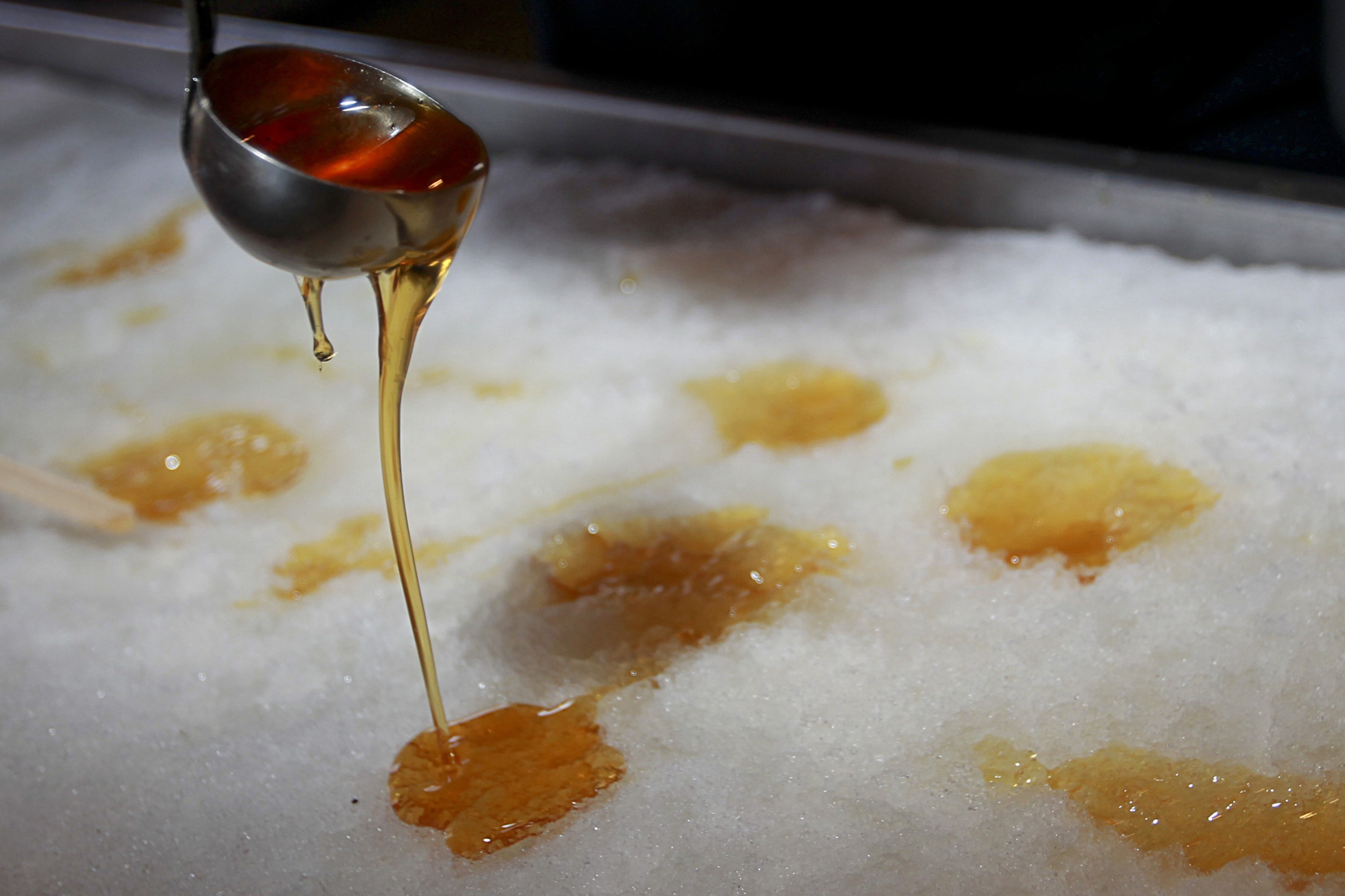
quebec maple syrup production
Traditional maple syrup production in Quebec. Getty Images
A Quebec maple syrup producer is selling cane-spiked syrup in cans to stores, according to investigative program Enquête (Investigation) on Radio-Canada, the French language division of the CBC.
Enquête says it began investigating after a Radio-Canada journalist found some maple syrup he bought at a grocery store had a strange taste. The program traced the can — labelled “pure maple syrup” — to producer Steve Bourdeau, based southwest of Montreal.
Enquête says it bought five cans of Bourdeau’s syrup — identified by 9227-8712 Quebec inc. or under the name “Érablière (Maple Grove) Steve Bourdeau” — randomly from different stores and batches, and tested them.
The cans were analyzed at Le Centre ACER (ACER Centre of Quebec), the lab responsible for testing and assuring quality control for the province’s maple syrup, and the results found each contained at least 50% cane sugar.
‘Not an accident. It’s deliberate’
“This is the first time I’ve seen falsification of this kind,” Luc Lagace, microbiologist and director of research at ACER, told Enquête.
“You can see that it’s outright cane sugar that’s been added to the cans. This is not an accident. It’s deliberate.”
Enquête says taped phone conversations and hidden camera footage between two people posing as grocery store buyers and Bourdeau had him saying he sold his syrup to hundreds of Quebec grocery stores such as IGA and Metro.
Bourdeau also said he didn’t illegally cut maple syrup labelled as pure with other sugars but boasted he was able to undercut his competitors price-wise, selling his cans for less than $5 each.
“There’s a lot of jealousy going on,” he told the undercover Enquête team. “Because I have the market. And it’s not entirely legal. And I got away with it anyway.”
What Bourdeau said of investigation
When Bourdeau was later confronted with Enquête’s investigation results he refused to speak on-camera but did by phone and email.
After first calling the test results “impossible,” Bourdeau suggested the blame may lie with some of his New Brunswick and Ontario suppliers who he buys in bulk from and then mixes with his own syrup and cans himself.
That, in itself, is not illegal.
“A producer can have a business relationship with another producer in Ontario,” Isabelle Lapointe, head of the Quebec Federation of Maple Syrup Producers, told Enquête.
“We have no control over that. The producer still has the responsibility to ensure that he meets the standards that are applicable in Quebec.”
Enquête says Boudreau also admitted by phone that he sometimes bought syrup from Ontario and sold it in cans labelling it as “product of Quebec,” which is illegal.
Genevieve Clermont, head of ACER’s inspection division, told Enquête that 90% of maple syrup from Quebec that is sold in bulk is tested but not the syrup in cans, which are sold directly by producers to grocery stores.
Boudreau told Enquête he abides by all provincial regulations and was starting his own probe into the source of his syrup and was planning on setting up his own inspection system.
However, he said he hadn’t planned to buy back any syrup he sold to grocery stores still on shelves.

 torontosun.com
The investigation began after a reporter noticed a strange taste in the maple syrup he bought from a store
Author of the article:Jane Stevenson
Published Apr 02, 2026 • Last updated 1 day ago • 2 minute read
quebec maple syrup production
Traditional maple syrup production in Quebec. Getty Images
A Quebec maple syrup producer is selling cane-spiked syrup in cans to stores, according to investigative program Enquête (Investigation) on Radio-Canada, the French language division of the CBC.
Enquête says it began investigating after a Radio-Canada journalist found some maple syrup he bought at a grocery store had a strange taste. The program traced the can — labelled “pure maple syrup” — to producer Steve Bourdeau, based southwest of Montreal.
Enquête says it bought five cans of Bourdeau’s syrup — identified by 9227-8712 Quebec inc. or under the name “Érablière (Maple Grove) Steve Bourdeau” — randomly from different stores and batches, and tested them.
The cans were analyzed at Le Centre ACER (ACER Centre of Quebec), the lab responsible for testing and assuring quality control for the province’s maple syrup, and the results found each contained at least 50% cane sugar.
‘Not an accident. It’s deliberate’
“This is the first time I’ve seen falsification of this kind,” Luc Lagace, microbiologist and director of research at ACER, told Enquête.
“You can see that it’s outright cane sugar that’s been added to the cans. This is not an accident. It’s deliberate.”
Enquête says taped phone conversations and hidden camera footage between two people posing as grocery store buyers and Bourdeau had him saying he sold his syrup to hundreds of Quebec grocery stores such as IGA and Metro.
Bourdeau also said he didn’t illegally cut maple syrup labelled as pure with other sugars but boasted he was able to undercut his competitors price-wise, selling his cans for less than $5 each.
“There’s a lot of jealousy going on,” he told the undercover Enquête team. “Because I have the market. And it’s not entirely legal. And I got away with it anyway.”
What Bourdeau said of investigation
When Bourdeau was later confronted with Enquête’s investigation results he refused to speak on-camera but did by phone and email.
After first calling the test results “impossible,” Bourdeau suggested the blame may lie with some of his New Brunswick and Ontario suppliers who he buys in bulk from and then mixes with his own syrup and cans himself.
That, in itself, is not illegal.
“A producer can have a business relationship with another producer in Ontario,” Isabelle Lapointe, head of the Quebec Federation of Maple Syrup Producers, told Enquête.
“We have no control over that. The producer still has the responsibility to ensure that he meets the standards that are applicable in Quebec.”
Enquête says Boudreau also admitted by phone that he sometimes bought syrup from Ontario and sold it in cans labelling it as “product of Quebec,” which is illegal.
Genevieve Clermont, head of ACER’s inspection division, told Enquête that 90% of maple syrup from Quebec that is sold in bulk is tested but not the syrup in cans, which are sold directly by producers to grocery stores.
Boudreau told Enquête he abides by all provincial regulations and was starting his own probe into the source of his syrup and was planning on setting up his own inspection system.
However, he said he hadn’t planned to buy back any syrup he sold to grocery stores still on shelves.
Quebec producer selling cane-spiked maple syrup: Radio-Canada investigation
The show Enquête (Investigation) says a Quebec maple syrup producer is selling cane-spiked syrup in cans to stores. Find out more.

Fake honey is an issue too.Quebec producer selling cane-spiked maple syrup: Radio-Canada investigation
The investigation began after a reporter noticed a strange taste in the maple syrup he bought from a store
Author of the article:Jane Stevenson
Published Apr 02, 2026 • Last updated 1 day ago • 2 minute read
quebec maple syrup production
Traditional maple syrup production in Quebec. Getty Images
A Quebec maple syrup producer is selling cane-spiked syrup in cans to stores, according to investigative program Enquête (Investigation) on Radio-Canada, the French language division of the CBC.
Enquête says it began investigating after a Radio-Canada journalist found some maple syrup he bought at a grocery store had a strange taste. The program traced the can — labelled “pure maple syrup” — to producer Steve Bourdeau, based southwest of Montreal.
Enquête says it bought five cans of Bourdeau’s syrup — identified by 9227-8712 Quebec inc. or under the name “Érablière (Maple Grove) Steve Bourdeau” — randomly from different stores and batches, and tested them.
The cans were analyzed at Le Centre ACER (ACER Centre of Quebec), the lab responsible for testing and assuring quality control for the province’s maple syrup, and the results found each contained at least 50% cane sugar.
‘Not an accident. It’s deliberate’
“This is the first time I’ve seen falsification of this kind,” Luc Lagace, microbiologist and director of research at ACER, told Enquête.
“You can see that it’s outright cane sugar that’s been added to the cans. This is not an accident. It’s deliberate.”
Enquête says taped phone conversations and hidden camera footage between two people posing as grocery store buyers and Bourdeau had him saying he sold his syrup to hundreds of Quebec grocery stores such as IGA and Metro.
Bourdeau also said he didn’t illegally cut maple syrup labelled as pure with other sugars but boasted he was able to undercut his competitors price-wise, selling his cans for less than $5 each.
“There’s a lot of jealousy going on,” he told the undercover Enquête team. “Because I have the market. And it’s not entirely legal. And I got away with it anyway.”
What Bourdeau said of investigation
When Bourdeau was later confronted with Enquête’s investigation results he refused to speak on-camera but did by phone and email.
After first calling the test results “impossible,” Bourdeau suggested the blame may lie with some of his New Brunswick and Ontario suppliers who he buys in bulk from and then mixes with his own syrup and cans himself.
That, in itself, is not illegal.
“A producer can have a business relationship with another producer in Ontario,” Isabelle Lapointe, head of the Quebec Federation of Maple Syrup Producers, told Enquête.
“We have no control over that. The producer still has the responsibility to ensure that he meets the standards that are applicable in Quebec.”
Enquête says Boudreau also admitted by phone that he sometimes bought syrup from Ontario and sold it in cans labelling it as “product of Quebec,” which is illegal.
Genevieve Clermont, head of ACER’s inspection division, told Enquête that 90% of maple syrup from Quebec that is sold in bulk is tested but not the syrup in cans, which are sold directly by producers to grocery stores.
Boudreau told Enquête he abides by all provincial regulations and was starting his own probe into the source of his syrup and was planning on setting up his own inspection system.
However, he said he hadn’t planned to buy back any syrup he sold to grocery stores still on shelves.
Quebec producer selling cane-spiked maple syrup: Radio-Canada investigation
The show Enquête (Investigation) says a Quebec maple syrup producer is selling cane-spiked syrup in cans to stores. Find out more.

Only if you convince yourself she really wants you for your looks and your dick.Fake honey is an issue too.
Sticky Truth About Food Fraud
We regulate for safety, but we tolerate deception – that’s the uncomfortable truth behind food fraud in Canada
Author of the article r. Sylvain Charlebois
Published Apr 04, 2026 • Last updated 1 day ago • 4 minute read
Maple syrup production in Quebec.
Maple syrup production in Quebec. Getty Images
A recent investigation has shaken one of Quebec’s most iconic industries.
Authorities are examining allegations that maple syrup sold in grocery stores– linked to a Quebec producer – may have been adulterated with cheaper sugars while still being marketed as “pure.”
Products have been pulled, regulators are involved, and once again, Canadians are left asking a familiar question: How did this go unnoticed?
Maple syrup is not just another product. In Quebec, it is culture, identity, and economic pride. But this case isn’t really about syrup.
It’s about something much bigger – and far more troubling.
Food fraud is not an anomaly. It is a feature of modern food systems.
When a product labeled as “pure” is anything but, that’s not a technical violation – it’s deception. And it’s happening more often than most consumers realize. As food prices rise and supply chains tighten, the incentives to cheat increase. Fraud is no longer the work of a few bad actors. It is, increasingly, an economic strategy.
And yet, here’s the uncomfortable truth: We rarely catch it ourselves.
We rely on the media.
Time and again, it is investigative journalism – not regulatory systems – that brings food fraud to light.
A well-known example is CBC Marketplace, which revealed that chicken served by Subway contained far less chicken DNA than consumers were led to believe. The methodology sparked debate, but the broader issue remained: Without that investigation, consumers would never have asked the question.
Canada’s food system often reactive rather than preventative
That should concern us.
A system that depends on journalists to expose fraud after the fact is not preventative – it’s reactive. And in many cases, far too late.
Canada’s food system is often ranked among the safest in the world, overseen by the Canadian Food Inspection Agency and supported by strong provincial frameworks. But these systems are primarily designed to ensure food safety – not to eliminate economic deception.
And that distinction matters.
Because food fraud is not just about money – it can become a public health issue. When undeclared ingredients enter the food supply – whether allergens, fillers, or contaminants – the risks extend far beyond wallets. Consumers can be exposed to substances they cannot tolerate, or worse, substances that were never meant to be consumed at all.
Consequences of food fraud often fail to match the crime
Still, when fraud is uncovered, the consequences often fail to match the crime.
Consider the case of Mucci Farms.
In 2016, the company was fined more than $1.5 million after pleading guilty to mislabeling imported vegetables as “Product of Canada” for three years. It remains one of the largest food fraud penalties ever issued in this country.
The explanation? A “computer glitch.”
That, in itself, is telling.
In food fraud cases, accountability is often diluted – much like the products themselves. Rarely do companies fully assume responsibility. Instead, we hear about errors, misunderstandings, or system failures. The language is sanitized, the intent blurred.
But for consumers, the outcome is the same: They were misled.
And so the question remains – are penalties truly acting as a deterrent, or simply the cost of doing business?
Food fraud costs an estimated $1.5 and $2 billion annually in Canada
Globally, food fraud is estimated to cost between $10 billion and $40 billion annually. In Canada alone, a conservative estimate would place the figure between $1.5 and $2 billion each year.
And that’s just what we can approximate.
Fraud, by design, hides in plain sight. What we uncover – through inspections, seizures, or media exposés – is only a fraction of what actually occurs. In some categories, like seafood, mislabeling rates remain alarmingly high. Honey, olive oil, spices, premium produce – these are all vulnerable.
Maple syrup is simply the latest reminder. This is hardly the first time maple syrup fraud has occurred in Canada, but it is the first time it has been caught. Big difference.
What makes this case particularly telling is not just the alleged act, but how it may have occurred. By operating outside traditional distribution systems, safeguards can be bypassed. Not because the system failed but because fraud adapted faster than oversight – and it always does.
The solution is not more bureaucracy. It is smarter enforcement. Better traceability. Stronger deterrence.
Food fraud driven by incentives
Technology can help – blockchain, advanced testing, real-time tracking – but tools alone won’t solve the problem. At its core, food fraud is driven by incentives. As long as the rewards outweigh the risks, it will persist.
Consumers are not powerless either. Price matters – but so does skepticism. If something feels too cheap to be true, it often is.
The maple syrup case will eventually fade from headlines. Investigations will conclude, responsibilities will be assigned, and the news cycle will move on.
But the real issue will remain. Because this was never just about syrup.
It was about a system that too often reacts instead of prevents.
And a question we should be asking far more often: Do we actually know what we’re eating – or are we simply trusting that someone else checked?
– Sylvain Charlebois is director of the Agri-Food Analytics Lab at Dalhousie University, co-host of The Food Professor Podcast and visiting scholar at McGill University
 torontosun.com
We regulate for safety, but we tolerate deception – that’s the uncomfortable truth behind food fraud in Canada
Author of the article
r. Sylvain CharleboisPublished Apr 04, 2026 • Last updated 1 day ago • 4 minute read
Maple syrup production in Quebec.
Maple syrup production in Quebec. Getty Images
A recent investigation has shaken one of Quebec’s most iconic industries.
Authorities are examining allegations that maple syrup sold in grocery stores– linked to a Quebec producer – may have been adulterated with cheaper sugars while still being marketed as “pure.”
Products have been pulled, regulators are involved, and once again, Canadians are left asking a familiar question: How did this go unnoticed?
Maple syrup is not just another product. In Quebec, it is culture, identity, and economic pride. But this case isn’t really about syrup.
It’s about something much bigger – and far more troubling.
Food fraud is not an anomaly. It is a feature of modern food systems.
When a product labeled as “pure” is anything but, that’s not a technical violation – it’s deception. And it’s happening more often than most consumers realize. As food prices rise and supply chains tighten, the incentives to cheat increase. Fraud is no longer the work of a few bad actors. It is, increasingly, an economic strategy.
And yet, here’s the uncomfortable truth: We rarely catch it ourselves.
We rely on the media.
Time and again, it is investigative journalism – not regulatory systems – that brings food fraud to light.
A well-known example is CBC Marketplace, which revealed that chicken served by Subway contained far less chicken DNA than consumers were led to believe. The methodology sparked debate, but the broader issue remained: Without that investigation, consumers would never have asked the question.
Canada’s food system often reactive rather than preventative
That should concern us.
A system that depends on journalists to expose fraud after the fact is not preventative – it’s reactive. And in many cases, far too late.
Canada’s food system is often ranked among the safest in the world, overseen by the Canadian Food Inspection Agency and supported by strong provincial frameworks. But these systems are primarily designed to ensure food safety – not to eliminate economic deception.
And that distinction matters.
Because food fraud is not just about money – it can become a public health issue. When undeclared ingredients enter the food supply – whether allergens, fillers, or contaminants – the risks extend far beyond wallets. Consumers can be exposed to substances they cannot tolerate, or worse, substances that were never meant to be consumed at all.
Consequences of food fraud often fail to match the crime
Still, when fraud is uncovered, the consequences often fail to match the crime.
Consider the case of Mucci Farms.
In 2016, the company was fined more than $1.5 million after pleading guilty to mislabeling imported vegetables as “Product of Canada” for three years. It remains one of the largest food fraud penalties ever issued in this country.
The explanation? A “computer glitch.”
That, in itself, is telling.
In food fraud cases, accountability is often diluted – much like the products themselves. Rarely do companies fully assume responsibility. Instead, we hear about errors, misunderstandings, or system failures. The language is sanitized, the intent blurred.
But for consumers, the outcome is the same: They were misled.
And so the question remains – are penalties truly acting as a deterrent, or simply the cost of doing business?
Food fraud costs an estimated $1.5 and $2 billion annually in Canada
Globally, food fraud is estimated to cost between $10 billion and $40 billion annually. In Canada alone, a conservative estimate would place the figure between $1.5 and $2 billion each year.
And that’s just what we can approximate.
Fraud, by design, hides in plain sight. What we uncover – through inspections, seizures, or media exposés – is only a fraction of what actually occurs. In some categories, like seafood, mislabeling rates remain alarmingly high. Honey, olive oil, spices, premium produce – these are all vulnerable.
Maple syrup is simply the latest reminder. This is hardly the first time maple syrup fraud has occurred in Canada, but it is the first time it has been caught. Big difference.
What makes this case particularly telling is not just the alleged act, but how it may have occurred. By operating outside traditional distribution systems, safeguards can be bypassed. Not because the system failed but because fraud adapted faster than oversight – and it always does.
The solution is not more bureaucracy. It is smarter enforcement. Better traceability. Stronger deterrence.
Food fraud driven by incentives
Technology can help – blockchain, advanced testing, real-time tracking – but tools alone won’t solve the problem. At its core, food fraud is driven by incentives. As long as the rewards outweigh the risks, it will persist.
Consumers are not powerless either. Price matters – but so does skepticism. If something feels too cheap to be true, it often is.
The maple syrup case will eventually fade from headlines. Investigations will conclude, responsibilities will be assigned, and the news cycle will move on.
But the real issue will remain. Because this was never just about syrup.
It was about a system that too often reacts instead of prevents.
And a question we should be asking far more often: Do we actually know what we’re eating – or are we simply trusting that someone else checked?
– Sylvain Charlebois is director of the Agri-Food Analytics Lab at Dalhousie University, co-host of The Food Professor Podcast and visiting scholar at McGill University
CHARLEBOIS: Sticky Truth About Food Fraud
Food fraud is not an anomaly. It is a feature of modern food systems. Read more.
Quebec maple syrup producers file legal action over alleged black-market operation
The request was filed this week by the Québec Maple Syrup Producers federation.
Author of the article:Montreal Gazette
Published Apr 22, 2026 • Last updated 10 hours ago • 2 minute read
A Quebec maple syrup producer has been accused of cutting his product with cane sugar.
A Quebec maple syrup producer has been accused of cutting his product with cane sugar. Photo by Marie-France Coallier /Montreal Gazette files
The Quebec maple syrup industry is seeking an investigation into a longtime producer accused of running a black-market operation, adulterating syrup and bypassing the province’s tightly controlled sales system, according to a legal filing.
The request, filed this week by the Quebec Maple Syrup Producers federation, alleges that Steve Bourdeau, and his company, have for years bought, processed and sold maple syrup outside the official system in violation of provincial regulations.
Quebec’s agricultural markets regulator has been asked to launch a formal inquiry into the company’s activities from 2023 to 2026, as well as impose penalties, suspend its production quota and potentially shut it down entirely.
It comes after an investigation by Radio-Canada’s Enquête program, released April 2, revealed Bourdeau was cutting half his product with cane sugar. The federation said that it had been investigating the company since January and filed a complaint with Quebec’s agriculture ministry on Feb. 20, weeks before the Enquête report was broadcast.
The federation began looking into the matter after a Radio-Canada journalist approached them to learn more about Quebec’s maple syrup control system for their own investigation, and tipped them off one maple syrup brand didn’t taste authentic. The journalist reportedly kept the identity of the producer anonymous, but the allegation of adulterated syrup “set off alarm bells.”
Quebec’s unique maple syrup regime, which requires producers to sell bulk syrup through a centralized agency that controls supply, pricing and quality, has long been credited with stabilizing the market, though it has been criticized by some producers as restrictive.
According to the filing, he admitted earlier this month to buying syrup “on the black market” for years and purchasing far more syrup than his own sugar bush could produce. He is also said to have sold products to hundreds of grocery stores across Quebec and beyond.
The producers’ group further alleges that some of the syrup was adulterated and distributed under multiple brand names, including products sold in major grocery chains such as IGA, Metro and Adonis.
Inspectors who visited the company’s facilities this month reported that returned, allegedly adulterated syrup had been transferred into larger containers, raising concerns it could be reintroduced into the market.
Bourdeau reportedly claimed annual sales of more than one million cans, generating up to $5 million in revenue, but declared production volumes and documentation did not match those figures.
The group also says the company operated thousands of maple taps without the required quotas and reported unusually large volumes of direct sales that were poorly documented or unsupported by records.
The filing says that Bourdeau has acknowledged violations of industry rules dating back more than a decade, including settlements covering conduct between 2010 and 2022.
The case has since been described as unprecedented, saying they had never encountered confirmed adulterated maple syrup despite years of inspections.
The Quebec Maple Syrup Producers argue that the case has already damaged confidence in the province’s signature export.
They are asking regulators to compel the company to hand over financial records, supplier lists and production data, and to pay more than $166,000 in penalties and additional unpaid contributions.
As an interim measure, they are seeking to suspend the company’s quota and force it to turn over all syrup in its possession.
The regulator has not yet ruled on the request.

 ici.radio-canada.ca
 torontosun.com
The request was filed this week by the Québec Maple Syrup Producers federation.
Author of the article:Montreal Gazette
Published Apr 22, 2026 • Last updated 10 hours ago • 2 minute read
A Quebec maple syrup producer has been accused of cutting his product with cane sugar.
A Quebec maple syrup producer has been accused of cutting his product with cane sugar. Photo by Marie-France Coallier /Montreal Gazette files
The Quebec maple syrup industry is seeking an investigation into a longtime producer accused of running a black-market operation, adulterating syrup and bypassing the province’s tightly controlled sales system, according to a legal filing.
The request, filed this week by the Quebec Maple Syrup Producers federation, alleges that Steve Bourdeau, and his company, have for years bought, processed and sold maple syrup outside the official system in violation of provincial regulations.
Quebec’s agricultural markets regulator has been asked to launch a formal inquiry into the company’s activities from 2023 to 2026, as well as impose penalties, suspend its production quota and potentially shut it down entirely.
It comes after an investigation by Radio-Canada’s Enquête program, released April 2, revealed Bourdeau was cutting half his product with cane sugar. The federation said that it had been investigating the company since January and filed a complaint with Quebec’s agriculture ministry on Feb. 20, weeks before the Enquête report was broadcast.
The federation began looking into the matter after a Radio-Canada journalist approached them to learn more about Quebec’s maple syrup control system for their own investigation, and tipped them off one maple syrup brand didn’t taste authentic. The journalist reportedly kept the identity of the producer anonymous, but the allegation of adulterated syrup “set off alarm bells.”
Quebec’s unique maple syrup regime, which requires producers to sell bulk syrup through a centralized agency that controls supply, pricing and quality, has long been credited with stabilizing the market, though it has been criticized by some producers as restrictive.
According to the filing, he admitted earlier this month to buying syrup “on the black market” for years and purchasing far more syrup than his own sugar bush could produce. He is also said to have sold products to hundreds of grocery stores across Quebec and beyond.
The producers’ group further alleges that some of the syrup was adulterated and distributed under multiple brand names, including products sold in major grocery chains such as IGA, Metro and Adonis.
Inspectors who visited the company’s facilities this month reported that returned, allegedly adulterated syrup had been transferred into larger containers, raising concerns it could be reintroduced into the market.
Bourdeau reportedly claimed annual sales of more than one million cans, generating up to $5 million in revenue, but declared production volumes and documentation did not match those figures.
The group also says the company operated thousands of maple taps without the required quotas and reported unusually large volumes of direct sales that were poorly documented or unsupported by records.
The filing says that Bourdeau has acknowledged violations of industry rules dating back more than a decade, including settlements covering conduct between 2010 and 2022.
The case has since been described as unprecedented, saying they had never encountered confirmed adulterated maple syrup despite years of inspections.
The Quebec Maple Syrup Producers argue that the case has already damaged confidence in the province’s signature export.
They are asking regulators to compel the company to hand over financial records, supplier lists and production data, and to pay more than $166,000 in penalties and additional unpaid contributions.
As an interim measure, they are seeking to suspend the company’s quota and force it to turn over all syrup in its possession.
The regulator has not yet ruled on the request.
Du sirop d’érable falsifié sur vos tablettes d’épicerie
Un important producteur acéricole de la Montérégie vend en épicerie du sirop coupé avec du sucre de canne, a découvert l'émission « Enquête ».
ici.radio-canada.ca
Quebec maple syrup producers file legal action over alleged black-market operation
The request was filed this week by the Québec Maple Syrup Producers federation.