Iranically Iran, Middle East’s Karen…

Ron in Regina

"Voice of the West" Party
Apr 9, 2008
31,364
11,386
113
Regina, Saskatchewan
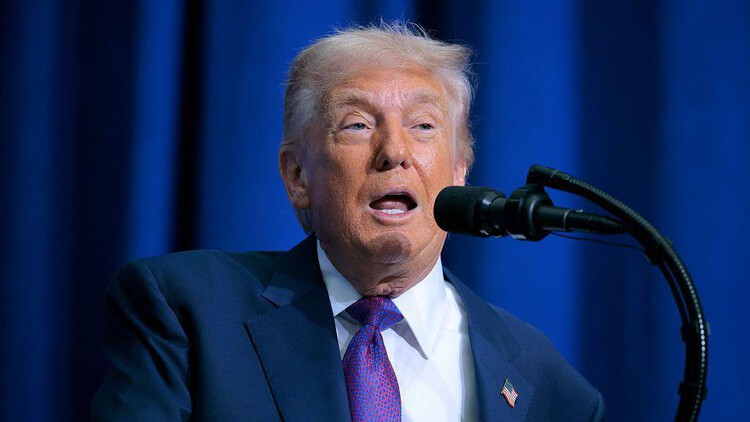
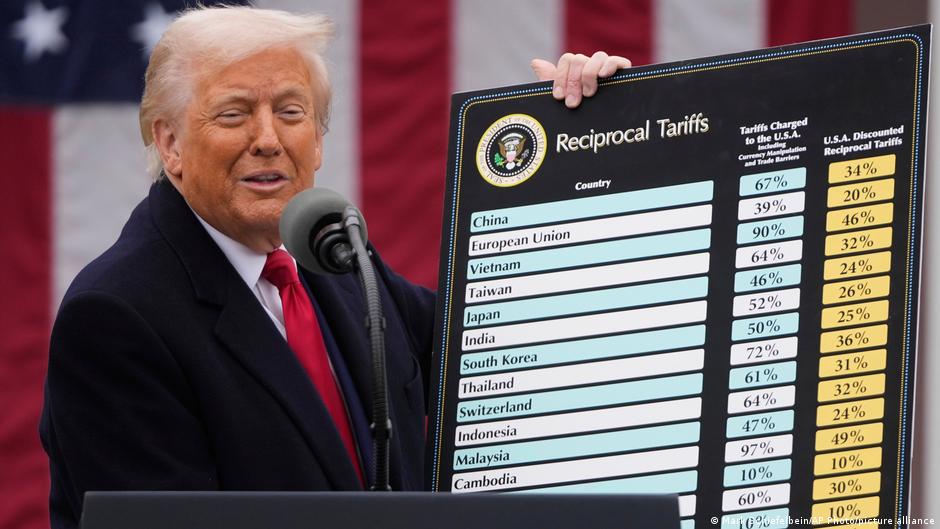
US President Donald Trump says the world will find out "over the next, probably, 10 days" whether the US will reach a deal with Iran or take military action, etc…
At the inaugural meeting of his Board of Peace in Washington DC, Trump said "we have some work to do" in coming to an agreement with the Islamic Republic about its nuclear programme, and that "we may have to take it a step further". In recent days, the US has surged military forces to the Middle East, while progress was also reported at talks between American and Iranian negotiators in Switzerland???
 

Ron in Regina

"Voice of the West" Party
Apr 9, 2008
31,364
11,386
113
Regina, Saskatchewan
US President Donald Trump says the world will find out "over the next, probably, 10 days" whether the US will reach a deal with Iran or take military action, etc…
US President Donald Trump delivered his latest ultimatum to Iran on Thursday during a meeting of the Bored of Peace, the Middle East coalition Trump formed to stabilise a region he could soon plunge into a new war.

The irony of simultaneously calling for peace and threatening military action underscored the competing impulses at the heart of Trump's foreign policy in his second term.

Perhaps nowhere is that contradiction clearer than the impasse between Washington and Tehran - a standoff that has quickly escalated and could now lead to the largest US air campaign in years.
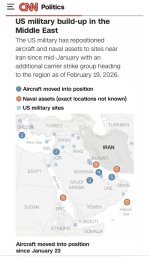
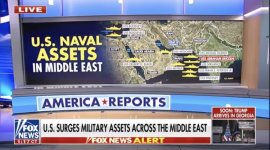
At the inaugural meeting of his Board of Peace in Washington DC, Trump said "we have some work to do" in coming to an agreement with the Islamic Republic about its nuclear programme, and that "we may have to take it a step further". In recent days, the US has surged military forces to the Middle East, while progress was also reported at talks between American and Iranian negotiators in Switzerland???
Such deployments can serve as leverage in diplomacy. But taken together, they may also suggest that indirect talks between Tehran and Washington have reached a deadlock - one that could be followed by military action if neither side shifts positions.

This raises a fundamental question: why do Iranian leaders, at least publicly, remain defiant in the face of the world's most powerful military and its strongest regional ally in the Middle East?
1771577883767.jpeg
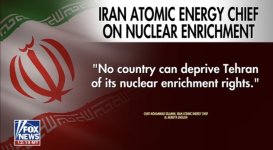
The answer lies in Washington's stated conditions for talks. From Tehran's perspective, these demands amount not to negotiation but to capitulation. From the perspective of Iran's Supreme Leader, Ali Khamenei, accepting such terms could appear more dangerous than risking a limited war with the United States under President Donald Trump.
1771577915589.jpegA military confrontation, however costly, may be seen as survivable. Total strategic rollback may not.
Iran said it would respond if attacked.

Brent crude futures have topped $72 a barrel - a 6-1/2 month high - and the dollar was firm in the Asia session.
1771578036589.jpeg
Trump, meanwhile, posted about aliens on social media, saying he would order Pentagon chief Pete Hegseth and other agencies to release government files related to aliens and unidentified flying objects?
Reports have suggested a U.S. strike could come as early as Saturday. The United States is preparing for a “sustained, weeks-long” (???) military campaign against Iran if negotiations between the countries fall apart in the coming days, according to multiple reports. Then what?
 

Ron in Regina

"Voice of the West" Party
Apr 9, 2008
31,364
11,386
113
Regina, Saskatchewan
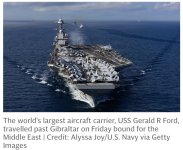
The world’s largest aircraft carrier, USS Gerald R Ford, steamed past Gibraltar on Friday bound for the Middle East as Donald Trump massed ever more American firepower within striking range of Iran.
1771684865038.jpeg
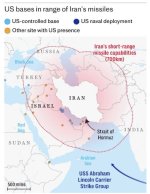
For now, US naval firepower is giving Iran a relatively wide berth. The nuclear-powered USS Abraham Lincoln aircraft carrier – with its crew of more than 5,500 sailors and Marines and its accompanying strike force – is on station off the coast of Oman, some 450 miles away, while a second carrier, the USS Gerald R Ford, is en route and will arrive within two weeks.

The prospect of this armada going into action raises a vital question: how might Iran’s leadership react? From the moment they learn of any incoming American attack, the regime would have every reason to strike back with all the weapons in its hands in order to inflict maximum carnage. If the Ayatollah believes his regime’s survival is at stake, he will look to use all 1,500 missiles while he still can.
1771684036886.jpeg
That means any new war would be far more dangerous and escalatory than previous rounds of bloodshed. If Ayatollah Ali Khamenei, the Supreme Leader, were to conclude that the very survival of the Islamic Republic was at stake, then caution and restraint would be unlikely to feature among his calculations.
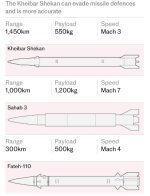
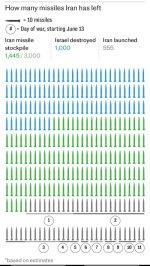
On the contrary, he might judge that the imperative was to fire as many of Iran’s estimated 1,500 ballistic missiles as possible before America – possibly aided by Israel – could destroy them, acting on the timeless principle of “use them or lose them”.

The primary target of America’s B-2 stealth bombers would not be the now ruined uranium enrichment facilities at Natanz and Fordow. Instead Trump’s warplanes would be trying to wreck Iran’s means of retaliation by destroying its ballistic missiles and striking at the nerve centres and the leadership of the regime.
1771684655025.jpeg
“If the whole regime elite believes that it is in a fight for its life, then anyone still alive after the first hit will, rationally, have every reason to strike back and try to impose maximum costs on Trump,” says Marcus Solarz Hendriks, the lead Middle East analyst at Greenmantle, a geopolitical consultancy.
1771684375000.jpeg
Khamenei’s ability to retaliate has been hugely reduced by Israel’s evisceration of Hamas and Hezbollah, the terrorist groups that Iran supplied with thousands of missiles to be fired in the event of an attack on its territory. Last year’s war cost Iran about half of its arsenal of ballistic missiles, and some 70 per cent of their launchers.
1771684340768.jpeg
But the roughly 1,500 missiles that are left – and perhaps 100 launchers – would on paper be enough to inflict carnage across the Middle East. Khamenei could fire them at every Gulf state hosting American forces, targeting Qatar once again and perhaps also Bahrain, the headquarters of the US Fifth Fleet.

In total, some 40,000 US military personnel are scattered at various bases across the region, all of them within missile range of Iran. American embassies would also be obvious targets, though they are well defended and the mission in Baghdad is accustomed to dealing with attacks.

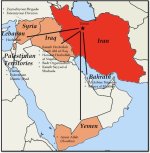
Khamenei may also fire his missiles at the oilfields of Saudi Arabia’s Eastern Province and the vital processing facility at Abqaiq, which handles about two thirds of the kingdom’s production. The Houthi rebels who control large areas of Yemen, including the capital Sana’a, retain a large arsenal of Iranian-supplied missiles which they have previously launched at both Saudi Arabia and the United Arab Emirates.

Khamenei might urge them to do so again. If they are willing to risk punitive retaliation, the Houthis may also target the US armada with the advanced anti-shipping missiles that Iran has provided for this purpose. If Trump starts by bombing Iran, he might also find himself attacking Yemen.
He would probably need to neutralise the naval wing of the Islamic Revolutionary Guard Corps (IRGC) too - in order to protect US warships and foil any attempt to block the Strait of Hormuz, the vital waterway at the entrance to the Gulf which serves as a conduit for global oil supplies.

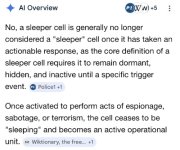
And, over the years, the intelligence branch of the IRGC is believed to have planted “sleeper cells” of terrorists and saboteurs in countries across the Middle East – and possibly in Europe – which could be activated.

But Khamenei’s problem is that his enemies know exactly how he might hit back and, in the event of war, America and Israel would do everything within their power to pre-emptively defang Iran.

Hendriks says that Iran has anticipated this by dispersing its missiles and delegating the authority to launch them to local commanders. Even if military headquarters are destroyed and communications disrupted, preventing the transmission of any orders, some missiles might still be fired.

In the same way, Iran has prepared for decapitation strikes against its leadership by creating parallel structures, including a new Defence Council to sit alongside the established Supreme National Security Council.

Whether any of this would survive the first days – or hours – of an American strike is open to question. Yet, this time, Khamenei would have every reason to use whatever is in his hands.
Let there be no doubt: it could be little more than a New York minute before military muscle-flexing transforms into something different. Iran, for its part, has been conducting large-scale live-fire naval drills with cruise missiles and other weapons, briefly shutting down the Strait of Hormuz, a global oil choke point for 20 per cent of worldwide crude.
Congress has a duty and obligation to invoke the War Powers Resolution in such a scenario, as this will not be a tactical one-off strike, nothing like the recent extraction activity in Venezuela or the uranium-enrichment-site bombings last year. This will be all-out, full-scale war. And only Congress has the power to declare war: Article 1, Section 8, of the US Constitution.
1771686576566.jpeg
 

Ron in Regina

"Voice of the West" Party
Apr 9, 2008
31,364
11,386
113
Regina, Saskatchewan
Based on intelligence assessments and security reports from 2025 and early 2026, the Islamic Revolutionary Guard Corps (IRGC) is suspected of maintaining and potentially activating sleeper cells, or utilizing proxy networks, in several countries, particularly in response to heightened tensions with the United States and Israel.

Suspected locations for IRGC-linked sleeper cells and intelligence networks include:
  • United States: U.S. homeland security officials have flagged an "elevated threat environment" regarding Iranian sleeper cells or agents. Intelligence indicates the IRGC has sought to develop surrogate networks within the U.S. for surveillance and potential attacks, with concerns focusing on "gotaway" individuals who entered illegally and potential plots targeting officials and dissidents.
  • Canada: Following U.S. strikes on Iranian interests, Canadian officials expressed severe concern regarding the activation of IRGC sleeper cells in Canada to target regime opponents and critics.
  • United Kingdom: Reports indicate the IRGC has been using online grooming to recruit individuals of Middle Eastern and Eastern European origin to form sleeper cells and lone-wolf operatives, with UK security services monitoring multiple potential plots.
  • Europe (General): Scandinavian countries (Sweden, Finland) have reported increased IRGC operations targeting Israeli interests and Iranian dissidents. The EU formally designated the IRGC as a terrorist organization in January 2026, citing their transnational repression.
  • These cells are generally described as acting as a "mosaic" or network, intended to collect intelligence, harass dissidents, or carry out acts of violence upon orders from Tehran, often providing "plausible deniability" for the regime.
  • Middle East:
    • Iraq & Lebanon: These countries are primary theaters for IRGC proxy warfare and embedded networks.
    • Syria & Yemen: Used by the IRGC to train and fund militia groups (e.g., Liwa Fatemiyoun, Liwa Zainabiyoun).
    • Turkey: Identified as a location for Iranian intelligence (MOI) and IRGC-linked plots.
  • South America: The IRGC and its Quds Force are suspected of having long-standing networks in the region.
Islamic Revolutionary Guard Corps (IRGC)
  • Mission:
    Safeguard the Islamic Republic's political and ideological system, prevent coups, and project power abroad.

  • Structure:
    A powerful, multi-service branch with its own Ground Forces, Navy, Aerospace Force, and the elite Quds Force for external operations.

  • Control:
    Reports directly to the Supreme Leader, bypassing civilian government…which sound so familiar much closer to home lately.

  • Influence:
    Controls significant economic assets, suppresses domestic dissent via the Basij, and runs foreign proxy operations.
The IRGC guards the regime, whereas the Iranian Army guards the nation. The IRGC has surpassed the Army in power, budget, political access, and influence, becoming the primary military actor. The Iranian Army is designed for external defense, but the IRGC was formed for internal security and regime protection, plus asymmetric regional warfare.
 

petros

The Central Scrutinizer
Nov 21, 2008
119,716
14,765
113
Low Earth Orbit
Based on intelligence assessments and security reports from 2025 and early 2026, the Islamic Revolutionary Guard Corps (IRGC) is suspected of maintaining and potentially activating sleeper cells, or utilizing proxy networks, in several countries, particularly in response to heightened tensions with the United States and Israel.

Suspected locations for IRGC-linked sleeper cells and intelligence networks include:
  • United States: U.S. homeland security officials have flagged an "elevated threat environment" regarding Iranian sleeper cells or agents. Intelligence indicates the IRGC has sought to develop surrogate networks within the U.S. for surveillance and potential attacks, with concerns focusing on "gotaway" individuals who entered illegally and potential plots targeting officials and dissidents.
  • Canada: Following U.S. strikes on Iranian interests, Canadian officials expressed severe concern regarding the activation of IRGC sleeper cells in Canada to target regime opponents and critics.
  • United Kingdom: Reports indicate the IRGC has been using online grooming to recruit individuals of Middle Eastern and Eastern European origin to form sleeper cells and lone-wolf operatives, with UK security services monitoring multiple potential plots.
  • Europe (General): Scandinavian countries (Sweden, Finland) have reported increased IRGC operations targeting Israeli interests and Iranian dissidents. The EU formally designated the IRGC as a terrorist organization in January 2026, citing their transnational repression.
  • These cells are generally described as acting as a "mosaic" or network, intended to collect intelligence, harass dissidents, or carry out acts of violence upon orders from Tehran, often providing "plausible deniability" for the regime.
  • Middle East:
    • Iraq & Lebanon: These countries are primary theaters for IRGC proxy warfare and embedded networks.
    • Syria & Yemen: Used by the IRGC to train and fund militia groups (e.g., Liwa Fatemiyoun, Liwa Zainabiyoun).
    • Turkey: Identified as a location for Iranian intelligence (MOI) and IRGC-linked plots.
  • South America: The IRGC and its Quds Force are suspected of having long-standing networks in the region.
Islamic Revolutionary Guard Corps (IRGC)
  • Mission:
    Safeguard the Islamic Republic's political and ideological system, prevent coups, and project power abroad.

  • Structure:
    A powerful, multi-service branch with its own Ground Forces, Navy, Aerospace Force, and the elite Quds Force for external operations.

  • Control:
    Reports directly to the Supreme Leader, bypassing civilian government…which sound so familiar much closer to home lately.

  • Influence:
    Controls significant economic assets, suppresses domestic dissent via the Basij, and runs foreign proxy operations.
The IRGC guards the regime, whereas the Iranian Army guards the nation. The IRGC has surpassed the Army in power, budget, political access, and influence, becoming the primary military actor. The Iranian Army is designed for external defense, but the IRGC was formed for internal security and regime protection, plus asymmetric regional warfare.
Sounds like more Israeli bullshit again.

Name a shin these sleeper cells have kicked and the flavour of ice cream.

If they want to attack Iran, then use the IDF not the Goyim.
 

Ron in Regina

"Voice of the West" Party
Apr 9, 2008
31,364
11,386
113
Regina, Saskatchewan
Sounds like more Israeli bullshit again.

Name a shin these sleeper cells have kicked and the flavour of ice cream.
1771692971264.jpeg
If they want to attack Iran, then use the IDF not the Goyim.
Just Google AI. I put in a loose request without a bunch of biased parameters.

“Where does the IRGC keep or is suspected of keeping sleeper cells?”

Nothing else. Try it yourself with your own AI.
 

petros

The Central Scrutinizer
Nov 21, 2008
119,716
14,765
113
Low Earth Orbit
View attachment 33371

Just Google AI. I put in a loose request without a bunch of biased parameters.

“Where does the IRGC keep or is suspected of keeping sleeper cells?”

Nothing else. Try it yourself with your own AI.
No bias? You want me to specifically ask about IRGC sleeper cells?

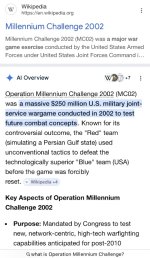
Since your trying AI, ask about Operation Millennium Challenge and ask if the result would be the same today.
 

Ron in Regina

"Voice of the West" Party
Apr 9, 2008
31,364
11,386
113
Regina, Saskatchewan
No bias? You want me to specifically ask about IRGC sleeper cells?

Since your trying AI, ask about Operation Millennium Challenge and ask if the result would be the same today.
1771702946972.jpeg
If Operation Millennium Challenge (MC02) were to occur in 2026, the outcome would likely
not be the same, though it would highlight a different, more complex set of vulnerabilities rather than a simple, overwhelming victory for either side. While the 2002 exercise saw a "Red Team" (led by Gen. Paul Van Riper) use asymmetric, low-tech tactics to sink a US Navy carrier group in a stunning upset, modern warfare has shifted toward high-tech, AI-driven, and hyper-connected systems, etc…
 

petros

The Central Scrutinizer
Nov 21, 2008
119,716
14,765
113
Low Earth Orbit
View attachment 33374
If Operation Millennium Challenge (MC02) were to occur in 2026, the outcome would likely
not be the same, though it would highlight a different, more complex set of vulnerabilities rather than a simple, overwhelming victory for either side. While the 2002 exercise saw a "Red Team" (led by Gen. Paul Van Riper) use asymmetric, low-tech tactics to sink a US Navy carrier group in a stunning upset, modern warfare has shifted toward high-tech, AI-driven, and hyper-connected systems, etc…
Now add in the Shanghai Corporation and Russia. Kiss Israel good bye.