


You are funny .All Trump can do is try to blow smoke up the asses of his now dead MAGA crowd.
He's powerless. He has to kiss Persian ass while petro dollar falls through the floor.
Iran War. . . USA Up 2-0 in the First Period
- Thread starter Tecumsehsbones
- Start date
You are using an out of date browser. It may not display this or other websites correctly.
You should upgrade or use an alternative browser.
You should upgrade or use an alternative browser.


Iran blew the fuck out of those bases.The United States has heavily reinforced its military presence across the Middle East outside the immediate Persian Gulf, with over 50,000 troops and significant air and naval assets focused on Iran. Major deployments include carriers in the Arabian Sea, air strike wings in Jordan, and thousands of personnel in Kuwait, Iraq, and Saudi Arabia.
Key U.S. military forces currently outside the Persian Gulf include:
These forces are designed for immediate response, with reports of "tens of thousands" of troops, air defenses, and carrier groups designed to provide firepower from the Mediterranean to the Arabian Sea.
- Naval Forces (Arabian Sea & Region): The USS Abraham Lincoln Carrier Strike Groupand the USS Gerald R. Ford are operating in the Arabian Sea. Numerous destroyers and combat ships are stationed in the Red Sea and Eastern Mediterranean.
- Air Power (Regional Bases):
- Jordan: A major buildup of F-15E Strike Eagle fighters is located at Muwaffaq Salti Air Base.
- Qatar: Al Udeid Air Base hosts advanced air defense systems (Patriot and THAAD) and aircraft, alongside allied RAF Typhoon jets.
- Turkey: Incirlik Air Base remains a major hub.
- Ground and Special Forces (Regional Bases):
- Kuwait: Over 13,500 personnel, including troops at Camp Buehring, act as a staging post.
- Iraq & Syria: Approximately 2,500 troops in Iraq and 2,000 in Syria, operating at locations such as Ain al-Asad and Erbil.
- Saudi Arabia: Approximately 2,700 personnel supporting air defense.
- Jordan: Roughly 3,800 troops, excluding Air Force personnel.
View attachment 34070
With the mountains in Iran to the north of the strait, Iran will (at least initially, & that might be all it needs) have the high ground…until jets arrive. If Iran is willing to sacrifice (one use and dispose of) whatever it throws at the Strait of Hormuz, repeatedly a few times, it’ll “probably” make the insurance companies veto any passage of the strait.
70 US aircraft have been shot down or destroyed on the ground. They were left undefeated.
He bullshits constantly.(YouTube & Trump says US to blockade ships crossing Strait of Hormuz)
Trump says US to blockade ships crossing Strait of Hormuz | AJ #shorts
US President Donald Trump says the US Navy will immediately blockade the Strait of Hormuz and intercept ships that pay tolls to Iran - after talks in Islamab...www.youtube.com
Trump with his middle of the night toilet tweets on truth social is also saying that other countries aside from America are going to be blockading that Strait without saying who they are. That’s curious all by itself.
They did. Down to 20% for interceptions. It's a crisis.Right .
Right .
Yes, we are now utterly destroyed and powerless.Iran blew the fuck out of those bases.
70 US aircraft have been shot down or destroyed on the ground. They were left undefeated.
Right and Kegbreth and Trump are strategical geniuses.Yes, we are now utterly destroyed and powerless.
If the missiles and drone could have been stopped, why weren't they?

Key details on international involvement:Trump with his middle of the night toilet tweets on truth social is also saying that other countries aside from America are going to be blockading that Strait without saying who they are. That’s curious all by itself.
- Initial Hesitation: Earlier in the crisis, Germany and Greece officially ruled out military participation.
- Potential Support: Trump has suggested that countries heavily reliant on oil passing through the Strait—such as Japan, South Korea, and the UK—would join the U.S. effort to keep the waterway open.
- GCC Partners: The United Arab Emirates (UAE) has previously indicated a willingness to join a U.S.-led military effort to secure the strait.
- Minesweeping Focus: While some countries are reluctant to join a direct blockade of Iranian ships, there is more potential for cooperation in mine-clearing operations to secure navigation.
As of April 12, 2026, following the collapse of peace talks, the U.S. Navy has been instructed to interdict any vessel that has paid a toll to Iran, effectively creating a blockade of Iranian-influenced traffic.
Tankers urged not to pay toll to Iran for use of strait — BBC News
Tanker firms are being advised not to pay Iran any levies in return for safe passage through the Strait of Hormuz.
Trump says gas prices may remain high through November midterm election — Reuters
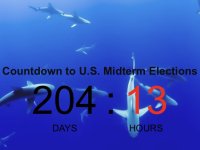
U.S. President Donald Trump said on Sunday that the price of oil and gasoline may remain high through November's midterm elections, a rare acknowledgement of the potential political fallout from his decision to attack Iran six weeks ago.
Summary of 2026 Conflict Losses (April 2-5 so this is a week old):70 US aircraft have been shot down or destroyed on the ground. They were left undefeated.
- F-15E Strike Eagle: 1 Shot Down.
- MC-130J: 2 Destroyed on ground.
- MH-6 Little Bird: 4 Destroyed on ground.
- MQ-9 Reaper Drones: ~16 total reported lost during the campaign.
Anyway, looks like Trump is gonna try & ‘Cuba’ Iran financially & that’s only taken 3/4’s of a century so far. By imposing additional costs on Iran’s foundering economy, Mr Trump is seeking to force the capitulation that Tehran resisted at the negotiating table, blockading the strait & making Iran use $30,000 drones to eat through million dollar American missiles.
The decision also suggests a greater sense of urgency than his earlier insouciance implied.
"Whether we make a deal or not makes no difference to me. The reason is because we've won," Trump said? Oh yeah, ok.
As Mr Vance was emerging to admit defeat, Mr Trump was at a sports arena in Miami, watching a mixed martial arts fight with Marco Rubio, the US secretary of state.Saturday, the president contended he did not care about the outcome, insisting the United States had already triumphed on the battlefield by killing Iranian leaders and destroying key military infrastructure.
It made for an incongruous split-screen. As the vice-president, a man with little negotiating pedigree, attempted to explain the collapse of the talks, Mr Rubio, America’s most senior diplomat, was watching a video montage of topless men thumping each other.
Yet Mr Trump cannot easily walk away while Iran continues to choke the world’s most important artery, through which – in normal times – a fifth of global oil supplies pass. The counter-blockade is an attempt to seize back the initiative.
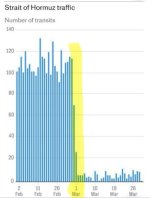
Gulf states, whose economies are already under strain, had hoped Mr Trump would use force to reopen the strait. A second blockade may not be what they had in mind. Nor are global markets likely to take kindly to a further escalation when trading opens on Monday. Fill your fuel tanks today.
There are legal risks, too. Mr Trump may find himself accused of breaching the same maritime norms he has invoked against Iran. While blockades are not illegal in wartime, their application to international straits is contested. A legal row is brewing. Nor is it clear that a blockade alone will be enough to force Iran to yield.
For all the escalation, the underlying dilemma remains unchanged. With diplomacy stalled, Washington and Tehran still face three unappealing choices: return to negotiations, resume hostilities, or allow the conflict to drift to an uneasy, unresolved end.
A return to war carries danger for both sides. The conflict is already unpopular in the United States. A second act threatens turmoil in global energy markets.
For the Iranian regime, renewed fighting risks squandering the domestic goodwill it has built by casting itself as the victim of an unprovoked war. Public sympathy may have shifted during the initial phase of the conflict, but ordinary people – many of whom have borne the brunt, with an estimated one million put out of work – may be less forgiving if a chance for peace is seen to have been squandered. How many Iranians are still incarcerated from their protest earlier in the year?
Mr Trump may calculate that the economic pressure of a naval blockade will, over time, force Iran’s leaders to bend – or even drive discontent back onto the streets. But such effects would take time, complicating his hope of declaring victory and moving on.
He could still seek to shift attention to more politically rewarding foreign policy battles – Nato, Greenland and Ukraine among them – but that becomes harder while the Strait of Hormuz remains contested.
At root, the problem is that a durable settlement remains elusive while both sides still believe they can dictate the outcome.
Both sides claim to have won and both side sides are waiting for the other to capitulate, so yeah, no reason whatsoever I guess, by anyone on any side of this latest chapter in the goat rodeo. If this Islamabad thing is just for optics for both sides, then neither has any real motivation to do anything except point fingers and take selfies I guess.
Losing sucks huh? There is no face to save off Operation Epic Failure. Why try? There are other sources to get the truth but you think they're goofy.Key details on international involvement:
Current Situation
- Initial Hesitation: Earlier in the crisis, Germany and Greece officially ruled out military participation.
- Potential Support: Trump has suggested that countries heavily reliant on oil passing through the Strait—such as Japan, South Korea, and the UK—would join the U.S. effort to keep the waterway open.
- GCC Partners: The United Arab Emirates (UAE) has previously indicated a willingness to join a U.S.-led military effort to secure the strait.
- Minesweeping Focus: While some countries are reluctant to join a direct blockade of Iranian ships, there is more potential for cooperation in mine-clearing operations to secure navigation.
As of April 12, 2026, following the collapse of peace talks, the U.S. Navy has been instructed to interdict any vessel that has paid a toll to Iran, effectively creating a blockade of Iranian-influenced traffic.
The situation remains highly volatile, with both China and Russia expressing opposition to the blockade.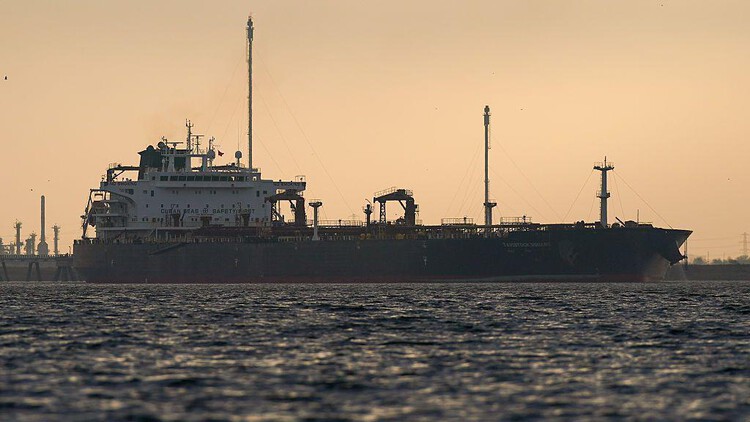
Tankers urged not to pay toll to Iran for use of strait — BBC News
Tanker firms are being advised not to pay Iran any levies in return for safe passage through the Strait of Hormuz.apple.news
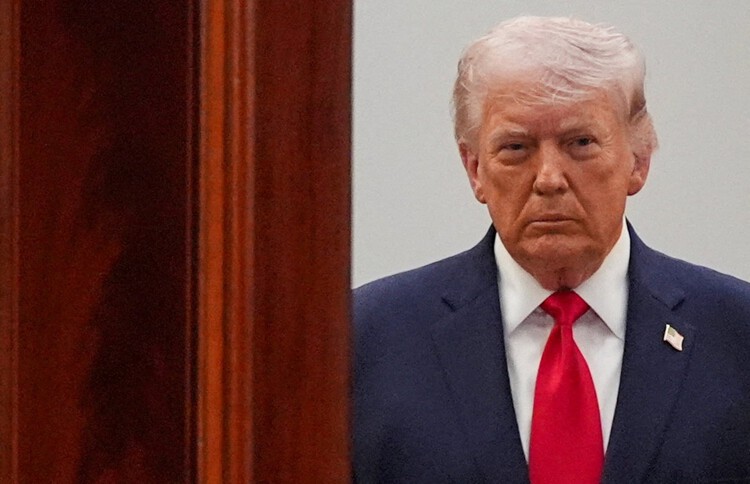
Trump says gas prices may remain high through November midterm election — Reuters
U.S. President Donald Trump said on Sunday that the price of oil and gasoline may remain high through November's midterm elections, a rare acknowledgement of the potential political fallout from his decision to attack Iran six weeks ago.
Summary of 2026 Conflict Losses (April 2-5 so this is a week old):
The figure of 70 appears to be an unverified or vastly exaggerated number not supported by credible, independent, or mainstream Western reporting from the scene…which can mean something or nothing.
- F-15E Strike Eagle: 1 Shot Down.
- MC-130J: 2 Destroyed on ground.
- MH-6 Little Bird: 4 Destroyed on ground.
- MQ-9 Reaper Drones: ~16 total reported lost during the campaign.
Anyway, looks like Trump is gonna try & ‘Cuba’ Iran financially & that’s only taken 3/4’s of a century so far. By imposing additional costs on Iran’s foundering economy, Mr Trump is seeking to force the capitulation that Tehran resisted at the negotiating table, blockading the strait & making Iran use $30,000 drones to eat through million dollar American missiles.
The decision also suggests a greater sense of urgency than his earlier insouciance implied.
As Mr Vance was emerging to admit defeat, Mr Trump was at a sports arena in Miami, watching a mixed martial arts fight with Marco Rubio, the US secretary of state.
It made for an incongruous split-screen. As the vice-president, a man with little negotiating pedigree, attempted to explain the collapse of the talks, Mr Rubio, America’s most senior diplomat, was watching a video montage of topless men thumping each other.
Yet Mr Trump cannot easily walk away while Iran continues to choke the world’s most important artery, through which – in normal times – a fifth of global oil supplies pass. The counter-blockade is an attempt to seize back the initiative.
View attachment 34073
Gulf states, whose economies are already under strain, had hoped Mr Trump would use force to reopen the strait. A second blockade may not be what they had in mind. Nor are global markets likely to take kindly to a further escalation when trading opens on Monday. Fill your fuel tanks today.
There are legal risks, too. Mr Trump may find himself accused of breaching the same maritime norms he has invoked against Iran. While blockades are not illegal in wartime, their application to international straits is contested. A legal row is brewing. Nor is it clear that a blockade alone will be enough to force Iran to yield.
View attachment 34074
For all the escalation, the underlying dilemma remains unchanged. With diplomacy stalled, Washington and Tehran still face three unappealing choices: return to negotiations, resume hostilities, or allow the conflict to drift to an uneasy, unresolved end.
A return to war carries danger for both sides. The conflict is already unpopular in the United States. A second act threatens turmoil in global energy markets.
For the Iranian regime, renewed fighting risks squandering the domestic goodwill it has built by casting itself as the victim of an unprovoked war. Public sympathy may have shifted during the initial phase of the conflict, but ordinary people – many of whom have borne the brunt, with an estimated one million put out of work – may be less forgiving if a chance for peace is seen to have been squandered. How many Iranians are still incarcerated from their protest earlier in the year?
Mr Trump may calculate that the economic pressure of a naval blockade will, over time, force Iran’s leaders to bend – or even drive discontent back onto the streets. But such effects would take time, complicating his hope of declaring victory and moving on.
He could still seek to shift attention to more politically rewarding foreign policy battles – Nato, Greenland and Ukraine among them – but that becomes harder while the Strait of Hormuz remains contested.
At root, the problem is that a durable settlement remains elusive while both sides still believe they can dictate the outcome.
Well, Irans propaganda has sure stepped up its game with all of old guard being murdered in the last seven weeks
They've been stocking old guard and Ayatollahs for years and years. Apparently Israel's water supply was hit last night.Well, Irans propaganda has sure stepped up its game with all of old guard being murdered in the last seven weeks
Is this the same technology that China was supplying to Venezuela? Anyway, the US sells weapons to Taiwan, & the US supplies satellite targeting data to Ukraine. China sells weapons to Iran, Russia supplies satellite targeting data to Iran. Iran supplies drones to Russia against Ukraine, & Ukraine get armament from America against Russia depending on what mood Trump is in on any given day and whether or not Trump has spoken to Putin or Zelenskyy last, etc…and that’s not even touching what Israel gets from America.
This is our modern interconnected world, and this is by no means new. Back in WWII the U.S. government officially moved from strict neutrality toward supporting the Allies (Britain, France, and later the Soviet Union) through policies like "Cash and Carry" (1939) and "Lend-Lease" (1941), while certain American corporations continued commercial dealings with Axis nations until the U.S. officially entered the war in December 1941.
Iranically, the technology being sold to Iran from China might’ve originally been stolen from America anyway, & round and round and round it goes…which if I felt more energetic, I would tie back to this guy for an example.
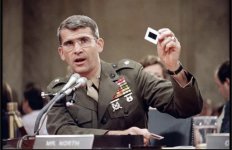
They're sending shit that makes airplanes go kaboom and fall out the sky.Is this the same technology that China was supplying to Venezuela? Anyway, the US sells weapons to Taiwan, & the US supplies satellite targeting data to Ukraine. China sells weapons to Iran, Russia supplies satellite targeting data to Iran. Iran supplies drones to Russia against Ukraine, & Ukraine get armament from America against Russia depending on what mood Trump is in on any given day and whether or not Trump has spoken to Putin or Zelenskyy last, etc…and that’s not even touching what Israel gets from America.
This is our modern interconnected world, and this is by no means new. Back in WWII the U.S. government officially moved from strict neutrality toward supporting the Allies (Britain, France, and later the Soviet Union) through policies like "Cash and Carry" (1939) and "Lend-Lease" (1941), while certain American corporations continued commercial dealings with Axis nations until the U.S. officially entered the war in December 1941.
Iranically, the technology being sold to Iran from China might’ve originally been stolen from America anyway, & round and round and round it goes…which if I felt more energetic, I would tie back to this guy for an example.
View attachment 34078
Netanyahu government preps for first open peace talks with Lebanon since 1980s
As Israel and Lebanon are set to hold open negotiations with the stated goal of reaching a diplomatic arrangement for the first time since the 1980s on Tuesday, the Netanyahu government has held several meetings in recent days to draft the country's position, sources told Haaretz.
Even though Israel wants to conduct negotiations under fire, the IDF's future operational freedom in Lebanon remains unclear, as the U.S. is pressuring Israel to limit strikes so as not to sabotage ongoing talks with Iran.
According to the sources, Israel is expected to demand Lebanon's government and army take decisive action to dismantle Hezbollah's military capabilities, not just in southern Lebanon, where the IDF has had a foothold for weeks. The sources struggled to assess whether Israel will be able to retain the extensive security zone it established in southern Lebanon as part of a future agreement.
The main area of concern is expected to be the center of the country, where Hezbollah has entrenched itself and is directing extensive fire at Israel. On the diplomatic front, Israel hopes that Hezbollah's financial assets will be seized and that the group's power in parliament and influence over the Lebanese government will erode.
However, a source familiar with the contacts told Haaretz that the Lebanese delegation has no real mandate to discuss Hezbollah's disarmament, adding that Lebanon's government could only engage Hezbollah on the issue if it first presented the Lebanese public with tangible achievements from the negotiations.
Another Lebanese source confirmed this, saying that Hezbollah might agree to place its activities under the supervision of the Lebanese army, but will likely condition it on an Israeli withdrawal from Lebanon.
Over the past day, Hezbollah fired about 20 rockets and drones at Israel, the IDF said later on Sunday. According to Lebanese state media, Israeli strikes in southern Lebanon's Tyre district killed at least 11 people.
As long as Israel maintains a presence in Lebanese territory and Hezbollah is viewed as the force resisting it, residents of southern Lebanon are likely to continue supporting the group. That support could shift, however, if people come to believe Hezbollah itself is preventing their return home, a Lebanese source told Haaretz. He noted that something similar had happened before: Lebanese communities that once supported the Palestine Liberation Organization eventually turned against it, writes Liza Rozovsky
As Israel and Lebanon are set to hold open negotiations with the stated goal of reaching a diplomatic arrangement for the first time since the 1980s on Tuesday, the Netanyahu government has held several meetings in recent days to draft the country's position, sources told Haaretz.
Even though Israel wants to conduct negotiations under fire, the IDF's future operational freedom in Lebanon remains unclear, as the U.S. is pressuring Israel to limit strikes so as not to sabotage ongoing talks with Iran.
According to the sources, Israel is expected to demand Lebanon's government and army take decisive action to dismantle Hezbollah's military capabilities, not just in southern Lebanon, where the IDF has had a foothold for weeks. The sources struggled to assess whether Israel will be able to retain the extensive security zone it established in southern Lebanon as part of a future agreement.
The main area of concern is expected to be the center of the country, where Hezbollah has entrenched itself and is directing extensive fire at Israel. On the diplomatic front, Israel hopes that Hezbollah's financial assets will be seized and that the group's power in parliament and influence over the Lebanese government will erode.
However, a source familiar with the contacts told Haaretz that the Lebanese delegation has no real mandate to discuss Hezbollah's disarmament, adding that Lebanon's government could only engage Hezbollah on the issue if it first presented the Lebanese public with tangible achievements from the negotiations.
Another Lebanese source confirmed this, saying that Hezbollah might agree to place its activities under the supervision of the Lebanese army, but will likely condition it on an Israeli withdrawal from Lebanon.
Over the past day, Hezbollah fired about 20 rockets and drones at Israel, the IDF said later on Sunday. According to Lebanese state media, Israeli strikes in southern Lebanon's Tyre district killed at least 11 people.
As long as Israel maintains a presence in Lebanese territory and Hezbollah is viewed as the force resisting it, residents of southern Lebanon are likely to continue supporting the group. That support could shift, however, if people come to believe Hezbollah itself is preventing their return home, a Lebanese source told Haaretz. He noted that something similar had happened before: Lebanese communities that once supported the Palestine Liberation Organization eventually turned against it, writes Liza Rozovsky


Iran Navy Threats US Warship
🎓Courses: https://www.rtcourses.com/💰Go Fund Me: https://gofund.me/e12bf94e💰Donate: https://www.paypal.com/donate/?hosted_button_id=WV79VFBBXCEBE👪Patreon...
youtube.com