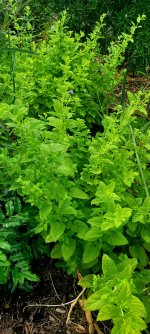
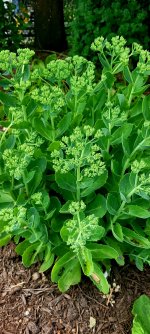
How Is Your Garden Coming Along?

spaminator

Hall of Fame Member
Oct 26, 2009
40,679
4,052
113
The surprising ways dandelions are good for us — and our gardens
The entire dandelion plant is edible and has medicinal properties. Even in gardens, it can be beneficial to other plants.

Author of the article:Washington Post
Washington Post
Kate Morgan
Published Jun 27, 2026 • Last updated 17 minutes ago • 6 minute read

Edible fresh yellow blowball dandelion flowers, spring, summer
Photo by Reddogs /Adobe Stock
If you were asked to picture a weed, there’s a good chance a dandelion would come to mind. As a child you may have been instructed to pull up as many as possible, or told not to blow their dainty, fluff-ball seed heads to make a wish. (Sorry, kids, that just helps them spread.)


The truth is that although dandelions have been vilified in lawn care commercials and popular imagination, they’re useful in myriad ways. The entire dandelion plant is edible and has medicinal properties. Even in gardens, it can be beneficial to other plants.


There are more than 250 species of Taraxacum, otherwise known as the dandelion, a name derived from the French phrase “dent de lion,” or lion’s tooth, for the distinct jagged shape of its leaves. The plants belong to the family Asteraceae, alongside daisies, asters, marigolds and sunflowers. Some are native to North America, but the one we’re most familiar with, the common dandelion (Taraxacum officinale), is an import. It arrived from Europe with the earliest colonists, who brought it along for its medicinal and nutritional qualities.

“We brought them here on purpose in the 1600s, because we’d been using dandelions for a long time,” says Abiya Saeed, an extension horticulture specialist at Montana State University. “The early settlers brought them for cultivation, especially as a food source. They’re nutritionally equivalent to things like spinach and other greens.”


The dandelion plant is rich in vitamins A, C and K, and contains such minerals as calcium, iron and magnesium. Its bright yellow petals are sweet and commonly used to make dandelion tea, wine and jelly. When the leaves are young and tender, they can be eaten raw. They take on a bitter flavor as they mature, but that is easily mellowed by blanching or sautéing. The roots can be cleaned and cooked like other root vegetables, and when dried and roasted, they take on a nutty flavor that mimics coffee.

The plant is featured in traditional dishes of various cuisines, including French and Korean salads, the Lebanese side dish hindbeh and rustic Italian dishes such as cicoria ripassata. The dandelion also has many medicinal properties, says Linda Patterson, director of the Boston School of Herbal Studies.

“One of my herbal teachers used to say if you eat dandelion every day, nothing will be able to kill you,” she says. “They’re incredibly antioxidant and anti-inflammatory. They’re well-known as a diuretic, and we can use it as a blood sugar regulator and a support for the liver.”


Dandelions have other applications, too: Its flowers make a vibrant natural dye, and its latex-rich sap is a source of natural rubber. The plant’s cultivators also prized the dandelion, Saeed says, for the ease with which it reproduces. A single dandelion flower contains several hundred seeds, and a mature plant can produce multiple seed heads in a season. But what historic dandelion lovers saw as a plus is what led to its reputation as a weed.

“The seeds are designed with these really interesting little mini-parachutes, which allow them to hitch a ride on the wind and travel for miles,” Saeed says. Thanks to that bit of natural engineering, it took only a couple of centuries for the common dandelion to spread across North America.

The lawn as we know it originated in Europe around the 17th century, where a patch of grass was a status symbol that meant its owner was wealthy enough to not farm it. In the United States, the trend took off with the rise of the suburbs in the middle of the 20th century. A tidy lawn of close-cropped grass became an integral part of the American Dream.


“We started to really dive into the idea of that monoculture turf grass lawn that’s uniform and spotless,” Saeed says. “People were really interested in getting rid of dandelions from that landscape.” The first chemical weed killers were introduced after World War II, she adds, and dandelions have been a target ever since.

Beyond the quest for a perfect lawn, Saeed says, many people simply want to remove invasive plants from their yards and gardens. But whether dandelions fall into that category is a bit complicated.

“They’re naturalized throughout North America and through much of the world. That just means they’re growing without human cultivation and human propagation, and have been for a long time,” she says. And although some research suggests dandelions might compete with other plants in certain situations, for the most part they don’t have a dramatic impact on native species, Saeed says.

“I like to also remind people that yes, dandelions are non-native, but so are most of the turf grass species we’re growing,” she says. “Kentucky bluegrass, for example, is the most common and most dominant turf grass species in the northern part of the United States, and it is also not a native plant.”


Native or not, dandelions can perform crucial services in the garden. They have a tap root – a thick, central root that grows straight down, which helps aerate compacted or poor quality soil. “Those tap roots also bring nutrients that are really, really deep in the soil up closer to the surface,” Saeed says, “making it so other plants can use them.”

When it comes to supporting pollinators, dandelions provide some nectar, though not nearly as much as many native species, Saeed says. But they thrive in soils and landscapes where other plants don’t, and in those places, less-than-ideal nectar and pollen is better than none.

“In locations where there’s not much else besides dandelions growing,” she says, “they’re a really important source for the pollinators that share those landscapes.”

The plant is also good at drawing other things out of the ground. Studies have shown that in areas near mining or industrial sites, dandelions can help remediate soil contaminated with heavy metals such as cadmium and petrochemicals (though that means it’s important not to eat dandelions grown in polluted soil).


Even if you can’t come around to love the dandelion, you may be able to respect it for its resilience.

“Part of what makes dandelions so adaptable is something called phenotypic plasticity,” Saeed says. “It basically means they can change their shape depending on the environment.”

They tend to grow taller in flower beds, but in lawns that are frequently mowed, dandelions adjust, she says, “to grow just an inch or two off the ground.” And despite your best efforts to yank the plant out of the ground, it can regrow from even the smallest piece of its tap root. It can survive deep freezes, long droughts, and being trampled and plucked. There is perhaps no flower better at enduring harsh conditions.

Of course, not everyone sees the dandelion as a landscaping scourge. There are annual dandelion festivals in Vermont, Colorado and West Virginia, and gardening groups celebrate an unofficial National Dandelion Day on April 5. And there are plenty of people who find their cheery yellow flowers downright pretty, and the round seed head is often used as a decorative motif.


Many people are also moving away from using harsh herbicides, and the cultural definition of the “perfect lawn” is beginning to shift. The dandelion, Patterson says, is due for a reputation upgrade.

“When you understand how useful they really are, you gain this new level of appreciation for something a lot of people turn their nose up at,” says the herbalist. “I think it was Emerson who said, ‘What is a weed? A plant whose virtues have not yet been discovered.'”
 

spaminator

Hall of Fame Member
Oct 26, 2009
40,679
4,052
113
Toronto's rain barrel program derailed as 'overwhelming demand' crashes website
The vendor’s website was brought down by a crush of barrel bargain hunters

Author of the article:Justin Holmes
Published Jul 24, 2026 • Last updated 10 hours ago • 3 minute read

City of Toronto rain barrel
City council has approved the spending of an extra $240,000 on Toronto’s rain barrel program, essentially doubling the funding for the subsidy. Photo by City of Toronto

Toronto City Hall can’t say it wasn’t warned about the rain barrels.


The second round of a rain barrel subsidy program was a washout on Thursday when the vendor’s website was crushed by “overwhelming demand,” the city said Friday morning.

That interest would be high was no surprise, as the first round sold out in nine hours and Mayor Olivia Chow said city hall had heard plenty from Torontonians who missed out the first time.

Councillor Stephen Holyday was the lone critic of the program when it came up at city council in June, arguing the terms were perhaps too generous if all the barrels got snapped up in a matter of hours.

He was not surprised to hear that demand had overwhelmed the system.

“Surely it was predictable, and predictable a second time,” he told the Toronto Sun early Friday evening.

Frustrated would-be barrellers complained on Reddit after the website crashed. Councillor Paul Ainslie took to X on Thursday evening to post about the vendor’s technical trouble, adding: “Oops.”


Under the program, the city covers most of the price of rain barrels and downspout diverters, plus delivery. A municipal document says the city’s share is 80%.

Home Depot Canada’s website lists rain barrels from the city’s partner, Enviro World, at prices above $100, but the City of Toronto’s website says the subsidized cost is just $8.95 plus tax, and $1 for a downspout diverter.

“We are working closely with the vendor to implement system improvements over the weekend to ensure the site can support the anticipated level of demand when sales reopen,” the city said in its statement Friday.

“Our priority is to ensure the platform is fully stable and reliable so that residents have a fair opportunity to participate in the program and can access it without disruption.”


A City of Toronto web page now says the second round of the program will begin at 2 p.m. on July 28.

Olivia Chow pride parade
Toronto Mayor Olivia Chow marches in the Toronto Pride Parade along Yonge St. on June 28, 2026. Photo by Nick Kozak/For Postmedia Network files
Intended to lessen water usage
The program is meant to help ease Toronto’s total water use, conserving rain water for use on lawns and gardens.

“It’s good for your water bill – it’ll go down, and you’re not wasting water on top of it,” Chow said during June’s city council meeting.

The rain barrel subsidy had been a one-off before city council approved another $240,000 in June to pay for another round, roughly doubling the program’s funding. Chow cited the initial demand as justification for rolling out more barrels.

“I just want to say that this is (an) incredibly popular program,” Chow told the council chambers.

“Let your local residents know, because last time within a couple of hours, it was gone.”

At the meeting, Holyday asked the city staff who are handling the program to consider the possibility that the price was simply too low.

On Friday, he stood by that, and conceded that it’s possible that some of those lucky enough to score the city’s bottom-price barrels could be reselling them at a profit.

“Maybe it’s time to take a closer look” at the terms of the program, Holyday said.

Without something like a means test, he added, it’s hard to say “people who need a highly discounted rain barrel are the ones who are getting it.”

jholmes@postmedia.com
 
  • Like
Reactions: Ron in Regina

Taxslave2

Senate Member
Aug 13, 2022
5,867
3,134
113
The surprising ways dandelions are good for us — and our gardens
The entire dandelion plant is edible and has medicinal properties. Even in gardens, it can be beneficial to other plants.

Author of the article:Washington Post
Washington Post
Kate Morgan
Published Jun 27, 2026 • Last updated 17 minutes ago • 6 minute read

Edible fresh yellow blowball dandelion flowers, spring, summer
Photo by Reddogs /Adobe Stock
If you were asked to picture a weed, there’s a good chance a dandelion would come to mind. As a child you may have been instructed to pull up as many as possible, or told not to blow their dainty, fluff-ball seed heads to make a wish. (Sorry, kids, that just helps them spread.)


The truth is that although dandelions have been vilified in lawn care commercials and popular imagination, they’re useful in myriad ways. The entire dandelion plant is edible and has medicinal properties. Even in gardens, it can be beneficial to other plants.


There are more than 250 species of Taraxacum, otherwise known as the dandelion, a name derived from the French phrase “dent de lion,” or lion’s tooth, for the distinct jagged shape of its leaves. The plants belong to the family Asteraceae, alongside daisies, asters, marigolds and sunflowers. Some are native to North America, but the one we’re most familiar with, the common dandelion (Taraxacum officinale), is an import. It arrived from Europe with the earliest colonists, who brought it along for its medicinal and nutritional qualities.

“We brought them here on purpose in the 1600s, because we’d been using dandelions for a long time,” says Abiya Saeed, an extension horticulture specialist at Montana State University. “The early settlers brought them for cultivation, especially as a food source. They’re nutritionally equivalent to things like spinach and other greens.”


The dandelion plant is rich in vitamins A, C and K, and contains such minerals as calcium, iron and magnesium. Its bright yellow petals are sweet and commonly used to make dandelion tea, wine and jelly. When the leaves are young and tender, they can be eaten raw. They take on a bitter flavor as they mature, but that is easily mellowed by blanching or sautéing. The roots can be cleaned and cooked like other root vegetables, and when dried and roasted, they take on a nutty flavor that mimics coffee.

The plant is featured in traditional dishes of various cuisines, including French and Korean salads, the Lebanese side dish hindbeh and rustic Italian dishes such as cicoria ripassata. The dandelion also has many medicinal properties, says Linda Patterson, director of the Boston School of Herbal Studies.

“One of my herbal teachers used to say if you eat dandelion every day, nothing will be able to kill you,” she says. “They’re incredibly antioxidant and anti-inflammatory. They’re well-known as a diuretic, and we can use it as a blood sugar regulator and a support for the liver.”


Dandelions have other applications, too: Its flowers make a vibrant natural dye, and its latex-rich sap is a source of natural rubber. The plant’s cultivators also prized the dandelion, Saeed says, for the ease with which it reproduces. A single dandelion flower contains several hundred seeds, and a mature plant can produce multiple seed heads in a season. But what historic dandelion lovers saw as a plus is what led to its reputation as a weed.

“The seeds are designed with these really interesting little mini-parachutes, which allow them to hitch a ride on the wind and travel for miles,” Saeed says. Thanks to that bit of natural engineering, it took only a couple of centuries for the common dandelion to spread across North America.

The lawn as we know it originated in Europe around the 17th century, where a patch of grass was a status symbol that meant its owner was wealthy enough to not farm it. In the United States, the trend took off with the rise of the suburbs in the middle of the 20th century. A tidy lawn of close-cropped grass became an integral part of the American Dream.


“We started to really dive into the idea of that monoculture turf grass lawn that’s uniform and spotless,” Saeed says. “People were really interested in getting rid of dandelions from that landscape.” The first chemical weed killers were introduced after World War II, she adds, and dandelions have been a target ever since.

Beyond the quest for a perfect lawn, Saeed says, many people simply want to remove invasive plants from their yards and gardens. But whether dandelions fall into that category is a bit complicated.

“They’re naturalized throughout North America and through much of the world. That just means they’re growing without human cultivation and human propagation, and have been for a long time,” she says. And although some research suggests dandelions might compete with other plants in certain situations, for the most part they don’t have a dramatic impact on native species, Saeed says.

“I like to also remind people that yes, dandelions are non-native, but so are most of the turf grass species we’re growing,” she says. “Kentucky bluegrass, for example, is the most common and most dominant turf grass species in the northern part of the United States, and it is also not a native plant.”


Native or not, dandelions can perform crucial services in the garden. They have a tap root – a thick, central root that grows straight down, which helps aerate compacted or poor quality soil. “Those tap roots also bring nutrients that are really, really deep in the soil up closer to the surface,” Saeed says, “making it so other plants can use them.”

When it comes to supporting pollinators, dandelions provide some nectar, though not nearly as much as many native species, Saeed says. But they thrive in soils and landscapes where other plants don’t, and in those places, less-than-ideal nectar and pollen is better than none.

“In locations where there’s not much else besides dandelions growing,” she says, “they’re a really important source for the pollinators that share those landscapes.”

The plant is also good at drawing other things out of the ground. Studies have shown that in areas near mining or industrial sites, dandelions can help remediate soil contaminated with heavy metals such as cadmium and petrochemicals (though that means it’s important not to eat dandelions grown in polluted soil).


Even if you can’t come around to love the dandelion, you may be able to respect it for its resilience.

“Part of what makes dandelions so adaptable is something called phenotypic plasticity,” Saeed says. “It basically means they can change their shape depending on the environment.”

They tend to grow taller in flower beds, but in lawns that are frequently mowed, dandelions adjust, she says, “to grow just an inch or two off the ground.” And despite your best efforts to yank the plant out of the ground, it can regrow from even the smallest piece of its tap root. It can survive deep freezes, long droughts, and being trampled and plucked. There is perhaps no flower better at enduring harsh conditions.

Of course, not everyone sees the dandelion as a landscaping scourge. There are annual dandelion festivals in Vermont, Colorado and West Virginia, and gardening groups celebrate an unofficial National Dandelion Day on April 5. And there are plenty of people who find their cheery yellow flowers downright pretty, and the round seed head is often used as a decorative motif.


Many people are also moving away from using harsh herbicides, and the cultural definition of the “perfect lawn” is beginning to shift. The dandelion, Patterson says, is due for a reputation upgrade.

“When you understand how useful they really are, you gain this new level of appreciation for something a lot of people turn their nose up at,” says the herbalist. “I think it was Emerson who said, ‘What is a weed? A plant whose virtues have not yet been discovered.'”
My mother had a real hate for dandelions. Can't remember why exactly except she didn't like them in the lawn because there were "weeds and unsightly". In reality, they are soil enhancers, and in our sandpit she tried to make into a lawn they would have been best left growing. She would even go across the road and slay any growing on the shoulder so they wouldn't blow onto her lawn.
 
  • Like
Reactions: Ron in Regina

spaminator

Hall of Fame Member
Oct 26, 2009
40,679
4,052
113
How to spot poison ivy and what to do if you accidentally touch it
After coming into contact with the plant, the best thing you can do immediately afterward is wash your skin.

Author of the article:Washington Post
Washington Post
Beth Krietsch
Published Aug 16, 2026 • Last updated 18 hours ago • 5 minute read

Poison ivy
Photo by inu_maru /Adobe Stock

Whether you’re out hiking, cleaning up your yard or petting your cat that’s been roaming around outside, there’s a common risk that comes along with summer: encountering poison ivy. When that happens, whether you touch the plant yourself or pick up its oil from the fur of your pet, you can end up with an itchy and uncomfortable rash called allergic contact dermatitis.


Despite the plant’s signature look with leaves growing in a cluster of three – “leaves of three, let it be” – poison ivy is easy to overlook and accidentally touch. The plant can grow as a climbing vine, shrub or ground cover, and may climb along plants, trees or poles. The leaves often look different throughout the seasons – glossy and reddish in the spring, green in the summer, and orange, red or yellow in the fall. It can also appear as a thick, hairy-looking vine around the trunk of a tree without any leaves attached.

If you think you’ve touched poison ivy, what you do next can make a big difference in the way your body reacts. Here’s what dermatologists recommend, plus other important facts about poison ivy you should know.


After coming into contact with the plant, the best thing you can do immediately afterward is wash your skin.

“The rash from poison ivy is caused by an oily resin called urushiol, and the goal is to get that oil off your skin before it fully absorbs,” said Aderonke Obayomi, a board certified dermatologist at Mount Sinai Health System.

Aim to wash the parts of your skin that touched the plant with lukewarm water and soap within 10 to 30 minutes of contact. Rubbing alcohol also works if you’re in a pinch and that’s what’s available.

The sooner you scrub up, the better: Washing within the first hour or two can also reduce the severity of the skin reaction, Obayomi said, even if it doesn’t prevent the rash entirely. It also makes it less likely you’ll accidentally transfer the oil to other parts of your body.

A degreasing soap, such as dish soap, is typically more effective at cutting through the urushiol, said Obayomi. But regular hand soap is better than nothing and can still be effective.


“Lather, rinse and repeat a few times, and get under your fingernails with a nail brush since the oil hides there and gets transferred everywhere you touch,” Obayomi said.

You’ll also want to wash everything that came into contact with poison ivy, such as your clothing, shoes, gardening gloves, gardening tools or even your pet’s fur. Toss your clothing in the washing machine, and wash with hot water and regular laundry detergent. Garden tools and other objects should be cleaned with alcohol or soap and water. Clean your furry friends with pet shampoo and water.

While bathing your pet, removing clothing, washing tools or handling anything that may have touched poison ivy, be sure to wear disposable gloves to protect yourself from touching the oil and transferring it.

If you’ve never had a poison ivy rash, it can take days or even up to two or three weeks for one to appear. If you’ve previously had poison ivy, the rash appears quicker, often within hours. That’s because poison ivy causes a delayed hypersensitivity reaction, where it takes time for the immune system to develop a response to the allergen after the first exposure, said Emily Lebowitz Luks, a clinical assistant professor of dermatology at Weill Cornell Medicine.


When it does appear, it’ll be tough to ignore. “The rash from poison ivy most commonly looks like itchy red streaks or blisters,” said Tanya Nino, a board certified dermatologist at Providence St. Joseph Hospital. “The itching can be quite intense.” On darker skin tones, the rash may appear purple, gray or dark brown.

A linear formation of blisters is a classic sign of poison ivy, Luks added. It often shows up that way because of the nature of contracting it: Chances are, the leaf brushed your skin in a linear fashion as you were walking by it.

A poison ivy rash isn’t contagious. So scratching the rash or brushing it against another area of your skin or someone else’s skin won’t cause it to spread. But the urushiol – the oily resin on the plant that causes the rash – can spread to other areas of skin if you touch it and then touch elsewhere on your body.

“What can genuinely cause new rash is leftover oil on unwashed hands, under fingernails, on clothing, or on a pet,” Obayomi said. So if you feel like the rash is spreading, you’ll want to think about where that oil might be lingering.


This is particularly likely if you’re not aware you were exposed to the plant and then you scratch other areas, Luks said. “This is why we commonly see poison ivy dermatitis involving the face, neck and genitalia.”

The rash may also appear to be spreading because different areas of skin absorb the oil at different rates, and new patches may continue to appear over several days, Obayomi explained.

A poison ivy rash usually resolves within a few weeks. While there’s nothing you can do to clear it up quicker, you can try a few things to ease the itch while you wait.

“For mild cases of poison ivy, over the counter 1 percent hydrocortisone cream, oral antihistamines such as loratadine, cetirizine and fexofenadine, colloidal oatmeal baths, and anti-itch lotions with ingredients such as pramoxine can be helpful,” Luks said. Wet compresses or soaking your skin in cool water can also ease the itch to some extent

If these don’t work or you have a severe or widespread rash, or the itchiness is keeping you up at night, it’s a good idea to see a dermatologist. They may prescribe a stronger topical steroid or a course of oral steroids to help manage your body’s inflammatory response.


You should also see a doctor if you can’t seem to stop scratching and notice the skin is breaking, as this can lead to infection and prolong the healing process.

“See your dermatologist if there are already signs of infection such as pus, pain or expanding redness,” Luks said. “Fever, swelling of the face or eyes, and trouble breathing or swallowing are all signs of a severe allergic reaction and require urgent medical evaluation.”

If you happen to brush up against poison ivy this summer, taking quick action to wash your skin, clothing and gear can potentially help you avoid weeks of itchy discomfort. Make sure you know how to identify the plant and wear long sleeves, long pants and gloves if you think you might be anywhere near it.

“Prevention is key,” Luks said.