

Alexi Navalny dead at 47
- Thread starter bob the dog
- Start date
You are using an out of date browser. It may not display this or other websites correctly.
You should upgrade or use an alternative browser.
You should upgrade or use an alternative browser.


Trump did it.

Trump may be the next one snuffed.Trump did it.

Why? If he's elected, he'll definitely be the first and only American president to invite the Russians to invade our allies.Trump may be the next one snuffed.
2nd.Why? If he's elected, he'll definitely be the first and only American president to invite the Russians to invade our allies.
Boris Johnson spoke on Bidens behalf and a few days later Russia did attack an ally that the US vowed to protect but have yet to kept that promise.
You didnt want them to surrender annexed territory did you? Sure seems like it.
Wondering if Trump wasn't talking about Canada being one not paying their fair share? Appears to be under 1.5 % of GDPWhy? If he's elected, he'll definitely be the first and only American president to invite the Russians to invade our allies.
Other than the fact we are broke and have nothing of any military significance to contribute it seems reasonable to ask. One thing for sure is war costs money.
Id say so. We are one of the worst.Wondering if Trump wasn't talking about Canada being one not paying their fair share? Appears to be under 1.5 % of GDP
Other than the fact we are broke and have nothing of any military significance to contribute it seems reasonable to ask. One thing for sure is war costs money.
Last edited:
Only if he wins the Primary.Trump may be the next one snuffed.

Russia poisoned Alexei Navalny with dart frog toxin, European nations say
Author of the article:Associated Press
Associated Press
Jill Lawless
Published Feb 14, 2026 • 3 minute read
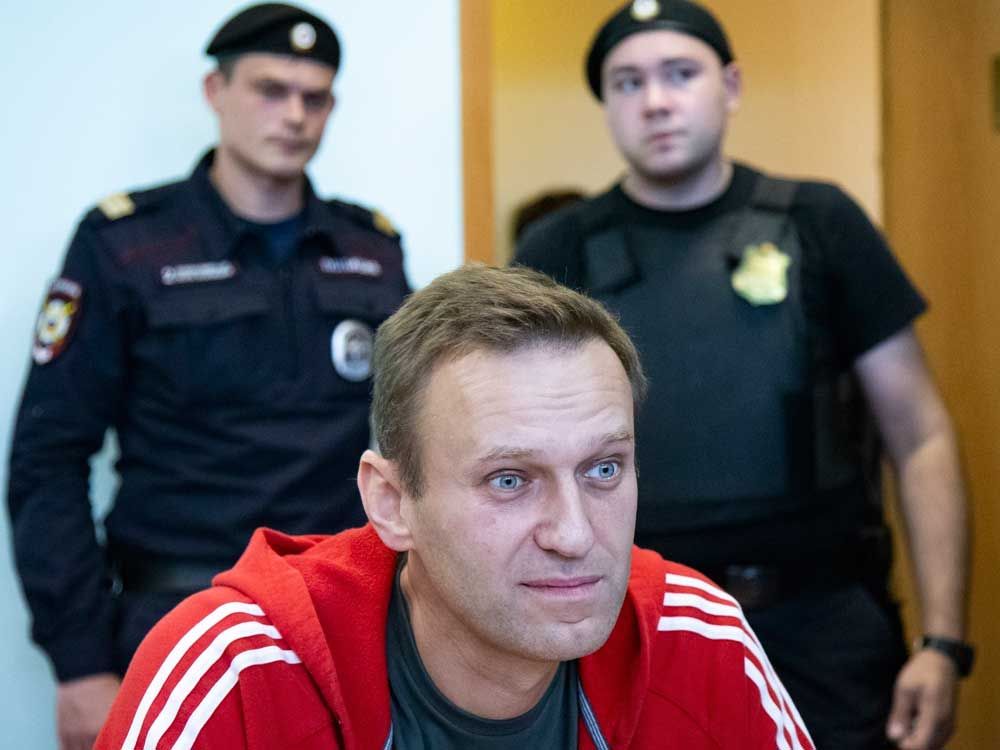
In this Aug. 22, 2019, file photo, Russian opposition leader Alexei Navalny speaks to the media prior to a court session in Moscow, Russia.
In this Aug. 22, 2019, file photo, Russian opposition leader Alexei Navalny speaks to the media prior to a court session in Moscow, Russia. Photo by Alexander Zemlianichenko, File /AP Photo
LONDON (AP) — Russian opposition leader Alexei Navalny was poisoned by the Kremlin with a rare and lethal toxin found in the skin of poison dart frogs, five European countries said Saturday.
The foreign ministries of the U.K., France, Germany, Sweden and the Netherlands said analysis in European labs of samples taken from Navalny’s body “conclusively confirmed the presence of epibatidine.” The neurotoxin secreted by dart frogs in South America is not found naturally in Russia, they said.
A joint statement said: “Russia had the means, motive and opportunity to administer this poison.”
The five countries said they were reporting Russia to the Organization for the Prohibition of Chemical Weapons for a breach of the Chemical Weapons Convention. There was no immediate comment from the organization.
Navalny, who crusaded against official corruption and staged massive anti-Kremlin protests as President Vladimir Putin’s fiercest foe, died in an Arctic penal colony on Feb. 16, 2024, while serving a 19-year sentence that he believed to be politically motivated.
“Russia saw Navalny as a threat,” British Foreign Secretary Yvette Cooper said. “By using this form of poison the Russian state demonstrated the despicable tools it has at its disposal and the overwhelming fear it has of political opposition.”
In this Aug. 22, 2019, file photo, Russian opposition leader Alexei Navalny speaks to the media prior to a court session in Moscow, Russia.
Alexei Navalny’s widow says lab reports show her husband was poisoned
A woman wears a photograph of deceased Russian opposition leader Alexei Navalny during a service in St. Mary's Church on the occasion of his birthday, in Berlin, Tuesday, June 4, 2024.
Canada sanctions 13 more Russians for role in Navalny’s imprisonment and death
Pallbearers carry the coffin of late Russian opposition leader Alexei Navalny into the Mother of God Quench My Sorrows church for his funeral service, in Moscow's district of Maryino on March 1, 2024. (Photo by STRINGER/AFP via Getty Images)
Hundreds bid farewell to Alexei Navalny at his funeral in Moscow
French Foreign Minister Jean-Noel Barrot wrote on X that the poisoning of Navalny shows “that Vladimir Putin is prepared to use biological weapons against his own people in order to remain in power.”
The European nations’ assessment came as Navalny’s widow, Yulia Navalnaya, attended the Munich Security Conference in Germany, and just before the second anniversary of Navalny’s death.
She said last year that two independent labs had found that her husband was poisoned shortly before he died. She has repeatedly blamed Putin for her husband’s death. Russian officials have vehemently denied the accusation.
Navalnaya said Saturday that she had been “certain from the first day” that her husband had been poisoned, “but now there is proof.”
“Putin killed Alexei with chemical weapon,” she wrote on She said Putin was “a murderer” who “must be held accountable.”
Russian authorities said that the politician became ill after a walk and died from natural causes.
A person holds a candle and a portrait of late Russian opposition leader Alexei Navalny, who died in a Russian Arctic prison, as people gather at a makeshift memorial in downtown Zagreb on Feb. 23, 2024.
A person holds a candle and a portrait of late Russian opposition leader Alexei Navalny, who died in a Russian Arctic prison, as people gather at a makeshift memorial in downtown Zagreb on Feb. 23, 2024. Photo by DAMIR SENCAR /AFP via Getty Images
Epibatidine is found naturally in dart frogs in the wild, and can also be manufactured in a lab, which European scientists suspect was the case with the substance used on Navalny. It works on the body in a similar way to nerve agents, causing shortness of breath, convulsions, seizures, a slowed heart rate and ultimately death.
European officials said they had a high degree of confidence in the assessment that Navalny died from epibatidine poisoning. Asked why the results had taken so long, German Foreign Minister Johann Wadephul said that it had been “a complicated process.”
Wadephul said “no one but Putin’s henchmen will be able to say in detail what happened on Feb. 16, 2024, in the Russian penal colony. But it is clear that Russian authorities had the possibility, the motive and the means to administer the poison to Navalny.”
Navalny was the target of an earlier poisoning in 2020, with a nerve agent in an attack he blamed on the Kremlin, which always denied involvement. His family and allies fought to have him flown to Germany for treatment and recovery. Five months later, he returned to Russia, where he was immediately arrested and imprisoned for the last three years of his life.
In this pool photograph distributed by the Russian state agency Sputnik, Russia's President Vladimir Putin meets with volunteers during a volunteer organizations forum in Moscow on Dec. 3, 2025.
In this pool photograph distributed by the Russian state agency Sputnik, Russia’s President Vladimir Putin meets with volunteers during a volunteer organizations forum in Moscow on Dec. 3, 2025. Photo by SHCHERBAK / POOL /AFP via Getty Images)
The U.K. has accused Russia of repeatedly flouting international bans on chemical and biological weapons. It accuses the Kremlin of carrying out a 2018 attack in the English city of Salisbury that targeted a former Russian intelligence officer, Sergei Skripal, with the nerve agent Novichok. Skripal and his daughter became seriously ill, and a British woman, Dawn Sturgess, died after she came across a discarded bottle with traces of the nerve agent.
A British inquiry concluded that the attack “must have been authorized at the highest level, by President Putin.”
The Kremlin has denied involvement. Russia also denied poisoning Alexander Litvinenko, a former Russian agent turned Kremlin critic who died in London in 2006, after ingesting the radioactive isotope polonium-210. A British inquiry concluded that two Russian agents killed Litvinenko, and Putin had “probably approved” the operation.
– Associated Press writers John Leicester in Paris, Mike Corder in The Hague and Philipp Jenne in Munich contributed to this report.
 torontosun.com
Author of the article:Associated Press
Associated Press
Jill Lawless
Published Feb 14, 2026 • 3 minute read
In this Aug. 22, 2019, file photo, Russian opposition leader Alexei Navalny speaks to the media prior to a court session in Moscow, Russia.
In this Aug. 22, 2019, file photo, Russian opposition leader Alexei Navalny speaks to the media prior to a court session in Moscow, Russia. Photo by Alexander Zemlianichenko, File /AP Photo
LONDON (AP) — Russian opposition leader Alexei Navalny was poisoned by the Kremlin with a rare and lethal toxin found in the skin of poison dart frogs, five European countries said Saturday.
The foreign ministries of the U.K., France, Germany, Sweden and the Netherlands said analysis in European labs of samples taken from Navalny’s body “conclusively confirmed the presence of epibatidine.” The neurotoxin secreted by dart frogs in South America is not found naturally in Russia, they said.
A joint statement said: “Russia had the means, motive and opportunity to administer this poison.”
The five countries said they were reporting Russia to the Organization for the Prohibition of Chemical Weapons for a breach of the Chemical Weapons Convention. There was no immediate comment from the organization.
Navalny, who crusaded against official corruption and staged massive anti-Kremlin protests as President Vladimir Putin’s fiercest foe, died in an Arctic penal colony on Feb. 16, 2024, while serving a 19-year sentence that he believed to be politically motivated.
“Russia saw Navalny as a threat,” British Foreign Secretary Yvette Cooper said. “By using this form of poison the Russian state demonstrated the despicable tools it has at its disposal and the overwhelming fear it has of political opposition.”
In this Aug. 22, 2019, file photo, Russian opposition leader Alexei Navalny speaks to the media prior to a court session in Moscow, Russia.
Alexei Navalny’s widow says lab reports show her husband was poisoned
A woman wears a photograph of deceased Russian opposition leader Alexei Navalny during a service in St. Mary's Church on the occasion of his birthday, in Berlin, Tuesday, June 4, 2024.
Canada sanctions 13 more Russians for role in Navalny’s imprisonment and death
Pallbearers carry the coffin of late Russian opposition leader Alexei Navalny into the Mother of God Quench My Sorrows church for his funeral service, in Moscow's district of Maryino on March 1, 2024. (Photo by STRINGER/AFP via Getty Images)
Hundreds bid farewell to Alexei Navalny at his funeral in Moscow
French Foreign Minister Jean-Noel Barrot wrote on X that the poisoning of Navalny shows “that Vladimir Putin is prepared to use biological weapons against his own people in order to remain in power.”
The European nations’ assessment came as Navalny’s widow, Yulia Navalnaya, attended the Munich Security Conference in Germany, and just before the second anniversary of Navalny’s death.
She said last year that two independent labs had found that her husband was poisoned shortly before he died. She has repeatedly blamed Putin for her husband’s death. Russian officials have vehemently denied the accusation.
Navalnaya said Saturday that she had been “certain from the first day” that her husband had been poisoned, “but now there is proof.”
“Putin killed Alexei with chemical weapon,” she wrote on She said Putin was “a murderer” who “must be held accountable.”
Russian authorities said that the politician became ill after a walk and died from natural causes.
A person holds a candle and a portrait of late Russian opposition leader Alexei Navalny, who died in a Russian Arctic prison, as people gather at a makeshift memorial in downtown Zagreb on Feb. 23, 2024.
A person holds a candle and a portrait of late Russian opposition leader Alexei Navalny, who died in a Russian Arctic prison, as people gather at a makeshift memorial in downtown Zagreb on Feb. 23, 2024. Photo by DAMIR SENCAR /AFP via Getty Images
Epibatidine is found naturally in dart frogs in the wild, and can also be manufactured in a lab, which European scientists suspect was the case with the substance used on Navalny. It works on the body in a similar way to nerve agents, causing shortness of breath, convulsions, seizures, a slowed heart rate and ultimately death.
European officials said they had a high degree of confidence in the assessment that Navalny died from epibatidine poisoning. Asked why the results had taken so long, German Foreign Minister Johann Wadephul said that it had been “a complicated process.”
Wadephul said “no one but Putin’s henchmen will be able to say in detail what happened on Feb. 16, 2024, in the Russian penal colony. But it is clear that Russian authorities had the possibility, the motive and the means to administer the poison to Navalny.”
Navalny was the target of an earlier poisoning in 2020, with a nerve agent in an attack he blamed on the Kremlin, which always denied involvement. His family and allies fought to have him flown to Germany for treatment and recovery. Five months later, he returned to Russia, where he was immediately arrested and imprisoned for the last three years of his life.
In this pool photograph distributed by the Russian state agency Sputnik, Russia's President Vladimir Putin meets with volunteers during a volunteer organizations forum in Moscow on Dec. 3, 2025.
In this pool photograph distributed by the Russian state agency Sputnik, Russia’s President Vladimir Putin meets with volunteers during a volunteer organizations forum in Moscow on Dec. 3, 2025. Photo by SHCHERBAK / POOL /AFP via Getty Images)
The U.K. has accused Russia of repeatedly flouting international bans on chemical and biological weapons. It accuses the Kremlin of carrying out a 2018 attack in the English city of Salisbury that targeted a former Russian intelligence officer, Sergei Skripal, with the nerve agent Novichok. Skripal and his daughter became seriously ill, and a British woman, Dawn Sturgess, died after she came across a discarded bottle with traces of the nerve agent.
A British inquiry concluded that the attack “must have been authorized at the highest level, by President Putin.”
The Kremlin has denied involvement. Russia also denied poisoning Alexander Litvinenko, a former Russian agent turned Kremlin critic who died in London in 2006, after ingesting the radioactive isotope polonium-210. A British inquiry concluded that two Russian agents killed Litvinenko, and Putin had “probably approved” the operation.
– Associated Press writers John Leicester in Paris, Mike Corder in The Hague and Philipp Jenne in Munich contributed to this report.
Russia poisoned Alexei Navalny with dart frog toxin, European nations say
Alexei Navalny was poisoned by the Kremlin with a lethal toxin from a poison dart frog, five European countries say. Read more.
i didn't know there were haitians living in russia.Russia poisoned Alexei Navalny with dart frog toxin, European nations say
Author of the article:Associated Press
Associated Press
Jill Lawless
Published Feb 14, 2026 • 3 minute read
In this Aug. 22, 2019, file photo, Russian opposition leader Alexei Navalny speaks to the media prior to a court session in Moscow, Russia.
In this Aug. 22, 2019, file photo, Russian opposition leader Alexei Navalny speaks to the media prior to a court session in Moscow, Russia. Photo by Alexander Zemlianichenko, File /AP Photo
LONDON (AP) — Russian opposition leader Alexei Navalny was poisoned by the Kremlin with a rare and lethal toxin found in the skin of poison dart frogs, five European countries said Saturday.
The foreign ministries of the U.K., France, Germany, Sweden and the Netherlands said analysis in European labs of samples taken from Navalny’s body “conclusively confirmed the presence of epibatidine.” The neurotoxin secreted by dart frogs in South America is not found naturally in Russia, they said.
A joint statement said: “Russia had the means, motive and opportunity to administer this poison.”
The five countries said they were reporting Russia to the Organization for the Prohibition of Chemical Weapons for a breach of the Chemical Weapons Convention. There was no immediate comment from the organization.
Navalny, who crusaded against official corruption and staged massive anti-Kremlin protests as President Vladimir Putin’s fiercest foe, died in an Arctic penal colony on Feb. 16, 2024, while serving a 19-year sentence that he believed to be politically motivated.
“Russia saw Navalny as a threat,” British Foreign Secretary Yvette Cooper said. “By using this form of poison the Russian state demonstrated the despicable tools it has at its disposal and the overwhelming fear it has of political opposition.”
In this Aug. 22, 2019, file photo, Russian opposition leader Alexei Navalny speaks to the media prior to a court session in Moscow, Russia.
Alexei Navalny’s widow says lab reports show her husband was poisoned
A woman wears a photograph of deceased Russian opposition leader Alexei Navalny during a service in St. Mary's Church on the occasion of his birthday, in Berlin, Tuesday, June 4, 2024.
Canada sanctions 13 more Russians for role in Navalny’s imprisonment and death
Pallbearers carry the coffin of late Russian opposition leader Alexei Navalny into the Mother of God Quench My Sorrows church for his funeral service, in Moscow's district of Maryino on March 1, 2024. (Photo by STRINGER/AFP via Getty Images)
Hundreds bid farewell to Alexei Navalny at his funeral in Moscow
French Foreign Minister Jean-Noel Barrot wrote on X that the poisoning of Navalny shows “that Vladimir Putin is prepared to use biological weapons against his own people in order to remain in power.”
The European nations’ assessment came as Navalny’s widow, Yulia Navalnaya, attended the Munich Security Conference in Germany, and just before the second anniversary of Navalny’s death.
She said last year that two independent labs had found that her husband was poisoned shortly before he died. She has repeatedly blamed Putin for her husband’s death. Russian officials have vehemently denied the accusation.
Navalnaya said Saturday that she had been “certain from the first day” that her husband had been poisoned, “but now there is proof.”
“Putin killed Alexei with chemical weapon,” she wrote on She said Putin was “a murderer” who “must be held accountable.”
Russian authorities said that the politician became ill after a walk and died from natural causes.
A person holds a candle and a portrait of late Russian opposition leader Alexei Navalny, who died in a Russian Arctic prison, as people gather at a makeshift memorial in downtown Zagreb on Feb. 23, 2024.
A person holds a candle and a portrait of late Russian opposition leader Alexei Navalny, who died in a Russian Arctic prison, as people gather at a makeshift memorial in downtown Zagreb on Feb. 23, 2024. Photo by DAMIR SENCAR /AFP via Getty Images
Epibatidine is found naturally in dart frogs in the wild, and can also be manufactured in a lab, which European scientists suspect was the case with the substance used on Navalny. It works on the body in a similar way to nerve agents, causing shortness of breath, convulsions, seizures, a slowed heart rate and ultimately death.
European officials said they had a high degree of confidence in the assessment that Navalny died from epibatidine poisoning. Asked why the results had taken so long, German Foreign Minister Johann Wadephul said that it had been “a complicated process.”
Wadephul said “no one but Putin’s henchmen will be able to say in detail what happened on Feb. 16, 2024, in the Russian penal colony. But it is clear that Russian authorities had the possibility, the motive and the means to administer the poison to Navalny.”
Navalny was the target of an earlier poisoning in 2020, with a nerve agent in an attack he blamed on the Kremlin, which always denied involvement. His family and allies fought to have him flown to Germany for treatment and recovery. Five months later, he returned to Russia, where he was immediately arrested and imprisoned for the last three years of his life.
In this pool photograph distributed by the Russian state agency Sputnik, Russia's President Vladimir Putin meets with volunteers during a volunteer organizations forum in Moscow on Dec. 3, 2025.
In this pool photograph distributed by the Russian state agency Sputnik, Russia’s President Vladimir Putin meets with volunteers during a volunteer organizations forum in Moscow on Dec. 3, 2025. Photo by SHCHERBAK / POOL /AFP via Getty Images)
The U.K. has accused Russia of repeatedly flouting international bans on chemical and biological weapons. It accuses the Kremlin of carrying out a 2018 attack in the English city of Salisbury that targeted a former Russian intelligence officer, Sergei Skripal, with the nerve agent Novichok. Skripal and his daughter became seriously ill, and a British woman, Dawn Sturgess, died after she came across a discarded bottle with traces of the nerve agent.
A British inquiry concluded that the attack “must have been authorized at the highest level, by President Putin.”
The Kremlin has denied involvement. Russia also denied poisoning Alexander Litvinenko, a former Russian agent turned Kremlin critic who died in London in 2006, after ingesting the radioactive isotope polonium-210. A British inquiry concluded that two Russian agents killed Litvinenko, and Putin had “probably approved” the operation.
– Associated Press writers John Leicester in Paris, Mike Corder in The Hague and Philipp Jenne in Munich contributed to this report.
Russia poisoned Alexei Navalny with dart frog toxin, European nations say
Alexei Navalny was poisoned by the Kremlin with a lethal toxin from a poison dart frog, five European countries say. Read more.
