AI Ya Yi.... Bizarre

Ron in Regina

"Voice of the West" Party
Apr 9, 2008
33,402
11,979
113
Regina, Saskatchewan
It must be weird however when people come up to you asking if they can pull your finger.
😂
It’s like the old silent but deadly released in an elevator…& the perpetrator says, “Do you smell popcorn?” before it hits everybody.

This thread seems to have diverged from cyber attacks or the potential there of.💨😳. Markwayne Mullin’s calamitous communication flubs earlier this week frustrated other Trump administration officials, to the point that White House chief of staff Stephen Miller intervened to yank Mullin off-air, according to White House insiders who spoke with Politico Thursday. Miller was across the Pacific Ocean with Donald Trump in Manila when he stepped in.

1795134763464.jpeg
Mullin broke from the administration’s rhetoric on the emergency FAA ground stop during an appearance on Fox News, indicating that the nationwide disruption was potentially related to the recent implementation of AI systems. Making matters even worse for the White House, Mullin cited “one guy who is very smart with tech,” though he explicitly added that it was not Elon Musk.🤔
 

spaminator

Hall of Fame Member
Oct 26, 2009
41,189
4,200
113
Microsoft CEO Satya Nadella says AI could trigger more tech outages
Companies rushing to issue fixes without testing them could introduce new software bugs, he says

Author of the article:Eddie Chau
Published Nov 19, 2026 • Last updated 15 hours ago • 2 minute read
Microsoft CEO Satya Nadella
Microsoft CEO Satya Nadella speaks during the 2026 DealBook Summit in the Appel Room at Lincoln Center on November 18, 2026 in New York City. Photo by Spencer Platt /Getty Images

In the wake of last week’s Microsoft 365 outage, the company’s CEO, Satya Nadella, is warning that artificial intelligence could lead to more tech outages.


On Wednesday at The New York Times DealBook Summit in New York City, Satya Nadella cautioned that AI could contribute to more outages as companies address cybersecurity threats and execute software fixes.

Nadella said AI tools are being increasingly used to help identify vulnerabilities in software, which puts pressure on tech companies to patch security flaws before cyber attackers could exploit them, according to TRT World.

The Microsoft CEO said companies rushing to issue fixes without testing them could introduce new software bugs and destabilize technology systems.

He noted the use of AI could enable “essentially a nation-state level persistent attacker going after you all the time, so that means we have a lot of fragility.”


Outlook outage was a ‘perfect storm’
Last week’s Microsoft 365 outage brought many companies in North America to a standstill, something Nadella acknowledged during an appearance on CNBC’s Mad Money program on Wednesday.

“It was one of those crazy perfect storms where there was a latent bug that got sort of found only during a particular traffic pattern,” Nadella told host Jim Cramer. “Of course, we should have done the testing before. We should have figured out how to have the bulkheads such that you didn’t have a global outage.”

The Microsoft outage was the first in a string of technology incidents, with outages affecting everything from communications to banking operations to grounding of flights.

Nadella further dove into the concerns that AI usage could introduce instability in older systems.

“The thing that AI has done is it allowed us to find these bugs and fix these bugs. But that means you’ve got to then patch them, and that creates instability,” the CEO said during the CNBC interview, pointing out that the increase in how quickly companies develop, test and execute fixes is known as “patch velocity.”

“And I think a lot of what you’re seeing is a little bit of, maybe, old infrastructure with new patches and instability,” he added.
 

Ron in Regina

"Voice of the West" Party
Apr 9, 2008
33,402
11,979
113
Regina, Saskatchewan
Mullin broke from the administration’s rhetoric on the emergency FAA ground stop during an appearance on Fox News, indicating that the nationwide disruption was potentially related to the recent implementation of AI systems. Making matters even worse for the White House, Mullin cited “one guy who is very smart with tech,” though he explicitly added that it was not Elon Musk.🤔
In the wake of last week’s Microsoft 365 outage, the company’s CEO, Satya Nadella, is warning that artificial intelligence could lead to more tech outages.
President Donald Trump on Wednesday continued defending Transportation Secretary Sean Duffy and his administration over last week’s nationwide flight shutdown — only to reveal that he had personally halted necessary improvements to the system. Trump said he wants to give “somebody”😉 one contract to “coordinate everything,” stating the current FAA system uses copper and “glass wiring.” The MAGA leader previously decried this on Monday and blamed former President Joe Biden’s administration for the shutdown.

They should get the guy who fixed the reflecting pool to do it. Single source contract and no bid.

Trump added, “I know how to do this stuff. And I said, ‘Don’t.’ I think Sean’s doing fantastic, Sean Duffy. I think the whole group is doing great. But I said, ‘Don’t waste the money by building little this and that’ … We want to give out one big [expenditure], like the ‘big, beautiful’ deal.”
"Tell them to relax, everything's good," Trump said in a Thursday interview with Fox News. "I'll let you know if there's a problem."
 

Ron in Regina

"Voice of the West" Party
Apr 9, 2008
33,402
11,979
113
Regina, Saskatchewan
"Tell them to relax, everything's good," Trump said in a Thursday interview with Fox News. "I'll let you know if there's a problem."
1795373875997.jpeg
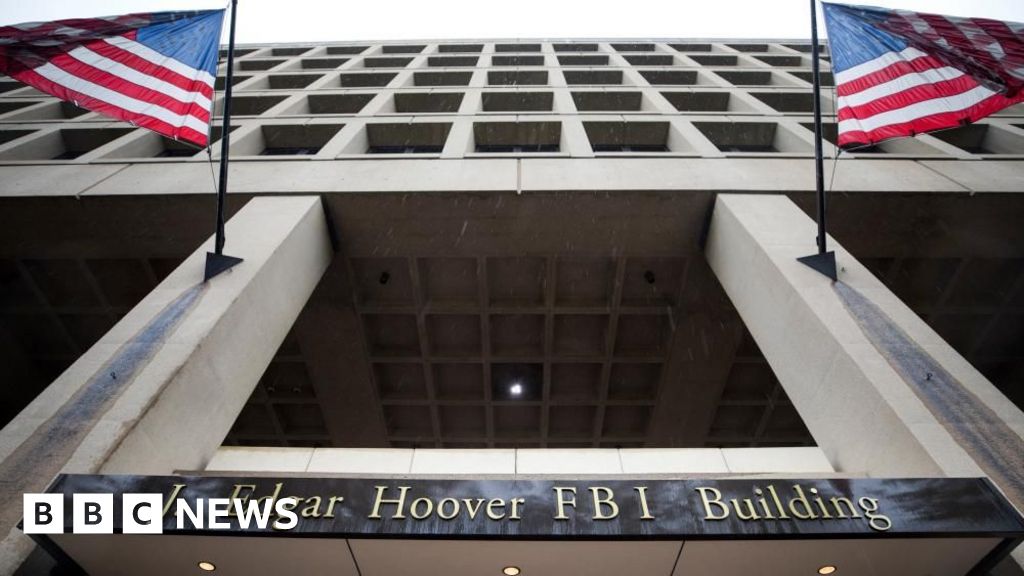
According to multiple news reports in November 2026, the FBI is investigating an apparent breach of its National Crime Information Center (NCIC) criminal database. This follows a separate cyberattack targeting employee data in September 2026.
 

spaminator

Hall of Fame Member
Oct 26, 2009
41,189
4,200
113
Data centres in Ontario: Easy delivery but the questions run deep
Ontario government says the data centre business could generate $122 billion in future economic growth, while creating more than 17,000 new jobs every year

Author of the article:Gordon Anderson
Published Nov 22, 2026 • 3 minute read
data centre 1
An aerial view of Microsoft's data centre campus in Vaughan. Microsoft has another data centre project currently under construction in Etobicoke. The new 280,000 square foot facility could be open late next year. Photo by Microsoft
In this three-part series, the Toronto Sun will explore the role of data centres in our province. In our first instalment, we look at their general purpose and touch on some of the controversy that surrounds this technology


From artificial intelligence tools to navigation apps and streaming platforms, delivering information to consumers in a timely fashion is routine.

But the infrastructure behind the simple delivery mechanism is complex and surrounded by plenty of concerns.

And at the heart of that delivery mechanism are data centres. Simply put, a data centre is a facility that houses computer equipment for storing, processing, and transmitting digital information.

When you open an app, save photos, or play online games, you’re using a data centre. Local businesses, hospitals, governments, and schools rely on them to deliver services.

An image of the Guelph Data Centre in Guelph, Ontario on Thursday, Aug. 13, 2026
An image of the Guelph Data Centre in Guelph, Ontario on Thursday, Aug. 13, 2026 Photo by Peter Power/Postmedia
What are some types of data centres?
Types of data centres include artificial intelligence, cloud, colocation and hyperscale.

Artificial intelligence centres are specialized facilities built to train and run artificial intelligence and machine learning models.


Hyperscale data centres are built to run cloud computing and artificial intelligence workloads.

Cloud computing is simply storing and running data, files and programs over the internet. Everyday services that utilize the cloud include Netflix and Spotify.

A colocation data centre rents cabinets, racks, cages, or private suites to businesses so they can house their servers.

What are there public protests?
Public protests against these projects mainly revolve around the large amounts of water and electricity consumed. Other issues that rankle the public include land usage concerns, air and noise pollution, digital sovereignty and general anxiety surrounding AI.

The International Energy Agency says a typical AI-focused data centre consumes as much electricity annually as 100,000 households, but the largest ones could consume 20 times as much.

A recent York University study says that a 122-megawatt data centre, running at 50% to 80% capacity, would consume approximately 534,360 to 854,976 megawatt hours annually, equivalent to the electricity consumption of roughly 49,000 to 78,000 households.


The University of Toronto prepared a study for city council back in July. The study says data centres could represent up to 13% of all electricity consumed in Ontario by 2035.

The World Resources Institute says medium-sized data centre facilities can consume 300,000 gallons (approximately 1.16 million litres) of water daily, while larger facilities can consume as much as five million gallons (approximately 19 million litres) of water every 24 hours.

Data centres require water to keep servers cool enough to function. Fresh water is cheap, abundant, and absorbs heat remarkably well.

Ontario Minister of Economic Development, Job Creation and Trade, MPP Victor Fedeli speaks at the Guelph Data Centre in Guelph back in August.
Ontario Minister of Economic Development, Job Creation and Trade, MPP Victor Fedeli speaks at the Guelph Data Centre in Guelph back in August. Photo by (Peter Power/Postmedia News)
Cloud here to stay
The surge in cloud computing and artificial intelligence is propelling the data centre boom. According to the province, the digital expansion underway could bring economic benefits like increased tax revenues, job creation and infrastructure investment.

In its Data Centre Playbook, the Ontario government says the data centre business could generate $122 billion in future economic growth, while creating more than 17,000 new jobs every year.


“We think many (municipalities) are very eager,”Economic Development Minister Vic Fedeli said in a recent interview. “This is a big economic driver for a municipality. It creates jobs, it creates a huge tax base for them, it puts a place for our Canadian data to be in a secure place.”

Ontario is considered a preferred location with its relatively cool climate, available land, low-cost energy, grid stability, and skilled construction workers.

Because the province does not have a single centralized public registry for all data centres, exact counts in the city vary by source.

One development currently underway is the YTO40 Microsoft hyperscale data centre in Etobicoke near Hwy. 401 and Islington Ave. The approximate square footage of the two-storey building is 280,000.

If not already finished, construction is expected to wrap before the end of the year. Equipment installation, testing, and preparation activities will continue until sometime late next year.

Local moratoriums
Toronto doesn’t have a moratorium on data centres. Neither do Brampton, Burlington, Hamilton, Richmond Hill, Oshawa and Vaughan.

Oakville currently has a one-year moratorium on data centres. Mississauga also has a one-year pause, with an option to add an additional year.

ganderson@postmedia.com

Next up: Part 2 will focus on the concerns from local communities that have moratoriums in place.
 

pgs

Hall of Fame Member
Nov 29, 2008
29,553
8,812
113
B.C.
Data centres in Ontario: Easy delivery but the questions run deep
Ontario government says the data centre business could generate $122 billion in future economic growth, while creating more than 17,000 new jobs every year

Author of the article:Gordon Anderson
Published Nov 22, 2026 • 3 minute read
data centre 1
An aerial view of Microsoft's data centre campus in Vaughan. Microsoft has another data centre project currently under construction in Etobicoke. The new 280,000 square foot facility could be open late next year. Photo by Microsoft
In this three-part series, the Toronto Sun will explore the role of data centres in our province. In our first instalment, we look at their general purpose and touch on some of the controversy that surrounds this technology


From artificial intelligence tools to navigation apps and streaming platforms, delivering information to consumers in a timely fashion is routine.

But the infrastructure behind the simple delivery mechanism is complex and surrounded by plenty of concerns.

And at the heart of that delivery mechanism are data centres. Simply put, a data centre is a facility that houses computer equipment for storing, processing, and transmitting digital information.

When you open an app, save photos, or play online games, you’re using a data centre. Local businesses, hospitals, governments, and schools rely on them to deliver services.

An image of the Guelph Data Centre in Guelph, Ontario on Thursday, Aug. 13, 2026
An image of the Guelph Data Centre in Guelph, Ontario on Thursday, Aug. 13, 2026 Photo by Peter Power/Postmedia
What are some types of data centres?
Types of data centres include artificial intelligence, cloud, colocation and hyperscale.

Artificial intelligence centres are specialized facilities built to train and run artificial intelligence and machine learning models.


Hyperscale data centres are built to run cloud computing and artificial intelligence workloads.

Cloud computing is simply storing and running data, files and programs over the internet. Everyday services that utilize the cloud include Netflix and Spotify.

A colocation data centre rents cabinets, racks, cages, or private suites to businesses so they can house their servers.

What are there public protests?
Public protests against these projects mainly revolve around the large amounts of water and electricity consumed. Other issues that rankle the public include land usage concerns, air and noise pollution, digital sovereignty and general anxiety surrounding AI.

The International Energy Agency says a typical AI-focused data centre consumes as much electricity annually as 100,000 households, but the largest ones could consume 20 times as much.

A recent York University study says that a 122-megawatt data centre, running at 50% to 80% capacity, would consume approximately 534,360 to 854,976 megawatt hours annually, equivalent to the electricity consumption of roughly 49,000 to 78,000 households.


The University of Toronto prepared a study for city council back in July. The study says data centres could represent up to 13% of all electricity consumed in Ontario by 2035.

The World Resources Institute says medium-sized data centre facilities can consume 300,000 gallons (approximately 1.16 million litres) of water daily, while larger facilities can consume as much as five million gallons (approximately 19 million litres) of water every 24 hours.

Data centres require water to keep servers cool enough to function. Fresh water is cheap, abundant, and absorbs heat remarkably well.

Ontario Minister of Economic Development, Job Creation and Trade, MPP Victor Fedeli speaks at the Guelph Data Centre in Guelph back in August.
Ontario Minister of Economic Development, Job Creation and Trade, MPP Victor Fedeli speaks at the Guelph Data Centre in Guelph back in August. Photo by (Peter Power/Postmedia News)
Cloud here to stay
The surge in cloud computing and artificial intelligence is propelling the data centre boom. According to the province, the digital expansion underway could bring economic benefits like increased tax revenues, job creation and infrastructure investment.

In its Data Centre Playbook, the Ontario government says the data centre business could generate $122 billion in future economic growth, while creating more than 17,000 new jobs every year.


“We think many (municipalities) are very eager,”Economic Development Minister Vic Fedeli said in a recent interview. “This is a big economic driver for a municipality. It creates jobs, it creates a huge tax base for them, it puts a place for our Canadian data to be in a secure place.”

Ontario is considered a preferred location with its relatively cool climate, available land, low-cost energy, grid stability, and skilled construction workers.

Because the province does not have a single centralized public registry for all data centres, exact counts in the city vary by source.

One development currently underway is the YTO40 Microsoft hyperscale data centre in Etobicoke near Hwy. 401 and Islington Ave. The approximate square footage of the two-storey building is 280,000.

If not already finished, construction is expected to wrap before the end of the year. Equipment installation, testing, and preparation activities will continue until sometime late next year.

Local moratoriums
Toronto doesn’t have a moratorium on data centres. Neither do Brampton, Burlington, Hamilton, Richmond Hill, Oshawa and Vaughan.

Oakville currently has a one-year moratorium on data centres. Mississauga also has a one-year pause, with an option to add an additional year.

ganderson@postmedia.com

Next up: Part 2 will focus on the concerns from local communities that have moratoriums in place.
Yes it could , but will it ?
 

55Mercury

rigid member
May 31, 2007
4,740
1,282
113
The proof is the proof is the proof and you'll know it's the proof when it's proven.