

The Tarriff Hype.
- Thread starter petros
- Start date
You are using an out of date browser. It may not display this or other websites correctly.
You should upgrade or use an alternative browser.
You should upgrade or use an alternative browser.


P
So how about historicAl figures being cancelled , names are always changing and evolving ."The name "Ontario" is derived from the Haudenosaunee (Iroquois) word "oniatarí:io," which means "lake of shining waters," and it predates European settlement in the region. The exact date of the original naming is not specified, but it has been in use since before the 17th century."
The name Ontario predates Canada

Are you in favour of that? Just curious…The federal government is replacing its counter-tariffs on seafood with 50 per cent levies on a series of other American goods, according to Finance Minister Frankie Bubbles office. Newly added to Canada’s list of counter-tariffs include:P
So how about historicAl figures being cancelled , names are always changing and evolving .
Wood charcoal;
Printed matter, including printed pictures or photographs;
Articles of plaster or of compositions based on plaster, including boards, sheets and tiles;
Materials used in the conveyance or packing of goods, including bottles, flasks, jars and pots;
And copper wire.
…& no, I am not in favour of Canadian tariffs on American goods, though I do respect boycotting Products when possible, so Canadians themselves can vote with their wallets.
Canada reveals newly added items to list of U.S. counter-tariffs — CTV News
The federal government is replacing its counter-tariffs on seafood with 50 per cent levies on a series of other American goods, according to Finance Minister François-Philippe Champagne’s office.

I wonder if this.is personal? Carney was running the Bank of Canada in 2008 when the derivatives and subprime scam hit.
Canadian Banks armed with a CAD worth $1.15 USD and super low Carney bank of Canada interest rate swooped in and bought banks and real-estate for pennies on a superior CAD
Trump didn't fair well.
**Yes, Donald Trump reported large business losses around 2008–2009 tied to the broader economic fallout from the financial crisis (often linked to complex mortgage-related derivatives and the housing/credit markets), but these were primarily from his real estate and casino operations—not from direct personal trading or investments in derivatives.**
According to New York Times reporting on his tax records:
- He declared more than $1 billion in losses for 2008 and 2009, largely related to the final failure of his Atlantic City casino investments (Trump Entertainment Resorts faced ongoing problems and filed for bankruptcy in early 2009).
- Other sources describe total core business losses in the range of roughly $1.4 billion across those two years.
- He used these losses (under tax rules allowing carrybacks/carryforwards and refunds in some cases) to claim a roughly $72.9 million federal income tax refund of taxes paid in prior years (mainly 2005–2007, during peak *Apprentice* earnings). He paid no federal income tax in 2008.
Key problem areas during the crisis included:
- **Chicago Trump International Hotel & Tower**: Construction finished amid the downturn with many residences unsold. He had large construction loans (hundreds of millions, with a personal guarantee on a portion from Deutsche Bank). He sought extensions, then sued the lenders (claiming the crisis was a “force majeure”/act of God that should excuse payment and seeking damages), while the bank countersued. Debt restructuring and later forgiveness/write-downs occurred; some forgiven debt was reported as income but offset by other losses.
- Atlantic City casinos continued their long pattern of poor performance and high debt, culminating in another bankruptcy filing.
- Broader real estate and licensing deals were hit by the recession (slower sales, empty commercial space, etc.).
Trump was not a major player in derivatives trading or structured products like the big Wall Street firms, hedge funds, or banks that took direct hits from CDOs, credit default swaps, or related instruments. Public records and reporting from the period show no evidence of significant personal losses from derivatives speculation. His businesses were exposed to the real-economy effects of the credit crunch and recession (tighter lending, falling property values/demand, reduced travel/gambling).
He also generated substantial income during these years from *The Apprentice*, related licensing, and branding deals (tens of millions annually in that period), which helped offset some pressures. Forbes estimates of his net worth showed a dip around the crisis years before later recovery as the economy improved. He has publicly said he tends to do better in downturns by finding opportunities, though contemporaneous reporting indicates he was primarily focused on managing debt and distressed properties rather than making large opportunistic gains from the crisis itself.
In short, the crisis contributed to (and amplified) real operating and valuation losses in his core businesses that he reported on his taxes, but these were not losses from trading or holding the derivatives that were central to the Wall Street meltdown. Tax rules allowed him to turn those reported losses into significant refunds of prior taxes paid.
Canadian Banks armed with a CAD worth $1.15 USD and super low Carney bank of Canada interest rate swooped in and bought banks and real-estate for pennies on a superior CAD
Trump didn't fair well.
**Yes, Donald Trump reported large business losses around 2008–2009 tied to the broader economic fallout from the financial crisis (often linked to complex mortgage-related derivatives and the housing/credit markets), but these were primarily from his real estate and casino operations—not from direct personal trading or investments in derivatives.**
According to New York Times reporting on his tax records:
- He declared more than $1 billion in losses for 2008 and 2009, largely related to the final failure of his Atlantic City casino investments (Trump Entertainment Resorts faced ongoing problems and filed for bankruptcy in early 2009).
- Other sources describe total core business losses in the range of roughly $1.4 billion across those two years.
- He used these losses (under tax rules allowing carrybacks/carryforwards and refunds in some cases) to claim a roughly $72.9 million federal income tax refund of taxes paid in prior years (mainly 2005–2007, during peak *Apprentice* earnings). He paid no federal income tax in 2008.
Key problem areas during the crisis included:
- **Chicago Trump International Hotel & Tower**: Construction finished amid the downturn with many residences unsold. He had large construction loans (hundreds of millions, with a personal guarantee on a portion from Deutsche Bank). He sought extensions, then sued the lenders (claiming the crisis was a “force majeure”/act of God that should excuse payment and seeking damages), while the bank countersued. Debt restructuring and later forgiveness/write-downs occurred; some forgiven debt was reported as income but offset by other losses.
- Atlantic City casinos continued their long pattern of poor performance and high debt, culminating in another bankruptcy filing.
- Broader real estate and licensing deals were hit by the recession (slower sales, empty commercial space, etc.).
Trump was not a major player in derivatives trading or structured products like the big Wall Street firms, hedge funds, or banks that took direct hits from CDOs, credit default swaps, or related instruments. Public records and reporting from the period show no evidence of significant personal losses from derivatives speculation. His businesses were exposed to the real-economy effects of the credit crunch and recession (tighter lending, falling property values/demand, reduced travel/gambling).
He also generated substantial income during these years from *The Apprentice*, related licensing, and branding deals (tens of millions annually in that period), which helped offset some pressures. Forbes estimates of his net worth showed a dip around the crisis years before later recovery as the economy improved. He has publicly said he tends to do better in downturns by finding opportunities, though contemporaneous reporting indicates he was primarily focused on managing debt and distressed properties rather than making large opportunistic gains from the crisis itself.
In short, the crisis contributed to (and amplified) real operating and valuation losses in his core businesses that he reported on his taxes, but these were not losses from trading or holding the derivatives that were central to the Wall Street meltdown. Tax rules allowed him to turn those reported losses into significant refunds of prior taxes paid.
…& Yet it was Carney that swooped in at Trumps request and brokered the Sweetheart deal between Qatar and Jared Kushner when he got in over his head with a real estate deal at 666 5th Ave. Carney is on both sides of the fence here. Brookfield Asset Management later reached a deal in 2018 to rescue the property by purchasing a 99-year ground lease and paying rent upfront.
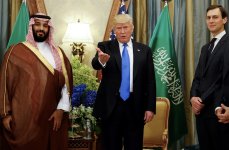
Investigations by journalists and inquiries from lawmakers like Senator Ron Wyden highlighted that Qatar's sovereign wealth fund (the Qatar Investment Authority) was a major investor in Brookfield Property Partners. Brookfield and Qatari officials maintained that the sovereign wealth fund had no direct involvement in or prior knowledge of the 666 Fifth Avenue transaction, and representatives denied any quid pro quo, then recently Qatar gifted Trump “Qatar Force One” not to the US government, but to the Trump presidential library so Trump gets to keep it after America gets to pay for all the upgrades to it. Balance in the universe?
(YouTube & Take a look inside Trump’s Boeing 747 Jet That Qatar Gifted)
 apple.news
So…how much of what’s playing out in the media for us rubes is just game show showmanship smoke and mirrors?
apple.news
So…how much of what’s playing out in the media for us rubes is just game show showmanship smoke and mirrors?

 en.wikipedia.org
Investigations by journalists and inquiries from lawmakers like Senator Ron Wyden highlighted that Qatar's sovereign wealth fund (the Qatar Investment Authority) was a major investor in Brookfield Property Partners. Brookfield and Qatari officials maintained that the sovereign wealth fund had no direct involvement in or prior knowledge of the 666 Fifth Avenue transaction, and representatives denied any quid pro quo, then recently Qatar gifted Trump “Qatar Force One” not to the US government, but to the Trump presidential library so Trump gets to keep it after America gets to pay for all the upgrades to it. Balance in the universe?
Opinion | American minds are the real front in this trade war — Toronto Star
As important as elbows up are, galvanized Canadians can do nothing to Trump. But demoralized Americans can.
660 Fifth Avenue - Wikipedia

White House propaganda backfires after goose outlasts eagle attack
'The goose fought back and came out of that, and survived the day,' said photographer Mervyn Sequeira
Author of the article:Bryan Passifiume
Published Aug 27, 2026 • 2 minute read
Image tweeted on Wednesday by the White House
Image tweeted on Wednesday by the White House Photo by screenshot /x.com
OTTAWA — The Donald Trump White House employed a little avian propaganda to flex on social media this week, but the image they chose doesn’t tell the whole story.
On Wednesday, a White House official posted an image to its X account of an American eagle standing atop a Canada Goose on a frozen lake, an attempt at commentary at the ongoing trade war the U.S. president is waging against Canada.
But the image, part of a series of photographs taken by photographer Mervyn Sequeira last year in Burlington, doesn’t depict how that encounter turned out.
“It was a 20 minute fight, the eagle kept repeatedly attacking,” Sequeira told CBC News in a March 2025 interview.
“The goose was hissing and pecking the best it could, defending itself.”
Eagle eventually tires and abandons fight
As the battle wore on, Sequeira said the two birds grew more and more tired.
“There were times when it seemed hopeless for the goose, the goose was under the eagle, I thought it was over,” he said.
“The goose fought back and came out of that, and survived the day.”
The eagle, clearly frustrated, eventually flew away, leaving the goose with ruffled feathers but otherwise intact.
Tensions between Canada and U.S. grow
The image was posted as a quote tweet to a previous post made by the White House, proclaiming that President Trump was “ending Canada’s free ride.”
In his latest flex against America’s northern neighbour, Trump on Thursday signed an executive order renaming Lake Ontario to Lake America.
That comes on the heels of the United States — using Canada’s supply management policies in the dairy industry, automotive quotas and individual provincial bans on the sale of U.S. alcohol as justification — enacted 50% tariffs on $28 billion in Canadian goods.
That prompted Ottawa to enact dollar-for-dollar counter-tariffs to match the U.S. measures, which go into effect on Sept. 8.
Despite both Canada and the U.S. saying late last week that a deal had been reached in principle, the talks unravelled after American officials allegedly introduced a slew of eleventh-hour demands, ones that Prime Minister Mark Carney warned would severely impact key Canadian industries.
Among these last-minute additions were passages restricting Ottawa’s ability to negotiate independent trade deals with third-party nations, alongside demands for concessions on Canadian cultural and French-language policies, as well as streaming regulations.
bpassifiume@postmedia.com
X: @bryanpassifiume

 torontosun.com
'The goose fought back and came out of that, and survived the day,' said photographer Mervyn Sequeira
Author of the article:Bryan Passifiume
Published Aug 27, 2026 • 2 minute read
Image tweeted on Wednesday by the White House
Image tweeted on Wednesday by the White House Photo by screenshot /x.com
OTTAWA — The Donald Trump White House employed a little avian propaganda to flex on social media this week, but the image they chose doesn’t tell the whole story.
On Wednesday, a White House official posted an image to its X account of an American eagle standing atop a Canada Goose on a frozen lake, an attempt at commentary at the ongoing trade war the U.S. president is waging against Canada.
But the image, part of a series of photographs taken by photographer Mervyn Sequeira last year in Burlington, doesn’t depict how that encounter turned out.
“It was a 20 minute fight, the eagle kept repeatedly attacking,” Sequeira told CBC News in a March 2025 interview.
“The goose was hissing and pecking the best it could, defending itself.”
Eagle eventually tires and abandons fight
As the battle wore on, Sequeira said the two birds grew more and more tired.
“There were times when it seemed hopeless for the goose, the goose was under the eagle, I thought it was over,” he said.
“The goose fought back and came out of that, and survived the day.”
The eagle, clearly frustrated, eventually flew away, leaving the goose with ruffled feathers but otherwise intact.
Tensions between Canada and U.S. grow
The image was posted as a quote tweet to a previous post made by the White House, proclaiming that President Trump was “ending Canada’s free ride.”
In his latest flex against America’s northern neighbour, Trump on Thursday signed an executive order renaming Lake Ontario to Lake America.
That comes on the heels of the United States — using Canada’s supply management policies in the dairy industry, automotive quotas and individual provincial bans on the sale of U.S. alcohol as justification — enacted 50% tariffs on $28 billion in Canadian goods.
That prompted Ottawa to enact dollar-for-dollar counter-tariffs to match the U.S. measures, which go into effect on Sept. 8.
Despite both Canada and the U.S. saying late last week that a deal had been reached in principle, the talks unravelled after American officials allegedly introduced a slew of eleventh-hour demands, ones that Prime Minister Mark Carney warned would severely impact key Canadian industries.
Among these last-minute additions were passages restricting Ottawa’s ability to negotiate independent trade deals with third-party nations, alongside demands for concessions on Canadian cultural and French-language policies, as well as streaming regulations.
bpassifiume@postmedia.com
X: @bryanpassifiume
White House propaganda backfires after goose outlasts eagle attack
Goose depicted in image tweeted by White House not only survived attack, but forced the exhausted eagle to abandon the fight. Read more.
What was never on the table was a zero-tariff deal, according to three senior Canadian officials.That is something the prime minister first acknowledged last summer but never forcefully persuaded Canadians to accept. All along, he insisted that U.S. tariffs on Canadian goods were illegal and unjustified violations of the Canada-United States-Mexico Agreement on trade (CUSMA), and that "no deal is better than a bad deal."
Trump has used several laws to impose tariffs on Canada and other allies, striking bilateral deals to reduce the duties only in exchange for major concessions and investment promises. Most Canadian exports were exempt from many tariffs if they complied with CUSMA rules, but Trump's so-called sectoral tariffs on "strategic" sectors hammered autos, steel, aluminum and lumber, and allowed no exemptions for Canada. Nor would his most recent tariffs, an unprecedented use of a 1930s trade law Herbert Hoover-style.
 en.wikipedia.org
In the latest round of talks, the U.S. position was clear: "The United States has not done a deal with any country in the world whereby the U.S. pays tariffs going into a country," said one Canadian official. "That's just not in the cards.”
en.wikipedia.org
In the latest round of talks, the U.S. position was clear: "The United States has not done a deal with any country in the world whereby the U.S. pays tariffs going into a country," said one Canadian official. "That's just not in the cards.”
"They won't even talk to you if you start with that position, so you have to start out accepting that you're going to pay tariffs going to the United States, and U.S. exporters are not going to pay tariffs coming into your country."
Hoover signed the Smoot-Hawley Tariff Act of 1930, which raised import duties. Trump enacted wide-ranging tariffs on foreign steel, aluminum, and goods from China during his term. Economists often criticize both actions for worsening global trade tensions, so Trump himself then pulled out and dusted off the same century old Smoot-Hawley Tariff Act as his other attempts at imposing Tariffs where mostly found to be illegal by America’s own courts.
Both leaders faced massive economic shocks soon after or during their time in office. Hoover faced the start of the Great Depression in 1929. Trump faced the economic shutdown caused by the COVID-19 pandemic in 2020, then as the “no new wars” came into his second term, he decided to declare military and/or economic war on pretty much everybody.
Both men initially tried to calm the public by claiming the crisis would be short-lived. Hoover stated that prosperity was "just around the corner” and Trump? Well, yeah.
Many blamed U.S. Commerce Secretary Howard Lutnick, who is influential with Trump and has jurisdiction over the so-called Section 232 tariffs applied to Canadian autos, steel, aluminum and lumber in the name of U.S. national security. Lutnick, who has long been involved in the back and forth over tariffs, showed up at the negotiations being led by Greer in Washington on Monday, Aug. 17.
 apple.news
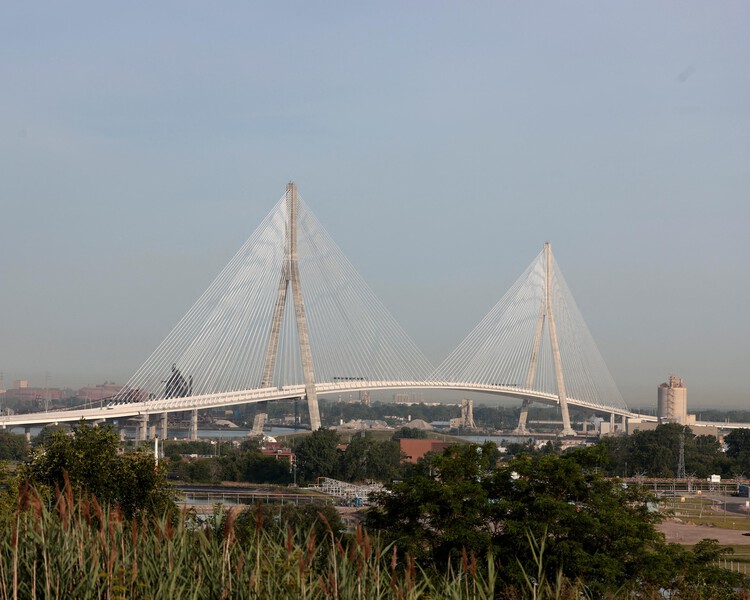
The Canadian side described Greer as a professional negotiator who acted in good faith and believed a fair deal was at hand. But several sources said that Lutnick — who had urged Trump to stall the opening the Gordie Howe International Bridge for a better deal, and had said "car assembly is going to be in America" — pushed Greer to take a much harder line on autos and steel, and to offer no more compromises.
apple.news
The Canadian side described Greer as a professional negotiator who acted in good faith and believed a fair deal was at hand. But several sources said that Lutnick — who had urged Trump to stall the opening the Gordie Howe International Bridge for a better deal, and had said "car assembly is going to be in America" — pushed Greer to take a much harder line on autos and steel, and to offer no more compromises.
 apple.news
Trump has used several laws to impose tariffs on Canada and other allies, striking bilateral deals to reduce the duties only in exchange for major concessions and investment promises. Most Canadian exports were exempt from many tariffs if they complied with CUSMA rules, but Trump's so-called sectoral tariffs on "strategic" sectors hammered autos, steel, aluminum and lumber, and allowed no exemptions for Canada. Nor would his most recent tariffs, an unprecedented use of a 1930s trade law Herbert Hoover-style.
Smoot–Hawley Tariff Act - Wikipedia
"They won't even talk to you if you start with that position, so you have to start out accepting that you're going to pay tariffs going to the United States, and U.S. exporters are not going to pay tariffs coming into your country."
Herbert Hoover and Donald Trump share striking similarities in their business backgrounds, nationalist trade policies, and initial downplaying of severe economic crises. Both presidents used high tariffs to protect American industries from foreign competition.The pitch to Canada in the recently collapsed trade talks was the same as Mr. Trump made last year to the Europeans, Japanese and others: Accept higher tariffs on your manufacturers and don’t retaliate, or we’ll hit you with even higher tariffs. We’re going to block some of your exports, but you can’t block any of our exports. We punch. You keep your hands down. We take. You give. Or else.
Hoover signed the Smoot-Hawley Tariff Act of 1930, which raised import duties. Trump enacted wide-ranging tariffs on foreign steel, aluminum, and goods from China during his term. Economists often criticize both actions for worsening global trade tensions, so Trump himself then pulled out and dusted off the same century old Smoot-Hawley Tariff Act as his other attempts at imposing Tariffs where mostly found to be illegal by America’s own courts.
Both leaders faced massive economic shocks soon after or during their time in office. Hoover faced the start of the Great Depression in 1929. Trump faced the economic shutdown caused by the COVID-19 pandemic in 2020, then as the “no new wars” came into his second term, he decided to declare military and/or economic war on pretty much everybody.
Both men initially tried to calm the public by claiming the crisis would be short-lived. Hoover stated that prosperity was "just around the corner” and Trump? Well, yeah.
Many blamed U.S. Commerce Secretary Howard Lutnick, who is influential with Trump and has jurisdiction over the so-called Section 232 tariffs applied to Canadian autos, steel, aluminum and lumber in the name of U.S. national security. Lutnick, who has long been involved in the back and forth over tariffs, showed up at the negotiations being led by Greer in Washington on Monday, Aug. 17.
Detroit despairs as ‘insanity’ of Trump’s Canada trade war punishes city — Guardian US
Unpopular new policy comes as midterms loom and control of Congress could be decided by several Michigan races
Mark Carney walked away from a trade deal with Donald Trump. Here's how negotiations fell apart — Toronto Star
The U.S. president was optimistic but the prime minister was cautious. Behind the scenes, a tentative agreement to end the Canada-U.S. trade war was crumbling during the final three days of negotiations, Tonda MacCharles writes.
Almost all of it, especially the weather but not the sports scores.So…how much of what’s playing out in the media for us rubes is just game show showmanship smoke and mirrors?
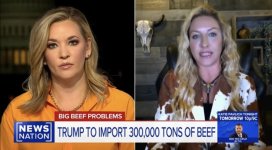
A new proposal by President Donald Trump to open a 90-day, tariff-free quota of up to 300,000 metric tons of imported beef for grinding, aimed at boosting supply and lowering ground beef prices in the U.S. claiming the imported meat will be sold at 25% below current market prices…
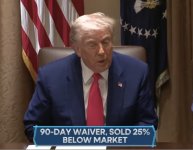
…which has not made American cattle ranchers very happy. The administration has not named the companies or countries providing the beef or explaining how the retail-level price drop will be enforced. The policy shift has drawn steep criticism from both Republican lawmakers and rancher associations, such as the National Cattlemen's Beef Association.

 www.sltrib.com
Support for Trump and Republicans in general in turn from rural and agricultural voting blocks has fallen sharply since last year. Global turmoil from tariffs and the increased costs in diesel fuel and fertilizer among other things. Farm bankruptcies have risen sharply from 2025 to 2026. Trade disputes have disrupted markets for soy beans and corn among other agricultural commodities further exasperating the issue.
www.sltrib.com
Support for Trump and Republicans in general in turn from rural and agricultural voting blocks has fallen sharply since last year. Global turmoil from tariffs and the increased costs in diesel fuel and fertilizer among other things. Farm bankruptcies have risen sharply from 2025 to 2026. Trade disputes have disrupted markets for soy beans and corn among other agricultural commodities further exasperating the issue.
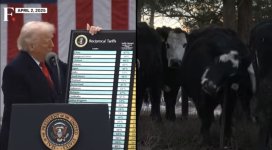
Something or somebody needs to be scapegoated:
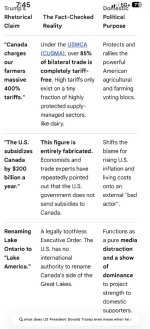
Apparently part of the answer is to rename Lake Ontario (but only for US government entities) to Lake America, and the other portion of the solution is to allow U.S. Beef Ranchers to bypass the USDA inspection process? Earlier this week, Trump said on the Glenn Beck program that he would look into whether there are too many beef processing plant regulations.
 apple.news
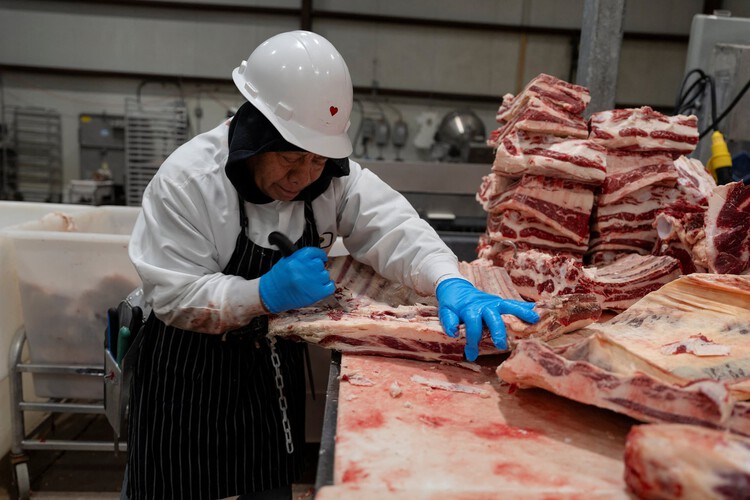
Under current federal law, farmers and ranchers are already legally permitted to slaughter livestock they raise for their own household consumption, employees, and nonpaying guests. Selling that meat commercially—especially across state lines—requires passing sanitation and safety regulations overseen by the USDA Food Safety and Inspection Service.
apple.news
Under current federal law, farmers and ranchers are already legally permitted to slaughter livestock they raise for their own household consumption, employees, and nonpaying guests. Selling that meat commercially—especially across state lines—requires passing sanitation and safety regulations overseen by the USDA Food Safety and Inspection Service.
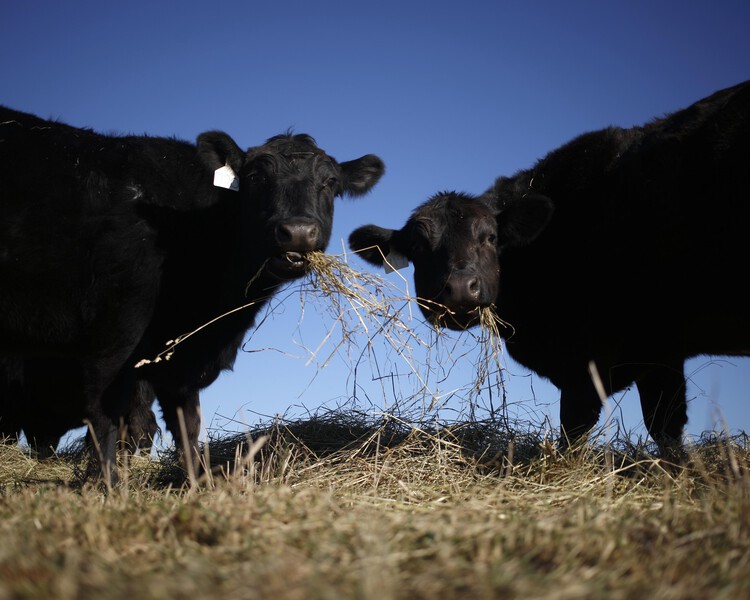 apple.news
Republican lawmakers have warned in recent days that “flooding” stores with imports will hit US ranchers, suggesting that the move is a short-term solution that will hinder cattle farmers from building out their herd, amid a 75-year low due to drought conditions and the high cost of fertilizer and diesel fuel for some reason.
apple.news
Republican lawmakers have warned in recent days that “flooding” stores with imports will hit US ranchers, suggesting that the move is a short-term solution that will hinder cattle farmers from building out their herd, amid a 75-year low due to drought conditions and the high cost of fertilizer and diesel fuel for some reason.
“For years I have heard that they have had a tremendous problem with the Big Processors, who many say are a nasty Monopoly,” Trump wrote on his Truth Social platform, referring to food processing companies. “There are, essentially, 4 of them, a very non competitive number, and they make life miserable for our wonderful Farmers and Ranchers, and I can’t let that happen, can I?
So, in order to break this powerful monopoly, with much of its ownership based outside of the U.S., I am authorizing legal documents to be drawn in order to allow Farmers and Ranchers to be given the right to PROCESS THEIR OWN FOOD. This should move quickly.”
The USDA does not have the staff or resources to dispatch federal inspectors to millions of individual private ranches if self-processing for commercial sale is widely permitted anyway, so… as the Commercial packing plants are processing the imported beef, ranchers can figure it out for themselves…& if something goes wrong, then they can always blame Canada.

 www.youtube.com
(YouTube & Trump’s Agriculture Secretary ADMITS she doesn’t know where the U.S. is importing beef from)
www.youtube.com
(YouTube & Trump’s Agriculture Secretary ADMITS she doesn’t know where the U.S. is importing beef from)
(YouTube & Secretary of Agriculture admits she doesn’t know where imported beef comes from)
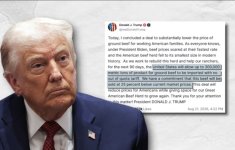
When reporters asked President Trump which countries are part of the deal, he declined to answer, stating only that he had "a few countries" in mind. Economic experts and industry groups “question” whether that much discounted beef is realistically available or will achieve the promised price cuts.
…which has not made American cattle ranchers very happy. The administration has not named the companies or countries providing the beef or explaining how the retail-level price drop will be enforced. The policy shift has drawn steep criticism from both Republican lawmakers and rancher associations, such as the National Cattlemen's Beef Association.
Utah cattle ranchers — and Sen. John Curtis — beef with Trump over import plan
U.S. Sen. John Curtis, a Republican, broke with President Donald Trump over a controversial beef import plan that Utah beef industry experts say could put their livelihoods at stake.
Something or somebody needs to be scapegoated:
Apparently part of the answer is to rename Lake Ontario (but only for US government entities) to Lake America, and the other portion of the solution is to allow U.S. Beef Ranchers to bypass the USDA inspection process? Earlier this week, Trump said on the Glenn Beck program that he would look into whether there are too many beef processing plant regulations.
Trump vows legal order to break up 'nasty monopoly' in food processing — Reuters
U.S. President Donald Trump on Friday said he was preparing a legal order to allow farmers and ranchers to be given the right to process their own food aimed at breaking what he called "a nasty monopoly" among the nation's top processors.
Trump pledges to allow cattle ranchers to process own food amid beef imports backlash — Guardian US
President faces criticism over plan to import up to 300,000 metric tons of foreign beef without charging higher tariffs
“For years I have heard that they have had a tremendous problem with the Big Processors, who many say are a nasty Monopoly,” Trump wrote on his Truth Social platform, referring to food processing companies. “There are, essentially, 4 of them, a very non competitive number, and they make life miserable for our wonderful Farmers and Ranchers, and I can’t let that happen, can I?
So, in order to break this powerful monopoly, with much of its ownership based outside of the U.S., I am authorizing legal documents to be drawn in order to allow Farmers and Ranchers to be given the right to PROCESS THEIR OWN FOOD. This should move quickly.”
The USDA does not have the staff or resources to dispatch federal inspectors to millions of individual private ranches if self-processing for commercial sale is widely permitted anyway, so… as the Commercial packing plants are processing the imported beef, ranchers can figure it out for themselves…& if something goes wrong, then they can always blame Canada.
Trump’s Agriculture Secretary ADMITS she doesn’t know where the U.S. is importing beef from
#shorts
www.youtube.com
When reporters asked President Trump which countries are part of the deal, he declined to answer, stating only that he had "a few countries" in mind. Economic experts and industry groups “question” whether that much discounted beef is realistically available or will achieve the promised price cuts.
Mean while my brought home a nice piece of New Zealand beef for supper tonight .Look at how cheap it is .A new proposal by President Donald Trump to open a 90-day, tariff-free quota of up to 300,000 metric tons of imported beef for grinding, aimed at boosting supply and lowering ground beef prices in the U.S. claiming the imported meat will be sold at 25% below current market prices…
View attachment 35508
…which has not made American cattle ranchers very happy. The administration has not named the companies or countries providing the beef or explaining how the retail-level price drop will be enforced. The policy shift has drawn steep criticism from both Republican lawmakers and rancher associations, such as the National Cattlemen's Beef Association.
View attachment 35504
Support for Trump and Republicans in general in turn from rural and agricultural voting blocks has fallen sharply since last year. Global turmoil from tariffs and the increased costs in diesel fuel and fertilizer among other things. Farm bankruptcies have risen sharply from 2025 to 2026. Trade disputes have disrupted markets for soy beans and corn among other agricultural commodities further exasperating the issue.Utah cattle ranchers — and Sen. John Curtis — beef with Trump over import plan
U.S. Sen. John Curtis, a Republican, broke with President Donald Trump over a controversial beef import plan that Utah beef industry experts say could put their livelihoods at stake.
View attachment 35506
Something or somebody needs to be scapegoated:
View attachment 35499
Apparently part of the answer is to rename Lake Ontario (but only for US government entities) to Lake America, and the other portion of the solution is to allow U.S. Beef Ranchers to bypass the USDA inspection process? Earlier this week, Trump said on the Glenn Beck program that he would look into whether there are too many beef processing plant regulations.
Under current federal law, farmers and ranchers are already legally permitted to slaughter livestock they raise for their own household consumption, employees, and nonpaying guests. Selling that meat commercially—especially across state lines—requires passing sanitation and safety regulations overseen by the USDA Food Safety and Inspection Service.Trump vows legal order to break up 'nasty monopoly' in food processing — Reuters
U.S. President Donald Trump on Friday said he was preparing a legal order to allow farmers and ranchers to be given the right to process their own food aimed at breaking what he called "a nasty monopoly" among the nation's top processors.
Republican lawmakers have warned in recent days that “flooding” stores with imports will hit US ranchers, suggesting that the move is a short-term solution that will hinder cattle farmers from building out their herd, amid a 75-year low due to drought conditions and the high cost of fertilizer and diesel fuel for some reason.Trump pledges to allow cattle ranchers to process own food amid beef imports backlash — Guardian US
President faces criticism over plan to import up to 300,000 metric tons of foreign beef without charging higher tariffs
View attachment 35500
“For years I have heard that they have had a tremendous problem with the Big Processors, who many say are a nasty Monopoly,” Trump wrote on his Truth Social platform, referring to food processing companies. “There are, essentially, 4 of them, a very non competitive number, and they make life miserable for our wonderful Farmers and Ranchers, and I can’t let that happen, can I?
View attachment 35501
So, in order to break this powerful monopoly, with much of its ownership based outside of the U.S., I am authorizing legal documents to be drawn in order to allow Farmers and Ranchers to be given the right to PROCESS THEIR OWN FOOD. This should move quickly.”
The USDA does not have the staff or resources to dispatch federal inspectors to millions of individual private ranches if self-processing for commercial sale is widely permitted anyway, so… as the Commercial packing plants are processing the imported beef, ranchers can figure it out for themselves…& if something goes wrong, then they can always blame Canada.
(YouTube & Trump’s Agriculture Secretary ADMITS she doesn’t know where the U.S. is importing beef from)Trump’s Agriculture Secretary ADMITS she doesn’t know where the U.S. is importing beef from
#shorts
(YouTube & Secretary of Agriculture admits she doesn’t know where imported beef comes from)
View attachment 35507
When reporters asked President Trump which countries are part of the deal, he declined to answer, stating only that he had "a few countries" in mind. Economic experts and industry groups “question” whether that much discounted beef is realistically available or will achieve the promised price cuts.
Awesome. Brought into Canada, through already in place arrangements with New Zealand, and it would’ve gone through Canadian inspection on the way in, and inspection in New Zealand before it left etc…right?Mean while my brought home a nice piece of New Zealand beef for supper tonight .Look at how cheap it is .
These are two different things. Apples and oranges.The USDA does not have the staff or resources to dispatch federal inspectors to millions of individual private ranches if self-processing for commercial sale is widely permitted anyway, so… as the Commercial packing plants are processing the imported beef, ranchers can figure it out for themselves…
When reporters asked President Trump which countries are part of the deal, he declined to answer, stating only that he had "a few countries" in mind. Economic experts and industry groups “question” whether that much discounted beef is realistically available or will achieve the promised price cuts.
Trump is announcing that because he’s going to import 300,000 tons of beef from somewhere that even his agricultural secretary doesn’t know where from…which is going to tie up packing plants in the US in this 90 day period, then US ranchers can butcher their own beef without having to have it USDA inspected and then be able to sell it commercially across state lines. Where does that beef go? One of the steps will be missing here.
This Ontario man thought he bought Canadian beef at Costco. Then he saw the label in the back — CTV News
Randy Thompson of Gravenhurst, Ont., stopped at a Costco in Orillia this week to pick up some Canadian beef. Instead, he unintentionally bought beef from the United States.
This was turdOWE's gift to the US. By banning pipelines to either coast, oil producing provinces were forced to accept a lower rate for quality product. It was also his way of ensuring that the west does not gain financial and political power.And Canada’s heavy crude typically trades at a discount (call it the Friends discount?) to U.S. benchmark oil, according to the U.S. Energy Information Administration.
Well, legally all US printed marine charts have to rename it lake Amerika. I believe this will also apply to all US flagged marine traffic in the lake. Or at least that portion that is US territory.I’m not sure how official that really is, outside of Trumps MAGA-Stan with their cartographer in chief.
View attachment 35481
The renaming of the Gulf of Mexico to the "Gulf of America" is official only for the U.S. federal government and does not have any international recognition. I’m still waiting on the renaming Lake Michigan into Lake Epstein.
View attachment 35483
View attachment 35488
View attachment 35482
Trump, speaking in the Oval Office after signing the order, took the opportunity to once again criticize Canada’s trade policies and leadership but insisted he loves the country (?) and that renaming Lake Ontario was not about sending a message.
What will that look like? The real name and then the Trump version in brackets below it? Satisfying the US requirement, but still utilizing the globally recognized name?Well, legally all US printed marine charts have to rename it lake Amerika. I believe this will also apply to all US flagged marine traffic in the lake. Or at least that portion that is US territory.
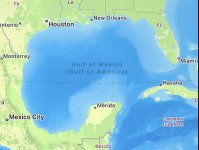
Something like this? President Donald Trump signed an executive order on January 20, 2025, directing U.S. federal agencies to refer to the Gulf of Mexico as the "Gulf of America". However, this change only applies within the U.S. government and has no binding international authority.
For some American bureaucrat to get in front of the camera to say that the deepest part of Lake Ontario and the fattest part of Lake Ontario in the whatever part of Lake Ontario is in American Waters so that justifies the name change…so…so what? The only thing it shows is vindictive pettiness and with this not being the first time (Gulf of Mexico), it does not display the dominance that Trump thinks it does, but simply childish impotence…& I’m assuming the American voters are clueing into this at this point.
Still getting trolled by Trump I see . The horror .What will that look like? The real name and then the Trump version in brackets below it? Satisfying the US requirement, but still utilizing the globally recognized name?
View attachment 35510
Something like this? President Donald Trump signed an executive order on January 20, 2025, directing U.S. federal agencies to refer to the Gulf of Mexico as the "Gulf of America". However, this change only applies within the U.S. government and has no binding international authority.
For some American bureaucrat to get in front of the camera to say that the deepest part of Lake Ontario and the fattest part of Lake Ontario in the whatever part of Lake Ontario is in American Waters so that justifies the name change…so…so what? The only thing it shows is vindictive pettiness and with this not being the first time (Gulf of Mexico), it does not display the dominance that Trump thinks it does, but simply childish impotence…& I’m assuming the American voters are clueing into this at this point.
It is trolling though, just a distraction and a flex that isn’t working. Look over there…& not at what’s really important in front of you sort of thing.Still getting trolled by Trump I see . The horror .
It is trolling and much funnier then kiss my ass .It is trolling though, just a distraction and a flex that isn’t working. Look over there…& not at what’s really important in front of you sort of thing.
Maybe the first time with the whole Gulf of America thing…but this isn’t the first time and it now just looks sad and pathetic with a side of immature childishness from somebody who’s never been put in their place before due to their privileged upbringing so they’ve never really had to mature.It is trolling and much funnier then kiss my ass .
I have to say that whole, …”and my ass has a whole lot of real estate!” was a pretty good line.
China engaged in a war of escalation with the U.S. last year, and tariffs imposed by each country surged past 100 per cent. China put in place export restrictions on rare earth minerals – which the U.S. needed – and the situation eventually cooled off. For China, critical minerals were a perfect chokepoint to inflict pain on the U.S. without damaging itself. Canada doesn’t have a lever like that to pull…none that don’t violate terms in CUSMA/USMCA/TMEC anyway like Trumps tariffs so far all seem to have anyway.
With the U.S. Canada is always going to be the one that’s in the position to be hurt more in a situation like this. The trading relationship should mutually beneficial, but it’s not proportionate because the scales of the two economies are not proportionate.
Ottawa’s recent countertariffs are misinterpreted by the public as retaliation to put pressure on the U.S., when they seem to have in fact been crafted to influence Canadian behaviour, pushing the country to wean itself off American products.
Escalation tactics in trade negotiations with the U.S. prove to be a minefield — The Globe and Mail
Countertariffs can provide leverage, but they run the risk of creating blowback that makes matters worse
Doug Ford unveils new Lake Ontario sign near Stoney Creek
'Just in case President Trump or anyone else forgets, we've set up this sign to remind them it's Lake Ontario now and forever'
Author of the article:Spiro Papuckoski
Published Aug 29, 2026 • Last updated 9 hours ago • 2 minute read
Screenshot (8)
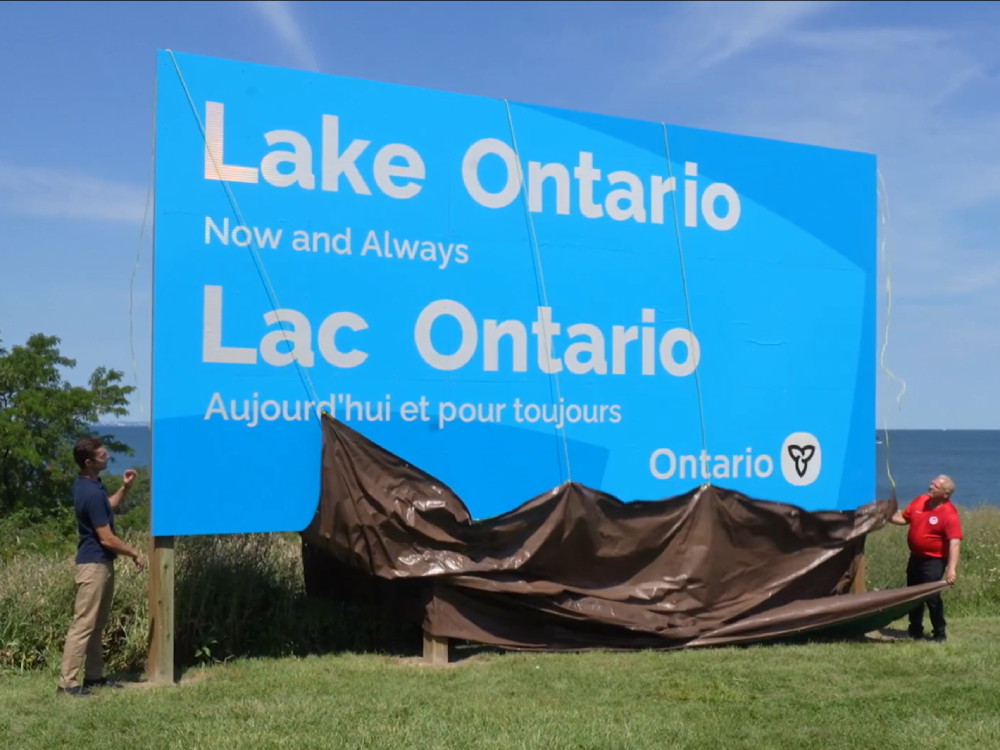
Premier Doug Ford unveiled a new large blue "Lake Ontario" sign in Winona, near Stoney Creek. Photo by Screenshot /X/@fordnation
Doug Ford is not messing around when it comes to Lake Ontario.
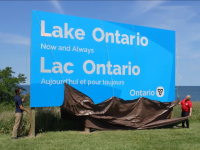
On Saturday, the premier unveiled a new large blue sign in Winona, near Stoney Creek, to send a message south of the border that the name of the lake will never change following U.S. President Donald Trump’s executive order renaming it Lake America on Thursday.
“I’m here on the shores of beautiful Lake Ontario, a crown jewel of our province and our country,” Ford said in a video shared to his social media channels.
“You may have heard that President Trump is trying to rename this lake, all because he doesn’t like Ontario and Canada standing up for ourselves.”
Lake’s name dates back to 1600s
Ford pointed out that the name of the lake, which dates back to the 1600s, predates the founding of both the U.S. and Canada.
In fact, the province is named after the lake and officially became known as Ontario on July 1, 1867, during Confederation.
“Long after President Trump is gone, it will still be called Lake Ontario,” Ford said.
“But just in case President Trump or anyone else forgets, we’ve set up this sign to remind them it’s Lake Ontario now and forever.”
Trade deal fell apart
Trade tensions between Canada and the U.S. have escalated over the past week after talks were halted by Prime Minister Mark Carney on Aug. 21 due to what he says were late-hour changes to an agreed-upon deal.
Among the last-minute additions were passages restricting Ottawa’s ability to negotiate independent trade deals with third-party nations, alongside demands for concessions on Canadian cultural and French-language policies, as well as streaming regulations.
It’s the latest effort by the premier to stand up for the province and the country after back-and-forth insults between him and Trump followed the failed trade talks.
Ongoing public spat
Ford told the U.S. president to “kiss his ass” during a live radio interview in response to tariff threats on Monday. Trump then invoked his late brother, former Toronto Mayor Rob Ford, during the public spat.
In response, Ford called Trump “a dictator.”
“He’s the type of guy in school that would take your lunch money one day, take your toque off your head the next day and then steal your running shoes,” Ford said.
“I’m not going to take any advice from a guy that’s the king of bankruptcies.”

 instagram.com
 torontosun.com
'Just in case President Trump or anyone else forgets, we've set up this sign to remind them it's Lake Ontario now and forever'
Author of the article:Spiro Papuckoski
Published Aug 29, 2026 • Last updated 9 hours ago • 2 minute read
Screenshot (8)
Premier Doug Ford unveiled a new large blue "Lake Ontario" sign in Winona, near Stoney Creek. Photo by Screenshot /X/@fordnation
Doug Ford is not messing around when it comes to Lake Ontario.
On Saturday, the premier unveiled a new large blue sign in Winona, near Stoney Creek, to send a message south of the border that the name of the lake will never change following U.S. President Donald Trump’s executive order renaming it Lake America on Thursday.
“I’m here on the shores of beautiful Lake Ontario, a crown jewel of our province and our country,” Ford said in a video shared to his social media channels.
“You may have heard that President Trump is trying to rename this lake, all because he doesn’t like Ontario and Canada standing up for ourselves.”
Lake’s name dates back to 1600s
Ford pointed out that the name of the lake, which dates back to the 1600s, predates the founding of both the U.S. and Canada.
In fact, the province is named after the lake and officially became known as Ontario on July 1, 1867, during Confederation.
“Long after President Trump is gone, it will still be called Lake Ontario,” Ford said.
“But just in case President Trump or anyone else forgets, we’ve set up this sign to remind them it’s Lake Ontario now and forever.”
Trade deal fell apart
Trade tensions between Canada and the U.S. have escalated over the past week after talks were halted by Prime Minister Mark Carney on Aug. 21 due to what he says were late-hour changes to an agreed-upon deal.
Among the last-minute additions were passages restricting Ottawa’s ability to negotiate independent trade deals with third-party nations, alongside demands for concessions on Canadian cultural and French-language policies, as well as streaming regulations.
It’s the latest effort by the premier to stand up for the province and the country after back-and-forth insults between him and Trump followed the failed trade talks.
Ongoing public spat
Ford told the U.S. president to “kiss his ass” during a live radio interview in response to tariff threats on Monday. Trump then invoked his late brother, former Toronto Mayor Rob Ford, during the public spat.
In response, Ford called Trump “a dictator.”
“He’s the type of guy in school that would take your lunch money one day, take your toque off your head the next day and then steal your running shoes,” Ford said.
“I’m not going to take any advice from a guy that’s the king of bankruptcies.”
Doug Ford on Instagram: "It’s Lake Ontario, now and always."
38K likes, 2,142 comments - fordnationdougford on August 29, 2026: "It’s Lake Ontario, now and always.".
instagram.com
Doug Ford unveils new Lake Ontario sign near Stoney Creek
Doug Ford is not messing around when it comes to Lake Ontario. Read more.
Video of Canada Geese dolled up with Trump's hair armed for tariff war
U.S. president shared meme depicting 'Donald Ducks' with automatic weapons protecting 'Lake America'
Author of the article:Joe Warmington
Published Aug 29, 2026 • Last updated 9 hours ago • 3 minute read
U.S. President Donald Trump shared a video to his Truth Social account that depicted armed Canada Geese protecting "Lake America".
U.S. President Donald Trump shared a video to his Truth Social account that depicted armed Canada Geese protecting "Lake America". Photo by @JonCovering /x
Just when you thought the “war” between Canada and United States was going low comes a new, completely fowl shot by President Donald Trump.
Move over elbows up. This one is machine guns up.
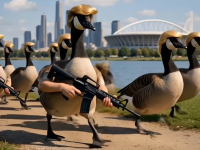
Just as people were bracing themselves for Trump to change the bird’s name to America Goose comes a social media post showing an army of rifle-carrying Canada Geese marching in unison and shooting into the air.
This time it’s the ducks doing the hunting! “Donald Ducks” that is, with manly arms toting automatic firearms. The Canada Geese flock in this video sport Trump’s golden locks as well.
And Trump has got in on the trolling fun — or horror — depending on who you talk to.
“Lake America protected by Donald Ducks,” says the social media post by Popmemes by Jon, who also tagged an American flag into his headline.
Trade tiff one of words and memes
So far this trade tiff has been one of words and memes. But, even though it’s just an AI-generated animation, this is the first time the economic standoff has been depicted a shooting war.
Trump reposted it to his Truth Social account on Saturday. By early afternoon, it already had more than a thousand “re-truths” and nearly six thousand likes.
The computer-generated video shows an army of Canada Geese with a city in the background that has a big downtown and a domed stadium. But once you think it’s trying to emulate Toronto comes a bridge that looks more like the ones that cross over from Manhattan to Brooklyn in New York City.
U.S. President Donald Trump shared a video to his Truth Social account that depicted armed Canada Geese protecting
U.S. President Donald Trump shared a video to his Truth Social account that depicted armed Canada Geese protecting “Lake America”. Photo by @JonCovering /X
What the video doesn’t show is the CN tower, which is the most iconic landmark in Toronto.
But when I reached out to Popmemes to find out for sure, he confirmed he is talking about the Big Smoke.
“You guessed it. DT Toronto.”
Trump not letting up in pushback
So clearly Trump is not letting up in his pushback on Canada — and specifically Toronto — which he vowed in an earlier post that the U.S. would not be doing much business with anymore.
But bringing Canada Geese into the battle? It has ruffled some feathers north of the border.
“It’s weird,” posted Adam Wiltshire.
“Should we consider this a threat?” added Pamela Ingold.
In the video, the gun-toting Canada Geese are all marching to the theme of the old Hawaii Five-0 television show next to a lake with ‘Old Glory’ American flags on poles next to the shore.
At the end of the clip, the birds all fire their guns in the air and fireworks appear over the city.
Funny or concerning? Or just plain absurd?
Later in the day, Premier Doug Ford unveiled a new sign near Hamilton identifying Lake Ontario and that its name will never change.
However, by Saturday evening, Trump responded on social media with yet another Internet meme video — this time showing the president kicking over a Lake Ontario sign and replacing it with a Lake America sign, and then doing the Trump dance to the Village People song YMCA.
This whole past week, from Ford telling Trump to “kiss his ass” to Prime Minister Marc Carney ending talks to halt the threat of tariffs and Trump renaming Lake Ontario, has had a ton of all of the above.
What’s next? Beavertails? Canada Dry? Canadian Tire? Maple syrup?
Perhaps, it might be a better idea to not ask.
![Trump-geese-video2-Aug29[1].jpg](https://forums.canadiancontent.net/data/attachments/33/33790-591009f34e1ea4782b07932df60616a2.jpg "Trump-geese-video2-Aug29[1].jpg")

 truthsocial.com
truthsocial.com
truthsocial.com
 torontosun.com
U.S. president shared meme depicting 'Donald Ducks' with automatic weapons protecting 'Lake America'
Author of the article:Joe Warmington
Published Aug 29, 2026 • Last updated 9 hours ago • 3 minute read
U.S. President Donald Trump shared a video to his Truth Social account that depicted armed Canada Geese protecting "Lake America".
U.S. President Donald Trump shared a video to his Truth Social account that depicted armed Canada Geese protecting "Lake America". Photo by @JonCovering /x
Just when you thought the “war” between Canada and United States was going low comes a new, completely fowl shot by President Donald Trump.
Move over elbows up. This one is machine guns up.
Just as people were bracing themselves for Trump to change the bird’s name to America Goose comes a social media post showing an army of rifle-carrying Canada Geese marching in unison and shooting into the air.
This time it’s the ducks doing the hunting! “Donald Ducks” that is, with manly arms toting automatic firearms. The Canada Geese flock in this video sport Trump’s golden locks as well.
And Trump has got in on the trolling fun — or horror — depending on who you talk to.
“Lake America protected by Donald Ducks,” says the social media post by Popmemes by Jon, who also tagged an American flag into his headline.
Trade tiff one of words and memes
So far this trade tiff has been one of words and memes. But, even though it’s just an AI-generated animation, this is the first time the economic standoff has been depicted a shooting war.
Trump reposted it to his Truth Social account on Saturday. By early afternoon, it already had more than a thousand “re-truths” and nearly six thousand likes.
The computer-generated video shows an army of Canada Geese with a city in the background that has a big downtown and a domed stadium. But once you think it’s trying to emulate Toronto comes a bridge that looks more like the ones that cross over from Manhattan to Brooklyn in New York City.
U.S. President Donald Trump shared a video to his Truth Social account that depicted armed Canada Geese protecting
U.S. President Donald Trump shared a video to his Truth Social account that depicted armed Canada Geese protecting “Lake America”. Photo by @JonCovering /X
What the video doesn’t show is the CN tower, which is the most iconic landmark in Toronto.
But when I reached out to Popmemes to find out for sure, he confirmed he is talking about the Big Smoke.
“You guessed it. DT Toronto.”
Trump not letting up in pushback
So clearly Trump is not letting up in his pushback on Canada — and specifically Toronto — which he vowed in an earlier post that the U.S. would not be doing much business with anymore.
But bringing Canada Geese into the battle? It has ruffled some feathers north of the border.
“It’s weird,” posted Adam Wiltshire.
“Should we consider this a threat?” added Pamela Ingold.
In the video, the gun-toting Canada Geese are all marching to the theme of the old Hawaii Five-0 television show next to a lake with ‘Old Glory’ American flags on poles next to the shore.
At the end of the clip, the birds all fire their guns in the air and fireworks appear over the city.
Funny or concerning? Or just plain absurd?
Later in the day, Premier Doug Ford unveiled a new sign near Hamilton identifying Lake Ontario and that its name will never change.
However, by Saturday evening, Trump responded on social media with yet another Internet meme video — this time showing the president kicking over a Lake Ontario sign and replacing it with a Lake America sign, and then doing the Trump dance to the Village People song YMCA.
This whole past week, from Ford telling Trump to “kiss his ass” to Prime Minister Marc Carney ending talks to halt the threat of tariffs and Trump renaming Lake Ontario, has had a ton of all of the above.
What’s next? Beavertails? Canada Dry? Canadian Tire? Maple syrup?
Perhaps, it might be a better idea to not ask.
Truth Social
Truth Social is America's "Big Tent" social media platform that encourages an open, free, and honest global conversation without discriminating on the basis of political ideology.
truthsocial.com
Truth Social
Truth Social is America's "Big Tent" social media platform that encourages an open, free, and honest global conversation without discriminating on the basis of political ideology.
truthsocial.com
WARMINGTON: Video of Canada Geese dolled up with Trump's hair armed for tariff war
Just when you thought the "war" between Canada and United States was going low comes a new, completely fowl shot by Donald Trump. Read more.