


Lots of standing water in the fields. Haven't seen any "yellow" ones yet. Our camper is next to a canola field & it's still green!So is that why I saw no yellow fields week ? Climate change or late spring ?
It's Climate Change I tell'ya!! IT'S CLIMATE CHANGE!!
- Thread starter B00Mer
- Start date
You are using an out of date browser. It may not display this or other websites correctly.
You should upgrade or use an alternative browser.
You should upgrade or use an alternative browser.

Weird I missed seeing the yellow fields this last trip .Lots of standing water in the fields. Haven't seen any "yellow" ones yet. Our camper is next to a canola field & it's still green!

France records 300 excess deaths during May heatwave
Apart from the May heatwave, France experienced a record-breaking heatwave of 11 days earlier this month that scientists link to climate change.
Author of the article:AFP
AFP
Published Jun 30, 2026 • 1 minute read
'We recorded 300 excess deaths,' said Caroline Semaille, director general of Public Health France. Photo by Thomas SAMSON /AFP
Paris (France) (AFP) — French health officials said on Tuesday that there were at least 300 more deaths than expected during a five-day heatwave in May, the country’s first of the year.
“We recorded 300 excess deaths, corresponding to an increase of nearly 14 percent,” said Caroline Semaille, director general of Public Health France, adding that the deaths were due to all causes combined and were not necessarily linked to elevated temperatures.
The May heat episode, “characterized by its early timing and intensity compared with seasonal norms, exposed a population not yet accustomed at that time of year to high temperatures, during a period when school and work activities are still in full swing,” the public health agency said.
Apart from the May heatwave, France experienced a record-breaking heatwave of 11 days earlier this month that scientists link to climate change.
The latest episode of extreme temperatures disrupted life in France, where few homes are equipped with air-conditioning units, and most schools are not designed to cope with extreme heat.
Citing preliminary figures, health officials on Sunday said they registered around 1,000 more deaths than during the same period in previous months since Wednesday last week, when France was at its hottest since records began.
Prime Minister Sebastien Lecornu said on Monday that more people had died in their homes during the latest heatwave than in previous episodes.
Heatwaves typically cause between 1,000 and 7,000 deaths per year, and “this summer we may be closer to 7,000 than to 1,000”, epidemiologist Basile Chaix of French research institute INSERM told AFP.

 torontosun.com
Apart from the May heatwave, France experienced a record-breaking heatwave of 11 days earlier this month that scientists link to climate change.
Author of the article:AFP
AFP
Published Jun 30, 2026 • 1 minute read
'We recorded 300 excess deaths,' said Caroline Semaille, director general of Public Health France. Photo by Thomas SAMSON /AFP
Paris (France) (AFP) — French health officials said on Tuesday that there were at least 300 more deaths than expected during a five-day heatwave in May, the country’s first of the year.
“We recorded 300 excess deaths, corresponding to an increase of nearly 14 percent,” said Caroline Semaille, director general of Public Health France, adding that the deaths were due to all causes combined and were not necessarily linked to elevated temperatures.
The May heat episode, “characterized by its early timing and intensity compared with seasonal norms, exposed a population not yet accustomed at that time of year to high temperatures, during a period when school and work activities are still in full swing,” the public health agency said.
Apart from the May heatwave, France experienced a record-breaking heatwave of 11 days earlier this month that scientists link to climate change.
The latest episode of extreme temperatures disrupted life in France, where few homes are equipped with air-conditioning units, and most schools are not designed to cope with extreme heat.
Citing preliminary figures, health officials on Sunday said they registered around 1,000 more deaths than during the same period in previous months since Wednesday last week, when France was at its hottest since records began.
Prime Minister Sebastien Lecornu said on Monday that more people had died in their homes during the latest heatwave than in previous episodes.
Heatwaves typically cause between 1,000 and 7,000 deaths per year, and “this summer we may be closer to 7,000 than to 1,000”, epidemiologist Basile Chaix of French research institute INSERM told AFP.
France records 300 excess deaths during May heatwave
"We recorded 300 excess deaths, corresponding to an increase of nearly 14 percent," said the director general of Public Health France.
Amatueures. THe last hot day, Vancouver managed to eliminate 612.France records 300 excess deaths during May heatwave
Apart from the May heatwave, France experienced a record-breaking heatwave of 11 days earlier this month that scientists link to climate change.
Author of the article:AFP
AFP
Published Jun 30, 2026 • 1 minute read
'We recorded 300 excess deaths,' said Caroline Semaille, director general of Public Health France. Photo by Thomas SAMSON /AFP
Paris (France) (AFP) — French health officials said on Tuesday that there were at least 300 more deaths than expected during a five-day heatwave in May, the country’s first of the year.
“We recorded 300 excess deaths, corresponding to an increase of nearly 14 percent,” said Caroline Semaille, director general of Public Health France, adding that the deaths were due to all causes combined and were not necessarily linked to elevated temperatures.
The May heat episode, “characterized by its early timing and intensity compared with seasonal norms, exposed a population not yet accustomed at that time of year to high temperatures, during a period when school and work activities are still in full swing,” the public health agency said.
Apart from the May heatwave, France experienced a record-breaking heatwave of 11 days earlier this month that scientists link to climate change.
The latest episode of extreme temperatures disrupted life in France, where few homes are equipped with air-conditioning units, and most schools are not designed to cope with extreme heat.
Citing preliminary figures, health officials on Sunday said they registered around 1,000 more deaths than during the same period in previous months since Wednesday last week, when France was at its hottest since records began.
Prime Minister Sebastien Lecornu said on Monday that more people had died in their homes during the latest heatwave than in previous episodes.
Heatwaves typically cause between 1,000 and 7,000 deaths per year, and “this summer we may be closer to 7,000 than to 1,000”, epidemiologist Basile Chaix of French research institute INSERM told AFP.
France records 300 excess deaths during May heatwave
"We recorded 300 excess deaths, corresponding to an increase of nearly 14 percent," said the director general of Public Health France.
France deaths rose by 30% during heatwave
The number of deaths increased by 62 percent in the Paris region over the same period, Public Health France said in a new report.
Author of the article:AFP
AFP
Published Jul 03, 2026 • 2 minute read
The government of Sebastien Lecornu faces a no-confidence vote in parliament over its handling of June's heatwave. Photo by Kenzo TRIBOUILLARD /AFP
Paris (France) (AFP) — France endured a rise of nearly 30 percent in the number of deaths recorded during the week starting June 22, the peak of a record-breaking heatwave that battered the country, the public health authority said Friday.
The number of deaths increased by 62 percent in the Paris region over the same period, Public Health France said in a new report. A similar spike has been recorded in the western region of Pays de la Loire.
Officials expect the tally to rise further.
The government of Prime Minister Sebastien Lecornu faces a no-confidence vote in parliament, possibly on Monday, over its handling of June’s heatwave, when temperatures climbed above 40C in many places. The extreme heat disrupted daily life, forcing schools to close and trains to be cancelled.
On Friday, Public Health France said there had been “an increase of 29.1 percent, corresponding to 2,025 additional deaths compared with the previous week” while noting that the figure was probably “an underestimate”.
The increase in deaths is concentrated almost entirely among people aged 45 and over.
“Although we are seeing a clear rise among 45–64-year-olds, people aged 65 and over account for the largest share of deaths,” Public Health France said.
The increase is particularly noticeable in deaths at home, which nearly doubled within a single week.
Lecornu has said more people died in their homes during the latest heatwave than in previous episodes.
Some politicians have said Frane has failed to put in place measures to deal with rising temperatures.
Around 15,000 people died in France during a severe heatwave in 2003, with many elderly people dying in nursing homes.
The June heatwave is considered more intense, but authorities say its consequences have been less severe.
“It will probably not be comparable,” Health Minister Stephanie Rist said on Friday.
Nicolas Revel, director general of the Paris public hospital system, has said he expects the death toll from the June heatwave to be lower than that of 2003, but “probably” higher than an episode last year that claimed 5,700 lives.
The Greens have claimed the June heatwave might have caused 10,000 deaths in France, prompting a strong rebuttal from Lecornu.
France also experienced an unusually early heatwave in May, with health officials saying there were at least 300 more deaths than expected during that period.
© 2026 AFP

 torontosun.com
The number of deaths increased by 62 percent in the Paris region over the same period, Public Health France said in a new report.
Author of the article:AFP
AFP
Published Jul 03, 2026 • 2 minute read
The government of Sebastien Lecornu faces a no-confidence vote in parliament over its handling of June's heatwave. Photo by Kenzo TRIBOUILLARD /AFP
Paris (France) (AFP) — France endured a rise of nearly 30 percent in the number of deaths recorded during the week starting June 22, the peak of a record-breaking heatwave that battered the country, the public health authority said Friday.
The number of deaths increased by 62 percent in the Paris region over the same period, Public Health France said in a new report. A similar spike has been recorded in the western region of Pays de la Loire.
Officials expect the tally to rise further.
The government of Prime Minister Sebastien Lecornu faces a no-confidence vote in parliament, possibly on Monday, over its handling of June’s heatwave, when temperatures climbed above 40C in many places. The extreme heat disrupted daily life, forcing schools to close and trains to be cancelled.
On Friday, Public Health France said there had been “an increase of 29.1 percent, corresponding to 2,025 additional deaths compared with the previous week” while noting that the figure was probably “an underestimate”.
The increase in deaths is concentrated almost entirely among people aged 45 and over.
“Although we are seeing a clear rise among 45–64-year-olds, people aged 65 and over account for the largest share of deaths,” Public Health France said.
The increase is particularly noticeable in deaths at home, which nearly doubled within a single week.
Lecornu has said more people died in their homes during the latest heatwave than in previous episodes.
Some politicians have said Frane has failed to put in place measures to deal with rising temperatures.
Around 15,000 people died in France during a severe heatwave in 2003, with many elderly people dying in nursing homes.
The June heatwave is considered more intense, but authorities say its consequences have been less severe.
“It will probably not be comparable,” Health Minister Stephanie Rist said on Friday.
Nicolas Revel, director general of the Paris public hospital system, has said he expects the death toll from the June heatwave to be lower than that of 2003, but “probably” higher than an episode last year that claimed 5,700 lives.
The Greens have claimed the June heatwave might have caused 10,000 deaths in France, prompting a strong rebuttal from Lecornu.
France also experienced an unusually early heatwave in May, with health officials saying there were at least 300 more deaths than expected during that period.
© 2026 AFP
France deaths rose by 30% during heatwave
France endured a rise of nearly 30 percent in the number of deaths recorded during the week starting June 22.
What we know about the European heatwave
As the mercury starts to rise again in Europe, here's what we know so far about the impact of the early summer heatwave
Author of the article:AFP
AFP
Published Jul 03, 2026 • 3 minute read
Scientists say heatwaves are becoming stronger and longer due to climate change.
Scientists say heatwaves are becoming stronger and longer due to climate change. Photo by Roman PILIPEY /AFP
Paris (France) (AFP) — Europe is still taking stock of a powerful heatwave in late June but experts are already confident it ranks among the worst ever recorded — even rivalling a freak 2003 episode.
Temperature records were rewritten across Europe as hundreds of millions of people withered under extreme heat that closed schools, shut down transport and cost untold lives.
A heat dome trapped hot air from North Africa over the Iberian Peninsula in late June before spreading as far as the United Kingdom, eventually weakening over central and eastern parts of Europe in early July.
As the mercury starts to rise again in Europe, here’s what we know so far about the impact of the early summer heatwave:
– Memories of 2003 –
As the June episode intensified, comparisons were quickly made to August 2003, when a heatwave of unprecedented magnitude baked Europe for a fortnight, causing tens of thousands of excess deaths.
Alvaro Silva, from the World Meteorological Organization, said duration was one measure of heatwave severity — along with intensity and range — and this recent episode was not as long as 2003.
“But we got many temperature records during this heatwave and the most impressive thing, we were still in June. So this is a big difference,” the climate scientist told AFP.
France’s weather service said the 14-day heatwave was even “more intense” than the 2003 episode that claimed 15,000 lives in France — although it was two days shorter.
Meteo France said temperatures above 40C were registered 114 times between June 17 and June 29 — surpassing the previous record of 87 instances during August 2003.
The UK Met Office said “direct comparisons with historic events are not straightforward because each heatwave has different characteristics”.
The recent heatwave was “one of the most significant” the UK has experienced in recent decades and particularly notable for a combination of “sustained heat, exceptional humidity and very warm nights”, it added.
– Severe, historic –
World Weather Attribution, a network of climate scientists, said the heatwave was the “most severe ever recorded” based on a three-day forecast of average peak temperatures over the region studied.
Such a heatwave would have been “virtually impossible” without the influence of climate change, they said. A similar event in June 2003 would have been about 2C cooler.
In a preliminary assessment, Germany’s weather service said the heatwave “can without a doubt be described as historic”.
“Since weather records began, there has never before been such a long and intense heatwave so early in the summer, in Germany or in many other parts of Europe,” it said.
Radim Tolasz, a climatologist at the Czech Hydrometeorological Institute, told AFP the heatwave smashed previous temperature highs and for June was the longest ever recorded.
In the Netherlands it was only the sixth most severe on record.
– 35C for 2/3rds of Europeans –
More than two-thirds of Europeans endured temperatures topping 35C during the June 15-30 heatwave, according to an AFP analysis.
Areas inhabited by some 410 million people on the continent were concerned by the hot spell, compared with 320 million during the record-setting heatwave of August 2003.
Almost the entire population of mainland France and more than three-quarters of the combined populations of Spain and Italy experienced temperatures exceeding 35C at some point in June.
– Death toll –
The heatwave has been linked to thousands of excess deaths in Europe.
France recorded a 29.1 percent increase in the number of recorded deaths during the week starting June 22. That corresponded to 2,025 additional deaths compared to the previous week.
In Spain, at least 1,028 people died of heat-related issues in June, more than double the figure from the same month last year.
Belgium reported 39 percent more deaths than normal between June 18 and 29, amounting to 1,222 excess fatalities.
In the Netherlands, provisional estimates of mortality figures for June 22-28 indicated approximately 480 more deaths than expected.
– Temperature records –
Temperature records tumbled across Europe, with the thermometer topping 40C in many locations during the hot spell.
Germany, Poland, Slovakia, the Czech Republic and Hungary recorded their hottest ever temperatures, while the United Kingdom, France and Switzerland hit new highs for June.
 torontosun.com
As the mercury starts to rise again in Europe, here's what we know so far about the impact of the early summer heatwave
Author of the article:AFP
AFP
Published Jul 03, 2026 • 3 minute read
Scientists say heatwaves are becoming stronger and longer due to climate change.
Scientists say heatwaves are becoming stronger and longer due to climate change. Photo by Roman PILIPEY /AFP
Paris (France) (AFP) — Europe is still taking stock of a powerful heatwave in late June but experts are already confident it ranks among the worst ever recorded — even rivalling a freak 2003 episode.
Temperature records were rewritten across Europe as hundreds of millions of people withered under extreme heat that closed schools, shut down transport and cost untold lives.
A heat dome trapped hot air from North Africa over the Iberian Peninsula in late June before spreading as far as the United Kingdom, eventually weakening over central and eastern parts of Europe in early July.
As the mercury starts to rise again in Europe, here’s what we know so far about the impact of the early summer heatwave:
– Memories of 2003 –
As the June episode intensified, comparisons were quickly made to August 2003, when a heatwave of unprecedented magnitude baked Europe for a fortnight, causing tens of thousands of excess deaths.
Alvaro Silva, from the World Meteorological Organization, said duration was one measure of heatwave severity — along with intensity and range — and this recent episode was not as long as 2003.
“But we got many temperature records during this heatwave and the most impressive thing, we were still in June. So this is a big difference,” the climate scientist told AFP.
France’s weather service said the 14-day heatwave was even “more intense” than the 2003 episode that claimed 15,000 lives in France — although it was two days shorter.
Meteo France said temperatures above 40C were registered 114 times between June 17 and June 29 — surpassing the previous record of 87 instances during August 2003.
The UK Met Office said “direct comparisons with historic events are not straightforward because each heatwave has different characteristics”.
The recent heatwave was “one of the most significant” the UK has experienced in recent decades and particularly notable for a combination of “sustained heat, exceptional humidity and very warm nights”, it added.
– Severe, historic –
World Weather Attribution, a network of climate scientists, said the heatwave was the “most severe ever recorded” based on a three-day forecast of average peak temperatures over the region studied.
Such a heatwave would have been “virtually impossible” without the influence of climate change, they said. A similar event in June 2003 would have been about 2C cooler.
In a preliminary assessment, Germany’s weather service said the heatwave “can without a doubt be described as historic”.
“Since weather records began, there has never before been such a long and intense heatwave so early in the summer, in Germany or in many other parts of Europe,” it said.
Radim Tolasz, a climatologist at the Czech Hydrometeorological Institute, told AFP the heatwave smashed previous temperature highs and for June was the longest ever recorded.
In the Netherlands it was only the sixth most severe on record.
– 35C for 2/3rds of Europeans –
More than two-thirds of Europeans endured temperatures topping 35C during the June 15-30 heatwave, according to an AFP analysis.
Areas inhabited by some 410 million people on the continent were concerned by the hot spell, compared with 320 million during the record-setting heatwave of August 2003.
Almost the entire population of mainland France and more than three-quarters of the combined populations of Spain and Italy experienced temperatures exceeding 35C at some point in June.
– Death toll –
The heatwave has been linked to thousands of excess deaths in Europe.
France recorded a 29.1 percent increase in the number of recorded deaths during the week starting June 22. That corresponded to 2,025 additional deaths compared to the previous week.
In Spain, at least 1,028 people died of heat-related issues in June, more than double the figure from the same month last year.
Belgium reported 39 percent more deaths than normal between June 18 and 29, amounting to 1,222 excess fatalities.
In the Netherlands, provisional estimates of mortality figures for June 22-28 indicated approximately 480 more deaths than expected.
– Temperature records –
Temperature records tumbled across Europe, with the thermometer topping 40C in many locations during the hot spell.
Germany, Poland, Slovakia, the Czech Republic and Hungary recorded their hottest ever temperatures, while the United Kingdom, France and Switzerland hit new highs for June.
One for the history books: What we know about the European heatwave
Europe is still taking stock of a powerful heatwave in late June but experts are already confident it ranks among the worst ever recorded.
El Nino set to be strong, UN warns
The World Meteorological Organization said El Nino had already set in, and would quickly gain strength, as it warned countries to brace for impact.
Author of the article:AFP
AFP
by Robin MILLARD
Published Jul 03, 2026 • Last updated 17 hours ago • 3 minute read
El Nino warms surface temperatures in the central and eastern equatorial Pacific Ocean.
El Nino warms surface temperatures in the central and eastern equatorial Pacific Ocean. Photo by MARTIN BERNETTI /AFP
Geneva (AFP) — El Nino will quickly develop into a strong event between July and September, fuelling the likelihood of extreme weather, the United Nations’ weather and climate agency warned Friday.
The World Meteorological Organization said El Nino had already set in, and would quickly gain strength, as it warned countries to brace for impact.
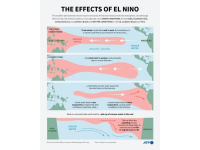
The effects of El Nino. (Nicholas SHEARMAN/AFP)
El Nino is a natural climate phenomenon that warms surface temperatures in the central and eastern equatorial Pacific Ocean, bringing worldwide changes in winds, pressure and rainfall patterns.
It typically takes place every two to seven years and lasts around nine to 12 months.
Conditions oscillate between El Nino and its opposite La Nina, with neutral conditions in between.
The WMO’s monthly Global Seasonal Climate Update points towards “a rapid development into a strong El Nino event during July-September”.
The UN agency classifies El Nino events as weak, moderate, strong or very strong, meaning it is set to reach the third-highest level out of four.
“El Nino conditions have developed in the tropical Pacific and are forecast to strengthen rapidly over the coming months, increasing the likelihood of… extreme weather events in many parts of the world,” the WMO said.
– Heatwave risks –
The Geneva-based agency said that forecasts produced by leading global climate centres, using different models, indicate a consistent and significant warming of ocean temperatures across the central and eastern equatorial Pacific.
The World Meteorological Organization has its headquarters in Geneva, Switzerland. (Fabrice COFFRINI/AFP)
“Seasonal-average sea-surface temperature anomalies expected to exceed 2C in key monitoring regions,” it said.
The models show “remarkable agreement, providing high confidence in the outlook”, the WMO said.
“El Nino is expected to continue strengthening during the Northern Hemisphere autumn, with its influence extending across many regions of the globe.
“Meanwhile, the equatorial Atlantic basin is expected to remain generally warmer than average.”
The last El Nino contributed to making 2023 the second-hottest year on record and 2024 the all-time high at around 1.55C above the 1850-1900 pre-industrial average.
While El Nino usually peaks between November and February, the resulting spike in temperatures typically comes later down the line.
“El Nino conditions are already under way and are forecast to strengthen rapidly into a strong event,” said WMO chief Celeste Saulo.
WMO climate prediction chief Wilfran Moufouma Okia said temperatures typically spike up to 12 months after an El Nino event. (Fabrice COFFRINI/AFP)
“This will intensify the chances of drought and heavy rainfall and the risk of heatwaves on land and marine heatwaves in many regions.”
The WMO said it was stepping up early warning support to help guide preparedness, especially in climate-sensitive sectors like agriculture and health.
“Advanced seasonal forecasts and early warnings are vital to save lives and cushion the impact on our economies and our communities,” said Saulo.
– Temperature impact –
The update predicts an overwhelming likelihood of above-average temperatures across most land areas between 60 degrees south and 60 degrees north — covering nearly all populated areas outside the polar regions.
And the July to September rainfall outlook is consistent with a strengthening El Nino, with above-normal rainfall forecast in some areas such as portions of the southwestern United States, and below normal forecast across the Indian subcontinent and much of Australia.
Tegucigalpa, the capital of Honduras, and its surrounding areas have already faced a severe drought. (JOHNY MAGALLANES/AFP)
The WMO says there is no evidence that climate change increases the frequency or intensity of El Nino events.
However, the agency believes it can amplify the associated effects, because a warmer ocean and atmosphere increase the availability of energy and moisture for extreme weather events, such as heatwaves and heavy rainfall.
During the northern hemisphere summer, warm waters associated with El Nino can fuel hurricanes in the central and eastern Pacific, while hindering their development in the Atlantic Ocean.
 torontosun.com
The World Meteorological Organization said El Nino had already set in, and would quickly gain strength, as it warned countries to brace for impact.
Author of the article:AFP
AFP
by Robin MILLARD
Published Jul 03, 2026 • Last updated 17 hours ago • 3 minute read
El Nino warms surface temperatures in the central and eastern equatorial Pacific Ocean.
El Nino warms surface temperatures in the central and eastern equatorial Pacific Ocean. Photo by MARTIN BERNETTI /AFP
Geneva (AFP) — El Nino will quickly develop into a strong event between July and September, fuelling the likelihood of extreme weather, the United Nations’ weather and climate agency warned Friday.
The World Meteorological Organization said El Nino had already set in, and would quickly gain strength, as it warned countries to brace for impact.
The effects of El Nino. (Nicholas SHEARMAN/AFP)
El Nino is a natural climate phenomenon that warms surface temperatures in the central and eastern equatorial Pacific Ocean, bringing worldwide changes in winds, pressure and rainfall patterns.
It typically takes place every two to seven years and lasts around nine to 12 months.
Conditions oscillate between El Nino and its opposite La Nina, with neutral conditions in between.
The WMO’s monthly Global Seasonal Climate Update points towards “a rapid development into a strong El Nino event during July-September”.
The UN agency classifies El Nino events as weak, moderate, strong or very strong, meaning it is set to reach the third-highest level out of four.
“El Nino conditions have developed in the tropical Pacific and are forecast to strengthen rapidly over the coming months, increasing the likelihood of… extreme weather events in many parts of the world,” the WMO said.
– Heatwave risks –
The Geneva-based agency said that forecasts produced by leading global climate centres, using different models, indicate a consistent and significant warming of ocean temperatures across the central and eastern equatorial Pacific.
The World Meteorological Organization has its headquarters in Geneva, Switzerland. (Fabrice COFFRINI/AFP)
“Seasonal-average sea-surface temperature anomalies expected to exceed 2C in key monitoring regions,” it said.
The models show “remarkable agreement, providing high confidence in the outlook”, the WMO said.
“El Nino is expected to continue strengthening during the Northern Hemisphere autumn, with its influence extending across many regions of the globe.
“Meanwhile, the equatorial Atlantic basin is expected to remain generally warmer than average.”
The last El Nino contributed to making 2023 the second-hottest year on record and 2024 the all-time high at around 1.55C above the 1850-1900 pre-industrial average.
While El Nino usually peaks between November and February, the resulting spike in temperatures typically comes later down the line.
“El Nino conditions are already under way and are forecast to strengthen rapidly into a strong event,” said WMO chief Celeste Saulo.
WMO climate prediction chief Wilfran Moufouma Okia said temperatures typically spike up to 12 months after an El Nino event. (Fabrice COFFRINI/AFP)
“This will intensify the chances of drought and heavy rainfall and the risk of heatwaves on land and marine heatwaves in many regions.”
The WMO said it was stepping up early warning support to help guide preparedness, especially in climate-sensitive sectors like agriculture and health.
“Advanced seasonal forecasts and early warnings are vital to save lives and cushion the impact on our economies and our communities,” said Saulo.
– Temperature impact –
The update predicts an overwhelming likelihood of above-average temperatures across most land areas between 60 degrees south and 60 degrees north — covering nearly all populated areas outside the polar regions.
And the July to September rainfall outlook is consistent with a strengthening El Nino, with above-normal rainfall forecast in some areas such as portions of the southwestern United States, and below normal forecast across the Indian subcontinent and much of Australia.
Tegucigalpa, the capital of Honduras, and its surrounding areas have already faced a severe drought. (JOHNY MAGALLANES/AFP)
The WMO says there is no evidence that climate change increases the frequency or intensity of El Nino events.
However, the agency believes it can amplify the associated effects, because a warmer ocean and atmosphere increase the availability of energy and moisture for extreme weather events, such as heatwaves and heavy rainfall.
During the northern hemisphere summer, warm waters associated with El Nino can fuel hurricanes in the central and eastern Pacific, while hindering their development in the Atlantic Ocean.
El Nino set to be strong, UN warns
El Nino will quickly develop into a strong event between July and September, fuelling the likelihood of extreme weather.
Gotta love that. Make a computer model that backs your predictions.The models show “remarkable agreement, providing high confidence in the outlook”, the WMO said.
Canadian women more concerned about climate change than men, new study says
Statistics Canada says women and university graduates are more likely to believe climate change will affect future generations
Author of the article:Gordon Anderson
Published Jul 09, 2026 • Last updated 12 hours ago • 3 minute read
climate
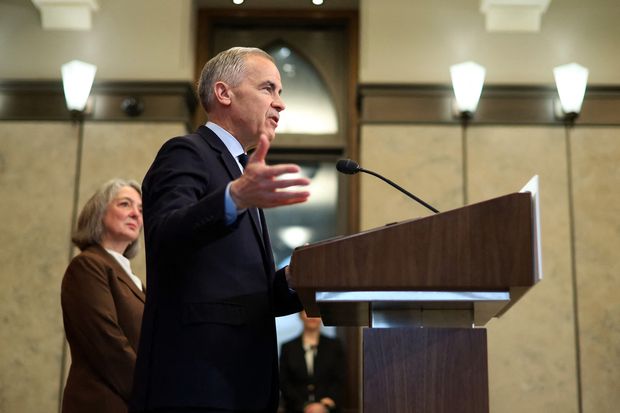
Canadian Prime Minister Mark Carney, alongside Minister of the Environment, Climate Change and Nature Julie Aviva Dabrusin (L), speaks during a news conference on Parliament Hill in Ottawa, Canada, on May 14, 2026. Carney announced a new agenda on clean energy initiatives. Photo by (Photo by Dave Chan / AFP via Getty Images)
Urban women, and women in general, are most likely to worry about climate change than any other segment of the Canadian public.
“Women were more likely to think that climate change would affect any of the multiple-choice categories than men,” a new Statistics Canada report said. “This result is consistent with other research on gender differences, which has found that women are slightly but consistently more likely than men to report belief in and concern about climate change.”
The reports says that 53% of Canadians are “very” or “extremely” concerned about climate change, with 59% of Canadians aged 64 and older and 59% of woman reporting higher levels of “concern than their counterparts.”
Titled Insights on Canadian Society: Feeling the heat: More than half of Canadians are highly concerned about climate change, the study was released on July 8.
Albertans were the least likely to believe future generations would be affected by climate change, with 75% saying they would be affected, while more than 85% of people in Newfoundland and Labrador, Nova Scotia, and Quebec said climate change would affect future generations.
Beginning of a mass extinction
Yet the report found that seniors worry more about climate change than younger demographics, despite doomsday predictions from then-teenage activist Greta Thunberg, who at the 2019 U.N. Climate Action Summit stated, “You have stolen my dreams and my childhood with your empty words. And yet I’m one of the lucky ones. People are suffering. People are dying. Entire ecosystems are collapsing. We are in the beginning of a mass extinction, and all you can talk about is money and fairy tales of eternal economic growth. How dare you!”
“Despite assumptions that climate change has stronger psychosocial effects on youth, seniors were the most likely age group to report high levels of concern about climate change in Canada,” wrote analysts. Rates were highest among retirees in British Columbia, Ontario, Nova Scotia and Prince Edward Island.
When considering the effects of climate change, university graduates and urban residents were more likely to believe that climate change would have an effect.
“Education continued to have a strong association with the belief that climate change would affect future generations of people, with 85% of university graduates selecting this response, compared with 78% of people without a high school diploma,” the release said.
According to the report, climate change also has greater mental health impacts on women than men, with some respondents reporting symptoms of post-traumatic stress disorder.
“Climate-related hazards in Canada and abroad can have a mental health impact, with some people experiencing symptoms of post-traumatic stress disorder, depression or anxiety related to ecological disasters and climate change,” the report noted. “Regardless of educational attainment, women aged 25 to 34 were more likely to report at least monthly stress about climate change than boys and men.”
Levels of distrust
There is also a level of distrust among Canadians who expressed skepticism about the government’s climate agenda and the legacy media’s reporting on it.
“This response may indicate some skepticism about the existence of climate change,” wrote analysts.
Overall, 53% of Canadians reported being concerned about climate change, while another 31% reported being somewhat concerned. Conversely, 16% said they were not concerned about climate change
“The findings revealed that women and university graduates were more likely to believe climate change would affect various groups of people, as well as plants or animals, and to express high levels of concern about climate change,” the report said. “Despite assumptions that climate change has stronger psychosocial effects on youth, seniors were the most likely age group to report high levels of concern about climate change in Canada.”
ganderson@postmedia.com
 torontosun.com
Statistics Canada says women and university graduates are more likely to believe climate change will affect future generations
Author of the article:Gordon Anderson
Published Jul 09, 2026 • Last updated 12 hours ago • 3 minute read
climate
Canadian Prime Minister Mark Carney, alongside Minister of the Environment, Climate Change and Nature Julie Aviva Dabrusin (L), speaks during a news conference on Parliament Hill in Ottawa, Canada, on May 14, 2026. Carney announced a new agenda on clean energy initiatives. Photo by (Photo by Dave Chan / AFP via Getty Images)
Urban women, and women in general, are most likely to worry about climate change than any other segment of the Canadian public.
“Women were more likely to think that climate change would affect any of the multiple-choice categories than men,” a new Statistics Canada report said. “This result is consistent with other research on gender differences, which has found that women are slightly but consistently more likely than men to report belief in and concern about climate change.”
The reports says that 53% of Canadians are “very” or “extremely” concerned about climate change, with 59% of Canadians aged 64 and older and 59% of woman reporting higher levels of “concern than their counterparts.”
Titled Insights on Canadian Society: Feeling the heat: More than half of Canadians are highly concerned about climate change, the study was released on July 8.
Albertans were the least likely to believe future generations would be affected by climate change, with 75% saying they would be affected, while more than 85% of people in Newfoundland and Labrador, Nova Scotia, and Quebec said climate change would affect future generations.
Beginning of a mass extinction
Yet the report found that seniors worry more about climate change than younger demographics, despite doomsday predictions from then-teenage activist Greta Thunberg, who at the 2019 U.N. Climate Action Summit stated, “You have stolen my dreams and my childhood with your empty words. And yet I’m one of the lucky ones. People are suffering. People are dying. Entire ecosystems are collapsing. We are in the beginning of a mass extinction, and all you can talk about is money and fairy tales of eternal economic growth. How dare you!”
“Despite assumptions that climate change has stronger psychosocial effects on youth, seniors were the most likely age group to report high levels of concern about climate change in Canada,” wrote analysts. Rates were highest among retirees in British Columbia, Ontario, Nova Scotia and Prince Edward Island.
When considering the effects of climate change, university graduates and urban residents were more likely to believe that climate change would have an effect.
“Education continued to have a strong association with the belief that climate change would affect future generations of people, with 85% of university graduates selecting this response, compared with 78% of people without a high school diploma,” the release said.
According to the report, climate change also has greater mental health impacts on women than men, with some respondents reporting symptoms of post-traumatic stress disorder.
“Climate-related hazards in Canada and abroad can have a mental health impact, with some people experiencing symptoms of post-traumatic stress disorder, depression or anxiety related to ecological disasters and climate change,” the report noted. “Regardless of educational attainment, women aged 25 to 34 were more likely to report at least monthly stress about climate change than boys and men.”
Levels of distrust
There is also a level of distrust among Canadians who expressed skepticism about the government’s climate agenda and the legacy media’s reporting on it.
“This response may indicate some skepticism about the existence of climate change,” wrote analysts.
Overall, 53% of Canadians reported being concerned about climate change, while another 31% reported being somewhat concerned. Conversely, 16% said they were not concerned about climate change
“The findings revealed that women and university graduates were more likely to believe climate change would affect various groups of people, as well as plants or animals, and to express high levels of concern about climate change,” the report said. “Despite assumptions that climate change has stronger psychosocial effects on youth, seniors were the most likely age group to report high levels of concern about climate change in Canada.”
ganderson@postmedia.com
Canadian women more concerned about climate change than men, new study says
Women were more likely to think that climate change would affect any of the multiple-choice categories than men. Read more.
If you had gone to university you would have been ordered to change your thinking.I'm a woman & I've always known that climate always changes. Aren't I brilliant?
11 dead, 19 missing as wildfire roars through southern Spain
Bedar is popular with foreign residents and tourists seeking a quieter alternative to the nearby beach resorts.
Author of the article:AFP
AFP
Jose Jordan with Daniel Silva in Madrid
Published Jul 10, 2026 • 3 minute read
A helicopter dropped water on the wildfire in Almeria province.
A helicopter dropped water on the wildfire in Almeria province. Photo by JOSE JORDAN /AFP
Bédar (Spain) (AFP) — Eleven people were killed including four suspected to be British, and 19 were missing after a wildfire tore through a rugged area of southern Spain, authorities said Friday.
Authorities said many of the victims may be foreign tourists visiting Bedar, a small whitewashed village in Los Gallardos district, but that they were still confirming their identities.
They described victims trying to flee the fast-moving blaze through difficult, forested terrain, in one of Spain’s deadliest wildfires in recent years.
Located about 15 kilometres (nine miles) from Spain’s Mediterranean coast, Bedar is popular with foreign residents and tourists seeking a quieter alternative to the nearby beach resorts.
Authorities said the fire had killed 11 people. (Handout/INFOCA/AFP)
The head of the regional government of Andalusia, Juan Manuel Moreno Bonilla, said four of the people who died were travelling in a right-hand drive car.
“They appear to have been British nationals and were burned to death inside the car,” he told Spanish radio, adding at least 19 people were still unaccounted for.
Bedar mayor Angel Francisco Collado said he urged some residents to flee their homes, “even those who did not want to leave”.
However seven people died while trying to escape on foot and two others were taken to hospital, he added.
Scientists agree that climate change caused by humans burning fossil fuels is making extreme weather events such as heatwaves more likely and more intense.
– Winds fan flames –
About 500 firefighters and troops battled the inferno northeast of Almeria in the southern Andalusia region which witnesses said may have been started by a power line that fell and set scrub land on fire.
It erupted as temperatures across heat-battered Spain and France were predicted to hit 40C on Friday, with forest fires blazing in both countries.
“At the moment, we have confirmed that 11 people have lost their lives in the Los Gallardos fire; there are no words for such grief,” Antonio Sanz, the Andalusia region’s minister for emergencies, said in a video posted on X.
Article contentThe fire struck on rough terrain that is hard to access. (JOSE JORDAN/AFP)
“Everything indicates that the deceased are, mostly or entirely, foreign nationals,” Sanz added, with authorities still confirming their identities.
He described the fire as a “very complex, very fast-moving” outbreak in a region with many ravines where it is difficult to use heavy machines and homes in forested areas.
Strong winds helped spread the blaze overnight but had calmed in the morning although forecasters predict they will pick up and change direction later in the day, Sanz said.
The Andalusia regional government said emergency services were submerged by more than 150 calls from people reporting the fire and that flames could be seen on a main highway passing near the village.
Sanz also said eight people had been injured, four seriously, and that about 3,150 hectares (7,780 acres) of forest and farmland had been scorched.
Around 800 people were evacuated, including nearly 200 who being accommodated in shelters, he added.
– ‘Deeply saddened’ –
Witnesses told authorities the blaze may have started after a power line fell, igniting dry vegetation before spreading rapidly through surrounding woodland, the regional government said.
Authorities have not confirmed the cause of the fire.
Roads were closed and residents evacuated as the inferno spread, with about 150 people housed in a cultural centre.
Spain’s Military Emergency Unit (UME) was sent to join the firefighters.
Prime Minister Pedro Sánchez wrote on X that he was “deeply saddened and devastated by the terrible consequences of the wildfire”.
He said in May that Spain would deploy its largest-ever summer wildfire response this year.
Spain is sweltering in a heatwave, with scorching temperatures triggering orange weather warnings – the second highest level — across parts of Andalusia in recent days.
Spain has experienced increasingly frequent and prolonged heatwaves in recent years, with temperatures often exceeding 40C, fuelling conditions for major wildfires.
Deadly wildfires devoured almost 400,000 hectares (one million acres) of land in Spain last year, the highest figure recorded for the country by the European Forest Fire Information System.
 torontosun.com
Bedar is popular with foreign residents and tourists seeking a quieter alternative to the nearby beach resorts.
Author of the article:AFP
AFP
Jose Jordan with Daniel Silva in Madrid
Published Jul 10, 2026 • 3 minute read
A helicopter dropped water on the wildfire in Almeria province.
A helicopter dropped water on the wildfire in Almeria province. Photo by JOSE JORDAN /AFP
Bédar (Spain) (AFP) — Eleven people were killed including four suspected to be British, and 19 were missing after a wildfire tore through a rugged area of southern Spain, authorities said Friday.
Authorities said many of the victims may be foreign tourists visiting Bedar, a small whitewashed village in Los Gallardos district, but that they were still confirming their identities.
They described victims trying to flee the fast-moving blaze through difficult, forested terrain, in one of Spain’s deadliest wildfires in recent years.
Located about 15 kilometres (nine miles) from Spain’s Mediterranean coast, Bedar is popular with foreign residents and tourists seeking a quieter alternative to the nearby beach resorts.
Authorities said the fire had killed 11 people. (Handout/INFOCA/AFP)
The head of the regional government of Andalusia, Juan Manuel Moreno Bonilla, said four of the people who died were travelling in a right-hand drive car.
“They appear to have been British nationals and were burned to death inside the car,” he told Spanish radio, adding at least 19 people were still unaccounted for.
Bedar mayor Angel Francisco Collado said he urged some residents to flee their homes, “even those who did not want to leave”.
However seven people died while trying to escape on foot and two others were taken to hospital, he added.
Scientists agree that climate change caused by humans burning fossil fuels is making extreme weather events such as heatwaves more likely and more intense.
– Winds fan flames –
About 500 firefighters and troops battled the inferno northeast of Almeria in the southern Andalusia region which witnesses said may have been started by a power line that fell and set scrub land on fire.
It erupted as temperatures across heat-battered Spain and France were predicted to hit 40C on Friday, with forest fires blazing in both countries.
“At the moment, we have confirmed that 11 people have lost their lives in the Los Gallardos fire; there are no words for such grief,” Antonio Sanz, the Andalusia region’s minister for emergencies, said in a video posted on X.
Article contentThe fire struck on rough terrain that is hard to access. (JOSE JORDAN/AFP)
“Everything indicates that the deceased are, mostly or entirely, foreign nationals,” Sanz added, with authorities still confirming their identities.
He described the fire as a “very complex, very fast-moving” outbreak in a region with many ravines where it is difficult to use heavy machines and homes in forested areas.
Strong winds helped spread the blaze overnight but had calmed in the morning although forecasters predict they will pick up and change direction later in the day, Sanz said.
The Andalusia regional government said emergency services were submerged by more than 150 calls from people reporting the fire and that flames could be seen on a main highway passing near the village.
Sanz also said eight people had been injured, four seriously, and that about 3,150 hectares (7,780 acres) of forest and farmland had been scorched.
Around 800 people were evacuated, including nearly 200 who being accommodated in shelters, he added.
– ‘Deeply saddened’ –
Witnesses told authorities the blaze may have started after a power line fell, igniting dry vegetation before spreading rapidly through surrounding woodland, the regional government said.
Authorities have not confirmed the cause of the fire.
Roads were closed and residents evacuated as the inferno spread, with about 150 people housed in a cultural centre.
Spain’s Military Emergency Unit (UME) was sent to join the firefighters.
Prime Minister Pedro Sánchez wrote on X that he was “deeply saddened and devastated by the terrible consequences of the wildfire”.
He said in May that Spain would deploy its largest-ever summer wildfire response this year.
Spain is sweltering in a heatwave, with scorching temperatures triggering orange weather warnings – the second highest level — across parts of Andalusia in recent days.
Spain has experienced increasingly frequent and prolonged heatwaves in recent years, with temperatures often exceeding 40C, fuelling conditions for major wildfires.
Deadly wildfires devoured almost 400,000 hectares (one million acres) of land in Spain last year, the highest figure recorded for the country by the European Forest Fire Information System.
11 dead, 19 missing as wildfire roars through southern Spain
Eleven people were killed and 19 were missing after a wildfire tore through a rugged area of southern Spain.
Firefighters gain upper hand on deadly Spain wildfire
Survivors described 'horrific' and terrifying moments as they escaped the flames
Author of the article:AFP
AFP
Alfons Luna
Published Jul 11, 2026 • 3 minute read
The flames raged through the brush near the village.
The flames raged through the brush near the village. Photo by JOSE JORDAN /AFP
LOS GALLARDOS, Spain — Firefighters aided by better weather on Saturday gained the upper hand on one of Spain’s deadliest wildfires as survivors described “horrific” and terrifying moments as they escaped the flames.
Around 500 firefighters backed by over 20 water-dropping aircraft were battling the blaze which erupted Thursday in the Gallardos area of the southern region of Andalusia, home to many foreign residents.
“We were absolutely terrified. We could see the flames. It was horrific,” Manoli Ramos, 72, a councillor in the small whitewashed village of Bedar where the victims were found, told AFP.
She recalled another major wildfire in 2012 when residents had been able to return home the following day, saying: “This time it was like hell.”
Officials said the 12 people who died were of different nationalities who had been trapped in vehicles and as they tried to flee on foot.
Austin Crilly, an 87-year-old British resident evacuated by police from the wildfire zone, told AFP he was watching television when he “saw a huge black cloud, well I thought it was a cloud.”
“I thought, ‘My God, I will shut the door’. Then, five minutes later, there was banging at the door. They said, ‘Take your money, take your cards and get out’,” he said.
Officials said some of those who died had not followed orders to evacuate or to shelter in place once the flames got too close.
Twelve people died in the blaze, which spread rapidly across parched woodland and scrub. (JOSE JORDAN/AFP)
Twelve people died in the blaze, which spread rapidly across parched woodland and scrub. (JOSE JORDAN/AFP) Photo by JOSE JORDAN /AFP
‘Best news’
The fast-moving fire — one of the deadliest in Spain’s recent history — showed signs of easing Saturday, allowing firefighters to directly attack the flames for the first time, officials said.
“The overnight evolution has been favourable and the weather conditions allow us to face the day with better prospects than yesterday,” Antonio Sanz, the Andalusian regional government’s emergency chief, told reporters.
“For the first time we will be able to carry out a direct attack on the fire. Until now, both the weather conditions and the nature of the blaze only allowed us to work defensively,” he added.
Strong winds that had fuelled the fire had eased, humidity levels had risen and temperatures had fallen, Sanz said.
The blaze has so far burned around 6,600 hectares (16,300 acres) in an area of steep ravines that is hard for vehicles to reach, he said.
There was no immediate confirmation of the identities of the 12 who died but the authorities said many of the victims may be foreigners who were in Bedar.
“It wasn’t good. Not good at all. I’d never seen anything like it. You see things like that in films, but never in real life,” said Martin Smith, 63, a British tourist who was evacuated with his wife, Elizabeth, 65, from the campsite where they were on holiday.
Sanz said there had been no reports of additional deaths overnight, describing that as “the best news we could have.”
Missing people
He said Spain’s Civil Guard police had searched the affected areas without finding any further victims, although he cautioned that the search was continuing.
“That does not mean it cannot happen, but after the Civil Guard swept the area, including locations that were still hotspots, it gives us hope,” he said.
Sanz said references to 23 missing people were misleading, explaining that the figure referred to people whose relatives had been unable to contact them and who could have reached evacuation centres or other safe locations.
He said seven formal missing persons reports had been filed.
However, officials said they could not establish a definitive toll until autopsies had been completed and the bodies recovered from the fire had been formally identified.
The authorities suspect the wildfire began when a power line broke as Spain sweltered in extreme heat, exceeding 40C in recent weeks, creating tinderbox conditions.
Scientists agree that human-driven climate change is making extreme weather events such as heatwaves more likely and more intense.
 torontosun.com
Survivors described 'horrific' and terrifying moments as they escaped the flames
Author of the article:AFP
AFP
Alfons Luna
Published Jul 11, 2026 • 3 minute read
The flames raged through the brush near the village.
The flames raged through the brush near the village. Photo by JOSE JORDAN /AFP
LOS GALLARDOS, Spain — Firefighters aided by better weather on Saturday gained the upper hand on one of Spain’s deadliest wildfires as survivors described “horrific” and terrifying moments as they escaped the flames.
Around 500 firefighters backed by over 20 water-dropping aircraft were battling the blaze which erupted Thursday in the Gallardos area of the southern region of Andalusia, home to many foreign residents.
“We were absolutely terrified. We could see the flames. It was horrific,” Manoli Ramos, 72, a councillor in the small whitewashed village of Bedar where the victims were found, told AFP.
She recalled another major wildfire in 2012 when residents had been able to return home the following day, saying: “This time it was like hell.”
Officials said the 12 people who died were of different nationalities who had been trapped in vehicles and as they tried to flee on foot.
Austin Crilly, an 87-year-old British resident evacuated by police from the wildfire zone, told AFP he was watching television when he “saw a huge black cloud, well I thought it was a cloud.”
“I thought, ‘My God, I will shut the door’. Then, five minutes later, there was banging at the door. They said, ‘Take your money, take your cards and get out’,” he said.
Officials said some of those who died had not followed orders to evacuate or to shelter in place once the flames got too close.
Twelve people died in the blaze, which spread rapidly across parched woodland and scrub. (JOSE JORDAN/AFP)
Twelve people died in the blaze, which spread rapidly across parched woodland and scrub. (JOSE JORDAN/AFP) Photo by JOSE JORDAN /AFP
‘Best news’
The fast-moving fire — one of the deadliest in Spain’s recent history — showed signs of easing Saturday, allowing firefighters to directly attack the flames for the first time, officials said.
“The overnight evolution has been favourable and the weather conditions allow us to face the day with better prospects than yesterday,” Antonio Sanz, the Andalusian regional government’s emergency chief, told reporters.
“For the first time we will be able to carry out a direct attack on the fire. Until now, both the weather conditions and the nature of the blaze only allowed us to work defensively,” he added.
Strong winds that had fuelled the fire had eased, humidity levels had risen and temperatures had fallen, Sanz said.
The blaze has so far burned around 6,600 hectares (16,300 acres) in an area of steep ravines that is hard for vehicles to reach, he said.
There was no immediate confirmation of the identities of the 12 who died but the authorities said many of the victims may be foreigners who were in Bedar.
“It wasn’t good. Not good at all. I’d never seen anything like it. You see things like that in films, but never in real life,” said Martin Smith, 63, a British tourist who was evacuated with his wife, Elizabeth, 65, from the campsite where they were on holiday.
Sanz said there had been no reports of additional deaths overnight, describing that as “the best news we could have.”
Missing people
He said Spain’s Civil Guard police had searched the affected areas without finding any further victims, although he cautioned that the search was continuing.
“That does not mean it cannot happen, but after the Civil Guard swept the area, including locations that were still hotspots, it gives us hope,” he said.
Sanz said references to 23 missing people were misleading, explaining that the figure referred to people whose relatives had been unable to contact them and who could have reached evacuation centres or other safe locations.
He said seven formal missing persons reports had been filed.
However, officials said they could not establish a definitive toll until autopsies had been completed and the bodies recovered from the fire had been formally identified.
The authorities suspect the wildfire began when a power line broke as Spain sweltered in extreme heat, exceeding 40C in recent weeks, creating tinderbox conditions.
Scientists agree that human-driven climate change is making extreme weather events such as heatwaves more likely and more intense.
Firefighters gain upper hand on deadly Spain wildfire
Firefighters aided by better weather on Saturday gained the upper hand on one of Spain's deadliest wildfires.
Paris landmarks shutter early as quarter of France swelters under heatwave
Eiffel Tower and museums announced shorter hours due to high temperatures
Author of the article:AFP
AFP
Published Jul 11, 2026 • 2 minute read
The operator of the Eiffel Tower said the monument would close early "due to the high temperatures forecast."
The operator of the Eiffel Tower said the monument would close early "due to the high temperatures forecast." Photo by Behrouz Mehri /AFP
PARIS — The Eiffel Tower and other Paris landmarks announced early closures over the weekend as a quarter of mainland France was under the highest heat alert level on Saturday in the third heatwave to hit the country since May.
The operator of the Eiffel Tower said the latticed-steel monument would “exceptionally close” early on Saturday and Sunday at 4 p.m., “due to the high temperatures forecast.”
The 324-metre (1,063-foot) tower, which attracts seven million tourists a year, usually stays open past midnight during the high season.
Two of the French capital’s most famous museums, the Louvre and the Musee d’Orsay, have taken similar measures.
The Louvre, the most visited museum in the world, said on Thursday it would close at 4 p.m. from Friday through to Monday.
The Musee D’Orsay announced it would also close early, “due to the extreme heat” at 5 p.m. from Saturday to Wednesday.
Twenty-four departments, home to 22.2 million people according to an AFP calculation, were under the maximum alert level issued by the national weather service Meteo-France on Saturday.
Another 59 departments of 96 in mainland France were under an orange heat warning, a step below the highest, as people flooded trains and highways at the start of a holiday weekend ahead of France’s national public holiday on July 14.
Across France, many towns have called off their firework displays for Bastille Day due to increased fires and dry conditions.
Wildfires have scorched twice as much land in France so far this year as in the same period last year, an official said on Friday.
French President Emmanuel Macron called for vigilance on Saturday, warning nine out of 10 fires are due to human activity.
“A single second of inattention can put families at risk, endanger those who protect us and destroy our countryside,” he wrote on X.
The European nation is facing its third heatwave since May, with a heatwave in June shattering records.
The country recorded more than 2,000 excess deaths during the June heatwave, and 300 during the high temperatures in late May, according to official figures.
The government has faced a barrage of criticism, accused of being “unprepared” for the extreme weather, the increasing frequency of which scientists have linked to man-made climate change.
High temperatures are expected to continue until Bastille Day on Tuesday, according to Meteo-France.
 torontosun.com
Eiffel Tower and museums announced shorter hours due to high temperatures
Author of the article:AFP
AFP
Published Jul 11, 2026 • 2 minute read
The operator of the Eiffel Tower said the monument would close early "due to the high temperatures forecast."
The operator of the Eiffel Tower said the monument would close early "due to the high temperatures forecast." Photo by Behrouz Mehri /AFP
PARIS — The Eiffel Tower and other Paris landmarks announced early closures over the weekend as a quarter of mainland France was under the highest heat alert level on Saturday in the third heatwave to hit the country since May.
The operator of the Eiffel Tower said the latticed-steel monument would “exceptionally close” early on Saturday and Sunday at 4 p.m., “due to the high temperatures forecast.”
The 324-metre (1,063-foot) tower, which attracts seven million tourists a year, usually stays open past midnight during the high season.
Two of the French capital’s most famous museums, the Louvre and the Musee d’Orsay, have taken similar measures.
The Louvre, the most visited museum in the world, said on Thursday it would close at 4 p.m. from Friday through to Monday.
The Musee D’Orsay announced it would also close early, “due to the extreme heat” at 5 p.m. from Saturday to Wednesday.
Twenty-four departments, home to 22.2 million people according to an AFP calculation, were under the maximum alert level issued by the national weather service Meteo-France on Saturday.
Another 59 departments of 96 in mainland France were under an orange heat warning, a step below the highest, as people flooded trains and highways at the start of a holiday weekend ahead of France’s national public holiday on July 14.
Across France, many towns have called off their firework displays for Bastille Day due to increased fires and dry conditions.
Wildfires have scorched twice as much land in France so far this year as in the same period last year, an official said on Friday.
French President Emmanuel Macron called for vigilance on Saturday, warning nine out of 10 fires are due to human activity.
“A single second of inattention can put families at risk, endanger those who protect us and destroy our countryside,” he wrote on X.
The European nation is facing its third heatwave since May, with a heatwave in June shattering records.
The country recorded more than 2,000 excess deaths during the June heatwave, and 300 during the high temperatures in late May, according to official figures.
The government has faced a barrage of criticism, accused of being “unprepared” for the extreme weather, the increasing frequency of which scientists have linked to man-made climate change.
High temperatures are expected to continue until Bastille Day on Tuesday, according to Meteo-France.
Paris landmarks shutter early as quarter of France swelters under heatwave
The Eiffel Tower and other Paris landmarks announced early closures over the weekend as a quarter of mainland France was under the highest heat alert level on Saturday.
El Niño has arrived and it is ‘no joke’
The United Nations’ weather and climate agency warned countries to brace for impact, and now’s about that time to prepare to buckle up
Author of the articleenette Wilford
Published Jul 17, 2026 • Last updated 1 day ago • 4 minute read
Man looks out toward the ocean during a tropical storm watch warning
"I ain’t never seen anything like this before," says Keith Bruitt as he looks out toward the ocean during a tropical storm watch warning on June 17, 2026 in Galveston, Texas. Photo by Brandon Bell /Getty Images
El Niño was predicted to quickly develop into a strong event between July and September and kick up some extreme weather — and it didn’t disappoint.
At the time, the World Meteorological Organization said El Nino had already set in, and would quickly gain strength.
The United Nations’ weather and climate agency warned countries to brace for impact, and now’s about that time to prepare to buckle up.
What can we expect?
The WMO’s monthly Global Seasonal Climate Update classifies El Niño events as weak, moderate, strong or very strong — meaning it is set to reach the third-highest level out of four.
“El Niño conditions have developed in the tropical Pacific and are forecast to strengthen rapidly over the coming months, increasing the likelihood of… extreme weather events in many parts of the world,” the agency said at the time.
In its monthly update, the U.S. Climate Prediction Center (CPC) pulled no punches about the rapidly strengthening El Niño across the eastern Pacific Ocean, noting water temperature anomalies in a key region around the equator are already running more than 1.0 C above average, with no signs of the warming pattern slowing down.
An ongoing event “would rank among the largest El Niño events in the historical record going back to 1950” as this trend continues, the CPC noted.
Forecasters anticipate that ocean temperatures in this region will continue to warm through the end of the year, and we have a 97% chance of a strong El Nino through at least next spring.
The U.S. National Oceanic and Atmospheric Administration (NOAA) concurred in its monthly update in June, issuing an El Niño advisory and confirming that warmer conditions had developed in the specific part of the Pacific Ocean known as Niño 3.4 — making the temperatures in the region the warmest on record than ever before at this time of year.
“In the sort of traditional Niño 3.4 region, we’re a bit above 2 C, which is generally seen as the threshold for a very strong or, some people don’t like this term, but a super El Niño,” climate scientist Zeke Hausfather wrote in a Substack post.
“So, effectively, we’re already touching a very strong El Niño conditions, and it’s early July still.”
Despite El Niño conditions rapidly setting in, it will have a significant impact on the Atlantic basin, which could see its quietest hurricane season in years, according to NOAA.
Illustration showing a magnifying glass placed over a map of equatorial Pacific Ocean sea surface temperature anomalies, made in Paris, France, on July 10, 2026.
Illustration showing a magnifying glass placed over a map of equatorial Pacific Ocean sea surface temperature anomalies, made in Paris, France, on July 10, 2026. (Joao Luiz Bulcao/Hans Lucas/AFP/Getty Images) Photo by Joao Luiz Bulcao/Hans Lucas/AFP /Getty Images
Breaking records?
El Niño is a natural climate phenomenon that warms surface temperatures in the central and eastern equatorial Pacific Ocean, bringing global changes in winds, pressure and rainfall patterns.
It typically takes place every two to seven years and lasts around nine to 12 months, with conditions oscillating between El Niño and its cooler opposite, La Niña, with neutral conditions in between.
The peak of the El Nino is currently expected to peak in October, Hausfather noted, though much of the current available models suggest it could be more likely to peak in November or December.
“So we have a long way to go. We’re already brushing super El Niño territory, and we may well be in uncharted waters later this year,” he detailed.
“We might end up breaking the previous El Niño record by a truly mind-blowing margin,” he added.
The strongest El Niño in recent years was in 2015-2016, where the ocean temperature anomaly was roughly 2.75C. There was a comparable one in 1877-1878, climate experts believe.
‘El Niño is no joke’ — namely on food insecurity
Earlier this month, when models showed the potential of an El Nino being as strong as 4 C above average, Hausfather thought that was a mistake, but now, it seems like a real possibility.
“The very fact that models right now are predicting a peak of around 3.6 C when the strongest El Nino in history, including arguably the one in the late 1800s, was only 2.75 C, is kind of mind-boggling,” he said.
Hausfather admitted he is concerned about food security in tropical regions, which are expected to be affected by drought in the coming months.
Canada, meanwhile, will likely see the effects in the winter months, with milder temperatures and drier conditions expected — and could be of greater concern for wildfires to develop in the spring in Western Canada.
“I think we should prepare for some pretty significant impacts,” Hausfather said. “El Niño is no joke, both for agriculture, for the natural world, for ocean ecosystems.”
 repository.library.noaa.gov

 www.theclimatebrink.com
 torontosun.com
The United Nations’ weather and climate agency warned countries to brace for impact, and now’s about that time to prepare to buckle up
Author of the article
enette WilfordPublished Jul 17, 2026 • Last updated 1 day ago • 4 minute read
Man looks out toward the ocean during a tropical storm watch warning
"I ain’t never seen anything like this before," says Keith Bruitt as he looks out toward the ocean during a tropical storm watch warning on June 17, 2026 in Galveston, Texas. Photo by Brandon Bell /Getty Images
El Niño was predicted to quickly develop into a strong event between July and September and kick up some extreme weather — and it didn’t disappoint.
At the time, the World Meteorological Organization said El Nino had already set in, and would quickly gain strength.
The United Nations’ weather and climate agency warned countries to brace for impact, and now’s about that time to prepare to buckle up.
What can we expect?
The WMO’s monthly Global Seasonal Climate Update classifies El Niño events as weak, moderate, strong or very strong — meaning it is set to reach the third-highest level out of four.
“El Niño conditions have developed in the tropical Pacific and are forecast to strengthen rapidly over the coming months, increasing the likelihood of… extreme weather events in many parts of the world,” the agency said at the time.
In its monthly update, the U.S. Climate Prediction Center (CPC) pulled no punches about the rapidly strengthening El Niño across the eastern Pacific Ocean, noting water temperature anomalies in a key region around the equator are already running more than 1.0 C above average, with no signs of the warming pattern slowing down.
An ongoing event “would rank among the largest El Niño events in the historical record going back to 1950” as this trend continues, the CPC noted.
Forecasters anticipate that ocean temperatures in this region will continue to warm through the end of the year, and we have a 97% chance of a strong El Nino through at least next spring.
The U.S. National Oceanic and Atmospheric Administration (NOAA) concurred in its monthly update in June, issuing an El Niño advisory and confirming that warmer conditions had developed in the specific part of the Pacific Ocean known as Niño 3.4 — making the temperatures in the region the warmest on record than ever before at this time of year.
“In the sort of traditional Niño 3.4 region, we’re a bit above 2 C, which is generally seen as the threshold for a very strong or, some people don’t like this term, but a super El Niño,” climate scientist Zeke Hausfather wrote in a Substack post.
“So, effectively, we’re already touching a very strong El Niño conditions, and it’s early July still.”
Despite El Niño conditions rapidly setting in, it will have a significant impact on the Atlantic basin, which could see its quietest hurricane season in years, according to NOAA.
Illustration showing a magnifying glass placed over a map of equatorial Pacific Ocean sea surface temperature anomalies, made in Paris, France, on July 10, 2026.
Illustration showing a magnifying glass placed over a map of equatorial Pacific Ocean sea surface temperature anomalies, made in Paris, France, on July 10, 2026. (Joao Luiz Bulcao/Hans Lucas/AFP/Getty Images) Photo by Joao Luiz Bulcao/Hans Lucas/AFP /Getty Images
Breaking records?
El Niño is a natural climate phenomenon that warms surface temperatures in the central and eastern equatorial Pacific Ocean, bringing global changes in winds, pressure and rainfall patterns.
It typically takes place every two to seven years and lasts around nine to 12 months, with conditions oscillating between El Niño and its cooler opposite, La Niña, with neutral conditions in between.
The peak of the El Nino is currently expected to peak in October, Hausfather noted, though much of the current available models suggest it could be more likely to peak in November or December.
“So we have a long way to go. We’re already brushing super El Niño territory, and we may well be in uncharted waters later this year,” he detailed.
“We might end up breaking the previous El Niño record by a truly mind-blowing margin,” he added.
The strongest El Niño in recent years was in 2015-2016, where the ocean temperature anomaly was roughly 2.75C. There was a comparable one in 1877-1878, climate experts believe.
‘El Niño is no joke’ — namely on food insecurity
Earlier this month, when models showed the potential of an El Nino being as strong as 4 C above average, Hausfather thought that was a mistake, but now, it seems like a real possibility.
“The very fact that models right now are predicting a peak of around 3.6 C when the strongest El Nino in history, including arguably the one in the late 1800s, was only 2.75 C, is kind of mind-boggling,” he said.
Hausfather admitted he is concerned about food security in tropical regions, which are expected to be affected by drought in the coming months.
Canada, meanwhile, will likely see the effects in the winter months, with milder temperatures and drier conditions expected — and could be of greater concern for wildfires to develop in the spring in Western Canada.
“I think we should prepare for some pretty significant impacts,” Hausfather said. “El Niño is no joke, both for agriculture, for the natural world, for ocean ecosystems.”
How Significant Was the 1877/78 El Niño?
Previous research has shown that the 1877/78 El Niño resulted in great famine events around the world. However, the strength and statistical significance of this El Niño event have not been fully addressed, largely due to the lack of data. We take a closer look at the data using an ensemble...
The Strongest El Niño Ever
With all the July runs in, dynamical models give a ~90% chance of a record-setting event
www.theclimatebrink.com
El Niño has arrived and it is ‘no joke’
El Nino was predicted to quickly develop into a strong event between July and September — and it didn’t disappoint. Read on.
Last edited:
Head for the hills .El Niño has arrived and it is ‘no joke’
The United Nations’ weather and climate agency warned countries to brace for impact, and now’s about that time to prepare to buckle up
Author of the article
Published Jul 17, 2026 • Last updated 1 day ago • 4 minute read
Man looks out toward the ocean during a tropical storm watch warning
"I ain’t never seen anything like this before," says Keith Bruitt as he looks out toward the ocean during a tropical storm watch warning on June 17, 2026 in Galveston, Texas. Photo by Brandon Bell /Getty Images
El Niño was predicted to quickly develop into a strong event between July and September and kick up some extreme weather — and it didn’t disappoint.
At the time, the World Meteorological Organization said El Nino had already set in, and would quickly gain strength.
The United Nations’ weather and climate agency warned countries to brace for impact, and now’s about that time to prepare to buckle up.
What can we expect?
The WMO’s monthly Global Seasonal Climate Update classifies El Niño events as weak, moderate, strong or very strong — meaning it is set to reach the third-highest level out of four.
“El Niño conditions have developed in the tropical Pacific and are forecast to strengthen rapidly over the coming months, increasing the likelihood of… extreme weather events in many parts of the world,” the agency said at the time.
In its monthly update, the U.S. Climate Prediction Center (CPC) pulled no punches about the rapidly strengthening El Niño across the eastern Pacific Ocean, noting water temperature anomalies in a key region around the equator are already running more than 1.0 C above average, with no signs of the warming pattern slowing down.
An ongoing event “would rank among the largest El Niño events in the historical record going back to 1950” as this trend continues, the CPC noted.
Forecasters anticipate that ocean temperatures in this region will continue to warm through the end of the year, and we have a 97% chance of a strong El Nino through at least next spring.
The U.S. National Oceanic and Atmospheric Administration (NOAA) concurred in its monthly update in June, issuing an El Niño advisory and confirming that warmer conditions had developed in the specific part of the Pacific Ocean known as Niño 3.4 — making the temperatures in the region the warmest on record than ever before at this time of year.
“In the sort of traditional Niño 3.4 region, we’re a bit above 2 C, which is generally seen as the threshold for a very strong or, some people don’t like this term, but a super El Niño,” climate scientist Zeke Hausfather wrote in a Substack post.
“So, effectively, we’re already touching a very strong El Niño conditions, and it’s early July still.”
Despite El Niño conditions rapidly setting in, it will have a significant impact on the Atlantic basin, which could see its quietest hurricane season in years, according to NOAA.
Illustration showing a magnifying glass placed over a map of equatorial Pacific Ocean sea surface temperature anomalies, made in Paris, France, on July 10, 2026.
Illustration showing a magnifying glass placed over a map of equatorial Pacific Ocean sea surface temperature anomalies, made in Paris, France, on July 10, 2026. (Joao Luiz Bulcao/Hans Lucas/AFP/Getty Images) Photo by Joao Luiz Bulcao/Hans Lucas/AFP /Getty Images
Breaking records?
El Niño is a natural climate phenomenon that warms surface temperatures in the central and eastern equatorial Pacific Ocean, bringing global changes in winds, pressure and rainfall patterns.
It typically takes place every two to seven years and lasts around nine to 12 months, with conditions oscillating between El Niño and its cooler opposite, La Niña, with neutral conditions in between.
The peak of the El Nino is currently expected to peak in October, Hausfather noted, though much of the current available models suggest it could be more likely to peak in November or December.
“So we have a long way to go. We’re already brushing super El Niño territory, and we may well be in uncharted waters later this year,” he detailed.
“We might end up breaking the previous El Niño record by a truly mind-blowing margin,” he added.
The strongest El Niño in recent years was in 2015-2016, where the ocean temperature anomaly was roughly 2.75C. There was a comparable one in 1877-1878, climate experts believe.
‘El Niño is no joke’ — namely on food insecurity
Earlier this month, when models showed the potential of an El Nino being as strong as 4 C above average, Hausfather thought that was a mistake, but now, it seems like a real possibility.
“The very fact that models right now are predicting a peak of around 3.6 C when the strongest El Nino in history, including arguably the one in the late 1800s, was only 2.75 C, is kind of mind-boggling,” he said.
Hausfather admitted he is concerned about food security in tropical regions, which are expected to be affected by drought in the coming months.
Canada, meanwhile, will likely see the effects in the winter months, with milder temperatures and drier conditions expected — and could be of greater concern for wildfires to develop in the spring in Western Canada.
“I think we should prepare for some pretty significant impacts,” Hausfather said. “El Niño is no joke, both for agriculture, for the natural world, for ocean ecosystems.”
How Significant Was the 1877/78 El Niño?
Previous research has shown that the 1877/78 El Niño resulted in great famine events around the world. However, the strength and statistical significance of this El Niño event have not been fully addressed, largely due to the lack of data. We take a closer look at the data using an ensemble...The Strongest El Niño Ever
With all the July runs in, dynamical models give a ~90% chance of a record-setting eventEl Niño has arrived and it is ‘no joke’
El Nino was predicted to quickly develop into a strong event between July and September — and it didn’t disappoint. Read on.

Youre getting rain?One thing for sure, El Nino is certainly putting a damper on the long hot dry summer we were promised.
We've gotten a LOT of rain in Edmonton & I hear that we've gotten more since we've been away on vacation. Oh goody!!Youre getting rain?
We've 1 rain in 2.5 months. In the 20 odd years of living Vancouver over 5 decades I've never seen it this dry. It was fantastic for winter but not so good now.We've gotten a LOT of rain in Edmonton & I hear that we've gotten more since we've been away on vacation. Oh goody!!