


It's Climate Change I tell'ya!! IT'S CLIMATE CHANGE!!
- Thread starter B00Mer
- Start date
You are using an out of date browser. It may not display this or other websites correctly.
You should upgrade or use an alternative browser.
You should upgrade or use an alternative browser.


And looking at all the road construction everywhere I go tells me the asphalt factories are doing just fine .
Indeed.And looking at all the road construction everywhere I go tells me the asphalt factories are doing just fine .

Canada’s costly climate gamble on food needs to end
When climate assumptions change, policy should follow
Author of the article r. Sylvain Charlebois
Published May 11, 2026 • Last updated 13 hours ago • 3 minute read
Unlike many sectors, food has no pause button. Products perish. Refrigeration cannot stop. Trucks must move. Grain must dry. Livestock must eat.
Unlike many sectors, food has no pause button. Products perish. Refrigeration cannot stop. Trucks must move. Grain must dry. Livestock must eat. Photo by Adobe Stock
For years, Canadians were told that catastrophic climate scenarios justified virtually any policy imposed in the name of emissions reductions. In agriculture and food, this translated into mounting costs across the supply chain, escalating industrial carbon pricing, and a policy environment increasingly disconnected from affordability and competitiveness.
Now, quietly, the scientific conversation is evolving.
A recent paper published in Geoscientific Model Development, tied directly to the next generation of UN-backed climate modeling for the IPCC’s upcoming assessment cycle, suggests that some of the most extreme warming scenarios used for years are no longer considered plausible. The infamous SSP5-8.5 pathway, often portrayed publicly as a “business-as-usual” future, assumed an explosion in coal consumption, extraordinarily high fossil fuel dependence, and emissions trajectories that increasingly diverged from economic and technological realities.
In plain English: some of the world’s leading climate scientists are now acknowledging that humanity is unlikely to follow the catastrophic path that dominated climate communication for much of the last decade.
Yet Canadian policy, especially in agri-food, still behaves as though we are one harvest away from Mad Max.
This matters because few sectors absorb policy costs more directly than food.
Even after Ottawa effectively zeroed out the consumer carbon levy on fuels in 2025, the industrial carbon pricing regime remains firmly in place and continues to rise, reaching $110 per tonne this year. These costs ripple through virtually every segment of the food economy: fertilizer production, trucking, warehousing, refrigeration, food processing, packaging, greenhouse operations, grain drying, and cold-chain logistics.
Food systems are extraordinarily energy intensive. Unlike many sectors, food has no pause button. Products perish. Refrigeration cannot stop. Trucks must move. Grain must dry. Livestock must eat.
And while government officials often insist the carbon price has only a “minimal” effect on grocery bills, that argument misses the broader economic picture entirely. The real issue is not simply retail pass-through. It is competitiveness.
Canada’s agri-food sector competes globally. When domestic costs rise faster than those faced by competitors in the United States or elsewhere, investment shifts. Processing capacity weakens. Domestic production becomes less attractive. Imports increase. Over time, consumers pay the price through weaker food sovereignty and higher structural costs.
This is not theoretical anymore.
Canadians are already visiting grocery stores more frequently in search of deals. Restaurant bankruptcies are accelerating. Food affordability remains the number one concern for households according to repeated national surveys conducted by Dalhousie University’s Agri-Food Analytics Lab. Families are adapting, trading down, and increasingly prioritizing price over virtually every other food value.
Meanwhile, policymakers continue layering costs onto the supply chain as though affordability were a secondary concern.
The irony is that the climate science itself is becoming more nuanced while public policy remains rigid.
To be clear, none of this means climate change is fake, harmless, or irrelevant to agriculture. Canadian farmers still face drought risks, floods, extreme weather volatility, and shifting growing conditions. Agriculture has always been vulnerable to nature. It always will be.
But policy should be proportional to realistic risks, not permanently anchored to worst-case scenarios that scientists themselves are now reassessing.
Recalibration required
Canada’s food strategy needs recalibration.
Instead of obsessing over punitive cost mechanisms, Ottawa should focus on resilience and productivity: modernizing transportation infrastructure, investing in irrigation and water systems, accelerating precision agriculture, supporting genetics research, strengthening domestic processing capacity, improving trade logistics, and encouraging technological innovation throughout the food chain.
Innovation reduces emissions. Efficiency reduces waste. Productivity strengthens food security.
Punishing domestic production does not.
The danger now is not climate denial. It is policy inertia.
Governments built much of today’s climate framework around assumptions that are quietly being revised by the scientific community itself. Yet admitting that some assumptions may have been overstated has become politically difficult because too many institutions, activists, and even media organizations spent years presenting worst-case scenarios as inevitabilities rather than possibilities.
The result is a dangerous disconnect between economic reality and policy ambition.
Canada needs climate policy rooted in pragmatism, not ideology. Especially in food.
Because in the end, no country can claim to care about sustainability while simultaneously making food less affordable, weakening domestic production, and eroding its own supply chains.
– Sylvain Charlebois is director of the Agri-Food Analytics Lab at Dalhousie University, co-host of The Food Professor Podcast and visiting scholar at McGill University.

 torontosun.com
When climate assumptions change, policy should follow
Author of the article
r. Sylvain CharleboisPublished May 11, 2026 • Last updated 13 hours ago • 3 minute read
Unlike many sectors, food has no pause button. Products perish. Refrigeration cannot stop. Trucks must move. Grain must dry. Livestock must eat.
Unlike many sectors, food has no pause button. Products perish. Refrigeration cannot stop. Trucks must move. Grain must dry. Livestock must eat. Photo by Adobe Stock
For years, Canadians were told that catastrophic climate scenarios justified virtually any policy imposed in the name of emissions reductions. In agriculture and food, this translated into mounting costs across the supply chain, escalating industrial carbon pricing, and a policy environment increasingly disconnected from affordability and competitiveness.
Now, quietly, the scientific conversation is evolving.
A recent paper published in Geoscientific Model Development, tied directly to the next generation of UN-backed climate modeling for the IPCC’s upcoming assessment cycle, suggests that some of the most extreme warming scenarios used for years are no longer considered plausible. The infamous SSP5-8.5 pathway, often portrayed publicly as a “business-as-usual” future, assumed an explosion in coal consumption, extraordinarily high fossil fuel dependence, and emissions trajectories that increasingly diverged from economic and technological realities.
In plain English: some of the world’s leading climate scientists are now acknowledging that humanity is unlikely to follow the catastrophic path that dominated climate communication for much of the last decade.
Yet Canadian policy, especially in agri-food, still behaves as though we are one harvest away from Mad Max.
This matters because few sectors absorb policy costs more directly than food.
Even after Ottawa effectively zeroed out the consumer carbon levy on fuels in 2025, the industrial carbon pricing regime remains firmly in place and continues to rise, reaching $110 per tonne this year. These costs ripple through virtually every segment of the food economy: fertilizer production, trucking, warehousing, refrigeration, food processing, packaging, greenhouse operations, grain drying, and cold-chain logistics.
Food systems are extraordinarily energy intensive. Unlike many sectors, food has no pause button. Products perish. Refrigeration cannot stop. Trucks must move. Grain must dry. Livestock must eat.
And while government officials often insist the carbon price has only a “minimal” effect on grocery bills, that argument misses the broader economic picture entirely. The real issue is not simply retail pass-through. It is competitiveness.
Canada’s agri-food sector competes globally. When domestic costs rise faster than those faced by competitors in the United States or elsewhere, investment shifts. Processing capacity weakens. Domestic production becomes less attractive. Imports increase. Over time, consumers pay the price through weaker food sovereignty and higher structural costs.
This is not theoretical anymore.
Canadians are already visiting grocery stores more frequently in search of deals. Restaurant bankruptcies are accelerating. Food affordability remains the number one concern for households according to repeated national surveys conducted by Dalhousie University’s Agri-Food Analytics Lab. Families are adapting, trading down, and increasingly prioritizing price over virtually every other food value.
Meanwhile, policymakers continue layering costs onto the supply chain as though affordability were a secondary concern.
The irony is that the climate science itself is becoming more nuanced while public policy remains rigid.
To be clear, none of this means climate change is fake, harmless, or irrelevant to agriculture. Canadian farmers still face drought risks, floods, extreme weather volatility, and shifting growing conditions. Agriculture has always been vulnerable to nature. It always will be.
But policy should be proportional to realistic risks, not permanently anchored to worst-case scenarios that scientists themselves are now reassessing.
Recalibration required
Canada’s food strategy needs recalibration.
Instead of obsessing over punitive cost mechanisms, Ottawa should focus on resilience and productivity: modernizing transportation infrastructure, investing in irrigation and water systems, accelerating precision agriculture, supporting genetics research, strengthening domestic processing capacity, improving trade logistics, and encouraging technological innovation throughout the food chain.
Innovation reduces emissions. Efficiency reduces waste. Productivity strengthens food security.
Punishing domestic production does not.
The danger now is not climate denial. It is policy inertia.
Governments built much of today’s climate framework around assumptions that are quietly being revised by the scientific community itself. Yet admitting that some assumptions may have been overstated has become politically difficult because too many institutions, activists, and even media organizations spent years presenting worst-case scenarios as inevitabilities rather than possibilities.
The result is a dangerous disconnect between economic reality and policy ambition.
Canada needs climate policy rooted in pragmatism, not ideology. Especially in food.
Because in the end, no country can claim to care about sustainability while simultaneously making food less affordable, weakening domestic production, and eroding its own supply chains.
– Sylvain Charlebois is director of the Agri-Food Analytics Lab at Dalhousie University, co-host of The Food Professor Podcast and visiting scholar at McGill University.
CHARLEBOIS: Canada’s costly climate gamble on food needs to end
Canada needs climate policy rooted in pragmatism, not ideology. Especially in food. Find out more.
Maybe on the lower mainland. Not on the island. Nothing being built, nothing being fixed.And looking at all the road construction everywhere I go tells me the asphalt factories are doing just fine .
All the money goes to the lower mainland .Maybe on the lower mainland. Not on the island. Nothing being built, nothing being fixed.
Where all the NDPee votes are.All the money goes to the lower mainland .
Rising water levels will engulf New Orleans, study says
Relocation must start now as water levels rise, experts say
Author of the article:Brian Towie
Published May 25, 2026 • Last updated 14 hours ago • 2 minute read
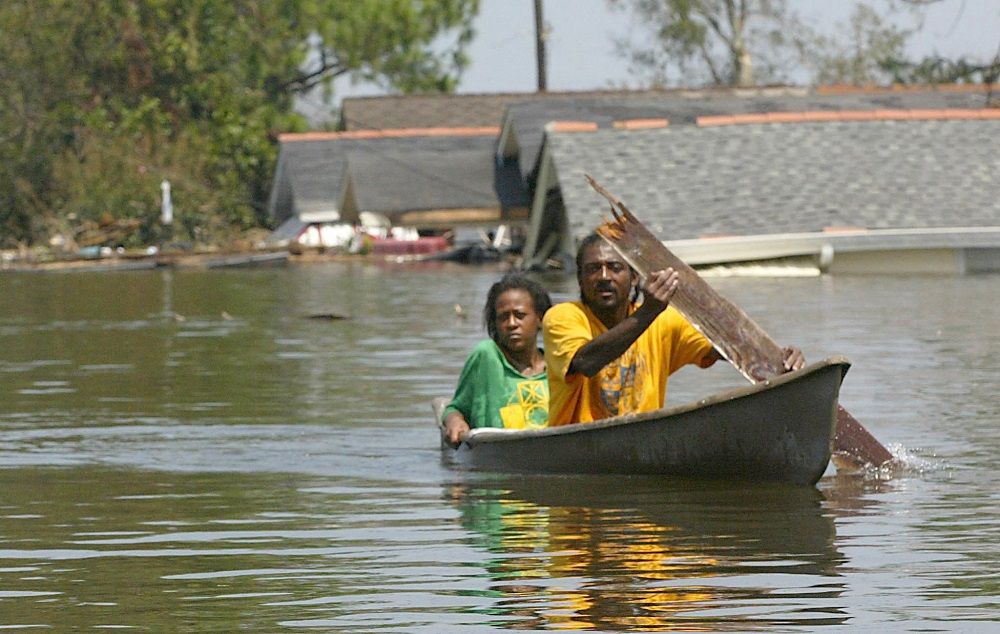
Residents flee flood waters in a canoe on August 30, 2005 in New Orleans, Louisiana, following Hurricane Katrina. The 20th anniversary of the landfall of Hurricane Katrina is August 29, 2025.
Residents flee flood waters in a canoe on Aug. 30, 2005 in New Orleans, Louisiana, following Hurricane Katrina. The 20th anniversary of the landfall of Hurricane Katrina is Aug. 29, 2025. Photo by Getty Images
See more Toronto Sun on Google — save as a Preferred Source
New Orleans is sinking and you’re not gonna swim, a new study says.
Louisiana’s biggest city has reached a “point of no return” and could be surrounded by the ocean within a few decades due to climate change, according to a study in the journal Nature Sustainability, adding that city residents should start relocating now.
Rising sea levels are a major threat to the Crescent City, which sits in a basin mostly below sea level. The city is surrounded by south Louisiana’s coastal wetlands that reduce the impact of heavy storms and hurricanes. Those wetlands are under threat from human activity, however, as people drain them for developments and build canals for the oil and gas industry. The U.S. Coastal Protection and Restoration Authority says that Louisiana has lost nearly 2,000 square miles of land since the 1930s and could lose another 3,000 over the next 50 years if no action is taken and could cause and average of $15.2 billion annually in flood damages.
“Given the importance of so many of south Louisiana’s assets — our waterways, natural resources, unique culture, and wetlands — the effects of this additional land loss and the increased risk of flooding would be catastrophic. We must take bold action now before it’s too late,” the group said.
People already leaving: Study author
According to Brianna Castro, one of the authors of the study and a professor of urban sustainability at Yale, New Orleanians are already leaving town. Since Hurricane Katrina devastated the city in 2005, killing almost 1,400 people, the city has lost about 25% of its population, and every major storm since then has prompted a spike in departures, she said. Billions have already been spent to improve the city’s levees, floodgates and pumps after Katrina, but the paper says it’s unlikely that will be enough to save the city in the decades to come.
There could also be a social impact, particularly for the city’s poor, the study argues. A chaotic relocation would erode the tax base, leading to worsening social services and rising insurance premiums, if insurers want to even continue to cover potential flood losses there.
“If the writing is on the wall that we need to go eventually, do we want to wait until people’s resources are exhausted and there’s a crisis?” Castro said.

 britannica.com

 coastal.la.gov
 torontosun.com
Relocation must start now as water levels rise, experts say
Author of the article:Brian Towie
Published May 25, 2026 • Last updated 14 hours ago • 2 minute read
Residents flee flood waters in a canoe on August 30, 2005 in New Orleans, Louisiana, following Hurricane Katrina. The 20th anniversary of the landfall of Hurricane Katrina is August 29, 2025.
Residents flee flood waters in a canoe on Aug. 30, 2005 in New Orleans, Louisiana, following Hurricane Katrina. The 20th anniversary of the landfall of Hurricane Katrina is Aug. 29, 2025. Photo by Getty Images
See more Toronto Sun on Google — save as a Preferred Source
New Orleans is sinking and you’re not gonna swim, a new study says.
Louisiana’s biggest city has reached a “point of no return” and could be surrounded by the ocean within a few decades due to climate change, according to a study in the journal Nature Sustainability, adding that city residents should start relocating now.
Rising sea levels are a major threat to the Crescent City, which sits in a basin mostly below sea level. The city is surrounded by south Louisiana’s coastal wetlands that reduce the impact of heavy storms and hurricanes. Those wetlands are under threat from human activity, however, as people drain them for developments and build canals for the oil and gas industry. The U.S. Coastal Protection and Restoration Authority says that Louisiana has lost nearly 2,000 square miles of land since the 1930s and could lose another 3,000 over the next 50 years if no action is taken and could cause and average of $15.2 billion annually in flood damages.
“Given the importance of so many of south Louisiana’s assets — our waterways, natural resources, unique culture, and wetlands — the effects of this additional land loss and the increased risk of flooding would be catastrophic. We must take bold action now before it’s too late,” the group said.
People already leaving: Study author
According to Brianna Castro, one of the authors of the study and a professor of urban sustainability at Yale, New Orleanians are already leaving town. Since Hurricane Katrina devastated the city in 2005, killing almost 1,400 people, the city has lost about 25% of its population, and every major storm since then has prompted a spike in departures, she said. Billions have already been spent to improve the city’s levees, floodgates and pumps after Katrina, but the paper says it’s unlikely that will be enough to save the city in the decades to come.
There could also be a social impact, particularly for the city’s poor, the study argues. A chaotic relocation would erode the tax base, leading to worsening social services and rising insurance premiums, if insurers want to even continue to cover potential flood losses there.
“If the writing is on the wall that we need to go eventually, do we want to wait until people’s resources are exhausted and there’s a crisis?” Castro said.
Hurricane Katrina | Deaths, Damage, & Facts | Britannica
Hurricane Katrina was a tropical cyclone that struck the southeastern United States in August 2005, breaching levees and causing widespread death and damage. Ultimately, the storm caused more than $125 billion in damage (more than $200 billion in 2024 dollars), and it reduced the population of...
britannica.com
A Changing Landscape | Coastal Protection And Restoration Authority
Louisiana is in the midst of a land loss crisis that has claimed nearly 2,000 square miles of land since the 1930s, and a scientific analysis confirmed that without action, we could lose up to another…
coastal.la.gov
Rising water levels will engulf New Orleans, study says
Study says city is at "point of no return" and resident should leave town now.
They really really could be surrounded , circle the wagons .Rising water levels will engulf New Orleans, study says
Relocation must start now as water levels rise, experts say
Author of the article:Brian Towie
Published May 25, 2026 • Last updated 14 hours ago • 2 minute read
Residents flee flood waters in a canoe on August 30, 2005 in New Orleans, Louisiana, following Hurricane Katrina. The 20th anniversary of the landfall of Hurricane Katrina is August 29, 2025.
Residents flee flood waters in a canoe on Aug. 30, 2005 in New Orleans, Louisiana, following Hurricane Katrina. The 20th anniversary of the landfall of Hurricane Katrina is Aug. 29, 2025. Photo by Getty Images
See more Toronto Sun on Google — save as a Preferred Source
New Orleans is sinking and you’re not gonna swim, a new study says.
Louisiana’s biggest city has reached a “point of no return” and could be surrounded by the ocean within a few decades due to climate change, according to a study in the journal Nature Sustainability, adding that city residents should start relocating now.
Rising sea levels are a major threat to the Crescent City, which sits in a basin mostly below sea level. The city is surrounded by south Louisiana’s coastal wetlands that reduce the impact of heavy storms and hurricanes. Those wetlands are under threat from human activity, however, as people drain them for developments and build canals for the oil and gas industry. The U.S. Coastal Protection and Restoration Authority says that Louisiana has lost nearly 2,000 square miles of land since the 1930s and could lose another 3,000 over the next 50 years if no action is taken and could cause and average of $15.2 billion annually in flood damages.
“Given the importance of so many of south Louisiana’s assets — our waterways, natural resources, unique culture, and wetlands — the effects of this additional land loss and the increased risk of flooding would be catastrophic. We must take bold action now before it’s too late,” the group said.
People already leaving: Study author
According to Brianna Castro, one of the authors of the study and a professor of urban sustainability at Yale, New Orleanians are already leaving town. Since Hurricane Katrina devastated the city in 2005, killing almost 1,400 people, the city has lost about 25% of its population, and every major storm since then has prompted a spike in departures, she said. Billions have already been spent to improve the city’s levees, floodgates and pumps after Katrina, but the paper says it’s unlikely that will be enough to save the city in the decades to come.
There could also be a social impact, particularly for the city’s poor, the study argues. A chaotic relocation would erode the tax base, leading to worsening social services and rising insurance premiums, if insurers want to even continue to cover potential flood losses there.
“If the writing is on the wall that we need to go eventually, do we want to wait until people’s resources are exhausted and there’s a crisis?” Castro said.
Hurricane Katrina | Deaths, Damage, & Facts | Britannica
Hurricane Katrina was a tropical cyclone that struck the southeastern United States in August 2005, breaching levees and causing widespread death and damage. Ultimately, the storm caused more than $125 billion in damage (more than $200 billion in 2024 dollars), and it reduced the population of...A Changing Landscape | Coastal Protection And Restoration Authority
Louisiana is in the midst of a land loss crisis that has claimed nearly 2,000 square miles of land since the 1930s, and a scientific analysis confirmed that without action, we could lose up to another…Rising water levels will engulf New Orleans, study says
Study says city is at "point of no return" and resident should leave town now.
Fear mongering. The water level isn't rising, New Orleans is quite literally sinking. This happens when you build in a swmp.

OMGosh, the roads here are HORRIBLE - pieces of my car are falling off because when I try to avoid one pot hole, I hit another one. It's disgusting & yet our taxes have been going up on the average of 6.5 - 7% a year!! Who gets that kind of raise (unless you're a politician)?Indeed.
Doesn't Volker Stevenson have the AB Hwys contract?OMGosh, the roads here are HORRIBLE - pieces of my car are falling off because when I try to avoid one pot hole, I hit another one. It's disgusting & yet our taxes have been going up on the average of 6.5 - 7% a year!! Who gets that kind of raise (unless you're a politician)?
I don't know about highways but I'm specifically referring to the City of Edmonton. We USED to have really good roads but in the last 5 years or so, bike lanes b became more important I guess even tho' very few people actually use them. Considering we're a winter city for about 8 months of the year, it's a pretty pathetic city council that we have. Their priorities are not what the cities priorities should be. But even after bitching from the community, when it came to the election, the same people (except for 4) were re-elected!! How dumb are people anyway? So needless to say, the same policies are being implemented - you know, the ones that most citizens of this city are against.Doesn't Volker Stevenson have the AB Hwys contract?
Dumber than you can possibly imagine. Remember Carnage got elected.How dumb are people anyway?
I was in Edmonton a month ago. Edmonton streets are no different than any other city coming out of winter.I don't know about highways but I'm specifically referring to the City of Edmonton. We USED to have really good roads but in the last 5 years or so, bike lanes b became more important I guess even tho' very few people actually use them. Considering we're a winter city for about 8 months of the year, it's a pretty pathetic city council that we have. Their priorities are not what the cities priorities should be. But even after bitching from the community, when it came to the election, the same people (except for 4) were re-elected!! How dumb are people anyway? So needless to say, the same policies are being implemented - you know, the ones that most citizens of this city are against.
Bike lanes are where snow gets plowed into berms. Handy.
lets hope the blackies go down with the state.Rising water levels will engulf New Orleans, study says
Relocation must start now as water levels rise, experts say
Author of the article:Brian Towie
Published May 25, 2026 • Last updated 14 hours ago • 2 minute read
Residents flee flood waters in a canoe on August 30, 2005 in New Orleans, Louisiana, following Hurricane Katrina. The 20th anniversary of the landfall of Hurricane Katrina is August 29, 2025.
Residents flee flood waters in a canoe on Aug. 30, 2005 in New Orleans, Louisiana, following Hurricane Katrina. The 20th anniversary of the landfall of Hurricane Katrina is Aug. 29, 2025. Photo by Getty Images
See more Toronto Sun on Google — save as a Preferred Source
New Orleans is sinking and you’re not gonna swim, a new study says.
Louisiana’s biggest city has reached a “point of no return” and could be surrounded by the ocean within a few decades due to climate change, according to a study in the journal Nature Sustainability, adding that city residents should start relocating now.
Rising sea levels are a major threat to the Crescent City, which sits in a basin mostly below sea level. The city is surrounded by south Louisiana’s coastal wetlands that reduce the impact of heavy storms and hurricanes. Those wetlands are under threat from human activity, however, as people drain them for developments and build canals for the oil and gas industry. The U.S. Coastal Protection and Restoration Authority says that Louisiana has lost nearly 2,000 square miles of land since the 1930s and could lose another 3,000 over the next 50 years if no action is taken and could cause and average of $15.2 billion annually in flood damages.
“Given the importance of so many of south Louisiana’s assets — our waterways, natural resources, unique culture, and wetlands — the effects of this additional land loss and the increased risk of flooding would be catastrophic. We must take bold action now before it’s too late,” the group said.
People already leaving: Study author
According to Brianna Castro, one of the authors of the study and a professor of urban sustainability at Yale, New Orleanians are already leaving town. Since Hurricane Katrina devastated the city in 2005, killing almost 1,400 people, the city has lost about 25% of its population, and every major storm since then has prompted a spike in departures, she said. Billions have already been spent to improve the city’s levees, floodgates and pumps after Katrina, but the paper says it’s unlikely that will be enough to save the city in the decades to come.
There could also be a social impact, particularly for the city’s poor, the study argues. A chaotic relocation would erode the tax base, leading to worsening social services and rising insurance premiums, if insurers want to even continue to cover potential flood losses there.
“If the writing is on the wall that we need to go eventually, do we want to wait until people’s resources are exhausted and there’s a crisis?” Castro said.
Hurricane Katrina | Deaths, Damage, & Facts | Britannica
Hurricane Katrina was a tropical cyclone that struck the southeastern United States in August 2005, breaching levees and causing widespread death and damage. Ultimately, the storm caused more than $125 billion in damage (more than $200 billion in 2024 dollars), and it reduced the population of...A Changing Landscape | Coastal Protection And Restoration Authority
Louisiana is in the midst of a land loss crisis that has claimed nearly 2,000 square miles of land since the 1930s, and a scientific analysis confirmed that without action, we could lose up to another…Rising water levels will engulf New Orleans, study says
Study says city is at "point of no return" and resident should leave town now.
Tornado patterns in Canada are shifting east, making Ontario a hot spot: Expert
Great Lakes usually keep tornadoes at bay in this region, with cold winds from the lakes shutting off tornadoes' connection to the surface.
Author of the article:Ryan Goodison
Published Jun 01, 2026 • 2 minute read
David Sills of the Northern Tornadoes Project at Western University was photographed in London on Monday, June 1, 2026. (Mike Hensen/The London Free Press)
David Sills of the Northern Tornadoes Project at Western University was photographed in London on Monday, June 1, 2026. (Mike Hensen/The London Free Press)
On May 9, ominous sirens from Western University filled the air, warning of a tornado. Ten days later, it happened again.
The Northern Tornadoes Project at Western University, which investigates the occurrence and damage caused by twisters across the country, confirmed there have already been four tornadoes around London this year.
On May 9, an EF-0 tornado, the weakest rating on the six-point scale, which can see wind speeds reach 90 to 130 kilometres/hour, occurred east of Lucan.
A wild storm that rolled in on May 19 resulted in three separate tornadoes: an EF-0 that touched down near Christina, a rural area southwest of London; an EF-1 that touched down near Belmont, southeast of London; and an EF-0, just south of Ingersoll.
David Sills, director of the Northern Tornadoes Project, says that although there were only five tornadoes in the Southwestern Ontario region last year, the quick succession of this year’s storms are more “coincidence than anything else” in his view.
“This is the time of year these things start to happen, but we’ve actually been really lucky,” he said. “The American states, along with the northern states, have really been hit hard with tornadoes this spring.”
Northern Tornadoes Project report confirming a twister hit Lucan
This photo was included in a Northern Tornadoes Project report confirming a twister hit Lucan on June 30, 2025. It is credited to the NTP director, Dave Sills
Sills says the Great Lakes usually keep tornadoes at bay in this region, with cold winds from the lakes shutting off tornadoes’ connection to the surface.
But a study Sills is working on, which is not yet published, finds tornado patterns have shifted more toward eastern Canada and away from the prairies.
The study, which Sills says looks into the occurrence of tornadoes across the country since 1980, shows Ontario is now a hotspot. A newly published study by them confirmed the province has averaged 18.5 tornadoes per year from 1991 to 2020.
“The numbers in the prairies have gone down, and Ontario now has the distinction of having the most tornadoes per year, so there has been this eastward shift,” Sills said.
The new study will not cover specific regions within provinces, but looks at the broader context across the country. Sills noted researchers will look into regional trends as the current study concludes.
As to why this shift is happening, Sills says his team doesn’t know yet. He says early theories suggest climate change, but more work needs to be done.
“There’s all kinds of different factors at play. A lot of them are connected to climate change, but as you can imagine, there’s a lot of untangling of factors to better understand any changes that we’re observing,” he said.
rgoodison@postmedia.com
 canada.ca
 torontosun.com
Great Lakes usually keep tornadoes at bay in this region, with cold winds from the lakes shutting off tornadoes' connection to the surface.
Author of the article:Ryan Goodison
Published Jun 01, 2026 • 2 minute read
David Sills of the Northern Tornadoes Project at Western University was photographed in London on Monday, June 1, 2026. (Mike Hensen/The London Free Press)
David Sills of the Northern Tornadoes Project at Western University was photographed in London on Monday, June 1, 2026. (Mike Hensen/The London Free Press)
On May 9, ominous sirens from Western University filled the air, warning of a tornado. Ten days later, it happened again.
The Northern Tornadoes Project at Western University, which investigates the occurrence and damage caused by twisters across the country, confirmed there have already been four tornadoes around London this year.
On May 9, an EF-0 tornado, the weakest rating on the six-point scale, which can see wind speeds reach 90 to 130 kilometres/hour, occurred east of Lucan.
A wild storm that rolled in on May 19 resulted in three separate tornadoes: an EF-0 that touched down near Christina, a rural area southwest of London; an EF-1 that touched down near Belmont, southeast of London; and an EF-0, just south of Ingersoll.
David Sills, director of the Northern Tornadoes Project, says that although there were only five tornadoes in the Southwestern Ontario region last year, the quick succession of this year’s storms are more “coincidence than anything else” in his view.
“This is the time of year these things start to happen, but we’ve actually been really lucky,” he said. “The American states, along with the northern states, have really been hit hard with tornadoes this spring.”
Northern Tornadoes Project report confirming a twister hit Lucan
This photo was included in a Northern Tornadoes Project report confirming a twister hit Lucan on June 30, 2025. It is credited to the NTP director, Dave Sills
Sills says the Great Lakes usually keep tornadoes at bay in this region, with cold winds from the lakes shutting off tornadoes’ connection to the surface.
But a study Sills is working on, which is not yet published, finds tornado patterns have shifted more toward eastern Canada and away from the prairies.
The study, which Sills says looks into the occurrence of tornadoes across the country since 1980, shows Ontario is now a hotspot. A newly published study by them confirmed the province has averaged 18.5 tornadoes per year from 1991 to 2020.
“The numbers in the prairies have gone down, and Ontario now has the distinction of having the most tornadoes per year, so there has been this eastward shift,” Sills said.
The new study will not cover specific regions within provinces, but looks at the broader context across the country. Sills noted researchers will look into regional trends as the current study concludes.
As to why this shift is happening, Sills says his team doesn’t know yet. He says early theories suggest climate change, but more work needs to be done.
“There’s all kinds of different factors at play. A lot of them are connected to climate change, but as you can imagine, there’s a lot of untangling of factors to better understand any changes that we’re observing,” he said.
rgoodison@postmedia.com
Enhanced Fujita scale for wind damage - Canada.ca
• On April 1, 2013, Environment Canada began to use an improved version of the F-scale known as the Enhanced Fujita or EF-scale. While the levels of intensity, ranging from EF0 to EF5, have the same relationship to damage as the original F-scale, the associated wind speeds have been made more...
Tornado patterns in Canada are shifting east, making Ontario a hot spot: Expert
Great Lakes usually keep tornadoes at bay in this region, with cold winds from the lakes shutting off tornadoes' connection to the surface.
AI data centres: What are they and why so controversial in Canada?
Critics cite energy and water consumption as well as land use and noise pollution as major issues.
Author of the article:Spiro Papuckoski
Published Jun 07, 2026 • Last updated 17 hours ago • 3 minute read
Rendering for a future TELUS AI data centre in Vancouver.
Rendering for a future TELUS AI data centre in Vancouver. Photo by Handout /TELUS / Westbank
The early stages of a potential plan to develop part of Hamilton’s industrial waterfront into an artificial intelligence data centre suffered a short circuit last week.
Toronto-based Slate Asset Management, which bought approximately 800 acres of industrial land and buildings from Stelco four years ago, said it plans to “redevelop the site into a world-class industrial park with a focus on job creation, economic growth, and environmental sustainability.”
The area, known as Steelport, could create up to 23,000 new jobs across the Greater Toronto and Hamilton Area and inject up to $3.8 billion into Ontario’s economy, the company says.
However, local residents opposed to the early plans that would see part of the land split up protested outside Hamilton City Hall on Thursday morning ahead of a committee of adjustment meeting considering the owner’s application.
Tribunal member Robert Reid acknowledged the application for the land severance met all of the regulations for that property.
However, after hearing many residents argue against the application in protest of AI infrastructure, along with thousands of emails and messages submitted to the committee, the tribunal voted 3-0 to deny the application.
Residents who attended the meeting erupted into loud cheers.
Despite the denial, the developer can either appeal the decision to the Ontario Land Tribunal or go ahead with its plans without splitting up the land.
The protest comes at a time when many Canadians appear to be skeptical about AI, which could replace jobs while also consuming higher amounts of water and power needed to run energy-intensive AI processors.
What is an AI data centre?
An AI data centre is a large specialized facility that houses the technological infrastructure needed to train, deploy and deliver AI applications and services.
According to CaTECH Systems, a telecommunications contractor in Markham, these supersized data centres require large amounts of energy to run the hardware and software as well as massive amounts of water to cool the machines.
“As AI continues to disrupt industries, the demand for specialized AI data centres has grown,” the company says. “These next-generation facilities are custom-built to support the heavy and complex needs of AI workloads.”
Meanwhile, traditional data centres are facilities that are designed for computer-based workloads that are “predictable, incremental, and less power-intensive.”
According to researchers at York University, there are five AI data centres currently operating in Canada — two in British Columbia and one each in Ontario, Quebec, and New Brunswick.
Attendees gather around a detailed, illuminated scale model demonstrating the liquid cooling architecture and power infrastructure of a modern data centre at the Vertiv booth in Taipei, Taiwan, Wednesday, June 3, 2026.
Attendees gather around a detailed, illuminated scale model demonstrating the liquid cooling architecture and power infrastructure of a modern data centre at the Vertiv booth in Taipei, Taiwan, Wednesday, June 3, 2026. Photo by Cheng Chia Huang /Getty Images
Why are they so controversial?
Critics of AI data centres cite energy and water consumption as well as land use and noise pollution as major issues.
The Starfish Environmental Society, based in Vancouver, says large amounts of electricity is needed to run these facilities, with many relying on fossil fuels to source their energy needs.
“Furthermore, many data centres build backup natural gas or diesel generators to ensure an uninterrupted supply of electricity,” they write, noting the increase in greenhouse gases.
In addition, AI data centres draw on large amounts of fresh water for their cooling systems.
There are also complaints about noise pollution from the constant drone of the facilities and the large amount of land needed to house the technology.
How do Canadians view AI?
According to a recent Angus Reid survey, more than two-thirds (68%) of Canadians want governments to heavily regulate AI and nearly three-in-four (74%) residents doubt any government can keep pace with the growing technology.
In addition, 68% say they would oppose a large AI data centre near their home while 79% support the government taxing companies that replace workers with AI.
“Canadians see some upside to data centres but grow more skeptical as the impacts move closer to daily life,” the pollster says.
The only positive result from the survey found 38% if respondents think that Canada can compete globally in AI and tech while 20% didn’t believe so. A plurality (42%) were unsure.

 thestarfish.ca

 catech-systems.com

 ibm.com
 slateam.com
 torontosun.com
Critics cite energy and water consumption as well as land use and noise pollution as major issues.
Author of the article:Spiro Papuckoski
Published Jun 07, 2026 • Last updated 17 hours ago • 3 minute read
Rendering for a future TELUS AI data centre in Vancouver.
Rendering for a future TELUS AI data centre in Vancouver. Photo by Handout /TELUS / Westbank
The early stages of a potential plan to develop part of Hamilton’s industrial waterfront into an artificial intelligence data centre suffered a short circuit last week.
Toronto-based Slate Asset Management, which bought approximately 800 acres of industrial land and buildings from Stelco four years ago, said it plans to “redevelop the site into a world-class industrial park with a focus on job creation, economic growth, and environmental sustainability.”
The area, known as Steelport, could create up to 23,000 new jobs across the Greater Toronto and Hamilton Area and inject up to $3.8 billion into Ontario’s economy, the company says.
However, local residents opposed to the early plans that would see part of the land split up protested outside Hamilton City Hall on Thursday morning ahead of a committee of adjustment meeting considering the owner’s application.
Tribunal member Robert Reid acknowledged the application for the land severance met all of the regulations for that property.
However, after hearing many residents argue against the application in protest of AI infrastructure, along with thousands of emails and messages submitted to the committee, the tribunal voted 3-0 to deny the application.
Residents who attended the meeting erupted into loud cheers.
Despite the denial, the developer can either appeal the decision to the Ontario Land Tribunal or go ahead with its plans without splitting up the land.
The protest comes at a time when many Canadians appear to be skeptical about AI, which could replace jobs while also consuming higher amounts of water and power needed to run energy-intensive AI processors.
What is an AI data centre?
An AI data centre is a large specialized facility that houses the technological infrastructure needed to train, deploy and deliver AI applications and services.
According to CaTECH Systems, a telecommunications contractor in Markham, these supersized data centres require large amounts of energy to run the hardware and software as well as massive amounts of water to cool the machines.
“As AI continues to disrupt industries, the demand for specialized AI data centres has grown,” the company says. “These next-generation facilities are custom-built to support the heavy and complex needs of AI workloads.”
Meanwhile, traditional data centres are facilities that are designed for computer-based workloads that are “predictable, incremental, and less power-intensive.”
According to researchers at York University, there are five AI data centres currently operating in Canada — two in British Columbia and one each in Ontario, Quebec, and New Brunswick.
Attendees gather around a detailed, illuminated scale model demonstrating the liquid cooling architecture and power infrastructure of a modern data centre at the Vertiv booth in Taipei, Taiwan, Wednesday, June 3, 2026.
Attendees gather around a detailed, illuminated scale model demonstrating the liquid cooling architecture and power infrastructure of a modern data centre at the Vertiv booth in Taipei, Taiwan, Wednesday, June 3, 2026. Photo by Cheng Chia Huang /Getty Images
Why are they so controversial?
Critics of AI data centres cite energy and water consumption as well as land use and noise pollution as major issues.
The Starfish Environmental Society, based in Vancouver, says large amounts of electricity is needed to run these facilities, with many relying on fossil fuels to source their energy needs.
“Furthermore, many data centres build backup natural gas or diesel generators to ensure an uninterrupted supply of electricity,” they write, noting the increase in greenhouse gases.
In addition, AI data centres draw on large amounts of fresh water for their cooling systems.
There are also complaints about noise pollution from the constant drone of the facilities and the large amount of land needed to house the technology.
How do Canadians view AI?
According to a recent Angus Reid survey, more than two-thirds (68%) of Canadians want governments to heavily regulate AI and nearly three-in-four (74%) residents doubt any government can keep pace with the growing technology.
In addition, 68% say they would oppose a large AI data centre near their home while 79% support the government taxing companies that replace workers with AI.
“Canadians see some upside to data centres but grow more skeptical as the impacts move closer to daily life,” the pollster says.
The only positive result from the survey found 38% if respondents think that Canada can compete globally in AI and tech while 20% didn’t believe so. A plurality (42%) were unsure.


Inside the Data Centre: The Hidden Environmental Costs of AI Models - The Starfish Canada
Big tech needs to be held accountable for its intensive energy and water consumption needed to keep AI running.
thestarfish.ca
AI-Ready Data Centers vs Traditional Data Centers Explained
Compare traditional data centers and AI-ready data centers, including power, cooling, density, scalability, and infrastructure requirements.
What Is an AI Data Center? | IBM
An AI data center is a facility that houses the specific IT infrastructure needed to train, deploy and deliver AI applications and services.
ibm.com
Steelport - Slate Asset Management
slateam.com
AI data centres: What are they and why so controversial in Canada?
The early stages of a potential plan to develop Hamilton's industrial waterfront into an AI data centre suffered a short circuit. Read more.
It's all about surveillance of Canadians not solving problems or innovations. It's big bro ah.AI data centres: What are they and why so controversial in Canada?
Critics cite energy and water consumption as well as land use and noise pollution as major issues.
Author of the article:Spiro Papuckoski
Published Jun 07, 2026 • Last updated 17 hours ago • 3 minute read
Rendering for a future TELUS AI data centre in Vancouver.
Rendering for a future TELUS AI data centre in Vancouver. Photo by Handout /TELUS / Westbank
The early stages of a potential plan to develop part of Hamilton’s industrial waterfront into an artificial intelligence data centre suffered a short circuit last week.
Toronto-based Slate Asset Management, which bought approximately 800 acres of industrial land and buildings from Stelco four years ago, said it plans to “redevelop the site into a world-class industrial park with a focus on job creation, economic growth, and environmental sustainability.”
The area, known as Steelport, could create up to 23,000 new jobs across the Greater Toronto and Hamilton Area and inject up to $3.8 billion into Ontario’s economy, the company says.
However, local residents opposed to the early plans that would see part of the land split up protested outside Hamilton City Hall on Thursday morning ahead of a committee of adjustment meeting considering the owner’s application.
Tribunal member Robert Reid acknowledged the application for the land severance met all of the regulations for that property.
However, after hearing many residents argue against the application in protest of AI infrastructure, along with thousands of emails and messages submitted to the committee, the tribunal voted 3-0 to deny the application.
Residents who attended the meeting erupted into loud cheers.
Despite the denial, the developer can either appeal the decision to the Ontario Land Tribunal or go ahead with its plans without splitting up the land.
The protest comes at a time when many Canadians appear to be skeptical about AI, which could replace jobs while also consuming higher amounts of water and power needed to run energy-intensive AI processors.
What is an AI data centre?
An AI data centre is a large specialized facility that houses the technological infrastructure needed to train, deploy and deliver AI applications and services.
According to CaTECH Systems, a telecommunications contractor in Markham, these supersized data centres require large amounts of energy to run the hardware and software as well as massive amounts of water to cool the machines.
“As AI continues to disrupt industries, the demand for specialized AI data centres has grown,” the company says. “These next-generation facilities are custom-built to support the heavy and complex needs of AI workloads.”
Meanwhile, traditional data centres are facilities that are designed for computer-based workloads that are “predictable, incremental, and less power-intensive.”
According to researchers at York University, there are five AI data centres currently operating in Canada — two in British Columbia and one each in Ontario, Quebec, and New Brunswick.
Attendees gather around a detailed, illuminated scale model demonstrating the liquid cooling architecture and power infrastructure of a modern data centre at the Vertiv booth in Taipei, Taiwan, Wednesday, June 3, 2026.
Attendees gather around a detailed, illuminated scale model demonstrating the liquid cooling architecture and power infrastructure of a modern data centre at the Vertiv booth in Taipei, Taiwan, Wednesday, June 3, 2026. Photo by Cheng Chia Huang /Getty Images
Why are they so controversial?
Critics of AI data centres cite energy and water consumption as well as land use and noise pollution as major issues.
The Starfish Environmental Society, based in Vancouver, says large amounts of electricity is needed to run these facilities, with many relying on fossil fuels to source their energy needs.
“Furthermore, many data centres build backup natural gas or diesel generators to ensure an uninterrupted supply of electricity,” they write, noting the increase in greenhouse gases.
In addition, AI data centres draw on large amounts of fresh water for their cooling systems.
There are also complaints about noise pollution from the constant drone of the facilities and the large amount of land needed to house the technology.
How do Canadians view AI?
According to a recent Angus Reid survey, more than two-thirds (68%) of Canadians want governments to heavily regulate AI and nearly three-in-four (74%) residents doubt any government can keep pace with the growing technology.
In addition, 68% say they would oppose a large AI data centre near their home while 79% support the government taxing companies that replace workers with AI.
“Canadians see some upside to data centres but grow more skeptical as the impacts move closer to daily life,” the pollster says.
The only positive result from the survey found 38% if respondents think that Canada can compete globally in AI and tech while 20% didn’t believe so. A plurality (42%) were unsure.
Inside the Data Centre: The Hidden Environmental Costs of AI Models - The Starfish Canada
Big tech needs to be held accountable for its intensive energy and water consumption needed to keep AI running.AI-Ready Data Centers vs Traditional Data Centers Explained
Compare traditional data centers and AI-ready data centers, including power, cooling, density, scalability, and infrastructure requirements.What Is an AI Data Center? | IBM
An AI data center is a facility that houses the specific IT infrastructure needed to train, deploy and deliver AI applications and services.Steelport - Slate Asset Management
AI data centres: What are they and why so controversial in Canada?
The early stages of a potential plan to develop Hamilton's industrial waterfront into an AI data centre suffered a short circuit. Read more.