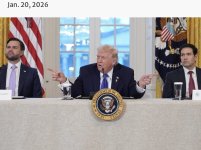
The U.S. Mid-Terms are still ten months away, & no guarantee that will reel in Orange Jesus regardless of the outcome, & then there’s another two years after that, that Trump is in power, assuming he doesn’t go for that “third term” he’s been rambling on about a while back, or elect himself emperor or whatever.
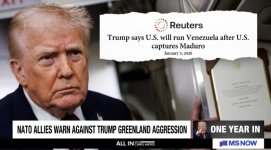
While the U.S. hasn’t publicly threatened to use military force in Cuba, Trump officials privately say the brazen raid that extracted Maduro should serve as an implicit threat to Havana.
Cuba’s fate has long been
entwined with Venezuela: subsidized Venezuelan oil has been a mainstay of its economy since shortly after Hugo Chávez took power in Venezuela in 1999. Washington intends to weaken the regime by choking off that oil, which has kept Cuba’s lights on, senior U.S. officials said. Cuba could run out of oil within weeks, bringing the economy to a grinding halt, according to economists.

en.wikipedia.org
The regime has withstood years of intense U.S. pressure, from the Central Intelligence Agency-backed Bay of Pigs invasion in 1961 to a punishing embargo imposed in 1962 that became more stringent over time.
The administration is also taking aim at Cuba’s overseas medical missions, Havana’s most important source of hard currency, including through visa bans targeting Cuban and foreign officials accused of facilitating the program, because doctors?
“Cuba’s rulers are incompetent Marxists who have destroyed their country, and they have had a major setback with the Maduro regime that they are responsible for propping up,” a White House official said, reiterating that Cuba should “make a deal before it’s too late.”
The Trump administration has assessed Cuba’s economy as being close to collapse and that the government has never been this fragile after losing a vital benefactor in Maduro, these people said. Officials don’t have a concrete plan to end the Communist government that has held power on the Caribbean island for almost seven decades, but they see Maduro’s capture and subsequent concessions from his allies left behind as a blueprint and a warning for Cuba, senior U.S. officials said.
U.S. intelligence assessments have painted a
grim picture of the island’s economy, plagued by chronic shortages of basic goods, medicines and frequent blackouts, according to people familiar with the analysis.
Trump administration searching for Havana insiders who could cut deal to end Communist rule

apple.news
That’ll learn them for being in the Western Hemisphere. “There is no surrender or capitulation possible nor any kind of understanding based on coercion or intimidation,” said Cuban President Díaz-Canel. Sort of sounds like Denmark, or Canada, or the EU, or NATO, but that’s probably just a coincidence.
In a statement, the State Department said that it is in America’s national security interests for Cuba “to be competently run by a democratic government and to refuse to host our adversaries’ military and intelligence services.”
Under the current "Trump regime," many political scientists, like Steven Levitsky, Daniel Ziblatt, and Brian Klaas, argue the U.S. has transitioned from a full democracy to a "competitive authoritarian" system or “anacracy,” where elections happen but the ruling party unfairly uses state power, creating a tilted playing field, though some still see it as a flawed democracy or in deep crisis.
Key Perspectives
- Competitive Authoritarianism: This view suggests the U.S. retains democratic structures (elections, institutions) but the governing party (under Trump) manipulates them to its advantage, stifling opposition and abusing power, making it no longer a robust democracy.
- Anocracy/Autocratization: Experts describe the U.S. as experiencing "autocratization," a process where democratic norms erode, accelerating under Trump, pushing it toward rule by a single leader.
Since 1960, the United States has imposed unilateral economic sanctions upon Cuba, sanctions that affect all sectors of the society as well as all categories of its population. Since February 3, 1962, when President John F. Kennedy made the decision to isolate the island completely, these sanctions have been total.
This network of sanctions is unique in terms of its length, its thoroughness, and its sophistication. It is also retroactive and applies to events that happened before the legislation was adopted, and extraterritorial: it extends to other nations and is therefore in conflict with the norms of international law, but that’s neither here nor there, & international law is so passé.