Ron: Doesn't Saskatchewan have potash that is used as fertilizer or am I not understanding its use. Or, is it mixed with something else that makes it fertilizer. The only reason I'm asking is that there seems to be a panic by certain media and/or podcasters that are concerned about the growing season this year. But I wonder why if we have everything needed for the farmers - or do we? I thought you'd likely know. thanks.
Iran War. . . USA Up 2-0 in the First Period
- Thread starter Tecumsehsbones
- Start date
You are using an out of date browser. It may not display this or other websites correctly.
You should upgrade or use an alternative browser.
You should upgrade or use an alternative browser.

They (West Asians) are the puss that surrounds a subdermal E European thorn.I’m not in approval of anybody over there. They’re all a bunch of hypocritical fuck ups in all honesty.

Potash is one of the three important fertilizers…nutrients…it’s essential but so are the others. Petros I’m sure can correct or explain this on this one better than I.Ron: Doesn't Saskatchewan have potash that is used as fertilizer or am I not understanding its use. Or, is it mixed with something else that makes it fertilizer. The only reason I'm asking is that there seems to be a panic by certain media and/or podcasters that are concerned about the growing season this year. But I wonder why if we have everything needed for the farmers - or do we? I thought you'd likely know. thanks.
(Think of lawn fertilizer with those three numbers on it….what potash contains is one of those numbers…with the others being nitrogen and phosphorus)

I'm not a farmer, I tend soil as agrarian. We use two fertilizers, N and and K with K covered in S that feeds the biome that farts P.Potash is one of the three important fertilizers…nutrients…it’s essential but so are the others. Petros I’m sure can correct or explain this on this one better than I.
(Think of lawn fertilizer with those three numbers on it….what potash contains is one of those numbers…with the others being nitrogen and phosphorus)
Sound cool?
Oh, thank you. I was curious & appreciate the information!! So, the concern about fertilizer is real which is what I was trying to determine.Potash is one of the three important fertilizers…nutrients…it’s essential but so are the others. Petros I’m sure can correct or explain this on this one better than I.
(Think of lawn fertilizer with those three numbers on it….what potash contains is one of those numbers…with the others being nitrogen and phosphorus)
US-Iran Peace Talks Near With Hormuz, Lebanon Top of Agenda — Bloomberg
The US and Iran prepared for direct talks in Pakistan with the Strait of Hormuz still effectively shut and Israel and Hezbollah exchanging fire, complicating efforts to turn a fragile truce into lasting peace.
Real but not for Canadian producers. We'll be fine.Oh, thank you. I was curious & appreciate the information!! So, the concern about fertilizer is real which is what I was trying to determine.

Well, looks like Donny's getting tired of playing green army men. Now he's back to his building blocks.
Another Lego video outWell, looks like Donny's getting tired of playing green army men. Now he's back to his building blocks.

IRAN Buat Tel Aviv jd Kota Mati
Kunjungi toko kami di Shopee!FigureArt.idn : https://shope.ee/5fGtDrTmRm{judul}skrip: editor:dubber:======================================GL MediaWebsite: ht...
 youtube.com

171K views · 14K reactions | There’s always one…or two 👂 #funnykids #millenialmom #millenial #teachers #funnykids | Serena Terry
There’s always one…or two 👂 #funnykids #millenialmom #millenial #teachers #funnykids
 www.facebook.com
They say it out loud but if I say Greater Israel Project is real and disgusting I'm a Joo hater.

 youtube.com
This needs to be stopped NOW!
Lebanon Under Fire
They slept thinking the war was over, but then 300 people were killed in under 24 hours.Support stories that matter. Join this channel to get access to perks...
youtube.com
This needs to be stopped NOW!
That's OK. If you say "Good morning, how are you?" you're a Joo hater.They say it out loud but if I say Greater Israel Project is real and disgusting I'm a Joo hater.
Lebanon Under Fire
They slept thinking the war was over, but then 300 people were killed in under 24 hours.Support stories that matter. Join this channel to get access to perks...
This needs to be stopped NOW!
Of coarse they are.Iran says "Jail Netanyahu or more truce."
The region is nothing if not hypocritical.
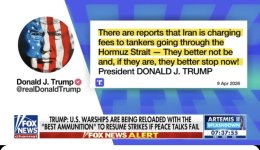
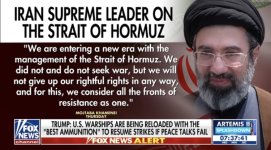
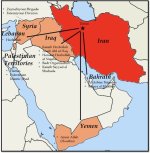
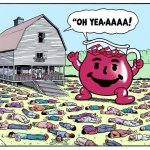
Don't be shocked when Iran takes out Israel's drinking water.
Why would anybody be surprised? It’s not like they’re not attacking their neighbours drinking water already so that precedent is set.
Are you in approval of Israel right now?
The U.S. delegation, led by Vice President JD Vance and including President Donald Trump's special envoy Steve Witkoff and son-in-law Jared Kushner, landed in two U.S. Air Force planes at an air base in Islamabad on Saturday morning, where they were received by Pakistan's army chief, Field Marshal Asim Munir, and Foreign Minister Ishaq Dar.I’m not in approval of anybody over there. They’re all a bunch of hypocritical fuck ups in all honesty.
The Iranian delegation, led by Parliamentary Speaker Mohammad Baqer Qalibaf and Foreign Minister Abbas Araqchi, arrived on Friday dressed in black in mourning for the death of Supreme Leader Ayatollah Ali Khamenei and other Iranians killed in the conflict.Trump has a 15-point plan that has not been published but leaked versions make it sound more like a surrender document than a basis for negotiation. Iran's 10-point plan contains a list of demands that America has consistently rejected in the past.
Many Lebanese were angry that Hezbollah had pulled them into a new conflict with Israel, just 15 months after the last war that devastated swathes of the country. In a social media post, Prime Minister Nawaf Salam wrote that the rocket attacks on Israel were “an irresponsible and suspicious act that jeopardizes Lebanon’s security and safety and provides Israel with pretexts to continue its aggression.”
They say it out loud but if I say Greater Israel Project is real and disgusting I'm a Joo hater.
Lebanon Under Fire
They slept thinking the war was over, but then 300 people were killed in under 24 hours.Support stories that matter. Join this channel to get access to perks...
This needs to be stopped NOW!

Why Anti-American Sentiment Grew 😳🔥 #WorldPolitics #Debate #News
Why Anti-American Sentiment Grew 😳🔥 #WorldPolitics #Debate #newsupdate In this video, we explore how U.S. interventions in different regions may have influ...
www.youtube.com
US-Iran negotiations underway, Trump says Strait of Hormuz being cleared — Reuters
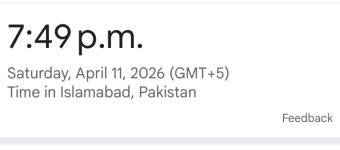
U.S. and Iranian negotiators held their highest-level talks in half a century in Pakistan on Saturday to try to end their six-week war as President Donald Trump said his military was starting the process of clearing the Strait of Hormuz.
There was no immediate statement from the U.S. about any unfreezing of assets. Qatar's Foreign Ministry did not immediately respond to a request for comment.
Iran has also demanded a ceasefire in Lebanon, where Israeli attacks on Iran-backed Hezbollah militants have killed nearly 2,000 people since the start of the fighting in March. Qalibaf said on X that talks would not start until those pledges were fulfilled.
Israel and the U.S. have said the Lebanon campaign is not part of the Iran-U.S. ceasefire. Trump posted on social media on Friday that the only reason the Iranians were alive was to negotiate a deal.
"The Iranians don't seem to realize they have no cards (Oh Frick…not “the cards” thing again?), other than a short term extortion of the World by using International Waterways. The only reason they are alive today is to negotiate!" he said.
Hezbollah announced it had conducted several military operations against Israeli positions on Saturday, both within Lebanese territory and in northern Israel, and in turn strikes on southern Lebanon continued on Saturday morning, Lebanese state media said.
A US delegation led by JD Vance has touched down in Pakistan for the highest-level talks between the two countries in nearly 50 years. Mr Vance, a critic of “forever wars”, reportedly requested that he lead the negotiations alongside special envoy Steve Witkoff and Jared Kushner, Mr Trump’s son-in-law, both of whom the Iranians don’t trust & don’t want to negotiate with.
Despite both sides promising to enter negotiations in good faith, Iran warned that discussions could only move forward with a ceasefire between Israel and Hezbollah.
 . They forgot to say Lebanon instead of Hezbollah this time…but the Israeli military and Iranian-backed militant group continued trading fire along the border of southern Lebanon on Saturday morning, threatening to derail the talks.
Netanyahu: Iran’s nuclear programme ‘crushed’ in war — The Telegraph
Benjamin Netanyahu vowed to “continue to fight Iran” as the US met for top-level peace talks with the Islamist regime on Saturday.
Ultimately, worded diplomatically, while the attempt at dialogue is objectively a step away from escalating conflict, the effectiveness of these specific individuals (Witkoff & Kushner) is widely doubted by Iranian officials and some analysts. Previous talks led by Witkoff and Kushner did not settle agreements, with critics pointing to their background in real estate rather than traditional diplomacy, suggesting they were ill-prepared for nuclear negotiations, assuming nuclear negotiations are even on the table at this point.A US delegation led by JD Vance has touched down in Pakistan for the highest-level talks between the two countries in nearly 50 years. Mr Vance, a critic of “forever wars”, reportedly requested that he lead the negotiations alongside special envoy Steve Witkoff and Jared Kushner, Mr Trump’s son-in-law, both of whom the Iranians don’t trust & don’t want to negotiate with.
Steve Witkoff, the special envoy to the Middle East who President Donald Trump tasked with negotiating a deal with Iran, does not sound very much like a diplomat lately.
“There’s almost no stopping them, they have an endless supply of [enriched uranium],” Witkoff toldSean Hannity the day the war began. “They thought they could strong-arm us. ... It was very, very clear that it was — it was going to be impossible, probably by the second meeting.”
“They bragged about having 60% enriched fuel, enough for 11 bombs,” he told reporters seven days into the conflict. “They told me and Jared, ‘We’re not going to give you diplomatically what you couldn’t take militarily.’ So you know, I think they’re gonna need a change of attitude.”
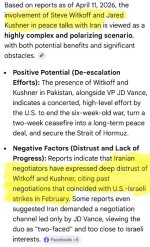
Witkoff and his co-negotiator, Trump son-in-law Jared Kushner, reportedly told the White House on the eve of the campaign that Iran was simply using talks to buy time — a conclusion that factored into Trump’s decision to greenlight the operation, according to at least threeseparate reports.
Trump himself publicly claimed that the pair had helped persuade him to go to war. The gulf between the two sides is huge. The US opening position is zero uranium enrichment by Iran, ever. Iran says it has the right to do this as a sovereign nation. Witkoff has admitted that his knowledge of the nuclear issue is “sketchy”.
A few months after leaving the White House at the end of Trump’s first term as his senior adviser, in 2020, Kushner got $2bn of Saudi money for his private equity fund. He’s had another $1.5bn from Qatar and the United Arab Emirates, and the fund now reportedly stands at $6.2bn. He gets 1.25 per cent a year to manage it – $157m in fees from foreign governments so far, according to the Senate Finance Committee, so there’s his impartiality or only an American-centric position in this. The President’s son-in-law is getting tens of millions in guaranteed fees every year from foreign autocracies in the Gulf while shaping US policy toward them.
Vance has a very personal stake in the outcome of these talks. He is a former Marine who served in Iraq – and then launched his political career by speaking out against the folly of “forever wars”. More than any other senior figure in the administration, he is associated with Trump’s former position of avoiding foreign entanglements. If he can make peace with Iran, it could launch his own bid for the presidency in 2028.
Tehran has a 10-point plan, which includes US acceptance of Iran’s right to uranium enrichment, and continued Iranian control over the Strait of Hormuz. Iran is demanding war reparations, a commitment from the US never to attack again, the lifting of all sanctions, and the withdrawal of US combat forces from the region.
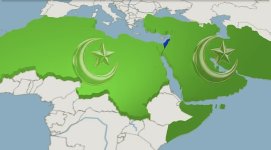 The US has a 15-point plan and, according to leaks, it includes a permanent commitment by Iran never to make a nuclear weapon. That means dismantling Natanz, Isfahan, and Fordow nuclear facilities; handing over all enriched uranium to the IAEA; and IAEA monitoring of all remaining nuclear infrastructure. The US plan also reportedly includes limits on ballistic missiles; an end to support for Hezbollah, the Houthis, Hamas, and militias in Iraq; and recognition of Israel’s right to exist.
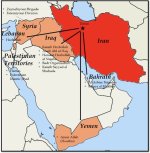 Trumps three negotiators are as close in their goals as America and Iran currently are, so how can this peace process not be successful? The US is much stronger than Iran militarily, but you can win every battle and still lose the war, and really, who has won this war as far as negotiations for a peace treaty go at this point?
Both sides had arrived at the venue when the Iranian delegation led by parliamentary speaker Mohammad Bagher Ghalibaf met Sharif, followed by US Vice President JD Vance, accompanied by White House envoy Steve Witkoff and President Donald Trump's son-in-law Jared Kushner.
Iran has previously said that any agreement on a permanent end to fighting must include the unfreezing of sanctioned Iranian assets as well as an end to Israel's war against Hezbollah in Lebanon, which Vance has said will not be up for discussion in Islamabad.
Vance says talks failed to reach deal with Iran on ending Mideast war — AFP News
Iran and the United States failed to reach an agreement to end the war in the Middle East, US Vice President JD Vance said Sunday after marathon talks in Islamabad, adding that he was leaving after giving Tehran the "final and best offer".
Vance said before leaving the US that if the other side was "willing to negotiate in good faith, we're certainly willing to extend the open hand"(like it was open until Feb 28th?).
But "if they're going to try to play us, then they're going to find the negotiating team is not that receptive", he added. So is this Round#1 or a continuation of the negotiations that America and Iran where in on February 28th?
I'm fucking awesome!That's OK. If you say "Good morning, how are you?" you're a Joo hater.
Holy fucking propaganda.Ultimately, worded diplomatically, while the attempt at dialogue is objectively a step away from escalating conflict, the effectiveness of these specific individuals (Witkoff & Kushner) is widely doubted by Iranian officials and some analysts. Previous talks led by Witkoff and Kushner did not settle agreements, with critics pointing to their background in real estate rather than traditional diplomacy, suggesting they were ill-prepared for nuclear negotiations, assuming nuclear negotiations are even on the table at this point.
Steve Witkoff, the special envoy to the Middle East who President Donald Trump tasked with negotiating a deal with Iran, does not sound very much like a diplomat lately.
“There’s almost no stopping them, they have an endless supply of [enriched uranium],” Witkoff toldSean Hannity the day the war began. “They thought they could strong-arm us. ... It was very, very clear that it was — it was going to be impossible, probably by the second meeting.”
“They bragged about having 60% enriched fuel, enough for 11 bombs,” he told reporters seven days into the conflict. “They told me and Jared, ‘We’re not going to give you diplomatically what you couldn’t take militarily.’ So you know, I think they’re gonna need a change of attitude.”
View attachment 34038
Witkoff and his co-negotiator, Trump son-in-law Jared Kushner, reportedly told the White House on the eve of the campaign that Iran was simply using talks to buy time — a conclusion that factored into Trump’s decision to greenlight the operation, according to at least threeseparate reports.
Trump himself publicly claimed that the pair had helped persuade him to go to war. The gulf between the two sides is huge. The US opening position is zero uranium enrichment by Iran, ever. Iran says it has the right to do this as a sovereign nation. Witkoff has admitted that his knowledge of the nuclear issue is “sketchy”.
A few months after leaving the White House at the end of Trump’s first term as his senior adviser, in 2020, Kushner got $2bn of Saudi money for his private equity fund. He’s had another $1.5bn from Qatar and the United Arab Emirates, and the fund now reportedly stands at $6.2bn. He gets 1.25 per cent a year to manage it – $157m in fees from foreign governments so far, according to the Senate Finance Committee, so there’s his impartiality or only an American-centric position in this. The President’s son-in-law is getting tens of millions in guaranteed fees every year from foreign autocracies in the Gulf while shaping US policy toward them.
Vance has a very personal stake in the outcome of these talks. He is a former Marine who served in Iraq – and then launched his political career by speaking out against the folly of “forever wars”. More than any other senior figure in the administration, he is associated with Trump’s former position of avoiding foreign entanglements. If he can make peace with Iran, it could launch his own bid for the presidency in 2028.
Tehran has a 10-point plan, which includes US acceptance of Iran’s right to uranium enrichment, and continued Iranian control over the Strait of Hormuz. Iran is demanding war reparations, a commitment from the US never to attack again, the lifting of all sanctions, and the withdrawal of US combat forces from the region.
View attachment 34040The US has a 15-point plan and, according to leaks, it includes a permanent commitment by Iran never to make a nuclear weapon. That means dismantling Natanz, Isfahan, and Fordow nuclear facilities; handing over all enriched uranium to the IAEA; and IAEA monitoring of all remaining nuclear infrastructure. The US plan also reportedly includes limits on ballistic missiles; an end to support for Hezbollah, the Houthis, Hamas, and militias in Iraq; and recognition of Israel’s right to exist.
View attachment 34039Trumps three negotiators are as close in their goals as America and Iran currently are, so how can this peace process not be successful? The US is much stronger than Iran militarily, but you can win every battle and still lose the war, and really, who has won this war as far as negotiations for a peace treaty go at this point?
Both sides had arrived at the venue when the Iranian delegation led by parliamentary speaker Mohammad Bagher Ghalibaf met Sharif, followed by US Vice President JD Vance, accompanied by White House envoy Steve Witkoff and President Donald Trump's son-in-law Jared Kushner.
Iran has previously said that any agreement on a permanent end to fighting must include the unfreezing of sanctioned Iranian assets as well as an end to Israel's war against Hezbollah in Lebanon, which Vance has said will not be up for discussion in Islamabad.
Iran's Foreign Minister Abbas Araghchi, who is also part of the delegation, told his German counterpart in a call on Saturday that "Iran enters negotiations with complete distrust due to repeated breaches of commitments and betrayals by the United States", the Tasnim news agency reported.
Vance says talks failed to reach deal with Iran on ending Mideast war — AFP News
Iran and the United States failed to reach an agreement to end the war in the Middle East, US Vice President JD Vance said Sunday after marathon talks in Islamabad, adding that he was leaving after giving Tehran the "final and best offer".apple.news
Vance said before leaving the US that if the other side was "willing to negotiate in good faith, we're certainly willing to extend the open hand"(like it was open until Feb 28th?).
But "if they're going to try to play us, then they're going to find the negotiating team is not that receptive", he added. So is this Round#1 or a continuation of the negotiations that America and Iran where in on February 28th?
They started painting JD as Antiwar in the NYT.