


They also get a year end bonus for attending those meetings .Too much imo. It's not only the money they spend but also the wasted time it takes to spend it. Choosing Art can take time.
It's what the 1% does (spend other people's money)
Trudeau Has Buried Us In Debt
- Thread starter Decapoda
- Start date
You are using an out of date browser. It may not display this or other websites correctly.
You should upgrade or use an alternative browser.
You should upgrade or use an alternative browser.

Here is somewhat of an oddity (I think) in government spending that has us shaking our heads. The Nanaimo Regional District(county) just bought an old school from the local school board to turn into a park,and the gym into a hall. The cost is being picked up by the taxpayers in the local area. What has us scratching our heads in wonder is why taxpayers are shelling out a couple of million for a property that already belongs to the local taxpayers.

Two different entities.Here is somewhat of an oddity (I think) in government spending that has us shaking our heads. The Nanaimo Regional District(county) just bought an old school from the local school board to turn into a park,and the gym into a hall. The cost is being picked up by the taxpayers in the local area. What has us scratching our heads in wonder is why taxpayers are shelling out a couple of million for a property that already belongs to the local taxpayers.
Dryden has a golf club / curling venue that was gifted to them with the caveat it remain a green space. Too stupid to know what to do with it, they gave it away for a dollar 7 years ago only to buy it back for $650,000 this year. Still don't know what to do with it.Here is somewhat of an oddity (I think) in government spending that has us shaking our heads. The Nanaimo Regional District(county) just bought an old school from the local school board to turn into a park,and the gym into a hall. The cost is being picked up by the taxpayers in the local area. What has us scratching our heads in wonder is why taxpayers are shelling out a couple of million for a property that already belongs to the local taxpayers.
Dryden , that sounds like a great goalie and a shitty politician .Dryden has a golf club / curling venue that was gifted to them with the caveat it remain a green space. Too stupid to know what to do with it, they gave it away for a dollar 7 years ago only to buy it back for $650,000 this year. Still don't know what to do with it.
On the banks of the mighty Wabigoon River.Dryden , that sounds like a great goalie and a shitty politician .
Noogibaw backwards.
Remote enough to be close to the Experimental Lakes Research Center due to the self contained watershed. It's a long walk to anywhere from Dryden.On the banks of the mighty Wabigoon River.
Noogibaw backwards.
Record Muskie caught on that lake. Great snowmobiling ( can sometimes be combined with the long walk )
But high taxes and we're fed up with that.
Last edited:
Was that the same person?Dryden , that sounds like a great goalie and a shitty politician .
Because they come up whenever searching Dryden on the internet, Ken's brother Dave is the one given credit for developing the goalie mask.
Not sure how Jacques Plante entered that picture but they would have played at the same time.

To the despair and fury of dental surgeons everywhere.Because they come up whenever searching Dryden on the internet, Ken's brother Dave is the one given credit for developing the goalie mask.
Well, everywhere they play hockey, anyhow.
Just going by memory , but I think Ken Dryden became a Liberal MP or Senator , he did get his law degree prior to playing for Montreal . Can’t remember his brother, but Jacques Plante was first to wear a mask in NHL and he was pretty much before Drydens time .Was that the same person?
Because they come up whenever searching Dryden on the internet, Ken's brother Dave is the one given credit for developing the goalie mask.
Not sure how Jacques Plante entered that picture but they would have played at the same time.

Ken Dryden (1947–2025) was a prominent Canadian Liberal politician, serving as a Member of Parliament (MP) for York Centre from 2004 to 2011Just going by memory , but I think Ken Dryden became a Liberal MP or Senator , he did get his law degree prior to playing for Montreal . Can’t remember his brother, but Jacques Plante was first to wear a mask in NHL and he was pretty much before Drydens time .
. A former NHL Hall of Fame goaltender, he served as the federal Minister of Social Development (2004–2006) under Prime Minister Paul Martin, focusing heavily on child care and social policy.
1 level of taxpayer that owns both of them.Two different entities.

Study accuses Carney Liberals of 'substantially' worsening federal finances
Combined deficits from 2025-26 to 2029-30 will total $321.7 billion, compared to $154.4 billion projected by Trudeau
Author of the article:Lorrie Goldstein
Published Mar 17, 2026 • Last updated 1 hour ago • 3 minute read
Interim parliamentary budget officer Jason Jacques told senators that Budget 2025 changed his mind on Canada's financial sustainability
Prime Minister Mark Carney holds up a copy of the budget as he and Finance Minister Francois-Philippe Champagne make their way to the House of Commons for the tabling of the federal budget on Parliament Hill in Ottawa, on Tuesday, Nov. 4, 2025. Photo by Justin Tang /THE CANADIAN PRESS
Prime Minister Mark Carney plans to spend more and run deficits more than twice as large over the next five years compared to those planned by the previous Liberal government, according to a new study by the Fraser Institute.
As a result, Carney’s combined deficits are projected to total $321.7 billion from 2025-26 to 2029-30 — $167.3 billion higher than the $154.4 billion former prime minister Justin Trudeau was projected to spend during the same period, according to the report by the fiscally conservative think-tank.
The study says that will increase the total federal debt to a projected $2.9 trillion in 2029-30 or 79% of GDP.
In addition to running higher deficits, the Fraser Institute report says the Carney government plans to increase spending by $67.6 billion over five years compared to the Trudeau government’s projections — $47.8 billion more for new programs and $19.8 billion more for servicing the debt.
Carney vowed ‘different approach’ to spending
This despite expecting slower total annual revenue growth from 2024-25 to 2029-30 of 14.2% or $72.3 billion, compared to 19.9% or $101.8 billion projected under Trudeau.
The study — “Comparing Federal Fiscal Plans: Is the Carney Government Truly Taking a Different Approach than its Predecessor? — is based on a comparison of the Trudeau government’s last fall economic statement or “mini-budget” in December 2024 and Carney’s first budget in November 2025.
“During the 2025 election, the Carney government promised to take a very different approach to federal finances than its predecessor,” said study co-author Jake Fuss, noting Carney criticized Trudeau for “spending too much.”
“But based on his first budget, spending is higher and deficits are double what even Trudeau planned to spend, which substantially worsens the state of federal finances.”
Spending ‘inappropriately’ shifted?
The study is also critical of how Carney’s budget divides government spending into operational spending — the cost of running the government — and capital spending on new infrastructure, while projecting a balanced operating budget by 2028-29.
While this is sensible in theory, the Fraser Institute study notes, the Parliamentary Budget Office has reported that 30% or $94 billion of the capital spending proposed in Carney’s budget isn’t, in fact, capital spending, but increased operating spending that may or may not lead to the creation of new assets.
“Simply put, nearly a third of the Carney government’s planned capital investments should not be considered as such and instead represent operating spending or tax credits that have been inappropriately shifted over to the capital side of the budget,” the Fraser Institute report says.
“Correcting this miscalculation shows that the Carney government is set to fall short of its commitment to balance operating spending against revenues.”
Study acknowledges economic challenges
The Fraser report acknowledges the Carney government has different priorities compared to the Trudeau government — such as boosting Canada’s spending on defence to 2% of GDP this year — and that its budget is aimed at accelerating $1 trillion in new total investments, while Trudeau’s main goal which was to redistribute income.
It also notes Trudeau’s last fall economic statement was written more than a year before Donald Trump became U.S. president and launched his tariff war, making it likely the Trudeau government would have increased projected spending and deficits had he stayed on to fight last year’s election.

 torontosun.com
Combined deficits from 2025-26 to 2029-30 will total $321.7 billion, compared to $154.4 billion projected by Trudeau
Author of the article:Lorrie Goldstein
Published Mar 17, 2026 • Last updated 1 hour ago • 3 minute read
Interim parliamentary budget officer Jason Jacques told senators that Budget 2025 changed his mind on Canada's financial sustainability
Prime Minister Mark Carney holds up a copy of the budget as he and Finance Minister Francois-Philippe Champagne make their way to the House of Commons for the tabling of the federal budget on Parliament Hill in Ottawa, on Tuesday, Nov. 4, 2025. Photo by Justin Tang /THE CANADIAN PRESS
Prime Minister Mark Carney plans to spend more and run deficits more than twice as large over the next five years compared to those planned by the previous Liberal government, according to a new study by the Fraser Institute.
As a result, Carney’s combined deficits are projected to total $321.7 billion from 2025-26 to 2029-30 — $167.3 billion higher than the $154.4 billion former prime minister Justin Trudeau was projected to spend during the same period, according to the report by the fiscally conservative think-tank.
The study says that will increase the total federal debt to a projected $2.9 trillion in 2029-30 or 79% of GDP.
In addition to running higher deficits, the Fraser Institute report says the Carney government plans to increase spending by $67.6 billion over five years compared to the Trudeau government’s projections — $47.8 billion more for new programs and $19.8 billion more for servicing the debt.
Carney vowed ‘different approach’ to spending
This despite expecting slower total annual revenue growth from 2024-25 to 2029-30 of 14.2% or $72.3 billion, compared to 19.9% or $101.8 billion projected under Trudeau.
The study — “Comparing Federal Fiscal Plans: Is the Carney Government Truly Taking a Different Approach than its Predecessor? — is based on a comparison of the Trudeau government’s last fall economic statement or “mini-budget” in December 2024 and Carney’s first budget in November 2025.
“During the 2025 election, the Carney government promised to take a very different approach to federal finances than its predecessor,” said study co-author Jake Fuss, noting Carney criticized Trudeau for “spending too much.”
“But based on his first budget, spending is higher and deficits are double what even Trudeau planned to spend, which substantially worsens the state of federal finances.”
Spending ‘inappropriately’ shifted?
The study is also critical of how Carney’s budget divides government spending into operational spending — the cost of running the government — and capital spending on new infrastructure, while projecting a balanced operating budget by 2028-29.
While this is sensible in theory, the Fraser Institute study notes, the Parliamentary Budget Office has reported that 30% or $94 billion of the capital spending proposed in Carney’s budget isn’t, in fact, capital spending, but increased operating spending that may or may not lead to the creation of new assets.
“Simply put, nearly a third of the Carney government’s planned capital investments should not be considered as such and instead represent operating spending or tax credits that have been inappropriately shifted over to the capital side of the budget,” the Fraser Institute report says.
“Correcting this miscalculation shows that the Carney government is set to fall short of its commitment to balance operating spending against revenues.”
Study acknowledges economic challenges
The Fraser report acknowledges the Carney government has different priorities compared to the Trudeau government — such as boosting Canada’s spending on defence to 2% of GDP this year — and that its budget is aimed at accelerating $1 trillion in new total investments, while Trudeau’s main goal which was to redistribute income.
It also notes Trudeau’s last fall economic statement was written more than a year before Donald Trump became U.S. president and launched his tariff war, making it likely the Trudeau government would have increased projected spending and deficits had he stayed on to fight last year’s election.
GOLDSTEIN: Study accuses Carney Liberals of 'substantially' worsening federal finances
Mark Carney’s combined deficits from 2025-26 to 2029-30 will total $321.7 billion, compared to the $154.4 billion Justin Trudeau planned.
They needed a study to figure it out ?Study accuses Carney Liberals of 'substantially' worsening federal finances
Combined deficits from 2025-26 to 2029-30 will total $321.7 billion, compared to $154.4 billion projected by Trudeau
Author of the article:Lorrie Goldstein
Published Mar 17, 2026 • Last updated 1 hour ago • 3 minute read
Interim parliamentary budget officer Jason Jacques told senators that Budget 2025 changed his mind on Canada's financial sustainability
Prime Minister Mark Carney holds up a copy of the budget as he and Finance Minister Francois-Philippe Champagne make their way to the House of Commons for the tabling of the federal budget on Parliament Hill in Ottawa, on Tuesday, Nov. 4, 2025. Photo by Justin Tang /THE CANADIAN PRESS
Prime Minister Mark Carney plans to spend more and run deficits more than twice as large over the next five years compared to those planned by the previous Liberal government, according to a new study by the Fraser Institute.
As a result, Carney’s combined deficits are projected to total $321.7 billion from 2025-26 to 2029-30 — $167.3 billion higher than the $154.4 billion former prime minister Justin Trudeau was projected to spend during the same period, according to the report by the fiscally conservative think-tank.
The study says that will increase the total federal debt to a projected $2.9 trillion in 2029-30 or 79% of GDP.
In addition to running higher deficits, the Fraser Institute report says the Carney government plans to increase spending by $67.6 billion over five years compared to the Trudeau government’s projections — $47.8 billion more for new programs and $19.8 billion more for servicing the debt.
Carney vowed ‘different approach’ to spending
This despite expecting slower total annual revenue growth from 2024-25 to 2029-30 of 14.2% or $72.3 billion, compared to 19.9% or $101.8 billion projected under Trudeau.
The study — “Comparing Federal Fiscal Plans: Is the Carney Government Truly Taking a Different Approach than its Predecessor? — is based on a comparison of the Trudeau government’s last fall economic statement or “mini-budget” in December 2024 and Carney’s first budget in November 2025.
“During the 2025 election, the Carney government promised to take a very different approach to federal finances than its predecessor,” said study co-author Jake Fuss, noting Carney criticized Trudeau for “spending too much.”
“But based on his first budget, spending is higher and deficits are double what even Trudeau planned to spend, which substantially worsens the state of federal finances.”
Spending ‘inappropriately’ shifted?
The study is also critical of how Carney’s budget divides government spending into operational spending — the cost of running the government — and capital spending on new infrastructure, while projecting a balanced operating budget by 2028-29.
While this is sensible in theory, the Fraser Institute study notes, the Parliamentary Budget Office has reported that 30% or $94 billion of the capital spending proposed in Carney’s budget isn’t, in fact, capital spending, but increased operating spending that may or may not lead to the creation of new assets.
“Simply put, nearly a third of the Carney government’s planned capital investments should not be considered as such and instead represent operating spending or tax credits that have been inappropriately shifted over to the capital side of the budget,” the Fraser Institute report says.
“Correcting this miscalculation shows that the Carney government is set to fall short of its commitment to balance operating spending against revenues.”
Study acknowledges economic challenges
The Fraser report acknowledges the Carney government has different priorities compared to the Trudeau government — such as boosting Canada’s spending on defence to 2% of GDP this year — and that its budget is aimed at accelerating $1 trillion in new total investments, while Trudeau’s main goal which was to redistribute income.
It also notes Trudeau’s last fall economic statement was written more than a year before Donald Trump became U.S. president and launched his tariff war, making it likely the Trudeau government would have increased projected spending and deficits had he stayed on to fight last year’s election.
GOLDSTEIN: Study accuses Carney Liberals of 'substantially' worsening federal finances
Mark Carney’s combined deficits from 2025-26 to 2029-30 will total $321.7 billion, compared to the $154.4 billion Justin Trudeau planned.
Doug Ford urged to 'improve his management' of Ontario's debt
New Fraser Institute study released ahead of PC government unveiling this year’s budget on Thursday
Author of the article:Lorrie Goldstein
Published Mar 24, 2026 • Last updated 21 hours ago • 2 minute read
Ontario Premier Doug Ford
Ontario Premier Doug Ford attends a press conference following a First Ministers Meeting in Ottawa on Jan. 29, 2026. Photo by Blair Gable /Postmedia Network
Ontario Premier Doug Ford’s government increased the province’s net debt by $104 billion, or 32.2%, between 2018, the year it was first elected, and 2024, which is the latest data available, according to a new study by the Fraser Institute.
With the province set to release this year’s budget on Thursday, the fiscally conservative think-tank said Ontario’s net debt per person stood at $26,451 in 2024, down from an all-time high of $29,628 under the Ford government during the pandemic year of 2020.
“Ontario’s provincial debt has risen substantially in the last few decades and Premier Ford needs to improve his management of provincial finances to avoid burdening future Ontarians,” said Jake Fuss, co-author of the study, Ontario Premiers and Government Debt, 1980 to 2024.
Inflation, population growth helped reduce per capita debt load
The study noted that because inflation plus population growth increased by 37.9% in Ontario from 2018 to 2024, above the increase in net debt (total debt minus financial assets) of 32.2%, debt per person fell at an annual rate of $260.
But even with that, the study said the Ford government “maintains higher debt per person levels than any other Ontario premier, except Kathleen Wynne.”
During the entire study period from 1980 to 2024, the report said Ontario’s per person net debt adjusted for inflation rose by 410.7%, from $5,180 to $26,451, an increase of $21,271 per person.
“Since debt eventually has to be repaid, Ontarians will face higher taxes … to pay for the province’s debt burden,” said study co-author Grady Munro.
Bob Rae government tops debt list
During the study period, average annual per person net debt adjusted for inflation rose fastest under the Bob Rae NDP government from 1990-95 at $1,777.
That was followed by the Dalton McGuinty Liberal government from 2003-13 at $717; the Wynne Liberal government from 2013-18 at $475; the Bill Davis Progressive Conservative government from 1980-85 at $394; the Mike Harris Progressive Conservative government from 1995-2002 at $343; and the David Peterson Liberal government from 1985-90 at $159.
It decreased by $176 during the short-lived Ernie Eves Progressive Conservative government from 2002-03 and by $260 during the Ford Progressive Conservative government from 2018-24.
 torontosun.com
New Fraser Institute study released ahead of PC government unveiling this year’s budget on Thursday
Author of the article:Lorrie Goldstein
Published Mar 24, 2026 • Last updated 21 hours ago • 2 minute read
Ontario Premier Doug Ford
Ontario Premier Doug Ford attends a press conference following a First Ministers Meeting in Ottawa on Jan. 29, 2026. Photo by Blair Gable /Postmedia Network
Ontario Premier Doug Ford’s government increased the province’s net debt by $104 billion, or 32.2%, between 2018, the year it was first elected, and 2024, which is the latest data available, according to a new study by the Fraser Institute.
With the province set to release this year’s budget on Thursday, the fiscally conservative think-tank said Ontario’s net debt per person stood at $26,451 in 2024, down from an all-time high of $29,628 under the Ford government during the pandemic year of 2020.
“Ontario’s provincial debt has risen substantially in the last few decades and Premier Ford needs to improve his management of provincial finances to avoid burdening future Ontarians,” said Jake Fuss, co-author of the study, Ontario Premiers and Government Debt, 1980 to 2024.
Inflation, population growth helped reduce per capita debt load
The study noted that because inflation plus population growth increased by 37.9% in Ontario from 2018 to 2024, above the increase in net debt (total debt minus financial assets) of 32.2%, debt per person fell at an annual rate of $260.
But even with that, the study said the Ford government “maintains higher debt per person levels than any other Ontario premier, except Kathleen Wynne.”
During the entire study period from 1980 to 2024, the report said Ontario’s per person net debt adjusted for inflation rose by 410.7%, from $5,180 to $26,451, an increase of $21,271 per person.
“Since debt eventually has to be repaid, Ontarians will face higher taxes … to pay for the province’s debt burden,” said study co-author Grady Munro.
Bob Rae government tops debt list
During the study period, average annual per person net debt adjusted for inflation rose fastest under the Bob Rae NDP government from 1990-95 at $1,777.
That was followed by the Dalton McGuinty Liberal government from 2003-13 at $717; the Wynne Liberal government from 2013-18 at $475; the Bill Davis Progressive Conservative government from 1980-85 at $394; the Mike Harris Progressive Conservative government from 1995-2002 at $343; and the David Peterson Liberal government from 1985-90 at $159.
It decreased by $176 during the short-lived Ernie Eves Progressive Conservative government from 2002-03 and by $260 during the Ford Progressive Conservative government from 2018-24.
GOLDSTEIN: Doug Ford urged to 'improve his management' of Ontario's debt
New Fraser Institute study released with the Progressive Conservative government set to unveil this year’s budget on Thursday. Read more.

Done!I vote we rename this thread. "Trudeau has buried us in debt!"
Premier Doug Ford's eighth budget another step in Ontario's decline
Premier is governing province on a whim, where scrutiny is a nuisance and public money follows political convenience, writes Eric Lombardi
Author of the article:Eric Lombardi, Special to Toronto Sun
Published Mar 28, 2026 • 3 minute read
Eric Lombardi is exploring a run for Ontario Liberal Party leader.
Eric Lombardi is exploring a run for Ontario Liberal Party leader. Photo by Handout /Eric Lombardi
The Ontario Legislature returned on Monday after a 14-week winter break. By Thursday, the government tabled its annual budget, including a 77% increase to the deficit. Debate will surely be rushed because, naturally, there is no time for scrutiny.
Finance Minister Peter Bethlenfalvy is warning of harder days ahead. You can hear the excuse-making machinery warming up for the coming days. Tariffs. Global instability. Donald Trump. Bad weather, perhaps.
Province in decline
The deeper problem is that Ontario has been in decline now for decades. Under Doug Ford, that decline has only accelerated.
Since 2018, Ontario’s per person output has slipped from above the Canadian average to below it. Real wages have grown at half the OECD pace and roughly one third of the American. Unemployment sits at 7.6%, now persistently above the national rate, with youth unemployment at generational highs. Ontario’s tax burden is higher today than it was under Liberal Kathleen Wynne. The 20% middle class income tax cut promised in 2018 never arrived.
It is an odd performance. One does not usually set fire to the kitchen and then muse about the rising temperature.
No wonder the government’s self promotion budget now runs north of $100 million a year. Since 2018, the Ford government has spent about $450 million on advertising, enough to have doubled the number of MRI machines across Ontario.
Ontarians face bad economy
In the same budget that talks about protecting Ontario, the government is shifting OSAP from grants to loans. Someone had to pay after this government blew up the higher education system with its international student fiasco and funding freezes. Young Ontarians face a generationally bad economy, yet the Ford cabinet must have concluded that protection is for other people.
Not all is bad, even when it’s insufficient. The one year HST break on new home construction is welcome, but it should be permanent. Ontario has loaded new housing with some of the heaviest taxes in the developed world. In parts of the Greater Toronto Area, local development charges alone can add more than $100,000 to the cost of a home. The province built just 62,561 homes last year, less than half its own target, even after padding the numbers with student dorms and long term care beds.
The budget also ignores Ontario’s problem of cost disease, where it now costs two to three times what it should to build almost anything. That is why growth has stalled. We cannot build enough housing, transportation infrastructure, or energy to expand the economy. Without growth, we are stuck, unable to properly fund services like health care and education, and unable to lower the burden on taxpayers.
Lack of urgency
What is most striking is the lack of urgency. A government serious about growth would treat this as a central economic problem. Instead, it spent its holidays flooding the zone with billion-dollar announcements on vanity projects, especially around Toronto’s waterfront and Ford’s own Etobicoke backyard. Ontario Place. The Science Centre move. Convention centre expansion. Ad-hoc plans for Billy Bishop airport. All while warning Ontarians about restraint and pushing the province over $500 billion in debt.
Ford is governing Ontario on a whim, where scrutiny is a nuisance and public money follows political convenience instead of accountable systems. Ontario today feels like a developed society saddled with a tired third-world government.
This is the real story of this budget. Ford’s eighth, and it barely confronts any of Ontario’s real problems. Just another bill for taxpayers in a province that refuses to face its own decline.
— Eric Lombardi is exploring a run for Ontario Liberal Party leader. Learn more at EricForOLP.ca.

 ericforolp.ca

 globalnews.ca

 www.missingmiddleinitiative.ca
 news.ontario.ca

 fraserinstitute.org
 fraserinstitute.org
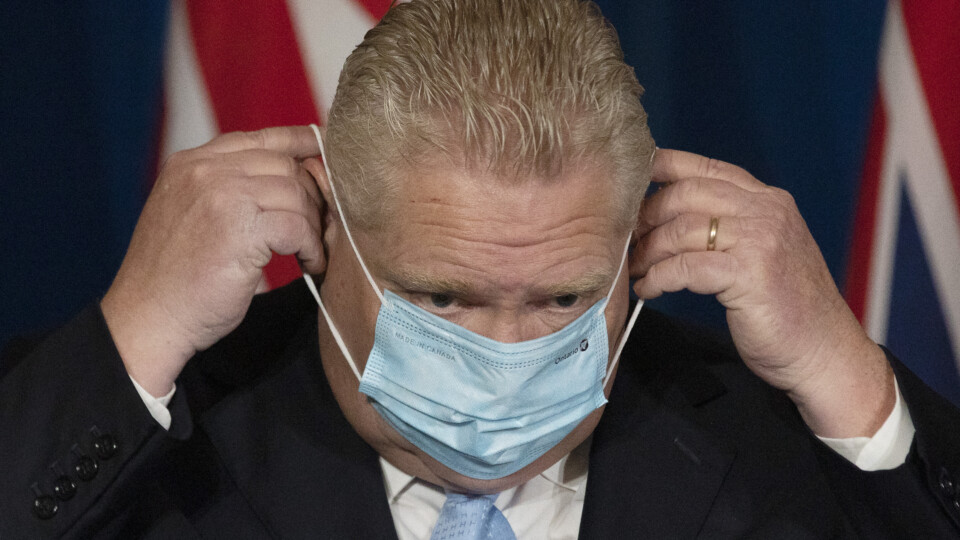
 thehub.ca
 globalnews.ca
 torontosun.com
Premier is governing province on a whim, where scrutiny is a nuisance and public money follows political convenience, writes Eric Lombardi
Author of the article:Eric Lombardi, Special to Toronto Sun
Published Mar 28, 2026 • 3 minute read
Eric Lombardi is exploring a run for Ontario Liberal Party leader.
Eric Lombardi is exploring a run for Ontario Liberal Party leader. Photo by Handout /Eric Lombardi
The Ontario Legislature returned on Monday after a 14-week winter break. By Thursday, the government tabled its annual budget, including a 77% increase to the deficit. Debate will surely be rushed because, naturally, there is no time for scrutiny.
Finance Minister Peter Bethlenfalvy is warning of harder days ahead. You can hear the excuse-making machinery warming up for the coming days. Tariffs. Global instability. Donald Trump. Bad weather, perhaps.
Province in decline
The deeper problem is that Ontario has been in decline now for decades. Under Doug Ford, that decline has only accelerated.
Since 2018, Ontario’s per person output has slipped from above the Canadian average to below it. Real wages have grown at half the OECD pace and roughly one third of the American. Unemployment sits at 7.6%, now persistently above the national rate, with youth unemployment at generational highs. Ontario’s tax burden is higher today than it was under Liberal Kathleen Wynne. The 20% middle class income tax cut promised in 2018 never arrived.
It is an odd performance. One does not usually set fire to the kitchen and then muse about the rising temperature.
No wonder the government’s self promotion budget now runs north of $100 million a year. Since 2018, the Ford government has spent about $450 million on advertising, enough to have doubled the number of MRI machines across Ontario.
Ontarians face bad economy
In the same budget that talks about protecting Ontario, the government is shifting OSAP from grants to loans. Someone had to pay after this government blew up the higher education system with its international student fiasco and funding freezes. Young Ontarians face a generationally bad economy, yet the Ford cabinet must have concluded that protection is for other people.
Not all is bad, even when it’s insufficient. The one year HST break on new home construction is welcome, but it should be permanent. Ontario has loaded new housing with some of the heaviest taxes in the developed world. In parts of the Greater Toronto Area, local development charges alone can add more than $100,000 to the cost of a home. The province built just 62,561 homes last year, less than half its own target, even after padding the numbers with student dorms and long term care beds.
The budget also ignores Ontario’s problem of cost disease, where it now costs two to three times what it should to build almost anything. That is why growth has stalled. We cannot build enough housing, transportation infrastructure, or energy to expand the economy. Without growth, we are stuck, unable to properly fund services like health care and education, and unable to lower the burden on taxpayers.
Lack of urgency
What is most striking is the lack of urgency. A government serious about growth would treat this as a central economic problem. Instead, it spent its holidays flooding the zone with billion-dollar announcements on vanity projects, especially around Toronto’s waterfront and Ford’s own Etobicoke backyard. Ontario Place. The Science Centre move. Convention centre expansion. Ad-hoc plans for Billy Bishop airport. All while warning Ontarians about restraint and pushing the province over $500 billion in debt.
Ford is governing Ontario on a whim, where scrutiny is a nuisance and public money follows political convenience instead of accountable systems. Ontario today feels like a developed society saddled with a tired third-world government.
This is the real story of this budget. Ford’s eighth, and it barely confronts any of Ontario’s real problems. Just another bill for taxpayers in a province that refuses to face its own decline.
— Eric Lombardi is exploring a run for Ontario Liberal Party leader. Learn more at EricForOLP.ca.
Eric Lombardi for Ontario Liberal Party leader
I'm running for Ontario Liberal Leader because what we want for ourselves and the next generation is absolutely within reach.
ericforolp.ca
Ontario finally sees increase in housing starts after years of decline | Globalnews.ca
Data released by the Canada Mortgage and Housing Corporation shows that Ontario saw a 12 per cent bump in new housing starts for January 2026 compared with the same period in 2025.
globalnews.ca
Development Charges: 10 Things You Need to Know About Housing Taxes in Ontario
Demystifying a complex contributor to the housing crisis
www.missingmiddleinitiative.ca
Ontario Newsroom
news.ontario.ca
Ford government should finally match policy with rhetoric in upcoming budget
Ontario also has the third-highest combined (federal/provincial) top income tax rate in North America.
Doug Ford spending more than ‘reckless’ Wynne
Ontario government corporate subsidies reached almost $10 billion by 2023, or nearly triple 2017 levels.
Eric Lombardi: Ontario is now the ‘sick man’ of Canada
The failures of Canada's largest province are dragging down the country
thehub.ca
Ford government runs deeper deficit, punts budget balance amid pessimistic outlook | Globalnews.ca
As the finance minister tabled the 2026 provincial budget on Thursday, he warned that geopolitical change has "reached our shores," requiring the province to spill more red ink.
globalnews.ca
LOMBARDI: Premier Doug Ford's eighth budget another step in Ontario's decline
Ontario has been in decline now for decades. Under Doug Ford, that decline has only accelerated. Read more.
Doug Ford’s budget continues borrowing binge
Doug Ford is responsible for a 44% increase to the Ontario debt since he took office in 2018.
Author of the article:Noah Jarvis
Published Apr 02, 2026 • Last updated 1 day ago • 3 minute read
Premier Doug Ford signs copies of the Ontario Budget
Ontario Premier Doug Ford signs copies of the Ontario Budget after Minister of Finance Peter Bethlenfalvy introduced the 2026 Budget in the legislature in Toronto, on Thursday, March 26, 2026. Photo by Chris Young /The Canadian Press
Ontario Premier Doug Ford talked a big game about former premier Kathleen Wynne’s spending mess, but his 2026 budget looks like it could have come from Wynne herself.
The Ford government is borrowing $25.8 billion this year. That’s driving government debt to $485.1 billion.
That means Ford is responsible for a 44% increase to the Ontario debt since he took office in 2018.
Ford’s big borrowing ways are a far cry from what he has been promising Ontarians for years.
What Ford used to say
Ford rightfully called out Wynne’s 2018 budget that added $14.6 billion to the government’s debt. But Ford’s 2026 budget has more red ink than Wynne’s.
Ford used to slam the Wynne government for handing out billions of dollars of corporate welfare. Now Ford is the corporate welfare king of Canada, wasting more money on business handouts than any other premier.
Ford used to criticize Wynne’s scheme of doling out millions of tax dollars to political parties. But instead of ending political welfare like he promised, Ford made it permanent.
If Ford had only stuck to the promises he made a few years ago, his government wouldn’t be plunging into nearly as much debt as it is now.
This year the Ford government is spending $5.8 billion more than it did last year. If this government were serious about managing taxpayer dollars responsibly, it would be cutting spending instead of spending billions more every year.
Big corporations getting handouts
Ford keeps doling out billions of taxpayer dollars to big corporations instead of cutting taxes across the board and allowing consumers to pick winners and losers.
Ford’s new $4-billion Protect Ontario Account is just another corporate welfare slush fund that will cut cheques for a select few businesses with enough connections to win government grants.
The corporate welfare approach costs taxpayers a fortune and it’s failed.
Ontario’s unemployment rate is 7.6% as of February 2026, the second-highest of any province in Canada. It’s clear that corporate subsidies don’t do a good job at creating jobs.
Years of government overspending by Liberal and Progressive Conservative premiers is coming back to hit taxpayers’ pocketbooks.
Ontarians are on the hook for $17.2 billion in debt interest charges this year. That means debt interest charges will cost each Ontarian more than $1,000 this year.
That’s also $17.2 billion that can’t be used to build hospitals, pave roads, or cut taxes because that money is going to the bond fund managers just to pay interest on the government credit card.
Ford doesn’t seem to be concerned about rising debt interest charges. But most Ontarians are.
About 75% of Ontarians say they are concerned about rising debt interest charges, according to Leger polling.
What are the bright spots in budget?
There are a couple bright spots for taxpayers in Ford’s budget.
The Ontario government is cutting small business taxes, which will help Ontario entrepreneurs create jobs. Ford is also expanding sales tax relief by removing the HST on all new homes. These tax cuts will save Ontarians $1.6 billion this year.
The only problem with Ford’s tax cuts is that they don’t go far enough.
Ontario needs broader tax cuts for families and businesses to ease the rising cost of living, make Ontario an attractive place to start businesses and weather the storm of American tariffs.
But until Ford cuts wasteful spending on things like corporate and political welfare, Ford won’t be able to provide meaningful tax relief without borrowing more.
Ford ran against Wynne’s big borrowing record, but now he’s replicating it.
Taxpayers can’t afford Ford’s borrowing binge. Ford needs to cut spending, cut the debt and cut taxes for all Ontarians.
— Noah Jarvis is the Ontario Director of the Canadian Taxpayers Federation
torontosun.com
Doug Ford is responsible for a 44% increase to the Ontario debt since he took office in 2018.
Author of the article:Noah Jarvis
Published Apr 02, 2026 • Last updated 1 day ago • 3 minute read
Premier Doug Ford signs copies of the Ontario Budget
Ontario Premier Doug Ford signs copies of the Ontario Budget after Minister of Finance Peter Bethlenfalvy introduced the 2026 Budget in the legislature in Toronto, on Thursday, March 26, 2026. Photo by Chris Young /The Canadian Press
Ontario Premier Doug Ford talked a big game about former premier Kathleen Wynne’s spending mess, but his 2026 budget looks like it could have come from Wynne herself.
The Ford government is borrowing $25.8 billion this year. That’s driving government debt to $485.1 billion.
That means Ford is responsible for a 44% increase to the Ontario debt since he took office in 2018.
Ford’s big borrowing ways are a far cry from what he has been promising Ontarians for years.
What Ford used to say
Ford rightfully called out Wynne’s 2018 budget that added $14.6 billion to the government’s debt. But Ford’s 2026 budget has more red ink than Wynne’s.
Ford used to slam the Wynne government for handing out billions of dollars of corporate welfare. Now Ford is the corporate welfare king of Canada, wasting more money on business handouts than any other premier.
Ford used to criticize Wynne’s scheme of doling out millions of tax dollars to political parties. But instead of ending political welfare like he promised, Ford made it permanent.
If Ford had only stuck to the promises he made a few years ago, his government wouldn’t be plunging into nearly as much debt as it is now.
This year the Ford government is spending $5.8 billion more than it did last year. If this government were serious about managing taxpayer dollars responsibly, it would be cutting spending instead of spending billions more every year.
Big corporations getting handouts
Ford keeps doling out billions of taxpayer dollars to big corporations instead of cutting taxes across the board and allowing consumers to pick winners and losers.
Ford’s new $4-billion Protect Ontario Account is just another corporate welfare slush fund that will cut cheques for a select few businesses with enough connections to win government grants.
The corporate welfare approach costs taxpayers a fortune and it’s failed.
Ontario’s unemployment rate is 7.6% as of February 2026, the second-highest of any province in Canada. It’s clear that corporate subsidies don’t do a good job at creating jobs.
Years of government overspending by Liberal and Progressive Conservative premiers is coming back to hit taxpayers’ pocketbooks.
Ontarians are on the hook for $17.2 billion in debt interest charges this year. That means debt interest charges will cost each Ontarian more than $1,000 this year.
That’s also $17.2 billion that can’t be used to build hospitals, pave roads, or cut taxes because that money is going to the bond fund managers just to pay interest on the government credit card.
Ford doesn’t seem to be concerned about rising debt interest charges. But most Ontarians are.
About 75% of Ontarians say they are concerned about rising debt interest charges, according to Leger polling.
What are the bright spots in budget?
There are a couple bright spots for taxpayers in Ford’s budget.
The Ontario government is cutting small business taxes, which will help Ontario entrepreneurs create jobs. Ford is also expanding sales tax relief by removing the HST on all new homes. These tax cuts will save Ontarians $1.6 billion this year.
The only problem with Ford’s tax cuts is that they don’t go far enough.
Ontario needs broader tax cuts for families and businesses to ease the rising cost of living, make Ontario an attractive place to start businesses and weather the storm of American tariffs.
But until Ford cuts wasteful spending on things like corporate and political welfare, Ford won’t be able to provide meaningful tax relief without borrowing more.
Ford ran against Wynne’s big borrowing record, but now he’s replicating it.
Taxpayers can’t afford Ford’s borrowing binge. Ford needs to cut spending, cut the debt and cut taxes for all Ontarians.
— Noah Jarvis is the Ontario Director of the Canadian Taxpayers Federation
JARVIS: Doug Ford’s budget continues borrowing binge
Doug Ford is responsible for a 44% increase to the Ontario debt since he took office in 2018. Read Noah Jarvis.
It is always easy spending other people’s money .Doug Ford’s budget continues borrowing binge
Doug Ford is responsible for a 44% increase to the Ontario debt since he took office in 2018.
Author of the article:Noah Jarvis
Published Apr 02, 2026 • Last updated 1 day ago • 3 minute read
Premier Doug Ford signs copies of the Ontario Budget
Ontario Premier Doug Ford signs copies of the Ontario Budget after Minister of Finance Peter Bethlenfalvy introduced the 2026 Budget in the legislature in Toronto, on Thursday, March 26, 2026. Photo by Chris Young /The Canadian Press
Ontario Premier Doug Ford talked a big game about former premier Kathleen Wynne’s spending mess, but his 2026 budget looks like it could have come from Wynne herself.
The Ford government is borrowing $25.8 billion this year. That’s driving government debt to $485.1 billion.
That means Ford is responsible for a 44% increase to the Ontario debt since he took office in 2018.
Ford’s big borrowing ways are a far cry from what he has been promising Ontarians for years.
What Ford used to say
Ford rightfully called out Wynne’s 2018 budget that added $14.6 billion to the government’s debt. But Ford’s 2026 budget has more red ink than Wynne’s.
Ford used to slam the Wynne government for handing out billions of dollars of corporate welfare. Now Ford is the corporate welfare king of Canada, wasting more money on business handouts than any other premier.
Ford used to criticize Wynne’s scheme of doling out millions of tax dollars to political parties. But instead of ending political welfare like he promised, Ford made it permanent.
If Ford had only stuck to the promises he made a few years ago, his government wouldn’t be plunging into nearly as much debt as it is now.
This year the Ford government is spending $5.8 billion more than it did last year. If this government were serious about managing taxpayer dollars responsibly, it would be cutting spending instead of spending billions more every year.
Big corporations getting handouts
Ford keeps doling out billions of taxpayer dollars to big corporations instead of cutting taxes across the board and allowing consumers to pick winners and losers.
Ford’s new $4-billion Protect Ontario Account is just another corporate welfare slush fund that will cut cheques for a select few businesses with enough connections to win government grants.
The corporate welfare approach costs taxpayers a fortune and it’s failed.
Ontario’s unemployment rate is 7.6% as of February 2026, the second-highest of any province in Canada. It’s clear that corporate subsidies don’t do a good job at creating jobs.
Years of government overspending by Liberal and Progressive Conservative premiers is coming back to hit taxpayers’ pocketbooks.
Ontarians are on the hook for $17.2 billion in debt interest charges this year. That means debt interest charges will cost each Ontarian more than $1,000 this year.
That’s also $17.2 billion that can’t be used to build hospitals, pave roads, or cut taxes because that money is going to the bond fund managers just to pay interest on the government credit card.
Ford doesn’t seem to be concerned about rising debt interest charges. But most Ontarians are.
About 75% of Ontarians say they are concerned about rising debt interest charges, according to Leger polling.
What are the bright spots in budget?
There are a couple bright spots for taxpayers in Ford’s budget.
The Ontario government is cutting small business taxes, which will help Ontario entrepreneurs create jobs. Ford is also expanding sales tax relief by removing the HST on all new homes. These tax cuts will save Ontarians $1.6 billion this year.
The only problem with Ford’s tax cuts is that they don’t go far enough.
Ontario needs broader tax cuts for families and businesses to ease the rising cost of living, make Ontario an attractive place to start businesses and weather the storm of American tariffs.
But until Ford cuts wasteful spending on things like corporate and political welfare, Ford won’t be able to provide meaningful tax relief without borrowing more.
Ford ran against Wynne’s big borrowing record, but now he’s replicating it.
Taxpayers can’t afford Ford’s borrowing binge. Ford needs to cut spending, cut the debt and cut taxes for all Ontarians.
— Noah Jarvis is the Ontario Director of the Canadian Taxpayers Federation
JARVIS: Doug Ford’s budget continues borrowing binge
Doug Ford is responsible for a 44% increase to the Ontario debt since he took office in 2018. Read Noah Jarvis.