


The Tarriff Hype.
- Thread starter petros
- Start date
You are using an out of date browser. It may not display this or other websites correctly.
You should upgrade or use an alternative browser.
You should upgrade or use an alternative browser.


If it's not war, it's piracy.
- Unitary Executive Theory: This is a legal theory, embraced mostly by some conservatives, which posits that the president has sole and total control over the entire executive branch and significant powers that are not subject to interference from Congress or the courts. Critics argue that an extreme interpretation of this theory transforms the U.S. into an autocracy.
- Abuse of power: This phrase is used to describe actions where a president uses their authority to pressure executive branch officials to be loyal to them rather than the law or the Constitution.
- Authoritarianism: Many scholars and political scientists characterize Donald Trump's actions and ideology (known as Trumpism) as having authoritarianleanings, which involves a strong belief that the leader is above the rule of law and seeks to accumulate all power.
- There is no single, official "tactical term" for a President operating on their own tangent regardless of the laws involved. Instead, political analysts, legal experts, and critics use a variety of terms and phrases to describe such behavior, often drawing on political science and legal theories

We can't complain in Canada.If the government ignores the Monday deadline, he said, “it is usurping Congress’s authority over the use of military force.” Under the Constitution, only Congress can declare war. The president needs lawmakers’ approval for sustained military action under the 1973 War Powers Resolution, which was passed in the wake of the Vietnam War to prevent another drawn-out, undeclared conflict.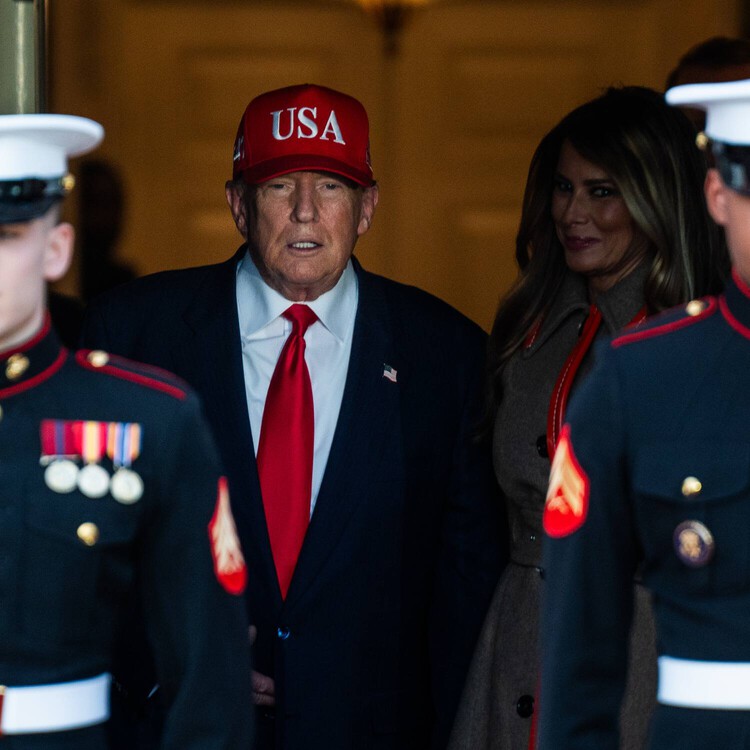
Trump administration tells Congress war law doesn’t apply to cartel strikes — The Washington Post
The Office of Legal Counsel told select lawmakers that the executive branch is not bound by the War Powers Resolution, which requires congressional approval for any military action that exceeds 60 days.apple.news
A top Justice Department lawyer has told lawmakers that the Trump administration can continue its lethal strikes against alleged drug traffickers in Latin America — and is not bound by a decades-old law requiring Congress to give approval for ongoing hostilities.
T. Elliot Gaiser, head of the Trump administration’s Office of Legal Counsel, made his remarks to a small group of lawmakers this week amid signs that the president may be planning to escalate the military campaign in the region, including potentially hitting targets within Venezuela.
“Venezuela has been very hostile to the United States and the Freedoms which we espouse. Therefore, any Country that purchases Oil and/or Gas from Venezuela will be forced to pay a Tariff of 25% to the United States on any Trade they do with our Country,” Trump said in a post on Truth Social.
Yet, American companies are buying Venezuelan heavy oil to feed gulf coast refineries? Venezuelan oil continues to make its way into the US even after sanctions were reinstated, due to a joint-venture license Chevron was granted to pump oil there. That license was set to be revoked on April 3, however, after Trump met with Chevron CEO Mike Wirth and other oil executives last week, the Treasury Department announced on Monday it would be extended to May 27. Does it continue to this day?
Of course you can. It's your most frequently exercised freedom.We can't complain in Canada.
US Supreme Court casts doubt on legality of Trump's global tariffs — Reuters
U.S. Supreme Court justices raised doubts on Wednesday over the legality of President Donald Trump's sweeping tariffs in a case with implications for the global economy that marks a major test of Trump's powers.
“If” it breaks with Trump on tariffs, it would be the first time the 6-3 conservative court has done so in a major argued case since the president returned to power in January. In case after case, the court has blessed the administration’s boundary-pushing policies on immigration, spending and independent agencies.
Takeaways from Trump’s rocky Supreme Court arguments over global tariffs — CNN
The Supreme Court appeared deeply concerned Wednesday with President Donald Trump’s reliance on a vague federal law to impose global tariffs, with several members of the court’s conservative wing picking apart the administration’s position in a case that could have sweeping implications for the...
The federal government has collected nearly $90 billion in revenue from the tariffs being challenged, according to United States Customs and Border Protection data as of September 23.
Earlier this month, Trump said in an interview with Fox Business that if the Supreme Court ruled against him, “we’d have to pay back money.”
If the tariffs were collected illegally, then…yeah! Those funds would have to be reimbursed, you’d think…?
Trade lawyers previously told CNN that the justices would likely be tasked with deciding who is entitled to a tariff refund if they rule against the president?
While several members of the court’s conservative supermajority gave mixed signals of how they may ultimately rule, the court’s three liberal justices made clear that they weren’t buying the arguments the Trump administration was attempting to sell.


Hmmmmm…President Donald Trump’s bid Friday to soothe consumers by dropping tariffs on a wide array of groceries, including coffee, beef, bananas and tomatoes — contradicting his repeated claims that the levies were not affecting retail prices — shows he is on the defensive over his signature policy initiative.
 apple.news
Trump goes on defense over tariffs as prices on everyday items keep rising — The Washington Post
The rollback of import taxes on coffee, bananas and many other foods is the latest sign that the administration could be forced to shift course.

mMaybe he is learning and adapting . LIf somethings are not working as intended , change course .Hmmmmm…President Donald Trump’s bid Friday to soothe consumers by dropping tariffs on a wide array of groceries, including coffee, beef, bananas and tomatoes — contradicting his repeated claims that the levies were not affecting retail prices — shows he is on the defensive over his signature policy initiative.
Trump goes on defense over tariffs as prices on everyday items keep rising — The Washington Post
The rollback of import taxes on coffee, bananas and many other foods is the latest sign that the administration could be forced to shift course.
Just saying .
It's understandable. He just didn't realize raising prices would cause prices to rise.Hmmmmm…President Donald Trump’s bid Friday to soothe consumers by dropping tariffs on a wide array of groceries, including coffee, beef, bananas and tomatoes — contradicting his repeated claims that the levies were not affecting retail prices — shows he is on the defensive over his signature policy initiative.
Trump goes on defense over tariffs as prices on everyday items keep rising — The Washington Post
The rollback of import taxes on coffee, bananas and many other foods is the latest sign that the administration could be forced to shift course.
Cuz he's an imbecile.
Canada should be paying attention to what's happening off Venezuela's coast. The assertion that everything is permissible in defence of American interests should sound eerily familiar to Canadian ears."The first round of tariffs, which the president initially directly tied to fixing what he condemned as an illegal influx of fentanyl and migrants coming across America's southern and northern borders,..."
Simple rebound. Start demanding Trump do something about all the illegals coming across the border into Canada AND the fucking DECADES of illegal guns and drugs flowing north. Or in earthier terms, clean up the dog shit in your yard before you complain about the state of my yard.
U.S. secretary of state Marco Rubio said "the United States is under attack from organized criminal narcoterrorists in our hemisphere, and the President is responding in the defence of our country.”
It is the same leaky logic that was used to justify U.S. tariffs on Canada: the southbound migrants supposedly storming across the border; the fentanyl being funneled from up north that, by Trump’s estimations, could have killed 9.5 million Americans.
Canada protested the American accusations but have resorted to playing Trump’s political game. With the threat of economic ruin, there hasn't been much choice.
But the interim report from the specially created “Fentanyl Czar” Kevin Brosseau last June insisted that, on the central Trump allegations, there is no there there.
“The volumes of fentanyl moving from Canada into the U.S. are negligible,” he wrote, citing U.S. Customs and Border Patrol statistics showing that just one tenth of one per cent of all fentanyl seizures came from Canada.
“These volumes are far less than the flow of illegal narcotics into Canada from the U.S.”
Two reasons why Canada should be wary as Donald Trump targets Venezuela — Toronto Star
Over and above the threat of an U.S.-led war in the western hemisphere, Canadians should pay attention to America's weaponization of information.
(Every person on that boat is less drugs that could be hauled if that’s what was happening but…)
After an Oct. 18 strike, Trump described the vessel as "a very large drug-carrying submarine that was … loaded up with mostly fentanyl and other illegal narcotics." He claimed the drugs would have killed 25,000 Americans if the cargo had reached U.S. shores. I’m assuming this was also a missile strike, etc…?
Two reasons why Canada should be wary as Donald Trump targets Venezuela — Toronto Star
Over and above the threat of an U.S.-led war in the western hemisphere, Canadians should pay attention to America's weaponization of information.
The charge that Maduro sits at the top of the Cartel of the Suns drug cartel, at once a president and a criminal don, is also questionable…but tariffs, etc…
Weed doesn't make money any longer in the Kootneys and Columbia Valley a lot of literally unground weed setup went tits up. Off grid types.Canada should be paying attention to what's happening off Venezuela's coast. The assertion that everything is permissible in defence of American interests should sound eerily familiar to Canadian ears.
U.S. secretary of state Marco Rubio said "the United States is under attack from organized criminal narcoterrorists in our hemisphere, and the President is responding in the defence of our country.”
It is the same leaky logic that was used to justify U.S. tariffs on Canada: the southbound migrants supposedly storming across the border; the fentanyl being funneled from up north that, by Trump’s estimations, could have killed 9.5 million Americans.
Canada protested the American accusations but have resorted to playing Trump’s political game. With the threat of economic ruin, there hasn't been much choice.
But the interim report from the specially created “Fentanyl Czar” Kevin Brosseau last June insisted that, on the central Trump allegations, there is no there there.
“The volumes of fentanyl moving from Canada into the U.S. are negligible,” he wrote, citing U.S. Customs and Border Patrol statistics showing that just one tenth of one per cent of all fentanyl seizures came from Canada.
“These volumes are far less than the flow of illegal narcotics into Canada from the U.S.”
The first U.S. boat strike, on Sept. 2, was hailed by Trump as having killed "11 terrorists" linked to Tren de Aragua, a designated terror group (in Canada, too) that is "operating under the control of Nicolas Maduro." I’m assuming this was a missile strike.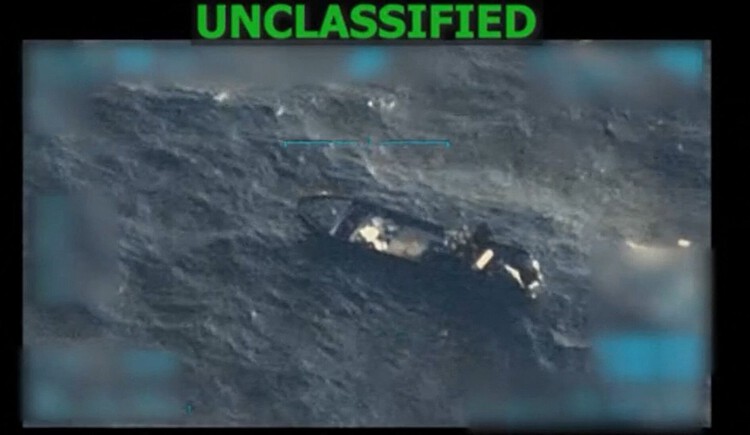
Two reasons why Canada should be wary as Donald Trump targets Venezuela — Toronto Star
Over and above the threat of an U.S.-led war in the western hemisphere, Canadians should pay attention to America's weaponization of information.
(Every person on that boat is less drugs that could be hauled if that’s what was happening but…)
After an Oct. 18 strike, Trump described the vessel as "a very large drug-carrying submarine that was … loaded up with mostly fentanyl and other illegal narcotics." He claimed the drugs would have killed 25,000 Americans if the cargo had reached U.S. shores. I’m assuming this was also a missile strike, etc…?
But an analysis last month by the International Crisis Group noted that "almost all the fentanyl entering the U.S. is produced in Mexico." Most Venezuelan cocaine, it said, "heads to Europe while only a minuscule share is trafficked to the U.S."Two reasons why Canada should be wary as Donald Trump targets Venezuela — Toronto Star
Over and above the threat of an U.S.-led war in the western hemisphere, Canadians should pay attention to America's weaponization of information.
The charge that Maduro sits at the top of the Cartel of the Suns drug cartel, at once a president and a criminal don, is also questionable…but tariffs, etc…
Elbow macaroni.
Nutrien ships the bulk of its potash exports — as much as 11 million tonnes per year — out of the Neptune Terminals in the Port of Vancouver. The company will continue to ship a majority of its product out of Vancouver. And while the Vancouver location was considered for the new terminal, it appears to have lost out. Canpotex, co-owned by Nutrien, ships roughly three million tonnes of potash through Portland, Oregon annually.Holy crap, were these guys even at the same meeting?
Nutrien has stated that current transportation options in Canada are not addressing the company’s needs, and that rail infrastructure bottlenecks in Metro Vancouver and labour disputes in Canada are disrupting its business. Nutrien said it’s trying to minimize supply chaindisruptions to remain competitive in the global marketplace.
In May, Nutrien chief executive Ken Seitz said executives were considering both Canadian and American ports for the terminal. He said timelines and Canadian Government regulations would be deciding factors.
Roughly a month earlier, Prime Minister Mark Carney said a priority for the country was speeding up regulatory processes for major projects. Then in June, the government made the idea law with the introduction of Bill C-5, the “One Canadian Economy Act,” introducing legislation intended to speed up “nation-building” projects and remove interprovincial trade barriers. The government chose the winners and losers for its own agenda.
Saskatchewan-based Nutrien Ltd., the world’s largest potash producer, confirmed that it’s looking to build a new export facility in Washington state — not Vancouver.
Nutrien has set plans in motion to build a $1-billion export terminal at Washington’s Port of Longview at a time when the federal government is pushing for built-in-Canada infrastructure projects.
Minister of Transport Steven MacKinnon has expressed disappointment in Nutrien’s decision, saying he’s trying to convince the company to reverse it. But Joel Bruneau, department head of economics at the University of Saskatchewan, said if transportation bottlenecks in Canada are impeding the free flow of Nutrien’s product, it has every right to seek alternatives.
“Carney wants, and we all want, more investment in Canada,” Bruneau said. “But if there’s bottlenecks in that railway, and Nutrien is saying those bottlenecks are problematic, then surely we should get rid of the bottlenecks in our transportation system. Surely we need another port in the country that we can offer to a company like Nutrien, one with excess capacity.”
Nutrien said it needs a new export terminal to meet growing demand for Saskatchewan potash. The company views the Washington site as a more efficient route to potash markets in China, Japan and India, but said it has “open lines of communication” with the Canadian government.
Pending a final investment decision, the company expects to finalize plans for the Longview terminal in 2027, and complete construction by 2031.

Saskatchewan firm's plan to export through Washington state instead of B.C. has David Eby fuming
Vaughn Palmer: Nutrien Ltd. says Longview, Washington, makes more sense than B.C. ports for a host of cost reasons

Nutrien's plans for U.S. terminal get pushback from Ottawa, thumbs up from economist
Nutrien has set plans in motion to build a $1-billion export terminal at the Port of Longview
 thestarphoenix.com
The BC premier said the whole country would benefit from the investing in
Eby was responding to the news that Saskatchewan Premier Scott Moe had been in discussions with Prime Minister Mark Carney and Alberta Premier Danielle Smith about an oil pipeline through B.C.
“I almost fell out of my seat when I heard Scott Moe say that he was part of these conversations — which I was completely unaware of — about what happens in B.C.,” Eby told the CBC’s David Cochrane, Thursday.
“I was especially surprised because there’s a lot we should be doing with Saskatchewan,” the premier continued, noting the news about the potash terminal, which had broken the day before. A final investment decision is expected in 2027.

Canadian potash company Nutrien to build terminal in U.S. and not B.C. | Globalnews.ca
B.C. Premier David Eby said on Monday that he questions this decision as it would put a Canadian product at the mercy of the U.S. administration.
 globalnews.ca
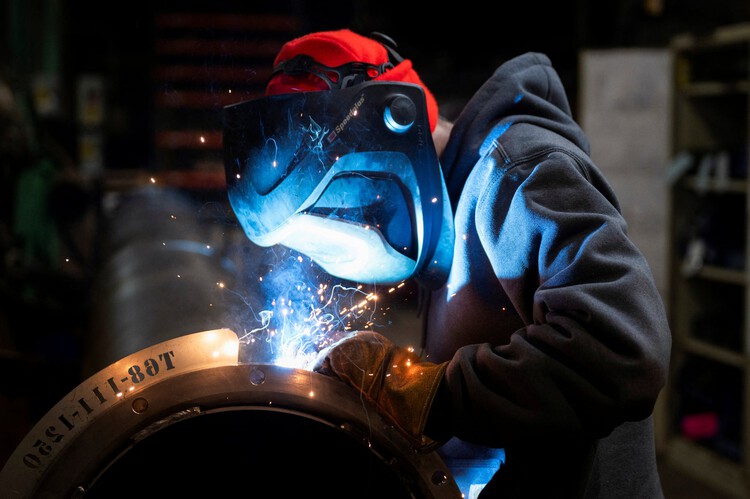
U.S. manufacturing contracted for the ninth straight month in November, with factories facing slumping orders and higher prices for inputs as the drag from import tariffs persisted…but maybe that’s just a coincidence?
The Federal Reserve's Beige Book report last week said overall consumer spending declined further by mid-November. It noted that while some of the U.S. central bank's 12 districts reported manufacturing activity increased somewhat, "tariffs and tariff uncertainty remained a headwind." President Donald Trump's sweeping import duties have undercut manufacturing, though some segments have been boosted by a surge in artificial intelligence investment.
U.S. Supreme Court justices last month raised doubts over the legality of Trump's tariffs, fueling speculation they would be struck down and cause more chaos as he is widely expected to shift to other trade tactics (like invading Venezuela?) in the event of an adverse ruling.
 apple.news
The Federal Reserve's Beige Book report last week said overall consumer spending declined further by mid-November. It noted that while some of the U.S. central bank's 12 districts reported manufacturing activity increased somewhat, "tariffs and tariff uncertainty remained a headwind." President Donald Trump's sweeping import duties have undercut manufacturing, though some segments have been boosted by a surge in artificial intelligence investment.
U.S. Supreme Court justices last month raised doubts over the legality of Trump's tariffs, fueling speculation they would be struck down and cause more chaos as he is widely expected to shift to other trade tactics (like invading Venezuela?) in the event of an adverse ruling.
US manufacturing stuck in doldrums as tariff headwinds persist — Reuters
U.S. manufacturing contracted for the ninth straight month in November, with factories facing slumping orders and higher prices for inputs as the drag from import tariffs persisted.
Was coming even without tariffs.U.S. manufacturing contracted for the ninth straight month in November, with factories facing slumping orders and higher prices for inputs as the drag from import tariffs persisted…but maybe that’s just a coincidence?
The Federal Reserve's Beige Book report last week said overall consumer spending declined further by mid-November. It noted that while some of the U.S. central bank's 12 districts reported manufacturing activity increased somewhat, "tariffs and tariff uncertainty remained a headwind." President Donald Trump's sweeping import duties have undercut manufacturing, though some segments have been boosted by a surge in artificial intelligence investment.
U.S. Supreme Court justices last month raised doubts over the legality of Trump's tariffs, fueling speculation they would be struck down and cause more chaos as he is widely expected to shift to other trade tactics (like invading Venezuela?) in the event of an adverse ruling.
US manufacturing stuck in doldrums as tariff headwinds persist — Reuters
U.S. manufacturing contracted for the ninth straight month in November, with factories facing slumping orders and higher prices for inputs as the drag from import tariffs persisted.

Costco joins companies suing for refunds if Trump’s tariffs fall
Costco Wholesale Corp. joined a growing list of businesses suing the Trump administration to ensure eligibility for tariff refunds. Read now
- Costco filed a lawsuit asking for a full refund of tariffs the warehouse club giant has paid since President Donald Trump imposed "reciprocal" and "fentanyl" tariffs earlier this year.
- Costco's suit in the U.S. Court of International Trade notes that it might not be able to get the refunds later, even if the Supreme Court upholds lower court rulings that the tariffs are illegal.
- Trump invoked the International Emergency Economic Powers Act to impose those often high tariffs on imports from most of the world's nations.
- http://www.cnbc.com/2025/12/01/costco-sues-trump-tariffs-trade-supreme-court.html
Big businesses will end up paying the most in tariffs because of the immense volume of goods they import. They have so far been in wait-and-see mode, viewing that as a better strategy than stirring up a feud with the temperamental president.
That phase of the tariff tussle appears to be ending. Costco, America’s 12th-largest publicly traded company by revenue and 15th-largest by number of employees, has filed suit at the U.S. Court of International Trade seeking refunds of the tariff money it has paid so far.
This suit confirms that American businesses pay American tariffs. If, as Trump believes, foreigners were paying them, there would be no reason for Costco to seek a refund. And Costco’s suit is one of many that will be filed as the thousands of American businesses robbed by the president seek their just recompense.
Costco says imported goods account for about one-third of its sales. The warehouse club is famous for its ruthlessness in cutting prices for its members. Obstacles to lower prices don’t normally include American customs officials running roughshod over the law.
Trump may lash out against Costco with one of his Truth Social tirades. But attacking a company that has mostly kept its prices low won’t go over well with inflation-weary voters. Nearly one-third of Americans shop at Costco, and they’re concentrated in the suburban areas so crucial to electoral success.
 apple.news
Big business is now acting on what small businesses felt instantly: Tariffs are taxes on Americans. The largest companies had enough money to absorb some of those costs for a while, but time is running out, and they don’t want to pass them on to their customers.
apple.news
Big business is now acting on what small businesses felt instantly: Tariffs are taxes on Americans. The largest companies had enough money to absorb some of those costs for a while, but time is running out, and they don’t want to pass them on to their customers.
That phase of the tariff tussle appears to be ending. Costco, America’s 12th-largest publicly traded company by revenue and 15th-largest by number of employees, has filed suit at the U.S. Court of International Trade seeking refunds of the tariff money it has paid so far.
This suit confirms that American businesses pay American tariffs. If, as Trump believes, foreigners were paying them, there would be no reason for Costco to seek a refund. And Costco’s suit is one of many that will be filed as the thousands of American businesses robbed by the president seek their just recompense.
Costco says imported goods account for about one-third of its sales. The warehouse club is famous for its ruthlessness in cutting prices for its members. Obstacles to lower prices don’t normally include American customs officials running roughshod over the law.
Trump may lash out against Costco with one of his Truth Social tirades. But attacking a company that has mostly kept its prices low won’t go over well with inflation-weary voters. Nearly one-third of Americans shop at Costco, and they’re concentrated in the suburban areas so crucial to electoral success.
Opinion | Costco’s lawsuit confirms who pays for tariffs — The Washington Post
The retailer becomes the largest company to sue over the administration’s trade policy.
America supplies about 1/50th of its own potash fertilizer needs…so yeah, I guess. U.S. President Donald Trump said Monday he may impose “very severe tariffs” on fertilizer from Canada “if we have to” (?) in order to bolster domestic production.Nutrien ships the bulk of its potash exports — as much as 11 million tonnes per year — out of the Neptune Terminals in the Port of Vancouver. The company will continue to ship a majority of its product out of Vancouver. And while the Vancouver location was considered for the new terminal, it appears to have lost out. Canpotex, co-owned by Nutrien, ships roughly three million tonnes of potash through Portland, Oregon annually.
Nutrien has stated that current transportation options in Canada are not addressing the company’s needs, and that rail infrastructure bottlenecks in Metro Vancouver and labour disputes in Canada are disrupting its business. Nutrien said it’s trying to minimize supply chaindisruptions to remain competitive in the global marketplace.
In May, Nutrien chief executive Ken Seitz said executives were considering both Canadian and American ports for the terminal. He said timelines and Canadian Government regulations would be deciding factors.
Roughly a month earlier, Prime Minister Mark Carney said a priority for the country was speeding up regulatory processes for major projects. Then in June, the government made the idea law with the introduction of Bill C-5, the “One Canadian Economy Act,” introducing legislation intended to speed up “nation-building” projects and remove interprovincial trade barriers. The government chose the winners and losers for its own agenda.
Saskatchewan-based Nutrien Ltd., the world’s largest potash producer, confirmed that it’s looking to build a new export facility in Washington state — not Vancouver.
Nutrien has set plans in motion to build a $1-billion export terminal at Washington’s Port of Longview at a time when the federal government is pushing for built-in-Canada infrastructure projects.
Minister of Transport Steven MacKinnon has expressed disappointment in Nutrien’s decision, saying he’s trying to convince the company to reverse it. But Joel Bruneau, department head of economics at the University of Saskatchewan, said if transportation bottlenecks in Canada are impeding the free flow of Nutrien’s product, it has every right to seek alternatives.
“Carney wants, and we all want, more investment in Canada,” Bruneau said. “But if there’s bottlenecks in that railway, and Nutrien is saying those bottlenecks are problematic, then surely we should get rid of the bottlenecks in our transportation system. Surely we need another port in the country that we can offer to a company like Nutrien, one with excess capacity.”
Nutrien said it needs a new export terminal to meet growing demand for Saskatchewan potash. The company views the Washington site as a more efficient route to potash markets in China, Japan and India, but said it has “open lines of communication” with the Canadian government.
Pending a final investment decision, the company expects to finalize plans for the Longview terminal in 2027, and complete construction by 2031.
Saskatchewan firm's plan to export through Washington state instead of B.C. has David Eby fuming
Vaughn Palmer: Nutrien Ltd. says Longview, Washington, makes more sense than B.C. ports for a host of cost reasonsvancouversun.com
I guess Nutrien doesn’t have 20 years to wait for regulatory approval, & then to have the project cancelled most of the through the process. Oh well…“I was really disappointed,” the current BC premier told reporters when asked about Nutrien’s decision to go with Longview, Washington, on the Columbia River over Prince Rupert or Vancouver. B.C. Premier David Eby says a recent decision by a Saskatchewan company doesn’t make sense.Nutrien's plans for U.S. terminal get pushback from Ottawa, thumbs up from economist
Nutrien has set plans in motion to build a $1-billion export terminal at the Port of Longview
The BC premier said the whole country would benefit from the investing ina pipelineport expansion on the West Coast to ship a landlocked commodity from one of the Prairie provinces. The premier first cited a concern about Nutrien’s decision last week.
Eby was responding to the news that Saskatchewan Premier Scott Moe had been in discussions with Prime Minister Mark Carney and Alberta Premier Danielle Smith about an oil pipeline through B.C.
“I almost fell out of my seat when I heard Scott Moe say that he was part of these conversations — which I was completely unaware of — about what happens in B.C.,” Eby told the CBC’s David Cochrane, Thursday.
“I was especially surprised because there’s a lot we should be doing with Saskatchewan,” the premier continued, noting the news about the potash terminal, which had broken the day before. A final investment decision is expected in 2027.
Canadian potash company Nutrien to build terminal in U.S. and not B.C. | Globalnews.ca
B.C. Premier David Eby said on Monday that he questions this decision as it would put a Canadian product at the mercy of the U.S. administration.
Trump made the comment while taking questions from reporters during a roundtable event at the White House where he announced a US$12-billion tariff relief fund for American farmers, who have been facing rising costs for agricultural inputs like seed and fertilizer amid Trump’s global trade war…& the irony would be that this $12-billion tariffs relief fund would come from the very pockets of these farmers and others that have had to pay Trumps tariffs.
“A lot of (fertilizer) does come in from Canada, and so we’ll end up putting very severe tariffs on that that Americans would have to pay, if we have to, because that’s the way you want to bolster here,” Trump said.
Trump threatens 'severe' tariffs on Canadian fertilizer 'if we have to' — Global News
Trump made the comment during a roundtable event at the White House where he announced a US$12-billion tariff relief fund for American farmers.
When Trump imposed a blanket 25 per cent tariff on Canadian goods early this year, he lowered the tariff on fertilizer to 10 per cent straight out of American Farmers pockets after outcry from industry groups and Republican lawmakers in farming states, such as Sen. Chuck Grassley of Iowa.

Rollins said Monday that US$11 billion of the new aid package will go to row crop farmers and will be disbursed by Feb. 28. The administration is holding back the remaining US$1 billion for fruits, vegetables and other crops to finalize the details, Rollins said.
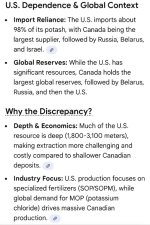
The U.S imports over 90 per cent of the potash its farmers need annually and 85 per cent of it comes from Canada. Almost half of the product out of Saskatchewan in 2023 went to the U.S. market. The OEC valued the international trade at US$3.66 billion. The U.S. gets about 11 per cent of its potash from Russia.
U.S. Treasury Secretary Scott Bessent said the payments will be a “liquidity bridge during a period of adjustment” to support farmers until they see benefits from Trump’s trade deals and other policies? Ruh-roh for the American farmers…wouldn’t that be a…subsidy…

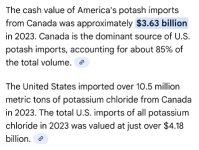
Now I’m assuming (I know, ass/u/ming) that the volume of potash imported from Russia to America of 11% in 2023 has decreased since that whole Ukraine invasion (I mean, I could be wrong here), and someone other that Belarus has been making up that shortfall? Rhymes with Zanada?
Potash – a critical raw material and an opportunity for investors — Swiss Resource Capital News
Advertisement/Promotion – This article is distributed on behalf of Millennial Potash Corp., with which SRC swiss resource capital AG has paid IR consulting agreements. Creator: SRC swiss resource capital AG · Author: Ingrid Heinritzi · First published: December 04, 2025, 4:55 p.m. Zurich/Berlin

America supplies about 1/50th of its own potash fertilizer needs…so yeah, I guess. U.S. President Donald Trump said Monday he may impose “very severe tariffs” on fertilizer from Canada “if we have to” (?) in order to bolster domestic production.
Trump made the comment while taking questions from reporters during a roundtable event at the White House where he announced a US$12-billion tariff relief fund for American farmers, who have been facing rising costs for agricultural inputs like seed and fertilizer amid Trump’s global trade war…& the irony would be that this $12-billion tariffs relief fund would come from the very pockets of these farmers and others that have had to pay Trumps tariffs.
“A lot of (fertilizer) does come in from Canada, and so we’ll end up putting very severe tariffs on that that Americans would have to pay, if we have to, because that’s the way you want to bolster here,” Trump said.
Many U.S. farmers rely on Canadian potash fertilizer from Saskatchewan in order to add potassium to their soils. Over 90 per cent of Canadian fertilizer is exported, and the U.S. market accounts for well over half of that, according to Fertilizer Canada.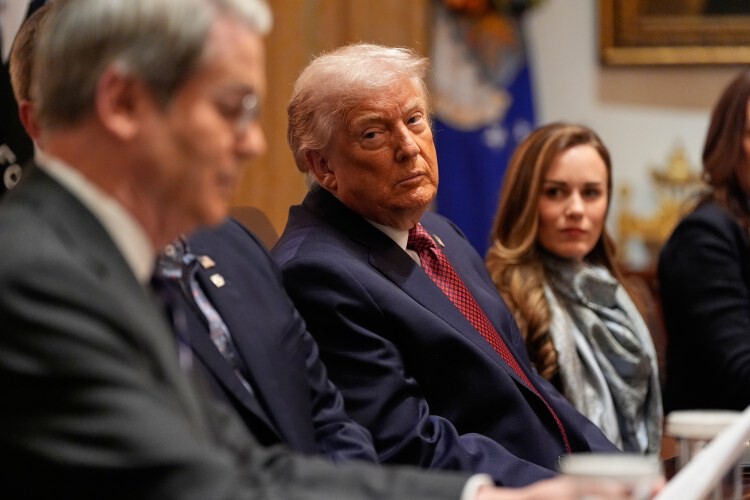
Trump threatens 'severe' tariffs on Canadian fertilizer 'if we have to' — Global News
Trump made the comment during a roundtable event at the White House where he announced a US$12-billion tariff relief fund for American farmers.
When Trump imposed a blanket 25 per cent tariff on Canadian goods early this year, he lowered the tariff on fertilizer to 10 per cent straight out of American Farmers pockets after outcry from industry groups and Republican lawmakers in farming states, such as Sen. Chuck Grassley of Iowa.
Rollins said Monday that US$11 billion of the new aid package will go to row crop farmers and will be disbursed by Feb. 28. The administration is holding back the remaining US$1 billion for fruits, vegetables and other crops to finalize the details, Rollins said.
View attachment 32242
The U.S imports over 90 per cent of the potash its farmers need annually and 85 per cent of it comes from Canada. Almost half of the product out of Saskatchewan in 2023 went to the U.S. market. The OEC valued the international trade at US$3.66 billion. The U.S. gets about 11 per cent of its potash from Russia.
U.S. Treasury Secretary Scott Bessent said the payments will be a “liquidity bridge during a period of adjustment” to support farmers until they see benefits from Trump’s trade deals and other policies? Ruh-roh for the American farmers…wouldn’t that be a…subsidy…
View attachment 32243
Now I’m assuming (I know, ass/u/ming) that the volume of potash imported from Russia to America of 11% in 2023 has decreased since that whole Ukraine invasion (I mean, I could be wrong here), and someone other that Belarus has been making up that shortfall? Rhymes with Zanada?
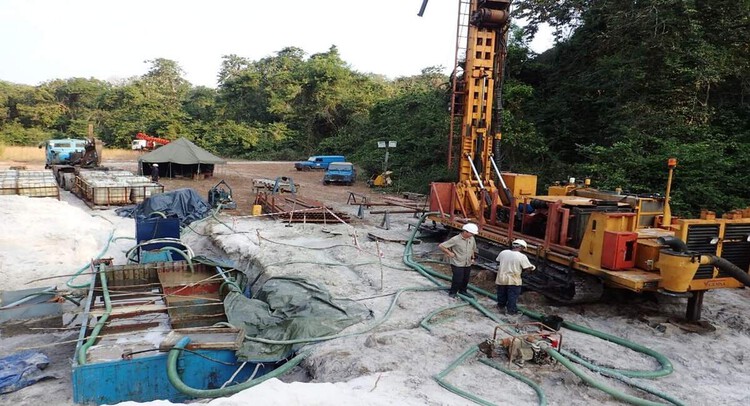
Potash – a critical raw material and an opportunity for investors — Swiss Resource Capital News
Advertisement/Promotion – This article is distributed on behalf of Millennial Potash Corp., with which SRC swiss resource capital AG has paid IR consulting agreements. Creator: SRC swiss resource capital AG · Author: Ingrid Heinritzi · First published: December 04, 2025, 4:55 p.m. Zurich/Berlin
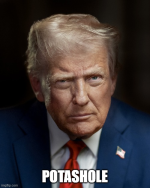
That's an insult to potash.
Kirsten Hillman leaving role as Canada's ambassador to U.S. next year
Report suggests that Canadian financier Mark Wiseman will take over role as CUSMA negotiations loom
Author of the article:Ian Shantz
Published Dec 09, 2025 • 1 minute read
Kirsten Hillman
Canadian ambassador to the United States Kirsten Hillman and Minister of International Trade and Intergovernmental Affairs Dominic LeBlanc arrive for a meeting on Parliament Hill in Ottawa on Wednesday, April 2, 2025.
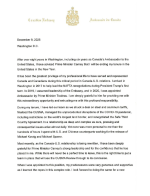
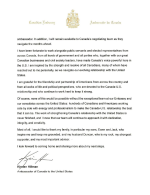
Kirsten Hillman, Canada’s ambassador to the United States, is leaving the job in the new year, she announced Tuesday in a social media post.
Hillman has been in position since 2020.
Hillman, who is the country’s chief negotiator on U.S. trade, will leave the post ahead of a renegotiation of the continental free-trade deal.
She said the timing of her exit will give Prime Minister Mark Carney the ability to put “a team in place that will see the CUSMA (Canada-U.S.-Mexico Agreement) review through to its conclusion,” referring to the expected 2026 renegotiation of the free-trade agreement.
According to a report from The Globe and Mail, citing a source, she is expected to be replaced by Canadian financier Mark Wiseman, who is a close friend to the prime minister.
PM asked Hillman to stay in position
Carney in June asked Hillman to stay on as ambassador to Washington to take on the chief negotiator role during tense trade and security talks with the Trump administration. She made it clear at the time that she didn’t want the responsibility over the long term.
Hillman has served at the Canadian Embassy in Washington since 2017 — six of those years as ambassador.
“Ambassador Hillman’s intelligence, determined action and diplomacy have contributed immensely to the advancement of a new economic and security relationship with the United States — and prepared the foundations for Canada in the upcoming CUSMA review,” Carney said in a statement.
Hillman, a lawyer, was a key member of the team that worked to revamp the old North American Free Trade Agreement during U.S. President Donald Trump’s first term, when it was replaced by the CUSMA.
She also served as Canada’s chief negotiator for the Comprehensive and Progressive Agreement for Trans-Pacific Partnership.

 theglobeandmail.com
 torontosun.com
Report suggests that Canadian financier Mark Wiseman will take over role as CUSMA negotiations loom
Author of the article:Ian Shantz
Published Dec 09, 2025 • 1 minute read
Kirsten Hillman
Canadian ambassador to the United States Kirsten Hillman and Minister of International Trade and Intergovernmental Affairs Dominic LeBlanc arrive for a meeting on Parliament Hill in Ottawa on Wednesday, April 2, 2025.
Kirsten Hillman, Canada’s ambassador to the United States, is leaving the job in the new year, she announced Tuesday in a social media post.
Hillman has been in position since 2020.
Hillman, who is the country’s chief negotiator on U.S. trade, will leave the post ahead of a renegotiation of the continental free-trade deal.
She said the timing of her exit will give Prime Minister Mark Carney the ability to put “a team in place that will see the CUSMA (Canada-U.S.-Mexico Agreement) review through to its conclusion,” referring to the expected 2026 renegotiation of the free-trade agreement.
According to a report from The Globe and Mail, citing a source, she is expected to be replaced by Canadian financier Mark Wiseman, who is a close friend to the prime minister.
PM asked Hillman to stay in position
Carney in June asked Hillman to stay on as ambassador to Washington to take on the chief negotiator role during tense trade and security talks with the Trump administration. She made it clear at the time that she didn’t want the responsibility over the long term.
Hillman has served at the Canadian Embassy in Washington since 2017 — six of those years as ambassador.
“Ambassador Hillman’s intelligence, determined action and diplomacy have contributed immensely to the advancement of a new economic and security relationship with the United States — and prepared the foundations for Canada in the upcoming CUSMA review,” Carney said in a statement.
Hillman, a lawyer, was a key member of the team that worked to revamp the old North American Free Trade Agreement during U.S. President Donald Trump’s first term, when it was replaced by the CUSMA.
She also served as Canada’s chief negotiator for the Comprehensive and Progressive Agreement for Trans-Pacific Partnership.
Kirsten Hillman, Canada’s lead trade negotiator and ambassador to U.S., to leave post in new year
Mark Wiseman, a close friend of the Prime Minister, expected to replace her, source says
theglobeandmail.com
Kirsten Hillman leaving role as Canada's ambassador to U.S. next year
Kirsten Hillman, Canada’s ambassador to the United States, is soon leaving the job, she announced Tuesday in a social media post. Read more.