SARS‑CoV‑2 (COVID-19)

spaminator

Hall of Fame Member
Oct 26, 2009
39,578
3,680
113
Quebec to stop offering COVID vaccine for free to most people, shots cost up to $180
Author of the article:Canadian Press
Canadian Press
Published Sep 18, 2025 • Last updated 1 day ago • 3 minute read


Quebec is now the second province after Alberta to announce it will no longer offer free doses of the COVID-19 vaccine to its entire population, starting this fall.


The decision matches a similar policy announced by Alberta Premier Danielle Smith, who said in August her own government would no longer do so as a cost-saving measure.


Quebec’s Health Department said it based its decision on advice from a committee of immunization experts that reports to the province’s public health institute.

It said it’s no longer necessary to offer free doses of the vaccine to healthy adults, since most in the province have now built up an immunity to the virus, either through vaccination, prior infections or both.

“There’s a lot of immunity inside that group,” said Dr. Luc Boileau, Quebec’s national director of public health.

Because of that, he said their risk of having complications if they were to get infected is not very high.


“In fact, it’s going to be very, very low for people that are not in the groups that are at risk,” he said.

Only certain people will remain eligible for subsidized shots this fall in Quebec.

They include those with chronic health conditions, those over 65, those living in long-term care facilities, and health-care workers, the province’s Health Department confirmed.

Quebecers who are pregnant, those who are immunocompromised, and those living in isolated regions will also still be able to get a free shot.

Boileau said if doses of the vaccine are left over after those priority groups receive them, the general population may be given the chance to access them for free.

He said they aren’t suggesting people shouldn’t get vaccinated, but that it should be treated as a personal decision instead, based on one’s own risk factor.


The doctor said the federal government’s decision to stop covering the costs of COVID-19 vaccination campaigns in the provinces and territories was another factor in Quebec’s decision.

He said that was expected, since the COVID-19 pandemic was an exceptional situation, and it wasn’t anticipated the federal government would indefinitely foot the costs.

“They are not going to pay and support that financially, which is, I mean their decision, but now we have to cope with that,” Boileau said.

Quebec’s COVID-19 immunization campaign is expected to kick off in early October.

The province will also continue to offer flu shots to general population for free this fall, the department confirmed.

Other provinces that responded to questions from The Canadian Press on Thursday, including Ontario, British Columbia and Nova Scotia, said they were maintaining plans to cover costs for people who wanted the vaccine.


“I think every year we look at what our options are,” said Nova Scotia Health Minister Michelle Thompson. “I don’t think it would be wise or fair of me to predict what’s going to happen next year. This year there is no need for any type of alarm. Our program is not changed.”

Healthy adults in Quebec who still want a dose this fall can pay out of pocket at their local pharmacy.

The province’s association of pharmacist owners said the costs will range between $150 to $180, depending on the rates set by individual pharmacies.

The Alberta government said there were approximately 401,000 unused doses of the vaccine last year, leading to estimated losses of $44 million.

However, the Smith government said it will still make doses of the vaccine free to those that need it most, including those with certain health conditions, and health-care staff.

“We’ll try it this way. This year, we are trying to mitigate costs because it is an expensive intervention,” Smith said last month.

This report by The Canadian Press was first published Sept. 18, 2025.
 

spaminator

Hall of Fame Member
Oct 26, 2009
39,578
3,680
113
COVID changes sperm in mice, may raise anxiety in offspring: study
Author of the article:AFP
AFP
Published Oct 11, 2025 • 2 minute read

COVID-19 infection causes changes to sperm in mice that may increase anxiety in their offspring, according to Australian researchers.
SYDNEY — COVID-19 infection causes changes to sperm in mice that may increase anxiety in their offspring, a study released Saturday said, suggesting the pandemic’s possibly long-lasting effects on future generations.


Researchers at the Florey Institute of Neuroscience and Mental Health in Melbourne, Australia, infected male mice with the virus that causes COVID, mated them with females, and assessed the impacts on the health of their offspring.


“We found that the resulting offspring showed more anxious behaviours compared to offspring from uninfected fathers,” the study’s first author Elizabeth Kleeman said.

The study — published in the peer-reviewed journal Nature Communications — found that all the offspring from COVID-infected fathers exhibited those changes.

In particular, females showed “significant changes” in the activity of certain genes in the hippocampus, the part of the brain that regulates emotions.


This “may contribute to the increased anxiety we observed in offspring, via epigenetic inheritance and altered brain development,” co-senior author Carolina Gubert said.

The researchers said their work was the first of its kind to show the long-term impact of COVID infection on the behaviour and brain development of later generations.

It found that the virus altered molecules in RNA in the fathers’ sperm, some of which are “involved in the regulation of genes that are known to be important in brain development,” the institute said.

“These findings suggest that the COVID-19 pandemic could have long-lasting effects on future generations,” lead researcher Anthony Hannan said.

But further research was needed, including on whether the same changes occur in people, he added.


“If our findings translate to humans, this could impact millions of children worldwide, and their families, with major implications for public health,” Hannan said.

The COVID pandemic, which took hold in early 2020, is known to have caused more than seven million deaths worldwide, according to the World Health Organization. The true toll is likely far higher.

Both the disease and official responses to it are known to have had deep impacts on mental health globally.

Research has shown that younger people, who were forced into isolation during a key social period of their lives, took the biggest mental health hit.

And a review of around 40 studies across 15 countries, published in the peer-reviewed journal Nature Human Behaviour in 2023, found that children had still not made up the learning gaps caused by pandemic-era disruptions to their education.
 

spaminator

Hall of Fame Member
Oct 26, 2009
39,578
3,680
113
Study finds mRNA coronavirus vaccines prolonged life of cancer patients
Author of the article:Washington Post
Washington Post
Mark Johnson, The Washington Post
Published Oct 23, 2025 • 6 minute read

The study's findings raise hope that scientists may be able to develop a universal vaccine for patients with different cancers.
Covid-19 vaccines, credited with saving millions of lives during the pandemic, set off a powerful alarm that rallies the human immune system against cancer and nearly doubles the median survival length of patients, according to a new retrospective study by researchers at the University of Texas MD Anderson Cancer Center and the University of Florida.


The study examined the records of more than 1,000 MD Anderson patients who had already started approved immunotherapy for advanced non-small-cell lung cancer and melanoma, a type of skin cancer, comparing those who received coronavirus mRNA vaccines with those who had not.


“This data is incredibly exciting, but it needs to be confirmed in a Phase III clinical trial,” said Adam Grippin, lead author of the study published Wednesday in the journal Nature.

Grippin, who worked on the project while at the University of Florida and is now a radiation oncologist at MD Anderson, said planning for a Phase III clinical trial is underway and organizers hope to begin enrolling patients by the end of the year.

While the findings raise hope that scientists may be able to develop a universal, off-the-shelf vaccine for patients with different cancers, they come at a difficult time for research into vaccines that use messenger RNA.


In August, Health and Human Services Secretary Robert F. Kennedy Jr. announced that the U.S. government was ending almost $500 million in mRNA vaccine development, “because the data show these vaccines fail to protect effectively against upper respiratory infections like Covid and flu.” Scientists have vigorously disputed Kennedy’s contention.

Vaccines that use messenger RNA, a single-stranded molecule, instruct our immune system without actually infecting the body, teaching cells to make a harmless piece of virus protein. Under President Donald Trump’s Operation Warp Speed program to fight the covid-19 pandemic, scientists were able to use the mRNA platform to develop vaccines less than a year after the virus was detected. Vaccine development often takes 10 to 15 years.


But mRNA vaccines were by no means a new idea. For more than two decades, scientists had been investigating their use against influenza and cancer.

In the latest study, scientists looked back at almost 900 patients with advanced lung cancer treated at MD Anderson and found that those given covid-19 vaccines within 100 days of starting cancer immunotherapy experienced median survival of 37.3 months compared with 20.6 months for those who were not vaccinated. Patients with melanoma that had spread also showed improved median survival when they were vaccinated.

The immunotherapy – called immune checkpoint treatment – works by releasing a brake that prevents an excessive immune response from killing healthy cells. Releasing that brake allows white blood cells called T cells to attack cancer.


Asked for response to the new study, the Department of Health and Human Services released a statement saying: “The risk-benefit of Covid vaccination in people under age 65 is most favourable for those who are at an increased risk for severe COVID-19, including groups like the advanced cancer patients analyzed in this hypothesis. We terminated 22 mRNA vaccine development investments because the data showed they failed to protect effectively against upper respiratory infections like COVID.”

Precisely why the mRNA vaccines proved so effective in awakening the body’s immune system to the presence of cancer isn’t yet clear, but it may have something to do with RNA’s fundamental role in the evolution of life.

“RNA preceded DNA evolutionarily, so cells don’t like RNA from the outside world coming in,” said Elias Sayour, one of the authors of the new paper and a pediatric oncologist at University of Florida Health. “So when that happens, that sets off all the alarms of the human body. The 911 signals we’re in trouble.”


Grippin had worked in Sayour’s University of Florida lab until 2019; he joined MD Anderson in July 2021.

Scientists at both institutions followed up the examination of the MD Anderson patient records by experimenting in the lab with mouse models, and they found that when immunotherapy treatment was used with mRNA vaccination, the combination slowed tumour growth.

“It is not unexpected. You can expect that more data will come out,” said Katalin Kariko, the University of Pennsylvania researcher who shared the 2023 Nobel Prize in medicine with Drew Weissman for work that led to the development of the coronavirus vaccines.

Kariko, who was not involved in the new study, said that in May she was in Europe speaking with other scientists “and they mentioned that the covid vaccine has an effect on cancer growth.” There are about 150 clinical trials of mRNA vaccines ongoing around the world, Kariko said, almost half for treatment of infectious diseases and many of the others for cancers.


“People are trying and they can see it is easy. It is cheap and very quickly you can proceed,” she said. “It will advance and it will benefit the patient.”

Jeff Coller, a professor of RNA biology and therapeutics at Johns Hopkins University who was also not involved in the Nature paper, said mRNA has been viewed as a promising cancer treatment because “it’s a natural product of the human body. Your mRNA is made by the body millions of times per day, and it’s incredibly adaptable.”

He added that mRNA “is very easy to work with, develop, manufacture and change as needed. No other medical therapeutic is this adaptable.” As an example, he pointed out that the day after scientists determined the genomic sequence of the virus SARS-CoV-2, researchers were able to design an mRNA vaccine against it, though it took months longer before vaccines were approved and put into use.


Grippin said the path toward the latest discovery began in 2016 when he and other scientists were experimenting with a vaccine specifically tailored for the brain tumours of individual patients.

“We ran an experiment designed to show how important it was that we make a new vaccine” to match the specific makeup of each tumour. The shock came when they examined the response of the control vaccines.

Although the control vaccines were completely unrelated to the tumour’s composition, they showed a remarkable immune response.

“It was the exact opposite of what we had expected to happen,” Grippin said. “But it opened the door to the possibility that we could design a universal vaccine that could be used to train any patient’s immune system to kill their cancer.”


After billions of doses of mRNA vaccines were administered to fight the covid-19 pandemic, scientists had an opportunity to see how they affected cancer patients.

Grippin and Steven H. Lin, a radiation oncologist at MD Anderson, launched the retrospective study of patients treated between 2015 and 2023 to determine whether those who received coronavirus vaccines lived longer.

The fact that the vaccines need not be individually tailored for a patient is especially significant. Making personalized cancer vaccines would require conducting a biopsy on a patient’s tumour and analyzing its genetic makeup, a process that would take months.

Sayour and other scientists said they hoped the new study will lead the Trump administration to reconsider the halt on mRNA vaccine development.


“Few things have been tested as comprehensively as the covid-19 mRNA vaccine,” Sayour said.

“I’m not saying this is the cure for cancer, okay? I’m saying that this is a tool, a tool that can allow us to markedly improve the response to immunotherapy we’re currently seeing. I mean, every day hundreds of cancer patients are dying despite checkpoint inhibitors.”

The study was funded by the National Cancer Institute and multiple foundations.
 

spaminator

Hall of Fame Member
Oct 26, 2009
39,578
3,680
113
Health officials brace for a severe flu season, urge people to get vaccinated
Hospitals are already dealing with high occupancy levels ahead of the normal start of viral season.

Author of the article:Elizabeth Payne
Published Oct 30, 2025 • Last updated 5 hours ago • 4 minute read

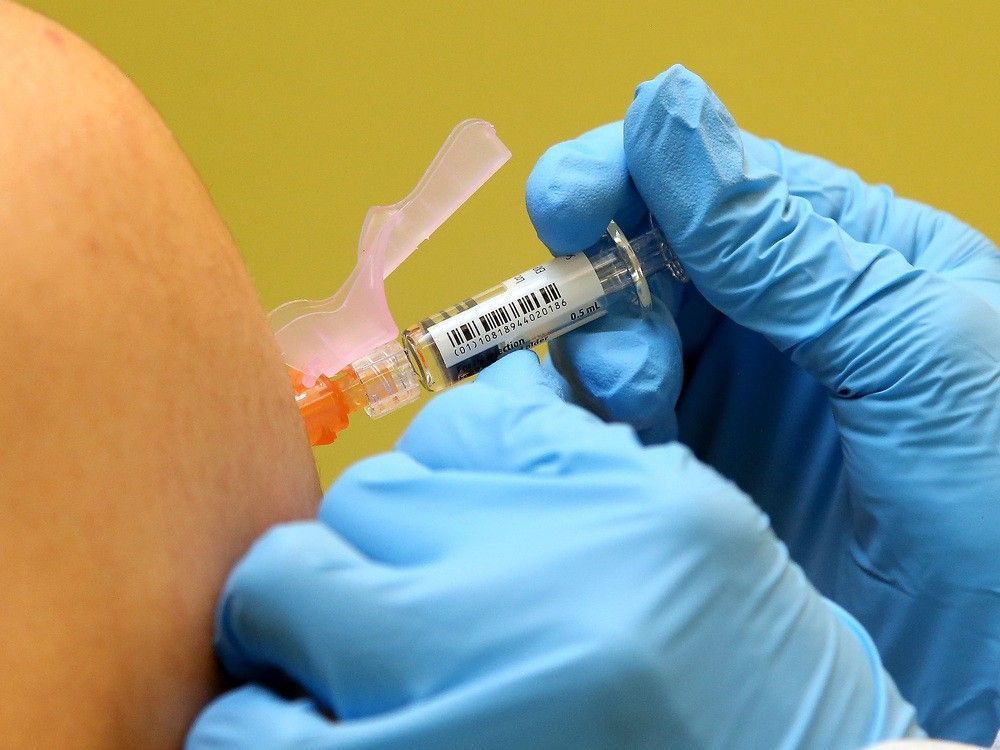
A file photo of a flu shot being administered at a downtown Ottawa pharmacy.
It is a public health message that goes out every fall, but this year the calls for people to get vaccinated against flu and COVID are more urgent.


Health officials are bracing for a severe flu season and urging residents to get vaccinated against flu, COVID-19 and RSV, if they are eligible. The message comes at a time when many hospitals are already overcrowded.


Dr. Virginia Roth, chief of staff at The Ottawa Hospital, is among those urging people to get vaccinated, especially those at high risk for severe outcomes from COVID-19, flu and RSV. Health officials are concerned because of the severe flu seasons reported in Australia and elsewhere.

“We have been watching it and we are bracing ourselves for a pretty severe flu season,” Roth says.

In addition to people protecting themselves, high vaccination rates help to protect the health system by giving already busy hospitals a break from what could be an extreme surge of patients.


Dr. Virginia Roth The Ottawa Hospital
Dr. Virginia Roth, chief of staff at The Ottawa Hospital, is among those urging people to get vaccinated.
Even before viral season has begun, The Ottawa Hospital is already well over capacity.

“We are facing higher volumes than usual and it is before respiratory season,” Roth says.

The Civic campus of The Ottawa Hospital was at around 110 per cent capacity as of Oct. 30, with the General campus at 106 per cent capacity.

The Ottawa Hospital is also not the only area hospital dealing with high occupancy levels ahead of viral season.

When hospitals are over capacity — which is not uncommon across Ontario — patients can end up on beds in hallways or other spaces not generally used for patients, including emergency departments. That increases emergency wait times significantly, slows access to treatment and increases the time it takes for patients to be admitted to hospital.


Roth says there is no single issue driving high hospital occupancy rates right now. “There is not one thing driving the numbers, but there are a lot of sick people.”

Higher vaccination rates, though, would help protect both individuals’ health and the health system, she said.

The Ontario Medical Association is also urging people to get vaccinated, citing a severe viral season in Australia and the fact that influenza vaccination rates tend to be historically low in Ontario and across Canada, as are COVID-19 vaccination rates.

Just under half of Ottawa residents 18 and over reported receiving flu shots in the 2024-25 season, Ottawa Public Health says. That was similar to levels a year earlier. Vaccination rates are highest among those over 65, who are at greater risk.


Immunization rates are lower for youth and children. Going back to 2019, just 37 per cent of Ottawa children and youth received flu shots. Children under five were more likely to be immunized than older children and youth.

Even among hospital staff, flu vaccination rates are low. Just 32.7 per cent of Ontario hospital staff members were vaccinated during the 2024-25 flu season, Public Health Ontario says. Long-term care workers were vaccinated at a higher rate: 61.7 per cent. Coverage among hospital staff peaked in 2020 and has decreased since then, according to Public Health Ontario.

Dr. Paul Roumeliotis, who is Medical Officer of Health for the Eastern Ontario Health Unit, says low vaccination rates among hospital workers have been an ongoing issue and are something public health officials are working on.


“That is a big challenge. (Health workers) have to walk the talk,” he says.

Paul Roumeliotis Eastern Ontario Health Unit
Dr. Paul Roumeliotis is Medical Officer of Health for the Eastern Ontario Health Unit.
Roumeliotis also notes that there is growing evidence that vaccine preventable illnesses, including influenza, pneumonia and shingles, can all contribute to more serious outcomes than many people understand, including higher cardiac risks. A study recently published in the Journal of the American Heart Association found that COVID-19 and flu could triple a person’s risk of heart attack.

COVID-19 and flu vaccines can go a long way to reduce hospital admissions for a variety of reasons, Roumeliotis says.

He adds those at highest risk are of particular concern, including the elderly and young children. Vaccine rates among the elderly are higher than for other demographics, but vaccination rates remain low for young children, he says.


Influenza and COVID-19 vaccines are now available for the general public through pharmacies, family doctors and public health units.

Levels of COVID-19 remain low in Ottawa, although some patients are being admitted to hospital and there have been three related deaths in the city since August, Ottawa Public Health says. There is very little flu or RSV being seen in the city, according to its latest data.

Flu season often starts in November, but that can vary. Vaccines against RSV are also available for those over 75 as well as pregnant women. There is also preventive treatment for infants.
 

spaminator

Hall of Fame Member
Oct 26, 2009
39,578
3,680
113
Health Canada won't explain $20M in pharmaceuticals lost from national stockpile
Author of the article:Canadian Press
Canadian Press
Sarah Ritchie
Published Nov 13, 2025 • Last updated 14 hours ago • 2 minute read

OTTAWA — The Public Health Agency of Canada said a “temperature deviation” caused the loss of more than $20-million worth of pharmaceutical products from the national emergency stockpile, but it will not give details about what was lost.


The figure was reported in the 2025 public accounts, the audited financial statements of the federal government for the 2024-25 fiscal year.


In a statement, Health Canada said the line item in the public accounts refers to pharmaceutical products, such as vaccines, that are held in the national emergency stockpile.

The statement did not say how the temperature deviation happened or whether it was the result of a single incident.

“While the Public Health Agency of Canada cannot disclose any further details concerning assets held by the (stockpile), including types and volumes, due to national security implications, we can confirm that the identified losses will not compromise the (stockpile’s) capacity to respond to public health events,” the statement said.


The national stockpile is a network of warehouses across the country where the government stores medical supplies, vaccines and emergency response equipment.

First established during the Cold War, the stockpile was initially intended to respond to a nuclear emergency.

Since then, it has been adapted to respond to disease outbreaks, including SARS and COVID-19, and natural disasters like hurricanes and floods, bioterrorism attacks and other emergencies.

It came under intense scrutiny in the early stages of the COVID-19 pandemic after it was reported that personal protective equipment supplies held in the stockpile — including millions of N95 masks — had expired and were not replaced years before the pandemic began.


At the time, Canada and countries around the world were competing to buy massive amounts of gloves, masks and other equipment amid global shortages.

The federal government launched a review of the stockpile system as a result of the public outcry. That resulted in a comprehensive management plan released in July 2024.

The review found the stockpile warehouses had aging physical infrastructure and outdated information management systems. The government leased and retrofitted a modern warehouse facility in response, which had specialized infrastructure to manage biomedical equipment.

The comprehensive management plan said as of 2023, the stockpile included ventilators, life support machines, masks and other personal protective equipment, and diagnostic equipment. It also had mini emergency triage clinics, supplies like generators and blankets, and vaccines and drugs.

The stockpile grew to fill 20 warehouses with some 1.7 million square feet of space in 2023, up from eight warehouses in 2019. During the pandemic, the stockpile grew to over three million square feet of warehouse space.

The comprehensive management plan also noted that the stockpile had started to donate medical materials before they were set to expire.
 

spaminator

Hall of Fame Member
Oct 26, 2009
39,578
3,680
113
Ontario wrote off $1.4B worth of protective equipment, auditor finds
Minister responsible for procurement says he has 'no regrets' about how provincial government acted

Author of the article:Canadian Press
Canadian Press
Liam Casey
Published Dec 02, 2025 • 3 minute read

People wearing protective gear.
Ontario wrote off more than one billion items of personal protective equipment at a cost of $1.4 billion since 2021 and is now burning expired products, the province's auditor general found.
Ontario wrote off more than one billion items of personal protective equipment at a cost of $1.4 billion since 2021 and is now burning expired products, the province’s auditor general found.


But the minister responsible for procurement said he has “no regrets” about how the government acted.


Auditor general Shelley Spence said the province continues to purchase masks, gowns and other protective gear at the same levels as the height of the COVID-19 pandemic in 2020 and 2021, despite significantly declining demand.

“We found that expired products began to accumulate in the provincial stockpile as some of the products purchased during the pandemic fell short of desired quality standards and were not used,” Spence wrote in her annual report.

Ontario had a critical shortage of protective gear during the pandemic, especially in the early days when much of the province’s inventory of PPE had already expired.


The province created Supply Ontario in late 2020 to manage the stockpile but Spence found it cannot properly track the gear.

“Supply Ontario does not have an effective inventory management system in place to report costs on a timely basis and instead relies on inefficient manual process to report yearly,” Spence wrote.

Supply Ontario now incinerates expired PPE — it has burned 780 million pieces so far — and converts it to heat energy rather than recycling it like British Columbia does, Spence found.

The province signed long-term contracts for PPE between October 2020 and April 2021 that locked it into buying 188 million surgical masks annually. Yet it only distributed 39 million of those masks last year, or 21 per cent.


The auditor also found Supply Ontario bought 25 million N95 masks in 2024/25, but it distributed only 5.5 million, or 22 per cent.

“Assuming usage levels are unchanged, we estimate that approximately 376 million surgical masks and 96 million N95 masks, worth approximately $126 million of taxpayers’ money, will expire between 2025/26 and 2030/31,” Spence wrote.

“If purchase commitments must be maintained to satisfy the policies of protecting public health and supporting local production, and Supply Ontario does not increase its distribution of PPE, waste will likely continue to occur.”

Spence, however, doesn’t blame the government for the waste, saying it was like the “Hunger Games” to buy protective gear.


“I can’t in hindsight really blame the government for having some of it go to waste, but I think it’s important for Ontarians to know that that’s the value of what was disposed of,” she said.

Minister of Public and Business Service Delivery Stephen Crawford blamed the previous government for “substandard” foreign-made protective equipment.

“It was a run to get PPE as quick as possible and we did that,” Crawford said. “So we have no regrets in terms of what we were able to do. And subsequently, we have invested heavily into manufacturing that product right here in Ontario, for good jobs and having a safe supply.”

When asked if he also had no regrets about burning 80 per cent of unused PPE that his government procured, Crawford said: “Would you like substandard PPE to be used with your children?”


Despite the vast amount of PPE stockpiled, Spence found only a “disproportionately low” two per cent of the items go to hospitals, which say the province cannot meet their needs.

Spence recommended Supply Ontario create a system to integrate and consolidate inventory records from a variety of sources and to better use that data to mange and report on PPE levels. She also recommended the province conduct a value-for-money analysis to make better policy decisions on purchasing commitments.

She also suggested the province develop and implement a plan to increase usage of PPE, particularly to hospitals.

Supply Ontario, which is run by Premier Doug Ford’s former chief of staff, Jamie Wallace, has agreed with all six of Spence’s recommendations.


It said it is currently consolidating inventory and records into a “single vendor warehouse management system” that will then be integrated into a single system to “enable timely financial reporting.”

The agency also agreed to provide an analysis to the government and will establish a working group with hospitals to better distribute the stockpiled products.

It also agreed to develop metrics to monitor and analyze protective equipment purchases.

New Democrat Leader Marit Stiles called the auditor’s findings “absolutely bonkers.”

“This is an agency that is run by the premier’s former chief of staff who is overseeing a contract that is literally setting hundreds of millions of dollars on fire,” she said.
 

spaminator

Hall of Fame Member
Oct 26, 2009
39,578
3,680
113
FDA to investigate whether adult deaths linked to coronavirus vaccine
"FDA is doing a thorough investigation, across multiple age groups, of deaths potentially related to coronavirus vaccines," said a spokesman for the Department of Health and Human Services

Author of the article:Washington Post
Washington Post
Daniel Gilbert, Rachel Roubein
Published Dec 10, 2025 • 3 minute read

Multiracial people in the city wearing face mask
The FDA to investigate whether adult deaths linked to coronavirus vaccine.
The Food and Drug Administration is investigating whether coronavirus vaccines are linked to deaths of adults, part of an investigation that has alleged children died as a result of the shots, federal health officials said Tuesday.


“FDA is doing a thorough investigation, across multiple age groups, of deaths potentially related to coronavirus vaccines,” said Andrew Nixon, a spokesman for the Department of Health and Human Services.


The agency also is reviewing safety of immunizations for RSV, according to manufacturers of the therapies who have been contacted by the FDA, a move first reported by Reuters.

The Washington Post reported late last month that the nation’s top vaccine regulator said the agency found “at least 10 children have died after and because of receiving covid-19 vaccination,” without citing specific evidence. Public health experts have called on the agency to release more details on how it performed its review and on the planned changes to vaccine regulation. Previous studies have shown the coronavirus vaccines have a generally safe track record.


The senior official, Vinay Prasad – who directs the FDA division that approves vaccines – wrote in a leaked internal email last month that the agency would set a higher bar for approving vaccines and require some to demonstrate they protect patients from diseases, at least after they become available on the market, rather than simply generating antibodies that fight the infections.

News that the investigation is also examining potential adult deaths was first reported by Bloomberg.

The prospect of major changes to how vaccines are approved alarmed many in the public health community, who questioned the evidence for tying children’s deaths to the vaccines. The coronavirus vaccines, like virtually all medicines, have side effects listed in their prescribing labels. Under the leadership of Health Secretary Robert F. Kennedy Jr., who founded a prominent anti-vaccine group, HHS has issued negative pronouncements suggesting that the use of mRNA-based coronavirus vaccines is risky.


Some financial analysts said it isn’t clear that the more rigorous review policy described in Prasad’s email will go into effect, noting that it wasn’t formally announced. The email, which HHS has defended, was not cleared with Kennedy or the health department, and Prasad did not discuss it with the secretary, before it was sent in late November, The Post previously reported.

Nixon previously said health officials “will soon release documents laying out that framework and data confirming how the coronavirus vaccine resulted in children’s deaths that previous leadership failed to properly investigate.”

Prasad’s plans, as outlined in his email, would reshape the FDA’s process for approving vaccines and likely require pharmaceutical companies to run larger studies, vaccine experts said, which could add to the burden of developing novel vaccines. A dozen former FDA commissioners argued last week in a New England Journal of Medicine article that the efforts could undermine the nation’s ability to fight infectious diseases and could threaten the health of vulnerable Americans.


Separately, the FDA has reached out to some drugmakers with concerns about the safety of preventative treatments for respiratory syncytial virus, RSV. Merck confirmed that it met briefly with FDA officials last week regarding Enflonsia, its monoclonal antibody to prevent RSV in infants.

“We expect questions from the FDA, and we want them to ask,” Merck said in a statement Tuesday, adding that it is “confident in the safety profile of Enflonsia.”

Reuters earlier reported that U.S. health regulators had approached Merck, Sanofi and AstraZeneca about the safety of their RSV therapeutics.

Sanofi, which developed its RSV therapeutic Beyfortus with AstraZeneca, said in a statement that its safety and effectiveness have been proven in clinical trials and studies involving more than 400,00 infants, and that “no safety issue has been identified.”
 

spaminator

Hall of Fame Member
Oct 26, 2009
39,578
3,680
113
Inquiry into Calgary woman's death after receiving COVID-19 vaccine will proceed, judge rules
Justice Indra Maharaj said it was clear the vaccine wasn't the direct cause of woman's death but a fatality inquiry can determine 'to what extent, if any, did the COVID-19 vaccine administered to Ms. Ghazar contribute to her death'

Author of the article:Kevin Martin
Published Dec 17, 2025 • Last updated 14 hours ago • 2 minute read

The Calgary courthouse.
The Calgary courthouse. Kevin Martin/Postmedia
A probe into the death of an elderly Calgary woman after she was vaccinated for COVID-19 will proceed, a judge has ruled.


In a written decision released Wednesday, Justice Indra Maharaj denied an application to stay the fatality inquiry into the April 8, 2021, death of Margaret Ghazar.


The Calgary Court of Justice judge said that while an extensive review was done by medical bodies to determine if there was a relationship between the death of Ghazar, 77, and her vaccination, it didn’t amount to “another forum” that would make the inquiry redundant.

“I am satisfied that the public health regime in Alberta and in Canada that assessed and examined the death of Ms. Ghazar as a potential AEFI (adverse event following immunization) is independent, able to make recommendations and assessed all pertinent information,” Maharaj wrote.


“However, I am not satisfied that it is sufficiently public and transparent as to satisfy the requirements of being ‘another forum’ in accordance with (the Fatality Inquiries Act).”

Lawyers for a doctor granted status in the inquiry had argued the issue of whether Ghazar’s vaccination contributed to her death had already been investigated by various public health bodies and a hearing is unnecessary, a position supported by Alberta Justice.

Following the woman’s death, medical officer of health Dr. Alexander Doroshenko conducted a causality assessment and “concluded that the level of certainty of an association between Ms. Ghazar’s immunization and her death is indeterminate,” Maharaj noted.

The Vaccine Injury Support Program, which provided financial support to the woman’s family, found on a balance of probabilities that “the evidence in this case was consistent with a causal association to vaccination,” the judge wrote.


Both provincial and federal bodies also conducted examinations into any potential connections between the administering of her vaccine on March 9, 2021, and her death from an acute form of pneumonia a month later, Maharaj said.

She said all those agencies work in concert to publish information related to adverse effects of vaccinations “to ensure the safety of all Canadians through the monitoring and assessment of data from all provinces and territories with respect to potential AEFIs.”

But she said that process “does not permit there to be public visibility or participation in the examination of a particular death, in this case the death of Ms. Ghazar.”

“In this case, the existing structure fails to allow for there to be public awareness and, possibly, participation, in the examination of the death of Ms. Ghazar.”

Maharaj said it was clear the vaccine wasn’t the direct cause of the woman’s death, but a fatality inquiry can determine “to what extent, if any, did the COVID-19 vaccine administered to Ms. Ghazar contribute to her death.”

If a connection is made, it will be up to her to determine “what, if any, recommendations can this court make to help prevent similar deaths in the future.”

A date for the fatality inquiry has not been set.

KMartin@postmedia.com

X: @KMartinCourts