

Refugee/Migrant Crisis
- Thread starter Tecumsehsbones
- Start date
You are using an out of date browser. It may not display this or other websites correctly.
You should upgrade or use an alternative browser.
You should upgrade or use an alternative browser.

Nova Scotia teen's bail conditions include ban on associating with terrorists
16-year-old boy placed on house arrest, prohibited from using internet, possessing weapons or explosives
Author of the article:Steve Bruce
Published Jul 16, 2026 • Last updated 1 day ago • 3 minute read
A 16-year-old Bridgewater boy accused of plotting attacks at two schools was released from custody by a youth court judge on strict conditions, including house arrest and a ban on using the internet, possessing weapons or explosives and associating with terrorists.
A 16-year-old Bridgewater boy accused of plotting attacks at two schools was released from custody by a youth court judge on strict conditions, including house arrest and a ban on using the internet, possessing weapons or explosives and associating with terrorists. Photo by File photo
A Bridgewater teen’s release conditions on charges of plotting attacks at two high schools include house arrest and a ban on using the internet, possessing weapons or explosives and associating with terrorists.
The 16-year-old boy was granted bail Tuesday in Bridgewater youth court after spending nearly four months on remand at the Nova Scotia Youth Facility in Waterville.
The teen, whose identity is protected under the Youth Criminal Justice Act, was released by Judge Catherine Benton on a bail order secured by $500 pledges by two “responsible adults”: his mother and an older male relative.
The boy must reside with his parent and can only leave the residence when accompanied by her or the other surety or an adult approved by them, or for a number of exceptions, including education programs or activities, legal commitments and medical emergencies or appointments.
He is also permitted to attend counselling sessions, meetings of the South Shore Community Justice Society and leisure activities approved by one of his sureties.
The order requires the teen to remain in Nova Scotia, surrender any passport or travel documents to Bridgewater police, report to police by phone every Friday, and have no contact with a Manitoba boy with whom he is accused of conspiring to commit murder.
Police allege the pair were planning simultaneous attacks at schools in both provinces.
The Nova Scotia teen was arrested March 17, when Bridgewater police searched his home and allegedly seized detailed handwritten plans, imitation weapons, including a roughly made pipe bomb and assault rifle, electronic devices, including a cellphone and a laptop, and articles of clothing with hate symbols and concerning comments on them.
Besides murder conspiracy, he was charged with uttering threats to cause death or bodily harm to students at Park View Education Centre in Bridgewater.
Last month, police laid an additional charge of counselling the Manitoba boy to commit murder.
Bridgewater police announced the arrest March 18, saying Interpol and the FBI had contacted them March 13 about online conversation between two Canadian youths that began in February. In their communication, the pair allegedly discussed “their desire to mount a violent attack on students at Park View Education Centre,” police said.
The police news release said that “while the attack was not believed to be imminent, it was clear that they had committed some thought and planning to the idea.”
On March 16, RCMP in Manitoba arrested a 14-year-old boy who had allegedly been talking to the Bridgewater teen about a plan to carry out an attack at Rivers Collegiate Institute in Rivers, northwest of Brandon.
The Bridgewater teen is banned from using the internet or possessing a computer, cellphone, pager or any other device capable of connecting to the internet, except for an electronic monitoring device.
He is specifically prohibited from being on any social media or communication platform — including, but not limited to, Discord, Roblox, X, Ko-fi, YouTube, Telegram, Instagram and Facebook — and from accessing or possessing any material related to school shooters, “other perpetrators of mass violence” and true crime and from viewing any material published by a terrorist group as defined in the Criminal Code.
He’s also not allowed to possess any objects, literature or documents bearing the logo of a terrorist group and cannot associate or communicate with anyone with a criminal record or anyone who participates in a terrorist group or “aids, abets, counsels or threatens terrorist activity.”
The boy is not to have or consume alcohol or drugs or possess a gun, imitation firearm, crossbow, axe, restricted weapon, prohibited device or ammunition, as well as any explosive substance “or precursor thereof.”
He can’t have a knife or cutting tool or instrument while outside his residence and is banned from accessing or possessing any information that explains how to make or use an explosive or a firearm.
The release order was worked out by provincial Crown attorney Shauna MacDonald and defence lawyers Shawnee Gregory and Claire Levasseur.
The judge did not read the bail conditions into the record in the interest of time. She was assured by the defence that the youth was willing to comply with the terms and that his adult supervisors were aware of their responsibilities.
The case will return to youth court Sept. 2.

 torontosun.com
16-year-old boy placed on house arrest, prohibited from using internet, possessing weapons or explosives
Author of the article:Steve Bruce
Published Jul 16, 2026 • Last updated 1 day ago • 3 minute read
A 16-year-old Bridgewater boy accused of plotting attacks at two schools was released from custody by a youth court judge on strict conditions, including house arrest and a ban on using the internet, possessing weapons or explosives and associating with terrorists.
A 16-year-old Bridgewater boy accused of plotting attacks at two schools was released from custody by a youth court judge on strict conditions, including house arrest and a ban on using the internet, possessing weapons or explosives and associating with terrorists. Photo by File photo
A Bridgewater teen’s release conditions on charges of plotting attacks at two high schools include house arrest and a ban on using the internet, possessing weapons or explosives and associating with terrorists.
The 16-year-old boy was granted bail Tuesday in Bridgewater youth court after spending nearly four months on remand at the Nova Scotia Youth Facility in Waterville.
The teen, whose identity is protected under the Youth Criminal Justice Act, was released by Judge Catherine Benton on a bail order secured by $500 pledges by two “responsible adults”: his mother and an older male relative.
The boy must reside with his parent and can only leave the residence when accompanied by her or the other surety or an adult approved by them, or for a number of exceptions, including education programs or activities, legal commitments and medical emergencies or appointments.
He is also permitted to attend counselling sessions, meetings of the South Shore Community Justice Society and leisure activities approved by one of his sureties.
The order requires the teen to remain in Nova Scotia, surrender any passport or travel documents to Bridgewater police, report to police by phone every Friday, and have no contact with a Manitoba boy with whom he is accused of conspiring to commit murder.
Police allege the pair were planning simultaneous attacks at schools in both provinces.
The Nova Scotia teen was arrested March 17, when Bridgewater police searched his home and allegedly seized detailed handwritten plans, imitation weapons, including a roughly made pipe bomb and assault rifle, electronic devices, including a cellphone and a laptop, and articles of clothing with hate symbols and concerning comments on them.
Besides murder conspiracy, he was charged with uttering threats to cause death or bodily harm to students at Park View Education Centre in Bridgewater.
Last month, police laid an additional charge of counselling the Manitoba boy to commit murder.
Bridgewater police announced the arrest March 18, saying Interpol and the FBI had contacted them March 13 about online conversation between two Canadian youths that began in February. In their communication, the pair allegedly discussed “their desire to mount a violent attack on students at Park View Education Centre,” police said.
The police news release said that “while the attack was not believed to be imminent, it was clear that they had committed some thought and planning to the idea.”
On March 16, RCMP in Manitoba arrested a 14-year-old boy who had allegedly been talking to the Bridgewater teen about a plan to carry out an attack at Rivers Collegiate Institute in Rivers, northwest of Brandon.
The Bridgewater teen is banned from using the internet or possessing a computer, cellphone, pager or any other device capable of connecting to the internet, except for an electronic monitoring device.
He is specifically prohibited from being on any social media or communication platform — including, but not limited to, Discord, Roblox, X, Ko-fi, YouTube, Telegram, Instagram and Facebook — and from accessing or possessing any material related to school shooters, “other perpetrators of mass violence” and true crime and from viewing any material published by a terrorist group as defined in the Criminal Code.
He’s also not allowed to possess any objects, literature or documents bearing the logo of a terrorist group and cannot associate or communicate with anyone with a criminal record or anyone who participates in a terrorist group or “aids, abets, counsels or threatens terrorist activity.”
The boy is not to have or consume alcohol or drugs or possess a gun, imitation firearm, crossbow, axe, restricted weapon, prohibited device or ammunition, as well as any explosive substance “or precursor thereof.”
He can’t have a knife or cutting tool or instrument while outside his residence and is banned from accessing or possessing any information that explains how to make or use an explosive or a firearm.
The release order was worked out by provincial Crown attorney Shauna MacDonald and defence lawyers Shawnee Gregory and Claire Levasseur.
The judge did not read the bail conditions into the record in the interest of time. She was assured by the defence that the youth was willing to comply with the terms and that his adult supervisors were aware of their responsibilities.
The case will return to youth court Sept. 2.
Bridgewater teen's bail conditions include ban on associating with terrorists
A Bridgewater boy's release conditions on charges of plotting school attacks include house arrest and a ban on associating with terrorists.
U.K. village wants to join U.S., saying Trump only hope
Sleepy village of Piddington, population 350, would see 1,250 migrants arrive in government relocation plan
Author of the article:Brian Towie
Published Jul 28, 2026 • 2 minute read
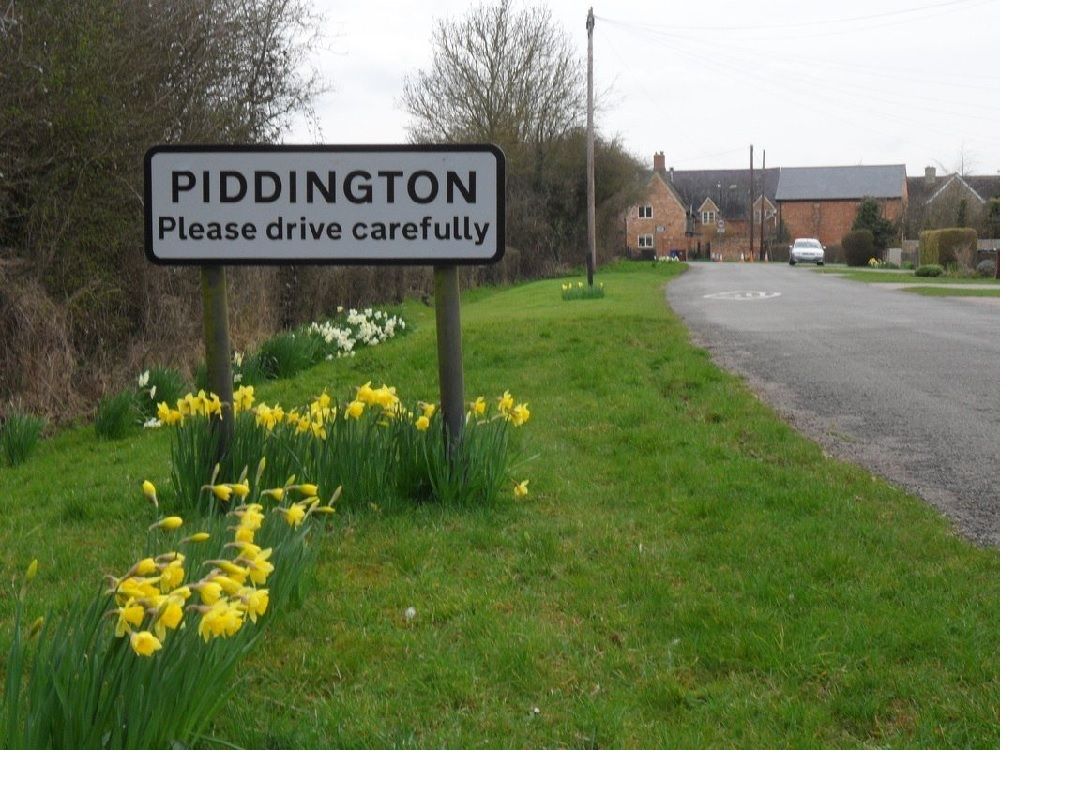
The tiny village of Piddington, England.
The tiny village of Piddington, England. Photo by X
A tiny English village wants to leave the U.K. and join the United States because of migrants, and it believes U.S. President Donald Trump may be its only hope.
The sleepy village of Piddington in Oxfordshire, England, has a population of 350 people. But the U.K. government wants to considerably increase the area’s population, with plans to house 1,250 male migrants at a nearby military site.
The residents have now voted in favour of protesting the migrants’ arrival and joining the United States.
Tyranny in the U.K.
The villagers could only separate with the permission of the government, which they’re unlikely to get. But they say it’s their only hope as the government is press-ganging them into accepting the migrants, who would be allowed to leave the military site and wander into the village. Residents are concerned about their safety, particularly the women and girls who live there.
Local parish councillor Joe Marshall, 26, told the U.K. Sun: “Donald Trump loves old quaint English villages, but he’s not so keen on migrants. So we are sure he would not let this happen to us.”
Electrical engineer Mario Terzino told the Sun: ” We are particularly angry that there no consultation about this, no advance warning. Instead, we learned about it through the media. Our independence referendum is a cry to be heard, a warning to the government that we won’t just sit back and accept this.
“This is a tranquil little village of just 350 souls and two thirds of those are women or children. We’re not equipped to have more than 1,000 young men, most of whom won’t speak English, descending on us. But tiny though Piddington is, we still do have quite a bite. And our voice will be heard. Elon Musk has already taken up our cause, and hopefully Donald Trump will too.”
Public figures back villagers
Tesla trillionaire Elon Musk has come out in support of the move, posting on X: “What has happened to towns who did nothing to deserve it, like little Piddington village, will happen to all of Britain, unless there is fundamental political change. It’s not right. Not right at all.”
British comedian John Cleese echoed the sentiment, posting: “What have they done to have their lives and expectations changed like this?”
Britain’s shame: Rape and grooming gangs
Britain’s ongoing attempt to house and integrate newcomers has had a horrific impact on its native population, most notably a damning report from a privately funded probe that said thousands of white working class girls were systematically groomed and raped by gangs of predominantly Pakistani Muslim men over decades.
The report said politicians, police and social workers ignored the victims out of fear of appearing racist or damaging “social cohesion.” They knew about it and let it continue. Worse yet, the report claims some authorities even co-operated with the rape gangs.
The report, spearheaded by British MP Rupert Lowe, calls for mandatory life sentences for groomers and child rapists and the immediate deportation of foreign nationals who offend.

 the-sun.com
 torontosun.com
Sleepy village of Piddington, population 350, would see 1,250 migrants arrive in government relocation plan
Author of the article:Brian Towie
Published Jul 28, 2026 • 2 minute read
The tiny village of Piddington, England.
The tiny village of Piddington, England. Photo by X
A tiny English village wants to leave the U.K. and join the United States because of migrants, and it believes U.S. President Donald Trump may be its only hope.
The sleepy village of Piddington in Oxfordshire, England, has a population of 350 people. But the U.K. government wants to considerably increase the area’s population, with plans to house 1,250 male migrants at a nearby military site.
The residents have now voted in favour of protesting the migrants’ arrival and joining the United States.
Tyranny in the U.K.
The villagers could only separate with the permission of the government, which they’re unlikely to get. But they say it’s their only hope as the government is press-ganging them into accepting the migrants, who would be allowed to leave the military site and wander into the village. Residents are concerned about their safety, particularly the women and girls who live there.
Local parish councillor Joe Marshall, 26, told the U.K. Sun: “Donald Trump loves old quaint English villages, but he’s not so keen on migrants. So we are sure he would not let this happen to us.”
Electrical engineer Mario Terzino told the Sun: ” We are particularly angry that there no consultation about this, no advance warning. Instead, we learned about it through the media. Our independence referendum is a cry to be heard, a warning to the government that we won’t just sit back and accept this.
“This is a tranquil little village of just 350 souls and two thirds of those are women or children. We’re not equipped to have more than 1,000 young men, most of whom won’t speak English, descending on us. But tiny though Piddington is, we still do have quite a bite. And our voice will be heard. Elon Musk has already taken up our cause, and hopefully Donald Trump will too.”
Public figures back villagers
Tesla trillionaire Elon Musk has come out in support of the move, posting on X: “What has happened to towns who did nothing to deserve it, like little Piddington village, will happen to all of Britain, unless there is fundamental political change. It’s not right. Not right at all.”
British comedian John Cleese echoed the sentiment, posting: “What have they done to have their lives and expectations changed like this?”
Britain’s shame: Rape and grooming gangs
Britain’s ongoing attempt to house and integrate newcomers has had a horrific impact on its native population, most notably a damning report from a privately funded probe that said thousands of white working class girls were systematically groomed and raped by gangs of predominantly Pakistani Muslim men over decades.
The report said politicians, police and social workers ignored the victims out of fear of appearing racist or damaging “social cohesion.” They knew about it and let it continue. Worse yet, the report claims some authorities even co-operated with the rape gangs.
The report, spearheaded by British MP Rupert Lowe, calls for mandatory life sentences for groomers and child rapists and the immediate deportation of foreign nationals who offend.
Our village is voting to leave Britain & join USA to stop influx of migrants
A VILLAGE is voting to leave Britain and join the USA in a desperate bid to stop asylum seekers from moving in. Some 350 residents of Piddington, Oxfordshire, are vowing to hold an independence ref…
U.K. village wants to join U.S., saying Trump only hope
A tiny English village wants to leave the U.K. and join the United States because of migrants. Find out more.

That's why I didn't answer the questions on the long form census that asked how many bedrooms I had. I directed them to seek that information from the county.
And for that initial question of how many people lived in my residence May the 12th I believe it was, that there was me and one other person who was homeless.
And for that initial question of how many people lived in my residence May the 12th I believe it was, that there was me and one other person who was homeless.
How sham marriages fueled India’s foreign student influx to Canada
'Given the high cost of studying and living in Canada, many Indian applicants relied on marriages of convenience to secure financial support in exchange for spousal open work permits,' a Canadian diplomatic official in Delhi wrote in an email
Author of the article:Bryan Passifiume
Published Jul 29, 2026 • Last updated 16 hours ago • 3 minute read
Canadian flag in front on Parliament
A Canadian flag flies in front of the peace tower on Parliament Hill in Ottawa, Canada on December 4, 2015, as part of the ceremonies to the start Canada's 42nd parliament. Photo by GEOFF ROBINS /AFP via Getty Images
OTTAWA — Closing a troublesome loophole allowing international students to bring spouses to Canada on open work permits gave government officials a glimpse into widespread “marriage of convenience” scams in India, internal government documents suggest.
Internal emails from Canada’s High Commission in New Delhi, obtained via an access-to-information request, show how the now-closed loophole allowed prospective foreign students to enter into transactional marriages that granted their “spouse” open work permits — a scheme openly advertised in Indian newspaper ads and online dating apps.
“Given the high cost of studying and living in Canada, many Indian applicants relied on marriages of convenience to secure financial support in exchange for spousal open work permits,” read an excerpt from an email from Han Duan, a Canadian diplomatic official in Delhi, to two IRCC officials.
“This practice was widely advertised in local newspapers and on dating apps.”
2024 policy change ended loophole
The emails were obtained by Vancouver-based immigration lawyer Richard Kurland, who told the Toronto Sun it was “no surprise” to see organized criminal activity infiltrate that portion of the study permit program, once big money and permanent residency promises entered the equation.
“Unscrupulous overseas agents were promising the moon,” said Kurland, who also edits the immigration policy periodical Lexbase. “They said ‘permanent residence is in your hands if you get your study permit, and we’ll take care of that pathway for you.'”
Participants were promised they’d be able to easily flip their study permits into work permits, Kurland said — allowing them to get a job and apply for permanent residence.
“It was a multi-year plan, and the sad part was most often financed by the young person’s family,” he added.
“In some cases, they literally sold the farm to put their kid in Canada.”
Under the scheme, entering into “marriages of convenience” would allow the non-student “spouse” to help fund the student’s education and living costs.
This served as a financial pipeline for thousands of Indian foreign student applicants hoping to study at Canadian colleges and universities, while giving their non-student spouses full access to the Canadian labour market.
This pipeline collapsed, however, when the federal government closed the loophole in 2024, when then-Immigration Minister Marc Miller announced broad reforms to the international student program, including an end to the Spousal Open Work Permit (SOWP) program for undergraduate students.
In further reforms announced at the beginning of this year, only students enrolled in master’s programs over 16 months in duration are entitled to spousal work permits.
Closing loophole curtailed student permit applications
Eliminating this loophole, Duan wrote in their email, caused a drop in the number of student permit applications from Indian nationals.
“Since the introduction of the student cap and various policy measures over the past year, New Delhi has observed a decline not only in the total number of Indian Study Permit (SP) applicants but also in the overall quality of applicants,” Duan wrote, who also attributed the drop to policy changes that prevents students from securing study permits to public post-secondary institutions but later transferring to lower-cost and less-reputable private colleges.
Duan noted that other nations who implemented similar policy changes also saw similar trends.
“Following the introduction of restrictions on spousal OWPs (open work permits,) many Indian SP (student permit) applicants have shifted to countries that still permit spousal visas, with significant increases reported in Germany, Sweden, and Finland,” they wrote.
“Similar trends have been observed in Ireland, France, and Italy, while Australia, New Zealand, and the UK have reported declines in Indian SP applications after implementing similar spousal restrictions.”
bpassifiume@postmedia.com
X: @bryanpassifiume
 torontosun.com
'Given the high cost of studying and living in Canada, many Indian applicants relied on marriages of convenience to secure financial support in exchange for spousal open work permits,' a Canadian diplomatic official in Delhi wrote in an email
Author of the article:Bryan Passifiume
Published Jul 29, 2026 • Last updated 16 hours ago • 3 minute read
Canadian flag in front on Parliament
A Canadian flag flies in front of the peace tower on Parliament Hill in Ottawa, Canada on December 4, 2015, as part of the ceremonies to the start Canada's 42nd parliament. Photo by GEOFF ROBINS /AFP via Getty Images
OTTAWA — Closing a troublesome loophole allowing international students to bring spouses to Canada on open work permits gave government officials a glimpse into widespread “marriage of convenience” scams in India, internal government documents suggest.
Internal emails from Canada’s High Commission in New Delhi, obtained via an access-to-information request, show how the now-closed loophole allowed prospective foreign students to enter into transactional marriages that granted their “spouse” open work permits — a scheme openly advertised in Indian newspaper ads and online dating apps.
“Given the high cost of studying and living in Canada, many Indian applicants relied on marriages of convenience to secure financial support in exchange for spousal open work permits,” read an excerpt from an email from Han Duan, a Canadian diplomatic official in Delhi, to two IRCC officials.
“This practice was widely advertised in local newspapers and on dating apps.”
2024 policy change ended loophole
The emails were obtained by Vancouver-based immigration lawyer Richard Kurland, who told the Toronto Sun it was “no surprise” to see organized criminal activity infiltrate that portion of the study permit program, once big money and permanent residency promises entered the equation.
“Unscrupulous overseas agents were promising the moon,” said Kurland, who also edits the immigration policy periodical Lexbase. “They said ‘permanent residence is in your hands if you get your study permit, and we’ll take care of that pathway for you.'”
Participants were promised they’d be able to easily flip their study permits into work permits, Kurland said — allowing them to get a job and apply for permanent residence.
“It was a multi-year plan, and the sad part was most often financed by the young person’s family,” he added.
“In some cases, they literally sold the farm to put their kid in Canada.”
Under the scheme, entering into “marriages of convenience” would allow the non-student “spouse” to help fund the student’s education and living costs.
This served as a financial pipeline for thousands of Indian foreign student applicants hoping to study at Canadian colleges and universities, while giving their non-student spouses full access to the Canadian labour market.
This pipeline collapsed, however, when the federal government closed the loophole in 2024, when then-Immigration Minister Marc Miller announced broad reforms to the international student program, including an end to the Spousal Open Work Permit (SOWP) program for undergraduate students.
In further reforms announced at the beginning of this year, only students enrolled in master’s programs over 16 months in duration are entitled to spousal work permits.
Closing loophole curtailed student permit applications
Eliminating this loophole, Duan wrote in their email, caused a drop in the number of student permit applications from Indian nationals.
“Since the introduction of the student cap and various policy measures over the past year, New Delhi has observed a decline not only in the total number of Indian Study Permit (SP) applicants but also in the overall quality of applicants,” Duan wrote, who also attributed the drop to policy changes that prevents students from securing study permits to public post-secondary institutions but later transferring to lower-cost and less-reputable private colleges.
Duan noted that other nations who implemented similar policy changes also saw similar trends.
“Following the introduction of restrictions on spousal OWPs (open work permits,) many Indian SP (student permit) applicants have shifted to countries that still permit spousal visas, with significant increases reported in Germany, Sweden, and Finland,” they wrote.
“Similar trends have been observed in Ireland, France, and Italy, while Australia, New Zealand, and the UK have reported declines in Indian SP applications after implementing similar spousal restrictions.”
bpassifiume@postmedia.com
X: @bryanpassifiume
How sham marriages fueled India’s foreign student influx to Canada
Ottawa's crackdown on spousal open work permits shut down a widespread visa scheme that drove thousands of student applications from India.
Stockwell Day warns of mass migration, unmanaged immigration for Canada after Ceuta invasion
'People need to get a grip and send the signal out, send it to our elected people, (that) Canada is not wide open,' former Public Safety minister said
Author of the article:Spiro Papuckoski
Published Aug 05, 2026 • Last updated 23 hours ago • 3 minute read
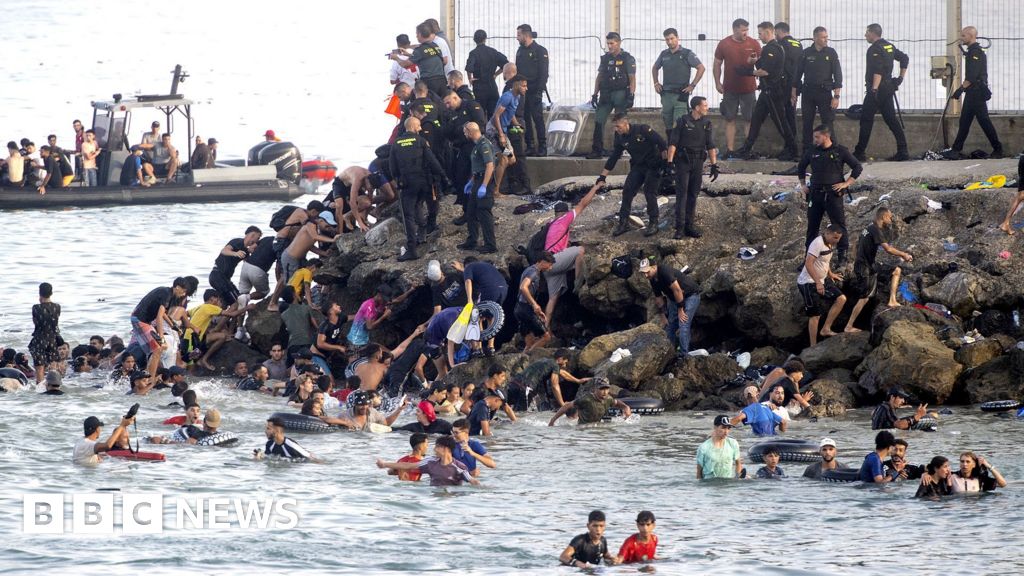
Migrants gesture while being escorted to the Ceuta-Morocco border gate in the Spanish North African enclave of Ceuta on Saturday, Aug. 1, 2026.
Migrants gesture while being escorted to the Ceuta-Morocco border gate in the Spanish North African enclave of Ceuta on Saturday, Aug. 1, 2026. Photo by Henry Nicholls / AFP /Getty Images
See more Toronto Sun on Google — save as a Preferred Source
Stockwell Day has a warning for Canadians about mass migration and unmanaged immigration after tens of thousands of migrants stormed into a Spanish enclave in North Africa last week.
The former Public Safety minister shared a video statement on social media this week that the invasion of migrants in Ceuta could also happen to Canada.
“People need to get a grip and send the signal out, send it to our elected people, (that) Canada is not wide open,” Day said on social platform X.
“This invasion that is happening in Spain is something that that country brought upon themselves, their leadership, their prime minister signal to the world that they don’t care if they get invaded. If there’s mass over-immigration, open immigration, that they’re never going to send back people who are there illegally.”
Day, who served under former Conservative prime minister Stephen Harper, also said there is the potential for “disaster” in Canada if political leaders send out a signal that they don’t care who enters the country without going thorough an exhaustive criminal background check.
Importing values not aligning with beliefs
In addition, he warned that there is concern for Canada importing cultural values that do not align with this country’s laws and beliefs.
“When you send a signal that anybody can come in, even when their values clash with yours, even when they don’t support the values that made Canada strong, you send that signal that people are welcome to come swarming in on that basis, then Canada also will be doomed,” Day said.
Day said not all cultures are equal, pointing out the differences between Islam and Western societies.
“In Canada, we don’t believe women are second class. In Canada, we don’t believe that you can keep women from voting. In Canada, we don’t believe that if somebody commits a terrorist act, they’re going to go to heaven and meet 72 virgins there. In Canada, we believe everybody gets a vote,” he said.
“These things are very different than where Islam is practised around the world, and if we don’t make that differentiation, we are going to be in trouble.”
Former Conservative MP Stockwell Day answers a question during a news conference at the National Press Theatre in Ottawa, Aug. 3, 2010.
Former Conservative MP Stockwell Day is seen answering a question during a news conference at the National Press Theatre in Ottawa, Aug. 3, 2010. Photo by Chris Roussakis / Files /Postmedia Network
Chaotic influx of migrants at Ceuta
In late July and early August, a chaotic influx of approximately 72,000 migrants crossed into Ceuta from neighbouring Morocco by land and water. The enclave is home to about 84,000 residents.
According to the BBC, Spain estimates that nearly 70,000 migrants have already returned to Morocco due to hunger and very limited resources to cope with the human influx. There have been 72 deaths officially recorded on the Spanish side of the border while 11 people died on the Moroccan side.
Day said if Canadian leaders don’t send signals that the country will punish those who break the law with strong penalties, including for violent offences, no free illegal drugs, no free “safe shootup” sites, then “you invite catastrophe.”
Day ended his nearly three-and-a-half minute message with words of hope, which he says comes from speaking the truth, and how Canadians can avert this type of disaster by asking the right questions before casting a vote at the ballot box.
“Are they voting for people and for policies that weaken a country, that make a country disintegrate, or are they voting for people and policies that respect the law, that respect legal immigration, that recognizes there’s right and wrong?” he asked.
“These are the types of things that are going to either make a country be strong and prosper or cause a country to fail.”
 bbc.com

 torontosun.com
'People need to get a grip and send the signal out, send it to our elected people, (that) Canada is not wide open,' former Public Safety minister said
Author of the article:Spiro Papuckoski
Published Aug 05, 2026 • Last updated 23 hours ago • 3 minute read
Migrants gesture while being escorted to the Ceuta-Morocco border gate in the Spanish North African enclave of Ceuta on Saturday, Aug. 1, 2026.
Migrants gesture while being escorted to the Ceuta-Morocco border gate in the Spanish North African enclave of Ceuta on Saturday, Aug. 1, 2026. Photo by Henry Nicholls / AFP /Getty Images
See more Toronto Sun on Google — save as a Preferred Source
Stockwell Day has a warning for Canadians about mass migration and unmanaged immigration after tens of thousands of migrants stormed into a Spanish enclave in North Africa last week.
The former Public Safety minister shared a video statement on social media this week that the invasion of migrants in Ceuta could also happen to Canada.
“People need to get a grip and send the signal out, send it to our elected people, (that) Canada is not wide open,” Day said on social platform X.
“This invasion that is happening in Spain is something that that country brought upon themselves, their leadership, their prime minister signal to the world that they don’t care if they get invaded. If there’s mass over-immigration, open immigration, that they’re never going to send back people who are there illegally.”
Day, who served under former Conservative prime minister Stephen Harper, also said there is the potential for “disaster” in Canada if political leaders send out a signal that they don’t care who enters the country without going thorough an exhaustive criminal background check.
Importing values not aligning with beliefs
In addition, he warned that there is concern for Canada importing cultural values that do not align with this country’s laws and beliefs.
“When you send a signal that anybody can come in, even when their values clash with yours, even when they don’t support the values that made Canada strong, you send that signal that people are welcome to come swarming in on that basis, then Canada also will be doomed,” Day said.
Day said not all cultures are equal, pointing out the differences between Islam and Western societies.
“In Canada, we don’t believe women are second class. In Canada, we don’t believe that you can keep women from voting. In Canada, we don’t believe that if somebody commits a terrorist act, they’re going to go to heaven and meet 72 virgins there. In Canada, we believe everybody gets a vote,” he said.
“These things are very different than where Islam is practised around the world, and if we don’t make that differentiation, we are going to be in trouble.”
Former Conservative MP Stockwell Day answers a question during a news conference at the National Press Theatre in Ottawa, Aug. 3, 2010.
Former Conservative MP Stockwell Day is seen answering a question during a news conference at the National Press Theatre in Ottawa, Aug. 3, 2010. Photo by Chris Roussakis / Files /Postmedia Network
Chaotic influx of migrants at Ceuta
In late July and early August, a chaotic influx of approximately 72,000 migrants crossed into Ceuta from neighbouring Morocco by land and water. The enclave is home to about 84,000 residents.
According to the BBC, Spain estimates that nearly 70,000 migrants have already returned to Morocco due to hunger and very limited resources to cope with the human influx. There have been 72 deaths officially recorded on the Spanish side of the border while 11 people died on the Moroccan side.
Day said if Canadian leaders don’t send signals that the country will punish those who break the law with strong penalties, including for violent offences, no free illegal drugs, no free “safe shootup” sites, then “you invite catastrophe.”
Day ended his nearly three-and-a-half minute message with words of hope, which he says comes from speaking the truth, and how Canadians can avert this type of disaster by asking the right questions before casting a vote at the ballot box.
“Are they voting for people and for policies that weaken a country, that make a country disintegrate, or are they voting for people and policies that respect the law, that respect legal immigration, that recognizes there’s right and wrong?” he asked.
“These are the types of things that are going to either make a country be strong and prosper or cause a country to fail.”
Ceuta: EU calls for stronger borders after migrant crossings into Spanish territory
Ursula von der Leyen has called for action ahead of an urgent EU interior ministers meeting to discuss the issue.
bbc.com
Stockwell Day warns of mass migration, unmanaged immigration for Canada after Ceuta invasion
Stockwell Day has a warning for Canadians about mass migration and unmanaged immigration after a Spanish enclave was invaded. Read more.
Non-citizen violent offender Medhani Yohans breaches yet again: Guelph cops
'He showed that he was not going to comply with those conditions'
Author of the article:Brad Hunter
Published Aug 06, 2026 • Last updated 17 hours ago • 2 minute read
Medhani Yohans
HELLO, IT'S ME: Medhani Yohans has allegedly breached yet again Photo by Guelph Police
Well, that didn’t take very long.
Within hours of high-risk offender Medhani Yohans being sprung from the Maplehurst Correctional Complex, he was back behind bars.
The violent 37-year-old courthouse frequent flier allegedly breached the primo condition on his release: Stay out of downtown Guelph, CTV News reports.
“(Yohans) travelled from Maplehurst back to the City of Guelph and shortly thereafter was observed by our officers in the downtown core,” Scott Tracey of the Guelph Police Service told the network.
Images of Medhani Yohans (Guelph Police)
WINNING: Images of Medhani Yohans (Guelph Police)
Tracey added that the bus dumped the the Eritrean refugee in downtown Guelph last Friday. But instead of leaving the no-go zone, the scofflaw stuck around.
Tracey said: “Our allegation is that, once he got off the bus, he did not vacate the downtown. He spent some time shopping, going in various stores (and) walking around. He had ample opportunity to leave the downtown, to get outside the borders that he had been ordered to stay away from. He did not do so.”
And so, cops busted him yet again.
“We had to step in and take him back into custody because he showed that he was not going to comply with those conditions,” Tracey said.
Yohans has been charged with nine counts of breaching probation orders.
Deportation order against him
As The Toronto Sun first reported, Yohans is not a Canadian citizen, struggles with the language, has a lengthy criminal record, and “major mental illness.”
IM BACK! Courthouse frequent flier and non-citizen Medhani Yohans. CTV/SCREENGRAB
IM BACK, BABY! Courthouse frequent flier and non-citizen Medhani Yohans. CTV/SCREENGRAB
A Canada Border Services Agency source told the Sun he was smuggled into Canada via Europe.
And, there is a deportation order for Yohans.
“There is more than enough blame to go around on this guy,” the CBSA source told the Sun.
“First, he originally came here as a sponsored refugee from Eritrea. So even though there is a Deportation Order against him, he can’t be removed because he’s a ‘Protected Person.’ The only thing that overrides that is a ‘Danger Opinion.’
“We tried getting one and … surprise, surprise … were shot down by headquarters. Apparently, his sexual assault convictions aren’t enough to label him a Danger.”
Yohans has been in and out of the slammer since at least 2023. He had been initially ordered to stay away from certain addresses. He violated those orders multiple times.
And there are other matters: He has a history of violence that includes two sexual assaults involving strangers.
No time to warn public of release
For their part, cops have warned the public about his release. In the most recent incident, Tracey said they didn’t have time and Yohans was back in custody faster than you can say recidivist.
“Frankly, we were intending to, but he was arrested so quickly that we didn’t get that warning out to the public,” Tracey told CTV.
Yohans has become the poster boy for revolving door justice and doesn’t appear bothered about breaching bail or probation. The Eritrean refugee has done it countless times with little apparent impact and no sign of him being booted from the country.
In June, Yohans pleaded guilty to breaching bail and was sentenced to nine months in jail, minus time served, leaving about 70 days in the slammer. He was also barred from downtown Guelph for three years and given three years’ probation.
bhunter@postmedia.com
@HunterTOSun

 ctvnews.ca
 torontosun.com
'He showed that he was not going to comply with those conditions'
Author of the article:Brad Hunter
Published Aug 06, 2026 • Last updated 17 hours ago • 2 minute read
Medhani Yohans
HELLO, IT'S ME: Medhani Yohans has allegedly breached yet again Photo by Guelph Police
Well, that didn’t take very long.
Within hours of high-risk offender Medhani Yohans being sprung from the Maplehurst Correctional Complex, he was back behind bars.
The violent 37-year-old courthouse frequent flier allegedly breached the primo condition on his release: Stay out of downtown Guelph, CTV News reports.
“(Yohans) travelled from Maplehurst back to the City of Guelph and shortly thereafter was observed by our officers in the downtown core,” Scott Tracey of the Guelph Police Service told the network.
Images of Medhani Yohans (Guelph Police)
WINNING: Images of Medhani Yohans (Guelph Police)
Tracey added that the bus dumped the the Eritrean refugee in downtown Guelph last Friday. But instead of leaving the no-go zone, the scofflaw stuck around.
Tracey said: “Our allegation is that, once he got off the bus, he did not vacate the downtown. He spent some time shopping, going in various stores (and) walking around. He had ample opportunity to leave the downtown, to get outside the borders that he had been ordered to stay away from. He did not do so.”
And so, cops busted him yet again.
“We had to step in and take him back into custody because he showed that he was not going to comply with those conditions,” Tracey said.
Yohans has been charged with nine counts of breaching probation orders.
Deportation order against him
As The Toronto Sun first reported, Yohans is not a Canadian citizen, struggles with the language, has a lengthy criminal record, and “major mental illness.”
IM BACK! Courthouse frequent flier and non-citizen Medhani Yohans. CTV/SCREENGRAB
IM BACK, BABY! Courthouse frequent flier and non-citizen Medhani Yohans. CTV/SCREENGRAB
A Canada Border Services Agency source told the Sun he was smuggled into Canada via Europe.
And, there is a deportation order for Yohans.
“There is more than enough blame to go around on this guy,” the CBSA source told the Sun.
“First, he originally came here as a sponsored refugee from Eritrea. So even though there is a Deportation Order against him, he can’t be removed because he’s a ‘Protected Person.’ The only thing that overrides that is a ‘Danger Opinion.’
“We tried getting one and … surprise, surprise … were shot down by headquarters. Apparently, his sexual assault convictions aren’t enough to label him a Danger.”
Yohans has been in and out of the slammer since at least 2023. He had been initially ordered to stay away from certain addresses. He violated those orders multiple times.
And there are other matters: He has a history of violence that includes two sexual assaults involving strangers.
No time to warn public of release
For their part, cops have warned the public about his release. In the most recent incident, Tracey said they didn’t have time and Yohans was back in custody faster than you can say recidivist.
“Frankly, we were intending to, but he was arrested so quickly that we didn’t get that warning out to the public,” Tracey told CTV.
Yohans has become the poster boy for revolving door justice and doesn’t appear bothered about breaching bail or probation. The Eritrean refugee has done it countless times with little apparent impact and no sign of him being booted from the country.
In June, Yohans pleaded guilty to breaching bail and was sentenced to nine months in jail, minus time served, leaving about 70 days in the slammer. He was also barred from downtown Guelph for three years and given three years’ probation.
bhunter@postmedia.com
@HunterTOSun
High-risk offender rearrested hours after release from custody
Medhani Yohans, a man described as a high-risk offender, is once again back behind bars.
Non-citizen violent offender Medhani Yohans breaches yet again: Guelph cops
Within hours of high-risk offender Medhani Yohans being sprung from the Maplehurst Correctional Complex he was back behind bars. Read more.
Liberal refugee claimant policy burdens Canada's health care
Party under Justin Trudeau and now Mark Carney has stretched our compassion beyond its breaking point
Author of the article:Lorne Gunter
Published Aug 08, 2026 • Last updated 20 hours ago • 3 minute read
Prime Minister Mark Carney speaks to journalists about U.S. President Donald Trump's new 50% tariff threat in the Parliamentary Precinct in Ottawa July 21, 2026.
Prime Minister Mark Carney speaks to journalists about U.S. President Donald Trump's new 50% tariff threat in the Parliamentary Precinct in Ottawa July 21, 2026. Photo by Blair Gable /Postmedia file
That didn’t take long.
Back in May, as part of a promise in the last federal budget to lower the cost of providing health care for unproven refugee claimants and asylum seekers, the federal government announced that newcomers awaiting hearings on their permanent residency would be required to pay 30% of their health care costs and four dollars on all prescriptions.
But quietly (almost secretively) on July 31, the Liberal government of Prime Minister Mark Carney walked back those changes and restored full funding to refugees and asylum seekers’ care, including feeding tubes, respiratory devices, implantable hearing aids, nursing homes and hospital-based rehabilitation, along with dental and vision care.
Those are products and services many Canadian citizens don’t receive for free.
The cost of the program, which had been $211 million in 2020-21 had grown to nearly $900 million last year before the budget cuts. This year it could well exceed $1 billion.
Canada is becoming a favoured destination for people in developing countries seeking high-quality, low-cost health care. Come to Canada, get those teeth fixed and top up your oxygen supplies all at the generosity of Canadian taxpayers.
May as well erect a giant, revolving neon sign that says, “Welcome to Canada. Free Health Care. Walk-Ins Accepted.”
Indeed, that’s pretty much what Immigration, Refugees and Citizenship Canada (IRCC) did last fall.
In social media posts last October, IRCC said to the rest of the world, “Thinking about moving to Canada? Did you know Canada has public health care? Learn how it works, who can get it and what services are covered.”
One in five Canadians cannot find a family doctor. Waiting times at emergency rooms routinely stretch over eight to 12 hours. And 74,000 Canadians have died on waiting lists for specialized care since 2018.
We can’t even care for all Canadians. Why in heavens do we imagine it’s a great idea to open our health-care doors to a flood of international service shoppers?
Yet the Carney Liberals think it’s the least we can do to add tens of thousands of refugees and asylum claimants to our health-care demand each year while they await hearings on their eligibility to stay in Canada.
The refugee claimant process can take three or more years, during which time it should be possible for folks on the backlog list to get most of their ailments patched up. For free. At Canadian taxpayers’ expense.
Some of this should be alleviated by the federal government’s new immigration rules that limit temporary foreigner works and student visa holders, but the Interim Federal Health Program (IHFP) is not aimed primarily at these two categories of newcomers.
The IHFP is reserved almost exclusively for refugee claimants and asylum seekers who present themselves at ports of entry, such as airports and land crossings, and ask for Canadian protection and residency.
In fact, the number of IFHP recipients could increase noticeably, despite changes to other immigration programs, since the residents of many countries will soon lose their ability to apply for asylum in the United States and are expected to turn to Canada, instead.
Where to draw the line between compassion and patsy-ism?
Canada has always been a welcoming country for new arrivals seeking safety and opportunity. It would be wrong to say, “No benefits at all.”
But first under Justin Trudeau and now under Mark Carney, the Liberals have stretched our compassion beyond its breaking point.
Benefits under the program were scaled back under the government of Stephen Harper. But all benefits were restored by Trudeau, then greatly expanded as costs skyrocketed.
So where’s the fine line? We passed that long ago when we began accepting anyone’s story of mistreatment, discrimination or danger in their home country and let them into Canada before vetting their claims.
Genuine refugees, who can prove their home governments or death squads are out to get them, should be welcomed. But why shouldn’t even they contribute to their own health care, the way Canadians do through their taxes?
 torontosun.com
Party under Justin Trudeau and now Mark Carney has stretched our compassion beyond its breaking point
Author of the article:Lorne Gunter
Published Aug 08, 2026 • Last updated 20 hours ago • 3 minute read
Prime Minister Mark Carney speaks to journalists about U.S. President Donald Trump's new 50% tariff threat in the Parliamentary Precinct in Ottawa July 21, 2026.
Prime Minister Mark Carney speaks to journalists about U.S. President Donald Trump's new 50% tariff threat in the Parliamentary Precinct in Ottawa July 21, 2026. Photo by Blair Gable /Postmedia file
That didn’t take long.
Back in May, as part of a promise in the last federal budget to lower the cost of providing health care for unproven refugee claimants and asylum seekers, the federal government announced that newcomers awaiting hearings on their permanent residency would be required to pay 30% of their health care costs and four dollars on all prescriptions.
But quietly (almost secretively) on July 31, the Liberal government of Prime Minister Mark Carney walked back those changes and restored full funding to refugees and asylum seekers’ care, including feeding tubes, respiratory devices, implantable hearing aids, nursing homes and hospital-based rehabilitation, along with dental and vision care.
Those are products and services many Canadian citizens don’t receive for free.
The cost of the program, which had been $211 million in 2020-21 had grown to nearly $900 million last year before the budget cuts. This year it could well exceed $1 billion.
Canada is becoming a favoured destination for people in developing countries seeking high-quality, low-cost health care. Come to Canada, get those teeth fixed and top up your oxygen supplies all at the generosity of Canadian taxpayers.
May as well erect a giant, revolving neon sign that says, “Welcome to Canada. Free Health Care. Walk-Ins Accepted.”
Indeed, that’s pretty much what Immigration, Refugees and Citizenship Canada (IRCC) did last fall.
In social media posts last October, IRCC said to the rest of the world, “Thinking about moving to Canada? Did you know Canada has public health care? Learn how it works, who can get it and what services are covered.”
One in five Canadians cannot find a family doctor. Waiting times at emergency rooms routinely stretch over eight to 12 hours. And 74,000 Canadians have died on waiting lists for specialized care since 2018.
We can’t even care for all Canadians. Why in heavens do we imagine it’s a great idea to open our health-care doors to a flood of international service shoppers?
Yet the Carney Liberals think it’s the least we can do to add tens of thousands of refugees and asylum claimants to our health-care demand each year while they await hearings on their eligibility to stay in Canada.
The refugee claimant process can take three or more years, during which time it should be possible for folks on the backlog list to get most of their ailments patched up. For free. At Canadian taxpayers’ expense.
Some of this should be alleviated by the federal government’s new immigration rules that limit temporary foreigner works and student visa holders, but the Interim Federal Health Program (IHFP) is not aimed primarily at these two categories of newcomers.
The IHFP is reserved almost exclusively for refugee claimants and asylum seekers who present themselves at ports of entry, such as airports and land crossings, and ask for Canadian protection and residency.
In fact, the number of IFHP recipients could increase noticeably, despite changes to other immigration programs, since the residents of many countries will soon lose their ability to apply for asylum in the United States and are expected to turn to Canada, instead.
Where to draw the line between compassion and patsy-ism?
Canada has always been a welcoming country for new arrivals seeking safety and opportunity. It would be wrong to say, “No benefits at all.”
But first under Justin Trudeau and now under Mark Carney, the Liberals have stretched our compassion beyond its breaking point.
Benefits under the program were scaled back under the government of Stephen Harper. But all benefits were restored by Trudeau, then greatly expanded as costs skyrocketed.
So where’s the fine line? We passed that long ago when we began accepting anyone’s story of mistreatment, discrimination or danger in their home country and let them into Canada before vetting their claims.
Genuine refugees, who can prove their home governments or death squads are out to get them, should be welcomed. But why shouldn’t even they contribute to their own health care, the way Canadians do through their taxes?
Lorne Gunter: Liberal refugee claimant policy a burden to Canada's health care
Why in heavens do we imagine it’s a great idea to open our health-care doors to a flood of international service shoppers?
Former Raptors boss Nick Nurse suing the Ontario government for $697,000
After extending an olive branch to the province for the last couple of years, Nurse and his wife are taking the province to court for the money.
Author of the article:Gordon Anderson
Published Aug 11, 2026 • 2 minute read
nurse
Former Toronto Raptors head coach Nick Nurse. Nurse is taking the province of Ontario to court after the Ministry of Finance rejected Nurse's Non-Resident Speculation Tax rebate application. Photo by Jack Boland/Toronto Sun/Postmedia Network
When former Raptors head coach Nick Nurse left the squad for the Philadelphia 76ers in 2023, the government of Ontario slapped him with a near $700,000 parting gift.
The Ministry of Finance rejected Nurse’s application for a rebate of the $697,500 Non-Resident Speculation Tax (NRST) that he and his wife had previously paid on their $4.65-million Mississauga home.
The NRST is a 25% tax applied to the purchase price of a residential property by a foreign national. A foreign national is defined as an individual who is not a citizen or permanent resident.
After extending an olive branch to the province for the last couple of years, Nurse and his wife are taking the province to court for the money.
“It’s been quite frustrating for them,” Mike Collinge told the National Post. “The ministry, at the administrative level, is yet to really articulate a reasonable basis for their position.”
Collinge is a Toronto-based partner at Deloitte Legal Canada LLP, and is acting on behalf of the Nurses.
Nurse and his wife bought their Mississauga home in October of 2021, paying the $697,000 NRST tax levy, on top of the $4.65 million purchase price.
When the couple bought the home, the NRST levy was 15% in the Greater Golden Horseshoe Region. Since then, the rate has increased to its current 25%.
Requirement not met
Finance regulations at the time allowed foreign buyers to claim a rebate of their NRST, provided they were in good standing with the rules. Namely, the property was their principal residence for at least 60 days, and Nurse had worked in Ontario for at least a year.
Nurse was fired by the Raptors on April 21, 2023. The 76ers hired Nurse on May 29. He has been with Philadelphia ever since.
After selling the property in September 2023, the couple applied for their rebate in March 2024, only to have it rejected a month later.
Ontario’s Ministry of Finance said that the Nurses did not qualify because they did not live in the house up to the date when they applied for the rebate.
“I think it’s a case where they changed the law after Mr. Nurse made his rebate application and then they’re reading a requirement into the law retroactively when the legislation itself was not retroactive,” Collinge says.
ganderson@postmedia.com
– With files from Postmedia
 torontosun.com
After extending an olive branch to the province for the last couple of years, Nurse and his wife are taking the province to court for the money.
Author of the article:Gordon Anderson
Published Aug 11, 2026 • 2 minute read
nurse
Former Toronto Raptors head coach Nick Nurse. Nurse is taking the province of Ontario to court after the Ministry of Finance rejected Nurse's Non-Resident Speculation Tax rebate application. Photo by Jack Boland/Toronto Sun/Postmedia Network
When former Raptors head coach Nick Nurse left the squad for the Philadelphia 76ers in 2023, the government of Ontario slapped him with a near $700,000 parting gift.
The Ministry of Finance rejected Nurse’s application for a rebate of the $697,500 Non-Resident Speculation Tax (NRST) that he and his wife had previously paid on their $4.65-million Mississauga home.
The NRST is a 25% tax applied to the purchase price of a residential property by a foreign national. A foreign national is defined as an individual who is not a citizen or permanent resident.
After extending an olive branch to the province for the last couple of years, Nurse and his wife are taking the province to court for the money.
“It’s been quite frustrating for them,” Mike Collinge told the National Post. “The ministry, at the administrative level, is yet to really articulate a reasonable basis for their position.”
Collinge is a Toronto-based partner at Deloitte Legal Canada LLP, and is acting on behalf of the Nurses.
Nurse and his wife bought their Mississauga home in October of 2021, paying the $697,000 NRST tax levy, on top of the $4.65 million purchase price.
When the couple bought the home, the NRST levy was 15% in the Greater Golden Horseshoe Region. Since then, the rate has increased to its current 25%.
Requirement not met
Finance regulations at the time allowed foreign buyers to claim a rebate of their NRST, provided they were in good standing with the rules. Namely, the property was their principal residence for at least 60 days, and Nurse had worked in Ontario for at least a year.
Nurse was fired by the Raptors on April 21, 2023. The 76ers hired Nurse on May 29. He has been with Philadelphia ever since.
After selling the property in September 2023, the couple applied for their rebate in March 2024, only to have it rejected a month later.
Ontario’s Ministry of Finance said that the Nurses did not qualify because they did not live in the house up to the date when they applied for the rebate.
“I think it’s a case where they changed the law after Mr. Nurse made his rebate application and then they’re reading a requirement into the law retroactively when the legislation itself was not retroactive,” Collinge says.
ganderson@postmedia.com
– With files from Postmedia
Former Raptors boss Nick Nurse suing the Ontario government for $697,000
The Ministry of Finance rejected Nurse’s application for a rebate of the $697,500 Non-Resident Speculation Tax (NRST). Read more.

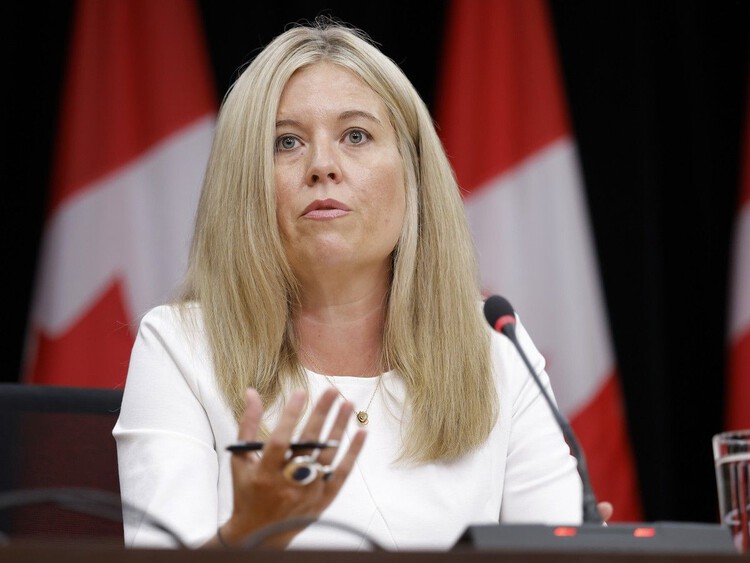
Speaking to reporters in Ottawa, the longtime Conservative MP argued that a slew of recent headlines detailing how non-Canadians charged with various crimes but received reduced sentences so as to avoid deportation proceedings was “insane and disgusting.”
National Post has recently detailed many cases where a judge cited an accused’s immigration status as a mitigating factor when issuing a criminal sentence. In one case cited by Rempel Garner, a judge granted a Ghanaian man and loan shark who violently stole a woman’s phone a conditional discharge, citing his immigration status. The Conservative MP once again called on the Liberals to amend the Criminal Code to prevent immigration status from being a consideration during sentencing for a crime.
 apple.news
National Post has recently detailed many cases where a judge cited an accused’s immigration status as a mitigating factor when issuing a criminal sentence. In one case cited by Rempel Garner, a judge granted a Ghanaian man and loan shark who violently stole a woman’s phone a conditional discharge, citing his immigration status. The Conservative MP once again called on the Liberals to amend the Criminal Code to prevent immigration status from being a consideration during sentencing for a crime.
Conservatives call for Liberals to block 'candy sentences' for immigrants convicted of crimes — National Post
The Conservative MP said the practice is 'insane and disgusting'
Mexican national charged with 1996 Vancouver murder
Rueda Salud lived in the same building as Muriel Lindsay, a 40-year-old Canada Post worker and cancer survivor, at the time of her death on Feb. 16, 1996.
Author of the article:Kim Bolan
Published Aug 13, 2026 • Last updated 1 day ago • 4 minute read
Muriel Lindsay of Vancouver, who was killed two years later, with a friend in 1994.
Muriel Lindsay of Vancouver, who was killed two years later, with a friend in 1994. Photo by VPD
A Mexican national has been extradited to B.C. and charged with the 1996 murder of Canada Post worker Muriel Lindsay in her West End apartment.
Vancouver police announced Thursday that officers had escorted Juan Manuel Rueda Salud, now 68, from Mexico to Canada on Wednesday and that he is being held in jail on one charge of second-degree murder.
Rueda Salud lived in the same building as Lindsay, a 40-year-old cancer survivor, at the time of her death on Feb. 16, 1996.
Her late mother, Marjorie, found her daughter fatally beaten on Feb. 17, 1996 after she had missed work.
VPD Insp. Ryan Smith, who spent 12 years on the cold case, said Lindsay’s surviving family members were “overjoyed” to hear that someone had finally been charged.
“She was deeply loved by friends and family, and she is sorely missed to this day,” he said. “While it is a relief to see a charge finally laid in this matter, it marks the start of another sad chapter for Muriel’s loved ones. Our thoughts are with them now.”
Juan Manuel Rueda Salud
A 30-year international Vancouver police investigation has culminated in a charge of second-degree murder against Mexican citizen Juan Manuel Rueda Salud, now 68. He is accused in the murder of Muriel Lindsay on or about Feb. 16, 1996. Photo by VPD
Smith said Rueda Salud was identified as a person-of-interest in the case, but left for Mexico a month after the killing. Investigators found him in Oaxaca in 2015.
“The case is now before the courts, so I can’t discuss specific evidence, but I can say that our forensic investigators gathered a considerable amount of evidence at the crime scene. We worked diligently for decades with other agencies in Mexico and the U.S., as well as Canadian law enforcement agencies and our forensic science and technology partners at BCIT, and we were able to identify Rueda Salud as a suspect,” Smith said.
Rueda Salud was charged on Nov. 2, 2024, and arrested under a provisional warrant in Mexico on Jan. 22, 2025, Smith added. He tried to fight his extradition, but was finally handed over to VPD officers this week.
Smith wouldn’t comment in detail about the case, but Postmedia previously reported that Lindsay died from blows to her head.
Just three weeks before her brutal death, Lindsay’s mother Marjorie received a disturbing letter at her home which began with the words “Hi Scum.” The letter referred to Muriel and said: “You are now 40 … we hope and pray that you start acting like an adult and not like a teenager … We also hope you stop smoking. You stink.”
Marjorie Lindsay recounted the letter and other threats in a 2006 interview with The Vancouver Sun, where her ex-husband Eric once worked as a journalist.
Marjorie said she never told her daughter about the letter as she didn’t want to upset her.
Muriel Lindsay, a letter sorter who was on the afternoon shift, had complained to co-workers about a series of strange events that led her to believe she was being stalked in the months before her murder.
First, one of her beloved cats went missing.
Lindsay made up a poster with her phone number on it and stuck it up around her Mole Hill neighbourhood. But instead of a call, she got a note slipped under her door saying she would owe money for the cat’s vet bill. She was concerned enough about the strange hand-delivered message that she reported the incident to Vancouver police.
Muriel Lindsay in a family handout with her cats.
Muriel Lindsay in a family handout with her cats.
Someone took out a six-month subscription to The Vancouver Sun in her name. Then two magazines started arriving at her West End apartment and a donation was made on behalf of her to the United Way for $120.
Lindsay was last seen alive by a co-worker whom she walked home with from the main post office when they got off shift at midnight on Feb. 15, 1996. The two parted company outside St. Paul’s Hospital to head to their separate residences.
Lindsay’s second-floor suite in a heritage house in the 1100-block of Comox was less than two blocks from where she last saw her friend. No one heard from her again and she did not report for work on the Friday.
Muriel Lindsay
Muriel Lindsay was murdered in her Mole Hill apartment on Feb. 16, 1996. Photo by Handout /Vancouver Sun files
Postmedia reported in 2006 that Lindsay was likely killed shortly after she got home in the early hours of Feb. 16, as she was still wearing the same clothes she wore to work.
Her mother also said at the time that her daughter had been bothered by two people who lived in the same house, including a man from Mexico.
“She was threatened many times by two people in that crummy house that she lived in,” she said.
In fact, Lindsay had already found a new apartment on Burnaby Street with a view of English Bay and had already been packing.some of her belongings.
“She was the loveliest girl and a private person and she did her job at the post office and was just going to move out of her place,” the elder Lindsay said.
kbolan@postmedia.com
X.com/kbolan
Blueksy: @kimbolan.bsky.social
 torontosun.com
Rueda Salud lived in the same building as Muriel Lindsay, a 40-year-old Canada Post worker and cancer survivor, at the time of her death on Feb. 16, 1996.
Author of the article:Kim Bolan
Published Aug 13, 2026 • Last updated 1 day ago • 4 minute read
Muriel Lindsay of Vancouver, who was killed two years later, with a friend in 1994.
Muriel Lindsay of Vancouver, who was killed two years later, with a friend in 1994. Photo by VPD
A Mexican national has been extradited to B.C. and charged with the 1996 murder of Canada Post worker Muriel Lindsay in her West End apartment.
Vancouver police announced Thursday that officers had escorted Juan Manuel Rueda Salud, now 68, from Mexico to Canada on Wednesday and that he is being held in jail on one charge of second-degree murder.
Rueda Salud lived in the same building as Lindsay, a 40-year-old cancer survivor, at the time of her death on Feb. 16, 1996.
Her late mother, Marjorie, found her daughter fatally beaten on Feb. 17, 1996 after she had missed work.
VPD Insp. Ryan Smith, who spent 12 years on the cold case, said Lindsay’s surviving family members were “overjoyed” to hear that someone had finally been charged.
“She was deeply loved by friends and family, and she is sorely missed to this day,” he said. “While it is a relief to see a charge finally laid in this matter, it marks the start of another sad chapter for Muriel’s loved ones. Our thoughts are with them now.”
Juan Manuel Rueda Salud
A 30-year international Vancouver police investigation has culminated in a charge of second-degree murder against Mexican citizen Juan Manuel Rueda Salud, now 68. He is accused in the murder of Muriel Lindsay on or about Feb. 16, 1996. Photo by VPD
Smith said Rueda Salud was identified as a person-of-interest in the case, but left for Mexico a month after the killing. Investigators found him in Oaxaca in 2015.
“The case is now before the courts, so I can’t discuss specific evidence, but I can say that our forensic investigators gathered a considerable amount of evidence at the crime scene. We worked diligently for decades with other agencies in Mexico and the U.S., as well as Canadian law enforcement agencies and our forensic science and technology partners at BCIT, and we were able to identify Rueda Salud as a suspect,” Smith said.
Rueda Salud was charged on Nov. 2, 2024, and arrested under a provisional warrant in Mexico on Jan. 22, 2025, Smith added. He tried to fight his extradition, but was finally handed over to VPD officers this week.
Smith wouldn’t comment in detail about the case, but Postmedia previously reported that Lindsay died from blows to her head.
Just three weeks before her brutal death, Lindsay’s mother Marjorie received a disturbing letter at her home which began with the words “Hi Scum.” The letter referred to Muriel and said: “You are now 40 … we hope and pray that you start acting like an adult and not like a teenager … We also hope you stop smoking. You stink.”
Marjorie Lindsay recounted the letter and other threats in a 2006 interview with The Vancouver Sun, where her ex-husband Eric once worked as a journalist.
Marjorie said she never told her daughter about the letter as she didn’t want to upset her.
Muriel Lindsay, a letter sorter who was on the afternoon shift, had complained to co-workers about a series of strange events that led her to believe she was being stalked in the months before her murder.
First, one of her beloved cats went missing.
Lindsay made up a poster with her phone number on it and stuck it up around her Mole Hill neighbourhood. But instead of a call, she got a note slipped under her door saying she would owe money for the cat’s vet bill. She was concerned enough about the strange hand-delivered message that she reported the incident to Vancouver police.
Muriel Lindsay in a family handout with her cats.
Muriel Lindsay in a family handout with her cats.
Someone took out a six-month subscription to The Vancouver Sun in her name. Then two magazines started arriving at her West End apartment and a donation was made on behalf of her to the United Way for $120.
Lindsay was last seen alive by a co-worker whom she walked home with from the main post office when they got off shift at midnight on Feb. 15, 1996. The two parted company outside St. Paul’s Hospital to head to their separate residences.
Lindsay’s second-floor suite in a heritage house in the 1100-block of Comox was less than two blocks from where she last saw her friend. No one heard from her again and she did not report for work on the Friday.
Muriel Lindsay
Muriel Lindsay was murdered in her Mole Hill apartment on Feb. 16, 1996. Photo by Handout /Vancouver Sun files
Postmedia reported in 2006 that Lindsay was likely killed shortly after she got home in the early hours of Feb. 16, as she was still wearing the same clothes she wore to work.
Her mother also said at the time that her daughter had been bothered by two people who lived in the same house, including a man from Mexico.
“She was threatened many times by two people in that crummy house that she lived in,” she said.
In fact, Lindsay had already found a new apartment on Burnaby Street with a view of English Bay and had already been packing.some of her belongings.
“She was the loveliest girl and a private person and she did her job at the post office and was just going to move out of her place,” the elder Lindsay said.
kbolan@postmedia.com
X.com/kbolan
Blueksy: @kimbolan.bsky.social
Mexican national charged with 1996 murder in Vancouver's West End
A Mexican national has been extradited to B.C. and charged with the 1996 murder of Canada Post worker Muriel Lindsay in her apartment.
Over 375,000 new Canadian citizens in 2025; more expected with Citizen Act revisions
On average, it took eight months to process new citizen applications
Author of the article ostmedia News
Published Sep 02, 2026 • 2 minute read
031926-Citizenship_Ceremony
New Canadians take their citizenship oath in a ceremony at the Calgary Central Library for Canada Day, Tuesday, July 1, 2025. Photo by Brent Calver /Postmedia
Canada reportedly gained just more than 375,000 new citizens last year, according to a submission from the Department of Immigration.
Per Blacklock’s Reporter, a total of 376,630 new citizens were granted their papers, the department said in a submission to the Senate national finance committee. The department wouldn’t say how many more applications were still to come after revisions to the Citizenship Act.
However, it did say “the average end-to-end processing time was eight months,” and that processing applications cost $86.8 million.
“This amount does not include internal service costs associated with citizenship,” the report said.
Currently, new citizens pay a $653 fee plus $100 for a minor child, must pass a citizenship test and publicly swear allegiance to the King and Constitution, while a commemorative citizenship certificate costs another $75.
The department would not say how Bill C-3, An Act To Amend The Citizenship Act, which became law last Nov. 20, might affect the numbers still to come.
The amendment granted citizenship to the grandchildren of Canadians abroad.
“Completed data for the fiscal year 2025-2026 are not yet available,” the submission said. “Given the complexity of some Bill C-3 cases, we expect greater pressure on processing times in the near future. The department is processing applications fairly and as quickly as possible while maintaining the integrity of Canada’s citizenship program.”
Bill C-3 application figures not known
The department didn’t give numbers when it came to Bill C-3 applications, refusal rates or backlogs.
Bill C-3 followed a 2023 Ontario Supreme Court ruling that struck a federal law limiting citizenship to only the first generation of children born to Canadians abroad.
The bill limited citizenship to children whose parents spent a minimum 1,095 days in Canada in the five years prior to their birth.
The immigration department originally estimated the bill would “create fewer than 5,000 new Canadians per year, while the Budget Office put total eligibility at 115,000 new citizens abroad.
In a 2022 report, Statistics Canada counted as many as 5.5 million with an unknown number of foreign-born grandchildren now eligible to become citizens.
 torontosun.com
On average, it took eight months to process new citizen applications
Author of the article
ostmedia NewsPublished Sep 02, 2026 • 2 minute read
031926-Citizenship_Ceremony
New Canadians take their citizenship oath in a ceremony at the Calgary Central Library for Canada Day, Tuesday, July 1, 2025. Photo by Brent Calver /Postmedia
Canada reportedly gained just more than 375,000 new citizens last year, according to a submission from the Department of Immigration.
Per Blacklock’s Reporter, a total of 376,630 new citizens were granted their papers, the department said in a submission to the Senate national finance committee. The department wouldn’t say how many more applications were still to come after revisions to the Citizenship Act.
However, it did say “the average end-to-end processing time was eight months,” and that processing applications cost $86.8 million.
“This amount does not include internal service costs associated with citizenship,” the report said.
Currently, new citizens pay a $653 fee plus $100 for a minor child, must pass a citizenship test and publicly swear allegiance to the King and Constitution, while a commemorative citizenship certificate costs another $75.
The department would not say how Bill C-3, An Act To Amend The Citizenship Act, which became law last Nov. 20, might affect the numbers still to come.
The amendment granted citizenship to the grandchildren of Canadians abroad.
“Completed data for the fiscal year 2025-2026 are not yet available,” the submission said. “Given the complexity of some Bill C-3 cases, we expect greater pressure on processing times in the near future. The department is processing applications fairly and as quickly as possible while maintaining the integrity of Canada’s citizenship program.”
Bill C-3 application figures not known
The department didn’t give numbers when it came to Bill C-3 applications, refusal rates or backlogs.
Bill C-3 followed a 2023 Ontario Supreme Court ruling that struck a federal law limiting citizenship to only the first generation of children born to Canadians abroad.
The bill limited citizenship to children whose parents spent a minimum 1,095 days in Canada in the five years prior to their birth.
The immigration department originally estimated the bill would “create fewer than 5,000 new Canadians per year, while the Budget Office put total eligibility at 115,000 new citizens abroad.
In a 2022 report, Statistics Canada counted as many as 5.5 million with an unknown number of foreign-born grandchildren now eligible to become citizens.
Over 375,000 new Canadian citizens in 2025; more expected with Citizen Act revisions
Canada gained almost 380,000 new citizens last year according to the Department of Immigration says Blacklock’s Reporter
Chinese national in Canada charged by the FBI
Border agents then found numerous pictures of military aircraft on Zeng’s phone. He said the pictures were taken to post on a flight radar website.
Author of the article:Gordon Anderson
Published Sep 02, 2026 • Last updated 19 hours ago • 2 minute read
Border 1
University of Waterloo student Weiheng Zeng allegedly taking photos are O'Hare International Airport in Chicago. Zeng was arrested by border guards on Aug. 23 and charged with lying to federal officers. Photo by (U.S. District Court, Eastern District of Michigan)
A University of Waterloo undergrad student is in American custody after the FBI charged him with making a false statement.
Weiheng Zeng, a Chinese national who lives in Cambridge, Ont., was charged on Aug. 26 with one count of making false statements to federal officers. He was arrested at the Ambassador Bridge in Windsor on Aug. 23.
Zeng popped up on the radar of the feds back in April after a security camera at O’Hare International Airport in Chicago allegedly captured the 24-year-old taking pictures, climbing a forklift and trying to gain access to sensitive areas at FedEx’s airport facility.
With the assistance of CCTV cameras, the FBI managed to track him back to his vehicle, a dark blue Chrysler Town & Country minivan with Ontario licence plates.
The case against Zeng was put on ice until he attempted to cross the border in the same vehicle on Aug. 23. Zeng told U.S. Customs and Border Protection that he was headed to Chicago for a one-day trip.
He was denied entry into the United States, and border officials interviewed him three times instead.
Over the course of his interviews, his story kept changing, said the 19-page affidavit sworn in U.S. District Court in Detroit by Robert Holbrook, a special agent assigned to the FBI’s Counterintelligence Division.
Border agents then found numerous pictures of military aircraft on Zeng’s phone. He said the pictures were taken to post on a flight radar website.
“Zeng’s phone was also found to contain pictures of him and other individuals in tactical clothing and in tactical formations, holding rifle-styled firearms,” Holbrook wrote in the complaint. Zeng said the weapon was an airsoft gun. The Chinese national denied having any military training or service.
FedEx security cameras at O’Hare airport captured images of a man taking photos, the FBI said in a criminal complaint. The man in the photo is believed to be Zeng.
FedEx security cameras at O’Hare airport captured images of a man taking photos, the FBI said in a criminal complaint. The man in the photo is believed to be Zeng. Photo by (U.S. District Court, Eastern District of Michigan)
A Chinese contact
Under further questioning, the affidavit said Zeng admitted to taking pictures of specific planes and their tail number of an unnamed “Chinese contact.”
Zeng believed his “contact” worked for a Chinese security service. He said they met online on a Chinese forum for aviation lovers in 2024.
Apparently, Zeng was paid for his alleged surveillance work, making $20 to $30 per accepted photograph. He was paid in yuan, via a bank transfer.
The FBI report alleges that Zeng would send photos and communicate via text messages from his Huawei phone, the SIM card allowing him to bypass the Canadian cellular network and connect directly to a Chinese provider network that would allow communication with his contact.
His contact would send him new SIM cards every four to five months.
“Zeng, at the direction of ‘Chinese Contact,’ would subsequently destroy the SIM cards, delete the conversations, and delete the photos he took,” wrote Holbrook.
The report said that Zeng allegedly took photos inside FedEx’s facility at Toronto Pearson last October.
A federal prosecutor termed him a flight risk and urged the court to keep him detained.
“He is a foreign resident and a foreign citizen,” assistant U.S. attorney Alyse Wu told the court.
Zeng consented to remain in custody.
The allegations have not been proven in court. He has not been charged with espionage.
ganderson@postmedia.com
 torontosun.com
Border agents then found numerous pictures of military aircraft on Zeng’s phone. He said the pictures were taken to post on a flight radar website.
Author of the article:Gordon Anderson
Published Sep 02, 2026 • Last updated 19 hours ago • 2 minute read
Border 1
University of Waterloo student Weiheng Zeng allegedly taking photos are O'Hare International Airport in Chicago. Zeng was arrested by border guards on Aug. 23 and charged with lying to federal officers. Photo by (U.S. District Court, Eastern District of Michigan)
A University of Waterloo undergrad student is in American custody after the FBI charged him with making a false statement.
Weiheng Zeng, a Chinese national who lives in Cambridge, Ont., was charged on Aug. 26 with one count of making false statements to federal officers. He was arrested at the Ambassador Bridge in Windsor on Aug. 23.
Zeng popped up on the radar of the feds back in April after a security camera at O’Hare International Airport in Chicago allegedly captured the 24-year-old taking pictures, climbing a forklift and trying to gain access to sensitive areas at FedEx’s airport facility.
With the assistance of CCTV cameras, the FBI managed to track him back to his vehicle, a dark blue Chrysler Town & Country minivan with Ontario licence plates.
The case against Zeng was put on ice until he attempted to cross the border in the same vehicle on Aug. 23. Zeng told U.S. Customs and Border Protection that he was headed to Chicago for a one-day trip.
He was denied entry into the United States, and border officials interviewed him three times instead.
Over the course of his interviews, his story kept changing, said the 19-page affidavit sworn in U.S. District Court in Detroit by Robert Holbrook, a special agent assigned to the FBI’s Counterintelligence Division.
Border agents then found numerous pictures of military aircraft on Zeng’s phone. He said the pictures were taken to post on a flight radar website.
“Zeng’s phone was also found to contain pictures of him and other individuals in tactical clothing and in tactical formations, holding rifle-styled firearms,” Holbrook wrote in the complaint. Zeng said the weapon was an airsoft gun. The Chinese national denied having any military training or service.
FedEx security cameras at O’Hare airport captured images of a man taking photos, the FBI said in a criminal complaint. The man in the photo is believed to be Zeng.
FedEx security cameras at O’Hare airport captured images of a man taking photos, the FBI said in a criminal complaint. The man in the photo is believed to be Zeng. Photo by (U.S. District Court, Eastern District of Michigan)
A Chinese contact
Under further questioning, the affidavit said Zeng admitted to taking pictures of specific planes and their tail number of an unnamed “Chinese contact.”
Zeng believed his “contact” worked for a Chinese security service. He said they met online on a Chinese forum for aviation lovers in 2024.
Apparently, Zeng was paid for his alleged surveillance work, making $20 to $30 per accepted photograph. He was paid in yuan, via a bank transfer.
The FBI report alleges that Zeng would send photos and communicate via text messages from his Huawei phone, the SIM card allowing him to bypass the Canadian cellular network and connect directly to a Chinese provider network that would allow communication with his contact.
His contact would send him new SIM cards every four to five months.
“Zeng, at the direction of ‘Chinese Contact,’ would subsequently destroy the SIM cards, delete the conversations, and delete the photos he took,” wrote Holbrook.
The report said that Zeng allegedly took photos inside FedEx’s facility at Toronto Pearson last October.
A federal prosecutor termed him a flight risk and urged the court to keep him detained.
“He is a foreign resident and a foreign citizen,” assistant U.S. attorney Alyse Wu told the court.
Zeng consented to remain in custody.
The allegations have not been proven in court. He has not been charged with espionage.
ganderson@postmedia.com
Plane enthusiast or Chinese spy? Chinese national in Canada charged by the FBI
The report alleges Zeng would send photos from his Huawei phone. The SIM card allowed him to bypass the Canadian cellular network. Read more
Terrorist's mom who blamed Canada running for Halton school trustee
There is little doubt that her son, Abdulrahman El-Bahnasawy, from Mississauga, was a deeply troubled young man.
Author of the article:Brad Hunter
Published Sep 09, 2026 • Last updated 16 hours ago • 3 minute read
Abdulrahman El-Bahnasawy and mother Khadiga Metwally. SCREENGRAB/COURTESY CBC
Abdulrahman El-Bahnasawy and mother Khadiga Metwally. Photo by SCREENGRAB /COURTESY CBC
His mom shamelessly declared that charges against convicted terrorist Abdulrahman El-Bahnasawy were “fabricated.”
To Dr. Khadiga Metwally, it was all Canada’s fault that her psycho son had designs on Islamic State-style martyrdom in New York City. Boy-o’s nutty plan was to unleash carnage and bloodshed on Manhattan landmarks such as the subway and Times Square.
The problem was, his terror pen pal was an undercover FBI agent.
A smorgasbord of excuses
He pleaded guilty in March 2019 to seven counts of terrorism and was sentenced to 40 years in a U.S. federal prison. In a rambling email to The Toronto Sun in 2019, the distraught mom offered a smorgasbord of excuses for her boy.
TROUBLED: Abdulrahman El-Bahnasawy.
TROUBLED: Abdulrahman El-Bahnasawy. Photo by SCREENGRAB /COURTESY CBC
But never mind that.
Metwally is now running to be a trustee for the Halton District Board of Education in Milton Wards 1 and 2. In a campaign form she filled out for Milton Today, she said one of her pillars is “Timely mental-health support is also essential; personal family experience has shown me the value of early understanding, compassionate support, and appropriate intervention.”
‘Manipulated by the FBI with the help of RCMP’
There is little doubt that her son, Abdulrahman El-Bahnasawy, from Mississauga, was a deeply troubled young man. And, as mom suggested in 2019, maybe he didn’t get the treatment he needed.
“My son was arrested by all unfair reasons… (he was) manipulated by FBI with the help of RCMP,” the candidate wrote the Sun in 2019.
“They manipulated him by ‘hyper’ talking while he was manic and wasn’t under treatment.”
She added: “Then (he) was arrested from the family car during our vacation visit to New York City. My son had only his bag and a few clothes. Nothing to threat(en) anybody.”
Oh, my.
The RCMP? “Dirty” for ensnaring her boy. But the proof is in the pudding, right? Ramadan would be celebrated by butchering diners in Big Apple restaurants and concert-goers.
He wanted to ‘create the next 9/11’
The U.S. Department of Justice said at the time of the wannabe terrorist’s conviction: “El-Bahnasawy acquired bomb-making materials and helped secure a cabin within driving distance of New York City to use for building explosive devices and staging the NYC Attacks.”
Her ambitious son stated he wanted to “create the next 9/11” and, in a bit of terror one-upmanship, he aimed to unleash attacks worse than the 2015 massacres in Paris and Brussels. That was just “online chatting,” his mother said, adding he was “off his meds.”
At his trial in the Big Apple, his lawyers argued that El-Bahnasawy was a mentally ill drug addict. And it is a proven fact that terrorists prey upon the unbalanced.
CAMH documents released to the Sun by the mother at the time characterized the family as Kuwaiti. El-Bahnasawy claimed in the docs that he was forced by his parents to enrol at an Islamic school even though at the time he didn’t identify as Muslim.
Well-educated, moderate Muslim family
He said the school was where he became radicalized. However, the docs said he came from a well-educated, moderate Muslim family.
Doctors assessing El-Banhasawy said, “this [jihad] is not an unusual path through which young people become involved in extreme political violence.”
And as we said, the proof is in the pudding.
Mom wants to be a Halton School Board trustee.
Mom wants to be a Halton School Board trustee.
While El-Banhasawy was initially incarcerated at United States Penitentiary (USP) Allenwood in Pennsylvania, his violent vibes were a long way from ebbing. On Dec. 7, 2020, he severely attacked and stabbed two corrections officers. One of the officers lost an eye.
Today, his prison home is just about as bleak as it can get: Following the stabbing in the Keystone State, El-Banhasawy was transferred to the Administrative Maximum Facility (ADX Florence). AKA Supermax.
Poses an ‘extreme danger’
The move is permanent, and officials say he poses an “extreme danger” to prison staff. Thank God he was pinched in the United States. In Canada, a small army of judicial activists and faculty lounge types would be desperately fighting for his freedom.
Not having a single issue with unleashing him on the rest of us.
bhunter@postmedia.com
@HunterTOSun
![Screenshot-2026-09-09-104558-e1788965740940[1].png](https://forums.canadiancontent.net/data/attachments/33/33884-6abe550cb152aedbfbfada7e5c31dc42.jpg "Screenshot-2026-09-09-104558-e1788965740940[1].png")


 votefordrkmetwally.ca
 torontosun.com
There is little doubt that her son, Abdulrahman El-Bahnasawy, from Mississauga, was a deeply troubled young man.
Author of the article:Brad Hunter
Published Sep 09, 2026 • Last updated 16 hours ago • 3 minute read
Abdulrahman El-Bahnasawy and mother Khadiga Metwally. SCREENGRAB/COURTESY CBC
Abdulrahman El-Bahnasawy and mother Khadiga Metwally. Photo by SCREENGRAB /COURTESY CBC
His mom shamelessly declared that charges against convicted terrorist Abdulrahman El-Bahnasawy were “fabricated.”
To Dr. Khadiga Metwally, it was all Canada’s fault that her psycho son had designs on Islamic State-style martyrdom in New York City. Boy-o’s nutty plan was to unleash carnage and bloodshed on Manhattan landmarks such as the subway and Times Square.
The problem was, his terror pen pal was an undercover FBI agent.
A smorgasbord of excuses
He pleaded guilty in March 2019 to seven counts of terrorism and was sentenced to 40 years in a U.S. federal prison. In a rambling email to The Toronto Sun in 2019, the distraught mom offered a smorgasbord of excuses for her boy.
TROUBLED: Abdulrahman El-Bahnasawy.
TROUBLED: Abdulrahman El-Bahnasawy. Photo by SCREENGRAB /COURTESY CBC
But never mind that.
Metwally is now running to be a trustee for the Halton District Board of Education in Milton Wards 1 and 2. In a campaign form she filled out for Milton Today, she said one of her pillars is “Timely mental-health support is also essential; personal family experience has shown me the value of early understanding, compassionate support, and appropriate intervention.”
‘Manipulated by the FBI with the help of RCMP’
There is little doubt that her son, Abdulrahman El-Bahnasawy, from Mississauga, was a deeply troubled young man. And, as mom suggested in 2019, maybe he didn’t get the treatment he needed.
“My son was arrested by all unfair reasons… (he was) manipulated by FBI with the help of RCMP,” the candidate wrote the Sun in 2019.
“They manipulated him by ‘hyper’ talking while he was manic and wasn’t under treatment.”
She added: “Then (he) was arrested from the family car during our vacation visit to New York City. My son had only his bag and a few clothes. Nothing to threat(en) anybody.”
Oh, my.
The RCMP? “Dirty” for ensnaring her boy. But the proof is in the pudding, right? Ramadan would be celebrated by butchering diners in Big Apple restaurants and concert-goers.
He wanted to ‘create the next 9/11’
The U.S. Department of Justice said at the time of the wannabe terrorist’s conviction: “El-Bahnasawy acquired bomb-making materials and helped secure a cabin within driving distance of New York City to use for building explosive devices and staging the NYC Attacks.”
Her ambitious son stated he wanted to “create the next 9/11” and, in a bit of terror one-upmanship, he aimed to unleash attacks worse than the 2015 massacres in Paris and Brussels. That was just “online chatting,” his mother said, adding he was “off his meds.”
At his trial in the Big Apple, his lawyers argued that El-Bahnasawy was a mentally ill drug addict. And it is a proven fact that terrorists prey upon the unbalanced.
CAMH documents released to the Sun by the mother at the time characterized the family as Kuwaiti. El-Bahnasawy claimed in the docs that he was forced by his parents to enrol at an Islamic school even though at the time he didn’t identify as Muslim.
Well-educated, moderate Muslim family
He said the school was where he became radicalized. However, the docs said he came from a well-educated, moderate Muslim family.
Doctors assessing El-Banhasawy said, “this [jihad] is not an unusual path through which young people become involved in extreme political violence.”
And as we said, the proof is in the pudding.
Mom wants to be a Halton School Board trustee.
Mom wants to be a Halton School Board trustee.
While El-Banhasawy was initially incarcerated at United States Penitentiary (USP) Allenwood in Pennsylvania, his violent vibes were a long way from ebbing. On Dec. 7, 2020, he severely attacked and stabbed two corrections officers. One of the officers lost an eye.
Today, his prison home is just about as bleak as it can get: Following the stabbing in the Keystone State, El-Banhasawy was transferred to the Administrative Maximum Facility (ADX Florence). AKA Supermax.
Poses an ‘extreme danger’
The move is permanent, and officials say he poses an “extreme danger” to prison staff. Thank God he was pinched in the United States. In Canada, a small army of judicial activists and faculty lounge types would be desperately fighting for his freedom.
Not having a single issue with unleashing him on the rest of us.
bhunter@postmedia.com
@HunterTOSun
Vote for Dr. Khdiga R. Metwally HDSB Trustee Candidate – Milton Wards 1 & 2
votefordrkmetwally.ca
HUNTER: Terrorist's mom who blamed Canada running for Halton school trustee
His mom shamelessly declared that charges against convicted terrorist Abdulrahman El-Bahnasawy were "fabricated." Read on.
Carney may import EU migrant crisis: Rempel Garner
Shadow Minister for Immigration says prime minister cryptic on meaning of his phrase "enhanced labour mobility" in talks with Europe.
Author of the article:Brian Towie
Published Sep 15, 2026 • Last updated 20 hours ago • 3 minute read
Conservative Shadow Minister for Immigration, Refugees and Citizenship, Michelle Rempel Garner.
Conservative Shadow Minister for Immigration, Refugees and Citizenship, Michelle Rempel Garner. Photo by Hyungcheol Park /Postmedia Network
Conservative Shadow Minister for Immigration Michelle Rempel Garner hopes Prime Minister Mark Carney doesn’t want to make Europe’s migration crisis our problem too.
Amid Carney’s talks to deepen ties with the European Union, he mentioned the phrase “enhanced labour mobility” between Canada and the bloc. Rempel Garner says Carney needs to spell out exactly what that means.
“Yesterday the Wall Street Journal and several Canadian outlets reported that the Liberal government was having discussions about deepening ties with the European Union: a move that could include, in the Prime Minister’s own words, ‘enhanced labour mobility’ between Canada and the 27-member bloc,” Rempel Garner wrote in a statement. “In a media scrum this morning, Mr. Carney confirmed that there was something on the table, but refused to provide further details.
“It is imperative that he immediately clarifies what exactly these plans entail. This is doubly true regarding migration, which has become a central issue across the European Union in recent years.”
Europe’s migrant crisis
Europe has been wrestling with mass migration and unmanaged immigration for more than a decade. The EU’s open-borders policy has allowed people from some of the most unstable places in the world to freely enter Europe. Since then, social cohesion in Europe has frayed. Major urban centres have so-called “no-go” areas of concentrated immigrant populations where crime and violence are so high that state authority has completely broken down. Europe has seen a dramatic rise in terrorism and violent crime, particularly against women and girls.
Migrants gather along the fence close to the site of clashes near Fnideq, on the Morocco-Spain border.
Migrants gather along the fence close to the site of clashes near Fnideq, on the Morocco-Spain border. Photo by Getty Images
Just recently, in late July and early August, Ceuta, a region in Spanish North Africa, saw an estimated 50,000 to 70,000 migrants — predominantly young men from North Africa — cross into the region by land and sea, according to the BBC. The region itself has a population of 86,000.
What’s happening in Europe isn’t an accident; it’s policy, and Rempel Garner wants to know if this is Carney’s vision for Canada, too.
“Over the past decade, the EU has enabled millions upon millions of people to illegally enter the Schengen Area,” Rempel Garner wrote. “Social cohesion is fraying in many member states as divisions have deepened and welfare systems have come under immense strain. Most recently, the world watched as tens of thousands of illegal migrants stormed the Spanish city of Ceuta in an effort to gain access to Europe.
“Even more concerning, the EU’s own Pact on Migration requires member states either to accept a quota of illegal border crossers or pay enormous fines. Given the existing immigration chaos in Canada after a decade of Liberal policies, the Prime Minister must be absolutely clear that he will not make matters worse by importing Europe’s immigration crisis. He must also unequivocally reject anything that even resembles Canadian participation in the EU Pact on Migration.”
Canada’s immigration mess
It’s not like Canada doesn’t have immigration issues of its own. Canada went from taking in roughly 579,000 people in 2015 to taking in 1.36 million by 2024. International students grew from 219,000 in 2015 to 515,000 in 2024, with 680,000 visas issued in 2023. Temporary foreign workers increased from 73,000 in 2015 to 191,000 in 2024 and asylum claims went from 16,000 in 2015 to 172,000 in 2024.
While current immigration plans call for fewer numbers, they still call for permanent residence numbers to range between 350,000 and 420,000 until 2028, and only 245,000 of those permanent residents are considered part of the economic immigrant stream. The others are categorized as refugees, humanitarian grounds and family reunification.
Staying in school (or in Canada)
A recent audit found Canada’s international student program is rife with abuse, but every year, Immigration, Refugees and Citizenship Canada could only investigate 2,000 cases of the 153,000 students who are potentially non-compliant with study permit conditions and gaming the system to stay.
Rempel Garner says Carney isn’t doing nearly enough to address these issues.
“The Liberals have already brought too many people into Canada too fast for housing, healthcare and jobs to keep up. Millions remain in the country on expired and expiring visas, and the government has no plans to make them leave.”
— With files from Brian Lilley
 torontosun.com
Shadow Minister for Immigration says prime minister cryptic on meaning of his phrase "enhanced labour mobility" in talks with Europe.
Author of the article:Brian Towie
Published Sep 15, 2026 • Last updated 20 hours ago • 3 minute read
Conservative Shadow Minister for Immigration, Refugees and Citizenship, Michelle Rempel Garner.
Conservative Shadow Minister for Immigration, Refugees and Citizenship, Michelle Rempel Garner. Photo by Hyungcheol Park /Postmedia Network
Conservative Shadow Minister for Immigration Michelle Rempel Garner hopes Prime Minister Mark Carney doesn’t want to make Europe’s migration crisis our problem too.
Amid Carney’s talks to deepen ties with the European Union, he mentioned the phrase “enhanced labour mobility” between Canada and the bloc. Rempel Garner says Carney needs to spell out exactly what that means.
“Yesterday the Wall Street Journal and several Canadian outlets reported that the Liberal government was having discussions about deepening ties with the European Union: a move that could include, in the Prime Minister’s own words, ‘enhanced labour mobility’ between Canada and the 27-member bloc,” Rempel Garner wrote in a statement. “In a media scrum this morning, Mr. Carney confirmed that there was something on the table, but refused to provide further details.
“It is imperative that he immediately clarifies what exactly these plans entail. This is doubly true regarding migration, which has become a central issue across the European Union in recent years.”
Europe’s migrant crisis
Europe has been wrestling with mass migration and unmanaged immigration for more than a decade. The EU’s open-borders policy has allowed people from some of the most unstable places in the world to freely enter Europe. Since then, social cohesion in Europe has frayed. Major urban centres have so-called “no-go” areas of concentrated immigrant populations where crime and violence are so high that state authority has completely broken down. Europe has seen a dramatic rise in terrorism and violent crime, particularly against women and girls.
Migrants gather along the fence close to the site of clashes near Fnideq, on the Morocco-Spain border.
Migrants gather along the fence close to the site of clashes near Fnideq, on the Morocco-Spain border. Photo by Getty Images
Just recently, in late July and early August, Ceuta, a region in Spanish North Africa, saw an estimated 50,000 to 70,000 migrants — predominantly young men from North Africa — cross into the region by land and sea, according to the BBC. The region itself has a population of 86,000.
What’s happening in Europe isn’t an accident; it’s policy, and Rempel Garner wants to know if this is Carney’s vision for Canada, too.
“Over the past decade, the EU has enabled millions upon millions of people to illegally enter the Schengen Area,” Rempel Garner wrote. “Social cohesion is fraying in many member states as divisions have deepened and welfare systems have come under immense strain. Most recently, the world watched as tens of thousands of illegal migrants stormed the Spanish city of Ceuta in an effort to gain access to Europe.
“Even more concerning, the EU’s own Pact on Migration requires member states either to accept a quota of illegal border crossers or pay enormous fines. Given the existing immigration chaos in Canada after a decade of Liberal policies, the Prime Minister must be absolutely clear that he will not make matters worse by importing Europe’s immigration crisis. He must also unequivocally reject anything that even resembles Canadian participation in the EU Pact on Migration.”
Canada’s immigration mess
It’s not like Canada doesn’t have immigration issues of its own. Canada went from taking in roughly 579,000 people in 2015 to taking in 1.36 million by 2024. International students grew from 219,000 in 2015 to 515,000 in 2024, with 680,000 visas issued in 2023. Temporary foreign workers increased from 73,000 in 2015 to 191,000 in 2024 and asylum claims went from 16,000 in 2015 to 172,000 in 2024.
While current immigration plans call for fewer numbers, they still call for permanent residence numbers to range between 350,000 and 420,000 until 2028, and only 245,000 of those permanent residents are considered part of the economic immigrant stream. The others are categorized as refugees, humanitarian grounds and family reunification.
Staying in school (or in Canada)
A recent audit found Canada’s international student program is rife with abuse, but every year, Immigration, Refugees and Citizenship Canada could only investigate 2,000 cases of the 153,000 students who are potentially non-compliant with study permit conditions and gaming the system to stay.
Rempel Garner says Carney isn’t doing nearly enough to address these issues.
“The Liberals have already brought too many people into Canada too fast for housing, healthcare and jobs to keep up. Millions remain in the country on expired and expiring visas, and the government has no plans to make them leave.”
— With files from Brian Lilley
Carney may import EU migrant crisis: Rempel Garner
Shadow Minister for Immigration says PM cryptic on meaning of his phrase "enhanced labour mobility" in talks with Europe. Read on,.
'Canada has no guts to stop us. That is clear'
The letter was sent to the Abbotsford Police Department and was released via an Access to Information Act request for exhibits from an Immigration and Refugee Board (IRB) hearing for a Bishnoi associate.
Author of the article:Brad Hunter
Published Sep 16, 2026 • Last updated 15 hours ago • 4 minute read
If Indian mobster Lawrence Bishnoi didn't exist, a crime novelist or Hollywood screenwriter would have to invent him.
Master criminal, Mr. Fun Lawrence Bishnoi.
A terrifying missive allegedly sent from a notorious Indian organized crime cabal is boasting: “Canada has no guts to stop us.”
And after the Justin Trudeau Liberals allowed Canada to be swamped with hundreds of thousands of unvetted immigrants, the hyper-violent Lawrence Bishnoi gang may have a point.
CBC News obtained a copy of a letter the gang brazenly sent to Canada’s defence minister, army and cops last year. In it, the gang claims to have 5,000 members in the country.
‘We will rule CANADA’
And boast they are better armed than the cops.
The letter was sent to the Abbotsford Police Department and was released via an Access to Information Act request for exhibits from an Immigration and Refugee Board (IRB) hearing for a Bishnoi associate.
The flunky was ordered deported in July.
SEEYA: Palwinder Singh (top left), Jasmer Singh (top right), Amitoz Bajwa (bottom left) and Sahibjot Singh (bottom right) CBSA
SEEYA: Palwinder Singh (top left), Jasmer Singh (top right), Amitoz Bajwa (bottom left) and Sahibjot Singh (bottom right). Photo by CBSA
The spelling and punctuation-challenged letter reads: “We are giving you a written warning and challenge. We are Indian gang Canada has no guts to stop us is that clear — we will rule in CANADA now no one can stop us we are very powerful.
“This is our time now Indian we have more than 5000 gang member in Canada they can do shooting for only $1000 can you stop us no way. You will see we will takeover CANADA soon.”
Bishnoi and company have been designated a terrorist entity in this country with hundreds of members sneaking into Canada with bogus work permits or as students.
Bureaucrats made crime a breeze
For political expediency, the government turned a blind eye to the explosive criminality, murders and extortion over the past decade. Canadian Border Services Agency members have told The Toronto Sun that efforts to block inadmissible criminals from South Asia were frequently blocked by bureaucrats.
According to CBC News, the documents pull back the curtain on the battle against young Indian nationals who are driving the bus behind the extortion crisis that has gripped South Asian communities from Surrey to Brampton.
ENJOY YOUR STAY! Some of the accused in the Peel extortion sweep. PRPS
ENJOY YOUR STAY! Some of the accused in the Peel extortion sweep. (PRPS)
The document dump also includes accusations against two suspected thugs for their Bishnoi ties. The documents allege Sahibjot Singh and Amitoz Bajwa were members of an Edmonton crime cell cops have linked to arsons, shootings and extortions.
The duo and other members of the Edmonton cell targeted victims in Alberta, Ontario and B.C.
Running criminal empire from behind bars
One of the documents includes the CBSA’s Tactical Guide to the Bishnoi and his gang, whose growth exploded after 2023. Bishnoi himself is caged in India but, through bribery and faithful soldiers, runs his criminal empire from behind bars.
Sitting atop the second banana list in Canada is Goldy Brar, welcomed with open arms in 2017. Brar obtained a student permit to attend Thompson Rivers University in Kamloops. It is unknown if he ever attended classes.
GOLDY BRAR: WANTED FOR MURDER.
GOLDY BRAR: WANTED FOR MURDER.
The duo is believed to be behind the 2023 execution-style murder of Sikh separatist leader Hardeep Singh Nijjar in B.C.
Brar then tossed a Hail Mary and applied for refugee status in 2019. The claim was later abandoned. His whereabouts are unknown.
Former besties now bitter rivals?
But as per CBSA, the two one-time besties have now become bitter rivals. Brar’s name is frequently invoked in Alberta extortion cases.
However, despite their bravado, gangland has gotten a lot tougher for the now-rival gangsters with the involvement of the FBI, who have offered a $50,000 reward for Brar’s capture. The duo is believed to be behind the 2023 execution-style murder of Sikh separatist leader Hardeep Singh Nijjar in B.C.
Sikh activist Hardeep Singh Nijjar.
Sikh activist Hardeep Singh Nijjar, 45, was marked for death. Photo by SIKHS FOR JUSTICE
In addition, the gang’s drug trafficking operations tied to rogue South Asian-controlled trucking companies have also run into roadblocks, with hundreds of millions in seizures at the U.S. border.
Another big wheel behind the Canadian extortion epidemic, according to CBC News, is so-called subcontractor Goldy Dhillon. CBSA alleges Dhillon is the chief recruiter of “foot soldiers” in Canada.
CBC News said the threat letter was delivered in August 2025.
‘Doesn’t matter Indian or white or black’
The mistake-laden letter vows: “Very soon every business owner have to pay protection money to us it is like TAX. No other way around for any business. so do not try to stop us and doesn’t matter Indian or white or black community businessman they all have to pay us.”
Cops say the letters fit the typical template of threats from the Lawrence Group and the Lawrence Bishnoi Group.
X
The booking pictures of (from L) Karanpreet Singh, Kamalpreet Singh and Karan Brar, charged in relation to the homicide of Hardeep Singh Nijjar. Photo by Handout /Integrated Homicide Investigation
“I am talking from Lawrence Bishnoi group. This time I shot at your house, next time it’s going to be you. I know exactly what your system is. Where you are what you do, I can find you,” a Peel Region threat reads.
“Either talk to us and settle this and it will be good for you guys. Or shots will be fired at your entire family. Not answering the phone will not make this go away.”
He earned the Bishnoi stench
The new information emerged from Jashandeep Singh’s CBSA star turn at an IRB hearing that torpedoed the 25-year-old’s admissibility. He came to Canada as a student in 2022, and earned the Bishnoi stench via mid-level gangbanger Arshdeep Singh.
Singh has since been deported. Jashandeep Singh had been accused of assisting in the concealment of a distinctive weapon that linked Arshdeep to gunplay in Surrey and Edmonton.
On law enforcement phone intercepts, Arshdeep Singh can be heard discussing heroin trafficking and that of other drugs. He’s also heard boasting of committing his first murder when he was 12.
TEMPORARY RESIDENT: A fourth person--22-year-old Amandeep Singh--has been charged in the homicide of Hardeep Singh Nijjar at a temple in Surrey.
TEMPORARY RESIDENT: A fourth person–22-year-old Amandeep Singh–has been charged in the homicide of Hardeep Singh Nijjar at a temple in Surrey. Photo by IHIT /sun
He was also a big player in auto theft and insurance fraud.
But the gangster outsmarted himself when he posted a video on social media of himself shooting a handgun that had a pink slide. Cops saw the video, determined where the gunplay occurred and grabbed the bullet casings.
After that, it was bye-bye, Mr. Singh. The bullets were linked to a slew of shootings. He later denied wrongdoing but did not fight his deportation.
bhunter@postmedia.com
@HunterTOSun

 ici.radio-canada.ca
 torontosun.com
The letter was sent to the Abbotsford Police Department and was released via an Access to Information Act request for exhibits from an Immigration and Refugee Board (IRB) hearing for a Bishnoi associate.
Author of the article:Brad Hunter
Published Sep 16, 2026 • Last updated 15 hours ago • 4 minute read
If Indian mobster Lawrence Bishnoi didn't exist, a crime novelist or Hollywood screenwriter would have to invent him.
Master criminal, Mr. Fun Lawrence Bishnoi.
A terrifying missive allegedly sent from a notorious Indian organized crime cabal is boasting: “Canada has no guts to stop us.”
And after the Justin Trudeau Liberals allowed Canada to be swamped with hundreds of thousands of unvetted immigrants, the hyper-violent Lawrence Bishnoi gang may have a point.
CBC News obtained a copy of a letter the gang brazenly sent to Canada’s defence minister, army and cops last year. In it, the gang claims to have 5,000 members in the country.
‘We will rule CANADA’
And boast they are better armed than the cops.
The letter was sent to the Abbotsford Police Department and was released via an Access to Information Act request for exhibits from an Immigration and Refugee Board (IRB) hearing for a Bishnoi associate.
The flunky was ordered deported in July.
SEEYA: Palwinder Singh (top left), Jasmer Singh (top right), Amitoz Bajwa (bottom left) and Sahibjot Singh (bottom right) CBSA
SEEYA: Palwinder Singh (top left), Jasmer Singh (top right), Amitoz Bajwa (bottom left) and Sahibjot Singh (bottom right). Photo by CBSA
The spelling and punctuation-challenged letter reads: “We are giving you a written warning and challenge. We are Indian gang Canada has no guts to stop us is that clear — we will rule in CANADA now no one can stop us we are very powerful.
“This is our time now Indian we have more than 5000 gang member in Canada they can do shooting for only $1000 can you stop us no way. You will see we will takeover CANADA soon.”
Bishnoi and company have been designated a terrorist entity in this country with hundreds of members sneaking into Canada with bogus work permits or as students.
Bureaucrats made crime a breeze
For political expediency, the government turned a blind eye to the explosive criminality, murders and extortion over the past decade. Canadian Border Services Agency members have told The Toronto Sun that efforts to block inadmissible criminals from South Asia were frequently blocked by bureaucrats.
According to CBC News, the documents pull back the curtain on the battle against young Indian nationals who are driving the bus behind the extortion crisis that has gripped South Asian communities from Surrey to Brampton.
ENJOY YOUR STAY! Some of the accused in the Peel extortion sweep. PRPS
ENJOY YOUR STAY! Some of the accused in the Peel extortion sweep. (PRPS)
The document dump also includes accusations against two suspected thugs for their Bishnoi ties. The documents allege Sahibjot Singh and Amitoz Bajwa were members of an Edmonton crime cell cops have linked to arsons, shootings and extortions.
The duo and other members of the Edmonton cell targeted victims in Alberta, Ontario and B.C.
Running criminal empire from behind bars
One of the documents includes the CBSA’s Tactical Guide to the Bishnoi and his gang, whose growth exploded after 2023. Bishnoi himself is caged in India but, through bribery and faithful soldiers, runs his criminal empire from behind bars.
Sitting atop the second banana list in Canada is Goldy Brar, welcomed with open arms in 2017. Brar obtained a student permit to attend Thompson Rivers University in Kamloops. It is unknown if he ever attended classes.
GOLDY BRAR: WANTED FOR MURDER.
GOLDY BRAR: WANTED FOR MURDER.
The duo is believed to be behind the 2023 execution-style murder of Sikh separatist leader Hardeep Singh Nijjar in B.C.
Brar then tossed a Hail Mary and applied for refugee status in 2019. The claim was later abandoned. His whereabouts are unknown.
Former besties now bitter rivals?
But as per CBSA, the two one-time besties have now become bitter rivals. Brar’s name is frequently invoked in Alberta extortion cases.
However, despite their bravado, gangland has gotten a lot tougher for the now-rival gangsters with the involvement of the FBI, who have offered a $50,000 reward for Brar’s capture. The duo is believed to be behind the 2023 execution-style murder of Sikh separatist leader Hardeep Singh Nijjar in B.C.
Sikh activist Hardeep Singh Nijjar.
Sikh activist Hardeep Singh Nijjar, 45, was marked for death. Photo by SIKHS FOR JUSTICE
In addition, the gang’s drug trafficking operations tied to rogue South Asian-controlled trucking companies have also run into roadblocks, with hundreds of millions in seizures at the U.S. border.
Another big wheel behind the Canadian extortion epidemic, according to CBC News, is so-called subcontractor Goldy Dhillon. CBSA alleges Dhillon is the chief recruiter of “foot soldiers” in Canada.
CBC News said the threat letter was delivered in August 2025.
‘Doesn’t matter Indian or white or black’
The mistake-laden letter vows: “Very soon every business owner have to pay protection money to us it is like TAX. No other way around for any business. so do not try to stop us and doesn’t matter Indian or white or black community businessman they all have to pay us.”
Cops say the letters fit the typical template of threats from the Lawrence Group and the Lawrence Bishnoi Group.
X
The booking pictures of (from L) Karanpreet Singh, Kamalpreet Singh and Karan Brar, charged in relation to the homicide of Hardeep Singh Nijjar. Photo by Handout /Integrated Homicide Investigation
“I am talking from Lawrence Bishnoi group. This time I shot at your house, next time it’s going to be you. I know exactly what your system is. Where you are what you do, I can find you,” a Peel Region threat reads.
“Either talk to us and settle this and it will be good for you guys. Or shots will be fired at your entire family. Not answering the phone will not make this go away.”
He earned the Bishnoi stench
The new information emerged from Jashandeep Singh’s CBSA star turn at an IRB hearing that torpedoed the 25-year-old’s admissibility. He came to Canada as a student in 2022, and earned the Bishnoi stench via mid-level gangbanger Arshdeep Singh.
Singh has since been deported. Jashandeep Singh had been accused of assisting in the concealment of a distinctive weapon that linked Arshdeep to gunplay in Surrey and Edmonton.
On law enforcement phone intercepts, Arshdeep Singh can be heard discussing heroin trafficking and that of other drugs. He’s also heard boasting of committing his first murder when he was 12.
TEMPORARY RESIDENT: A fourth person--22-year-old Amandeep Singh--has been charged in the homicide of Hardeep Singh Nijjar at a temple in Surrey.
TEMPORARY RESIDENT: A fourth person–22-year-old Amandeep Singh–has been charged in the homicide of Hardeep Singh Nijjar at a temple in Surrey. Photo by IHIT /sun
He was also a big player in auto theft and insurance fraud.
But the gangster outsmarted himself when he posted a video on social media of himself shooting a handgun that had a pink slide. Cops saw the video, determined where the gunplay occurred and grabbed the bullet casings.
After that, it was bye-bye, Mr. Singh. The bullets were linked to a slew of shootings. He later denied wrongdoing but did not fight his deportation.
bhunter@postmedia.com
@HunterTOSun
’We will rule in CANADA’: Letter from Bishnoi gang to police disclosed to CBC News | RCI
Documents detail year-long investigation into group behind extortion, shootings, arson and fraud
ici.radio-canada.ca
Indian Bishnoi mob's chilling warning: 'Canada has no guts to stop us. That is clear'
A terrifying missive allegedly sent from a notorious Indian organized crime cabal is boasting: "Canada has no guts to stop us." Read on.
This is something we were discussing this morning. Our borders are leaky enough without allowing anyone that wandered into Europe all of a sudden wandering into Canada and deciding to stay and collect welfare paid by dumb Canadians taxes. People that we know in Germany are non too happy with the current state of affairs there and the recent rise of a far right(by European standards) party in Provincial elections is more of a response to the immigration than anything else.Shadow Minister for Immigration says prime minister cryptic on meaning of his phrase "enhanced labour mobility" in talks with Europe.
Lethbridge teen facing terrorism, child sexual abuse charges related to online terrorist network
The accused was affiliated with an online group involved in ideologically motivated violent extremism
Author of the article:Mackenzie Rhode
Published Sep 28, 2026 • Last updated 11 hours ago • 2 minute read
An RCMP cruiser file photo.
An RCMP cruiser file photo. Brent Calver/Postmedia
A Lethbridge teen is facing several terrorism, child sexual abuse and animal cruelty charges as a result of their alleged participation in an online network, recognized by the federal government and U.S. Federal Bureau of Investigation as a terrorist group.
The 17-year-old was arrested on Sept. 3 by the RCMP Federal Policing Northwest Region’s Integrated National Security Enforcement Team (INSET), following an investigation into a Discord user.
The Lethbridge Police Service referred INSET to the user, who was affiliated with an online group involved in ideologically motivated violent extremism, RCMP said in a Monday release. Investigators determined the user’s online activities was consistent with that of the 764 network, which became a listed terrorist entity in December 2025.
As a result of the investigation into the Discord user, the teen is facing multiple charges:
Participation in activity of terrorist group;
Facilitating terrorist activity;
Commission of offence for terrorist group;
Distribution of child sexual abuse and exploitation material;
Possession of child sexual abuse and exploitation material;
Causing unnecessary suffering to an animal.
The youth, who cannot be named under the Youth Criminal Justice Act, is scheduled to appear at the Alberta Court of Justice in Lethbridge on Oct. 14.
Government of Canada, FBI warn of dangers of 764
Members of the 764 networks are known to have extreme, radicalist views, said RCMP in a release, and victimize children through desensitizing and radicalizing them to violence.
The Government of Canada defines the group as “a decentralized transnational network of online nihilistic violent extremists, whose core beliefs are rooted in misanthropy (a hatred of humanity or the human race) and nihilism (the rejection of all religious, moral and social values, often accompanied by a belief that life is meaningless).”
They operate on publicly available platforms, including gaming platforms, social media sites and mobile applications that are popular with youth (Roblox, Discord, Minecraft, Twitch, Telegram, Steam, etc.), according to the RCMP website.
Members engage in criminal activity worldwide, “seeking to destroy civilized society through violence and chaos,” according to the government.
“764 members view sexual, psychological, and physical violence as entertainment, a way to achieve status and notoriety in-group, and ideological labour to erode social norms.”
The Canadian government shared previous incidents involving the group, including a February 2024 incident in which an 14-year-old Albertan was charged with multiple offences including child pornography and explosives-related crimes. Beyond Canada, a minor linked to 764 attacked a 55-year-old woman with a knife in Sweden in January 2025, uploading a video of the attack to social media from a 764-linked account.
In January 2025, a teen in the U.K. pled pled guilty to encouraging suicide, possessing a terrorism manual and possessing child sexual abuse material.
 torontosun.com
The accused was affiliated with an online group involved in ideologically motivated violent extremism
Author of the article:Mackenzie Rhode
Published Sep 28, 2026 • Last updated 11 hours ago • 2 minute read
An RCMP cruiser file photo.
An RCMP cruiser file photo. Brent Calver/Postmedia
A Lethbridge teen is facing several terrorism, child sexual abuse and animal cruelty charges as a result of their alleged participation in an online network, recognized by the federal government and U.S. Federal Bureau of Investigation as a terrorist group.
The 17-year-old was arrested on Sept. 3 by the RCMP Federal Policing Northwest Region’s Integrated National Security Enforcement Team (INSET), following an investigation into a Discord user.
The Lethbridge Police Service referred INSET to the user, who was affiliated with an online group involved in ideologically motivated violent extremism, RCMP said in a Monday release. Investigators determined the user’s online activities was consistent with that of the 764 network, which became a listed terrorist entity in December 2025.
As a result of the investigation into the Discord user, the teen is facing multiple charges:
Participation in activity of terrorist group;
Facilitating terrorist activity;
Commission of offence for terrorist group;
Distribution of child sexual abuse and exploitation material;
Possession of child sexual abuse and exploitation material;
Causing unnecessary suffering to an animal.
The youth, who cannot be named under the Youth Criminal Justice Act, is scheduled to appear at the Alberta Court of Justice in Lethbridge on Oct. 14.
Government of Canada, FBI warn of dangers of 764
Members of the 764 networks are known to have extreme, radicalist views, said RCMP in a release, and victimize children through desensitizing and radicalizing them to violence.
The Government of Canada defines the group as “a decentralized transnational network of online nihilistic violent extremists, whose core beliefs are rooted in misanthropy (a hatred of humanity or the human race) and nihilism (the rejection of all religious, moral and social values, often accompanied by a belief that life is meaningless).”
They operate on publicly available platforms, including gaming platforms, social media sites and mobile applications that are popular with youth (Roblox, Discord, Minecraft, Twitch, Telegram, Steam, etc.), according to the RCMP website.
Members engage in criminal activity worldwide, “seeking to destroy civilized society through violence and chaos,” according to the government.
“764 members view sexual, psychological, and physical violence as entertainment, a way to achieve status and notoriety in-group, and ideological labour to erode social norms.”
The Canadian government shared previous incidents involving the group, including a February 2024 incident in which an 14-year-old Albertan was charged with multiple offences including child pornography and explosives-related crimes. Beyond Canada, a minor linked to 764 attacked a 55-year-old woman with a knife in Sweden in January 2025, uploading a video of the attack to social media from a 764-linked account.
In January 2025, a teen in the U.K. pled pled guilty to encouraging suicide, possessing a terrorism manual and possessing child sexual abuse material.
Lethbridge teen facing terrorism, child sexual abuse charges related to online terrorist network
A Lethbridge teenager is facing multiple charges as a result of their participation in an online terrorist network.
Carney signals plan to crank up Canada's immigration intake
"We’ve taken measures to get that under control and we have it under control," Carney said during his sit-down last week with 10 New York Times reporters
Author of the article:Bryan Passifiume
Published Sep 30, 2026 • Last updated 1 day ago • 3 minute read
Travellers tote their luggage at Pearson airport.
Travellers tote their luggage at the Terminal 1 international arrivals area of Toronto Pearson International Airport on Sept. 26, 2022. Photo by Ernest Doroszuk / Files /Toronto Sun
OTTAWA — Time to re-open the gates.
That’s what Prime Minister Mark Carney implied during a recent interview with the New York Times, suggesting that Canada’s immigration system is ready to start ramping up intake.
“We’ve taken measures to get that under control and we have it under control,” Carney said during his sit-down last week with 10 New York Times reporters.
“(International) students down by 60%, temporary foreign workers down by 50%. It happens to be the case. Part of this is tightening, but asylum seekers are down by one-third on a flow basis, and now the question starts to become: When do we resume some controlled increase in the population, which is the nature of Canada?”
Immigration cuts came near end of Trudeau administration
After a decade of record-high immigration levels, largely thanks to policies enacted by former Prime Minister Justin Trudeau, in 2024 Ottawa announced massive cuts in federal immigration targets, citing Canada’s affordability and housing crisis.
Indeed, Canada has seen an explosion in immigration since 2015 — consistently breaking records on landed permanent residents (PR), topping 437,000 in 2021, followed by 437,539 in 2022 and 483,000 in 2023.
Prior to that, annual PR intake was typically between 220,000 and 280,000.
As well, the 2021 census indicated that immigrants made up around 23% of Canada’s population, a 150-year record surpassing the previous highs of 22.3% recorded in 1921.
Canada also saw a surge in non-permanent residents — a cohort which includes international students, foreign workers and refugees — growing from under 1 million to over 2.7 million by the middle of 2024.
Instead of his policies, Trudeau chose to blame corporations for Canada’s unsustainable explosion of newcomers.
“Far too many corporations have chosen to abuse our temporary measures by exploiting foreign workers while refusing to hire Canadians for a fair wage,” Trudeau said at the time.
“All while under the watch of provinces, some colleges and universities are bringing in more international students than communities can accommodate, treating them as an expendable means to line their own pockets.”
Canada’s 2025 target of 500,000 new permanent residents was dialled back to 395,000, and further to 380,000 by 2026, with 2027’s target set at 365,000.
That new policy was designed to create a 0.2% decline in Canada’s population until this year, with plans to return to 0.8% growth next year.
Record immigration put pressure on Canada, Carney admits
Carney’s comments came about a month before the federal government is mandated to table its 2027-2029 immigration levels plan in the House of Commons.
In his interview, Carney acknowledged that Canada’s influx of immigrants put pressure on other parts of Canadian life.
“We’re a country of immigrants. We consistently take around one per cent of our population in terms of immigration,” he said.
“The consequence of that was that the pressure on the education system, the pressure on housing, the pressure on other things was very high. We stopped those from being purely demand-driven and capped them. And the fact was that what was also happening on the postsecondary side was there were basically degree factories coming up that were there for the visa as opposed to some of that demand.”
He added that “controlled” increases to Canada’s population are indeed coming.
“That will happen, and we just want to make sure that we’ve got it under control,” he said.
bpassifiume@postmedia.com
X: @bryanpassifiume

 nytimes.com
 torontosun.com
"We’ve taken measures to get that under control and we have it under control," Carney said during his sit-down last week with 10 New York Times reporters
Author of the article:Bryan Passifiume
Published Sep 30, 2026 • Last updated 1 day ago • 3 minute read
Travellers tote their luggage at Pearson airport.
Travellers tote their luggage at the Terminal 1 international arrivals area of Toronto Pearson International Airport on Sept. 26, 2022. Photo by Ernest Doroszuk / Files /Toronto Sun
OTTAWA — Time to re-open the gates.
That’s what Prime Minister Mark Carney implied during a recent interview with the New York Times, suggesting that Canada’s immigration system is ready to start ramping up intake.
“We’ve taken measures to get that under control and we have it under control,” Carney said during his sit-down last week with 10 New York Times reporters.
“(International) students down by 60%, temporary foreign workers down by 50%. It happens to be the case. Part of this is tightening, but asylum seekers are down by one-third on a flow basis, and now the question starts to become: When do we resume some controlled increase in the population, which is the nature of Canada?”
Immigration cuts came near end of Trudeau administration
After a decade of record-high immigration levels, largely thanks to policies enacted by former Prime Minister Justin Trudeau, in 2024 Ottawa announced massive cuts in federal immigration targets, citing Canada’s affordability and housing crisis.
Indeed, Canada has seen an explosion in immigration since 2015 — consistently breaking records on landed permanent residents (PR), topping 437,000 in 2021, followed by 437,539 in 2022 and 483,000 in 2023.
Prior to that, annual PR intake was typically between 220,000 and 280,000.
As well, the 2021 census indicated that immigrants made up around 23% of Canada’s population, a 150-year record surpassing the previous highs of 22.3% recorded in 1921.
Canada also saw a surge in non-permanent residents — a cohort which includes international students, foreign workers and refugees — growing from under 1 million to over 2.7 million by the middle of 2024.
Instead of his policies, Trudeau chose to blame corporations for Canada’s unsustainable explosion of newcomers.
“Far too many corporations have chosen to abuse our temporary measures by exploiting foreign workers while refusing to hire Canadians for a fair wage,” Trudeau said at the time.
“All while under the watch of provinces, some colleges and universities are bringing in more international students than communities can accommodate, treating them as an expendable means to line their own pockets.”
Canada’s 2025 target of 500,000 new permanent residents was dialled back to 395,000, and further to 380,000 by 2026, with 2027’s target set at 365,000.
That new policy was designed to create a 0.2% decline in Canada’s population until this year, with plans to return to 0.8% growth next year.
Record immigration put pressure on Canada, Carney admits
Carney’s comments came about a month before the federal government is mandated to table its 2027-2029 immigration levels plan in the House of Commons.
In his interview, Carney acknowledged that Canada’s influx of immigrants put pressure on other parts of Canadian life.
“We’re a country of immigrants. We consistently take around one per cent of our population in terms of immigration,” he said.
“The consequence of that was that the pressure on the education system, the pressure on housing, the pressure on other things was very high. We stopped those from being purely demand-driven and capped them. And the fact was that what was also happening on the postsecondary side was there were basically degree factories coming up that were there for the visa as opposed to some of that demand.”
He added that “controlled” increases to Canada’s population are indeed coming.
“That will happen, and we just want to make sure that we’ve got it under control,” he said.
bpassifiume@postmedia.com
X: @bryanpassifiume
Our Interview With Mark Carney
New York Times journalists pressed the Canadian prime minister about a range of topics in an hourlong interview last week. Here’s a transcript of their conversation.
nytimes.com
Carney signals plan to crank up Canada's immigration intake
During interview, Prime Minister Mark Carney hints Canada could soon raise immigration levels after Trudeau-era cuts. Read on.
Here's my reply to an email from Telus extolling the virtues of National Reconciliation Day 'n I'm like, wtf?...
What business is it of yours to promote government propaganda? Do you get some kind of tax incentive from it?
If you really wanted truth you would tell them the truth, and the truth is that this whole truth and reconciliation hogwash is all an act. If you really cared about reconciliation then that can only be meaningfully achieved by giving the Assembly of First Nations the entire immigration portfolio and anything less than that is simply meaningless window dressing.
Promote that and you will have people's attention.
What business is it of yours to promote government propaganda? Do you get some kind of tax incentive from it?
If you really wanted truth you would tell them the truth, and the truth is that this whole truth and reconciliation hogwash is all an act. If you really cared about reconciliation then that can only be meaningfully achieved by giving the Assembly of First Nations the entire immigration portfolio and anything less than that is simply meaningless window dressing.
Promote that and you will have people's attention.