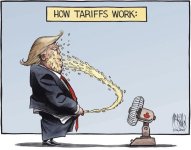
The Tarriff Hype.

Ron in Regina

"Voice of the West" Party
Apr 9, 2008
32,789
11,816
113
Regina, Saskatchewan
“U.S. President Donald Trump’s trade czar on Wednesday defended the plan to impose new 50 per cent tariffs on Canada, claiming the goal is to “improve our trading relationship,” with work ongoing to develop “options” on renewing the Canada-U.S. Mexico Agreement on free trade (CUSMA).
Tracy Moran’s report on President Donald Trump’s tariff tantrums against Canada, forced-labour imports one day, wildfire smoke the next, reads like governance by make-believe: evidence optional, belief mandatory. Believe his reality or pay for doubting it. Consequently, Trump’s strategy has created a global prisoner’s dilemma. He bets that no democracy can afford to break with America first, that each will quietly accommodate his fictions rather than risk standing alone.

Individually, appeasement looks rational. Collectively, it is ruinous. Every government that swallows one falsehood to preserve the relationship makes the next falsehood easier to swallow. That is why this is no longer merely a dispute over tariffs or trade. It is an existential test of whether democracies can defend a shared reality without destroying themselves in the process.
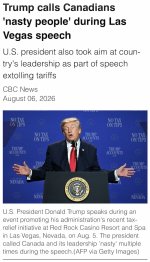
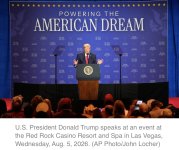
When Trump tells prime-time America he has proof the 2020 election was stolen, the lie becomes a loyalty test: accept his reality or risk political exile. His apprentices — Musk, Vance, Rubio, Hegseth and Fox News — have learned the lesson. Lie fluently or become irrelevant.

The danger is not simply that Trump lies. It is that lying becomes cheaper than resisting him. A chain of command built on fiction eventually collapses because no one knows which orders, promises or treaties can be trusted. His lies are reducing the world order to chaos.
 
  • Like
Reactions: Taxslave2

petros

The Central Scrutinizer
Nov 21, 2008
121,119
15,042
113
Low Earth Orbit
The US is a democracy. You are still to vote for the person you are told to vote for or suffer the concequences.
No it's not. Just as your claim Israel is but isn't.

It's a bullshit façade propped by emotions not reality.

Is North Korea "Democratic People's Republic of Korea" a democracy because they say they are?

So what the fuck makes America a democracy?
 
Last edited:

Ron in Regina

"Voice of the West" Party
Apr 9, 2008
32,789
11,816
113
Regina, Saskatchewan
Mr. Trump claims to be defending American interests by threatening to impose new tariffs on Canadian alcoholic beverages and other products starting on Aug. 19.

But many U.S. wine, beer and spirit producers don’t want this kind of help. They are warning him that his latest attempt to strong-arm Ottawa in trade talks will also inflict more damage on them.

An American industry group, calling itself the Toasts Not Tariffs Coalition, argues that legislators should instead be focused on restoring open markets with Canada and providing certainty for U.S. businesses that rely on cross-border trade.

“The latest announcement underscores a troubling reality: The beverage alcohol and hospitality sectors continue to be caught in the middle of trade conflicts it did not create,” the coalition states in a press release issued in response to the presidential proclamation of the impending tariffs.

The 50-per-cent tariffs will be invoked under Section 338 of the Tariff Act of 1930.

Also known as the Smoot-Hawley Tariff Act, the protectionist trade legislation was intended to give Washington a means to settle the score with countries that unfairly impose tariffs on U.S. products. Instead, Mr. Trump is using it to menace an already-wronged trading partner.

In addition to alcohol, the recently announced U.S. duties will apply to a range of other Canadian exports, including hockey sticks and cement, regardless of their standing under the United States-Mexico-Canada Agreement on trade. U.S. alcohol producers, however, are already feeling acute pain.

“For more than a year now, American wine and spirits exporters have faced major losses in Canada after U.S. products were removed from retail shelves across the country, cutting off access to one of our most important export markets,” the coalition added in its release.

Mr. Trump, though, appears unfazed by the financial pain that his illogical trade policies have inflicted on the U.S. sector. Even the U.S. industry acknowledges that provincial and territorial boycotts of American alcohol only came to pass because of Mr. Trump’s unprovoked trade war. It didn’t have to be this way. Before those bans began in March 2025, Canada had been the top export market for U.S. wine and the second-largest destination for U.S. spirits.

Canada was responsible for more than 80 per cent of total U.S. wine export losses globally, making 2025 “the most catastrophic single-year trade disruption in the history of U.S. wine exports.” The coalition has spent months cautioning the Trump administration that its protectionist trade policies risk permanent harm to American brands in Canada.

“The significant damage to U.S. alcohol brands in Canada caused by his this trade dispute will have lasting negative impacts on U.S. producers,” the coalition wrote in a correspondence to U.S. Trade Representative Jamieson Greer this past April.

Most provinces, including Ontario, Quebec and British Columbia, are standing firm on their boycotts. Albertaand Saskatchewan, meanwhile, are facing new calls to reinstate their bans in light of the pending Section 338 tariffs.

Additionally, other countries similarly aggrieved by U.S. trade policies, such as Mexico, are eager to find new markets for their alcohol exports.
 

petros

The Central Scrutinizer
Nov 21, 2008
121,119
15,042
113
Low Earth Orbit
Mr. Trump claims to be defending American interests by threatening to impose new tariffs on Canadian alcoholic beverages and other products starting on Aug. 19.

But many U.S. wine, beer and spirit producers don’t want this kind of help. They are warning him that his latest attempt to strong-arm Ottawa in trade talks will also inflict more damage on them.

An American industry group, calling itself the Toasts Not Tariffs Coalition, argues that legislators should instead be focused on restoring open markets with Canada and providing certainty for U.S. businesses that rely on cross-border trade.

“The latest announcement underscores a troubling reality: The beverage alcohol and hospitality sectors continue to be caught in the middle of trade conflicts it did not create,” the coalition states in a press release issued in response to the presidential proclamation of the impending tariffs.

The 50-per-cent tariffs will be invoked under Section 338 of the Tariff Act of 1930.

Also known as the Smoot-Hawley Tariff Act, the protectionist trade legislation was intended to give Washington a means to settle the score with countries that unfairly impose tariffs on U.S. products. Instead, Mr. Trump is using it to menace an already-wronged trading partner.

In addition to alcohol, the recently announced U.S. duties will apply to a range of other Canadian exports, including hockey sticks and cement, regardless of their standing under the United States-Mexico-Canada Agreement on trade. U.S. alcohol producers, however, are already feeling acute pain.

“For more than a year now, American wine and spirits exporters have faced major losses in Canada after U.S. products were removed from retail shelves across the country, cutting off access to one of our most important export markets,” the coalition added in its release.

Mr. Trump, though, appears unfazed by the financial pain that his illogical trade policies have inflicted on the U.S. sector. Even the U.S. industry acknowledges that provincial and territorial boycotts of American alcohol only came to pass because of Mr. Trump’s unprovoked trade war. It didn’t have to be this way. Before those bans began in March 2025, Canada had been the top export market for U.S. wine and the second-largest destination for U.S. spirits.

Canada was responsible for more than 80 per cent of total U.S. wine export losses globally, making 2025 “the most catastrophic single-year trade disruption in the history of U.S. wine exports.” The coalition has spent months cautioning the Trump administration that its protectionist trade policies risk permanent harm to American brands in Canada.

“The significant damage to U.S. alcohol brands in Canada caused by his this trade dispute will have lasting negative impacts on U.S. producers,” the coalition wrote in a correspondence to U.S. Trade Representative Jamieson Greer this past April.

Most provinces, including Ontario, Quebec and British Columbia, are standing firm on their boycotts. Albertaand Saskatchewan, meanwhile, are facing new calls to reinstate their bans in light of the pending Section 338 tariffs.

Additionally, other countries similarly aggrieved by U.S. trade policies, such as Mexico, are eager to find new markets for their alcohol exports.
We have one ace in the hole remaining....

Cut off Porn Hub!
 
  • Like
Reactions: Ron in Regina

Ron in Regina

"Voice of the West" Party
Apr 9, 2008
32,789
11,816
113
Regina, Saskatchewan
Dear RON,

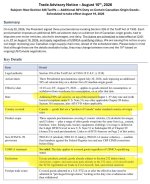
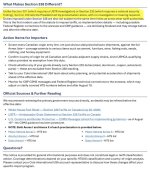
On July 20, 2026, the President signed three proclamations invoking Section 338 of the Tariff Act of 1930. Each proclamation imposes an additional 50% ad valorem duty on a distinct list of Canadian-origin goods, tied to disputes over motor vehicles, alcoholic beverages, and dairy We're providing all the details to help you navigate these new rules!

To view this information, please click here.

Sincerely,

(One of the many Customs Brokers we deal with)
1786396914030.jpeg
1786396935269.jpeg
Then this link will be rich spin skirting along the edge of reality:
 

spaminator

Hall of Fame Member
Oct 26, 2009
40,660
4,047
113
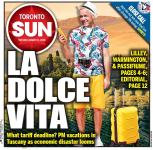
Carney vacations in Tuscany while Trump’s 50% tariff deadline looms
"He is in close contact with his team and officials on several priorities," read a note from the PMO concerning the trip

Author of the article:Bryan Passifiume
Published Aug 10, 2026 • Last updated 20 hours ago • 2 minute read

Prime Minister Mark Carney is about to follow through on bad policy to keep his own caucus together. Read Brian Lilley's column for more.
Prime Minister Mark Carney speaks with reporters outside of the Liberal caucus meeting in West Block on Wednesday, June 4, 2025 Photo by Bryan Passifiume /Toronto Sun/Postmedia Network

OTTAWA — With the Trump Administration’s deadline to slap Canada with 50% tariffs looming a little over a week away, Prime Minister Mark Carney is spending the week in Italy on vacation.


In a note sent to the Parliamentary Press Gallery on Saturday, the PMO announced that Carney will be “on a reduced schedule in the week of Aug. 10, and that Carney will be in Italy “for personal commitments until Aug. 17.”

Flight trackers show CANFORCE ONE departed Ottawa Friday afternoon, landing in St. John’s a short time later.

After a brief stop in YYT, presumably a technical stop for fuel, the PM’s CC-144D Challenger departed eastbound over the Atlantic Ocean, landing in Grosseto, Italy — a city in the Italian region of Tuscany.

Trip comes as tariff deadline looms
No further details about the trip were released by the PMO.

Despite the timing of the trip — including ongoing high-stakes negotiations with the Americans over trade and continuing economic uncertainty at home — the PMO insists Carney won’t be out of reach.


“During this period, he is in close contact with his team and officials on several priorities, including the ongoing Canada-U.S. trade negotiations,” the note said.

“All relevant rules have been followed and will be followed at all times, in consultation with the Ethics Commissioner, who did not identify any concerns or inconsistencies with the Prime Minister’s obligations.”

On July 20, U.S. President Donald Trump enacted a rarely-used section of the 1930 Tariff Act to impose 50% duties on nearly $20 billion in Canadian exports if a deal isn’t reached by Aug. 19.

Trump identified regulations prohibiting the sale of American alcohol, Canada’s agricultural supply management framework and Canadian automotive counter-tariffs as primary irritants.

As domestic pressure mounts to reach a deal, Trade Minister Dominic LeBlanc and Chief Negotiator Janice Charette are in Washington to work out an arrangement, as rumours swirl around Parliament Hill that Canada is prepared to concede to these three flashpoints.


PM no stranger to official air travel
This is the second vacation Carney has undertaken this year.

Back in March, the PM vacationed in Rome at the tail end of a 10-day European trip that saw him visit Norway to observe a NATO exercise, and later in London to meet with now-former UK PM Keir Starmer.

According to publicly available flight tracker data, Carney has taken CANFORCE ONE on 13 separate trips since the House of Commons rose for the summer on June 18.

Ten of those trips have taken place within Canada’s boundaries, but three trips — including a July 6 to 10 trip to attend the NATO summit in Türkiye and his visit to Saudi Arabia to meet with Crown Prince Mohammed bin Salman — saw the PM travel abroad.

Last year, the Toronto Sun reported Carney travelled 153,000 km across 28 separate flights in his first eight months as prime minister.

bpassifiume@postmedia.com
X: @bryanpassifiume
 

spaminator

Hall of Fame Member
Oct 26, 2009
40,660
4,047
113
Mark Carney turning blind eye to Canada by vacationing now
Wildfires rage and job losses mount in Canada, but anyone wanting answers from the PM on these pressing matters will have to find him in Italy

Author of the article:Joe Warmington
Published Aug 10, 2026 • Last updated 14 hours ago • 4 minute read

Prime Minister Mark Carney
Prime Minister Mark Carney arrives to speak to journalists in the Parliamentary Precinct in Ottawa, July 21, 2026. Photo by Blair Gable /Postmedia Network

As Canada burns and bleeds jobs, Mark Carney fiddles three hours from Rome.


There are plenty of coveted Canadian summer vacation spots, but the prime minister is in luxurious Tuscany, Italy, instead.

Meanwhile, the residents and firefighters dealing with active and seemingly out-of-control forest fires here get no such vacation getaway. Nor do those standing in lines at food banks. These lines may soon be growing. No fancy pasta dishes for them. Let them eat Kraft dinner.

Of course, don’t forget the news last week that the 80-year-old former Clarkson refinery in Mississauga, now known as the Petro-Canada oil and lubricant division, will be “retired” by its swimming-in-profit American owner and Texas-based HF Sinclair Corporation, which could cost at least 250 direct jobs.

Canada losing jobs while PM vacays in Italy
“This is a reckless decision made in a Dallas boardroom by people who will never have to look these workers in the eye,” said Unifor national president Lana Payne. “We are about to hand control of that supply to producers in other countries at the exact moment governments here are telling us supply chain security matters.”


Producing 15,600 barrels per day of engine oils, hydraulic fluids and industrial lubricants will likely be produced after 2027 in HF Sinclair’s refinery in Tulsa, Okla.

The same sort of situation is happening in Oakville as Algonquin Power’s head office is being moved to Chicago.

Meanwhile, the closest that some fellow Canadians can get to going to Tuscany is down to Little Italy at Clinton and College Sts.

Anybody ask Carney about it? He’s is the real Italy. As the Sun‘s Bryan Passifiume reported Monday, the PMO sent out this email to the parliamentary gallery members: “During this period, he is in close contact with his team and officials on several priorities, including the ongoing Canada-U.S. trade negotiations.”

The PM is having his cake and eating it, too. But nothing to see here, says the PMO.

“All relevant rules have been followed and will be followed at all times, in consultation with the Ethics Commissioner, who did not identify any concerns or inconsistencies with the Prime Minister’s obligations,” it said.


In addition to the optics, can this, and the crucial trade talks with the United States, be effectively managed from Italy?

Who did Integrity Commissioner clear Carney to see?
The PMO and the integrity commissioner were asked where the PM is staying in Tuscany — a hotel or a private residence? And who is he meeting while there? The New York Times reported in 2021 that Brookfield Company CEO Bruce Flatt has a residence in Tuscany. Could Carney, who was the Brookfield Assets Chair before becoming PM, end up seeing his old pal on this trip?

What was Integrity Commissioner Konrad Von Finckenstein asked by the PMO to review? If it’s not a visit with a former co-worker, what was it? Should the public not know?

It hearkens back to when Prime Minister Justin Trudeau went on a similar vacation to the Aga Khan’s private, Bell Island in the Bahamas in 2016, where it was later determined that four federal conflict of interest sections had been violated.

No one is suggesting, or has suggested there is any violation in 2026. Just asking obvious questions the prime minister’s people were expecting — hence mentioning the pre-approval declaration in their note to reporters.


It’s not like this prime minister doesn’t spend taxpayer money on travel. He does. As Passifiume reported in July about a November trip to South Africa and United Arab Emirates, Canada’s CANFORCE ONE departed Ottawa for a week-long trip to attend the G20 Leaders’ Summit that included meals that “cost $159,781.24” for “a choice between Italian sausage and penne pasta in white wine tomato sauce, or chicken chasseur with bacon and mushroom sauce, served with mashed potato and green beans.”

During another part of the journey, “passengers could choose between chicken stuffed with turkey bacon or Chilean sea bass with steamed veg and roasted sweet potatoes.”

All courtesy of the Canadian taxpayer.

Like the last one, this prime minister and those close to him seem so out of touch with the day-to-day reality of regular Canadians who are struggling to put food on their own tables, while also paying for the PM’s fine dining and holidays in comfort and style and in fancy places away from Canada.


Haliburton is a nice place to go in the summer, and so is Fernie, B.C., Shediac, N.B., or Lethbridge, Alta., or the lake district north of Winnipeg. Instead, the Canadian Challenger jet was sitting on the tarmac in Grosseto in Tuscany.

Grosseto is described as being “renowned for its rich history, stunning landscapes, and vibrant local culture” and “offers a unique blend of historical charm and modern amenities” including fine dining and “130 km of coastline with beaches, pinewoods and rocky shores.”

Canada has beaches, pine trees and rocky shores, too. But the prime minister chose the Italian version.
 

spaminator

Hall of Fame Member
Oct 26, 2009
40,660
4,047
113
PM jets to Italy as trade war clock ticks
With $28B in tariffs looming Aug. 19, Carney's 'personal' Italian getaway raises eyebrows

Author of the article:Brian Lilley
Published Aug 10, 2026 • 3 minute read

Mark Carney
Prime Minister Mark Carney leaves 10 Downing St. on March 16, 2026 in London, England. Photo by Brook Mitchell, WPA Pool /Getty Images

When negotiations get tough, the tough go to … Italy?


Mark Carney is away in Italy this week on a strange personal trip that may or may not be a vacation, just as trade talks with the United States are heating up. Several statements released to the media last week didn’t describe the trip as a vacation, more a personal one, and said that he had cleared the trip with the Ethics Commissioner.

Vacations, unless they are to the Aga Khan’s private island, aren’t normally something the Ethics Commissioner weighs in on, which is why Carney’s trip for “personal commitments” still raises questions.

All that said, it’s not like Carney is off lounging on a beach; prime ministers, other than Trudeau, really never get time off. This week he’s on a reduced schedule while in Italy, meaning he’s probably still working harder than most.

The real question about Carney’s trip is the timing, given the ongoing trade talks and the potential for new tariffs being imposed by the Americans next week.


The $28 billion threat
Donald Trump has threatened new tariffs of 50% on dairy products, alcoholic beverages, hockey sticks, cement, paper, furniture, honey, and more by August 19. The actions would hit $28 billion worth of Canadian goods, and more importantly for Carney, they would hit plants in British Columbia, Ontario and Quebec — essentially his industrial power and voting base.

The good news is that talks have picked up again, and Minister Dominic LeBlanc, Carney’s point man on cross-border issues, is expected to be in Washington all week for renewed negotiations. The renewed talks have been described as substantive, a word that could not be used to describe previous rounds of talks between Ottawa and Washington.

A sign that this is true can be seen in the fact that an entire team has been ordered from Ottawa to the American capital, rather than LeBlanc flying down with a political staffer or two in tow.

What’s on the table
Last week the Globe and Mail reported that the Carney government was willing to concede to the Americans on removing Canada’s retaliatory tariffs on American autos, removing provincial restrictions on American companies getting government contracts, ending the booze ban in provincial liquor stores, and agreeing to changes on how the dairy quota awarded to the United States in CUSMA would be allocated. In exchange, the Globe said, the Americans would lower their Section 232 tariffs on steel and aluminum, but not autos at this point, and the proposed deal wouldn’t address softwood lumber tariffs.


That’s not the type of deal that is likely to win over provincial premiers, who have massive sway in what Carney is trying to negotiate.

Premiers not buying it
Ontario’s Doug Ford is highly unlikely to agree to put American booze back on the shelves without some sort of resolution on autos. There is a way to bring any American tariffs on Canadian autos or auto parts down to 1–2% while still allowing the Trump administration to declare a win, but that hasn’t been part of the talks so far.

Quebec Premier Christine Fréchette is equally unlikely to surrender on supply management for dairy, or the booze ban, just weeks before an election in which the separatist Parti Québécois might win without significant gains for her province. And can anyone expect British Columbia’s David Eby to put bourbon back on the shelf when B.C. softwood lumber faces an effective tariff rate as high as 47%?

So things are moving forward, but they are also fraught.

Carney has said that he doesn’t want one-off deals on sectoral tariffs, but rather a grand bargain. What that grand bargain might look like is anyone’s guess — his government may have appointed a long list of people to an advisory council, they may have promised to keep provinces in the loop, but in reality it seems information goes one way.

Even large lobby groups like the auto industry and dairy, even provinces, are kept in the dark on what is being discussed. Information is more likely to come from the American side than the Canadian side, even for Canadian media.

And in the midst of all this, Mark Carney isn’t in Ottawa assuring the nation, he’s not in Washington taking part in guiding the talks — he’s in Italy sipping on an Aperol Spritz.

In politics, as in comedy, timing is everything, and Carney’s timing on this is off.
 
  • Like
Reactions: Ron in Regina

Ron in Regina

"Voice of the West" Party
Apr 9, 2008
32,789
11,816
113
Regina, Saskatchewan

spaminator

Hall of Fame Member
Oct 26, 2009
40,660
4,047
113
Ethics commissioner's advice to Mark Carney about Tuscany will remain secret
While the Conflict of Interest Act allows the prime minister to seek guidance confidentially, it's only a matter of time before details leak out — like what happened with Trudeau's Aga Khan trip

Author of the article:Joe Warmington
Published Aug 11, 2026 • Last updated 15 hours ago • 4 minute read

Mark Carney
Prime Minister Mark Carney arrives for an availability at the Canadian Embassy in Washington on Tuesday, May 6, 2025. Photo by Adrian Wyld /THE CANADIAN PRESS FILES

Canadians do not know exactly where in Tuscany our prime minister is. Now comes word from the ethics commissioner that we are not entitled to know what advice Mark Carney was given before jetting to Italy.


“The Conflict of Interest Code for Members of the House of Commons and the Conflict of Interest Act require the Office to keep certain information confidential,” the Conflict of Interest and Ethics Commissioner’s director of communications, Melanie Rushworth, said.

Respectfully, she added that Carney did seek ethics commissioner Konrad von Finckenstein’s counsel.

“We can confirm that the Office of the Conflict of Interest and Ethics Commissioner was consulted prior to the Prime Minister’s current vacation in Italy,” Rushworth said.

Ethics commissioner Konrad von Finckenstein.
Ethics commissioner Konrad von Finckenstein. POSTMEDIA FILES
But beyond those details was a wall of silence.

“We are unable to discuss the nature, scope, content, or outcome of any consultation involving an individual elected or appointed official. More generally, the commissioner’s office provides advice and guidance to elected and appointed officials regarding their obligations, but the office does not approve vacations.”


Under House of Commons conflict of interest rules, “the mandate of the Commissioner is twofold: to administer the Conflict of Interest Code for Members of the House of Commons and to administer the Conflict of Interest Act for public office holders.”

According to the Conflict of Interest Act, the commissioner “provides confidential advice to public office holders with respect to their obligations under the Conflict of Interest Act” and “provides confidential advice to the Prime Minister about the application of the Conflict of Interest Act. Additionally, the commissioner provides “confidential policy advice to the Prime Minister on conflict of interest and ethics issues in general.”

Toronto Sun front cover for Tuesday, Aug. 11.
It’s in the vault.

While the commissioner keeps “confidential the advice he gives to the PM,” Duff Conacher, founder and coordinator of non-profit Democracy Watch, reminds that secrets in Ottawa are hard to keep, as previous prime minister Justin Trudeau learned in his 2016-17 Christmas break vacation fiasco to the Aga Khan’s Bell Island in the Bahamas.


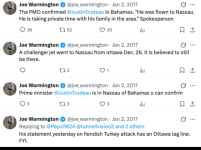
Joe Warmington tracked the PM’s Challenger jet to Nassau on social media in 2016-17.
Reminds of Trudeau’s Aga Khan island vacation
This situation reminds of that one. For a refresher, Trudeau had taken off on vacation but did not tell anybody where. With help from sources, I was able to track his Challenger jet to Nassau in the Bahamas and those first social media posts helped break open what ended up being an even bigger story my Postmedia colleagues broke of a helicopter ride to the island — something that deservedly netted David Akin and Chris Selley a National Newspaper Award.

When the dust settled, it was ruled Trudeau had violated four sections of the conflict act.

No one has suggested Carney has violated the act here. The Tuscany trip was cleared by the ethics commissioner in advance. But, like Trudeau to the Aga Khan island, Conacher doubts the details of Carney’s Italian vacation will remain in darkness forever.

“The PMO will have to answer sooner or later. Paraphrasing the old saying, a cover-up would smell even worse than a violation of the COIA,” Conacher said.


Why Tuscany and who will he meet?
It’s unclear why Carney chose Tuscany, or if he plans to visit friends in the region like his billionaire former Brookfield colleague Bruce Flatt. But, Conacher said the PM will have to be careful about who he meets up with — from the private and public sectors. Any gift over $200 must be registered.

“If the president of Italy or someone in the Italian government is hosting and paying for Carney’s stay,” that would have to be registered as well, Conacher said.

It’s hard to speculate how von Finckenstein advised Carney, but Conacher added, “even if Carney pays the full costs of the trip, given that it would be difficult to determine exactly what that full cost is if someone is hosting him in a private villa, my opinion is that the host would definitely have provided a benefit worth more than $200 and so the hosting gift should be disclosed.”

Duff Conacher is co-founder of Democracy Watch. POSTMEDIA FILES.
There is a split on how people feel about this trip happening while Canada is in negotiations over trade with the United States and much of the country is facing wildfires and other problems. However you feel about it, one thing that is clear is that Prime Minister Carney this week seems to be off the grid and off the clock.


You only have to look at the PM’s X account to see his latest stock posts are about building affordable housing and the Canada Child Benefit. There are no selfie pics under the Tuscan sun like there was from the FIFA World Cup games.

“If Carney and the PMO and the Ethics Commissioner think they will get away with hiding who is hosting him, if anyone is, or where he is staying as Trudeau tried to do with his Aga Khan trip, they are only fooling themselves,” said Conacher, adding “someone will find out or it will be leaked by someone.”

At the moment, all we know about Carney’s whereabouts is that Canada’s jet landed in Grosseto, Italy.

For now.
1786545667715.png1786545689075.png
 
  • Like
Reactions: Ron in Regina

Ron in Regina

"Voice of the West" Party
Apr 9, 2008
32,789
11,816
113
Regina, Saskatchewan
Canada’s top trade negotiator has warned her American counterparts that if the White House imposes new tariffs on Aug. 19, the move would represent a “cliff” that risks halting negotiations with the U.S.
Trade talks have increased since last month, when Trump threatened to impose a 50 per cent tariff on $29 billion worth of Canadian goods, ranging from alcohol products, sports equipment to cement, effective Aug. 19. The executive order was signed using powers under Section 338 of the Smoot-Hawley Tariff Act.

The Smoot-Hawley Tariff Act was a U.S. law signed by President Herbert Hoover on June 17, 1930. It raised import duties on over 20,000 goods by roughly 20% to 40%. Named after Senator Reed Smoot and Representative Willis Hawley, it aimed to protect domestic farms and industries but worsened the Great Depression by raising U.S. import duties to historic highs, triggering foreign retaliatory tariffs, causing international trade to collapse, and destroying global market confidence during an already fragile economic downturn.
1786569889669.jpegThe bilateral interim agreement, if reached, is expected to be just the first step, in what will be a broader negotiation with the U.S. and Mexico on the Canada-United States-Mexico-Agreement (CUSMA) next year.

In the ongoing bilateral trade talks ahead of the August 19, 2026 tariff deadline, the United States has shown willingness only to “partially” reduce (not eliminate) its existing Section 232 sectoral tariffs on Canadian steel and aluminum, and to discuss a “potential” structure to stave off new 50% levies. The U.S. is not offering a fully tariff-free baseline or major structural retreats, instead using its tariff pressure to demand and coerce sweeping concessions from Canada.

The U.S. side is pressing Ottawa for total capitulation on key Canadian market protections—including changes to dairy quota allocations, lifting provincial (not federal) bans on American alcohol, removing local procurement restrictions, and pulling retaliatory auto tariffs—while giving up very little ground in return.

“Duncan Wood, visiting fellow at the Wilson Center, said the risk of these interim agreements is how they might impact the effectiveness of the existing CUSMA trade pact.

“Will we end up with a USMCA, a side agreement with lots of carve-outs for Canada and the U.S., and another side agreement with a lot of carve-outs for Mexico and the U.S., and ultimately the USMCA only truly applies to Mexico-Canada trade in its entirety,” said Wood. “It’s a very messy situation. We’ve lost the simplicity of a free trade deal.”
 

spaminator

Hall of Fame Member
Oct 26, 2009
40,660
4,047
113
Petition to kick out U.S. ambassador reaches nearly 30,000 signatures
Petition accuses Pete Hoekstra of undermining Canada-U.S. relations, suggests he egged on Alberta separatists

Author of the article:Brian Towie
Published Aug 11, 2026 • 2 minute read

U.S. Ambassador to Canada Pete Hoekstra
U.S. Ambassador to Canada Pete Hoekstra Photo by Tony Caldwell /Postmedia Network

The online petition, set for presentation in the House of Commons in the fall, says Hoekstra, U.S. President Donald Trump’s representative in Ottawa, ought to be declared persona non grata and the federal government should request his removal as U.S. ambassador.


Green Leader Elizabeth May will present the petition, which was launched by a Calgary woman.


Accusations
The petition accuses Hoekstra of unduly interfering in Canadian politics and making statements “inconsistent with diplomatic protocol.” It says he undermined Canada-U.S. relations, characterizing the 2025 federal election as “anti-American” and normalizing Trump’s threats to annex Canada as the “51st state.”

Most notably, the petition suggests that he egged on the Alberta separatist movement. Specifically, the petition alleges representatives of the Alberta Prosperity Project, an independence movement, met with U.S. State Department officials three times between April 2025 and January and that Hoekstra said he had no knowledge of those meetings. The petition also attempts to link Hoekstra to a Michigan-based voter identification app used by another Alberta sovereignty group, The Centurion Project.


The petition also calls for a parliamentary review of what it calls U.S. diplomatic interference in Canadian affairs.

Hoekstra a vocal ambassador
It’s true that Hoekstra has voiced his opinion over a number of issues that affect Canada-U.S. relations, though whether or not such opinions undermine them could be debated. He’s specifically called out Canadian bans on American liquor, calling them “kind of backwards” and a major irritant in U.S.-Canada trade deal talks.

“That’s kind of backwards to me and if Canadians can explain that logic to me, I can’t understand it. We buy 93% of your exports and you ban ours,” Hoekstra told Michael LeBlanc and Sylvain Charlebois on the Food Professor podcast, adding the only two provinces that don’t ban U.S. booze are Alberta and Saskatchewan.


Does this petition have legs?
The U.S. Embassy told media it was aware of the petition, but didn’t comment any further.

A “persona non grata” declaration allows a government, according to the UN’s Vienna Convention on Diplomatic Relations, to strip diplomatic immunity from an individual and force them to leave the country. Canada has done so in the past, most recently with Chinese and Indian officials over allegations of foreign interference.

Chinese diplomat Zhao Wei was given the boot in 2023 after an intelligence report said he targeted MP Michael Chong by investigating family members living in Hong Kong.

The next year, Canada kicked out six Indian diplomats and consular officials after the RCMP alleged agents of India’s government targeted Canadian citizens. That campaign, police said, was linked to the murder of Sikh activist Hardeep Singh Nijjar in Surrey, B.C., allegedly at the behest of Indian gangster Lawrence Bishnoi, according to U.S. authorities.
 

spaminator

Hall of Fame Member
Oct 26, 2009
40,660
4,047
113
Details of Mark Carney's Tuscany vacation shrouded in mystery
Where is he staying? Whose villa is he using? What’s the potential conflict? Is there a quid pro quo?

Author of the article:Lorne Gunter
Published Aug 12, 2026 • Last updated 1 day ago • 3 minute read

Canadian Prime Minister Mark Carney drinks a local beverage during a visit to a small fruit farm in Saguenay Thursday, Aug. 6, 2026.
Canadian Prime Minister Mark Carney drinks a local beverage during a visit to a small fruit farm in Saguenay Thursday, Aug. 6, 2026. Photo by Francis Vachon /Postmedia
I’m troubled by Prime Minister Mark Carney’s Tuscany vacation, but not just because it comes at a bad time in trade negotiations.


There are plenty of examples of Carney caving to Trump on trade and tariffs. He can give in to Trump just as easily from Italy as from Ottawa.


Besides, modern G7 leaders have sophisticated communications suites with them – secure phones, video, and satellite. Carney is instantly available even on a beach or a golf course.

What truly bothers me, though, is that Carney’s office says the trip was cleared in advance by the ethics commissioner.

Where is he staying? Whose villa is he using? What’s the potential conflict? Is there a quid pro quo?

Since becoming prime minister a year-and-a-half ago, Carney has seemingly backed down every time he has confronted U.S. President Donald Trump.


Admittedly, Trump is an irrational bully. Dealing with him must at times be the equivalent of encountering someone having a psychotic episode on the street. The temptation is to just smile and back away slowly.

But Carney always seems to go beyond that.

Take his “negotiations” with Trump over the Gordie Howe bridge in July. Carney insisted he wouldn’t give in to Trump’s extortion. The Americans wouldn’t get a nickel of the bridge’s toll revenue until its $6.4-billion construction costs, which had been paid exclusively by Canadians, had been paid back.


Of course, the truth was what our self-described “tough negotiator” prime minister had agreed to give the Americans half of the toll revenue from Day One for at least 15 years.

What kind of signal does that send the White House about Canada’s strength in standing up for its own interests in trade negotiations in general?

Carney has cratered on a digital services tax, which irritated American trade negotiators, but he gave up on it only after it was too late to extract concessions from the U.S.

In the midst of tough negotiations last October on CUSMA – the Canada-U.S.-Mexico trade pact – Carney’s industry minister, Melanie Joly, announced, out of the blue, that Canada would slash the number of autos American manufacturers could bring to Canada tariff-free. That had nothing to do with CUSMA talks, but it caused the Americans to walk away from the table.

For a man who promised during the 2025 election to be the crisis leader Canada needed, Carney has solved few crises. I expect him to take similarly weak action over Trump’s threatened 50% tariffs coming Aug. 19.


The best the Carney government can offer steelmakers, for instance, who are hard hit by tariffs, is a $100-million subsidy to help them cut their shipping costs.

The Liberals are not going to be able to spend their way out of the current trade crisis.

But that brings me back to the question of where, exactly, is Carney staying during his Tuscany trip for “personal commitments?”

What kind of accommodations has to be cleared with the ethics commissioner in advance?

This puts me in mind of a 2004 vacation to Jamaica taken by then-prime minister Justin Trudeau.

At the time, his office said he was staying at a vacation home a family friend had lent him.

That home turned out to be a $9,000-a-night beachfront estate, the use of which had been a “gift” from a friend, complete with servants and fancy meals.

After the Trudeau family’s fiasco of staying twice on the private island of the Aga Khan, whose foundation does business with the federal government, the PMO decided to clear the Jamaica stay before Trudeau took off.


Still, there was the hint of potential conflict, cleared or not.

What, if anything, is Carney hiding? Tell me what Marriott he’s at and I’ll stop worrying about conflicts.

But until the PMO can come clean, I’m going to wonder, because as the former head of one of the biggest investment house in the world, Carney has all sorts of well-connected friends.
 

spaminator

Hall of Fame Member
Oct 26, 2009
40,660
4,047
113
Trump tariffs threaten economic gut punch for small businesses: CFIB
"Few small firms can absorb a 50% tariff, and few can pass that cost on to customers while staying competitive," said CFIB President Dan Kelly

Author of the article:Bryan Passifiume
Published Aug 12, 2026 • Last updated 19 hours ago • 2 minute read

A truck with vehicles crosses the Blue Water Bridge border crossing into the United States from Sarnia, Ontario, Canada on April 3, 2025. Photo by GEOFF ROBINS /AFP via Getty Images

With the Trump White House’s 50% tariff threats looming, thousands of Canadian small businesses are girding themselves for the worst.


That’s according to a new report published this week by the Canadian Federation of Independent Business (CFIB), which suggests two-in-five Canadian exporters face a direct impact from those tariffs.

“The small studio in Ontario shipping paintings to a gallery in New York, or a sawmill in B.C. shipping panels to a builder in Seattle is being walloped by the 50% tax threat,” said CFIB President Dan Kelly.

“If the tariffs come into effect next week, they will cause massive dislocation for small businesses that rely on U.S. clients and American buyers that rely on Canadian suppliers.”

As part of his ongoing trade war with Canada, U.S. President Donald Trump announced blanket 50% tariffs on a large swath of exports from Canada — amounting to around $20 billion in exported goods — if a deal isn’t reached by Aug. 19.

Trump identified prohibitions on the sale of American alcohol, Canada’s agricultural supply management framework and Ottawa’s automotive counter-tariffs as the U.S.’s main trade irritants.


Exporter anxiety building
Many of these businesses, Kelly said, spent years assuming that CUSMA-compliant goods would remain immune from such tariffs.

“The prospect of losing sales, slashing prices, or having to pivot to new markets altogether is generating a lot of small exporter anxiety in the lead-up to August 19,” Kelly said.

The study found 90% of businesses who export goods to the United States are concerned over the looming tariffs, with 32% saying they’re “extremely concerned.”

Industries expressing the greatest concern include Canada’s machinery and equipment sector, as well as wood, forestry and building products, plastics, polymers and packaging, agricultural, food and beverage, and the arts, jewelry and creative industries.

Concerns are also being raised over competitiveness, particularly over reliance on the American market.

A total of 78% of exporters say the 50% tariffs would make their products uncompetitive in the U.S. market, while 75% say the tariffs would prompt measures to become less reliant on American customers.

Seventy-eight per cent, however, say they’re remaining in a “wait-and-see” mode, preferring to ride out trade uncertainty until more answers are known.

“Few small firms can absorb a 50% tariff, and few can pass that cost on to customers while staying competitive,” Kelly said.

“All eyes are on our negotiations with Washington as the stakes are very high for Canadian SMEs.”

bpassifiume@postmedia.com
X: @bryanpassifiume
 
  • Like
Reactions: Ron in Regina

Ron in Regina

"Voice of the West" Party
Apr 9, 2008
32,789
11,816
113
Regina, Saskatchewan
Trade negotiators on both sides are reported to be working feverishly on a Canada-U.S. interim trade deal before Donald Trump’s new tariffs come into effect next Wednesday.

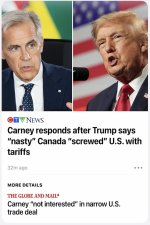
But what will Canada concede in any deal and how long will it last before the U.S. president decides to impose other tariffs based on a new excuse (?) such as Carney not sending him a postcard from his Italian hideaway?

Two sources told National Post that Canada “made it clear to the U.S. last week that if the tariffs were to go forward on Aug. 19, it will be difficult for Canada to make a deal.”
It is possible, but I wouldn’t at this stage get overly excited about it, because we know this relationship with President Trump is is very awkward. He’s mercurial. He changes his mind. He likes dramatic interventions that upset the apple cart and put everything back to square one, so you never know for sure. And quite frankly, if we did get a deal signed, sealed and delivered, how long would it last?