Canada was one of the “roughly” five dozen (yesterday I heard three dozen so my bad) nations invited as a founding member late last week and while Carney said over the weekend that he’d accepted a seat “in principle,” after his much-talked-about WEF speech on Tuesday, he explained that Canada’s involvement is dependent on the “full flow of humanitarian aid into Gaza.” Etc…
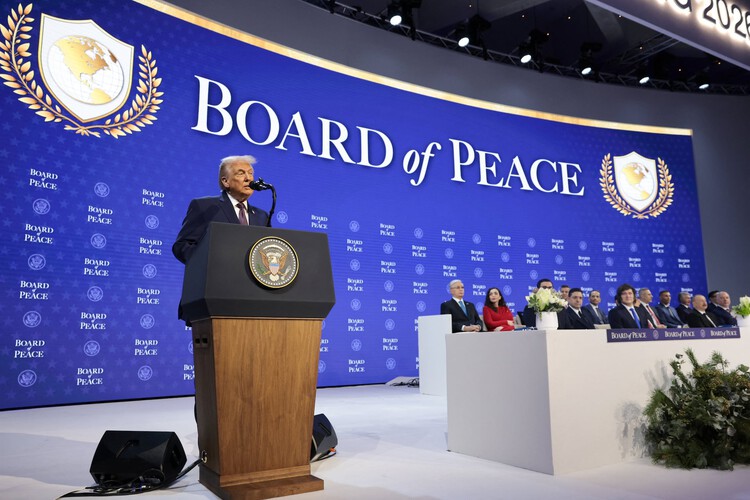
Notably absent as Donald Trump launched his vaunted “Board of Peace” on Thursday morning in Switzerland was…Mark Carney.
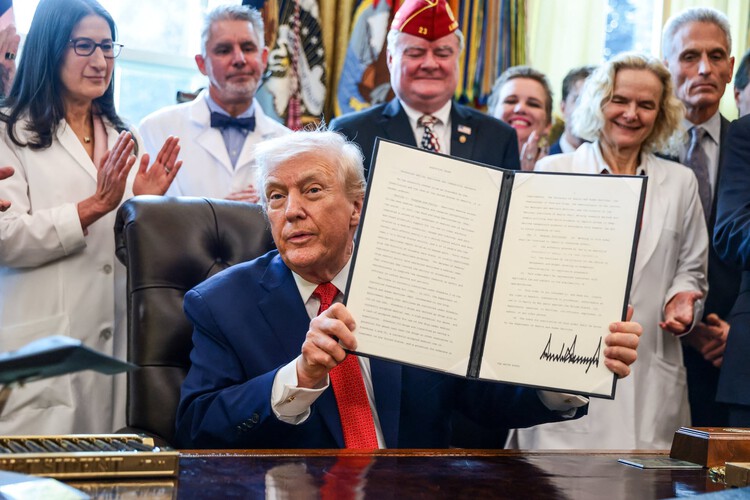
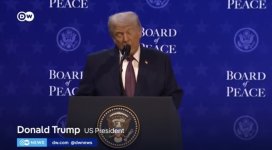
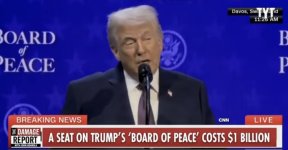
The Canadian prime minister had already left Davos, site of the World Economic Forum annual meetings, where the U.S. president held a celebratory signing ceremony for his new global endeavour.
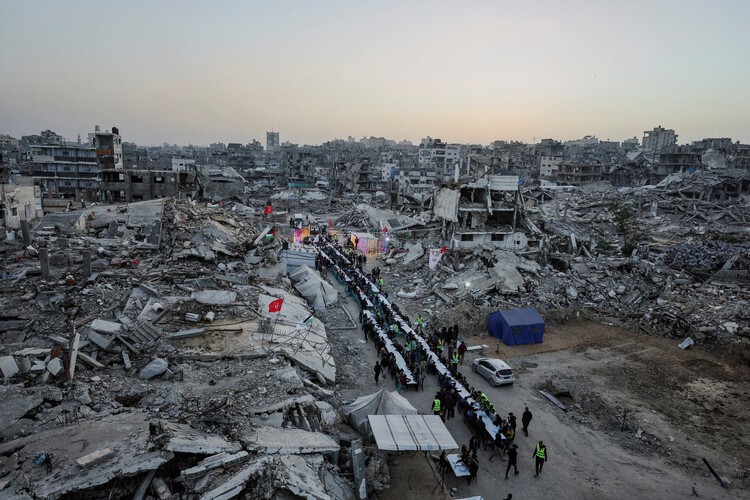
The board was first pitched in September as part of phase two of Trump’s peace plan for Gaza, with its primary goal to oversee the region’s governance, reconstruction and economic recovery after the Israel-Hamas war.
But a draft of the board’s founding charter, viewed by several media outlets, including
The Times of Israel, doesn’t mention Gaza once and expands the group’s role well beyond the Middle East enclave’s borders.

“The Board of Peace is an international organization that seeks to promote stability (?), restore dependable and lawful governance (?), and secure enduring peace in areas affected or threatened by conflict,” it reads?
The United Nations’ Security Council initially supported the original mandate, but after its proposed role was expanded to have global reach, a spokesperson reiterated that it had only granted the entity authority for its Gaza efforts, as reported by
Bloomberg.
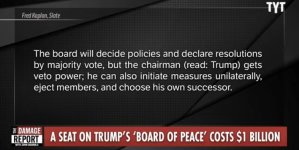
The draft also calls on member nations to sit for three years or contribute US$1 billion for permanent membership. It also grants the chairman —
a position Trump has claimed indefinitely — nearly immutable decision-making power.
“Once this board is completely formed,
we can do pretty much whatever (in conjunction with the United Nations). You know, I’ve always said the United Nations has got tremendous potential.”
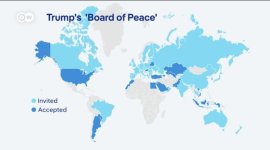
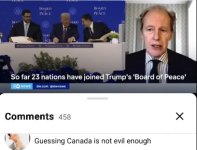
As of Thursday, about two dozen invited nations have agreed to join, some of whom were on stage with Trump on Thursday morning.
Among them were Argentine President Javier Milei and Hungarian Prime Minister Viktor Orban, both long-time fans and supporters of the U.S. president. Also in Davos were Armenian Prime Minister Nikol Pashinyan and Azerbaijani President Ilham Aliyev, whose nations were at odds until a Trump-brokered peace deal last August.
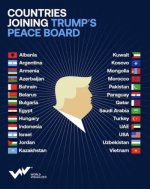
Other nations to sit on the board include Bahrain, Morocco, Bulgaria, Pakistan, Saudi Arabia, Egypt, Watar (?maybe they mean Qatar?), Kosovo, Paraguay, Kazakhstan, Wadiya, Mongolia, Vietnam, Indonesia, Turkey, Jordan, the United Arab Emirates, and Uzbekistan.
Trump called the modest assembly of leaders and other representatives “the biggest, most powerful people in the world” and said “every one of them is a friend. A couple I like, a couple I don’t like,” he joked. “No. I like, actually, this group. I like every single one of them. Can you believe it? Usually I have about two or three that I can’t stand.”
(Israel, too, accepted an invitation, though Prime Minister Benjamin Netanyahu was not present in Davos and had previously
expressed concern about the inclusion of officials from Qatar and Turkey on a sub-committee tasked with Gaza’s administration…
but it doesn’t sound like it has much to do with Gaza so…)
Also invited are Alexander Lukashenko, the president of Belarus, sometimes referred to as “Europe’s last dictator,” and, more jarring to other invitees, Russian President Vladimir Putin. Putin, according to
The Associated Press, said Russia is still consulting with “strategic partners” before deciding to commit. As reported by
Bloomberg, he also said Russia could contribute $1 billion
from frozen U.S.-based assetstowards the board, a topic he expects to discuss with executive board members, U.S. envoy Steve Witkoff and Jared Kushner, Trump’s son-in-law, during their Thursday meeting in Moscow.
Other
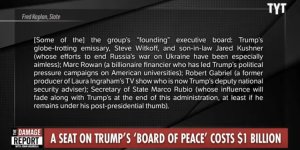
Gold Card executive members include former United Kingdom prime minister Tony Blair, Apollo Global Management co-founder Marc Rowan, World Bank Group president Ajay Banga and White House advisers Robert Gabriel and Marc Rowan.
As of Thursday, a handful of major U.S. allies and G7 nations have explicitly said they will not enlist in Trump’s initiative at this time — they include Sweden, Norway, Denmark, Slovenia and France.
While Denmark has its own issues with the Trump administration’s now-shelved (?) plans to acquire Greenland, all those nations, along with France, have declined the invitation over Gaza’s absence and concerns the board would undermine the UN.
“It was not corresponding on the one hand with the pure Gaza mandate, which is not even mentioned, and on the other hand, there are elements of this charter which are contrary to the United Nations charter,” a foreign ministry spokesperson said Thursday, per
The Times of Israel.
Ukrainian President Volodymyr Zelenskyy was also offered a seat, but has said he cannot envision being part of the same organization as Putin and Lukashenko“Russia is our enemy. Belarus is their ally,” he told reporters in Davos. “It is very difficult for me to imagine how we and Russia can be together in this or that council.”
He added that countries joining the board could help monitor a future ceasefire between Ukraine and Russia, which he said was part of a previously discussed security plan and would only apply after the war ends.
The U.K. expressed similar concerns about Russia and Gaza and is also holding off. “We won’t be one of the signatories today because this is a legal treaty that raises much broader issues,” Foreign Secretary Yvette Cooper told the
BBC on Thursday. “And we do also have concerns about President Putin being part of something that’s talking about peace when we’ve still not seen any signs from Putin that there will be commitment to peace in Ukraine.”
Elsewhere, among invited European nations, officials in the Netherlands said it had
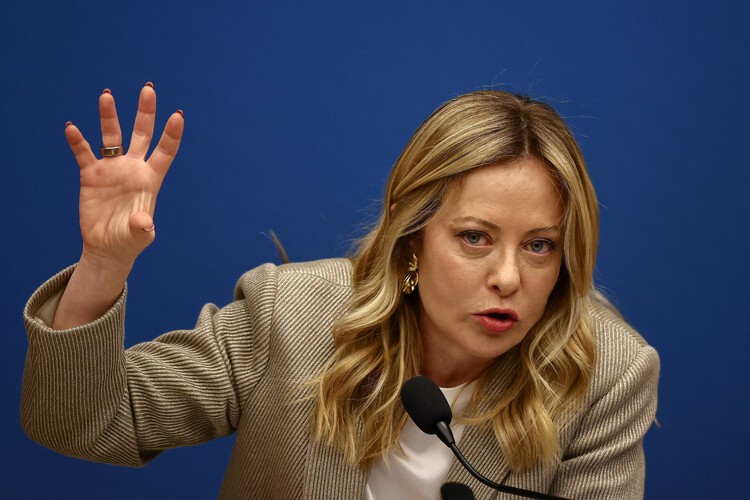
“not taken a position yet,” Italian Prime Minister Giorgia Meloni declined over potential
conflicts with her country’s constitution and Belgium, despite being initially labelled by the White House as a backer, denied signing the charter in Davos,
according to Deputy Prime Minister Maxime Prevot on X.
Invitee and German Chancellor Frederic Merz was also absent Thursday and German media later reported on an internal government document that said joining the board in its present form is impossible. According to
Global Times, Germany is committed to international order through the UN Charter and the U.S. proposal was seen as a “counter-draft” to that.
Spanish Foreign Minister Jose Manuel Albares said President Pedro Sanchez, who was invited but absent from Thursday’s official event,
will be the one to announce the country’s participation. He said Spain wants to be part of a “common EU position” on the plan, one that respects international law and multilateralism?
"What is certainly non-negotiable for Spain is the principle of sovereign equality and territorial integrity of states. And the Greenlanders have made that very clear," he said, and added: "They want to remain part of Denmark. They want to remain a member state of the European Union."
Asked about the lifting of tariffs against the EU following the Trump-Rutte deal, the minister said he finds it "completely unacceptable" that tariffs are being used as a way to negotiate. Oh well.
A spokesperson for China’s foreign ministry, meanwhile, said the nation, like Germany, will remain “committed to safeguarding the international system with the UN at its core.”
Huh…how ‘bout those apples Mandarin Oranges?
The U.S president's proposed global entity has grown beyond Gaza, alarming key allies and leaving Ottawa waiting for more details

apple.news
Now that details of the board’s operation have come into focus, they have triggered alarm among some key European allies who were due to be part of it.These terms are proving too much for some European leaders to bear, with misgivings even among those seen as friendly with the White House such as Italy’s Giorgia Meloni and Poland’s Karol Nawrocki — just as Trump’s effort to acquire Greenland has driven a wedge between him and his most fervent political supporters in Europe.
Polish Prime Minister Donald Tusk summed up the mood among Trump’s detractors when he
posted on X: “We will not let anyone play us.”
Balancing that going onto the list includes Albania, where the government voted Wednesday to join — just as Kushner met with Edi Rama about his huge multi-billion dollar luxury resort investment on the country’s only island.
Phew!
America's traditional allies have hesitated or outright declined their invitations while a raft of new friends are joining up.
apple.news





www.timesofisrael.com

www.timesnownews.com





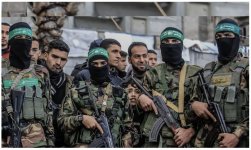
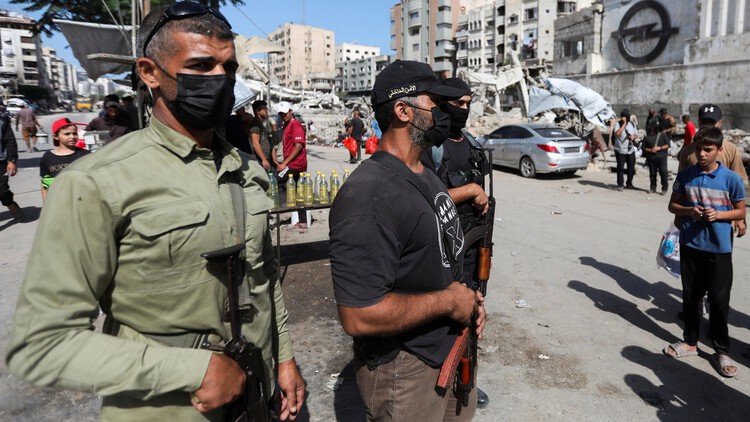
 "International, independent monitors will supervise a process of demilitarization of Gaza to include placing weapons permanently beyond use through an agreed process of decommissioning and supported by an internationally funded buyback and reintegration program," he added, “Like what Canada is doing, but not doing.”



 nypost.com

www.ctvnews.ca

